Loading summary
Transcript44 lines
- [00:00]
IBM Representative
So there's a lot of noise about AI, but time's too tight for more promises. So let's talk about results. At IBM, we work with our employees to integrate technology right into the systems they need. Now a global workforce of 300,000 can use AI to fill their HR questions, resolving 94% of common questions, not noise. Proof of how we can help companies get smarter by putting AI where it actually pays off, deep in the work that moves the business. Let's create smarter business IBM if you
- [00:31]
Cincinnati Insurance Representative
follow markets, you know the value of long term thinking. You plan, you diversify, you prepare for volatility. But in life, even the best strategies can't prevent every bad day a fire, a loss, a disruption that demands immediate attention. When that happens, what matters isn't just what you planned. It's who shows up. That's where Cincinnati Insurance comes in. For more than 75 years, they've helped individuals and businesses navigate life's toughest moments with care, expertise and personal attention. Together with independent agents, Cincinnati Insurance focuses on relationships, not transactions. Their approach is grounded in experience, follow through and trust built over time. Bad days happen, and when they do, you deserve an insurance partner who understands risk, respects what you've built and is ready to help you move forward. The Cincinnati Insurance companies Let them make your bad day better. Find an independent agent@cin fin.com this podcast
- [01:32]
Wise Representative
is brought to you by wise the smarter way to manage your money internationally if you're getting a headache from juggling different currencies and different bank accounts in different countries, there's a better way to receive money in the currency you need without the slow transfer times or hidden fees. Meet Wise, the savvy way to handle your money internationally. Hold balances in up to 40 currencies with the mid market exchange rate on every conversion. Whether you're receiving payments from tenants abroad, earning as a digital nomad, or converting dividends from your international investments, the WISE Multi currency account is Be Smart, Get Wise, download the Wise app today or visit wise.com, terms and conditions apply.
- [02:11]
Cincinnati Insurance Representative
Bloomberg Audio Studios podcasts Radio News 2026
- [02:18]
David Gura
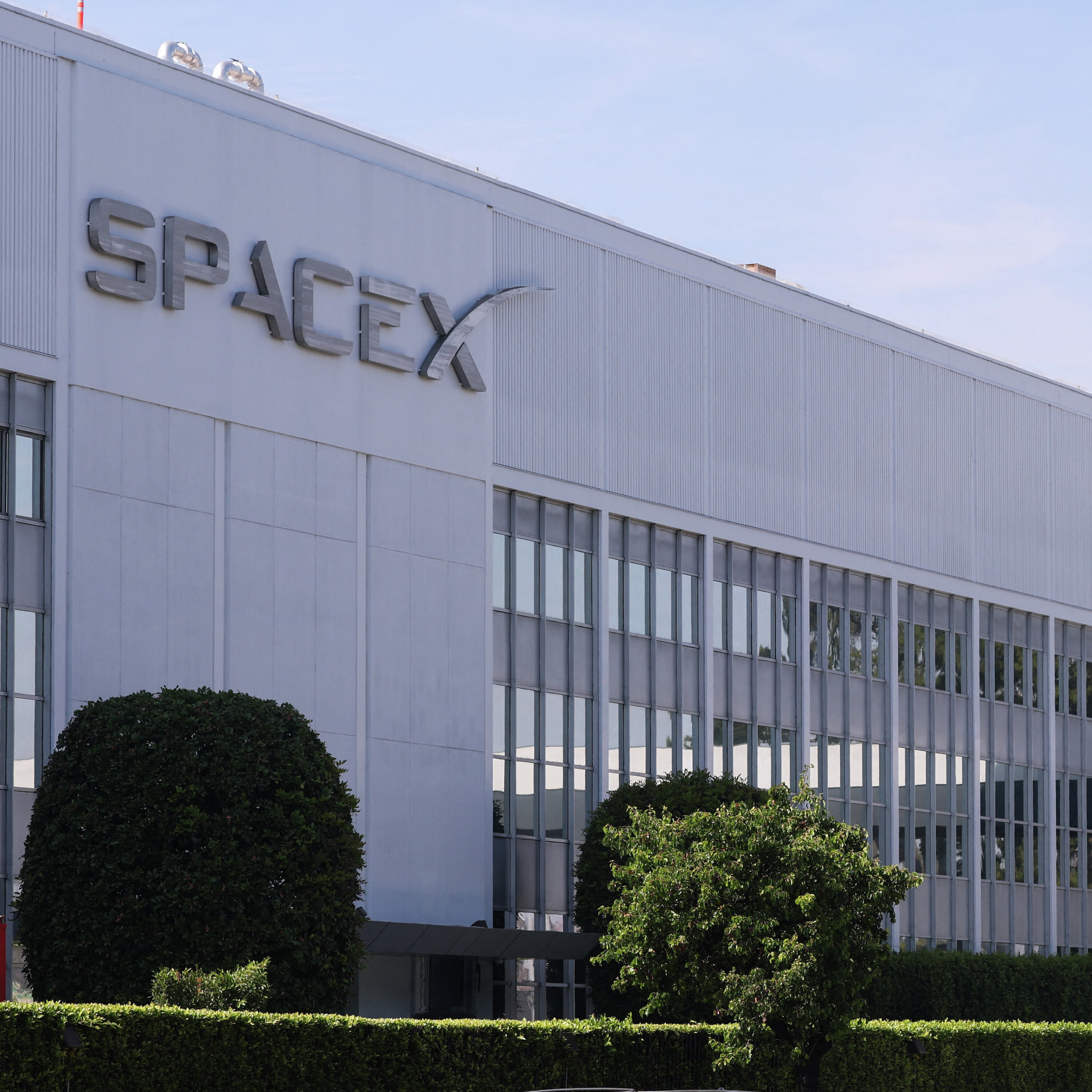
is shaping up to be a landmark year for high profile IPOs. AI giants Anthropic and OpenAI are both expected to go public later this year, with valuations projected to be hundreds of billions of dollars. But 2026, his most memorable stock market debut, could kick off as early as this week, when Elon Musk's company, SpaceX, files the paperwork to go public. How big a deal is this ipo? The numbers being floated are Certainly eye popping.
- [02:46]
Ed Ludlow
How big a deal? The biggest deal ever, literally.
- [02:50]
David Gura
Ed Ludlow, co host of Bloomberg Tech, says SpaceX hopes to raise more money than any other company in history.
- [02:58]
Ed Ludlow
What we're reporting is up to $75 billion. It kind of started at $30 billion, then 50 billion do billion than $75 billion.
- [03:07]
David Gura
The previous record was $25.6 billion raised by Saudi Aramco back in 2019.
- [03:13]
Ed Ludlow
You know, it's astronomic sums, but the whole point is that it's all predicated on a pitch for this kind of future space economy.
- [03:21]
David Gura
And that future space economy needs a lot of cash.
- [03:25]
Ed Ludlow
They need that capital because, you know, the future business model for SpaceX has changed. They want to build data centers in space and it doesn't matter if a data center is in space or it's on Earth. The chips, the GPUs that go into it, that they cost tens of billions of dollars. And that's a big focus.
- [03:44]
David Gura
I'm David Gura and this is the big take from Bloomberg News. Today on the show, SpaceX's possible record setting IPO, what it means for the business of space, why the company wants to give retail investors a chance to buy in, and how Elon Musk could become the world's first trillionaire. After its IPO. SpaceX will be up there with the largest publicly traded companies in the world, the ones that are worth 13 digits. There's chip maker Nvidia Alphabet, Google's parent company, and Microsoft. Ed says SpaceX could seek a $1.75 trillion valuation. What gives SpaceX at this moment the confidence that investors will support that valuation, that the public markets will.
- [04:32]
Ed Ludlow
First of all, you either do or you don't believe in a future where instead of being large tin cans on Earth, data centers in the form factor of satellites are the best way forward. The argument is basically that in the vacuum of space, heat dissipation and thermodynamics not an issue. Energy, electricity. Well, there's infinite sun. The sun is always on in space, David. And so it's a very sort of whimsical, silly argument, but that's basically what those that believe in the economics of this would put forward. And investors buy it. Right? They believe that even though Elon Musk's kind of skill is to look, keep investors looking to the horizon, he does often in the end get to the bold plans that he outlines. Even if the timeline's kind of off, that's part of it. You know, SpaceX absolutely dominates all of the payload from Earth to orbit. They have changed the economics of space launch. And if any of this future business of space based data center is going to succeed, they will have to prove out or keep proving out the reusability and economics on a dollar per kilo basis of what they're already doing. And there's a lot of belief that that won't change.
- [05:45]
David Gura
ED Elon Musk started SpaceX more than 20 years ago and I think there are probably a lot of listeners who will think this is a company that still just builds rockets and shoots them into space. But the reality is this has become a massive sprawling conglomerate. What does SpaceX encompass in the year 2026?
- [06:00]
Ed Ludlow
Yeah, in the year 2026, SpaceX still dominates the launch of rockets into orbit and the transfer of payload, both human and non human payload, from Earth into orbit. Like they are the number one launch provider. But more recently their business, the kind of money side of it, has been about starlink, a constellation based Internet where you, much like you would subscribe to your Internet provider here on Earth, you pay a subscription. It's just that the technology relies on satellites in orbit and ground receivers. And that has been the most recent shift where revenues have gone from majority being either government or private customers paying for SpaceX to put their gear on a rocket and send it into orbit, to now Starlink becoming a bigger chunk of it. And so the next phase in the IPO is all about the evolution of that, from constellations focused on Internet and Starlink to constellations that are data centers.
- [07:00]
David Gura
Is this principally what's motivating the company to go public at this moment, that kind of growth that you're describing?
- [07:06]
Ed Ludlow
It's the money. Elon Musk has always been relatively candid about how he feels about life as a CEO of a public company, the scrutiny that a public company faces, and you know, for the longest time keeping SpaceX private and some of his other ventures private, separate from Tesla, which is a public company, that was the priority. But the frank reality was that when the idea of a space or orbital data center became sort of clearly the business plan, then they needed the capital. And to get capital at that volume, you need to pull off a financial mechanism like an IPO of that scale.
- [07:49]
David Gura
You have this company that is building and shooting up rockets, has this very successful Starlink side of the business, and then it goes about and acquires Xai, another Elon Musk property. What was the rationale for that and how hard a sell is it to investors who are looking at the prospect of this IPO and wondering if in this environment backing a company that is so squarely centered on AI makes a lot of sense.
- [08:13]
Ed Ludlow
Yeah, in simple terms, XAI is a company that develops AI large language models. Right. Is the common parlance that people have become accustomed to. XAI essentially does exactly what OpenAI and Anthropic do. They train models and then they offer products. In their case it is a generative AI tool and other more enterprise focused products around grok. And so quite rightly people were like, this is nuts. Why would SpaceX do this with Xai Beyond Elon bringing his different interests under one umbrella and bringing them into one entity. And it's the idea that, well, what is constraining those companies developing AI is compute. The constraint is that there is not enough data center capacity on Earth. One way to solve for that is to put them in orbit in space. And so you have SpaceX. That is the modus operandi by which that compute gets into orbit. It will build and design the satellite form factor data centers, but XAI is the user. And we're not talking at that point about training models, we're talking about inference, running the models, running vast amounts of data and compute and beaming it back down to Earth. And so actually from that standpoint, if you are saying that in the first instance you're your own customer, it does make a lot of sense to investors and investors were happy to back it.
- [09:37]
David Gura
You report on this stuff day in and day out and data centers in space still sounds kind of fantastical to me. I'm wondering how much the conversation has shifted, maybe in part because Elon Musk is talking about this so much. To that being maybe not a given, but what SpaceX and other companies are
- [09:53]
Ed Ludlow
shooting for here, it sounds far fetched and fantastical to a lot of people. There is still a lot that needs to happen to make this a reality. And it's one reason why we so closely track Starship. So Starship is SpaceX's future generation launch system and rocket. And basically the math that all of the investors and analysts and industry do is the economics of Starship. First of all, Starship hasn't really ever completed even a test mission, end to end. In other words, it's never launched from Earth, got to orbit, done something real in terms of deploy a payload and then come back down to Earth. They've run experiments, but they need to do that. And the math that needs to be done is the long term future of Starship on a dollar per kilo basis, how much does it cost to put Starship into orbit and deploy payload and then bring it back down to Earth safely and in one piece so it can be reused again. Until that happens, nobody can model for the viability of space based data center because as SpaceX would tell it themselves, only Starship is capable of putting these satellite data centers into orbit. There isn't anyone else with a rocket or the technical know how to do it. And so we're waiting on that big moment.
- [11:14]
David Gura
I think of Tesla, a public company. You've listened to quarterly earnings calls. I have as well. I think that Elon Musk's distaste for for those is sometimes palpable on those calls. But the broader question here is how much Elon Musk's vision is at odds with what a public company has to do. So he has dreams of data centers in space, he has dreams of colonizing Mars. These are very medium to long term goals for him. How does he square that or how difficult is it for him to square that with the necessary kind of quarterly reporting targets that a public company has?
- [11:46]
Ed Ludlow
The one counter argument to that is that while Tesla is a public company, is owned by some of the largest financial institutions on the planet, a meaningful proportion of the shareholder base is everyday people, retail investors who are huge backers of Elon Musk. The reason that that's interesting is the latest reporting from Bloomberg and others is that when this SpaceX IPO happens, a really big chunk of the offering will go to retail investors. What Musk has always said is that he values those retail investors of Tesla. He often will say they have a better understanding of how the company works beyond that of the sell side analyst, for example, or even the institutional shareholder who holds the stock in a fund on behalf of clients and the wider public. And so he wants to reward that loyalty. But that is completely separate from a bigger question, which is is it sensible, logical and efficient that Tesla, SpaceX and Xai all coexist as one company? Because actually historically they've always worked very closely with one another. There's always been crossover between them. And so the other argument if you're a shareholder is, well, if you own one, it's just logical to own the rest of it as well.
- [13:04]
David Gura
Coming up, the timetable for this highly anticipated IPO and what it'll mean for the world's richest man.
- [13:14]
IBM Representative
So there's a lot of noise about AI, but time's too tight for more promises. So let's talk about results. At IBM we work with our employees to integrate technology right into the systems they need. Now a Global workforce of 300,000 can use AI to fill their HR questions. Resolving 94% of common questions. Not noise proof of how we can help companies get smarter by putting AI where it actually pays off deep in the work that moves the business. Let's create smarter business.
- [13:44]
Cincinnati Insurance Representative
IBM you need to make a huge presentation in an hour. Adobe Acrobat uses AI to take all your documents and generate a presentation with a single click. Build slides quickly and streamline the process. Need a last minute pitch deck? Do that with Acrobat. Need to level up your presentation design? Do that with acrobat. You have 30 plus documents that need to be simplified into a proposal. Do that, do that, do that with Acrobat. Learn more@adobe.com Dothatwith Acrobat support for the
- [14:17]
Public Holdings Representative
show comes from Public. Public is an investing platform that offers access to stocks, options, bonds and crypto, and they've also integrated AI with tools that can assist investors in building customized portfolios. One of these tools is called Generated Assets. It allows you to turn your ideas into investable indexes. So let's say you're interested in something specific like biotech companies with high R and D spend small cap stocks with improving operating margins or the S&P 500 minus high debt companies. Chances are there isn't an ETF that fits your exact criteria. But on Public you just type in a prompt and their AI screens thousands of stocks and builds a one of a kind index. You can even backtest it against the S&P 500. Then you can invest in a few clicks, go to public.com market and earn an uncapped 1% bonus when you transfer your portfolio. That's public.com market ad paid for by Public Holdings Brokerage Services by Public Investing member finra SIPC Advisory Services by Public Advisors SEC Registered Advisor crypto services by ZeroHash sample prompts are for illustrative purposes only, not investment advice. All investing involves risk of loss. See complete disclosures@public.com Disclosures.
- [15:33]
David Gura
When SpaceX goes public later this year, the company's reportedly targeting June it'll be eligible for a new fast tracked entry to the NASDAQ 100. On Monday, NASDAQ announced it'll shorten the waiting period for new listings to just 15 days, a move widely seen as a way to draw companies like SpaceX to the exchange. But even with a fast track to the market and so much investor excitement about the company, ed says what SpaceX is trying to pull off is difficult.
- [16:01]
Ed Ludlow
This is a big, big IPO and so it's entirely possible that the IPO gets delayed, it gets kicked back further into 2026, even next year. But that's the mechanics of it. The the bigger picture is SpaceX is a closely held company, a private company where Elon Musk doesn't have the majority of volumetric ownership, but he does have incredible voting power. And then you have some very interesting financial institutions on the cap table, venture capital firms that have been in there early since day one, Founders Fund. And so SpaceX decides with its bankers how much of this company it's going to offer. And, and as we discussed a moment ago, how much of this is going to go to the retail investor and all of that impacts the market. The other reporting is that SpaceX is gunning for some prestige. It would like to go straight into the S&P 500, which would take some consideration by the committees overseeing the S&P 500 and the umbrella organization to make bylaw and rule changes. That is something that would be consequential for the markets. And, and again, it's only with time that we'll know if that's achievable or not. In this timeframe of an IPO in the middle of 2026.
- [17:17]
David Gura
You've talked to executives as I have with companies weighing going public and timing is so critical. I look around the world at the uncertainty with what's happening in the Middle east, the general agita among investors about the U.S. economy and the global economy. What would this company say to that? Maybe this isn't the right moment for this to happen because there is so much uncertainty.
- [17:37]
Ed Ludlow
You can look at different data sets that would either evidence or dispute the psychology of the market. There's a lot of big names in financial markets right now saying that investors should put a little bit more into cash. And it's interesting to see some of the commentary attached to that saying. They're not saying that because of safety and because of the conflict in war in Iran. They're saying it because you need to get ready for a big SpaceX IPO and have some liquidity to participate and buy a big block of shares. That's kind of interesting. SpaceX has had no difficulty in attracting capital in the private markets. Now the one sort of pause for thought is that it's not only SpaceX that's looking at the public market window. Right? You have OpenAI that at its last private valuation post money 830 to $50 billion. So what would its public valuation be? You have anthropic also waiting in the wings considering an IPO in some sense it's an issue of chronology. One goes first and the rest follow. The others are that it's competitive, right? You are asking for the same capital from the same types of people and it's the same types of banks on the top lines of these deals, working on all these different IPOs. It's a competitive landscape. Some people see it as a starter gun, others see it as if the environment more broadly is difficult. Maybe they all hit pause or they're waiting for somebody to go first.
- [19:02]
David Gura
Ed, when all is said and done, how much of this company is Elon Musk likely to own?
- [19:07]
Ed Ludlow
There's a difference between saying what percentage of a company does one own, financially speaking? You know, Elon, from a voting power perspective, he has absolute control as it stands with SpaceX along with its board and the board observers that get board observer status through having a more meaningful ranking on the captain table. So that's an interesting part of it. I'm racing to pull up on my Bloomberg terminal how much of Tesla Elon Musk currently owns. But remember that he's embarking at this moment in time, over the next decade on a compensation plan that was designed, all told, not just to compensate him with a trillion dollars of economic value, but with much more voting power as well. So for him, that's what it's all about. And he has argued in voting control so that he can execute on the bigger picture that he believes these companies are going after, which is changing. It shifts all the time at the moment what Elon Inc. Is trying to achieve. But that's his argument. If he doesn't have the voting power, he won't be able to execute on it because he'll be vulnerable to the will of activist investors and other regulatory bodies.
- [20:12]
David Gura
When this idea of an IPO first came up, there was a lot of attention on what it would mean for Elon Musk's personal net worth. He's already the world's richest man, of course. What will it do? How much does he stand to make here? And what is Elon Musk's broader goal amassing all of this money? What does he want to spend all of that money on?
- [20:29]
Ed Ludlow
As Elon Musk would tell it, his goal is not to amass all that money. The overriding goal of SpaceX was to make humankind a multi planetary species. In other words, SpaceX in very simple terms, would take humans from Earth to the future Mars and in the interim, the moon. And that's something that he genuinely believed in, what he is good at is framing it in the context of his ability to raise funding for those bigger picture goals rather than serve his own net worth. Right now he is worth about $650 billion according to Bloomberg data. So he's the world's richest person. But through the financial Mechanism of a SpaceX IPO taking the paper value of his SpaceX ownership after a public offering, what people talk about is him being the first individual trillionaire, right, Having a trillion dollars of personal wealth. He also has a 10 year compensation plan with Tesla set against mandatory goals. He has to hit all those things to get the comp. But the economic value of the award is $1 trillion total, depending on the share price going with him in the trajectory that he wants to take the company. So yeah, $650 billion right now. And let's say if you and I are still doing this in 10 years time, the idea is that he'll be the multitrillionaire.
- [21:48]
David Gura
So we've got this looming ipo. We have the Artemis launch scheduled for this week.
- [21:52]
Ed Ludlow
Yeah.
- [21:53]
David Gura
What could this IPO signal about investments in the space sector more broadly?
- [21:57]
Ed Ludlow
Broadly, investment in space is strong right now, particularly in private market backing. When we say investment in space, that can mean a lot of different things. You know, within space there are categories launch different rocket providers, propelling payload from Earth to orbit. Actually there's less focus there. All of the banks do research. Morgan Stanley is one that's done a lot of research on the potential multi trillion dollar addressable market in space. But that encompasses everything from literally communications via satellite. Internet like Starlink is the value of data generated in space. There's this idea that here on Earth, for example, a farmer in any given geography is made more efficient and better served by what a satellite can see in orbit versus anything that can be generated on the ground. And that can fundamentally change the economics of all kinds of industries, agriculture being one. And so that's the direction of travel here. The thing is about the SpaceX IPO bringing it back to what we're talking about today. It's how much does that suck the oxygen out of the room? Because investors know that SpaceX is way ahead of many others that are chasing it in those domains and they want to concentrate their focus on that single name.
- [23:18]
David Gura
This is the Big Take from Bloomberg News. I'm David Gura. To get more from the Big Take and unlimited access to all of bloomberg.com, subscribe today@bloomberg.com podcastoffer if you like this episode, make sure to follow and review the Big Take wherever you listen to podcasts, it helps people find the show. Thanks for listening. We'll be back tomorrow.
- [23:47]
Cincinnati Insurance Representative
If you follow markets, you know the value of long term thinking. You plan, you diversify, you prepare for volatility. But even the best strategies can't prevent every bad day. For more than 75 years, Cincinnati Insurance has helped individuals and businesses navigate tough moments. With expertise, personal attention and independent agents who focus on relationships, not transactions, the Cincinnati Insurance companies let them make your bad day better. Find an agent@cinfin.com.
- [24:26]
Wise Representative
With volley from iShares. You get access to both monthly income and growth potential in one simple etf. It's the best of both worlds. Discover Bali Ishares Large Cap Premium Income Active ETF iShares the market is yours. Visit www.ishares.com to view perspectives for investment objectives, risks, fees, expenses and other information that you should read and consider carefully before investing. Risks include principal loss and the use of derivatives, which could increase risks and volatility. Monthly income is not guaranteed. Prepared by BlackRock Investments, LLC.
- [24:52]
4imprint Representative
Deadlines shift, plans change and sometimes you just need promo products fast. Turn to 4imprint 4imprint has hundreds of promotional items available with 24 hour turnaround, from custom apparel and drinkware to tradeshow gear, writing tools and more. And their 360 degree guarantee promises your logo will be printed with care, your order ships fast and it'll show up right and on time. That's the certainty of 4imprint. Check out the full 24 hour selection at fourimprint.com for Imprint. For certain.