Loading summary
Transcript89 lines
- [00:00]
The Hartford Narrator
When you're running a business, the best days are the ones where priorities stay on track. For midsize and large companies, that isn't always easy. Risk can touch multiple parts of an organization at the same time, often in ways that aren't immediately obvious. It might involve property liability or cyber. It could stem from regulatory requirements or challenges tied to a specific industry or the scale of an operation. At that level, managing risk becomes an ongoing discipline, not a one time decision. the Hartford, the focus is on helping businesses manage risk before it turns into something more disruptive. That means working with companies to identify where they're exposed, decide what matters most, and put practical standards in place so risk is managed as part of day to day operations. And when losses do happen, the Hartford can pair that risk control work with insurance coverage grounded in underwriting, risk engineering and claims experience developed over time. Learn more@theheartford.com riskmitigation Amazon Health AI presents Painful Thoughts I I can't stop scratching my downtown.
- [01:07]
Sarah Holder
Mm, yeah, but I'm not itching to go downtown and tell a receptionist I'm
- [01:11]
The Hartford Narrator
here to talk about my downtown.
- [01:15]
Sarah Holder
Some things you'd rather type than say out loud.
- [01:18]
The Hartford Narrator
There's no question too embarrassing for Amazon Health AI. Chat your symptoms and get virtual care 24. 7 Healthcare just got less painful.
- [01:28]
Commercial Narrator
Bite into a stacked sandwich made with herobread and the only thing you'll think is delicious. You won't think it has up to 19 grams protein, 11 to 32 grams of fiber, or just 0 to 5 grams net carbs. But it does HeroBread. No compromises, just loaves, buns, tortillas, bagels and noodles packed with flavor right now. Get 10% off at HRO Co with code IHEART. That's H E R O code IHEART. All figures per serving of HeroBred. See Nutrition Facts on Hero Co
- [02:02]
Kristin V. Brown
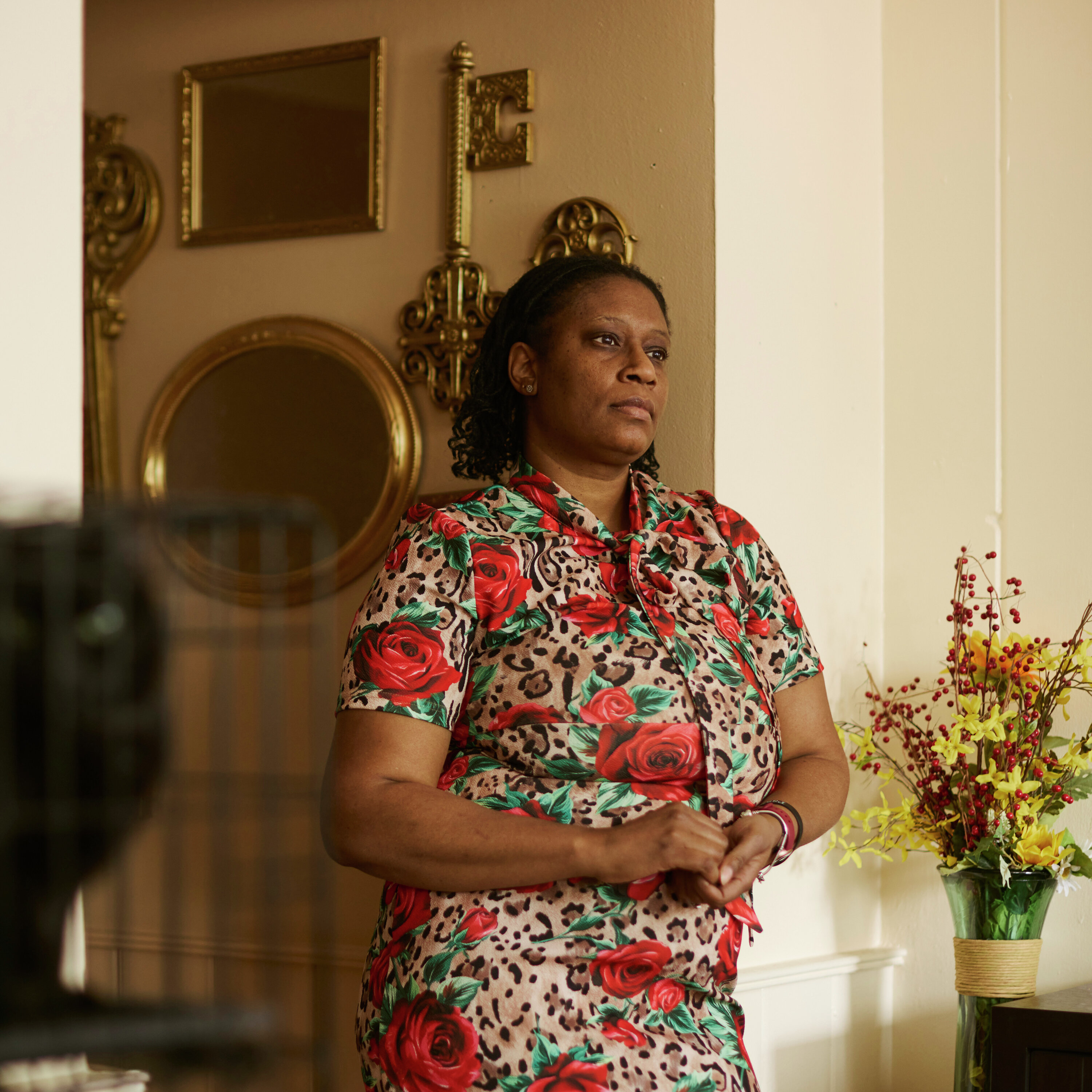
Bloomberg Audio Studios Podcasts Radio News Yasmin Harris was in her early 30s when she started noticing unusual symptoms.
- [02:14]
Yasmin Harris
I was tired all of the time. My mood was horrible. I also started having minor hot flashes, right? My sex life just went 100% out
- [02:24]
Kristin V. Brown
of the window around that time. She also got her first ever urinary
- [02:29]
Yasmin Harris
tract infection, so that as well as kind of like the mood swings was really high on my radar that something more has to be going on with me, she says.
- [02:40]
Kristin V. Brown
Her primary care doctor told her it was probably just too much stress. He put her on antidepressants for her mood swings, talked to her about bathroom hygiene, and sent her on her way one night a few years later, in her kitchen. Around dinner time, she started having chest pain and got diagnosed with heart failure. Her doctor put her on a series of medications and eventually she was given a pacemaker. She was only 39. Shortly after, her periods became irregular, lasting for weeks at a time. Yasmin felt like this all had to be connected.
- [03:17]
Yasmin Harris
I started googling and just doing a ton of research and one of the very first things that came up highlighted menopause and perimenopause.
- [03:27]
Kristin V. Brown
But she says her gynecologist told her she was still a little too young to worry about it. She gave Yasmin a prescription for birth control to manage her cycle. Still, Yasmin didn't feel satisfied with the care she was getting. So she turned to the Internet for a second opinion and she found plenty.
- [03:46]
Sarah Holder
Let's talk about some researched Ashwagandha benefits for menopause. Taking a black cohosh supplement that I got from Whole Foods and that has really seemed to be helping me.
- [03:55]
Carol Massar
You need three supplements that are gonna
- [03:57]
Sarah Holder
help bring back your intimacy, your libido during menopause.
- [04:03]
Kristin V. Brown
What worked? What didn't work?
- [04:06]
Yasmin Harris
Nothing worked, Sarah. Nothing. Absolutely nothing.
- [04:10]
Kristin V. Brown
Nothing.
- [04:11]
Yasmin Harris
Nothing worked.
- [04:12]
Kristin V. Brown
How much do you think you spent on these kinds of remedies and treatments and things that you'd found online?
- [04:19]
Yasmin Harris
Girl, I've spent easily thousands of dollars.
- [04:23]
Kristin V. Brown
When women suspect they're experiencing the lead up to menopause, finding the right way to treat their symptoms isn't always straightforward. And while a growing industry of startups and supplements are advertising more and more options for women seeking that treatment, the healthcare mainstream hasn't kept up with their needs. That's led to a massive nearly $19 billion global menopause market dominated by non medical treatments as opposed to evidence backed therapies.
- [04:51]
Sarah Holder
This need is being filled by telehealth companies and Instagram influencers because it's not able to be met by the medical community.
- [05:02]
Kristin V. Brown
Kristin V. Brown is a health and science journalist who recently wrote a story for Bloomberg Businessweek tracking the rise of of the menopause economy. She says the overall market for menopause treatment is expected to exceed $28 billion by 2033. We are in the midst of a menopause gold rush, but is it also leaving women behind?
- [05:25]
Sarah Holder
There is a real mismatch and there is a real need to give more access to care, but that access isn't really like coming from the best place for patients.
- [05:40]
Kristin V. Brown
I'm Sarah Holder and this is the big take from Bloomberg News. Today on the show we go inside the big business of menopause from TikTok medical advice to complicated healthcare systems. How are women navigating this multi billion dollar market? And will more money pouring into it make it easier or just more crowded?
- [06:06]
Sarah Holder
So about six months before I turned 40, like it had gotten a calendar alert, Instagram started just serving me the menopause content.
- [06:15]
Kristin V. Brown
Health reporter Kristin V. Brown is writing a book about female fertility. She's also a woman on the Internet. And when the menopause posts started coming, they didn't stop.
- [06:26]
Sarah Holder
And I have to tell you, it was so depressing when there are all these symptoms, right? Itchiness, weight gain, which you know is associated with menopause, but also, like, men experience weight gain in midlife, right? It's just a fact of aging. And I started looking at myself, at my own aging body, and I was like, I, I am itchy. I have gained some weight. Like, I have been kind of hot at night sometimes. And I mean, honestly, Instagram basically convinced me that I might be in perimenopause.
- [06:55]
Kristin V. Brown
Perimenopause is the stretch of a woman's life that comes before reaching menopause.
- [07:01]
Sarah Holder
So menopause, it's one day in your life, right? It's the day that you have gone 12 months since having a period.
- [07:10]
Kristin V. Brown
And a lot of the symptoms people sometimes associate with menopause actually begin in the lead up to that single day,
- [07:16]
Sarah Holder
because that's when your hormones are kind of going wild as your ovaries are kind of shutting down production, if you will.
- [07:25]
Kristin V. Brown
Those symptoms might be itchiness, hot flashes, or weight gain. They might also be mood swings or
- [07:31]
Sarah Holder
brain fog, physical and emotional. And I think that's what makes it hard to diagnose, because it's also happening at a time in your life where your body is just, you know, starting to not work as well in general. So it can be hard to know, is this menopause, or is my skin just getting dry because I'm getting older?
- [07:49]
Kristin V. Brown
Yasmin Harris had similar questions. According to the Mayo Clinic, the average woman in the U.S. experiences menopause at age 51. Yasmin was in her 30s. But when the traditional healthcare system didn't have answers, Googling her symptoms had her
- [08:05]
Yasmin Harris
convinced, because the symptoms just. They just all fit, right?
- [08:10]
Kristin V. Brown
Yasmin asked her gynecologist to test her hormones at one point, and she says the doctor told her she didn't find indicators of menopause.
- [08:18]
Sarah Holder
I think that's really one of the tricky things about diagnosing it is there's no test that you can take and think, oh, You've crossed some specific hormonal threshold, and now you're in perimenopause. It really is just evaluating the sort of constellation of symptoms and trying to put together a picture of whether you are transitioning.
- [08:40]
Kristin V. Brown
And Krizan, how has this period of life been talked about historically? How has the healthcare industry approached perimenopause historically?
- [08:49]
Sarah Holder
Menopause has been something that we haven't really talked about. And I think that's one of the biggest problems is, you know, it's been something that's sort of whispered about. Your doctor never talked to you about it. Your mom maybe never even talked to you about it. So women are going into this phase in their life without a lot of information.
- [09:07]
Yasmin Harris
Often I actually reached out to my mother as I started doing the research, and my mother is in her mid to late 60s now, and she didn't know any of this stuff either.
- [09:19]
Kristin V. Brown
Kristin says that even doctors don't always have the information.
- [09:23]
Sarah Holder
Something like 70% of OB GYN training programs have no formal menopause curriculum. Right. So they're literally getting no formal training on this.
- [09:33]
Kristin V. Brown
That's kind of crazy, something that every woman goes through.
- [09:36]
Sarah Holder
It's really crazy that doctors are not learning about it. And that's in part because of, you know, a scare or over prescribing the best treatments for it.
- [09:46]
Kristin V. Brown
There have been treatments for many of the most common perimenopause symptoms, like hot flashes and vaginal dryness. For decades, the gold standard is hormone therapy, a boost of estrogen delivered as a pill, patch, or cream. Kristin says the therapy has faced setbacks on the road to wider adoption. Research in the 1970s linked it to higher risks of uterine cancer, though the problem has been mitigated by adding progesterone to the treatment. Then in 2002, the US National Institutes of Health published results from a randomized controlled trial called the Women's Health Initiative, suggesting that the risks outweighed the benefits.
- [10:27]
Sarah Holder
Doctors decided, you know, this isn't safe for women. And so people didn't learn about it because there wasn't a treatment option that the medical community sort of agreed was safe for a long time. Those sort of thoughts and feelings about hormone therapy have been walked back. You know, we now understand that they were sort of overblown. Right? But in the meantime, you have generations of obs who have received no training. And at the same time, 1.3 million women go through menopause every year. Right. So that math isn't mathing. Right. There's just not enough practitioners and so this marketplace has emerged to sort of fill that gap. Did you know that red light therapy
- [11:06]
Yasmin Harris
can actually help more than just the skin? It can actually help with a range of menopause symptoms.
- [11:12]
Sarah Holder
Mentioned last month that I'm going through perimenopause. That's why I'm partnering with midihealth.
- [11:17]
The Hartford Narrator
If you're a woman approaching menopause, here's four supplements you must take.
- [11:21]
Kristin V. Brown
Kristin says this marketplace has flourished online as Gen Xers and Millennials reach perimenopause.
- [11:29]
Sarah Holder
We are a very online generation, right? If the doctor tells us they can't do anything, we get on Reddit, we get on ChatGPT, we say, no, thank you, I'm going to find a solution myself, right? You have telehealth companies like MIDI and Alloy that kind of grew out of the post pandemic telehealth boom and looked at companies like HIMSS and said, oh well, what they're doing for erectile dysfunction, you know, later GLP1s we can do for menopause.
- [11:58]
Kristin V. Brown
MIDI Health, which was founded in 2021, became the first menopause unicorn this year, meaning it's valued at over a billion dollars. Using their services, women can get prescribed hormone therapy and a host of other treatments.
- [12:13]
Sarah Holder
You can now get GLP1s through them. You can get peptides, right, like longevity peptides that are prescribed by a doctor. You can get lots of supplements, right? So they are not just selling kind of the gold standard treatment, but also some of these things that there is less evidence behind.
- [12:33]
Kristin V. Brown
In emailed statements to Bloomberg Businessweek, Mitti and Aloy emphasized their commitment to helping women access hard to find evidence based care in a confusing marketplace. They said that they don't push specific courses of action and that they're dedicated to helping each patient find appropriate individualized care. Beyond established telehealth brands, there's also a vast cottage industry of individuals looking to
- [12:59]
Sarah Holder
cash in this proliferation of influencers and doctors who have become influencers, dispensing advice often while also trying to sell you something, right? And so these things have coalesced to create this very noisy environment where women are learning about hormone therapy, but they're also learning about, oh, do I need a weighted vest? Do I need to take black cohosh?
- [13:24]
Kristin V. Brown
Black cohosh? What is that?
- [13:26]
Sarah Holder
It's this weird supplement that you really should not take, probably without consulting your doctor because like a lot of supplements, it has been associated with liver damage. So I mean, these things, most of the things, right, you know, like a weighted vest, I mean the evidence isn't great. The biggest risk is probably to your pocketbook, right? But some of these things could have real consequences. And then when you get into hormone therapy, women may need different hormone therapy products, different levels of them. Right? You could just not be getting the right thing for you. Right. If you don't see the appropriate medical professional. So there's really a lot of nuance in both making the diagnosis and approving and prescribing the appropriate treatment.
- [14:13]
Kristin V. Brown
So will all this money pouring into the alternative menopause market make finding good care any easier? That's after the break.
- [14:24]
Commercial Narrator
Foreign
- [14:28]
Carol Massar
this is the Bloomberg Tech Minute brought to you by ChatGPT. Now with ChatGPT work, I'm Carol Massar. Globetrotters hunting for airfare bargains are in for a rude awakening as the days of stumbling across a cheap seed on a popular flight could soon disappear. Bloomberg's Wan Ha reports that airlines from Delta to Virgin Atlantic are adopting artificial intelligence to change seed prices more quickly by by weighing dozens of variables in real time, helping capture more revenue while shrinking pricing gaps that once allowed travelers to find bargain fares. Machine learning models can more accurately forecast demand by analyzing historical booking patterns, seat inventory and seasonal trends, while also continuously tracking competitors fares and capacity changes to update prices in near real time. The technology could lead to higher fares on busy routes as airlines pack flights closer to capacity, but may also result in lower fares on off peak and lower demand routes. That's the Bloomberg Tech Minute brought to you by ChatGPT. Put ChatGPT to work on your most ambitious ideas and projects. Get started@chatgpt.com today by selecting work mode available on plus and Pro plans.
- [15:42]
The Hartford Narrator
Amazon Health AI presents painful thoughts.
- [15:47]
Sarah Holder
Why did I search the Internet for answers to my cold sword or problem? Now I'm stuck down a rabbit hole filled with images of alarmingly graphic source
- [15:56]
Kristin V. Brown
in various stages of ooze.
- [15:59]
Sarah Holder
I can clear my search history, but I can never unsee that.
- [16:05]
The Hartford Narrator
Don't go down the rabbit hole. Amazon Health AI gets you the right care fast. Healthcare just got less painful.
- [16:13]
Wasabi Narrator
Innovation is what gets your business to market and Wasabi is designed to give every business a shot at competition. How break free from skyrocketing storage costs and unpredictable egress fees from old and top heavy legacy providers. You know the big guys. Wasabi is the world's hottest cloud storage company and the go to provider for professional and collegiate sports teams and leagues around the world. And here's why. Innovation from Wasabi's AI enabled intelligent media storage Wasabi Air to the industry's only cloud storage service with with triple protection against cybercriminals, data deletion and ransomware. The world's top companies trust Wasabi. Remember, Wasabi is up to 80% less than market competition and doesn't charge a cent for businesses to access their own data. Wasabi Another championship story. Check them out for free@wasabi.com Wasabi Hot Cloud Storage proud partner of iHeart podcast network.
- [17:18]
Kristin V. Brown
The market for menopause care is vast and growing. Journalist Kristen V. Brown says all these startups and supplements are responding to a real need for women, but the industry as a whole still has some growing up to do.
- [17:32]
Sarah Holder
Absolutely. There is a care gap and the telehealth companies are helping to fill it. That is indisputable. I think some women are getting the appropriate treatment for them while others are not getting the appropriate treatment, just sort of like getting prescribed, some kind of cookie cutter thing. But the question is, how do you get women quality sort of personalized care?
- [17:54]
Kristin V. Brown
It's so funny, it makes me think of this, the joke that like if men had periods, cramps would be eradicated, that there's women's health again has been underinvested in for so long. But I'm wondering, with so much money coming into this industry and and so much money being spent by women on this industry, might that inspire more investment in the kinds of treatments and research focused on women's health that thus far have been ignored or under invested in,
- [18:25]
Sarah Holder
you might think, right?
- [18:27]
Yasmin Harris
No.
- [18:27]
Sarah Holder
So unfortunately, you know, there has been a renewed interest in funding women's health, but most of that interest from investors has gone to things that have a clear kind of roi, like telehealth companies. Because really solving the problems, right? Asking the questions of why does menopause occur, figuring out if there is an intervention that can slow it. These are all really hard science problems that will take a really long time to, you know, figure out if there is a solution and then see a return on the solution.
- [19:05]
Kristin V. Brown
And Kristen says more research could make a big difference given the staying power of that 2002 Women's Health Initiative study laying out the risks of hormone therapy.
- [19:15]
Sarah Holder
One of the problems with the WHI study is that it looked at a population of patients that looked at older menopause patients primarily at an extrapolated risk for all women who might be taking hormone therapy. It sort of drew conclusions that weren't necessarily relevant to every woman who might get this therapy. And then, you know, the sort of like classic thing that happens where like the media also kind of like, gets ahold of it, and then, like, suddenly you have this huge fear about hormone therapy. And I should say that was not the first time that happened. With hormone therapy. There's this real pattern you see in history of adopting hormone therapy for menopause. Then the medical community deciding that it has too many risks. One of the previous scares was because they did find actual increased incidence of cancer when unopposed estrogen was given, right? So that was when they added progesterone to the treatment to protect the uterus. Right now, it's about 1.7% of women who are the appropriate age are taking hormone therapy. Before WHI it was like, at least 25%. Some estimates are way, way higher than that. So, I mean, really, you can see in the numbers the damage that that study and the interpretation of it and coverage of it did. And there are groups, right, like the menopause society that is working actively to combat this, right, training practitioners in how to treat women in menopause. But their efforts just can't yet fill the gap in the number of women that need care.
- [20:55]
Kristin V. Brown
And that gap in care is what's pushed people like Yasmin Harris into the online menopause marketplace, even though what she really wanted was for a traditional doctor to hear her out and really get to the bottom of what she was feeling.
- [21:08]
Yasmin Harris
I had never really stopped looking for a gynecologist that would listen to me. And I was also looking for, you know, a physician that I could more so relate to, so a black woman physician, because I, in my experience, I felt like I just wasn't being taken seriously.
- [21:27]
Kristin V. Brown
In February 2025, she found one. And after enduring the typical months long waiting period for a menopause specialist, she got an appointment.
- [21:36]
Sarah Holder
And the menopause specialist puts her on an appropriate dose of hormone therapy. She gets an estrogen patch with progesterone. And she said that, like, almost immediately she started feeling better.
- [21:50]
Yasmin Harris
This is probably going to sound really overdramatic, but I promise you, the minute I put the first patch on, like, felt normal, if that makes sense.
- [21:57]
Sarah Holder
And the really crazy thing that I don't really know if we can attribute this to the hormone therapy. Her doctor was cautious about that, but her symptoms totally went away to the extent that she actually had her pacemaker removed, her heart condition vanished, which is, you know, Yasmin's a very, very extreme example, but I think that she illustrates how women can get caught in all this noise and the care gap.
- [22:25]
Kristin V. Brown
While getting access to care can be challenging, more women are seeking treatment in the US last year, about 32 million prescriptions were written for a form of estrogen used for menopause symptoms, up from 18 million in 2021, according to data from Symphony Health compiled by Bloomberg Intelligence. And last November, the Food and Drug Administration announced it would drop the black box warning from hormone therapy treatments. The narrative around menopause has been changing, too. There are new books and movies out about this time in a woman's life. There's less whispering for Yasmin, talking about perimenopause with the right doctor changed her life. How do you feel today?
- [23:08]
Yasmin Harris
I feel amazing today. I no longer battle with the perimenopause symptoms. I feel a lot more grounded. I feel 100 times better, and I feel a lot more confident in the care that I'm receiving. And I feel a lot more educated to be able to communicate with my different providers to actually explain to them what I'm experiencing and how I'm feeling.
- [23:38]
Kristin V. Brown
This is the Big Take from Bloomberg News. I'm Sarah Holder. To get more from the Big Take and unlimited access to all of bloomberg, bloomberg.com, subscribe today@bloomberg.com podcastoffer if you like this episode, make sure to subscribe and review the Big Take. Wherever you listen to podcasts, it helps people find the show. Thanks for listening. We'll be back tomorrow.
- [24:09]
The Hartford Narrator
When you're running a business, the best days are the ones where priorities stay on track. For midsize and large companies, risk can affect multiple parts of the organization at once, from property and liability to cyber and regulatory challenges. At that level, managing risk becomes an ongoing discipline. At the Hartford, the focus is on helping businesses manage risk before it turns into something more disruptive. And when losses do happen, that work is paired with insurance coverage shaped by years of underwriting, risk engineering and claims experience. Learn more@the Hartford.com riskmitigation policies provided by Hartford Fire Insurance Company and its property and casualty affiliates, Hartford, Connecticut.
- [24:49]
Commercial Narrator
The Hulu original series Furious is now streaming on Hulu and Hulu on Disney. Starring Emmy Rossam as Alice Black, Furious follows a rookie FBI agent on the hunt for Catherine, played by Lola Petticrew, a mysterious and calculating female serial killer. While Alice upholds justice, Catherine kills for it, terrorizing the rich and powerful men of New York in her pursuit of vengeance. With secrets that change everything, Alice discovers there's a thin line between hunter and prey. Watch the Hulu Original series Furious, now streaming on Hulu and Hulu on Disney for bundle subscribers. Terms apply.
- [25:27]
ChatGPT Work Narrator
Some people use ChatGPT to answer questions. Others use it to get real work done. With ChatGPT work, you bring the goal plus real inputs like briefs, notes, files, feedback, data, and project plans. It can help turn them into an analysis, tracker, deck, outline, prototype or workflow. You can review and keep shaping. You stay in control, giving direction and choosing the final output. Put ChatGPT to work on your most ambitious ideas and projects. Get started@chatgpt.com by selecting Work Mode, available on plus and Pro plans.