Loading summary
Transcript62 lines
- [00:00]
Optum Healthcare Narrator
Healthcare doesn't always work great. If you've ever waited on a refill or couldn't schedule an appointment, you get it. That's the kind of stuff Optum is changing. They're using data and technology to integrate patient care, pharmacy and everything else. So healthcare is connected, not complicated. What's that look like? Cheaper prescriptions that are easier to get and care that looks at the whole person how you need it. Optum is helping make healthcare work as one for everyone. Everyone. Learn more@business.optum.com it's time to plan ahead
- [00:31]
4imprint Promotional Host
and make sure your brand is showing up in ways that can have an impact. 4imprint's promotional products are designed to work as hard as you do and make a lasting impression. From quality apparel, including exclusive brands, to drinkwear, tech and Totes, they've got thousands of options to fit your brand and budget. Plus you get free samples, expert help and their 360 degree guarantee. So you can be four imprint certain everything shows up just right, right on time. Explore more@4imprint.com 4imprint for certain wise is
- [01:03]
Wise Currency Service Narrator
the smart way to manage the currencies you need around the globe. When you send money abroad using your bank, you could get hit with hidden fees and exchange rate markups. There's a better way, Try Wise. Wise uses the exchange rate you'd usually find on Google, with no unwelcome surprises. Plus, most transfers happen in under 20 seconds, which means your money arrives in less time than you've been listening to me. It's simple and free to sign up when you download the WISE app. Be smart, get WISE Ts and Cs. Apply.
- [01:35]
Optum Healthcare Narrator
Bloomberg Audio Studios Podcasts Radio News When
- [01:40]
Sarah Holder
a startup called FIA launched last year, billing itself as an online shopping assistant, it got a lot of attention. Right away.
- [01:48]
Olivia Solon
They had this whole list of their investors that looked like a sort of festival lineup.
- [01:52]
Sarah Holder
That's Bloomberg technology editor Olivia Solon.
- [01:55]
Olivia Solon
They raise money from a bunch of celebrities and VCs. So notable capital Kleiner Perkins, Khosla Ventures, but also Sydney Sweeney, Khloe Kardashian and Hailey Bieber.
- [02:09]
Sarah Holder
The founders were buzzy too.
- [02:11]
Olivia Solon
One of its founders is Phoebe Gates, who's the daughter of Microsoft co founder Bill Gates. She went to Stanford, as did Sophia Kiani, who's the co founder. The co founders are sort of influencers and they also kind of do Podcast
- [02:25]
Sarah Holder
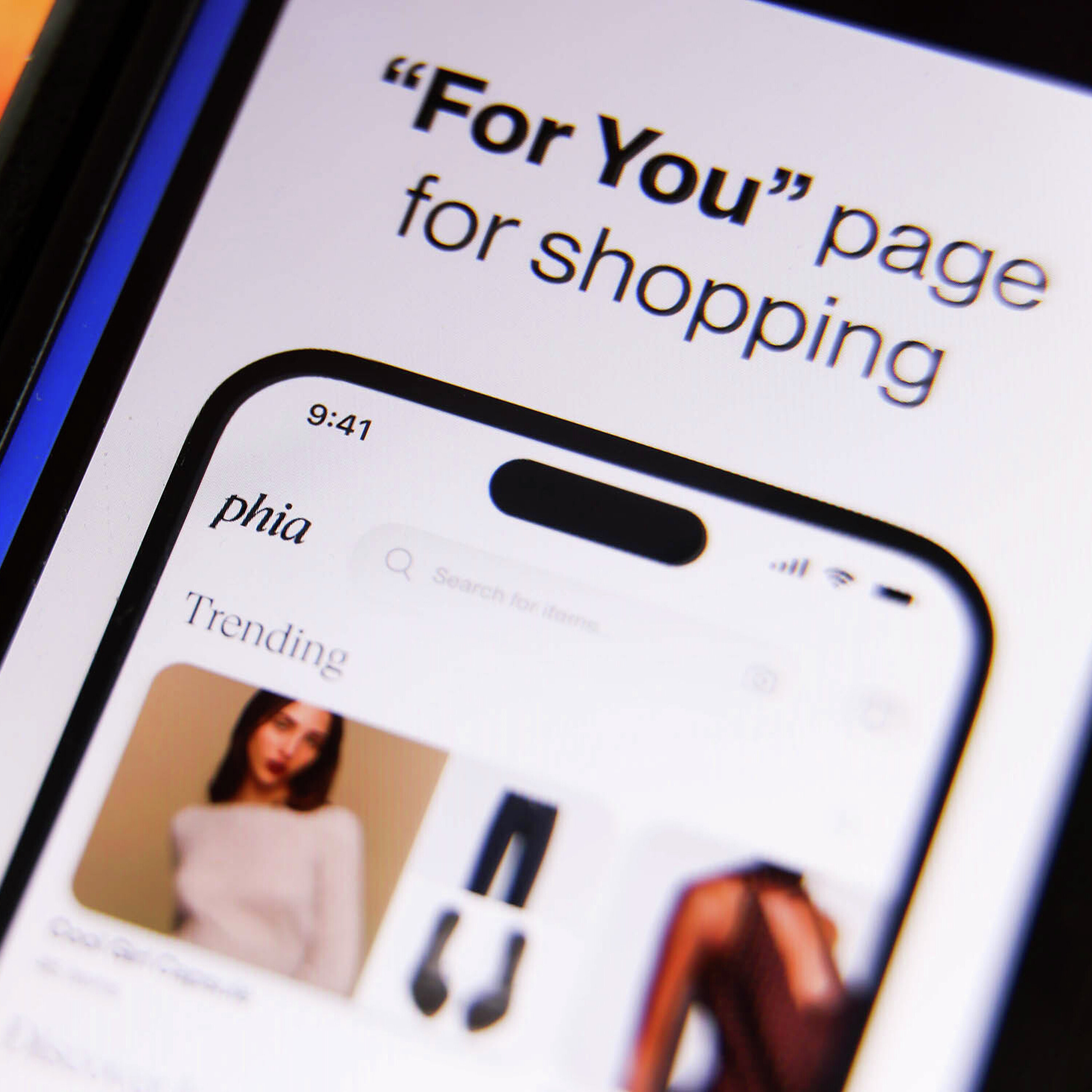
welcome to the Burnouts, the podcast where we juggle launching a startup and surviving our 20s in New York City. FIA offers an app and a browser extension that promise to help online shoppers find deals on their favorite products. When shoppers use FIA to make a purchase, retailers give the company a cut of the sale. The startup has raised 43 and a half million dollars, and according to estimates from app figures, it's been downloaded over a million times in the past year. But last month, Olivia reported that FIA's success wasn't all that it seemed. She found that it was taking credit for purchases it didn't facilitate, using a tactic called cookie stuffing.
- [03:08]
Olivia Solon
You're only supposed to get the commission if the shopper takes they make an intentional click on something you've provided and that you had an influence over the sale in some meaningful way.
- [03:19]
Sarah Holder
When Olivia brought her reporting to Fiat, the company said that a recent update to their code base had caused the issue, that they'd been made aware of the problem within the past 24 hours, and that they'd already resolved it. But Olivia kept asking questions, and from her reporting, it appears there's more to the story. I'm Sarah Holder, and this is the big take from Bloomberg News today on the show, the cookie stuffing controversy at FIA and what the latest Bloomberg reporting suggests about how much it its co founders knew and when they may have known it. For all the excitement around fia, the product it's offering isn't entirely new. It's just the latest player in a vast industry known as affiliate marketing.
- [04:12]
Olivia Solon
At its most basic, this is where retailers give a small commission to publishers or other people who refer to shoppers to their websites. So that could be an influencer. It could be like a reviews website. I think a good example would be something like Wirecutter, which, you know, does reviews of products and then recommends those products to its readers. And when you click on a link from a Wirecutter review, a special little piece of code will be in the link. And that will mean that if you then end up buying the product on Amazon or Walmart or wherever the product sold, Amazon or Walmart will pay Wirecutter a small commission. And it's usually, you know, a couple of percent through to, like, 15, depending on the type of product.
- [04:54]
Sarah Holder
Okay, tell me a little more about how this works, how a company like FIA makes money.
- [04:58]
Olivia Solon
The key thing about affiliate marketing is in order to get the commission, the shopper has to have taken an intentional action with your content. So, like, you click on the link from Wirecutter, you read the review on Wirecutter, so you went to go and buy the thing, and so fear is doing the same thing. It has its own little app that has loads of fashion items and stuff, and, and so you can click on a link from there and you end up being referred to the retailer's website. It also has this called a browser extension, which is a little program you add to your browser. And so as you're shopping around the Internet, when you put something in your shopping cart, a little fear pop up appears and offers you coupon codes and says, do you want to use this discount code? And if you click on one of those discount codes, fear is entitled to a commission. Any brand with a website is a part of their marketing strategy. And so FIA was part of a bunch of retailers like Gap, Nordstrom, I think Walmart, a bunch of their programs to, to receive commissions if they help drive a sale.
- [06:00]
Sarah Holder
So, Olivia, what did you find when you started looking into FIA's practices a little more closely?
- [06:06]
Olivia Solon
Because FIA has this browser extension, it's quite easy to observe how it operates, and you can see what's going on with the links as you click them to see whose affiliate code is appearing in those links. And that's responsible ultimately for determining the attribution for the sale and the commission. And when you look at the source code, which is public, and your colleagues analyze that source code, you can see the different features and how they are supposed to behave.
- [06:41]
Sarah Holder
FIA was registering genuine clicks that users made using its online shopping tool.
- [06:46]
Olivia Solon
But what FIA was also doing was registering a click even when nobody had clicked on anything. So neither clicking on a link from the app or one of the coupon codes on the popup, it was just registering that someone had clicked, which then injects its own little cookie. And then what that does is allows it to take credit for the sale and then therefore the commission. It was mainly happening on a mobile browser. You'd just click onto a retailer's website and in the background, it would just secretly open another tab. But in mobile, you don't see the other tab behind it. And that tab was the thing that was registering the click for fia. For fia, exactly. Even if you'd come to the website from Wirecut or any other referrer, we ran tests across 50 or more more websites, and it was fairly consistently happening.
- [07:36]
Sarah Holder
Another analysis by a competitor of FIA's, Capital One Shopping, came to similar conclusions.
- [07:43]
Olivia Solon
They were able to see that there was something unusual happening with the fear cookie dropping.
- [07:50]
Sarah Holder
You write about a type of cookie dropping called cookie stuffing. Can you explain what that term means and how common the practice is?
- [07:59]
Olivia Solon
So cookies are used in the affiliate marketing process to determine which referrer was the last click before a purchase was made. And so cookie stuffing is putting a cookie there when there hasn't been an intentional action from the shopper to click on a link intentionally or to click on a coupon. Sometimes that's done through weird pop ups like ads and they all drop a cookie. Other times there's no interaction whatsoever. It's just sort of stealthily happening.
- [08:31]
Sarah Holder
And what does it mean about FIA's business? It's claiming that it's driving some of the shopping, that it hasn't been. It's claiming revenue from these retailers.
- [08:38]
Olivia Solon
Well, when we were first looking at it, we couldn't determine exactly what the contribution was, but what we could see was that it was reliably happening on mobile, on almost every website. I think on every website we tested, these cookies were being dropped. So that meant that, you know, retailers who would have made the sale anyway. So if you just had an organic sale, people just visiting your website and buying stuff, they didn't come from any referral. Those retailers would have to be paying fear for that when they shouldn't. They didn't have to. Similarly, all the other referrers, the wire cutters, the social media influencers who were sending people to those websites were having their own kind of codes replaced by fears. So it was a kind of loss to those people as well.
- [09:23]
Sarah Holder
Just to be clear, Olivier, what regulations exist here? Have other players been accused of this in the past?
- [09:29]
Olivia Solon
I think probably the most famous example was a company called Honey that got bought by PayPal for $4 billion. And it was another browser extension supposedly offering discounts at the checkout. And it was found to be doing cookie stuffing. So now there's this huge ongoing litigation against Honey, which PayPal now owns, and PayPal is denying the allegations. So the practice is a violation of contracts that FIA has with various commercial partners, including affiliate networks. And affiliate networks are the companies that sort of look over the entire landscape. They have the retailers as their partners and then they figure out who was the last click and who therefore gets the commission.
- [10:15]
Sarah Holder
So, Olivia, you do all this reporting, the story comes out. What was the reaction like from the industry and from users? Because I remember seeing it everywhere on X. People were really talking about this. People were shocked.
- [10:27]
Olivia Solon
Yeah, it got a lot of attention. And I guess that's probably partly because of who Phoebe Gates is. But when we went to the company, they downplayed it as a recent glitch. You know, we went to them, they said, oh, on the day you came to us, we'd actually already been notified by someone else. And as soon as we realized what was going on. We stopped the behavior, the future, and we fixed it in 24 hours. At the time of the first article, we couldn't tell for sure when the feature had been switched on, even though we could see it was available in the code. So we kept on looking after the break.
- [11:08]
Sarah Holder
Olivia keeps on looking.
- [11:15]
Carol Massar
This is the Bloomberg Tech Minute brought to you by ChatGPT. Now with ChatGPT work, I'm Carol Massar. DoorDash, the largest food delivery company in the U.S. is building its own delivery drones and has gained the necessary FAA approvals to operate them commercially. The latest in its effort to delegate more orders to robots as a way of cutting delivery times, Bloomberg's Natalie Leung reports. The company says it has been conducting pilot programs with various restaurants, some of which have seen their order volume grow during the test period. The effort marks an expansion of DoorDash's in house robotics efforts to reduce reliance on human couriers for some orders, as their wages constitute a key expense to the business. Drones are also a way for DoorDash to cut delivery times on orders from more remote locations that some dashers may not want. That's the Bloomberg Tech Minute brought to you by ChatGPT. Put ChatGPT to work on your most ambitious ideas and projects. Get started@chatgpt.com today by selecting work mode available on plus and Pro plans.
- [12:23]
4imprint Promotional Host
It's time to plan ahead and make sure your brand is showing up in ways that can have an impact. That's where 4imprint comes in. 4imprint have promotional products that work as hard as you do, durable, useful and designed to make a lasting impression. Think quality apparel your team will wear again and again, including popular and exclusive brands. Drinkware that's enjoyed again and again, bags, notebooks, tools and tech items that don't just look good but actually get used with thousands of customizable options, 4imprint makes it easy to find what fits your brand and your budget. You'll get expert help, free samples and their 360 degree guarantee means you can be four imprint certain your order shows up just right right on time. Whether you're gearing up for fall events or simply planning ahead for the season, 4imprint can help your brand show up, stay useful and make connections that last. Explore the possibilities@4imprint.com for Imprint for certain
- [13:18]
Optum Healthcare Narrator
let's talk about healthcare for a second. It doesn't always work the way people expect it to. If you've ever waited on a prescription refill or had a hard time getting the care you needed, you know the feeling the system should just work better for everyone. That's exactly what the people at Optum are trying to do every day. They're a healthcare company linking patient care and pharmacy services and using data and technology to drive the whole system. So care is connected, not complicated for patients and providers. Things like making it easier to get care that looks at the whole person, from primary care doctors to mental health support and even in home care. And then using technology to make sure they all work together. Technology designed to help doctors spend less time on busy work and more time with their patients and those prescriptions. Optum is working to bring costs down, save patients money and make it easier to get refills. Little by little, Optum is helping make healthcare work as one for everyone. Head to business.optum.com to see how.
- [14:22]
Sarah Holder
So, Olivia, after publishing your first story, you didn't stop reporting. What were the open questions that you were trying to answer about FIA and these practices?
- [14:33]
Olivia Solon
There were three main questions. How long had it been going on for? When did it start? The second question was, did the founders know about this? And then the third question was sort of how significant was this alleged activity to Fear's revenue? Like, was it a big proportion of revenue or just a small bit?
- [14:51]
Sarah Holder
And you found some internal documents and had conversations with sources that shed light on some of those questions. What did you find?
- [15:00]
Olivia Solon
The main feature we thought was live since December, definitely was live since December and was switched off on July 7, which was the day that we got in touch with the company.
- [15:09]
Sarah Holder
So this was going on for at least seven months.
- [15:11]
Olivia Solon
Yeah, there were a couple of other features we identified doing kind of similar things at slightly different points in the customer journey. Some of them had been live since October or November, I believe. We were also told by sources and have seen messages that indicate that both Phoebe Gates and Sophia Kiani, the co founders, were aware of the features and in some cases seem to be proposing new ways of dropping cookies in ways that are non compliant.
- [15:41]
Sarah Holder
Your reporting suggests that there were three different features built into FIA's plugin that may have allowed the company to falsely claim credit for sales. Can you just walk me through these features?
- [15:52]
Olivia Solon
Right, so the first one was the open the tab in the background, quietly drop a cookie, enable coupon, auto drop was how it was described and that was the one that was switched on in December. The second one, we don't have a name for it, but it was one where. Where if you know you're on a merchant's website looking to buy something, FIA's popup appears with a Bunch of coupons. And if you click on anywhere on the website, whether it's to click back onto the merchant's webpage or to try and close the pop up, it would register that as a click, which again, it's not supposed to.
- [16:24]
Sarah Holder
So if you're trying to close the popup, that registers as a customer trying to use the service.
- [16:30]
Olivia Solon
Yes, exactly. Or if you're trying to just click back to be like, get out the way, I can't see anything on this page. On the rest of the page it would register that. And then the third one was something called Passive Trigger, which would refresh Fear's cookie every two hours without the user doing anything at all. You know, there would have to be some kind of click event to start off that process. So it could have been a compliant click in the first place, or it could have been a non compliant one. But then every couple of hours it would just refresh the FIA cookie. So if in the intervening time someone else's cookie had been placed because someone landed on the website from another referrer, it would get replaced again with fears after two hours. And so there's a lot of different ways they're doing it. Ultimately they all lead to the same thing in that the cookie is dropped and that will lead them to taking the credit. So they're just taking every opportunity to drop their cookie so that nobody else can take the credit for that sale.
- [17:26]
Sarah Holder
And what do we know about what FIA's co founders knew about these features and how they were being used from
- [17:33]
Olivia Solon
the conversations we've seen online, the messages and interviews we've done with people who have firsthand knowledge of the company. Both of the co founders seemed to be aware that they were using techniques that they shouldn't be using according to their commercial partners terms of service.
- [17:52]
Sarah Holder
Can you just read some of these Slack messages that you reviewed that indicate the level of understanding that these co founders had about what was going on here?
- [18:03]
Olivia Solon
Yeah. So back in December, we've seen messages where Phoebe Gates is talking to her technical team and she's kind of concerned because the company's not capturing every single transaction that's being made through Etsy. They're not making as much revenue as they'd expected in the week that she's discussing. And this is late December. And so she says, can you confirm auto pop for cookie drop is live on all sites with a coupon to confirm we're monetizing on all gmv, which means gross merchandise value through those. And so what she's saying there is she Wants to make sure that when the fear pop up appears on a website with the various coupons, at that point a cookie's being dropped. And so whether or not someone's clicking on the coupons, they're still dropping the cookie. We went to them for comment. They added context that there was a problem with this pop up that meant that they might have been losing legitimate commissions as well. I think at the beginning we weren't entirely sure whether this was just like maybe some developer who was just adding these tools to make him look like he was, or she looking like they were performing better within the workplace. I think the messages we've seen show just how hands on Phoebe and Sophia were with the startup and that they knew about all the various techniques being used.
- [19:21]
Sarah Holder
Olivia, you end your story by quoting one of these Slack messages that the co founder Sofia Kiani sent to a colleague who had written to her about one of the cookie drop functions you exposed. Can you just read it to us?
- [19:33]
Olivia Solon
So Sophia is responding to an engineer who's just talked about the passive trigger, which is the tool that drops a cookie every two hours automatically. And he says it's working pretty well. So another feature that she was discussing wasn't really that necessary. And Sophia responds, that makes sense. Yeah. Just whatever we can do to keep these cookies dropping will be amazing. Thank you.
- [19:58]
Sarah Holder
I want to spend a little more time on FIA's response though. How did they explain these tactics, the timeline, and these co founders knowledge of what was going on?
- [20:09]
Olivia Solon
FIA hasn't provided us with a huge amount of clarity on the timeline. We went to them for comment and their response was any features causing misattributions were immediately removed over a month ago on July 7th. We're reviewing every transaction we're fully committed to and have already begun issuing all transaction reversals to brand partners as a result of any misattribution. And we're hiring a head of compliance to make sure something like this never happens again. So they didn't deny the existence of these features, but they're not really being drawn on any detail into how long they've been going on for.
- [20:46]
Sarah Holder
So what kind of fallout can you expect from this? How might retailers respond, for example?
- [20:51]
Olivia Solon
Well, retailers will want to get refunds for any sales that they would have made anyway right after the first story.
- [20:59]
Sarah Holder
That was something that happened. Right. Fia had to pay back these retailers for purchases that were made within a certain time period.
- [21:04]
Olivia Solon
Exactly. And I think that time period is going to have to be a little bit longer than they had previously disclosed. So they'll have to pay more back to the retailers. I would suspect they may have to pay money back to other publishers or at least the retailers may have to do that. So other influencers, other websites that have been referring people will feel hard done by. We've spoken to a couple of them actually who say that they were not getting as many commissions as they expected. And some of them have already had in the sort of last, I don't know, month or so. That's a time period where the affiliate networks hold on to the commissions before distributing them out to the publishers. So if they of the commissions that are still being held by these sort of middlemen, those ones are being reallocated, at least by some of the big networks. They're figuring out who the rightful referrer was and paying them the commission. But once the money's gone to fear, it's then up to fear to unpick and all of that. The amount of revenue they seemingly generated from these features is interesting. We have reporting that indicates that more than half of the revenue came from these non compliant techniques. And that's according to a post that we saw relating to their total sales that were made in June through their retail partners. Since then the company has told us that that post was inaccurate and used a flawed methodology. And so they're saying that that was an overestimation. But they haven told us the exact proportion of their revenue that did not align with industry standards.
- [22:38]
Sarah Holder
And what's next for FIA here? They disabled these features in early July, according to their statement. How has their business been impacted as a result, if this was driving significant revenue?
- [22:50]
Olivia Solon
Well, at the moment we're still in the sort of fallout phase where people are figuring out what's going on. So some of the ad networks have sort of deplatformed fear for a while while they work out exactly what was going on. They may well take them back in, but for now they're sort of keeping their distance. So they'll have to, you know, build up trust again with retailers, build up trust with the affiliate. Their affiliate networks try and differentiate themselves in a way. They have just launched a some kind of digital wardrobe where you can kind of display your clothes in an app. The company is still launching new products, it's still innovating. So it's quite difficult to know what lies ahead for them.
- [23:36]
Sarah Holder
This is the Big Take from Bloomberg News. I'm Sarah Holder. To get more from the Big Take and unlimited access to all of bloomberg.com, subscribe today@bloomberg.com podcastoffer if you liked this episode, make sure to subscribe and review the Big take. Wherever you listen to podcasts, it helps people find the show. Thanks for listening. We'll be back tomorrow.
- [24:08]
Optum Healthcare Narrator
Healthcare doesn't always work great. If you've ever waited on a refill or couldn't schedule an appointment, you get it. That's the kind of stuff Optum is changing. They're using data and technology to integrate patient care, pharmacy and everything else. So healthcare is connected, not complicated. What's that look like? Cheaper prescriptions that are easier to get and care that looks at the whole person how you need it. Optum is helping make healthcare work as one for everyone. Learn more@business.optum.com it's time to plan ahead
- [24:39]
4imprint Promotional Host
and make sure your brand is showing up in ways that can have an impact. 4imprint's promotional products are designed to work as hard as you do and make a lasting impression. From quality apparel, including exclusive brands, to drinkware, tech and totes, they've got thousands of options to fit your brand and budget. Plus you get free samples, expert help and their 360 degree guarantee so you can be 4 imprint certain everything shows up just right, right on time. Explore more@4imprint.com 4imprint for certain wise is
- [25:11]
Wise Currency Service Narrator
the smart way to manage the currencies you need around the globe. When you send money abroad using your bank, you could get hit with hidden fees and exchange rate markups. There's a better way, try Wise. Wise uses the exchange rate you'd usually find on Google, with no unwelcome surprises. Plus, most transfers happen in under 20 seconds, which means your money arrives in less time than you've been listening to me. It's simple and free to sign up when you download the WISE app. Be smart, get WISE Ts and Cs apply.