Loading summary
Transcript46 lines
- [00:00]
Tide Commercial Announcer
Did you know Tide has been upgraded to provide an even better clean in cold water? Tide is specifically designed to fight any stain you throw at it, even in cold butter. Yep, chocolate ice cream. Sure thing. Barbecue sauce. Tide's got you covered. You don't need to use warm water. Additionally, Tide pods let you confidently fight tough stains with new coldzyme technology. Just remember, if it's gotta be clean, it's gotta be tied.
- [00:28]
Podcast Host (Brad vs. Everyone)
The social media trend that's landing some gen zers in jail, the progressive media darling whose public meltdown got her fired, and the massive TikTok boycott against Target. That actually makes no sense. You won't hear about these online stories in the mainstream media, but you can keep up with them and all the other entertaining and outrageous things happening online in media and in politics with the Brett vs. Everyone podcast. Listen to the Brad vs. Everyone podcast on the iHeartRadio app, Apple Podcasts, or wherever you get your podcasts.
- [00:59]
Rebel.com Advertiser
Did you know you can save up to 70% on the best brands just by shopping at from rebel.com we're talking about strollers, car seats, high chairs, espresso machines, cookware. Everything you need for way less. Here's how it works. Every single day, Rebel drops thousands of new products on the site for up to 70% off. It is a constant stream of endless deals from top brands like Uppababy, Nuna, Baby bjorn, Breville, Nespresso, KitchenAid, Le Creuset, and more. But you have to act fast because every deal is one of a kind. So if you see something you love, make sure you add to cart fast. So stop paying full price when you don't have to. Whether it's baby gear, kitchen upgrades, or a treasure for your home you didn't know you needed, Rebel has it for way less. Up to 70% less. Shop from rebel.com and save Big Bloomberg Audio Studios podcasts radio news On January.
- [02:03]
David Gura
2, Nicolas Maduro met with Chinese officials in Caracas. There's video of that meeting on Maduro's Instagram account. The narrator touts Chinese investment in Venezuela in energy and technology and infrastructure, and praises the relationship between the two nations. Hours later, Maduro was captured by US Special Forces.
- [02:42]
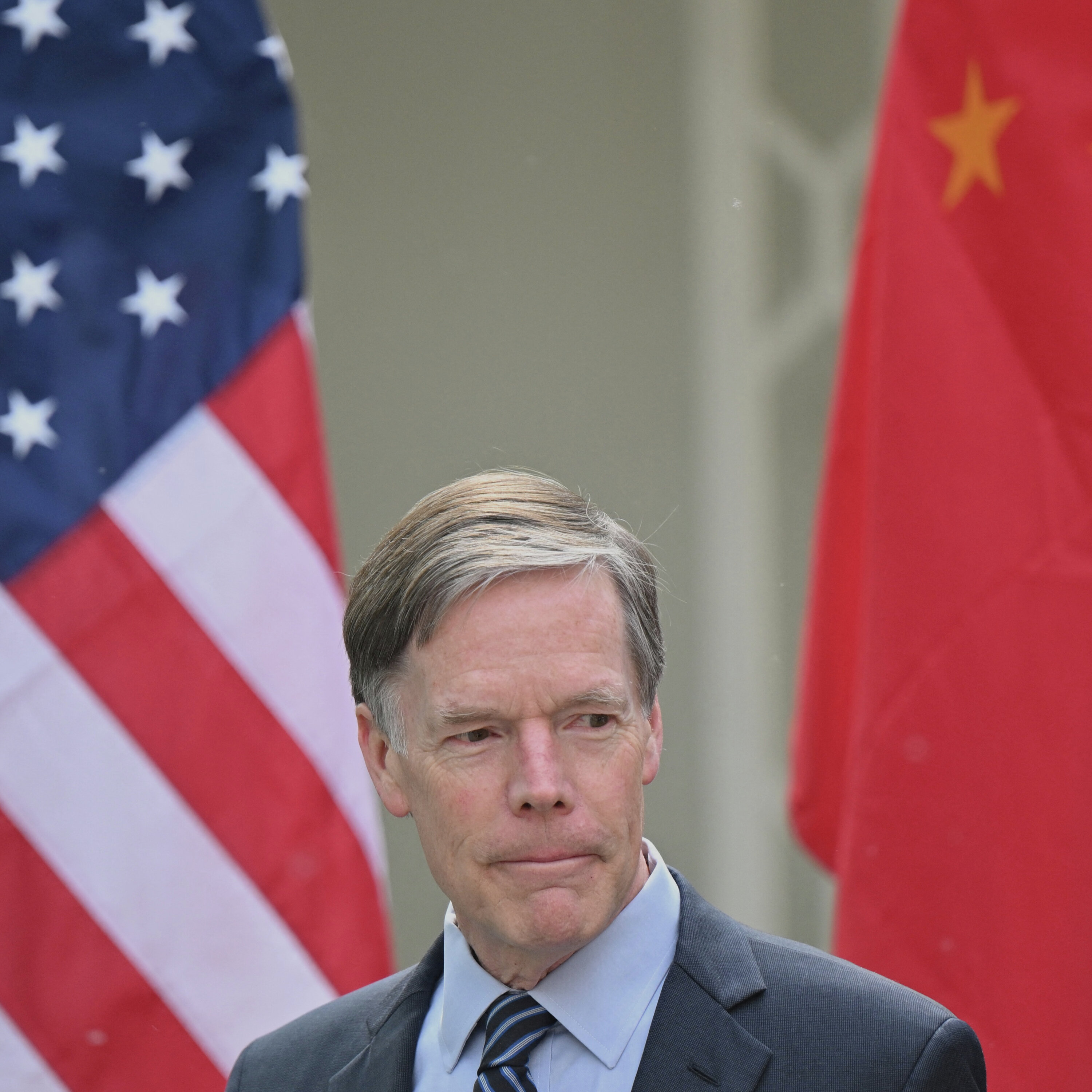
Ambassador Nicholas Burns
Well, that was very unfortunate timing for the Chinese government. There's no question in my mind that the Chinese, in a way, were humiliated.
- [02:52]
David Gura
Nicholas Burns was a U.S. diplomat for decades under Republican and Democratic presidents including Bill Clinton, George W. Bush and Barack Obama. Most recently, he was the US Ambassador to China under President Biden. China and Venezuela have had what the Chinese call an all weather strategic partnership, a very close relationship. China promised to stand by Venezuela through thick and thin, Burns explains, through any crisis.
- [03:19]
Ambassador Nicholas Burns
But when that crisis came, the Chinese couldn't defend Nicolas Maduro. So I think frankly, this has been a loss of space and it's been a loss of influence for China, certainly in Venezuela. And I have to imagine that some countries in Latin America will begin to question whether an all encompassing embrace of China and some of them have made that is really in their long term interest.
- [03:46]
David Gura
I'm David Gurat and this is the big take from Bloomberg News today, a conversation with Ambassador Nicholas Burns, now a professor at the Harvard Kennedy School, about how Beijing will respond to the US Incursion into Venezuela, how it could change China's approach to Taiwan, and how the so called Don Ro Doctrine, President Trump's focus on the Western Hemisphere could hand China an edge on the world stage. When I sat down with Ambassador Nicholas Burns this week, he brought up an article he read in 2024 as he made his way to what ended up being the last summit meeting between President Biden and President Xi, an extraordinary front.
- [04:28]
Ambassador Nicholas Burns
Page story which essentially said that in 2002, the United States was the leading trade partner of every country in South America. But by 2024, the People's Republic of China was the leading trade partner of every country in South America, with the exception at that time, of Colombia.
- [04:48]
David Gura
It illustrated vividly, Burns says, the extraordinary commitment China has made to compete for influence in Latin America and Venezuela has been a key part of that. Over nearly two decades, China has loaned the country tens of billions of dollars and Venezuela has paid interest on those loans with oil. I asked Ambassador Burns about how China responded to the capture of Nicolas Maduro and to the Trump administration's assertion it's going to control the flow of oil.
- [05:16]
Interviewer / Host (David Gura)
From Venezuela, how do its policy priorities in South America change as a result of what happened to Maduro?
- [05:23]
Ambassador Nicholas Burns
Well, the Chinese are going to compete. They're not going to leave the field in a new Monroe Doctrine. Chinese, just because the United States has said move out of Latin America, I actually have a lot of sympathy for the view that we should push back against the more competitive Chinese actions against the United States. Certainly in Latin America, for instance, the Trump administration has been right to say in the Panama Canal that a Chinese state company shouldn't control the entry ports. That just makes sense, an American national security standpoint. But they will compete. China is a major creditor to Venezuela. And if part of the solution to try to stabilize Venezuela in the next six to 12 months turns out to be a big debt negotiation. China will demand a seat at the table. They'll also look for fishers in the US Relationship with Venezuela and try to exploit them very cynically. China was a major supporter of this brutal regime, the Maduro regime. Many of the people who ran that machine are still in place. And so I think they'll look to see if they can divide the United States from that regime. And so I don't think they're going to quit. And this is all part of this global competition that's been underway for many years now between the US And China.
- [06:45]
Interviewer / Host (David Gura)
So much of President Trump's focus has been on and continues to be on Venezuela's oil. You were talking about the debt that Venezuela is into China, and there was this oil for debt program that was in place. How critical is that oil to China today?
- [06:58]
Ambassador Nicholas Burns
I think it's more symbolically important than it is in real terms. Chinese imports of Venezuelan oil represent about 4% of China's total imports around the world. So it's not that strategically important, but I think it's politically important for them that they not be shut out of that market. But certainly China's very interested in developing the entire South American market. If you think of Brazil, for instance, where China has made extraordinary inroads with Chinese electric vehicles, with Chinese purchases of Brazilian soybeans. And so I think you'll see the Chinese ramp up their state enterprise investment in many different parts of South America, and it's going to be interesting to watch to see if they can be successful.
- [07:43]
Interviewer / Host (David Gura)
As you mentioned, China likely wants a seat at the table as all of this unfolds. A spokesperson for the Chinese Foreign Ministry said at a press conference, the lawful rights and interests of China in Venezuela must be protected. Protected. How big a concern is that to the Chinese that they could lose access to what they helped build? Where does that leave China in trying to plot a path forward?
- [08:03]
Ambassador Nicholas Burns
Well, I think there are two Chinese concerns here, and I don't have sympathy for either of them. One is, again, they don't want to see a dramatic decline in their trade and investment activities in South America, I would say even Latin America, because they see it as such a major market, both in importing critical foodstuffs, but also in terms of making inroads for their most competitive industries. But secondly, this may turn out to help the United States and help Scott Bessen, for instance, in his trade, tariff and supply chain negotiations with the Chinese. There's a truce, as you know, between the United States and China from the extraordinary tariff and supply chain wars of 2025. But it's a very unstable truth. And so if the United States suddenly, because of this intervention in Venezuela has a lock on the oil industry, that's going to help perhaps the United States as the Chinese and the United States try to one up each other. And certainly I hope the United States can be successful. I'm not rooting for China at all. Having served as ambassador, I've seen how quick they are to deploy unfair trade practices against our own companies. And I hope the administration can be successful certainly on the supply chain issue as well as on tariffs.
- [09:17]
David Gura
You mentioned the role that China is playing across the continent. Can you put into context Venezuela's role in that?
- [09:23]
Ambassador Nicholas Burns
Well, I think it was a function of both Russia, China and other authoritarian countries coalescing to support an unlawful regime in Caracas. Maduro stole the election of 2024. He wasn't a legitimate leader and yet he had this support, very overt political support from Xi Jinping and from Vladimir Putin. And so I think in this sense it's been a loss of influence for all those authoritarian, which is a very positive development. And that's what they've lost. They are now at sea. And some of their other primary supporters, Cuba being the most notable. Well, we saw what happened when the US Special Forces outmaneuvered completely the Cuban Praetorian guard around Nicolas Maduro. And the threat that President Trump has made against Cuba has to be concentrating mines in Havana. So I think the table have been turned a little bit here in the global competition, these very self confident authoritarian powers and China and Russia, North Korea and Iran, the tables have been turned against certainly the Iranians, certainly the Venezuelans as part of this in the Western hemisphere. And so, you know, we're not going to know how this all plays out until several years of history of caste. But this has been a dramatic diminution of Chinese influence in the Western hemisphere.
- [10:46]
Interviewer / Host (David Gura)
Well, I want to turn to what's being called the Don Row Doctrine.
- [10:50]
President Donald Trump
They now call it the Don Roh document. I don't know, it's Monroe Doctrine. We sort of forgot about it. It was very important, but we forgot about it. We don't forget about it anymore.
- [11:02]
David Gura
Under our new name, President Trump making.
- [11:04]
Interviewer / Host (David Gura)
No bones about the fact that he.
- [11:05]
David Gura
Wants to focus on the Western Hemisphere. How does that change China's approach to foreign policy?
- [11:11]
Ambassador Nicholas Burns
Well, the Chinese now know that the game has been changed, that the United States under President Trump is going to be very aggressive in pushing back against aspects of Chinese influence. That's what this new Trump corollary to the Monroe Doctrine that was announced in the National Security Strategy report. That's what that means. But I think that the Trump administration would be more effective if they stopped talking just about oil and they started talking more about the real strength of the United States. The president has talked almost solely about the petroleum oil benefits to the United States. I think most American presidents, if not all American presidents for the last century, would have said, we want the hemisphere to be governed by rule of law societies, by governments that are elected by the people of the country. We want human rights honored. That's a glaring omission in the policy of the Trump administration. And it's not going to be attractive, at least to average people in Venezuela or other parts of Central and South America, if the United States is seen to be saying, we only care about your resources.
- [12:21]
David Gura
Coming up, how President Trump's incursion in Venezuela could influence Presidents Xi and Putin and how it's shaping President Trump's designs on Greenland. The US Military blockade of Venezuela and the apprehension of Nicolas Maduro has put other countries on edge. President Trump has put Cuba on notice, and he's suggested the US could strike cartels in Mexico. And then there's Greenland.
- [12:55]
Interviewer / Host (David Gura)
When President Trump talks about Greenland, he often brings up China. He's made unsupported claims that there are Chinese destroyers off Greenland. And here's what he said when he met with oil executives last week at the White House.
- [13:06]
President Donald Trump
I get along very well with President Xi. I'm going to go over to China in April, but I don't want them as a neighbor in Greenland. Not going to happen.
- [13:14]
Interviewer / Host (David Gura)
To what degree are President Trump's designs on Greenland, do you think, tied to China?
- [13:19]
Ambassador Nicholas Burns
Well, it's hard to know because there are so many different explanations being offered by the Trump administration about this really problematic focus on Greenland. And I just say this. There's no question that there is a longer term strategic threat. Given the fact that the passageway between Asia and the Atlantic is now navigable in the summer months, there is more of a threat, particularly from Russia. Greenland is very strategic. We have to contain and deter Russia. But the way to do that is to work through the NATO alliance. There is an Arctic Council of the eight Arctic countries, Russia is a member. The other seven members are all members of NATO, including Denmark and Greenland as part of the Danish Kingdom, and of course, the United States. So if the concern here is that there is a threat from Russia and its maybe long term strategic partner, China, the way to deal with it is to have A united NATO and seven of those nations, including the United States, working with Denmark and others and not attempting to buy or acquire by force Greenland from a vaunted and very reliable NATO ally, Denmark. And if you think about this, I was ambassador to NATO between 2001 and 2005. I remember very clearly what happened on 911 that afternoon in Brussels as we looked at the twin towers falling In New York, 3,000 people dead. We looked at the Pentagon being attacked and the Danish ambassador called me and said they were with us, they would defend us, they would invoke Article 5 of the NATO treaty. Attack on one is an attack on all, which we did. The next day, the Danes went into Afghanistan, suffering a higher level of casualties. On a per capita basis, they suffered the most of any of the troop contributing nations in terms of the numbers of people, of their soldiers who were killed and were wounded. They really stood with us. And now suddenly we have a situation and it's hard to believe we've come to this point where the leading member of NATO is threatening another NATO member with military force that will break NATO. If the Trump administration tries to use military force to occupy Greenland, that will be the end of NATO. It will cause irreparably harm to the United States. It will be a shameful episode in our history. And I've got to believe that the Trump administration is going to find a way to back down from this ludicrous claim that President Trump has made to Greenland itself.
- [16:03]
Interviewer / Host (David Gura)
The journalist Christopher Beam wrote a piece for Bloomberg Businessweek recently, and he made what I think is a really interesting point about how this could backfire on the U.S. he wrote, President Trump's norm busting incursion in Venezuela makes China look like the adult in the room. This reinforces the country's reputation in the region as a calm, predictable partner with whom one can do business. Do you agree with that?
- [16:25]
Ambassador Nicholas Burns
Well, it's what the Chinese are trying to insinuate. Not just insinuate. China is saying, we are the defender of the international order that was established after the Second World War. We are the cautious and responsible party, and the United States is an agent of instability. That's a little bit of sophistry from the Chinese. The Chinese are threatening Taiwan with military force as we speak. The Chinese have stolen in the Spratly and Paracel Islands of the South China Sea territory from both Vietnam and the Philippines. The Chinese are harassing Japan over Japanese control of the Senkaku Islands in the East China Sea. The Chinese have been contesting Indian sovereignty on their border in the Himalayas. So it's like the pot calling the kettle black. You know, there was a meeting several months ago that the South Africans hosted, and of course, the Chinese were there and the South Africans and most of our major allies in the world and the United States stayed away. If we continue to act unilaterally and if we continue to lecture the European allies as if they're the problem of the world and yet not be tough enough in our rhetoric towards both China and Russia, I think that these authoritarian regimes are going to make more inroads in global public opinion about who's the agent of instability and who isn't. I would never call President Trump an isolationist. He's not. He's certainly an interventionist. But the United States, I think is strongest when we're working with and through our allies, our NATO allies like Denmark and East Asia, our allies like Japan, South Korea, the Philippines, our strategic partner, India, Australia. I really hope the Trump administration will get back to what has been so successful for every president since Truman and Eisenhower, and that is the United States leads these alliances that China and Russia do not have. That's our strategic advantage over them. But if we drive them away, then we weaken ourselves.
- [18:28]
Interviewer / Host (David Gura)
You mentioned Taiwan, and I'm curious how the US Intervention in Venezuela might have changed President Xi's approach to Taiwan. The reporter David Sanger asked President Trump about this during an interview he and his colleagues at the New York Times conducted last week. Sanger asked, have you created a precedent.
- [18:43]
Ambassador Nicholas Burns
That you may come to regret later on?
- [18:46]
President Donald Trump
No, because this was a real threat.
- [18:48]
Interviewer / Host (David Gura)
But Trump added, taiwan is, quote, a source of pride for President Xi.
- [18:53]
President Donald Trump
He considers it to be a part of China, and that's up to him what he's going to be doing.
- [18:59]
Interviewer / Host (David Gura)
But President Trump said, I've expressed to him that I would be very unhappy if he did that, meaning invaded Taiwan.
- [19:05]
President Donald Trump
I don't think he'll do that. I hope he doesn't. But you don't think you've set a precedent.
- [19:10]
Interviewer / Host (David Gura)
Do you think, to borrow David Sanger's question, President Trump has created a precedent here he may come to regret later on?
- [19:18]
Ambassador Nicholas Burns
It is a slippery slope. I don't think the Chinese feel that the People's Liberation army is ready to invade Taiwan, at least not ready to mount a cross strait invasion, a combined forces operation of naval vessels, of submarines, aircraft. It's extraordinarily difficult to do. And the Taiwanese, of course, have been watching the Ukrainians in the ways the Ukrainians have held off a much larger Russian army through drone warfare through intelligence operations. And so I think there's a doubt in the Chinese mind about that. But there's no question that Xi Jinping wants to bring Taiwan under the control directly of the People's Republic of China. And should he attempt to do that at some point in the future, he may well use what the United States did in Venezuela to justify, well, if the United States can invade a sovereign member of the United nations, that's the Chinese one, of course, we have the right to take back what they believe incorrectly is a territory of the People's Republic of China. I think it also makes Putin's argument about wanting to claim Ukrainian territory, at least, you know, in the minds of some people, not you, not me, a more plausible explanation of what they're trying to do. So we're giving them a tactical advantage in how they describe what their own strategies are in the case of China, Taiwan, in the case of Russia, Ukraine. And that's very ill advised for the United States to be doing.
- [20:50]
Interviewer / Host (David Gura)
Ambassador Burns, thank you very much.
- [20:51]
Ambassador Nicholas Burns
David, thank you. Always a pleasure.
- [21:01]
Interviewer / Host (David Gura)
This is the Big Take from Bloomberg News. I'm David Gura. The show is hosted by me, Juan Ha and Sarah Holder.
- [21:07]
David Gura
The show is made by Aaron Edwards, David Fox, Eleanor Harrison Dengate, Paddy Hirsch.
- [21:11]
Interviewer / Host (David Gura)
Rachel Lewis Christmas Kriski, Naomi Ng, Julia Press, Tracy Samuelson, Naomi Shaven, Alex Segura, Julia Weaver, Yang Yang and Taka Yasuzawa. To get more from the Big Take and unlimited access to all of bloomberg.com, subscribe today@bloomberg.com podcastoffer thanks for listening. We'll be back on Monday.
- [21:38]
Podcast Host (Brad vs. Everyone)
The social media trend that's landing some gen zers in jail, the progressive media darling whose public meltdown got her fired, and the massive TikTok boycott against Target. That actually makes no sense. You won't hear about these online stories in the mainstream media, but you can keep up with them and all the other entertaining and outrageous things happening online in media and in politics with the Brad vs. Everyone podcast. Listen to the Brad vs. Everyone podcast on the iHeartRadio app, Apple Podcasts, or wherever you get your podcasts.