Loading summary
Transcript75 lines
- [00:00]
The Hartford Representative
When you're running a business, the best days are the ones where priorities stay on track. For midsize and large companies, risk can affect multiple parts of the organization at once, from property and liability to cyber and regulatory challenges. At that level, managing risk becomes an ongoing discipline. At the Hartford, the focus is on helping businesses manage risk before it turns into something more disruptive. And when losses do happen, that work is paired with insurance coverage shaped by years of underwriting, risk engineering and claims experience. Learn more@the Hartford.com riskmitigation policies provided by Hartford Fire Insurance Company and its property and casualty affiliates, Hartford, Connecticut so there's
- [00:41]
IBM Representative
a lot of noise about AI, but time's too tight for more promises, so let's talk about results. At IBM, we work with our employees to integrate technology right into the systems they need. Now a global workforce of 300,000 can use AI to fill their HR questions, resolving 94% of common questions, not noise Proof of how we can help companies get smarter by putting AI where it actually pays off, deep in the work that moves the business. Let's create smarter business.
- [01:10]
The Hartford Representative
IBM support for the show comes from public.com if you're actively involved in your portfolio, you probably catch yourself repeating the same actions. Buying the dip, manually sweeping idle cash, putting on a hedge on public you can now create AI agents that handle all these tasks on your behalf. Just describe what you want to do in plain English, like if the Vix hits 25, buy a put option on the S&P 500 or if my cash balance goes above $20,000, move the excess into my direct index. You approve the workflow and your agent handles the risk, monitoring the market, watching for your conditions and executing your strategies exactly as defined. An investing platform driven by your intent, not just your clicks. You can also get full read and write access to your account via the public API. Go to public.com market and fund your account in five minutes or less. That's public.com market paid for by Public
- [02:07]
Sarah Holder
Investing Brokerage Services by Open to the Public Investing Inc. Member FINRA and SIPC Advisory services by Public Advisors, LLC SEC registered advisor complete disclosures available at public.com disclosures
- [02:23]
Nancy Cook
Bloomberg Audio
- [02:24]
Optum Representative
Studios Podcasts Radio News While many folks
- [02:29]
David Gura
have been enjoying beach trips and holiday getaways, Ron Brownstein and Nancy Cook have spent their summers looking ahead to the midterm elections.
- [02:39]
Ron Brownstein
There have been more consequential primaries this year, Nancy, I think, than any year I can remember.
- [02:45]
Nancy Cook
I mean, there's kind of been this civil war going on in the Democratic Party.
- [02:48]
Ron Brownstein
Yeah, I'VE been covering national politics since the 80s. I cannot remember a year year when I have written as many stories about Democratic primaries or primaries in either party.
- [02:57]
David Gura
Ron is a columnist for Bloomberg Opinion and Nancy is a senior national political correspondent for Bloomberg News. And they've both been following races across the country from Maine to Colorado, where centrist Democrats and progressives have been facing off for some key seats in the
- [03:13]
Ron Brownstein
history of the party. There is nothing quite as systematic as what we are seeing now on the left in terms of the infrastructure to find candidates, train candidates, fund candidates, support candidates.
- [03:26]
David Gura
That structure and the success many of those left of center Democratic candidates have had have become a major theme this cycle, and they loom large over the future of the Democratic Party.
- [03:36]
Ron Brownstein
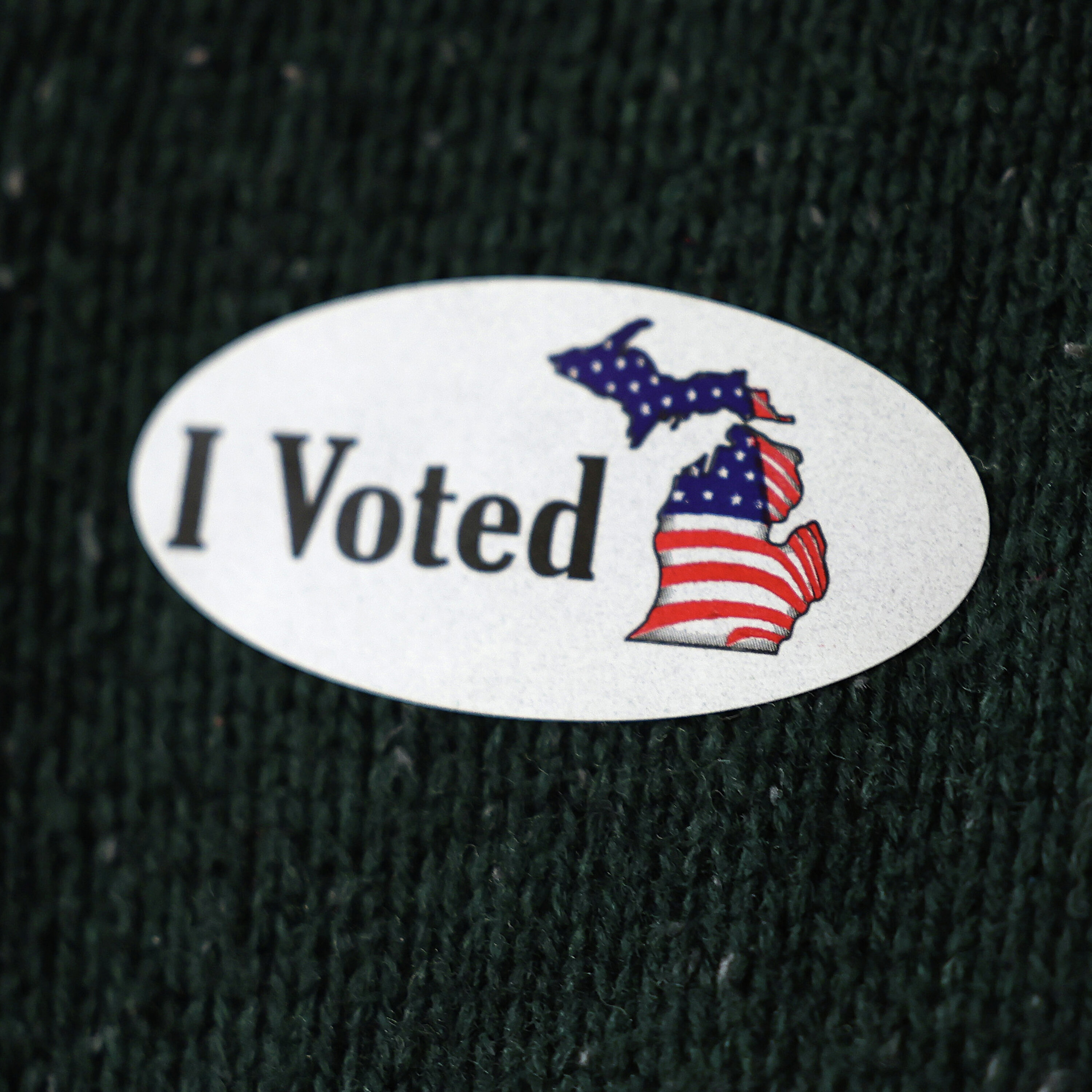
The scorecard so far is that the left is clearly ascending, but still primarily in safe places, and that in the competitive districts, Democrats are still relying more on centrist nominees. But that firewall is breaking down. And Michigan next week is going to be critical in determining how far it breaks down.
- [04:04]
David Gura
I'm David Guerrera and this is the big take from Bloomberg News today on the show why the Democratic primaries in this midterm cycle matter for control of Congress, for influence over the Democratic Party's priorities, and what the upcoming primary in Michigan in particular could signal about where things are headed in 2028 and beyond. A few days ahead of the primary in Michigan scheduled to take place on Tuesday, I sat down with Bloomberg's Nancy Cook and Ron Brownstein, and Nancy told me ideological infighting among Democrats is something she's tracking very closely.
- [04:41]
Nancy Cook
You know, so much of the Democratic primary process has been the party warring between moderates and progressives, between like sort of new economic policy ideas and old ones. I mean, the party is really in search of both leadership and its identity. And all of this is gonna set the stage for what happens and what the 2028 presidential race looks like and what the field looks like. And so the primaries have been really important on the Democratic side on that
- [05:09]
Sarah Holder
notion of there being a civil war within the Democratic Party. Ron, what kind of impact is that likely to have beyond these primaries? Looking at the midterms and looking at the general election on the heels of that.
- [05:19]
Ron Brownstein
Yeah. So most of the wins by the left have been in solidly blue places. The three Mamdani candidates all won in New York. Those are all districts where Harris won over 70%. Same thing with Colorado. Safe district. But by and large, you know, the left hasn't really broken through. That's what makes the Michigan Senate race so important.
- [05:40]
Sarah Holder
Nancy You've written about the upcoming Democratic Senate primary in Michigan. The other day you called it, quote, one of the signatures races of the year.
- [05:47]
David Gura
Why is this particular race shaping up
- [05:49]
Sarah Holder
to be such a key battleground, a key litmus here for Democrats?
- [05:52]
Nancy Cook
It's so important because Michigan is a swing state and it will be in 2028 in the presidential race. And so it will offer us all these clues about both parties and what's going to work in this battleground state for the presidential election. But it's been so important because in Michigan you have El Said, who is a former health official, who is a progressive. He is backed Senators Warren and Sanders. He is giving rise to a lot of the economic populism. He's anti incumbent, all these things that the progressive movement really wants. Against Haley Stevens, who is a current House member and this is for the Senate seat and she's backed by Chuck Schumer and also apec, which is the powerful pro Israel lobbying group. Gretchen Whitmer, the very popular Michigan governor, just came out and endorsed her. And underlying that is a very interesting growing sentiment in the party that is increasingly anti Israel. And so El Said, and the progressive wing are increasingly skeptical of the US Giving so much support to Israel. And so that is sort of an undercurrent in this race as well.
- [07:00]
Sarah Holder
Ron, you've written about how Michigan's demographics offer Democrats this kind of unique opportunity to try to win back the populist periphery voters that both Democrats and Republicans are trying to court this election cycle. I know you're planning a trip to Michigan in the coming days. What is the outcome of that primary going to tell you about that, that broader effort, the effort to get those voters to go to one side or another.
- [07:24]
Ron Brownstein
One of the things we've seen in these Democratic primaries is that the left candidates who are styling themselves basically as class warriors, Right. The Sanders argument is that the way you win back the working class is through undiluted economic populism and that in effect that will trump the cultural issues that Republicans have used to peel away first white voters and then non white working class voters really since the, since the 60s. Well, so far in the primaries, you know, the left candidates, the working class heroes, are depending primarily on college educated and younger voters. I mean, that's been their coalition in New York and elsewhere. So, you know, in public polling that's been available in Michigan, you're seeing the same pattern.
- [08:10]
Nancy Cook
I do think the establishment wing of the Democratic Party has really woken up to how competitive this race in the last few weeks. And has rung the bell. And I think that that's why you saw Governor Whitmer come out and endorse Haley Stevens. She is heavily going after black voters in the areas around Detroit. We've seen her do tons of campaign stop. She was at black churches on Sunday. And so I think that if Haley Stevens is able to pull this off, part of it will be because she has gotten a huge amount of support from black voters.
- [08:42]
Ron Brownstein
Yeah, Stevens is, as Nancy said, relying heavily on black voters, but also leading among non college white voters and older voters. And El Said's coalition is basically college educated voters and young people. You know, ultimately in the general election, Democrats are going to do fine with college educated voters. I mean, Trump's approval among them is significantly weaker even than it was in the first term. And I think Democrats are going to run very well in places where there is a big white collar population. The problem is they won an awful lot of those places already in 2018. There aren't that many of them left to win in the House. In the House, the battleground, as David, as you noted, is primarily these working class districts. There. Trump's approval has sagged as well. But those voters have more residual resistance to voting for Democrats, even when they're down on Trump. So, you know, you'd have to say Stevens is better positioned to win some of those voters back than El Said. That's the fear of Democrats that his far left positions will allow the Republicans to hold even a lot of blue collar white voters who feel disappointed in what they've gotten out of Trump.
- [09:50]
David Gura
Nancy, I wanna spend a moment on
- [09:51]
Sarah Holder
this Democratic socialist label. And there is kind of a fascinating moment during the Democratic debate in the Wisconsin governor's race where you saw a candidate kind of disavow allegiance to the Democratic Socialists of America, but say that she espouses or agrees with a lot of the policies of that group.
- [10:06]
David Gura
How did we get to the point
- [10:07]
Sarah Holder
today, Nancy, where this group, members of it, are really vying to kind of chart the future of the Democratic Party more broadly?
- [10:15]
Nancy Cook
Well, I think the Democratic Party is still licking its wounds. From 2024, Trump won all seven battleground states there. Kamala Harris spent a billion dollars to try to win that seat and was not successful. And I think that there's just a power vacuum. Right. And so anytime there's a power vacuum, it means that a lot of different people can come into it. And the Democratic Socialists is one piece of that that's coming into that. I talked to a lot of Republicans privately. They are very nervous about the midterms. And there was a CNN poll that came out this week which shockingly showed that about 73% of voters say that Trump is not paying attention to their own individual concerns. I mean, that is a really startling number when I look at it. And so what Republicans are trying to do is say, hey, forget what we've done or our record or Trump. I mean, Republicans are entirely in power in was trying to ask voters to forget about that and then meanwhile hold up these Democratic Socialist candidates, of which, yes, there are increasing number but not that many and sort of hold them up as the boogeyman for the entire Democratic Party, when in reality the Democratic Party sure has progressives and Democratic Socialists, but also just has a lot of centrists.
- [11:27]
Ron Brownstein
You know, one of the things that Democrats, I think are really trying to grapple with is the growing strength of these Democratic socialist or just far left Bernie type candidates is that fundamentally about ideology. I mean, what I call the core four of all these candidates are Medicare for all, abolish ice, a wealth tax, not just higher rates, but a tax on assets, and then cutting off military aid to Israel and in many cases actual arms embargo. So like, is it that voters are demanding those kind of far left or vanguard left progressive positions, or is it that Democratic socialist candidates seem more committed to fighting at this moment? I think the evidence is less that there is this hunger for kind of a revolution in policy than it is that these guys seem to be the ones who are fighting Trump and are more committed to the idea that Democrats have to do things differently.
- [12:28]
David Gura
After the break, Nancy Cook, Ron Brownstein and I talk about the way Democratic primaries are shaping Republicans approach to the midterms. Ron and Nancy, we've been focusing on Michigan.
- [12:50]
Sarah Holder
And if you were to pull back
- [12:51]
David Gura
and kind of look at the constellation of other Democratic primaries that have taken place or are taking place, are there any others that stand out to you as being maybe similar to what we're seeing in Michigan or different? Are there ones you're watching perhaps as closely as you're watching Michigan?
- [13:05]
Nancy Cook
I'm very interested in what happens in Maine, which is it's on a primary. But Maine just picked its Democratic candidate, Troy Jackson after Graham Platner dropped out. I'm just super interested in what happens in that state. A because control of the Senate runs through Maine for the Democratic Party at least. And then also it's another moment for the strength of incumbency. So Senator Susan Collins is running for reelection. She's been in the Senate for a Long time. She's trying to prevail in a state that Trump lost. Kamala Harris did win Maine. And so I think that that is going to be a really interesting test case of how tired are voters of just like Washington, as usual, and are they willing to throw her out? Even though she's been making the argument a lot lately that she is the head of the Appropriations Committee, she brings a lot of money back to the state. Like, are voters just so tired of Washington insiders that they're going to throw, you know, everybody out?
- [14:02]
Ron Brownstein
One reason Michigan is so important is because the left is going to have a good week next week. All signs are pointing toward Francesca Hong, who is a self declared socialist in Wisconsin. There's a poll out from Marquette University with her pulling away from the field, despite the governor endorsing someone else. And then at the same time, same day, I believe. Same day, right. Minnesota is also August 11th, and the left candidate there, the lieutenant governor, Peggy Flanagan, who's another kind of Bernie Warren candidate, seems to have established a lead over the centrist Angie Craig. Regardless of how these last ones sort out, I think you're gonna have something of a collective freakout among centrist Democrats by the end of this primary. What we're watching now, with this kind of infrastructure in kind of the Bernie group, Our Revolution, the Elizabeth Warren group, Justice Democrats, like the AOC ish, Like there's never been anything quite.
- [14:55]
Nancy Cook
Well, just to jump in for a second, you say the Democrats haven't been through this, and I agree with that. But the Republicans have. And when I talk to my Trump sources and people in that orbit, they feel like what is happening to the Democratic Party is what happened to their party, the Republican Party, with the Tea Party, where suddenly this insurgent group of people around 2010, when President Obama was in office, got really tired and really took over the country club. Establishment Republican. It's like sort of history repeating itself, but just on the Democratic side. I mean, I had dinner with like some Trump people a few weeks ago and they were like, oh, we feel bad for the Dems. You know, we went through that 16 years ago.
- [15:39]
Ron Brownstein
What's unique for the Democrats? And even compared to the Tea Party, I mean, the Tea Party was more of a kind of a diffused, you know, thing. This is like actual structures, you know, that go out, recruit candidates, train them, fund them, support them with endorsements and appearances and basically get their buy in, as I said, to kind of a, you know, a litmus test of issues. You can raise the question whether the Democrats are really advantaged by all of this money going into internal fighting. But I would bet in 28, the center is going to try to respond more significantly than we've seen this year to what the left is doing.
- [16:14]
Nancy Cook
And Republicans would like to run against the progressives. Like, the more, the further left the candidate is in the House or the Senate, the more excited the Republicans are. And so if El Said wins the Michigan Senate primary on Tuesday, you know, Mike Rogers, who is going to be the Republican candidate, you know, he would be thrilled to run against him. And so it's also just an interesting moment for Republicans also trying to hold their fire and wait to see who the pick is.
- [16:41]
David Gura
Let me pick up on that a little bit here.
- [16:43]
Sarah Holder
So they may be eager to run against a kind of left leaning Democrat in the general election.
- [16:49]
David Gura
I'm curious if, you know, there's been
- [16:51]
Sarah Holder
another impact of this, that maybe the Republican Party Republicans have felt like they
- [16:55]
David Gura
have, like they're under pressure to go
- [16:56]
Sarah Holder
with their own populist candidates.
- [16:58]
David Gura
Do you feel like the way that
- [16:59]
Sarah Holder
this is resonating among Democrats may lead Republicans, and President Trump in particular, to recognize the fact that perhaps the game here is to lean more into economic issues?
- [17:08]
Nancy Cook
I mean, I feel like Republican candidates recognize that and they're going to be talking about that. But Trump is on his own program in Washington and his own program is squarely about him and his legacy and what he views as important. And part of that is the Iran war. But he, I don't think is going to change what he does based on the fate of other Republicans. I don't think that's the headspace that he's in based on my reporting.
- [17:34]
David Gura
Let me return to some of the
- [17:36]
Sarah Holder
races in which left leaning candidates have not done well.
- [17:39]
David Gura
And Nancy, when you look at where
- [17:41]
Sarah Holder
Democratic socialists have failed to make gains,
- [17:44]
David Gura
how should the Democratic Party think about those outcomes?
- [17:47]
Sarah Holder
What does it say about voters broadly from the way those races have turned out?
- [17:50]
Nancy Cook
One lesson that progressives are taking where they haven't come out on top is that people do want to put forward a candidate who can beat a Republican and they don't want to put forward someone who is going to be talking about the Green New Deal and then can't win in November or whatever the policy issue is. And so I think voters are more attuned to that because I think they are still so mad about the 2024 election, they're kind of shocked that Trump is back in. Like, how did that happen? How did these people screw this up? Democrats are so mad they feel like we knew all the things that he was gonna do or we knew some hint of them. Why did the party let him do that? And I still think that there's so much anger about sort of letting Joe Biden run and what happened with Kamala Harris. And I talked to donors who were so mad about all the money they gave, and they felt like it went towards nothing. And so I think they want someone who will fight for them and fight Trump, but also who can win.
- [18:44]
Ron Brownstein
The core issue of 26 has clarified by now, and to me, it's like, it's pretty simple. Can Republicans win? Vastly more voters who disapprove of Trump than they did during his first term? And the only reason Republicans are not freaking out now is because polls show Democrats struggling to crack much past 80% of people who disapprove of Trump. You know, if you're a Democratic strategist in Maine or Michigan, your job is not as a candidate. You don't have to convince a majority of the state that Trump is taking the country in the wrong direction. 60% of the people believe that your job is just to reassure enough of them that it's okay to vote for the Democrat. And so, like, you know, the left is basically treating this as, well, the environment's so good. We can take big swings, we can take chances, whereas the center is like, you know, just don't do anything too unusual, and you're gonna win a lot of these races by historic metric.
- [19:42]
Hulu Representative
Right?
- [19:43]
Nancy Cook
The center's like, don't be weird. You know, just be cool. Don't be weird.
- [19:46]
Ron Brownstein
Don't be weird.
- [19:47]
Nancy Cook
Just seem normal. Like, don't even talk that much and just let voters get mad about Trump.
- [19:52]
Ron Brownstein
Like, that's all you have to do.
- [19:55]
Sarah Holder
Nancy Cook, Ron Brownstein, thank you both very much.
- [19:57]
Nancy Cook
Thanks.
- [19:58]
Ron Brownstein
Good to be with you guys. Good to be with you, Nancy.
- [19:59]
Nancy Cook
Ron was my first boss in Washington, and now I'm on the pod with him. I'm honored.
- [20:05]
Ron Brownstein
Now we're pod people.
- [20:06]
Nancy Cook
We're pod people.
- [20:07]
Sarah Holder
There you go.
- [20:08]
David Gura
I love it. This is the big take from Bloomberg News. I'm David Gura.
- [20:13]
Sarah Holder
The show is hosted by me, Sarah
- [20:15]
David Gura
Holder, and Juan Ha. The show is made by Aaron Edwards, David Fox, Jeff Grocott, Paddy Hirsch, Rachel Lewis Griski, Laura Newcombe, Naomi Ng, Julia Press, Tracy Samuelson, Naomi Shaven, Alex Segura, Julia Weaver, Yang Yang, and Taka Yasuzawa. Our executive producer is Nicole Beemsterbor. To get more from the big take and unlimited access to all of bloomberg.com, subscribe today@bloomberg.com podcastoffer thanks for listening. We'll be back on Monday.
- [20:46]
Optum Representative
Healthcare doesn't always work great. If you've ever waited on a refill or couldn't schedule an appointment, you get it. That's the kind of stuff Optum is changing. They're using data and technology to integrate patient care, pharmacy and everything else. So healthcare is connected, not complicated. What's that look like? Cheaper prescriptions that are easier to get and care that looks at the whole person how you need it. Optum is helping make healthcare work as one for everyone. Learn more@business.optum.com Wasabi is purpose built to
- [21:17]
Wasabi Representative
free your business from skyrocketing storage costs and fees from the big guys. Wasabi is the go to provider for professional and collegiate sports teams around the world. Check out Wasabi's AI enabled intelligent media storage, Wasabi Air, and the industry's only cloud storage service with triple protection against cyber criminals. Wasabi driving innovation in data storage for up to 80% less than market competition. Try for free at wasabi.com, wasabi Hot Cloud Storage, proud partner of iHeart Podcast Network.
- [21:46]
Hulu Representative
The Hulu Original Series Furious is now streaming on Hulu and Hulu on Disney. Starring Emmy Rossom as Alice Black, Furious follows a rookie FBI agent on the hunt for Catherine, played by Lola Petticrew, a mysterious and calculating female serial killer. While Alice upholds justice, Catherine kills for it, terrorizing the rich and powerful men of New York in her pursuit of vengeance. With secrets that change everything, Alice discovers there's a thin line between hunter and prey. Watch the Hulu Original Series Furious, now streaming on Hulu and Hulu on Disney for bundle subscribers. Terms apply.