Loading summary
Transcript49 lines
- [00:01]
Carol Massar
With VRBoCare, help is always ready before, during and after your stay.
- [00:07]
Chris Ansi
We've planned for the plot twists so
- [00:09]
Carol Massar
support is always available because a great
- [00:12]
David Gura
trip starts with peace of mind.
- [00:15]
Optum Narrator
Healthcare doesn't always work great. If you've ever waited on a refill or couldn't schedule an appointment, you get it. That's the kind of stuff Optum is changing. They're using data and technology to integrate patient care, pharmacy and and everything else. So healthcare is connected, not complicated. What's that look like? Cheaper prescriptions that are easier to get and care that looks at the whole person how you need it. Optum is helping make healthcare work as one for everyone. Learn more@business optum.com it's time to plan
- [00:46]
4imprint Narrator
ahead and make sure your brand is showing up in ways that can have an impact. 4imprint's promotional products are designed to work as hard as you do and make a lasting impression. From quality apparel, including exclusive brands, to drinkwear, tech and Totes, they've got thousands of options to fit your brand and budget. Plus you get free samples, expert help and their 360 degree guarantee. So you can be four imprint certain everything shows up just right, right on time. Explore more@4imprint.com 4imprint for certain
- [01:20]
Carol Massar
Bloomberg Audio
- [01:21]
Optum Narrator
Studios Podcasts Radio News
- [01:27]
Dan Flatley
Watching the yen
- [01:28]
Chris Ansi
quite closely, Obviously it's not gotten a huge gain.
- [01:31]
David Gura
The yen continued its recent slide on Monday, and that's in spite of a rare joint effort by the US And Japan late last month to try to strengthen it.
- [01:40]
Dan Flatley
We are currently at 1 what is that, 158 on dollar yen. So the yen has given up half
- [01:46]
Carol Massar
of the gains that it made since that intervention.
- [01:49]
David Gura
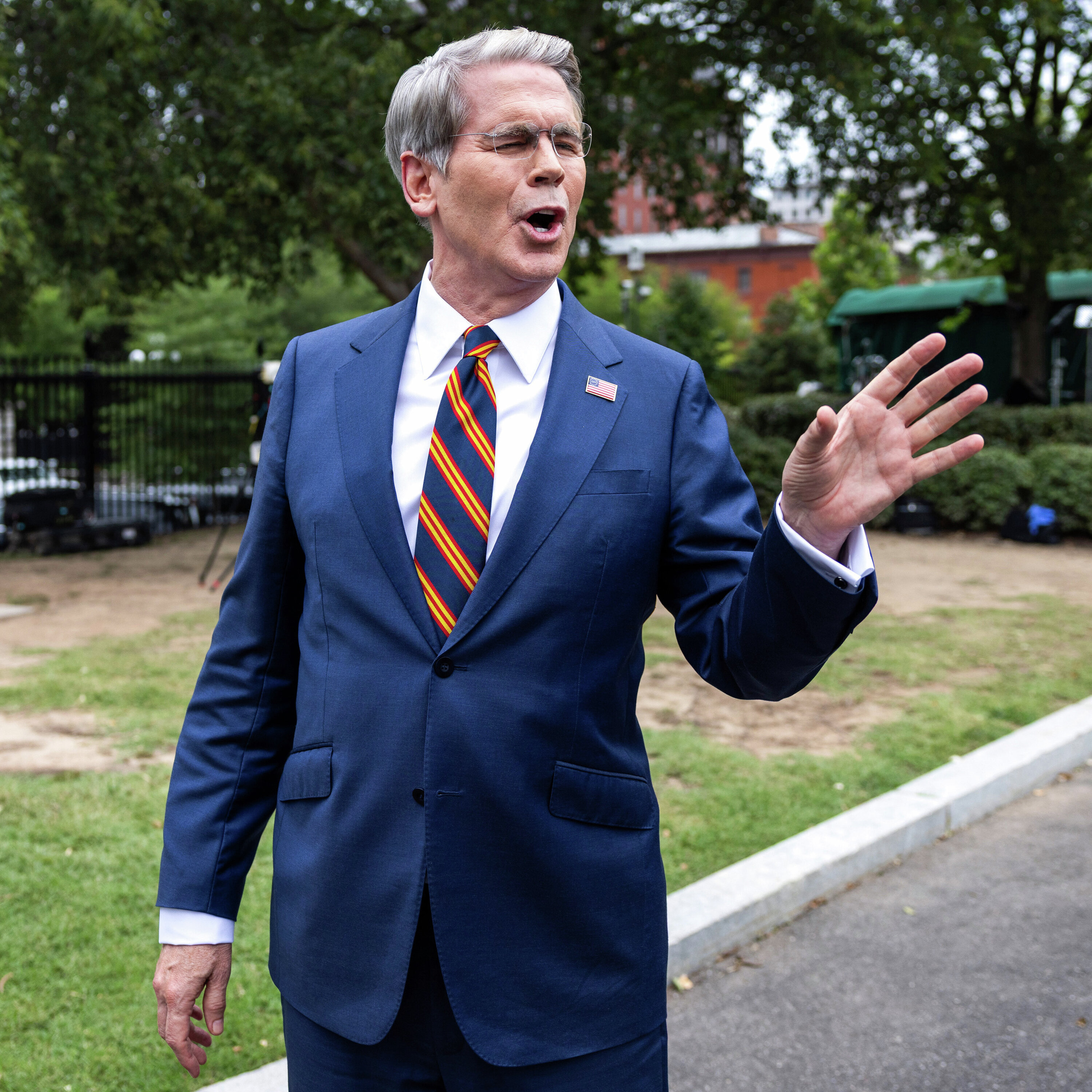
The U.S. stepped in to prop up the Japanese currency for the first time since 1998, and that caught investors and central bankers by surprise. The intervention was spearheaded by US Treasury Secretary Scott Bessant, who cut his teeth as a macro trader working at hedge funds before he started his current job effectively running the world's largest economy. For Bessant, propping up the yen is more than the US Helping an ally. It's also something that could head off market moves that could result in higher interest rates in the United States.
- [02:21]
Chris Ansi
The last thing he wants is to see, you know, US Mortgage rates going even higher.
- [02:27]
David Gura
Chris Ansi is a senior editor on Bloomberg's Global Economy Team, and he points out Japan is the largest foreign holder of U.S. treasuries. Chris says that if Japan wants to prop up its own currency by buying yen, the dollars it needs to do so could come from selling some of
- [02:42]
Chris Ansi
Its US Debt, the biggest foreign holder of Treasuries, dumping a bunch of their holdings. That's going to put pressure on 10 year treasuries, 30 year treasuries and the 30 year fixed rate mortgage.
- [02:54]
David Gura
Bessant's intervention may not be one and done. The Treasury Secretary recently asked the Federal Reserve to make a policy change that would let Japan borrow more dollars against its treasury holdings without having to sell them. Previous Treasury Secretaries were reluctant to intervene in currency markets and investors are wondering how far Besant is willing.
- [03:15]
Dan Flatley
At the end of the day, you're sort of playing with the good faith and credit of the United States government.
- [03:21]
David Gura
Bloomberg's Dan Flatley covers the Treasury Department.
- [03:23]
Dan Flatley
You know, the Treasury Secretary is not supposed to act as a hedge fund manager. The Treasury Secretary is supposed to act as the chief financial steward of the United States economy. So, you know, there are enormous stakes here. And so all's well, that goes well until, until things go off the rails. Things are going fine now, seem to be, but that's not to say that is indefinite.
- [03:51]
David Gura
I'm David Gura and this is the big take from Bloomberg News. Today on the show, Scott Besant's interventions in global currency markets. What impact are they having and what's the end game? All right, let me, let me set the table here with you, Chris. To start over the last half decade or so, Japanese yen has weakened against the dollar. Five years ago, a dollar would buy you say, 100, 110 yen. For the last half year or so, a dollar gets you more than 150 yen for starters. What, what is wrong with a weak yen? Why does Japan want a stronger currency?
- [04:31]
Chris Ansi
Well, it wants a stronger currency because it has been flirting with the weakest levels in and at a time of elevated energy costs. Right. They have to use a lot more yen to buy imported oil, fertilizer, all kinds of commodities. And the prices of those have already been rising, right? But it's rising even more in yen terms. So Japanese households and companies have seen their purchasing power really demolished. And Japan's interest rates have been coming up a little bit over the past couple of years, but they are still very, very low, you know, around 1% and their inflation is at least double that. So their real interest rates are negative and that is imparting massive pressure all the time on the end, obviously American interest rates much higher, closer to 4%. And if the bank of Japan continues to be a laggard in raising interest rates and you know, you're not going intervention really having a lasting effect so
- [05:48]
David Gura
you have Scott Besant, the Treasury Secretary, kind of surveilling the global economy, paying close attention to Japan. What do we know of why he decided it was wise for the US to intervene at this point?
- [05:58]
Dan Flatley
There's a couple of things going on here. There's a geopolitical dimension to this, which is essentially sending a signal to the world that if you're a close US Ally, you are not only the beneficiary of potentially good trade agreements, defense agreements, other types of policy benefits, but you also have available to you the might of the dollar and the US Financial system to come to your rescue should you run into problems. And so I think that there's also sort of the exigencies of the job when it comes to defending the dollar's global role. So one of the things that Besant appears to have been contemplating was the fact that if Japan needed to defend the yen, it would have to sell US Treasuries. One of the fears is that if Japan were to sell a substantial portion of its holdings, that could lead to a rise in yields here in the United States, which would put upward pressure on things like mortgages and other things that are already sort of under upward pressure. And that's leading to, obviously, domestically a lot of questions about affordability and other things like that. So I think that's his primary concern there. Now, we don't have perfect visibility into his thinking around this, and he has said very little about the specifics of this operation. But basically what he has said is that Japan's economy is in much stronger shape than the market sometimes gives it credit for, and that technically the word is disorderly, that U.S. and Japanese officials stepped in to prevent disorderly selling in the market.
- [07:41]
David Gura
And Chris, notably in this intervention, the US didn't sell dollars to buy yen. It sold euros to defend the yen. Why was that?
- [07:48]
Chris Ansi
You know, as Dan said, the treasury hasn't spelled out exactly what it did here and why. But the euro yen cross is not very liquid, right? If you think about the $9.5 trillion a day foreign exchange market, right? The number one currency pair is euro dollar, number two, dollar yen, euro yen isn't there. It's very, very illiquid. But if a market is illiquid, that means you can have a big price impact, right, with a relatively small amount. And if you're using billions of dollars, I can imagine that the impact is going to be pronounced. So part of it might have been he didn't want to sell dollars, put pressure on the dollar, potentially put pressure on Treasuries send long term US Interest rates up.
- [08:42]
David Gura
Chris, all of this makes me curious about this move more broadly. When you look at the pantheon of treasury secretaries, what's kept them from making these kinds of interventions?
- [08:52]
Chris Ansi
Well, the principle that U.S. treasury secretaries have embraced for many decades is one of freely set exchange rates, market set exchange rates. And they generally don't like the idea of manipulation and going into the market. We saw in the Asian financial cris crisis, a bunch of Asian economies were maintaining currency pegs that didn't suit their fundamentals. And then when they broke, all of a sudden there was a massive crisis. So this philosophy of embracing hands off, let the market do what it's going to do with currencies is deeply ingrained in the US Treasury.
- [09:38]
David Gura
Dan, I want to turn to you on I'm hoping you can explain the way that the experience he had doing macro trading kind of could influence his on the work he's doing now in treasury when it comes to the yen.
- [09:48]
Dan Flatley
Yeah, I mean, he looks across the whole world, obviously, both as a public official and in his prior career as a hedge fund manager. But Japan has a special place in his heart, I think it's fair to say. You know, we're trying to tally up how many times he's been there. I think it's at least 55. I've heard him say a 60 in a recent interview. He talks a lot about the policies of former Prime Minister Shinzo Abe, Abe Nami. He's very much enamored of that policy mix. And obviously during his time at Soros Fund Management, they made a big bet on where the yen was going based on Abenomics. He's also obviously been involved or was involved in the bank of England trade. That's very famous. Legendary that George Soros. Yes, absolutely legendary trade that George Soros was involved in. He brings a certain what some folks have described as a quote, unquote, buy side mentality to the treasury job, which is, you know, rather than coming from a big bank or someplace where you're working on mergers and acquisitions or IPOs or other types of deals that include many, many layers of management and people. And he is a specialist at identifying macroeconomic trends that can lead to big bets that pay off. One of the things that he learned from Soros, and he's talked about this a little bit, is the value of leverage. So if you see a really promising prospect out there and you're very confident in the outcome, there's no reason to hold back in terms of the amount of risk that you're willing to take if you believe that the outcome is more or less assured. I think that has contributed to an attitude that Besset exhibits of making very bold moves from his seat at treasury that are frankly unconventional for a Treasury secretary to do, certainly for a Treasury secretary to do basically on his own. He's not coordinating these types of moves with big multilateral groups of countries. He's not going necessarily to the IMF to talk these things through. He's not coordinating this well in advance. It's just I see an opportunity here. I'm going to take it because I believe it's the right thing to do. And some people like that, and some people think that that's a pretty risky strategy.
- [12:14]
David Gura
So how well is Treasury Secretary Besant's intervention working, and what does this move tell us about how likely we are to see more.
- [12:25]
Carol Massar
This is the Bloomberg Tech Minute, brought to you by ChatGPT. Now with ChatGPT work, I'm Carol Massar. DoorDash, the largest food delivery company in the U.S. is building its own delivery drones and has gained the necessary FAA approvals to operate them commercially. The latest in its effort to delegate more orders to robots as a way of cutting delivery times, Bloomberg's Natalie Leung reports. The company says it has been conducting pilot programs with various restaurants, some of which have seen their order volume grow during the test period. The effort marks an expansion of DoorDash's in house robotics efforts to reduce reliance on human couriers for some orders, as their wages constitute a key expense to the business. Drones are also a way for DoorDash to cut delivery times on orders from more remote locations that some dashers may not want. That's the Bloomberg Tech Minute brought to you by ChatGPT. Put ChatGPT to work on your most ambitious ideas and projects. Get started@chatgpt.com today by selecting Work Mode, available on plus and Pro plans.
- [13:33]
4imprint Narrator
It's time to plan ahead and make sure your brand is showing up in ways that can have an impact. That's where 4imprint comes in. 4imprint have promotional products that work as hard as you do. Durable, useful and designed to make a lasting impression. Think quality apparel your team will wear again and again, including popular and exclusive brands. Drinkware that's enjoyed again and again, bags, notebooks, tools and tech items that don't just look good but actually get used with thousands of customizable options. 4imprint makes it easy to find what fits your brand and your budget. You'll get expert help, free samples and their 360 degree guarantee means you can be four imprint certain your order shows up just right, right on time. Whether you're gearing up for fall events or simply planning ahead for the season, 4imprint can help your brand show up, stay useful and make connections that last. Explore the possibilities@4imprint.com 4imprint for certain let's
- [14:28]
Optum Narrator
talk about healthcare for a second. It doesn't always work the way people expect it to. If you've ever waited on a prescription refill or had a hard time getting the care you needed, you know the feeling the system should just work better for everyone. That's exactly what the people at Optum are trying to do every day. They're a healthcare company linking patient care and pharmacy services and using data and technology to drive the whole system. So care is connected, not complicated for patients and providers. Things like making it easier to get care that looks at the whole person, from primary care doctors to mental health support and even in home care, and then using technology to make sure they all work together. Technology designed to help doctors spend less time on busy work and more time with their patients and those prescriptions. Optum is working to bring costs down, save patients money and make it easier to get refills. Little by little, Optum is helping make healthcare work as one for everyone. Head to business.optum.com to see how.
- [15:32]
David Gura
There are a lot of factors that could ease pressure on the yen Lower US Tariffs, an end to the war with Iran. They could both bring down costs in Japan. There's also the big gap between Japan's 1% benchmark interest rate and the rate in the US 3.75%, something investors have long exploited to borrow money cheaply to invest in other places where rates are higher. What's known as the carry trade also puts pressure on the yen. I asked Bloomberg's Chris Ansi if, given all those factors, Treasury Secretary Scott Besant's intervention made a difference.
- [16:07]
Chris Ansi
Well, it certainly worked in changing the immediate dynamic. It surprised a lot of the market, but it has retreated since then. It points to the fact that at the end of the day, you can put a few big orders through and you can definitely move the market. Definitely show the currency traders that you mean business, that you're coordinated. But if you don't have a shift in policies, it's very difficult to break the narrative. And the narrative has been one where the bank of Japan is behind the curve. The Prime Minister Sanae Takaichi, has been talking about fiscal stimulus. This is in the context of Japan having the largest debt to GDP ratio in the world, well over 200% of GDP. We think in the U.S. here that, you know, 100% is bad. Well, in Japan, it's double that.
- [17:06]
Dan Flatley
So.
- [17:07]
Chris Ansi
And they're talking about fiscal easing, relaxing fiscal rules. And so it just kind of leaves international investors a little skittish.
- [17:16]
David Gura
On Friday morning, U.S. jobs numbers came out. They were lower than expected. And then we saw the yen strengthen against the doll because traders thought more, I guess they thought more dollar yen intervention could be coming. Just explain that link for us, if you could, what's going on here, why we saw that move on Friday morning.
- [17:31]
Chris Ansi
So we saw that move because the unexpected decline in US Payrolls for July was a signal to US investors that, you know what, maybe the US Economy isn't quite so hot as we thought, and maybe the pressure on the Federal Reserve to raise interest, interest rates in coming months isn't as great as we anticipated. U.S. treasury yields then came down. That means the gap with Japan isn't as wide as it was. And so you have the dollar decline and it's declined across the board, not only against the yen, but others as well. And it even crept into my mind when we saw the yen shoot up against the dollar after those numbers. Did Japan intervene again? Because intervention can be quite effective when the market's already moving your way. You know, it's like, you know, you're pushing on something that's already moving in the direction you want.
- [18:36]
David Gura
Dan, what do we know about Secretary Besant's endgame here? There was that moment kind of kicked all of this off where a photographer captured him writing on a pad of paper this to do list. And by Japanese yen, 5 to 10 billion dollars was on there. Do we have a sense of his commitment to this and sort of his appetite for further intervention?
- [18:53]
Dan Flatley
I think that there's a few different things going on here. I mean, the first thing I would say is that, you know, in case you were wondering, Secretary Bessen is very much enjoying his job. He likes to sort of do things like the notepad with the to do list of buying 5 to 10 billion yen. He likes to sort of be clever. But I think that some of the things that he works on are obviously very, very serious matters. And so there is always an element of four thought behind much of what he says. And so I think he does have an appetite to continue doing some of this type of intervention, but he does not have unlimited resources. And so there's only so much that he can do. So I think that's probably why you're seeing A little bit of the smokescreen about, well, what are we doing? When are we going to do it? Are we prepared to intervene again, are we not? Because you don't want to sort of give markets too clear a signal about what you're going to do, because you don't want to sort of tip your hand or lock yourself into a position that you can't then move out of. And his prior experience has served him well so far. Whether that can continue to be the case, I think depends on how credible the market finds not only him, but also US Officials and US Policy more generally as time goes by.
- [20:18]
David Gura
So I think of Scott Besson in his past life. If he were to make a bad trade or make a mistake, obviously not good for him. Stakes are a bit higher here, he being the treasury secretary. And I wonder sort of how you think about that, what the risks are for the US and for the global economy if Scott Bezens moves his intervention doesn't have the intended impact.
- [20:39]
Dan Flatley
Yeah, I think the stakes are enormous. A lot of these instruments do have safeguards built into them. But at the end of the day, you're sort of playing with the good faith and credit of the United States government. There is always the risk of an impact to yields, as we talked about, and interest rates, but also to losses of taxpayer money. So far, we have seen no indication that that has happened. But obviously that is a risk here. And I think, as somebody put it to me earlier this week, you know, the Treasury Secretary is not supposed to act as a hedge fund manager. The Treasury Secretary is supposed to act as the chief financial steward of the United States economy. Besant has done this pretty much on a bilateral basis in a lot of these situations, which is something that previous secretaries have tried to avoid. And so, you know, all's well. That goes well until things go off the rails. Things are going fine now, seem to be. But that's not to say that that is indefinite.
- [21:46]
David Gura
This is the Big Take from Bloomberg News. I'm David Gura. To get more from the Big Take and unlimited access to all of bloomberg.com, subscribe today@bloomberg.com podcastoffer if you like this episode, make sure to follow and review the Big Take. Wherever you listen to podcasts. It helps people find the show. Thanks for listening. We'll be back tomorrow.
- [22:09]
Optum Narrator
Healthcare doesn't always work great. If you've ever waited on a refill or couldn't schedule an appointment, you get it. That's the kind of stuff Optum is changing. They're using data and technology to integrate patient care, pharmacy and everything else. So healthcare is connected, not complicated. What's that look like? Cheaper prescriptions that are easier to get and care that looks at the whole person how you need it. Optum is helping make healthcare work as one for everyone. Learn more at business.optum.com it's time to
- [22:40]
4imprint Narrator
plan ahead and make sure your brand is showing up in ways that can have an impact. 4imprint's promotional products are designed to work as hard as you do and make a lasting impression. From quality apparel, including exclusive brands, to drinkware, tech and totes, they've got thousands of options to fit your brand and budget. Plus you get free samples, expert help and their 360 degree guarantee so you can be four imprint certain everything shows up just right, right on time. Explore more@4imprint.com For Imprint for certain wise
- [23:12]
Wise Narrator
is the smart way to manage the currencies you need around the globe. When you send money abroad using your bank, you could get hit with hidden fees and exchange rate markups. There's a better way. Try Wise. Wise uses the exchange rate you'd usually find on Google, with no unwelcome surprises. Plus, most transfers happen in under 20 seconds, which means your money arrives in less time than you've been listening to me. It's simple and free to sign up up when you download the WISE app. Be smart, get WISE Ts and Cs apply.