Loading summary
Transcript78 lines
- [00:00]
Okta Representative
These days it seems like AI agents are just about everywhere you turn every field and every function. But without identity, you can't trust they'll serve your business instead of jeopardizing it. Fortunately, Okta helps you get identity right by securing your AI agents identities, giving you a single layer of control, a single standard of trust. So whether an AI agent supports a single user or your entire enterprise, with Okta you'll turn risk into opportunity. Secure every agent, Secure any agent. Okta secures AI.
- [00:32]
IBM Representative
The thing about AI for business, it may not automatically fit the way your business works. At IBM we've seen this firsthand. But by embedding AI across hr, IT and procurement processes, we've reduced costs by millions, slash repetitive tasks and freed thousands of hours for strategic work. Now we're helping companies get smarter by putting AI where it actually pays off, deep in the work that moves the business. Lets create smarter business. IBM.
- [01:02]
Wan Ha (Bloomberg Host)
At Venture Global we think about what
- [01:04]
Public/Advertising Voice
can be done, not what's usually done through innovation.
- [01:09]
Wan Ha (Bloomberg Host)
Venture Global is not only building some of the largest energy facilities in the world right here in the United States, but delivering American energy at a fraction of the cost in a fraction of the time. So while others are busy talking, we're busy building. That's Venture Global. That's unstoppable energy.
- [01:34]
Joe Wiesenthal (Bloomberg Analyst)
Bloomberg Audio Studios podcasts radio news we
- [01:40]
Wan Ha (Bloomberg Host)
begin the week with the US and Iran having reached an interim deal to end hostilities and reopen the Straits of
- [01:45]
Joe Wiesenthal (Bloomberg Analyst)
Hormuz and oil prices lower and sparked
- [01:48]
Wan Ha (Bloomberg Host)
a relief rally across Asian markets. Officials from both countries set to meet
- [01:52]
Joe Wiesenthal (Bloomberg Analyst)
now in Switzerland on June 19th where the agreement will be formally.
- [01:56]
Tracey Alloway (Bloomberg Analyst)
Everyone has discovered from the past six years that these big one off, supposedly one off disruptions can happen with frequency.
- [02:07]
Wan Ha (Bloomberg Host)
That's Bloomberg's Tracey Alloway. Tracy co hosts the Odd Lots podcast and she spends a lot of time looking at the long term impacts of geopolitics on the global economy.
- [02:18]
Tracey Alloway (Bloomberg Analyst)
And so the lesson that everyone's been internalizing is that you need to build up stockpiles, you need to have independence in terms of your crucial supplies, you need to have additional capacity.
- [02:30]
Wan Ha (Bloomberg Host)
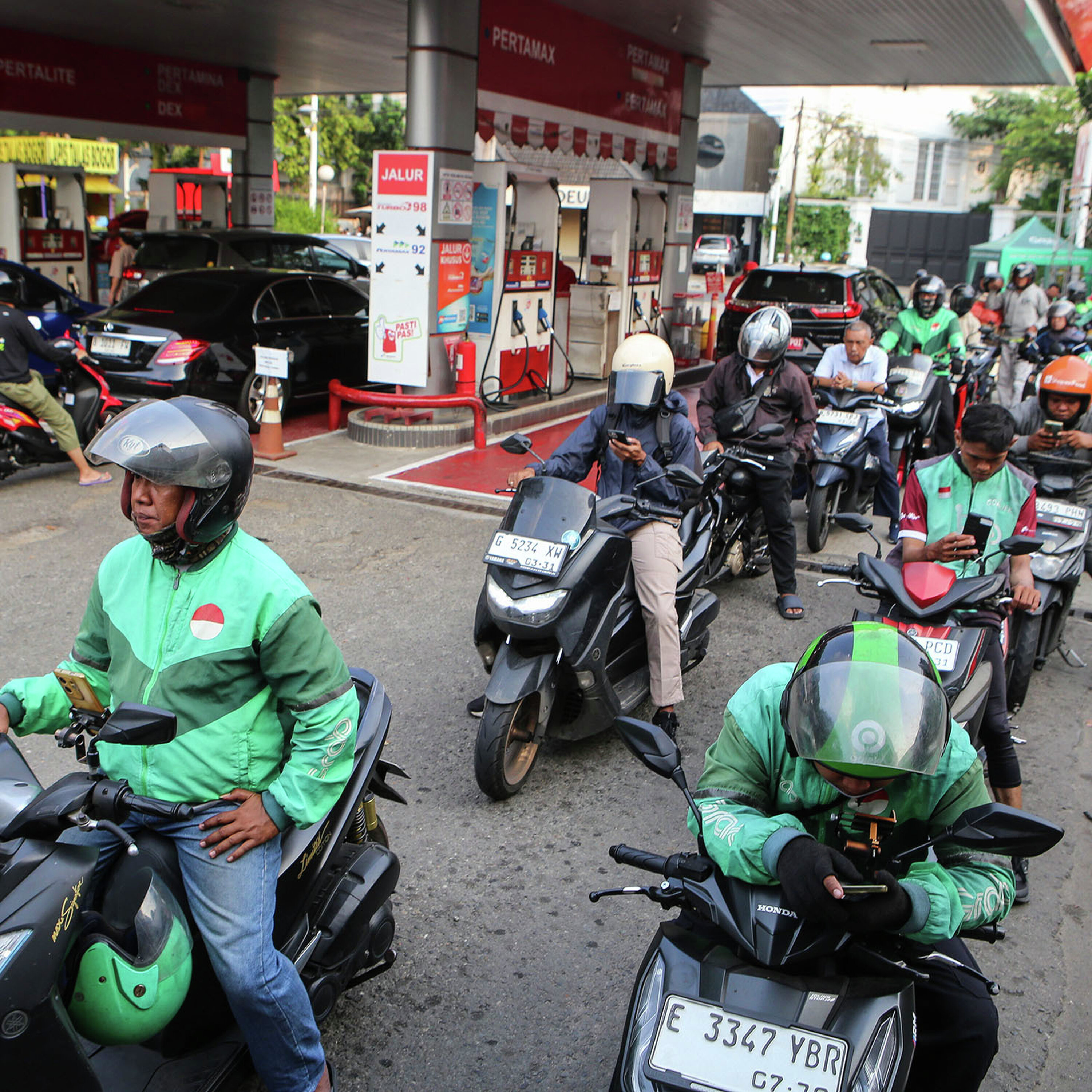
And few place have shown the need for independence and extra capacity more clearly than in Asia over the past few months. After the US and Israel went to war with Iran, the Strait of Hormuz grounded to a halt, choking off supplies of virtually every major commodity, including one fifth of the world's oil.
- [02:50]
Joe Wiesenthal (Bloomberg Analyst)
I think a lot of great things are going to happen in the Middle
- [02:53]
Wan Ha (Bloomberg Host)
east right now and very importantly, the oil is plummeting down at the G7 summit in France, President Trump touted a deal the US reached with Iran's regime over the weekend, which he says will reopen the Strait of Hormuz.
- [03:07]
Joe Wiesenthal (Bloomberg Analyst)
Essentially, ships are starting to go out now. On Friday, it'll be completely opened.
- [03:14]
Wan Ha (Bloomberg Host)
Across Asia, countries are welcoming the U. S. Iran peace deal that would help destabilize global energy prices and reopen a vital shipping route. But many are skeptical that will happen. And even if it does, for Asia, that shift might be too little, too late.
- [03:35]
Joe Wiesenthal (Bloomberg Analyst)
There is this brewing but not yet impacting food issue that will arise in Southeast Asia specifically.
- [03:43]
Wan Ha (Bloomberg Host)
That's Bloomberg's Joe Wiesenthal. He co hosts Odd Lots with Tracy.
- [03:47]
Joe Wiesenthal (Bloomberg Analyst)
The closure of the Strait of Hormuz is gonna create a food stress in much of the world during the next planting season. And if there's food stress, people will be buy and not random manufactured goods in China come that time. And so there may be an element where China is choosing to reduce its imports so that its customers of manufacturers have more capacity come next year.
- [04:25]
Wan Ha (Bloomberg Host)
Welcome to the Big Tech Asia from Bloomberg News. Hi, I'm Wan Ha. Today I'm sitting down with my colleagues Tracey Alloway and Joe Weisenthal, co hosts of Bloomberg's Odd Lots podcast. We recorded this conversation just before news broke that Iran and the US May have struck a deal to reopen the Strait of Hormuz. And as you'll hear, this discussion is arguably just as relevant now as when we taped it. While the reopening of the Strait would be a welcome relief, the structural shifts caused by the conflict have fundamentally changed businesses across Asia. And the resulting pressure on food and energy supplies and prices isn't going away anytime soon. On today's show, we dive into why Asia is feeling more economic pain from this conflict than Western nations and what the new normal looks like for the region and the rest of the world. While the details of the proposed new deal between the US And Iran remain unclear, one thing is certain. War in Iran and the virtual closure of the Strait of Hormuz have effectively slapped a war tax on vital products, and it's impacted every corner of the global economy. You've probably felt the pinch in one way or another, but its effects haven't been distributed evenly. Wealthy countries like the US And Japan have opted to drain their stockpiles of crude oil. In other corners of the world, governments are turning to demand destruction by encouraging industries and consumers to use less. But that risks slowing economic growth and triggering recession. It's a glaring disparity, and Bloomberg's Tracey Alloway says it highlights a structural vulnerability.
- [06:16]
Tracey Alloway (Bloomberg Analyst)
They're often poorer countries. They don't have as big stockpiles of oil inventory. And the one thing we've seen developed countries do across the world is really start to dig into those stockpiles and release barrels in order to, I guess, cushion the higher prices. And so for a poorer country, I think that's one of the reasons in Asia, you're seeing the governments really focused on demand destruction rather than propping up prices. So you've had, I think India was encouraging people not to go on flights. People are being urged not to drive to work, things like that. China is doing pretty much all the heavy lifting in terms of demand destruction or, like, the bulk of it. So I saw a JP Morgan estimate, I think, saying that demand for oil from China had fallen like 9%. I think that's 1.5 million barrels a day.
- [07:11]
Wan Ha (Bloomberg Host)
It's huge.
- [07:12]
Tracey Alloway (Bloomberg Analyst)
Yeah, it's a pretty big deal. And again, it stands in stark contrast to a lot of the developed nations like the US that are really digging into their stockpiles.
- [07:22]
Wan Ha (Bloomberg Host)
You know, I don't know if you guys have noticed in your time here, the prices at gas stations. Do you know how much gas in Hong Kong cost?
- [07:28]
Joe Wiesenthal (Bloomberg Analyst)
No, no.
- [07:29]
Wan Ha (Bloomberg Host)
About $33 Hong Kong dollars per liter, which is its equivalent of about $16 per gallon.
- [07:36]
Joe Wiesenthal (Bloomberg Analyst)
Wow.
- [07:37]
Wan Ha (Bloomberg Host)
Right. That's up about 15% since the Iran war began. And diesel prices have actually jumped. And I wonder, how does this stack up to what we've seen in the US And I guess, more importantly, how does that feed into inflationary pressures?
- [07:51]
Joe Wiesenthal (Bloomberg Analyst)
I mean, if we had $16 gasoline in the US there would definitely be a revolution for sure. Yeah. Clearly, inflation is trending up in the US For a number of reasons. One of them is oil. And so you might say, well, you strip that out because that goes into headline rather than core inflation. But then when you think about, like, everything has oil or energy in it, especially because of transport costs, it just builds that up pressure. Throw in all the data center spending, and the story is just like building heat and pressure on everything, and oil is just part of it.
- [08:26]
Wan Ha (Bloomberg Host)
In some countries with limited resources, governments are left with little choice but to turn the lights off. But wealthier countries are playing a very different game. Instead of asking citizens to cut back, the countries who can afford it are spending heavily to absorb the sticker shock at the pump. You know, here in Hong Kong, the government is actually putting aside the equivalent of US$230 million in a subsidy program to help manage soaring fuel prices. It does seem like there's this imbalance in how the burden of the conflict is being carried. Right. You've got developed economies like Hong Kong and Germany able to afford these subsidies, while you've got emerging countries who literally can't keep the lights on. What do you guys make of that disparity? And I guess the question is, is this something the US policymakers even think about?
- [09:16]
Tracey Alloway (Bloomberg Analyst)
Probably not, to be honest. One of the interesting things here is to me is how long the US can actually offset the pain of higher prices. They've obviously been releasing a lot from the Strategic Petroleum Reserve. The question is how long can you actually keep doing it? And apparently the US is now getting pretty close to its operational minimum. So I think, I think the minimum is like 250 million barrels and we're
- [09:45]
Joe Wiesenthal (Bloomberg Analyst)
now at 349 million. Yeah. As the lowest, we're back to the post Covid lows.
- [09:51]
Tracey Alloway (Bloomberg Analyst)
Yeah, that's right. So the issue in the US is like crunch time could come. Right.
- [09:58]
Wan Ha (Bloomberg Host)
Like they're going to lose that buffer pretty soon.
- [10:00]
Tracey Alloway (Bloomberg Analyst)
Yeah.
- [10:00]
Wan Ha (Bloomberg Host)
And I think Asia does seem caught in this trap that really is not of its own making.
- [10:05]
Tracey Alloway (Bloomberg Analyst)
Right.
- [10:05]
Wan Ha (Bloomberg Host)
You've got interest rates that are rising globally, of course, driven by the war shocks and the AI investment boom centered in the US and the West. You've got the US dollar really strong right now. What do you biggest impact of the US dollar strengthening on emerging Asian economies?
- [10:22]
Tracey Alloway (Bloomberg Analyst)
Not good. So there's the outlook for economic growth and there's the outlook for the fiscal side, let's say. And so if you're spending money to subsidize oil prices and you're running through your stockpiles in some instances, then it becomes more expensive the longer it goes on. One of the theories I've seen for the falling gold price recently is that government selling or central banks are, are selling reserve assets in order to raise more foreign affects so that they can buy more oil at the higher prices. So it exacerbates foreign currency exposure for emerging markets and probably weakens their fiscal position in the future and then in terms of economic growth. So obviously if you can't get oil, if you can't get feedstock for plastics, that's pretty much in everything. And so you'll see less economic activity. But on the other, and if we see some countries respond to higher oil prices by actually building out more clean energy capacity, selling more EVs for instance, then like that could be a little bit of an economic boost. And I'm not saying that it's enough to fully offset the impact, but, like, it's something at least.
- [11:43]
Joe Wiesenthal (Bloomberg Analyst)
So, like, let's get back to the context of the question. It doesn't matter what the price of the dollar is. People are going to spend a crazy amount of money on memory chips from Korea, period. The one could go up, the yuan could go down. It doesn't matter. We're going to be shipping a lot of dollars to Korea and Taiwan for key infrastructure for the AI buildout. And so I think, yes, absolutely. Like, the strength of the dollar is real. But I think we're in this very odd moment where, because the AI race feels existential, that the traditional macro signals that we would look at, like, rates are being swamped by the spending that everyone has just chosen to make for existential reasons on so many aspects of AI.
- [12:30]
Wan Ha (Bloomberg Host)
Yeah. And to your point, Asia is the backbone of the global AI ecosystem. Factories here produce the chips that power the AI revolution. But those factories rely heavily on energy and raw materials. Right. So what happens if there's ongoing uncertainty or disruption at the Strait of Hormuzz?
- [12:49]
Tracey Alloway (Bloomberg Analyst)
Should we do helium?
- [12:50]
Joe Wiesenthal (Bloomberg Analyst)
Yeah, I was gonna. Yeah, go for it.
- [12:52]
Tracey Alloway (Bloomberg Analyst)
No, you start.
- [12:53]
Joe Wiesenthal (Bloomberg Analyst)
Well, I was just gonna say, like, both of our minds went to helium at the same time. So it's like, this is pretty important in advanced semiconductor manufacturing. Helium. Please don't ask me exactly why, but it has to do something with, like, its ability to go down to incredibly cold temperatures, which is helpful in all kinds of different ways. But there is not a lot of elasticity in helium supply. And so if there's going to be, like, one link where the persistent closure of the Strait of Hormuz might actually intersect with that, it would be if they truly run out of helium, and then you just really have a much harder time making chips.
- [13:36]
Wan Ha (Bloomberg Host)
Now I want to shift to interest rates for a bit. Japan's wholesale inflation accelerated in May at its fastest pace in three years. And its producer price index also surged to 16, 0.3% was quite high. That puts a lot of pressure on the bank of Japan to hike interest rates. And across Asia, you are seeing countries raising their inflation projections and pushing interest rates higher. What do you think would be the broader impact of prolonged inflation across Asia and what does it mean for US Consumers?
- [14:09]
Tracey Alloway (Bloomberg Analyst)
So the inflationary impact is there. Right. And it's not even necessarily oil. It's also those petrochemicals which go into everything. And then the other thing in terms of inflation, governments and companies around the world are learning that it's important to build up stockpiles. And it's important to build out your energy capacity or your petrochemical capacity or your chips capacity, things like that. If you have everyone all at once trying to do this, that consumes resources, right? That is de facto inflationary. And I think that's probably the lesson we have collectively learned from the past few years, is that you don't want to be left high and dry if there's a big disruption. It is really important to have extra stuff. And extra stuff, you know, means higher prices.
- [15:10]
Wan Ha (Bloomberg Host)
After the break. Why? We may not yet have seen the full extent of damage caused by the closure of the Strait of Hormuz and how the fallout from the war is reshaping Asia's relationship with the rest of the world.
- [15:27]
IBM Representative
So there's a lot of noise about AI, but time's too tight for more promises. So let's talk about results. At IBM, we work with our employees to integrate technology right into the systems they need. Now a Global workforce of 300,000 can use AI to fill their HR questions. Resolving 94% of common questions, not noise. Proof of how we can help companies get smarter by putting AI where it actually pays off, deep in the work that moves the business. Let's create smarter business. IBM.
- [15:57]
Okta Representative
These days, it seems like AI agents are just about everywhere. You turn every field and every function. But without identity, you can't trust they'll serve your business instead of jeopardizing it. Fortunately, Okta helps you get identity right by securing your AI agents identities, giving you a single layer of control, a single standard of trust. So whether an AI agent supports a single user or your entire enterprise, with Okta you'll turn risk into opportunity. Secure every agent, Secure any agent. Okta secures.
- [16:27]
Public/Advertising Voice
AI support for the show comes from public. Public is an investing platform that offers access to stocks, options, bonds and crypto. And they've also integrated AI with tools that can assist investors in building customized portfolios. One of these tools is called generated assets. It allows you to turn your ideas into investable indexes. So let's say you're interested in something specific, like biotech companies with high RD spend small cap stocks with improving operating margins or the S&P 500 minus high debt companies. Chances are there isn't an ETF that fits your exact criteria. But on public, you just type in a prompt and their AI screens thousands of stocks and builds a one of a kind index. You can even backtest it against the S&P 500. Then you can invest in a few clicks. Go to public.com market and earn an uncapped 1% bonus when you transfer your portfolio. That's public.com market and paid for by Public Holdings Brokerage Services by Public Investing Member FINRA SIPC Advisory Services by Public Advisors SEC Registered Advisor Crypto Services by ZeroHash Sample prompts are for illustrative purposes only, not investment advice. All investing involves risk of loss. See complete disclosures@public.com Disclosures.
- [17:49]
Wan Ha (Bloomberg Host)
The supply shock caused by the closure of the Strait of Hormuz is arguably the biggest ever. But by draining reserves, finding workarounds and managing demand, governments have tried to shield their citizens from the pain or delaying it at least. Even if the Strait does open this weekend, Bloomberg's Joe Wiesenthal and Tracy Alloway say that pain might still be coming. Richer countries will be able to spend to ease it, but poorer countries in Asia don't have those resources and that could spell trouble for everyone. You guys spoke with a former farmer, Lorcan Kelly, on one of your recent episodes.
- [18:27]
Joe Wiesenthal (Bloomberg Analyst)
The problem's gonna rise in 6 months and 12 months time when they're decisions we made today about do I plant that field of wheat or do I breed more cattle for next year? And farmers are going to say no, we're not going to do that.
- [18:39]
Wan Ha (Bloomberg Host)
You know, across Southeast Asia right now, farmers are now skipping this planting season, right? Because they can't afford the diesel for the tractors. They can't afford the diesel for the water pumps, right. That they need to cultivate the crops. And some are actually choosing to leave crops rotting in the ground because they can't afford to harvest. I mean that's huge, right?
- [19:00]
Joe Wiesenthal (Bloomberg Analyst)
So this is what I was saying earlier, that perhaps one of the shoes that may be yet to drop is a food crisis in Asia and it's perhaps the hierarchy of needs, right? If you're struggling to buy food, you're not going to be buying electronics, right. From China, whatever it else. And so perhaps one part of the logic for China to reduce its imports is to ease a little bit of that squeeze. But what I've heard, which is that there is this brewing but not yet impact food issue that will arise in Southeast Asia.
- [19:32]
Tracey Alloway (Bloomberg Analyst)
Specifically when it comes to the impact of fertilizer, we're talking about longer time frames because there are planting seasons. As you just mentioned, one historical anecdote that I learned from Adam Toos is that apparently in ancient Roman times, emperors would try to time wars so that they weren't during the planting season so that it wouldn't disrupt food supplies in the also so that farmers could actually go off and be soldiers. But clearly we seem to have forgotten that lesson.
- [20:02]
Wan Ha (Bloomberg Host)
I want to stay on food for a bit, you know, in Thailand. I was there in Bangkok just a couple weeks ago and talked to our colleagues there. I mean, they've done some really great reporting on how fishermen in Thailand are keeping their boats anchored because fuel eats up more than half of the cost of every trip. So, you know, they basically can't raise the price of their catch. Right. So they're deciding not to go out. And, and I wonder to what extent should policymakers and leaders worry about this turning into a political problem? Right, this ag issue.
- [20:33]
Joe Wiesenthal (Bloomberg Analyst)
Yeah, I mean, look, I don't know if I ever fully bought the theory, but there are many people who argued, for example, that the catalyst for the Arab Spring was wheat prices that year. And our leadership has other things on their mind. We're talking about this is very classic type of thing that creates real political disruption. And I don't think we should have the hubris to assume that these cycles, which have probably have data points going back thousands of years, have suddenly stopped.
- [21:04]
Wan Ha (Bloomberg Host)
And I guess with sanctions, I mean, I do wonder to what extent that the oil crunch would lead to the weakening of essentially one of the US's biggest non military weapons. Right. Sanctions.
- [21:15]
Joe Wiesenthal (Bloomberg Analyst)
There was an interesting article in the Wall Street Journal that the North Korean economy is doing surprisingly well. They're actually building a lot of housing and there's sort of quite a little evidence of like improving standard of living and so forth. And of course here is one of the most sanctioned countries on earth for a very long time. I just think like the degree to which sanctions are a powerful tool that they could really be used to like crush any enemy. All of it's being called into question right now.
- [21:50]
Wan Ha (Bloomberg Host)
Now let's say the war ends next week. How do you think the world has fundamentally been changed because of this war and how it's played out?
- [22:00]
Tracey Alloway (Bloomberg Analyst)
So I think it goes back to I guess the idea of the choke point economy. So everyone has discovered from the past six years that these big one off, supposedly one off disruptions can happen with frequency.
- [22:16]
Joe Wiesenthal (Bloomberg Analyst)
Right.
- [22:16]
Tracey Alloway (Bloomberg Analyst)
So each disruption is slightly different in what it actually is, but they're happening more often. I mean, I'm sure both of us having been in Hong Kong during the pandemic, I will always keep an extra supply of toilet paper from now until forever. Basically we all learn that. And so I think that impulse is going to stick around for a long time.
- [22:39]
Joe Wiesenthal (Bloomberg Analyst)
The world is very globalized. I feel like for me coming here to Hong Kong, it's been very helpful reminder, like how integrated the world still is. But these are the trend. The wheels are all spinning in the opposite direction of where they were in, you know, the second half of the 20th century. Trade barriers are going up and countries don't trust each other and that is going to have consequences for both productivity and prices.
- [23:18]
Wan Ha (Bloomberg Host)
This is the Big Take Asia from Bloomberg News. I'm wan ha to get more from the Big Take and unlimited access to all of bloomberg.com, subscribe today@bloomberg.com podcastoffer if you liked the episode, make sure to subscribe and review the BigTick Asia. Wherever you listen to podcasts, it really helps people find the show. Thanks for listening. See you next time.
- [23:49]
Okta Representative
These days it seems like AI agents are just about everywhere you turn, every field and every function. But without identity, you can't trust they'll serve your business instead of jeopardizing it. Fortunately, Okta helps you get identity right by securing your AI agents identities, giving you a single layer of control, a single standard of trust. So whether an AI agent supports a single user or your entire enterprise, with Okta you'll turn risk into opportunity. Secure every agent. Secure any agent. Okta secures AI we learned how to
- [24:22]
Public/Advertising Voice
love dogs from the dogs that loved us and waited for us to get home from school. They were the dogs that raised us. We returned the love with Pedigree dog food. It was good then. It's better now. For 40 years, pedigree has been bringing out the goodness in dogs. Every bowl serves up 100% of the nutrition your dog needs, supporting six health essentials. That's the Pedigree goodness promise. Pedigree Good then, better now.
- [24:51]
Wan Ha (Bloomberg Host)
Ryan Reynolds here from Mint Mobile with
- [24:53]
IBM Representative
a message for everyone paying big wireless way too much.
- [24:56]
Wan Ha (Bloomberg Host)
Please, for the love of everything good
- [24:58]
IBM Representative
in this world, stop with Mint. You can get premium wireless for just $15 a month. Of course, if you enjoy overpaying. No judgments.
- [25:05]
Wan Ha (Bloomberg Host)
But that's weird.
- [25:06]
IBM Representative
Okay, one judgment anyway. Give it a try@mintmobile.com Switch upfront payment
- [25:13]
Wan Ha (Bloomberg Host)
of $45 for three month plan equivalent to $15 per month required intro rate first three months only, then full price
- [25:18]
Tracey Alloway (Bloomberg Analyst)
plan options available, taxes and fees extra. See full terms@mintmobile.com.