Loading summary
Transcript59 lines
- [00:00]
IBM Representative
So there's a lot of noise about AI, but time's too tight for more promises. So let's talk about results. At IBM, we work with our employees to integrate technology right into the systems they need. Now a global workforce of 300,000 can use AI to fill their HR questions, resolving 94% of common questions, not noise. Proof of how we can help companies get smarter by putting AI where it actually pays off. Deep in the work that moves the business. Lets create smarter business IBM Being a
- [00:31]
Commercial Narrator
small business owner isn't just a career, it's a calling. Chase for Business knows how much heart and effort go into building something of your own. Manage all your business finances, from banking to payments to credit cards, all in one place with Chase's digital tools. Plus access online resources designed to help your business thrive. Learn more@chase.com business chase for business make more of what's yours the Chase Mobile app is available for select mobile devices. Message and data rates may apply. JP Morgan Chase Bank NA Member FDIC Copyright 2026 JPMorgan Chase Co. Sonesta TravelPass makes traveling more rewarding Designed to help you get more out of every stay sign up@sinesta.com to enjoy instant savings, bonus points and valuable perks like early check in, late checkout, room upgrades and free stays. Over time with Sonesta Travel Pass, every stay brings you closer to your next reward. Choose from more than 1100 hotels across 13 distinctive brands and unlock the best available rates when you book direct with Sonesta TravelPass. Here today, roam tomorrow. Join now@sonesta.com terms and conditions apply. Bloomberg Audio Studios Podcasts Radio News this
- [01:49]
Sarah Holder
episode contains descriptions of sexual assault. Please take care while listening.
- [01:57]
IBM Representative
I understand what the victims say, and
- [02:00]
David Voriakis
I'm not here to try to say that I can stand in their shoes or that I can address their concerns. I'm here to say we did what we did because we wanted to see
- [02:13]
IBM Representative
Epstein go to jail.
- [02:16]
Sarah Holder
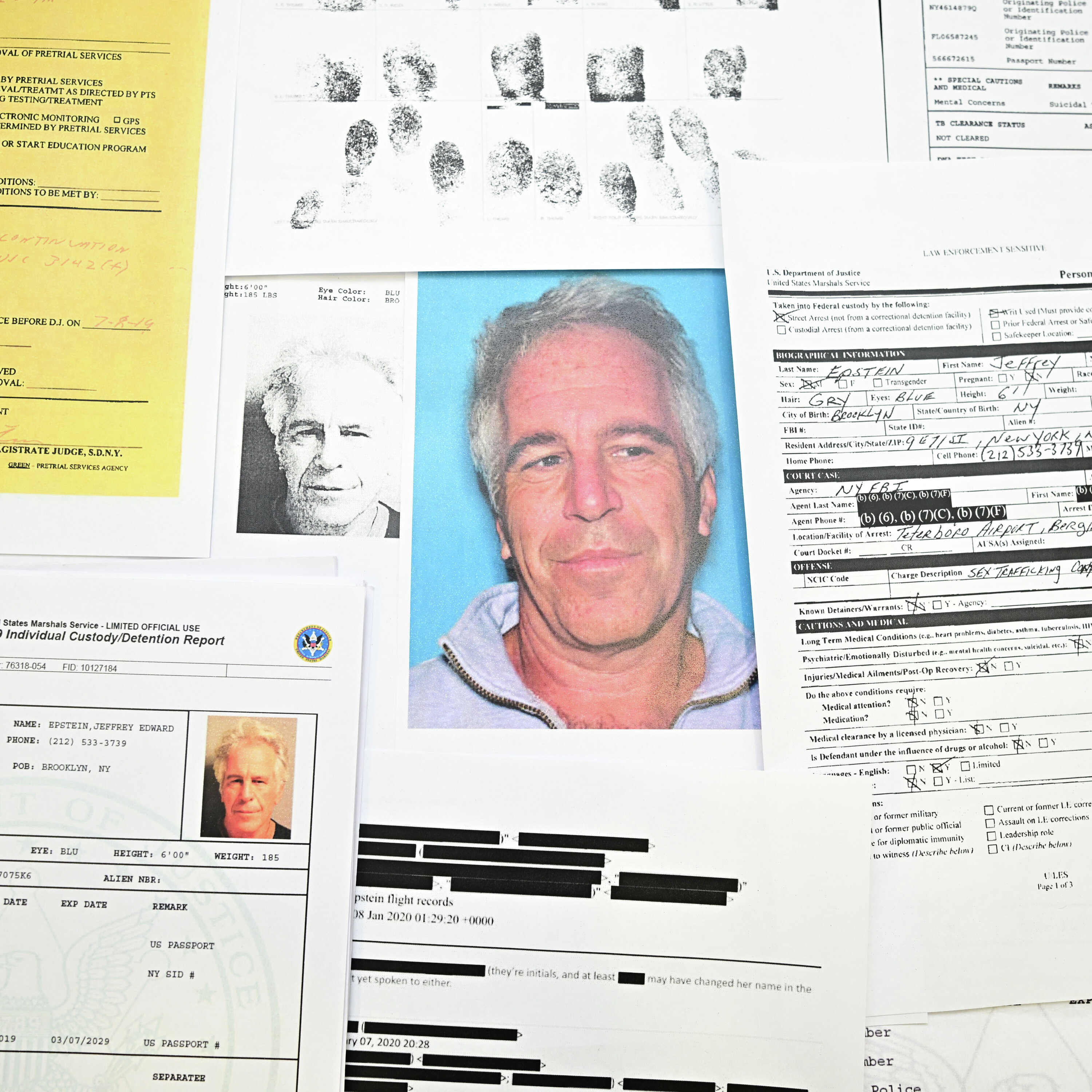
That was Alex Acosta speaking in 2019. At the time, Acosta was President Trump's labor secretary, and he was fielding questions about Jeffrey Epstein, who just days earlier was arrested on allegations of trafficking minors for sex.
- [02:32]
David Voriakis
We believe that we proceeded appropriately.
- [02:36]
Sarah Holder
Acosta was under a microscope. A dozen years earlier, he had been the U.S. attorney for the Southern District of Florida, where he'd overseen a federal investigation to Epstein's crimes. Acosta signed off on the infamous plea deal that ultimately put Epstein in jail on state charges for 13 months, a good chunk of which he spent leaving during the daytime on work release.
- [03:00]
David Voriakis
The Criticism, of course, is that that was a sweetheart deal.
- [03:04]
Sarah Holder
Bloomberg legal reporter David Voriakis, that had
- [03:08]
David Voriakis
they indicted Epstein on sex trafficking charges, he could have gone to jail or prison for a much longer period than he ended up serving.
- [03:18]
Sarah Holder
Acosta was under fire for striking this deal that critics said failed young women and girls, both those who talked to prosecutors working in his office and Epstein's future victims. Acosta resigned the next day. Those criticisms wouldn't have been new to Acosta, though, because during the Epstein investigation, he was hearing similar concerns inside his office from the prosecutor who led the investigation for more than two years. Her name is Marie Vilafagnia.
- [03:50]
David Voriakis
Marie Vilafagne was a very smart, very determined prosecutor who took a distinct point of view that what Jeffrey Epstein did was a harm and a threat to the public.
- [04:02]
Sarah Holder
After Epstein's plea deal, the evidence that Vilafania collected through interviews with victims and investigations of Epstein's finances was filed away. Witness statements, memos, and a 60 count indictment that was never brought. But the Justice Department's latest release of Epstein filed documents includes a trove of information from Vilafania's investigation.
- [04:25]
David Voriakis
She has not spoken publicly. We tried to use this as an opportunity to use her words on what happened and how she felt about it.
- [04:34]
Sarah Holder
It's the clearest window yet into what Vilafagne knew about Epstein, what she told her bosses at the time, and her growing frustration about how they failed to act.
- [04:44]
David Voriakis
There's a number of people along the way who could have put their hand up to stop Jeffrey Epstein and his crimes. That's what we're learning through the Epstein files. But she was a very determined person early in the Epstein saga who did her best to try to stop him.
- [05:03]
Sarah Holder
I'm Sarah Holder and this is the big take from Bloomberg News today on the show, the federal prosecutor who took on Jeffrey Epstein. But the Epstein files reveal about her findings, her battles with her bosses and her behind the scenes push to stop Epstein. So today we're here to talk about Marie Vilafagne. She's an important character in the Jeffrey Epstein story, but we don't often hear much about her. Vilafania began investigating Epstein in 2006 when when she was Assistant U.S. attorney for the Southern District of Florida reporting up to Alex Acosta who was the chief prosecutor. David, walk us through the chronology of the case.
- [05:49]
David Voriakis
Well, it started in 2005 when the parents of a 14 year old girl went to the Palm beach police and complained that she was at Epstein's mansion and gave him a sexualized massage. The Palm beach police Found a number of girls in similar situations and took it to the county district attorney's office, which ultimately charged Epstein with a single count of prostitution. The Palm beach police chief was dissatisfied with that outcome and then went to the FBI hoping that they would do a more thorough investigation. That's how she started on the case in May of 2006. And she spent a year interviewing more than a dozen girls and developing a great deal of corroborating evidence about Epstein. She developed a 60 count indictment against Epstein with a variety of crimes, including sex trafficking. And she justified it with an 80 page prosecution memo that described the strengths and weaknesses of the case against Epstein, why they should indict, what the risks are, what might happen, what might go wrong. Vilafanya documented that Epstein used assistance to recruit local high school girls and would offer them 200 to $300 to give him massages that became sexualized massages. He would fondle these girls, sometimes penetrate them with his fingers or a vibrator while he masturbated. And sometimes it graduated to oral sex and vaginal sex.
- [07:34]
Sarah Holder
And what exactly did she recommend that her office do?
- [07:37]
David Voriakis
Well, on May 1, 2007, she urgently said, we need authority for the FBI to arrest him now to protect the public so that this won't go on anymore. She didn't get a response to that. Two weeks later, she wrote another memo saying, I want you to approve this indictment. When I say you, I'm talking about her superiors. He remains a threat and that we have information that he's going to be traveling from the Virgin Island Islands to New Jersey and so let's arrest him.
- [08:09]
Sarah Holder
And how do they respond to her urging that now is the time we need to arrest Jeffrey Epstein?
- [08:15]
David Voriakis
The response she got was, effectively, not so fast. We're not ready yet. We haven't made a decision. It's not imperative that we do it right this moment. One of Vilafania's supervisors at the time was named Matt Menschel. He was the criminal chief in the Southern District of Florida. Very well regarded trial attorney, had a lot experience doing prosecutions. When she urged her superiors to act now, Matt Menel responded in an email and said, quote, I'm having trouble understanding, given how long this case has been pending, what the rush is. He went on to say, this is obviously a very significant case and Alex wants to take his time making sure he is comfortable before proceeding.
- [09:04]
Sarah Holder
You write that Menshel left the office shortly after this in August 2007. And according to Vilafania's writing, she continued to Urge her supervisors to move more quickly in her eyes, why was there such urgency?
- [09:18]
David Voriakis
She felt that the time was right that he was a billionaire with the means to flee if he were charged, and that she felt it was necessary to protect the public. She had developed a picture of Epstein, which later investigations showed as well, that he was a serial predator. And I think she felt that she had enough evidence to prove that in court, and it was time to stop that behavior. In general, Acosta was reluctant to agree with Vilafagna that this was a federal case. He was hearing arguments from the defense that was attacking the credibility of these girls. He was wondering whether these were cases that should be charged as a prostitution on a state level or whether they were federal sex trafficking cases. And I believe that at the time, there was more of an attitude that it was acceptable to attack the credibility of victims of sex crimes than there is today. And in fact, Acosta acknowledges that now, 20 years later, that it was more prevalent of a practice to attack these girls through cross examination. And so what Vilafania was trying to do was determine how well they would hold up in the crucible of cross examination at a trial where they would be attacked. And Epstein was very aggressive at attacking these girls. He had quite an impressive roster of defense lawyers who were given their mission to defend him very zealously, and they did so.
- [11:05]
Sarah Holder
So in the summer of 2007, more than a year into Vilafania's investigation of Epstein, she learns that Menshel meets with one of Epstein's lawyers. Vilafania is concerned that that meeting was about conducting plea negotiations. What does she say?
- [11:22]
David Voriakis
She said that it was inappropriate for him to engage in plea talks without consulting her, the investigators, or the victims. He then responds that, quote, both the tone and substance of your email are totally inappropriate. He said, in combination with other matters in the past, it seriously calls your judgment into question.
- [11:47]
Sarah Holder
And then her response to that was. Was striking. She responds, quote, I feel like there's a glass ceiling that prevents from moving forward. While evidence suggests that Epstein is continuing to engage in this criminal behavior.
- [11:59]
David Voriakis
Right. Menshell said to Vilafania that he was not actually engaged in plea negotiations. And it was soon after that that he told Vilafania that Alex Acosta had decided that there would not be federal charges, but that Epstein would plead guilty in state court and serve up to two years and also be registered as a sex offender and have to pay damages to the girls.
- [12:30]
Sarah Holder
And then you write that Menshell leaves the office shortly after this. What happens then? Walk us through the timeline.
- [12:36]
David Voriakis
After Menshell left the office, it fell to Vilafania to negotiate the actual plea agreement and the terms of the federal non prosecution agreement. This took place over several weeks. It was a complicated negotiation with a number of moving parts, and it ultimately resulted in an agreement in late September 2007 in which Epstein agreed that he would exercise his best efforts to plead guilty by late October 2007. In fact, it did not happen then, and Vilafania felt that he was in breach of his agreement and she continued to investigate him, moving toward a possible indictment of Epstein on federal charges.
- [13:30]
Sarah Holder
And as part of her continued investigations, Vilafania continues to interview victims. Right. At one point, Villafano writes to Acosta about an interview she had just had with three of the victims. And I just want to read this email because I think it speak to her mindset at the time and the kinds of things she was hearing from these girls. She writes to Acosta, I wish you could have been there to see how much this has affected them. One girl broke down sobbing so that we had to stop the interview twice within a 20 minute span. She regained her composure enough to continue a short time, but she said that she was having nightmares about Epstein coming after her and she started to break down again. So we stopped the interview. What do we know about how she was feeling at this time and how this was weighing on her?
- [14:13]
David Voriakis
You could see through the correspondence that she was not happy with some of the terms and she was not happy with Epstein's legal team, which was attacking her personally, was going over her head and she felt was changing the the terms of the agreement. In March of 2008, she wanted to know what her superiors were waiting for. And she said, quote, the please be PA answer is really wearing thin, especially when Epstein's group is still on the attack while we are forced to wait on the sidelines. These are wrenching cases to do. They're very difficult emotionally on all concerned. There's a lot of effort to protect the feelings and the integrity of the victims. And it's a hard call for everyone to decide, well, how will this young girl who's 16 years old or 17 years old, how would they hold up against a very smart, very aggressive lawyer in a court of law? And some of those girls flat out said, I don't want any part of this, I don't want to testify. Some of them said they loved Epstein. Epstein had a sort of cult of personality around him, which his trafficking network facilitated. And a number of these girls entered into civil settlements with Epstein and so Epstein would agree to civil settlements, but they'd also use that as a club against prosecutors. And so those were all obstacles that she had to face. And collectively with her superiors, they came to the decision to avoid the risk of a trial and to secure a guilty plea.
- [16:02]
Sarah Holder
So in June 2008, after months of waiting, Vilafania learns that finally, Epstein plans to plead guilty to a couple of charges, state charges, not federal charges. What does Vilafanya say in that moment,
- [16:14]
David Voriakis
when colleagues congratulated her on finally sort of landing the big case? She was not happy. She felt that instead of serving 18 months in jail that he should be doing 18 years in prison. She also was upset because she thought that she had an agreement with the defense lawyers that he would actually serve two years in jail and that he would not be eligible for this work release program. Had Epstein been indicted and convicted of sex trafficking, the penalty was something like two decades in prison. Now, of course, there were ways for the defense to reduce such a sentence, but that's why they were fighting so very hard to keep this out of a federal court house and make it a state case.
- [17:07]
Sarah Holder
Marie Villafanya declined to comment for David's story after the break. More from our conversation.
- [17:19]
IBM Representative
The thing about AI for business it may not automatically fit the way your business works. At IBM, we've seen this firsthand. But by embedding AI across hr, IT and procurement processes, we've reduced costs by millions, slash repetitive tasks, and freed thousands of hours for strategic work. Now we're helping companies get smarter by putting AI where it actually pays off, deep in the work that moves the business.
- [17:46]
Commercial Narrator
Let's create smarter business IBM Everyone has been there. Your team's feedback is scattered across emails, chats and sticky notes. It's a mess, but PDF spaces in Adobe Acrobat gives you one collaborative workspace to streamline every file and comment. So if you need six departments to finally agree on a proposal, do that with Acrobat. Need to turn a mountain of feedback into one plan of action? Do that with Acrobat Want to stop searching for files and finally get everyone on the same page? Do that, do that, do that with Acrobat. Learn more@adobe.com do that with Acrobat.
- [18:30]
Financial Product Advertiser
With volley from iShares, you get access to both monthly income and growth potential in one simple ETF. It's the best of both worlds. Discover Bali iShares Large Cap Premium Income Active ETF iShares the market is yours. Visit www.ishares.com to view perspectives for investment objectives, Risks fees, expenses and other information that you should read and consider carefully before investing. Risks include principal loss and the use of derivatives, which could increase risks and volatility. Monthly income is not guaranteed. Prepared by BlackRock Investments, LLC.
- [19:00]
Sarah Holder
We've read a lot over the past few months about how Epstein rallied powerful people around him and used his connections to exert influence and in some cases, avoid consequences for years. In these documents, we can see Marie Vilafagne grappling with this dynamic in real time. I want to start with talking about Epstein's legal team. Who were they and what did the documents reveal about the way that they operated?
- [19:25]
David Voriakis
They included prominent litigators, and their tactics were quite aggressive. Prosecutors have a lot of discretion in the investigative phase on how much they will listen to defense lawyers before they charge someone in this case, vilafanya wrote. Acosta set the tone that allowed the defense an extraordinary level of access to the supervisory team in his office, which gave Epstein a number of advantages. Acosta had not been a prosecutor before he became the U.S. attorney in the Southern District of Florida, and so he was relying on his team to guide him through a lot of this. And he was also open to listening to defense lawyers help him frame the issues. And a big one was whether this was appropriately handled in federal court or state court. There are a number of other examples where prosecutors would say, enough is enough. I've heard what I need to hear. But he allowed a continuing level of input that influenced the ultimate disposition of this case.
- [20:33]
Sarah Holder
You found some other specific examples of how Epstein's legal team pushed back on Vilafania's investigation. One of the striking ones was Vilafania wanted to subpoena Epstein's computers back in 2007. The office issued the subpoena but then accepted Epstein's guilty plea to state charges in 2008 without ever getting the computers. What happened there?
- [20:58]
David Voriakis
The Palm beach police had raided Epstein's house as part of their investigation, but what was conspicuously missing was his computer units that she was convinced had a lot of evidence of his crimes. The prosecutors, and particularly Vilafania, believed that those computers were being held by an investigator for one of Epstein's defense lawyers, and she wanted those computers. And there was a lot of back and forth and pushback from the defense. Ultimately, her office did not pursue subpoenas that would have potentially brought those computers to the government and potentially delivered a lot more evidence than they already had.
- [21:44]
Sarah Holder
So in hindsight, does this look like a missed opportunity for the government?
- [21:48]
David Voriakis
I will say that the Department of Justice, which did an Exhaustive investigation of this in 2019 and 2020, said that it was a mistake and poor judgment by Alex Acosta to not pursue those computers and to reach an agreement before he had all the evidence that was potentially available to him.
- [22:10]
Sarah Holder
And whatever happened to Menshell after he left the Southern District of Florida, after
- [22:16]
David Voriakis
he left the government, which was In August of 2007, he became a very successful defense lawyer in Miami, did a number of high profile cases, and he also corresponded with Epstein in 2010, which lasted through 2017. And Epstein extended dinner invitations to him, tried to steer potential legal engagements his way, and they had some personal discussions back and forth.
- [22:49]
Sarah Holder
What did Menshell say in response to your reporting?
- [22:52]
David Voriakis
He said that Menchell's emails with Epstein were made in the context of potential representations and referrals, none of which ever materialized into any business of Mr. Menschel or his firm. And that during the three months Mr. Menschel was involved in the investigation of Epstein, he treated the matter as he treated every case he prosecuted over his 20 year career in public service, with seriousness, professionalism, and respect for the chain of command. Any suggestion that Mr. Menshel prevented an indictment or did anyone any favors is categorically false.
- [23:27]
Sarah Holder
And I also want to talk about Alex Acosta. It took years for the details of the non prosecution agreement to come out and for federal prosecutors in New York to eventually indict Epstein on sex trafficking charges. In the meantime, Acosta's career took off. He became Labor Secretary for President Donald Trump in his first term. What happened when the details of that agreement came to light?
- [23:47]
David Voriakis
The Miami Herald in late 2018 wrote a very powerful series of stories that illuminated many of the mechanics of Epstein's non prosecution agreement with the Southern District of Florida and got several victims to speak on the record in a way that had never happened before. And that really changed the public perception of Epstein. Acosta came under a great deal of scrutiny and pressure and resigned soon after. He took the position then, as he takes the position now, that they did the best they could in investigating Epstein at the time. There were concerns then about the credibility of some of the girls and the women who said that they were sexually assaulted. And anytime a prosecutor goes to trial, there's a risk of an acquittal. And he looked for the certainty of a jail term through a negotiated plea deal. And one of Acosta's big points was also that the deal that he struck required Epstein to register as a sex offender, which is something that would stick with him always.
- [24:59]
Sarah Holder
And finally, I want to ask about Marie Vilafagnia. Aside from these documents that we see in the Epstein files, has she spoken in public about this?
- [25:07]
David Voriakis
She has not spoken publicly, and I will say that her public words changed over time because after Epstein pleaded guilty through civil litigation, she defended that deal in open court in 2009. She defended it in written declarations through the years, including one in 2017 where she said she felt that a plea deal was the best outcome here because of concerns by the victims. But then in her declaration in 2019 that we write about as well, she seemed to have hardened her attitude and say that she felt that the victims were not well treated by the outcome.
- [25:48]
Sarah Holder
Thank you so much for sharing your reporting.
- [25:50]
David Voriakis
Thank you.
- [25:56]
Sarah Holder
This is the Big Take from Bloomberg News. I'm Sarah Holder. To get more from the Big Take and unlimited access to all of bloomberg.com, subscribe today@bloomberg.com podcastoffer. Thanks for listening. We'll be back tomorrow.
- [26:16]
Commercial Narrator
If you follow markets, you know the value of long term thinking. You plan, you diversify, you prepare for volatility. But even the best strategies can't prevent every bad day. For more than 75 years, Cincinnati Insurance has helped individuals and businesses navigate tough moments. With expertise, personal attention and independent agents who focus on relationships, not transactions, the Cincinnati Insurance companies let them make your bad day better. Find an agent@cin fin.com this podcast is
- [26:52]
Financial Product Advertiser
brought to you by wise the smarter way to manage your money Internationally if you're getting a headache from juggling different currencies in different bank accounts in different countries, there's a better way to receive money in the currency you need without the slow transfer times or hidden fees. Meet Wise the Savvy Way to handle your money internationally. Hold balances in up to 40 currencies with the mid market exchange rate on every conversion. Whether you're receiving payments from tenants abroad, earning as a digital nomad, or converting dividends from your international investments, the Wise Multi Currency account is for you. Be Smart. Get Wise. Download the Wise app today or visit wise.com Terms and Conditions apply. With volley from iShares, you get access to both monthly income and growth potential in one simple ETF. It's the best of both worlds. Discover Bali iShares Large Cap Premium Income Active ETF iShares the market is yours. Visit www.ishares.com to view perspectives for investment objectives, risks, fees, expenses and other information that you should read and consider carefully before investing. Risks include principal loss in the use of derivatives, which could increase risks and volatility. Monthly income is not guaranteed. Prepared by BlackRock Investments, LLC.