Loading summary
Transcript47 lines
- [00:03]
Sarah Holder
Bloomberg Audio Studios Podcasts Radio News.
- [00:09]
Zainab Fattah
Mecca is a small, hilly town that's been a holy site for Muslims since more than 1,400 years.
- [00:19]
Sarah Holder
Bloomberg Zainab Fattah says 1400 years later, this ancient city has become one of the world's hottest property markets. And it's getting even hotter.
- [00:29]
Zainab Fattah
Mecca has the biggest hotel market in the entire Middle East. Dubai has more hotel rooms than Las Vegas, and Mecca has way more than that. More than half of all of the hotel rooms that are being constructed in Saudi Arabia are actually being built in the cities of Mecca and Medina.
- [00:46]
Sarah Holder
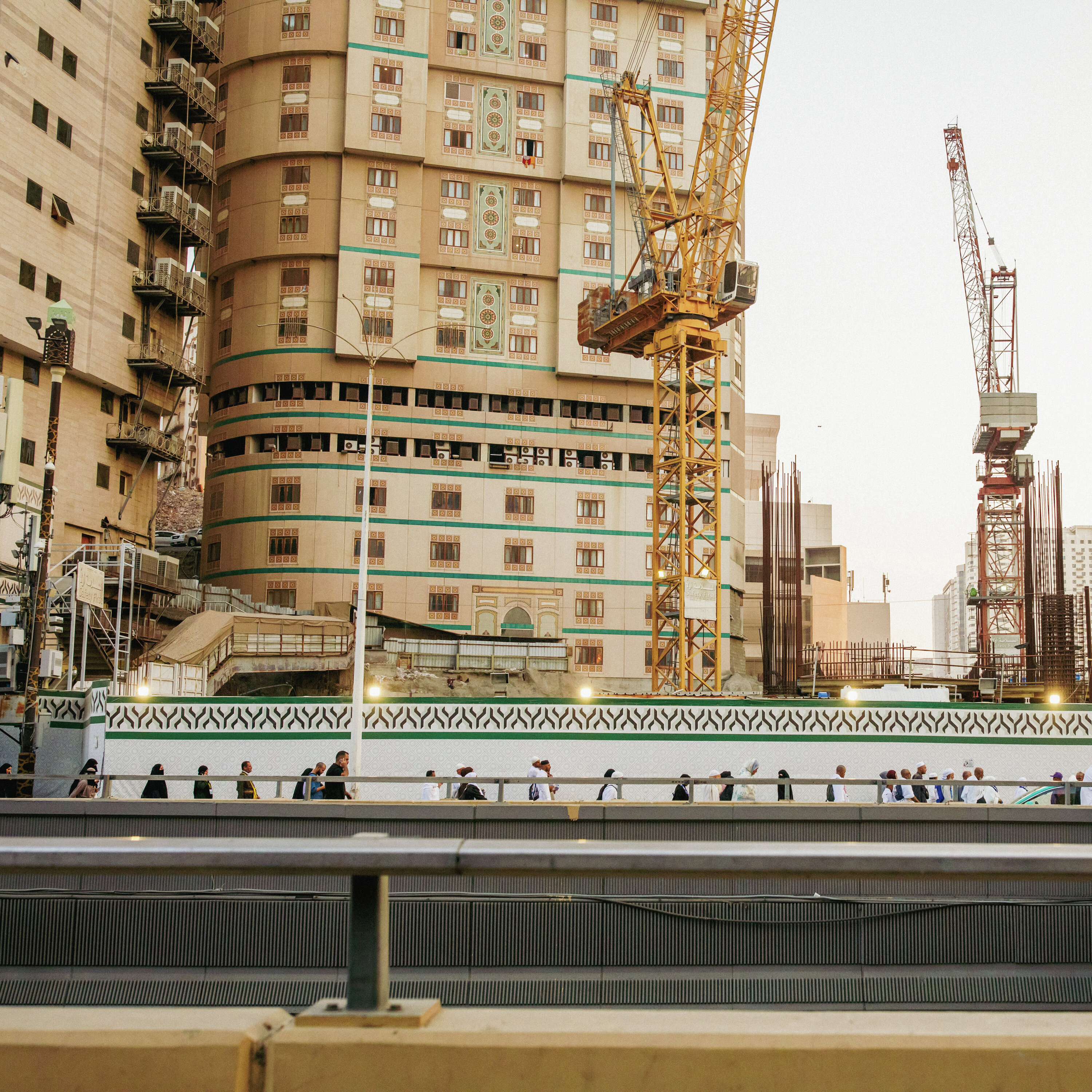
Zaynab, who covers business and economics in the Middle east, visited Mecca late last year and found a city in the middle of a major transformation.
- [00:57]
Zainab Fattah
You look around, there are cranes everywhere and a lot of development because there are some large projects that the government is starting to build and some of the government related companies and those are meant to basically upgrade the offering of housing and hotels to kind of be able to absorb the increasing number of Muslims who want to come to Mecca.
- [01:22]
Sarah Holder
2.3 million people live in Mecca year round and thousands more visit the city on a given day to pray at the Grand Mosque and perform sacred rites during the Hajj, the annual pilgrimage that all Muslims are supposed to take at least once in their lives. The city's population nearly doubles to 4 million people.
- [01:42]
Zainab Fattah
It's a journey that's required for every able bodied Muslim who has the financial means once in a lifetime. The city almost has to swell overnight to kind of accommodate that influx of humanity at one time, meaning Mecca real.
- [01:57]
Sarah Holder
Estate is always in high demand. For a long time, Saudi Arabia prohibited foreigners from owning property. But in an effort to overhaul the economy, Crown Prince Mohammed bin Salman has been quietly loosening restrictions on foreign investment and tourism. And now it's Mecca's turn. As of this year, any Muslim buyer will be able to purchase property in the holy city regardless of their nationality. Investment will still be restricted for non Muslims who can't even visit the city.
- [02:29]
Zainab Fattah
The pitch is come to Mecca, you will be able to have state of the art apartment, you're going to have all the facilities, you're going to have a hospital nearby, you're going to have a mall nearby. You're going to be so close to the Grand Mosque, you can walk to the Grand Mosque if you want, have all the facilities you want, but at the same time you will be in a place that is so unique that you'll be able to rent your apartment if you want, and at the same time to use it for personal Use.
- [03:00]
Sarah Holder
Mecca has more than $60 billion worth of projects planned or under construction right now, according to estimates from the business intelligence firm Mead. And all this rapid growth has come with trade offs for the people who live in Mecca and the people who visit.
- [03:16]
Zainab Fattah
There is a lot happening there. And in many ways it kind of makes you think about what is good and what's. What's kind of changing the city. It's almost unrecognizable to some.
- [03:30]
Sarah Holder
I'm Sarah Holder and this is the big take from Bloomberg News. Today on the show, Saudi Arabia changed its rules on foreign investments and set off a property gold rush in Mecca. What it means for the holy city, for investors, and for Saudi Arabia's plans to shift its economy away from oil.
- [03:55]
Zainab Fattah
Mecca and Medina mean a lot to Saudi Arabia because the king of Saudi Arabia is often referred to as the custodian of the two holy mosques. And that carries with it a lot of political capital and a lot of prestige and respect in the Islamic world.
- [04:11]
Sarah Holder
And for a long time there have been strict regulations around who can visit and invest in Mecca.
- [04:17]
Zainab Fattah
Mecca was always off limit to any foreigner who isn't Saudi. You couldn't buy there until now. This is a sea change. For the first time ever, a Muslim investor would be able to buy a property in Mecca outright in Saudi Arabia. In other cities, they have been loosening the ownership criteria little by little. They want to streamline the process and enable foreigners to, especially the many millions of expats who live in Saudi Arabia, to be able to buy a property.
- [04:47]
Sarah Holder
Those aren't the only changes. Saudi Arabia used to limit the issuance of visas for people doing a shorter pilgrimage called Umrah around the time of the Hajj. But the kingdom recently expanded the timeframe for those pilgrimages and loosened some of its visa restrictions, meaning approved visitors can now go for shorter pilgrimages virtually year round.
- [05:09]
Zainab Fattah
Some say that because of the focus on the pilgrims, that the city kind of lacked a lot of the infrastructure that it needed in terms of, you know, better transport, better metro, more hospitals, more schools. And there is a push in the government and among a lot of those developers to build up more of the infrastructure to cater to the people who.
- [05:30]
Sarah Holder
Live there, not just the tourists.
- [05:33]
Zainab Fattah
Yeah, exactly. But now what we're seeing is that the government decided to come in and take some of the neighborhoods and the areas that they basically said were unplanned districts and they bought a lot of those homes and they demolished those areas and started building from scratch. But the expansion of this city is not unlimited. Land is very, very scarce, especially around the Grand Mosque.
- [06:01]
Sarah Holder
Mecca, a small town surrounded by mountains, is running out of land that makes every square meter extra valuable.
- [06:10]
Zainab Fattah
Everyone who had a plot of land in Mecca was able to make a lot of money because you could build up a hotel and basically you get a lot of captive demand. Religious tourists who are coming in, pilgrims who are coming in, and you're able to make money.
- [06:26]
Sarah Holder
Brokers say land near the Grand Mosque has recently traded near $87,000 per square meter, among the highest prices globally. Meanwhile, five star hotel rooms can cost about $10,000 a night during the holy month of Ramadan.
- [06:41]
Zainab Fattah
I was speaking to one broker who has brokerage for very high end properties and he was telling me, in Mecca we're selling at Monte Carlo prices. It's that crazy, the demand.
- [06:54]
Sarah Holder
Zaynab says prices in Mecca have been high for a long time, but opening up Mecca to foreign investment could push them even higher.
- [07:03]
Zainab Fattah
The government of Saudi Arabia have been allowing a lot of construction of hotel rooms because they want to ensure that you don't end up with a situation where it becomes so expensive. A lot of the pilgrims who come, many of them come from very poor nations like Bangladesh or, you know, parts of India or Pakistan or Afghanistan or, you know, countries where the income is very, very low and many of them would not afford to staying in expensive hotels. On the other hand, the prices for the actual homes to buy a property has been kind of controlled by dynamics within the local market because the market hasn't been open to foreign investors. But now the expectations that once foreigners will be able to buy, you're gonna probably see prices surge. One developer told me that the first tower they started building, they started selling off plan, which means before construction they sold at around 35,000 R per square meter. And he told me, once the market's open, we expect to be selling at around 50,000 rial per square meter.
- [08:10]
Sarah Holder
Are there concerns about this holy journey becoming more and more unaffordable for people and less accessible for people across the Muslim world if these changes continue, Is the government concerned about that?
- [08:23]
Zainab Fattah
There are a lot of critiques, of course. Some basically say the focus on building higher towers and more skyscrapers is changing the city. Some say it kind of stands in tension with the whole egalitarian mission of going to a holy site wearing white clothing to kind of not show who's poor and who's rich. Building five star hotels would stand in some tension with that.
- [08:48]
Sarah Holder
And the Hajj is already an expensive endeavor. In 2025, Hajj packages from the US cost $10,000 to $20,000 a person, according to Saudi Arabia's centralized pilgrimage booking platform.
- [09:00]
Zainab Fattah
The government would say we need to increase the supply to keep this place affordable, to enable the increasing number of pilgrims to find space to stay at affordable levels. At the same time, some people say, some have criticized the over development and they say that this is changing the very landscape of the holy city of Mecca.
- [09:21]
Sarah Holder
Representatives for the Saudi government didn't respond to requests for comment about development in Mecca. Another challenge is how to keep residents and tourists safe. Mecca has a history with fatalities from extreme heat stampedes and construction accidents. So with more visitors, how is the government preparing?
- [09:43]
Zainab Fattah
This is the million dollar question, right? How do you actually keep millions of people who descend on a city at the same time safe and ensure there are no fatal accidents? And, and they've been trying so many different things. So on one hand they've been trying limiting the number of people who are able to come during the hashtime, which is the two week period. And now each country is assigned a certain quota and they've been trying to kind of give priority to people who are older and they don't allow children to be into the city during that time to come to the hajj. So they've been trying to control the numbers.
- [10:22]
Sarah Holder
Coming up, why Saudi Arabia needs to court international investors and what other areas of the country it's opening up. For a long time, Bloomberg Zainab Fatah says one industry dominated Saudi Arabia's economy.
- [10:46]
Zainab Fattah
Saudi Arabia had been reliant as an economy on oil for a very long time. And the oil sustained pretty much the government's budget, the infrastructure, spend, everything in the country.
- [10:59]
Sarah Holder
In 2016, Crown Prince Mohammed bin Salman launched Vision 2030, a blueprint for how to shift the country's economy away from its dependence on oil. The plan brought about significant changes. It aimed to increase women's participation in the labor market, expanded the tourism sector and invited outside partners including Formula One and FIFA to host events there. But a decade later, some of Vision 2030's biggest swings haven't worked out. Like the one and a half trillion dollar plan for a futuristic city called Neom, which has been scaled back. The country is still heavily reliant on oil, which makes up roughly 60% of government revenue. And the price of oil has been falling. Brent crude is now less than $70 a barrel. Bloomberg Economics estimates Saudi Arabia needs a price of almost $100 to balance its budget. All this means the kingdom is running a budget deficit and now Zana says it's pivoting away from flashy investments in favor of more pragmatic ones.
- [12:07]
Zainab Fattah
They know that the world is moving into a different direction, that clean energy is going to get a bigger share of the economy going forward, and they need to find other ways. They need to move the economy away from this reliance on oil by building up other sectors. Now, religious tourism brings in a lot of money into Saudi Arabia. And although we don't have a lot of exact estimates, some analysts, they say it's over $12 billion annually. That comes from all the people who are coming on the different airlines, staying in hotels, the food, the transportation. So when you look at growing religious tourism, that by definition helps also reduce the reliance on oil.
- [12:51]
Sarah Holder
Saudi Arabia is also looking to boost other industries like manufacturing, logistics and technology. Just this month, the country amended the rules for the Saudi stock exchange and capital markets, opening them to all foreign investors.
- [13:06]
Zainab Fattah
Recently when they opened the stock market, we've seen a lot of investors very interested in it. We've seen a lot of investors go and buy into the stocks of the developers in anticipation of these rules, basically making these developers businesses a lot more thriving, bringing a lot of sales and revenue to them. We know that Ummil Khorra has been basically almost doubled overnight. The number of foreign investors from State street to, you know, HSBC and Schwab and funds from pretty much every large bank and asset manager who are buying into the stocks of this company, Umbelkura, as well as other companies that build in Mecca and Medina because they see this as like the surest place where demand is there. So there is a lot of investment that's happening that's coming in from across the Gulf, from other countries like Turkey and even further afield. One developer told me that he's been contacted by funds in Europe and the US and that surprised him.
- [14:12]
Sarah Holder
Foreign governments have also been eager to invest largely majority Muslim nations interested in securing a piece of Mecca for their citizens.
- [14:21]
Zainab Fattah
We're talking about large sovereign wealth funds. We spoke to the CIO of the Sovereign Wealth Fund of Indonesia who told us that they have allocated $1 billion to buy property.
- [14:34]
Indonesian Sovereign Wealth Fund CIO
Saudi and US are very close politically as well as very important because that's where all of Indonesians go for Hajj is one of the Indonesian dream to go to Hajj. We're also the largest number of population percentage wise that go to Mecca. So when they open it in Saudi, we took that opportunity right away.
- [14:51]
Zainab Fattah
Those funds are doing that because they want to be able to build in Mecca to Make the pilgrimage cheaper for a lot of the Muslim pilgrims from Indonesia. The same with the Malaysian funds and other investors from Muslim majority nations. You have presidents in like Indonesia who are running on this. Basically this is one of their campaign promises to their constituents. We will enable you to go and do the Hajj. And they do that through basically these investments by their sovereign wealth funds into Mecca, by building up a Hajj village, buying up hotels to ensure that the cost for their own pilgrims are lower and are controlled.
- [15:40]
Sarah Holder
For Saudi Arabia, the challenge now is getting all those foreign investors and tourists who are drawn to the country for its holy sites to consider other parts of the country.
- [15:51]
Zainab Fattah
Mecca and Medina, as one economist told me, is really the low hanging fruit for the investment case to Saudi Arabia. It's where the government doesn't have to do a lot of work. There is already a lot of demand. The one thing they're trying to kind of grow in a big way is now the tourism that's adjacent to the religious tourism. So they say, you're a pilgrim, you're coming from China and you're coming here for two weeks. You went to Mecca, you went to Medina. You will be able now to also go maybe to the south of the country or explore the Red Sea. So they're building huge developments there. And they're building on islands that rival the Maldives. They're untouched for decades. They were never touched.
- [16:32]
Sarah Holder
So the pitch is, come for Hajj. Stay an extra week. See the rest of what the country has to offer.
- [16:38]
Zainab Fattah
Go to the Red Sea and have a vacation there. Go scuba diving.
- [16:49]
Sarah Holder
This is the Big Take from Bloomberg News. I'm Sarah Holder. To get more from the Big Take and unlimited access to all of bloomberg.com, subscribe today@bloomberg.com podcastoffer if you liked this episode, make sure to subscribe and review the Big Take. Wherever you listen to podcasts, it helps people find the show. Thanks for listening. We'll be back tomorrow.