Loading summary
Transcript84 lines
- [00:00]
Optum Healthcare Narrator
Healthcare doesn't always work great. If you've ever waited on a refill or couldn't schedule an appointment, you get it. That's the kind of stuff Optum is changing. They're using data and technology to integrate patient care, pharmacy and everything else. So healthcare is connected, not complicated. What's that look like? Cheaper prescriptions that are easier to get and care that looks at the whole person how you need it. Optum is helping make healthcare work as one for everyone. Everyone. Learn more@business.optum.com it's time to plan ahead
- [00:31]
4imprint Promotional Products Narrator
and make sure your brand is showing up in ways that can have an impact. 4imprint's promotional products are designed to work as hard as you do and make a lasting impression. From quality apparel, including exclusive brands, to drinkwear, tech and Totes, they've got thousands of options to fit your brand and budget. Plus you get free samples, expert help and their 360 degree guarantee. So you can be four imprint certain everything shows up just right, right on time. Explore more@4imprint.com 4imprint for certain wise is
- [01:03]
Wise Currency Management Narrator
the smart way to manage the currencies you need around the globe. When you send money abroad using your bank, you could get hit with hidden fees and exchange rate markups. There's a better way. Try Wise. Wise uses the exchange rate you'd usually find on Google, with no unwelcome surprises. Plus, most transfers happen in under 20 seconds, which means your money arrives in less time than you've been listening to me. It's simple and free to sign up when you download the WISE app. Be smart, get WISE Ts and Cs apply.
- [01:35]
Optum Healthcare Narrator
Bloomberg Audio Studios Podcasts, Radio News
- [01:41]
Leopold Aschenbrenner
Basically the thing this investment firm will be will be kind of like, you know, brain trust, any eye. It's going to be all about situational awareness.
- [01:47]
Sarah Holder
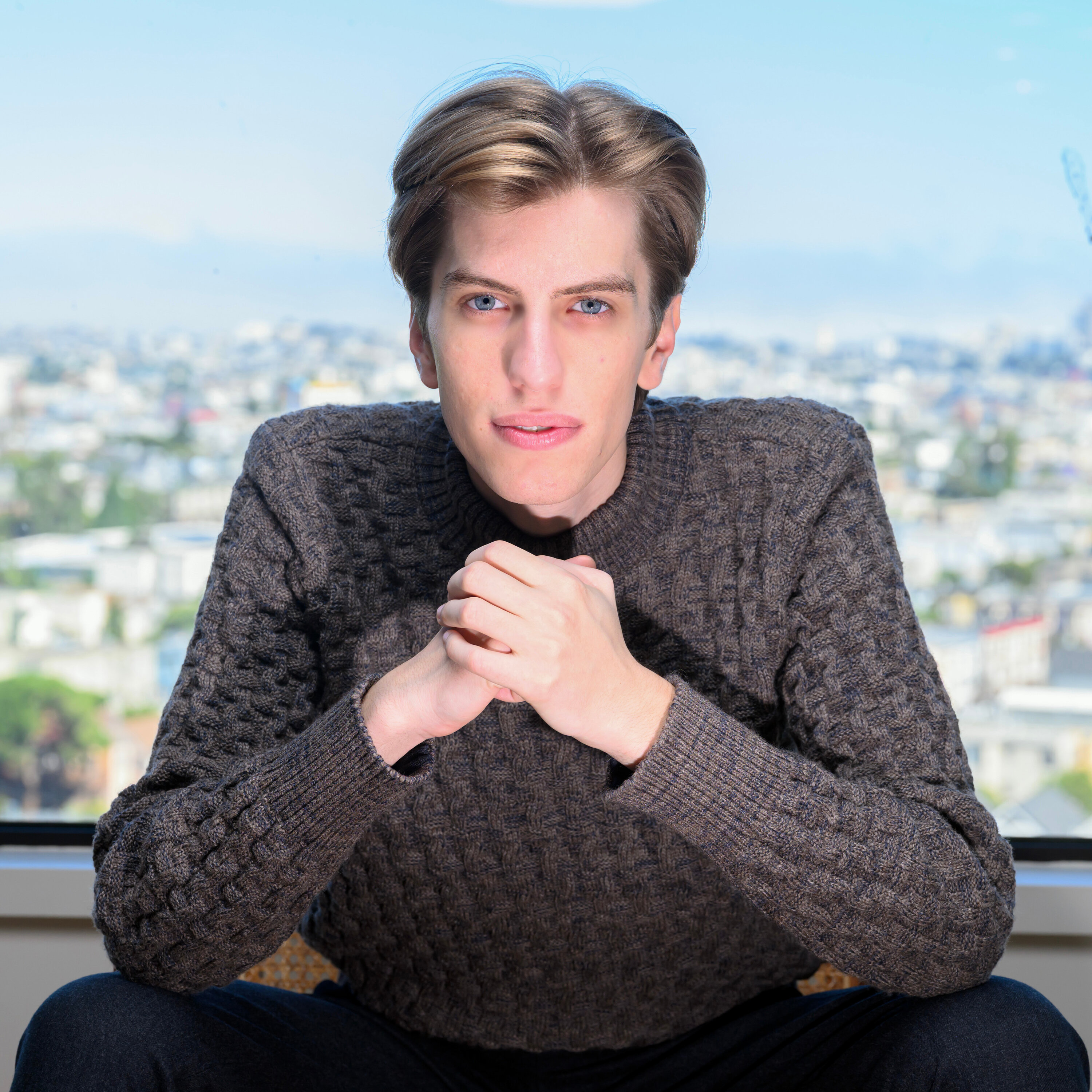
This is Leopold Aschenbrenner in June 2024. Aschenbrenner is about 22 years old here. He's just left a job at OpenAI and published an essay series laying out his predictions for how AI will transform society. And he's telling his friend, the podcaster Dwarkesh Patel, about a new investment fund he's starting that's going to go all in on the technology.
- [02:11]
Leopold Aschenbrenner
We're going to have the best situational awareness in the business. You know, we're going to have way more situational business than any of the people who manage money in New York.
- [02:18]
Sarah Holder
Situational awareness is what Aschenbrenner had called his essay series. It's also what he names his hedge Fund. Both are built around the same simple thesis. He believes AI is about to get a lot more powerful. That will reach AGI, or artificial general intelligence by as early as 2027. And he also believes that the companies building AI infrastructure are about to get a lot more valuable.
- [02:43]
Leopold Aschenbrenner
I think this investment firm is going to just be betting on AGI, you know, betting on AGI and superintelligence before the decade is out. Taking that seriously, making the bets you would make that if you took that seriously. So I think if that's wrong, firm is not going to do that well.
- [02:57]
Sarah Holder
But he tells Patel he plans on doing well.
- [03:00]
Leopold Aschenbrenner
Obviously you can't not blowing up is sort of like task number one and two or whatever.
- [03:05]
Sarah Holder
And over the next two years, situational awareness did extremely well. In the first half of this year, it posted returns of over 400%. And by the beginning of last month, it it had an estimated $45 billion in assets. What is it about this 24 year old that was so intriguing to investors? Why do they trust him with all this money?
- [03:27]
Katherine Burton
I think it's just because of what he wrote.
- [03:29]
Sarah Holder
That's Katherine Burton, who covers hedge funds for Bloomberg.
- [03:33]
Katherine Burton
He clearly had no investment training at all and clearly no risk management training at all. So I think it was just that they thought he saw something about the future, an AI that they said, sure, why not throw a few bucks his way?
- [03:50]
Sarah Holder
Katherine has been tracking the rise of Aschen Brenner's fund and its unceremonious fall because last week situational awareness blew up. And in the insane volatility that we've seen the last month, he was on the wrong side of things.
- [04:07]
Hema Parmar
We are seeing the pain really flow through the space.
- [04:10]
Leopold Aschenbrenner
You know, we had a pullback in AI and a lot of people got hurt.
- [04:14]
Sarah Holder
By the end of July, the fund's $45 billion in assets had shrunk to an estimated $10 billion. It was a stunning reversal of fortune brought on by the hedge fund's strategy of using a lot of borrowed money to make big bets. In other words, situational awareness was over leveraged, says Bloomberg's hedge fund reporter Hema Parmar.
- [04:39]
Hema Parmar
So there's a lot of layers of risk bundled up and leverage is especially concerning because it just magnifies everything.
- [04:50]
Sarah Holder
I'm Sarah Holder and this is the big take from Bloomberg News today on the show. The rise and fall and bailout of situational awareness, what it means for investors, and whether the fund is a bellwether for the AI trademark or a high risk outlier. Catherine Burton And Hema Parmar. Thanks for joining us, Kathy. What's the Situational Awareness secret sauce? What's supposed to set Leopold Aschenbrenner's fund apart from other hedge funds in the space?
- [05:27]
Katherine Burton
The knowledge of which companies would succeed because of AI and which would fail because of AI. I think he sold it on that. He knew he could figure out which companies were going to be the winners and which were going to be the losers.
- [05:38]
Hema Parmar
He also had quite significant private positions in AI focused companies as well too.
- [05:44]
Katherine Burton
And the returns, then people started seeing the returns. That's the real thing. They saw that he was up a few hundred percent the first year and at the peak this year, up what? 400 and some odd percent.
- [05:55]
Sarah Holder
Wow. So what kinds of investors get involved in the beginning?
- [05:59]
Leopold Aschenbrenner
Yeah.
- [05:59]
Hema Parmar
No, so it's interesting because with traditional hedge funds, we typically see pensions, endowments, foundations, those sorts of institutions. This firm, Situational Awareness, gathered their capital from less likely individuals. So not the traditional sort of big institutions that write sizable checks, but rather a lot of founders and individuals. So founders of private companies like Stripe or founder of a hedge fund, D1 Capital. Dan Sondheim was an investor, according to the Wall Street Journal's report. So we see a lot more Silicon Valley types of investors writing checks than say a sovereign wealth fund.
- [06:37]
Sarah Holder
And what were some of those bets that Situational awareness made on AI? What were some of the companies that they put the brunt of their investment into?
- [06:45]
Hema Parmar
So it was an sk, Hynix was one of them. A number of other AI focused companies.
- [06:50]
Katherine Burton
And he had a big, a big, big stake in Anthropic. $5 billion stake, a $5 billion stake, and one that everyone knew was going to pay off.
- [06:58]
Sarah Holder
And for a while these bets were paying off. Right. He was effectively posting gains that were higher than the gains of the AI companies that made up the fund. How did he accomplish that? It comes back to leverage, right?
- [07:09]
Katherine Burton
Yes. Like any hedge fund, they go to a bank, they say, can you lend us money to make our bets bigger? And they use the stocks that they own as collateral or the companies that they own as collateral. And the banks look turns and say, sure. A lot of big companies he traded in with big liquid companies. And so they lend him money like four or five times leverage. So that means at the peak he could have been managing around $200 billion on his $45 billion of net assets.
- [07:47]
Sarah Holder
That amount of leverage, is it typical for the industry? Did it raise any red flags?
- [07:52]
Katherine Burton
I think it started to. Usually a long short stock fund would be More like two times would be more a norm. So, yes, it was a lot.
- [08:03]
Sarah Holder
When you are four or five times leveraged, as situational awareness was, what happens when your assets fall, say 40%?
- [08:11]
Hema Parmar
So leverage basically amps up everything. It amps up the gains that you can make if you make an investment, but it can also amplify. It will also amp up the spiraling downward pain that you'll face, and so that's why it's so risky. And then on a short bet, if you're amping up those bets, you will have to cover that bet. And there's an infinite amount of money you can lose on a short bet.
- [08:32]
Katherine Burton
The damage is a lot worse. And then the banks come to you and say, hey, we need more collateral, because these things are going in the wrong direction. And then they have to come up with the cash, which means selling things in their portfolio, which sends down the prices of those things normally. And then the spiral goes faster and is bigger.
- [08:52]
Hema Parmar
Right.
- [08:52]
Sarah Holder
Whereas if you're using your own money, there's a down week. You can kind of wait it out. See, maybe in two years this will pay out. But lenders are not, they're not going
- [09:00]
Katherine Burton
to be patient because it's their money. So that's the vulnerability of borrowing a lot of money. And that's what happened to this fund.
- [09:08]
Sarah Holder
At the beginning of last month, it seemed like situational awareness was in a pretty good spot. It had $45 billion worth of assets, investments from the likes of Jane street, the Stripe co founders, as you mentioned. But you and your team reported there were signs that Wall street was getting anxious even in July. What were those signs?
- [09:26]
Hema Parmar
So a lot of hedge funds, and broadly investors have been concerned for a while about the kind of capex spending that we're seeing when it comes to these big tech companies and their AI expenditures. So those worries have been growing as situational awareness's prominence has grown too. You see a lot of funds really tracking what investments situational awareness was making and looking closely to see what stocks they were trading.
- [09:48]
Sarah Holder
In a client letter Ashen Brenner sent last week, he blamed short sellers for targeting the fund. How big of a factor were short sellers?
- [09:57]
Katherine Burton
Here we have reported that apparently they weren't as big a factor as the fund said they were or suggested they were in their letter. But the mechanism for how it worked is if you wanted short, then you would go and borrow the shares and then sell them. So that pushes the price down. And so if they thought that he was going to explode, then they would keep selling the shares in the hopes that the price would go down and then they would buy them back at a cheaper price.
- [10:26]
Hema Parmar
As the markets began spiraling, as the short bets hindered, the stocks of situational concerns grew. When you look at the leverage that was placed and used as we've been talking about, that made matters far worse for situational. Things really came to a head at the end of the month when the firm was getting these margin calls and now needs to find some cash fast. And they have a lot of money in their private book, which ideally you don't want to touch if you're a fund, if you've got $5 billion worth of anthropic and you have money in their public stock portfolio. And as they were trying to figure out where to get some liquidity in order to meet the margin calls, the firm had conversations about potentially selling some of their anthropic stake, which is very coveted, or selling some of their stock portfolio.
- [11:21]
Sarah Holder
So how might a 24 year old hedge fund founder come back from a $30 billion wipeout? We'll be right back with Hema Parmar and Catherine Burn Foreign.
- [11:38]
Carol Massar
This is the Bloomberg Tech Minute brought to you by ChatGPT. Now with ChatGPT work, I'm Carol Massar. DoorDash, the largest food delivery company in the U.S. is building its own delivery drones and has gained the necessary FAA approvals to operate them commercially. The latest in its effort to delegate more orders to robots as a way of cutting delivery times, Bloomberg's Natalie Leung reports. The company says it has been conducting pilot programs with various restaurants, some of which have seen their order volume grow during the test period. The effort marks an expansion of DoorDash's in house robotics efforts to reduce reliance on human couriers for some orders, as their wages constitute a key expense to the business. Drones are also a way for DoorDash to cut delivery times on orders from more remote locations that some dashers may not want. That's the Bloomberg Tech Minute brought to you by ChatGPT. Put ChatGPT to work on your most ambitious ideas and projects. Get started@chatgpt.com today by selecting Work Mode, available on plus and Pro plans.
- [12:45]
4imprint Promotional Products Narrator
It's time to plan ahead and make sure your brand is showing up in ways that can have an impact. That's where 4imprint comes in. 4imprint have promotional products that work as hard as you do, Durable, useful and designed to make a lasting impression. Think quality apparel your team will wear again and again, including popular and exclusive brands. Drinkware that's enjoyed again and again, bags, notebooks, tools and tech items that don't just look good, but actually get used. With thousands of customizable options, 4imprint makes it easy to find what fits your brand and your budget. You'll get expert help, free samples and their 360 degree guarantee means you can be four imprint certain your order shows up just right, right on time. Whether you're gearing up for fall events or simply planning ahead for the season, 4imprint can help your brand show up, stay useful and make connections that last. Explore the possibilities@4imprint.com 4imprint for certain.
- [13:40]
Optum Healthcare Narrator
Let's talk about healthcare for a second. It doesn't always work the way people expect it to. If you've ever waited on a prescription refill or had a hard time getting the care you needed, you know the feeling the system should just work better for everyone. That's exactly what the people at Optum are trying to do every day. They're a healthcare company linking patient care and pharmacy services and using data and technology to drive the whole system. So care is connected, not complicated for patients and providers. Things like making it easier to get care that looks at the whole person, from primary care doctors to mental health support and even in home care. And then using technology to make sure they all work together. Technology designed to help doctors spend less time on busy work and more time with their patients and those prescriptions. Optum is working to bring costs down, save patients money and make it easier to get refills. Little by little, Optum is helping make healthcare work as one for everyone. Head to business.optum.com to see how.
- [14:45]
Sarah Holder
Just to walk through this kind of death spiral, that situational awareness was in. Tech stocks were sliding. Lenders wanted out. The fund met the margin calls by liquidating stocks, which makes them lose even more value. And that's what sort of triggers the situation where Ashen Brenner needs a way out. So, Kathy, what was his plan to save the fund?
- [15:06]
Katherine Burton
It was sort of two pronged. On the one hand, he was exploring ideas of selling some of his private companies, especially Anthropic, because that's supposed to go public later this year. So everyone knew that's a winner. And at the same time, he was talking to some hedge funds to buy a big chunk of his portfolio all in one go because that would stop the bleeding and do that at some sort of discount. So there was a fight amongst some major firms about who was going to
- [15:34]
Sarah Holder
buy it and who ends up winning that fight.
- [15:36]
Katherine Burton
Ken Griffin was the one that ended up winning that fight. Ken Griffin runs a giant hedge fund called Citadel, which runs about $70 billion. He started it from more or less from his dorm room at Harvard. So he too was a young guy. There have been other times in history, dating back to a fund blowup Slayer was a fund called Amaranth that he stepped in and bought their positions. He's done it several times, mostly successfully.
- [16:04]
Sarah Holder
So how did Ken Griffin and Citadel come to the table and buy this portfolio of stocks?
- [16:09]
Katherine Burton
Well, Ken likes to step in when there's distress. And so he went to the firm or his people went to the firm and started talking. And as I said, there were other hedge funds. Millennium had talked to them. I think Jane street had talked to them. But Ken came in and they negotiated, apparently throughout the night. Can eventually won the trade with a discount of around 10%.
- [16:33]
Sarah Holder
And what's in it for Citadel? Is it just buying these tech and AI stocks for cheap?
- [16:38]
Katherine Burton
Yeah, absolutely. And I think on the bet that once the thing was settled, they would go up. And in fact, they did go up a lot.
- [16:49]
Sarah Holder
So what is the status of situational awareness today? What's the value of the remaining private stakes that the fund has left?
- [16:58]
Hema Parmar
So situational still runs at least 10 billion doll. A lot of that is in the private stakes. The stocks that they have remaining, that they did not sell to Citadel have likely soared because the market calmed down a lot and rallied in the wake of the news of the deal. And if we look at the Citadel side of things, their fund was basically flat before the deal. And now with this deal having snapped up this huge portfolio of stocks at a discount, the fund is up nearly 6% for the month alone, which is more than they've made year to date so far until this deal. So it's definitely been something of a.
- [17:32]
Sarah Holder
For Citadel, kind of a win win.
- [17:34]
Hema Parmar
Yeah. Yes.
- [17:35]
Sarah Holder
And what did Leopold Ashenbrenner say to his investors after all this went down? How is he trying to. To spin this?
- [17:43]
Katherine Burton
He said, my bad. Basically. He said that for the time being, they would continue without leverage. They still had a public book. He didn't say how big it was, but everything would be done with cash, shorts and longs. So he would not borrow any money in the public book and that he still had all his private investments and so he would carry on with that.
- [18:08]
Sarah Holder
And how do situationals investors stand after the last couple of weeks?
- [18:14]
Hema Parmar
Well, it really depends when you got into the fund, if you were an early investor, if you got in even earlier this year in January, let's say, then you should be fine. Your fund may still be up 80% or more going back, but if you are an investor that got it in the past couple months, then you really face the brunt of those losses. You were exposed to the declining stocks. You were exposed to selling a big chunk of a portfolio at a discount. Investors in the fund this month were down nearly 70% in the month alone. So if you got in the last quarter, let's say you're not in a great position.
- [18:51]
Sarah Holder
I'm wondering what the takeaway is here, because this has been a really dramatic collapse. It has sort of a okay ending, I guess. But, you know, Aschenbrenner, of course, is part of the camp of people saying AI is a great bet. It's going to pay off eventually. On the other side, you have investors like Ray Dalio who are saying AI is a bubble. How does situational awareness fit into that broader conversation about, like, how good of a bet AI is right now and whether there is bigger pain ahead for AI investors?
- [19:21]
Hema Parmar
So we're seeing something of a split between how hedge funds are looking at AI and most funds take like, a side. So we do see a lot of funds that are very bullish on AI, clearly situational CO2. There are other funds that are far more cautious. So if we look at Viking Global, they are quite intentionally stepping away from AI and not having that exposure. They've been worried about all the things we're kind of seeing this month. So while we are seeing pain sort of trickle through, some of the other funds like Whale Walk and CO2, firms that have less exposure and are taking the other side of that trade, clearly are going to do a little bit better.
- [19:58]
Sarah Holder
There's also this whole part of the story which is that situational awareness was over leveraged. So I'm wondering how much of this story is about over leveraging versus overexposure.
- [20:09]
Katherine Burton
Yeah, I mean, basically any meltdown like this is usually caused by leverage. And so probably it would have been fine if he hadn't been so leveraged. Like, Emma just mentioned a company called Whalerock, and they had a bad month, but not anything that was existential. So it's really all about the leverage and the lack of risk management.
- [20:31]
Sarah Holder
Yeah, yeah. Aaron Brown, a crypto investor, wrote for Bloomberg Opinion, and he pointed out that the simple fact that situational awareness reported a 439% return in July was, quote, a warning, not a triumph. He was arguing essentially that the risks of being overleveraged and overexposed are real, that those kinds of gains aren't a product of good strategy but basically dumb luck. Do you have any indication of how many other investors and hedge funds are out there with these kinds of high leverage AI bets?
- [21:00]
Hema Parmar
Situational feels like an outlier in that regard. We've seen the leverage story time and time again in our industry and we've seen blowups tied to leverage. So institutions and larger players tend to really notice when we see the leverage to this degree in a concentrated portfolio. And I think that's why we've seen some cautiousness around the institutions. It's not the kind of thing we see to this degree with a lot of hedge funds that are of size.
- [21:24]
Sarah Holder
And Kathy, what is the biggest lesson here?
- [21:27]
Katherine Burton
I think they are sadly the same lesson for every blow up, which is if your manager is using an outsized amount of leverage, then it's quite possible that you're going to have a blow up. I mean, this time the banks were able to survive this. They all got out, they all got their money back. But we've seen times when they haven't. And actually just the importance of risk management, which, I mean, you could have a young portfolio manager, but if you don't have people that know the markets around him, then that's really an issue.
- [22:04]
Sarah Holder
At the end of last week, Aschenbrenner wrote a letter to his investors saying, quote, we took the steps that were necessary to fight another day. He said he was determined to draw the, quote, necessary lessons from this and make sure the fund can stay alive even after taking a loss. Late yesterday, Emma reported that situational awareness was back at it. According to people familiar with the matter, it had put $400 million behind an unnamed privately held company in its portfolio. The fund declined to comment. This is the Big Take from Bloomberg News. I'm Sarah Holder. To get More from the Big Take and unlimited access to all of Bloomberg.com, subscribe today@Bloomberg.com podcastoffer if you liked this episode, make sure to follow and review the Big Take. Wherever you listen to podcasts. It helps people find the show. Thanks for listening. We'll be back tomorrow.
- [23:11]
VRBO Narrator
A vacation rental should come with support, not surprises. That's why VRBO comes with a VRBoCare guarantee and 24. 7 life support from Real people. So if something goes sideways, Verbocare can help. If the host cancels verbo care.
- [23:23]
Hema Parmar
If the listing says heated pool, but
- [23:25]
Optum Healthcare Narrator
there's actually no pool to heat.
- [23:26]
VRBO Narrator
Definitely a Verbocare thing.
- [23:28]
Optum Healthcare Narrator
If my teenager starts calling me Leslie
- [23:30]
VRBO Narrator
instead of mom, that's a family thing. Leslie.
- [23:32]
Hema Parmar
That makes sense.
- [23:33]
VRBO Narrator
Sorry book with support, not surprises. VRBoCare and 247 life support. If you know you VRBO terms apply. See vrbo.com trust for details.
- [23:41]
Optum Healthcare Narrator
Healthcare doesn't always work great. If you've ever waited on a refill or couldn't schedule an appointment, you get it. That's the kind of stuff Optum is changing. They're using data and technology to integrate patient care, pharmacy and everything else. So healthcare is connected, not complicated. What's that look like? Cheaper prescriptions that are easier to get and care that looks at the whole person how you need it. Optum is helping make healthcare work as one for everyone. Learn more@business.optum.com it's time to plan ahead
- [24:12]
4imprint Promotional Products Narrator
and make sure your brand is showing up in ways that can have an impact. 4imprint's promotional products are designed to work as hard as you do and make a lasting impression. From quality apparel including exclusive brands, to drinkwear, tech and Totes, they've got thousands of options to fit your brand and budget. Plus you get free samples, expert help and their 360 degree guarantee. So you can be four imprint certain everything shows up just right, right on time. Explore more@4imprint.com 4imprint for certain.