Loading summary
Transcript83 lines
- [00:01]
Bank of America Announcer
Introducing B of A Rewards a new way to reward your every ambition. It all starts with a Bank of America checking account and grows from there. You get cash back deals on brands you know and love, plus a credit card rewards bonus, helping you earn more rewards on things you buy every day. Join B of A Rewards today for rewards tailored to your lifestyle. What would you like the power to do? Bank of America Open or enroll your account@bankofamerica.com bfarewards bank of America Corporation all rights reserved.
- [00:31]
IBM Representative
So there's a lot of noise about AI, but time's too tight for more promises. So let's talk about results. At IBM, we work with our employees to integrate technology right into the systems they need. Now a Global workforce of 300,000 can use AI to fill their HR questions, resolving 94% of common questions. Not noise proof of how we can help companies get smarter by putting AI where it actually pays off, deep in the work that moves the business. Let's create smarter business.
- [01:00]
Chase Bank Announcer
IBM we when you own your own business, you own every decision. Now own the card that rewards you for it. Chase Sapphire Reserve for Business is a pay in full card that elevates your travel experience and offers premium benefits that will take your business to the next level. Sapphire Reserve for business offers 8x points on all purchases through Chase Travel, 3x points on social media and search engine advertising, airport lounge access, and more. Chase Sapphire Reserve for Business it's the card that gives back all you put in. Learn more@chase.com ReserveBusiness Chase for Business make more of what's yours Accounts subject to credit approval restrictions and limitations apply. Cards are issued by JPMorgan Chase Bank, NA Member FDIC,
- [01:47]
Bloomberg Audio Studios Announcer
Bloomberg Audio Studios, Podcasts,
- [01:50]
Health Expert / Analyst
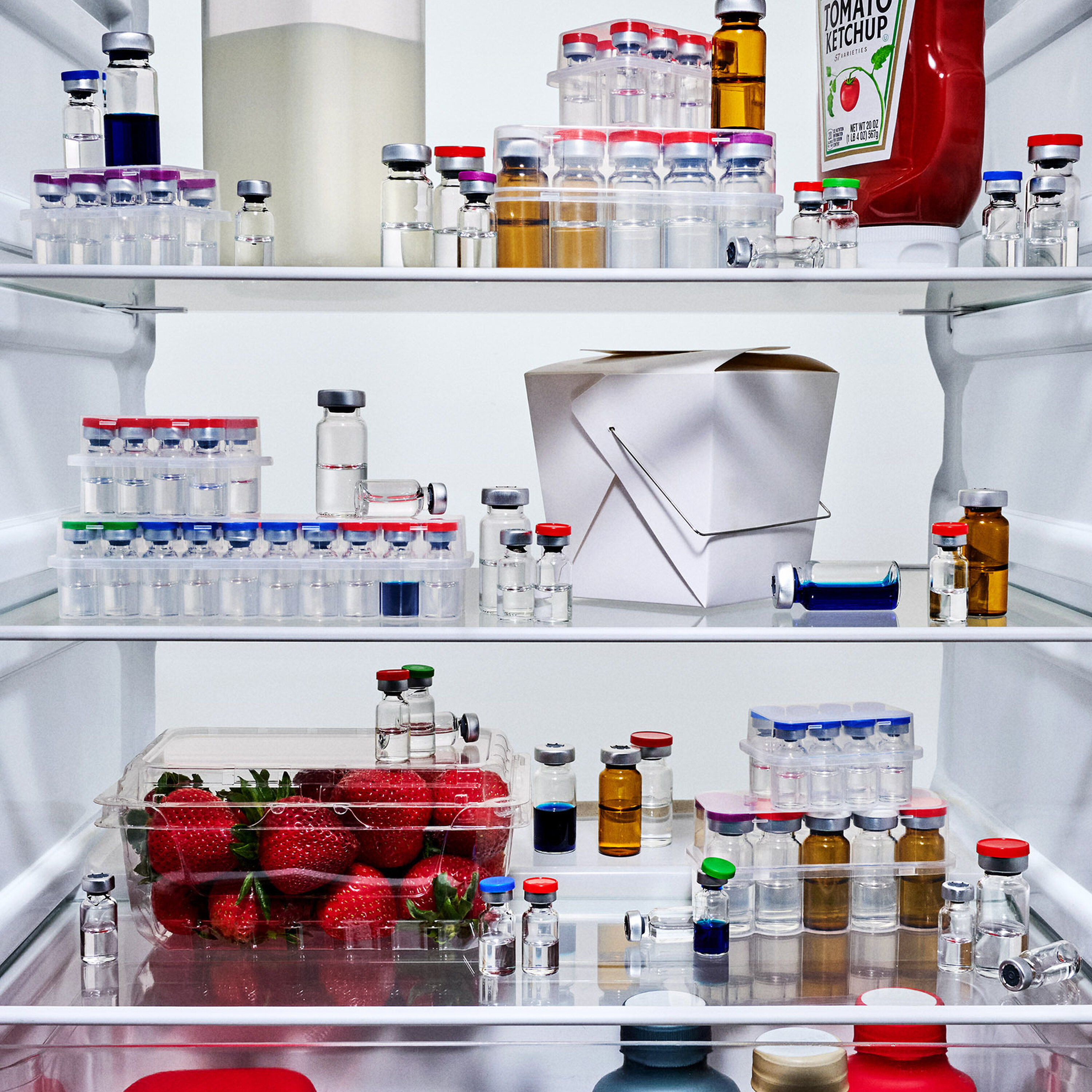
Radio News Essentially, if you have a health concern or problem, whether that's a physical problem or a cosmetic or aesthetic one, there is probably a peptide for that.
- [02:02]
Amanda Mulligan (Bloomberg Reporter)
That's Madison Muller, who covers the pharmaceutical industry for Bloomberg. Recently she's been hearing a lot about a specific kind of drug, peptides. I've been hearing a lot about them too. They seem to be everywhere.
- [02:18]
Nathan Hager (Bloomberg Reporter)
Now to the injectable peptides craze sweeping social media. If you're in your 30s and you're not incorporating peptides into your skincare routine, why not?
- [02:27]
Amanda Mulligan (Bloomberg Reporter)
At the most basic level, peptides are chains of amino acids that bind to receptors in the body to turn processes on and off. Peptides are used in lots of different drugs and they promise all kinds of transformative benefits.
- [02:41]
Nathan Hager (Bloomberg Reporter)
They will make you theoretically tan, beautiful, snatched, pain free, well rested, that's Amanda
- [02:49]
Amanda Mulligan (Bloomberg Reporter)
Mull, a senior reporter for Bloomberg Businessweek. She says some of the most popular peptide based drugs are ones you probably recognize, like GLP1s for weight loss and insulin.
- [03:01]
Nathan Hager (Bloomberg Reporter)
Some of the substances that we're talking about are like extremely well researched, extremely widely used, safe, effective, and they come from pharmaceutical companies that have large, well inspected facilities for producing peptide drugs in large quantities.
- [03:17]
Amanda Mulligan (Bloomberg Reporter)
But there are a lot of other peptide based injectables that are largely unregulated.
- [03:23]
Nathan Hager (Bloomberg Reporter)
There's a lot of substances that have not been trialed extensively in humans or hardly at all in humans. For some of them, they do not come generally from large pharmaceutical companies in the US they are imported sort of as research materials. The sale of them is generally illegal for human use.
- [03:43]
Amanda Mulligan (Bloomberg Reporter)
But Amanda says right now the underground peptide trade is booming.
- [03:48]
Nathan Hager (Bloomberg Reporter)
You could buy some in a minute or two if you got out your credit card. Right now.
- [03:54]
Amanda Mulligan (Bloomberg Reporter)
Already investors estimate that this peptide black market is worth 1 to 3 billion dollars. But it might not be a black market for long because the US Secretary of Health and Human Services is himself a peptide enthusiast.
- [04:10]
Nathan Hager (Bloomberg Reporter)
I mean, I'm a big fan of peptides.
- [04:11]
IBM Representative
I've used them myself and used them
- [04:15]
Nathan Hager (Bloomberg Reporter)
with really good effect.
- [04:16]
Amanda Mulligan (Bloomberg Reporter)
That's Robert F. Kennedy Jr. On Joe Rogan's podcast in the summer of 2023. Kennedy has been pushing the FDA to take a closer look at the drugs in part because he says he wants to divert demand away from what he's called a dangerous black market that could potentially pave the way for state regulated compounding pharmacies to make some peptides legally.
- [04:39]
Nathan Hager (Bloomberg Reporter)
If all of these things get put into legal compounding in the US that probably expands a lot of people's risk tolerance and willingness to try them because they're coming from like a certified facility. They're, you know, traceable. They're, you know, it just brings it out of the shadows a little bit.
- [04:59]
Amanda Mulligan (Bloomberg Reporter)
I'm Sarah Holder and this is the big take from Bloomberg News today on the show Inside the billion dollar peptide craze. How the drugs moved into the mainstream and what regulation would mean for telehealth companies, big pharma and the alternative wellness industry. What's the origin story for these drugs that use peptides?
- [05:26]
Health Expert / Analyst
Well, peptides have actually been around for a long time. They sort of became popular on like the fringes of the fitness and the bodybuilding community. And over time they've sort of seeped into more of the mainstream culture.
- [05:38]
Nathan Hager (Bloomberg Reporter)
If you are like looking for an inflection point, it is probably like 2021, 2022. When people beyond the sort of like type 2 diabetes patient community started to become aware that Ozempic and then Mounjaro were really great for weight loss, that started to become, you know, something that people wrote about in, like, culture magazines and on blogs and like on Reddit. So people started to look for options to receive these, these drugs.
- [06:08]
Health Expert / Analyst
People were seeking out GLP from compound pharmacies or medical spas. And once they got comfortable sort of taking a medication that was not necessarily a branded, you know, pharmaceutical product, some of these med spas, some of these doctors started recommending other things. So let's try BPC157 or let's try GHKCU. All of these sort of sound like Alphabet soup of various letters and numbers and things. But people got comfortable with the idea one of injecting themselves with something because of the GLP1s and then also taking something that didn't come from a brand name pharmaceutical company. And we're also seeing right now, I mean, a lot of people who are big personalities, podcasters, biohackers, sort of talking about various, like, experimentation that they're doing with their own health. I mean, we have people like Brian Johnson that have a lot of followers have gotten a lot of attention. Joe Rogan's talked about peptides on his podcast. And so that's again, sort of thrust them into like the mainstream culture more and people just being more willing to sort of get health care from outside of the traditional healthcare system, outside of what doctors are prescribing them, and sort of taking it into their own hands sometimes in an extreme way.
- [07:20]
Amanda Mulligan (Bloomberg Reporter)
Amanda and Madison talked to several people who've recently started using peptides. It's not all biohackers and looks maxers. It's people like Christy Turner, a therapist from Indiana.
- [07:31]
Christy Turner (Therapist)
I feel like, I honestly think GLP1s have just been a gateway drug to peptides.
- [07:36]
Amanda Mulligan (Bloomberg Reporter)
Christy started using Zepbound, a GLP1, in May of 2024. She credits the drug with helping her lose 200 pounds in two years.
- [07:45]
Christy Turner (Therapist)
I've had a pretty charmed Disney experience on Zepbound, really.
- [07:49]
Amanda Mulligan (Bloomberg Reporter)
Then about a year ago, Christy started using ghkcu, which helps with the skin sagging that often accompanies massive weight loss. And more recently, she's also started taking glutathione, which is supposed to boost her immune system. US Regulators don't permit GHKCU to be compounded in its injectable form. But Christie's doctor, a functional medicine practitioner and OSTEOPATH with her own independent practice sources the drugs from compounding pharmacies that are willing to make them. Compounding pharmacies are state regulated facilities that are licensed to make customized versions of drugs. Kristi sees her doctor remotely and trusts her advice.
- [08:31]
Christy Turner (Therapist)
She always does a good job of educating me on what it is, not just saying you should take it. But she says, hey, if this is a concern, here's information on it. Let me know what you think. I looked at her stuff and then I did a lot of research on my own and I really just didn't feel like the risks were significant for me to take. I mean I just really didn't feel like I had risk really at it.
- [08:54]
Nathan Hager (Bloomberg Reporter)
Her story to me is sort of a case study in how people's risk tolerance expands.
- [08:59]
Amanda Mulligan (Bloomberg Reporter)
Bloomberg's Amanda Mulligan and how like somebody
- [09:02]
Nathan Hager (Bloomberg Reporter)
who, who wants to do things, the very traditional, very by the book way can, can sort of have their mind opened to doing things that are sort of beyond that original risk tolerance because of the sort of networks of trust and relationships that they have to these drugs.
- [09:20]
Amanda Mulligan (Bloomberg Reporter)
The reason there's this huge underground market for peptides is that aside from high profile drugs like GLP1s, most have not been approved for clinical use in the U.S. some of the peptides we're seeing today were first developed by pharma companies, but weren't projected to be safe or effective or profitable enough to be put through the FDA approval process. For a lot of them, that means they haven't gone through robust long term safety testing. And in the world of drugs, unlike say supplements or cosmetics, unapproved essentially means illegal.
- [09:56]
Nathan Hager (Bloomberg Reporter)
In 2023, the Biden administration FDA decided to put many of these peptides on a list that explicitly banned compounding pharmacies from putting them in drugs for consumers, even with a valid prescription. But before that it was just sort of like they were illegal because they weren't explicitly made legal in some way. And so as they became more common online, the Biden administration said, we know that this is bec more popular. We will enforce against this. That got some of the compounding pharmacies that had been dabbling in this. It got some of them out of the business.
- [10:31]
Amanda Mulligan (Bloomberg Reporter)
And this almost sounds like a naive question, but how are people getting them anyway then?
- [10:36]
Health Expert / Analyst
It is so easy to order anything that you want online these days. So that's part of it is people are ordering what is considered research use only chemicals sort of online a lot of times from China or other overseas suppliers.
- [10:49]
Amanda Mulligan (Bloomberg Reporter)
It's not technically illegal to possess these chemicals and you can sell them as long as you're not marketing them as medicine. So black market peptide vendors will often market their products as research chemicals, not for human consumption.
- [11:02]
Health Expert / Analyst
It shouldn't be a loophole, but it is. It's people or some businesses think that by labeling something as research use only, it sort of shields them from liability of like actually selling something or importing something into the US that people are not supposed to be taking.
- [11:20]
Nathan Hager (Bloomberg Reporter)
So what is being imported and sold to consumers in the case of these black market peptides is active pharmaceutical ingredients. You get the powdered version of of these active ingredients that is then imported in with peptide drugs. The powdered active ingredient. The only really difference between that and like a like a finished usable drug is reconstitution with like a type of sterile water that then makes it injectable. So you've got this powder coming in that is pretty EAS to teach people how to use once you can get it into their hands.
- [11:55]
Amanda Mulligan (Bloomberg Reporter)
And buyers often don't know what's in these research use only chemicals. So their rise has also led to a growing demand for companies that test
- [12:03]
Nathan Hager (Bloomberg Reporter)
these peptides as more and more people have heard about them. And the only way to get a lot of them is through this sort of trade with American resellers of Chinese peptide ingredients. More and more people have said like, wait, can you show me something that proves that like this powder is what you say it is and it's not fentanyl or something like that?
- [12:25]
Amanda Mulligan (Bloomberg Reporter)
The underground peptide trade may soon move out of the shadows, what that means for these chains of amino acids and the future of our healthcare system. After the break.
- [12:42]
Bloomberg Audio Studios Announcer
Not every sale happens at the register. Before AT&T business Wireless, checking out customers on our mobile POS systems took too long. Basically a staring contest where everyone loses. It's crazy what people will say during an awkward silence. Now transactions are done before the silence takes hold. That means I can focus on the task at hand and make an extra sail or two. Sometimes I do miss the bonding time.
- [13:06]
Bank of America Announcer
Sometimes AT&T business Wireless connecting changes everything.
- [13:13]
Karen Mosky (Bloomberg Reporter)
Get the news you need in just 15 minutes.
- [13:15]
Nathan Hager (Bloomberg Reporter)
Start your day with Bloomberg Daybreak, the podcast with a global view on the stories that matter. I'm Nathan Hager.
- [13:21]
Karen Mosky (Bloomberg Reporter)
And I'm Karen Mosky.
- [13:23]
Nathan Hager (Bloomberg Reporter)
Join us each morning for curated stories
- [13:25]
Karen Mosky (Bloomberg Reporter)
on current events, politics, business and foreign
- [13:28]
Nathan Hager (Bloomberg Reporter)
relations, plus one conversation on the day's biggest developments, all in just 15 minutes.
- [13:33]
Karen Mosky (Bloomberg Reporter)
Subscribe to Bloomberg Daybreak for a precise, thoughtful take on the stories that matter.
- [13:37]
Nathan Hager (Bloomberg Reporter)
Listen to Bloomberg Daybreak each morning on Apple, Spotify, or anywhere you listen.
- [13:42]
Karen Mosky (Bloomberg Reporter)
A decade ago, the ethanol kingpin of Iowa became the king of corn in Brazil.
- [13:49]
Nathan Hager (Bloomberg Reporter)
So we met with a lot of larger farmers, went from Bahia to Tocatines to Mato Grosso.
- [13:54]
Karen Mosky (Bloomberg Reporter)
He brought a team of executives. They were gonna help the country get in on a gold rush.
- [13:59]
Nathan Hager (Bloomberg Reporter)
Carbon and its derivatives are gonna be really the next great commodity that the globe's gonna trade.
- [14:04]
Karen Mosky (Bloomberg Reporter)
But back home in Iowa, trouble was brewing.
- [14:08]
Health Expert / Analyst
If you live in Iowa, your land, your water and your voice could all be at risk. Thanks to a man named Bruce Rastetter.
- [14:15]
Karen Mosky (Bloomberg Reporter)
Now people are questioning if his climate solutions have anything to do with climate at all.
- [14:20]
Nathan Hager (Bloomberg Reporter)
Gotta give Bruce and the guys credit. They're Republicans. They don't give a money.
- [14:25]
Karen Mosky (Bloomberg Reporter)
On this season of drilled carbon Cowboys, the story of how the ethanol kingpin of Iowa became the king of corn in Brazil and what it tells us about the limits of technology and markets to solve the climate crisis. Listen on the iHeartRadio app, Apple Podcasts, or wherever you get your podcasts.
- [14:50]
Amanda Mulligan (Bloomberg Reporter)
When U.S. health and Human Services Secretary Robert F. Kennedy Jr. Was asked about peptides on the Joe Rogan show In June of 2023, he said he was a fan.
- [15:00]
Nathan Hager (Bloomberg Reporter)
He's peptide positive.
- [15:01]
Amanda Mulligan (Bloomberg Reporter)
I would say that's Amanda Mulligan.
- [15:04]
Nathan Hager (Bloomberg Reporter)
He said that he has taken peptides, that he had a good experience with them, that he thinks they're very interesting.
- [15:10]
Health Expert / Analyst
Yeah. And a lot of the people in RFK circle are also peptide positive. A lot of these figures within the MAHA movement, the Make America Healthy Again movement, have some sort of relationship to or have talked about taking peptides themselves. So there's a lot of chatter right now, sort of from these circles as well, that have become increasingly influential in this administration.
- [15:31]
Amanda Mulligan (Bloomberg Reporter)
Madison Mueller says all these peptide positive vibes could soon lead to a seismic change for the industry.
- [15:38]
Health Expert / Analyst
So there's basically going to be a advisory committee meeting at the end of July in which a group of independent experts will review the evidence, which there isn't much evidence to review, and basically make a non binding recommendation to the FDA and to HHS about whether these should be legalized, whether they should be sort of categorized differently to allow compounding pharmacies to make them in a legal
- [16:05]
Amanda Mulligan (Bloomberg Reporter)
way in the U.S. this FDA committee is expected to recommend that seven peptides be added to the list of substances available for legal use in compounding pharmacies, with another five to be considered for inclusion by early 2027.
- [16:19]
Health Expert / Analyst
Kind of at the end of the day, the HHS Secretary or head of the FDA can decide what they want to do, sort of regardless of what comes out of that meeting. But that meeting is supposed to be an important step toward legalizing these substances.
- [16:34]
Amanda Mulligan (Bloomberg Reporter)
And who are the potential winners here if peptides do gain the regulatory approval that the administration is pushing for?
- [16:41]
Nathan Hager (Bloomberg Reporter)
Well, I think that there are a lot of parts of the healthcare industry that have already started to like, line up behind what they see as an eventuality. Telehealth platforms, which have benefited enormously from the GLP1 boom. Compounding pharmacies. Telehealth platforms and compounding pharmacies often partner to, you know, sort of like serve large scale patient populations for particular drugs. Entrepreneurs who are starting up, you know, ways of sourcing these drugs like fitness influencers. The funny thing about the sort of research chemicals is that in order to like, not violate federal law, when you're selling research materials, you're not supposed to acknowledge at all that they might have any kind of effects in the human body. You're not supposed to provide dosage advice. And part of that is you're not supposed to partner with influencers who talk about how wonderful they are for your skin or your sleep or your body composition or whatever. But you know, compounding pharmacies and telehealth platforms do have like much broader capacity to partner with advertisers, to partner with platforms, to partner with influencers. So the further this gets brought into regulatory compliance, the more opportunities there are for a lot of fronts.
- [17:57]
Amanda Mulligan (Bloomberg Reporter)
But even if they do gain more widespread acceptance, Peptides won't necessarily be heading for your GP's office.
- [18:05]
Health Expert / Analyst
They still are sort of on the fringes of the regular traditional drug approval system because they won't be FDA approved products. Even if the FDA says that compounding pharmacies can make them. It's different from the, you know, pharmaceutical grade products that have been tested extensively in hundreds or thousands of patients over many, many years in large, you know, blinded trials. So how will companies handle these if they're wanting to be above board and sort of comply with like the FDA standards for drug drugs is sort of
- [18:37]
Amanda Mulligan (Bloomberg Reporter)
a lingering question from a business perspective. Who are the potential losers here? Who doesn't stand to gain if these kinds of regulatory shifts happen?
- [18:49]
Nathan Hager (Bloomberg Reporter)
I think that like a potential loser here is big pharma because a lot of these very, very popular compounds, like they don't exist in patent protection anymore. There's not really any direct way that any particular pharma company can profit off of these any more than like a, you know, an enterprising compounding pharmacy or telehealth platform. So not only that, but you have like a patient population who is more and more comfortable sort of finding someone who will sell them something directly, whether that is finding a doctor online who will send them to a compounding pharmacy, or whether that is finding active pharmaceutical ingredient powder themselves and figuring it out from there based on what people on Reddit say.
- [19:32]
Amanda Mulligan (Bloomberg Reporter)
I know the answer to this is probably, it depends. But I am wondering what having more peptides available legally through compounding pharmacies means for patients or potential users.
- [19:44]
Nathan Hager (Bloomberg Reporter)
I think that like the, the upside of this potentially is harm reduction. Like you've got a patient population of millions of people who are on these medications currently or who are very interested in getting on them. And if a lot of them are willing to take peptides from like wherever online, then is it ultimately safer and more beneficial to those patients to give them sort of a safe supply situation? But then you've got like sort of the downside of putting this sort of imprimatur of safety and efficacy and legitimacy on drugs that like, we don't really know if they're safe or efficacious or good for you in the long term. BPC157 is one of the very, very popular peptides and people rave about it. People say that, you know, they healed 10, they healed old injuries. But there's also based on the mechanism of like how this drug works, it potentially, like if you have like a cancerous tumor in your body that you don't know about yet, or that isn't dangerous yet, hasn't grown yet, there's a real danger of like suddenly you've supercharged, not only your tendon regeneration but also the ability of that tumor to grow. So you have like this whole spectrum of potential outcomes and because there's no research, we don't know how likely any of them are.
- [21:07]
Health Expert / Analyst
There's a couple of different things happening right now. I mean we're in this moment where we are seeing widespread distrust of traditional healthcare systems. You know, Robert F. Kennedy Jr. And HHS, they've been very skeptical of things like vaccines and sort of upending long standing vaccine recommendations. Especially after Covid, people became pretty skeptical of government recommendations for healthcare, public health, just the whole ecosystem in general. Also a lot of frustration with health insurers and the cost of medications, the cost of treatment. People also want to take control of their health and they're interested in more preventative solutions. And so people are looking outside of the traditional sort of health care paradigm. That medications and treatment were often recommended in and sort of it existed within the doctor's office. And now people are seeking out things really outside of the doctor's office, mostly if they're going even to the doctor at all.
- [22:11]
Amanda Mulligan (Bloomberg Reporter)
This is the Big Take from Bloomberg News. I'm Sarah Holder. To get more from the Big Take and unlimited access to all of bloomberg.com, subscribe today@bloomberg.com podcastoffer if you like this episode, make sure to subscribe and review the Big Take wherever you listen to podcasts. It helps people find the show. Thanks for listening. We'll be back tomorrow.
- [22:42]
Chase Bank Announcer
The Bloomberg Sustainable Business Summit Returns to Singapore on July 22. Our 5th annual Asia Pacific Summit will explore how business and finance leaders are shaping the next phase of globalization by strengthening resilience and driving a multi speed energy transition across Asia's diverse markets. Join us for solutions driven discussions and networking opportunities. Thank you to our Summit advisor, Bangkok Bank. Learn more at BloombergLive.com SBS-Singapore.