Loading summary
Transcript65 lines
- [00:00]
IBM Representative
So there's a lot of noise about AI, but time's too tight for more promises. So let's talk about results. At IBM, we work with our employees to integrate technology right into the systems they need. Now a global workforce of 300,000 can use AI to fill their HR questions, resolving 94% of common questions, not noise. Proof of how we can help companies get smarter by putting AI where it actually pays off, deep in the work that moves the business. Let's create smarter business IBM if you
- [00:31]
Carol Massar
follow markets, you know the value of long term thinking. You plan, you diversify, you prepare for volatility. But in life, even the best strategies can't prevent every bad day a fire, a loss, a disruption that demands immediate attention. When that happens, what matters isn't just what you planned, it's who shows up. That's where Cincinnati Insurance comes in. For more than 75 years, they've helped individuals and businesses navigate life's toughest moments with care, expertise and personal attention. Together with independent agents, Cincinnati Insurance focuses on relationships, not transactions. Their approach is grounded in experience, follow through and trust built over time. Bad days happen, and when they do, you deserve an insurance partner who understands risk, respects what you've built and is ready to help you move forward. The Cincinnati Insurance companies Let them make your bad day better. Find an independent agent@cin fin.com this podcast
- [01:32]
Wise Representative
is brought to you by Wise the smarter way to manage your money internationally if you're getting a headache from juggling different currencies and different bank accounts in different countries, there's a better way to receive money in the currency you need without the slow transfer times or hidden fees. Meet Wise, the savvy way to handle your money internationally. Hold balances in up to 40 currencies with the mid market exchange rate on every conversion. Whether you're receiving payments from tenants abroad, earning as a digital nomad, or converting dividends from your international investments, the Wise Multi currency account is Be Smart, Get Wise, download the Wise app today or visit wise.com, terms and conditions apply.
- [02:11]
Chase for Business Representative
Bloomberg Audio Studios Podcasts Radio News as
- [02:17]
Sarah Holder
the US And Israel continue their attacks on Iran, the White House is now trying to sell Congress on the war. It's already started.
- [02:25]
Nancy Cook
They have let this go on for a handful of days now without sort of a clear rationale of what has happened, how long this will go on.
- [02:33]
Sarah Holder
But Bloomberg national political correspondent Nancy Cook
- [02:36]
Nancy Cook
and now they're trying to play catch up, both with lawmakers with their own base. Now they're really on the defensive.
- [02:42]
Sarah Holder
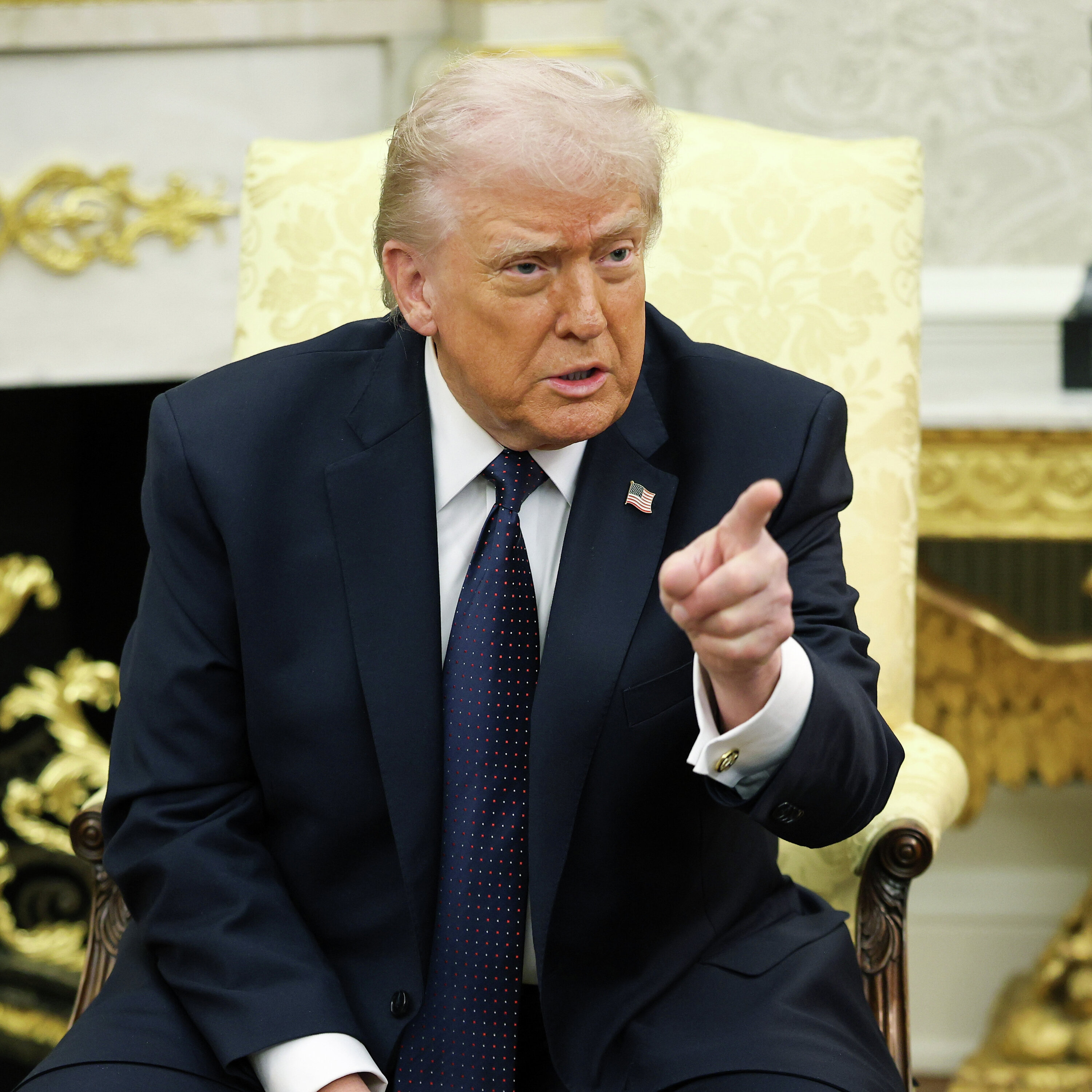
President Trump made The case today that it was critical to hit Iran before it attacked the US or an ally. We were having negotiations with these lunatics and it was my opinion that they were going to attack first. They were going to attack. If we didn't do it, they were going to attack first.
- [03:00]
Jamie Tarabay
I felt strongly about it.
- [03:01]
Sarah Holder
Members of the administration, including Secretary of State Marco Rubio, are holding an all Congress briefing today. Rubio also briefed congressional leaders Monday and has been insistent that the Trump administration gave Congress at least some high profile members the necessary notice before striking targets in Iran.
- [03:19]
Nancy Cook
We notified Congress.
- [03:20]
Jamie Tarabay
I mean, we notified the Gang of Eight, we notified congressional leadership.
- [03:23]
Nancy Cook
There's no law that requires us to do that. The law says we have to notify them 48 hours after beginning hostilities.
- [03:29]
Sarah Holder
Technically, Congress, not the president, has the power to declare war. And members of Congress, mostly Democrats like Senator Mark Warner, have pushed back on the idea that the Trump administration followed constitutional procedure.
- [03:42]
Jamie Tarabay
Our system says before a president chooses to go to war, you gotta get a declaration.
- [03:46]
Nancy Cook
You gotta make the case to the American people.
- [03:48]
Jamie Tarabay
You've gotta ask Congress. None of that took place as he chose to start this war Friday night.
- [03:55]
Sarah Holder
But there are also criticisms coming in from Trump's own party. In posts on social media, Senator Rand Paul and Congressman Thomas Massie, both of Kentucky, said they were opposed to this war.
- [04:06]
Nancy Cook
There's been a real split within the magasphere. You have some that are supporting the
- [04:11]
Chase for Business Representative
president and others who say this is not the America first president that we signed up for.
- [04:20]
Sarah Holder
I'm Sarah Holder and this is the big take from Bloomberg News today on the show. As conflict widens in the Middle east and tensions are also rising on Capitol Hill, what are Trump's plans for what comes next? And what power does Congress have to shape the direction of this conflict? Four days into the war with Iran, I sat down with Bloomberg national political correspondent Nancy Cook and national security reporter Jamie Tarabay to discuss the Trump administration's shifting justifications for launching joint strikes on Iran with Israel. So, Nancy, President Trump has said these attacks may last four to five weeks, possibly more. Monday night on Truth Social, he even said the US had enough weapons to fight wars forever. What do we know about what he's looking to accomplish in Iran and how long he's actually willing to let this war go on?
- [05:19]
Nancy Cook
Well, I think that the President has given a lot of different statements to a lot of different people. He talked to about, you know, 10 or more journalists over the weekend, sort of highlighting what his rationales were and what the timeframe would Be there have been a bunch of shifting explanations for four to five weeks. We've also heard it could be much longer. Secretary of State Rubio said that we were doing this because of Israel. Other people have said, oh, it's because of a nuclear weapon. I mean, I think that the point is, is that there has just been a remarkable amount of shifting justifications both for the time frame and also the reason why we're doing this.
- [05:56]
Sarah Holder
And let's tick through some of these justifications that we've heard from the president so far. There's the idea that this could spark regime change, permanently disable Iran's nuclear missile capabilities, stop its shipments of roadside bombs, ended support for armed proxy groups. All of these suggestions by Trump of what the reason for this war has been. Why is military intervention the strategy? Why not continue negotiations with Iran, for example?
- [06:23]
Nancy Cook
Well, I think that two things One, Trump has always been very aligned with Israel and has always really followed their lead. And this is something that Netanyahu wants. You could argue why he wants to do that for his own political survival or for the safety of Israel. I'll leave that to others to decide. But Trump has always been very aligned with him, and so they are following Israel's lead on this. Secretary of State Marco Rubio basically said that on the Hill just outright yesterday, which is something that a lot of political people latched onto and thought that was interesting. But then, two, more broadly, Trump really came back into office because people were disillusioned with the state of the economy. However, now that he is back in office for his second term, he doesn't have to run for reelection again. And he really wants to go for it in terms of establishing his legacy. And to him, that means remaking the world order, getting rid of leaders who he sees as bad actors. And he has really sort of changed his tune on nation building and become much more of a foreign policy hawk in his second term than I think anyone anticipated. And I think that a lot of the MAGA base is pretty surprised because in his second term, what we've seen is he captured and ousted Nicolas Maduro of Venezuela in early January. Now we have the bombing of Iran. The administration is openly eyeing leadership changes in Cuba. And so it's just Trump really wants to remake the world order, and he is going ahead and doing it. And so it's just a really interesting moment. And it's a really interesting moment politically in terms of his own base, because not everyone's happy with it and not everyone's going along with it. I still think that people may fall in line. But right now, there's a lot of fracturing in the MAGA base with former lawmakers like Marjorie Taylor Greene and influencers like Tucker Carlson and Megyn Kelly really calling out the president and saying, this is not what we signed up for.
- [08:22]
Sarah Holder
And, Jimmy, I want to talk more about how these strikes in Iran fit into Trump's broader vision for US Military strategy around the world. As Nancy mentioned, the strikes came just a few weeks after US Forces seized Venezuela's President Nicolas Maduro in a surprise raid. Is Venezuela being seen as a roadmap for what Trump wants to do in Iran?
- [08:42]
Jamie Tarabay
It's really interesting to see the fact that Trump has used his executive powers to launch attacks on other countries. I mean, last year, it wasn't just Venezuela and the boat strikes in the Caribbean. It was Yemen. It was Iran as well. And these were all moments during the, the year that he did not go to Congress to get any kind of authorization. Secretary Rubio said that there have been multiple, multiple briefings on the Hill. The quality and content of those briefings has varied. And this will all fall along political lines. We've seen, you know, senators who are Democrats who come out saying there's not enough detail. We don't understand this. You know, we need more. There's, you know, Senator Mark Warner, who, you know, from Virginia, who's part of the Gang of Eight, and the ranking Democrat on the Senate Intelligence Committee, said that as a member of the Gang of Eight, he did not see anything that presented an imminent threat to the US and he would have had access to classified information. But then you have people like Jim Risch, who is a senior Republican, also on the Intelligence Committee, who will tell you things like he was convinced before he even walked into these briefings. You know, so there are people who are determined to support the president no matter what. And then there are there are those who also just question everything he does. So everything that kind of comes out of these briefings is really challenging to pass. But there is 100% of frustration, particularly when you see really sort of conservative hawks like Sen. Senator Roger Wicker, who's the chairman of the Senate Armed Services Committee, and a hawk like just these are the things that he cares about, not getting enough detail and not having that requisite communication between the Pentagon and the Hill or the White House and the Hill and sort of really having to play catch up all this time.
- [10:35]
Sarah Holder
And Jamie, I'm curious, how much did Congress know before the US Attacked Iran? I know you say it's hard to parse, of course. But what are the facts here?
- [10:44]
Jamie Tarabay
What we understand is that the Gang of eight was briefed, senior leadership was briefed. My understanding is, and Rubio said this yesterday, that they did give, you know, very sort of short notice to the senior leadership in Congress that, that an attack was happening or that something was underway, but they didn't want to say too much, obviously, because they didn't really want anything to get out before it happened.
- [11:10]
Sarah Holder
And how much does that differ from the kind of notification that's supposed to happen in, in these situations?
- [11:15]
Jamie Tarabay
Well, I mean, normally there's a lot more attempts to get buy in from the Hill. You know, there's a lot more outreach. There's a lot more at least also preparing the public for something like this, you know, and normally, particularly when we look at the Iraq war, George W. Bush, you know, went to the Hill, got, got Congress to approve it. It was a vote. And you know, but we've seen every president since the War Powers act came in in the 70s just ignore it. You know, Barack Obama did it in Libya, Bill Clinton did it in Kosovo, Ronald Reagan did it in Granada, and Donald Trump did it in his first administration. It's there as a check. And as we have clearly seen in this first year of President Trump's second term, Congress has not been that much of a check on his powers and his decisions.
- [12:07]
Sarah Holder
After the break, what could Congress do to limit the Trump administration's use of force in Iran and will they do it?
- [12:20]
IBM Representative
So there's a lot of noise about AI, but time's too tight for more promises. So let's talk about results. At IBM, we work with our employees to integrate technology right into the systems they need. Now a Global workforce of 300,000 can use AI to fill their HR questions. Resolving 94% of common questions, not noise. Proof of how we can help companies get smarter by putting AI where it actually pays off. Deep in the work that moves the business. Let's create smarter business.
- [12:49]
Jamie Tarabay
IBM support for the show comes from public. Lately it feels like there are two types of investing platforms. Some are traditional brokerages that haven't changed much in decades. And others feel less like investing and more like a game. Public is positioned differently. It's an investing platform for people who are serious about building their wealth on public. You can build a portfolio of stocks, options, bonds, crypto without all the bugs or the confetti. Retirement accounts. Yep. High yield cash. Yes again. They even have direct indexing. Public has modern design, powerful tools and customer support that actually helps go to public.com market and earn an uncapped 1% bonus when you transfer your portfolio. That's public.com market ad paid for by Public Holdings Brokerage Services by Public Investing Member FINRA SIPC Advisory Services by Public Advisors SEC Registered Advisor Crypto Services by ZeroHash all investing involves risk of loss. See complete disclosures@public.com, being a small business
- [13:50]
Chase for Business Representative
owner isn't just a career, it's a calling. Chase for Business knows how much heart and effort go into building something of your own. That's why they make business growth their priority. The Chase team takes the time to understand your mission, where you are now, and where you want to go. Their broad range of solutions is designed with you in mind so you can bring your ideas to life. From banking to payment acceptance to credit cards, you can conveniently manage all your business finances all in one place. With their digital tools looking for tips and advice, their online resources are always available to give you the solutions you need to help your business thrive. See how your business can get stronger and go farther with Chase for Business. Learn more@chase.com business chase for business Make More of what's yours the Chase Mobile app is available for select mobile devices. Message and data rates may apply JPMorgan Chase Bank Naomi Member FDIC Copyright 2026 JPMorgan Chase Co.
- [14:52]
Sarah Holder
The Trump administration made a push for congressional support for the war in Iran. On Tuesday, Secretary of Defense Pete Hegseth, CIA Director John Ratcliffe, Joint Chiefs of Staff Chairman Dan Kaine, and Secretary of State Marco Rubio were on the Hill for a briefing open to all members of Congress. Jamie, talk me through what happens during that briefing and what you expect to come of it.
- [15:15]
Jamie Tarabay
People who want to be convinced will be convinced. People who don't want to be convinced will not be convinced. And then there's the people in the middle who actually have, you know, really sort of studied, concerned questions. And they're the ones that you always really want to talk to because they're the ones who kind of understand the sort of the breadth of what military action really is. And there are going to be so many people at these briefings. If it's the entire both the House and the Senate and all of their members. And I think at some point it's going to get a little leaky. Some staffers will chat. We'll be hearing more about this in reporting over the next couple of days. Whether people will be satisfied, I think will largely depend on who they support in this situation.
- [16:05]
Sarah Holder
Well, I want to ask about another Potential pivot point here. Both houses of Congress had already scheduled a vote attempting to curb Trump's use of military power. The vote actually, you know, predated the strike on Iran. Can you tell me about that effort and why it started originally?
- [16:21]
Jamie Tarabay
I think because of the last year that we've seen with all of the military actions that the White House has launched unilaterally. It started with Yemen, went into Iran, and then, of course, the boat strikes in the Caribbean, and then the Nicolas Maduro raid, and then the chatter that began to increase, and we saw all of the military buildup off the coast of Venezuela begin to move to the Gulf in preparation now, we know, for these efforts against Iran. So in both houses, both chambers, Democrats and Republicans have sponsored bills to go to the floor to provide limits for what President Trump can do with the Iran war. Now, they're both expected to fail, and they're both expected to fail because in spite of some Republicans like Rand Paul or Thomas Massie who are against this kind of intervention slash foreign action, there are Democrats who are very pro Israel who have said they will either not vote or vote against it. So it's very symbolic at this point. You know, when we keep talking about, you know, what the House and the Senate can and can't do to check the White House and executive power, because there's a majority in both chambers, that's really, really challenging. And I think that that's going to be another thing to watch in November, whether the House flips, whether the Senate also flips, and what difference that makes to the remaining years of President Trump's term. The most important part about all of this, and I think that's something that we're going to see play out this week in Congress, is the people who voted for and people who voted against. And, you know, this was this thing that sort of like dogged Hillary Clinton after the Iraq war, became intensely unpopular when she ran for president. And so when we see the war powers resolutions hit the floor in both the Senate and the House this week, people who don't vote will be seen to be given their tacit approval to the war. And if this drags on, we've just had more US Military casualties. Both Hegseth and President Trump have not said no to the possibility of ground troops that we see, you know, where Congress can and cannot have an effective role.
- [18:44]
Sarah Holder
And, Nancy, in previous conflicts in the region, the US has lined up international support as well, in particular from European allies. What kind of support or response has Trump been getting from Europe this time? What has the EU said about their willingness to be drawn into this broader conflict?
- [19:01]
Nancy Cook
Well, Trump didn't ask any of our typical allies for permission on this, I mean, apart from talking about it with Israel. But all of the European partners that we normally work with, you know, weren't given the heads up. But actually, I think that that made it easier for them. You know, they didn't have to, you know, commit to it. They didn't have to say they supported it. You know, they weren't put in an awkward position. So I think from their perspective, it's probably a good thing, you know, they didn't have to sort of negotiate with Trump on this. But I do think that it just shows the extent to which he is willing to go out alone on things and how much he is charging ahead without leaning on traditional alliances in terms of foreign policy. And this is just another instance on the US Side.
- [19:45]
Sarah Holder
How do you expect these strikes and their aftermath to play out in the midterms? We might get a hint today as voters head to the polls in primaries in North Carolina and Texas.
- [19:55]
Nancy Cook
How they play out in the midterms depends how long the strikes go on and what it really does to the economy. So we saw the price of a gallon of gasoline jump overnight up to $3.11 a gallon. And so that is something that I'll be watching. If the strikes go on for two months and that ends up hurting the price of oil and the price of gasoline, then I think it will play into the midterms quite a bit. If the strikes are over in a few weeks and we're not embroiled into a huge regional conflict, then I feel like by the time people are thinking about who they'll vote for in the midterms, which typically happens in the summer and fall, then, you know, people will have moved on to other things. People are so upset about domestic policy issues right now, including the economy, isis, handling of the immigration, that that's really their focus. And Trump voters don't necessarily want this nation building. And if that continues to disrupt the domestic agenda, I think Republicans will pay a price at the polls in November.
- [21:00]
Sarah Holder
This is the big take from Bloomberg News. I'm Sarah Holder. This is a developing story. We're live blogging@bloomberg.com with the latest from across the globe. And we have a special Bloomberg subscription offer for podcast listeners@bloomberg.com podcastoffer thanks for listening. We'll be back tomorrow.
- [21:27]
Carol Massar
I'm Carol Massar.
- [21:28]
Tim Stanwak
And I'm Tim Stanwak inviting you to join us for the Bloomberg businessweek Daily
- [21:32]
Carol Massar
Podcast now every day we are bringing you reporting from the magazine that helps global leaders stay ahead.
- [21:37]
Tim Stanwak
We've got insight on the people, the companies and trends that are shaping today's complex economy.
- [21:42]
Carol Massar
That's right, Tim. We're all over global business, finance, tech news, all as it is happening in real time. And we've got complete coverage of the US Market. Close. Got to say, basically, if it impacts financial markets, if it impacts companies, if it's impacting trends and narratives that are out there, we are on it.
- [21:56]
Tim Stanwak
We also have a lot of fun doing it. Bloomberg businessweek also brings you the analysis behind the headlines through conversations with our expert guests.
- [22:04]
Carol Massar
And we are doing this all live each weekday. And then we bring you the best analysis in our daily podcast.
- [22:10]
Tim Stanwak
Search for Bloomberg Businessweek on YouTube, Apple, Spotify or anywhere else you listen.
- [22:14]
Carol Massar
Check it out on your way home from work to catch up on the conversations that you miss during the business
- [22:18]
Tim Stanwak
day and on the weekend. Check it out for a complete wrap up of your business BusinessWeek.
- [22:22]
Carol Massar
That's the Bloomberg Business Week Daily Podcast. I'm Carol Massar.
- [22:25]
Tim Stanwak
And I'm Tim Stanovec. Subscribe today wherever you get your podcasts.
- [22:31]
Nancy Cook
Hey everyone, it's Emily Simpson and Shane Simpson from the Legally Brunette podcast.
- [22:37]
Jamie Tarabay
Each week we're bringing you true crime
- [22:39]
Wise Representative
through a legal lens.
- [22:40]
Nancy Cook
Whether you want all the facts on the disappearance of Nancy Guthrie or you still need to wrap your head around the Diddy verdict, we're breaking it all down step by step.
- [22:50]
Wise Representative
And we're not just lawyers, we're also husband and wife. It makes for some pretty entertaining episodes.
- [22:55]
Nancy Cook
Listen to Legally Brunette on the iHeartRadio app, Apple Podcasts or wherever you get your podcasts.
- [23:01]
Anna Navarro
I'm Anna Navarro and on my new podcast, Bleep with Anna Navarro, I'm talking to the people closest to the biggest issues happening in your community and around the world. Because I know deep down inside right now we are all cursing and asking what is the bleep is going on? Every week I'm breaking down the biggest issues happening in our communities and around the world. I'm talking to people like Julie K. Brown who broke the explosive story on Jeffrey Epstein in 2018.
- [23:29]
Jamie Tarabay
The Justice Department through we counted four presidential administrations failed these victims.
- [23:36]
Anna Navarro
Listen to BLEEP with Ana Navarro on the iHeartRadio app, Apple Podcasts or wherever you get your podcasts.