Loading summary
Transcript90 lines
- [00:00]
Ben Steverman
Wasabi is purpose built to free your business from skyrocketing storage costs and fees from the big guys. Wasabi is the go to provider for professional and collegiate sports teams around the world. Check out Wasabi's AI enabled intelligent media storage, Wasabi Air and the industry's only cloud storage service with triple protection against cyber criminals. Wasabi driving innovation in data storage for up to 80% less than market competition. Try for free at wasabi.com, wasabi Hot Cloud Storage, proud partner of Iheart Podcast Network. Well, the holidays have come and gone once again. But if you've forgotten to get that special someone in your life a gift, well, Mint Mobile is extending their holiday offer of half off unlimited wireless. So here's the idea. You get it now, you call it an early present for next year. What do you have to lose? Give it a try@mintmobile.com Switch limited time.
- [00:51]
Commercial Announcer
50% off regular price for new customers. Upfront payment required $45 for three months, $90 for six month or $180 for 12 month plan taxes and fees. Extra speeds may slow after 50 gigabytes per month when network is busy see terms Financial growth begins long before the first investment. It comes from understanding what you're building toward, what's at stake and what success looks like for you. At Oppenheimer, we bring bold thinking guided by the full strength of our expertise to put capital to work building and protecting wealth that lasts generations. Put the power of Oppenheimer thinking to work for you. Wealth management, capital markets, investment banking.
- [01:34]
Ben Steverman
Bloomberg.
- [01:34]
Commercial Announcer
Audio Studios, podcasts, radio news.
- [01:39]
Sarah Holder
Hey, it's Sarah. Today on the show, we're going to talk about the Trump administration's plan to give millions of babies savings accounts. But first, I want to tell you about a special new series we at Bloomberg have been working on called the 6th Bureau about a spy for China's elusive intelligence agency and how he got caught. I'm here in the studio with Drake Bennett, who covers tech, and Jordan Robertson, who covers cybersecurity, the hosts of the show. Hi.
- [02:04]
Ben Steverman
Hey there.
- [02:05]
Sarah Holder
Hey, can you give me the one sentence elevator pitch? What is the show about?
- [02:10]
Ben Steverman
Yeah, it's a wild story about a.
- [02:11]
Derek Hamilton
Chinese spy who ran operations all over.
- [02:14]
Ben Steverman
The world to steal aviation trade secrets and eventually got caught and documented a.
- [02:20]
Derek Hamilton
Lot of his life in a kind.
- [02:21]
Ben Steverman
Of diary that we wound up getting. This was someone working out of basically like MSS headquarters in China who was sort of masterminding one of these spy rings. And so it was just totally unprecedented to get this kind of thing and we had never seen. Drake and I both covered China stories for quite some time.
- [02:37]
Derek Hamilton
We had never seen, you know, a spy get arrested and leak all of this information.
- [02:42]
Ben Steverman
And neither had the US Government.
- [02:43]
Sarah Holder
I really can't wait to listen. Thank you guys both so much for joining me. And we're excited for the rest of the listeners to get to hear it, too.
- [02:49]
Ben Steverman
Thank you. Thanks.
- [02:51]
Sarah Holder
The Six Bureau from the Big Take will be right here on our show tomorrow and every Friday for the next few weeks. And now, here's today's episode.
- [03:00]
Ben Steverman
Dear America, if I start Investing when.
- [03:03]
Sarah Holder
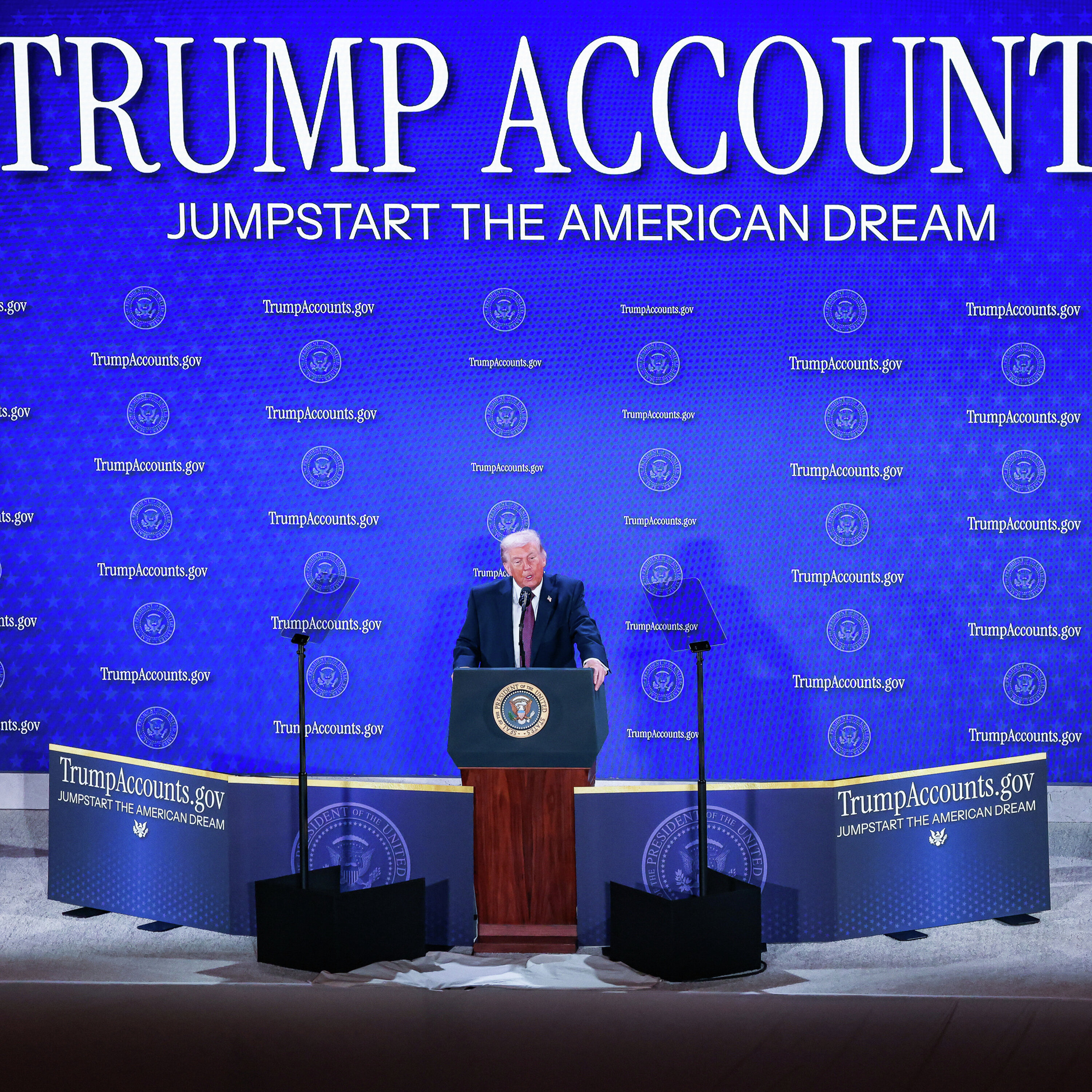
I'm 16, I'm 7. It could change my future. All our future. Between all the advertisements for weight loss, drugs, and AI chatbots that aired during this year's super bowl, there was one commercial you might have blinked and missed. It was sponsored by a nonprofit called Invest America, promoting a new government initiative. This year, every American child gets an investment account. The administration is calling them 530A accounts or Trump Accounts. They're financial savings accounts that can't be touched until a child turns 18. Starting in July, parents of kids under 18 will be able to sign up, and kids born between 2025 and 2028 will. Will get a seed deposit of $1,000 straight from the US government. That's free money. Bloomberg reporter Ben Steverman didn't catch the ad live.
- [03:55]
Ben Steverman
I missed the super bowl this year.
- [03:57]
Sarah Holder
So I missed it entirely.
- [03:58]
Ben Steverman
Yeah, yeah. I just watched a movie instead.
- [04:02]
Sarah Holder
But Ben says the prime placement shows just how central the idea is to the administration's affordability messaging.
- [04:09]
Ben Steverman
I think that this is about their signaling for 2026, the election this year. We're not just a party and an administration focused on helping rich people. We want to help everyone.
- [04:21]
Sarah Holder
This raises questions like how much could these Trump accounts help the kids who get them? And who stands to benefit most? They're the questions economist Derek Hamilton has interrogated as he weighs the program's promise and potential pitfalls.
- [04:37]
Derek Hamilton
You know, some of the good news is there's an interest in how do we afford financial security in a wider way. But the delivery is really problematic.
- [04:51]
Sarah Holder
I'm Sarah Holder, and this is the big take from Bloomberg News today on the show. What is a Trump account? How does it work? And how could it impact the financial future of millions of American children? Tucked inside Trump's one big, beautiful bill, along with trillions of dollars of tax breaks, were $15 billion earmarked for a new program called Trump Accounts.
- [05:20]
Ben Steverman
The original name was actually MAGA Accounts, and then they decided to change the name to Trump accounts. As the bill was going through the process and they actually changed a lot of the details about this as it was going through. It became less generous. I think they realized that it was going to be too expensive if they did what they were planning to do. So they, the program's changed a lot. But these are basically individual retirement accounts for babies. The money is locked up until they're 18 and then they become IRAs.
- [05:49]
Sarah Holder
Babies born between 2025 and 2028 will get a head start on saving with $1,000 from the US government.
- [05:57]
Ben Steverman
The other thing that they're hoping people do is that they're hoping employers pitch in on behalf of their employees kids. They're also hoping that philanthropists step up and, and they're hoping that parents contribute to their kids accounts over time. And you could also imagine like a grandma and grandpa, like contribute on behalf of the kid. So they're hoping that this thousand dollars will become much more than $1,000 over time.
- [06:23]
Sarah Holder
How will that money be invested?
- [06:25]
Ben Steverman
The idea is it's going to be in an index fund invested in US Stocks and the federal government has yet to announce who is going to manage that money and how exactly it's going to work. But the idea is it's supposed to be low fee index funds of some sort. So hopefully this money is not eaten up by fees and that if the stock market does well, those gains will actually reach these kids.
- [06:52]
Sarah Holder
I can save for a house with a trampoline. Two trampolines.
- [06:56]
Ben Steverman
One of the real benefits of the idea of investing on behalf of a baby is that you have the power of compounding. You can put that money in the stock market and it could go up potentially 10% a year and that could grow the money into something substantial. If you're able to save over time.
- [07:12]
Sarah Holder
You could get two trampolines.
- [07:15]
Ben Steverman
Maybe.
- [07:16]
Sarah Holder
These accounts will be administered by the US treasury and open for enrollment in July. But the administration is also in the process of picking firms to serve as trustees for these investments. According to Bloomberg reporting, Robinhood is one of the companies that the US Government is considering for a key role.
- [07:32]
Ben Steverman
All this is uncharted territory in terms of keeping track of so many like these accounts. It's going to be very, very complicated and let's hope that the computer systems of the US Government are up for it.
- [07:46]
Sarah Holder
Launching a program at this scale may be uncharted territory, but the idea of the government helping children build wealth through investment accounts isn't new or unique to the U.S. the UK offers a similar program that it calls a child trust fund. And for years, there have been efforts at the federal and state level in the US to offer parents something called baby bonds, a government funded program first proposed by Derek Hamilton, who's a professor of economics and director of the New School's Institute on Race, Power and Political Economy.
- [08:18]
Derek Hamilton
In a nutshell, it is a trust account to democratize wealth. It affords everybody the opportunity to have a a nest egg when they become a young adult so that they can invest in a vehicle to build wealth.
- [08:33]
Sarah Holder
Connecticut's been running a baby bonds program since 2023. Hamilton came up with the idea after seeing how access to an elite education shaped his own life path.
- [08:43]
Derek Hamilton
When understanding differences across class, race, gender, et cetera, it often comes down to resources. The learnings was how can we better democratize that investment so that everyone would really be able to build the economic security and agency that comes along with wealth?
- [09:01]
Sarah Holder
And in your conception and proposal for baby bonds, how are those nest egg accounts funded?
- [09:08]
Derek Hamilton
Federally funded in the ideal scenario, similar to Social Security. That's another linkage we can use. When we think about baby bonds, we have something for us when we reach the twilight of our life. We have the federal government reserving the economic resource of a pension that's pretty much universally established. But we have nothing. For young adults beginning a life cycle of trying to have economic security, what.
- [09:36]
Sarah Holder
Hamilton is pitching is essentially a savings account created for babies by the federal government to give them a head start on financial security in their young adulthood. Sounds a lot like Trump accounts, right? But Hamilton says there are some key differences.
- [09:53]
Derek Hamilton
Unlike baby bonds that are intended to provide everyone in a democratized way, an opportunity to build wealth. The Trump account, sadly and the delivery will enhance inequality in the long run.
- [10:10]
Sarah Holder
We get into criticisms of the program and do some math after the break. Hey, this is U.S. olympic gold medalist Tara Davis Woodhull.
- [10:21]
Ben Steverman
And I'm U.S. paralympic gold medalist Hunter Woodhull.
- [10:23]
Sarah Holder
As athletes, our lives are about having.
- [10:25]
Ben Steverman
A clear path and a team that you can absolutely trust.
- [10:29]
Sarah Holder
So when it came to getting the.
- [10:30]
Ben Steverman
Best mortgage, we chose PennyMac.
- [10:32]
Sarah Holder
PennyMac is proud to be the official mortgage provider of Team USA and you.
- [10:36]
Ben Steverman
Learn more at pennymac.com pennymac loan services llc/housing lender nmls id 35953 licensed by the Department of Financial Protection and Innovation under the California Residential Mortgage Lending Act. Conditions and restrictions may apply.
- [10:48]
Commercial Announcer
Now I'd like to introduce you to Meaningful Beauty, the famed skin care brand created by iconic supermodel Cindy Crawford. It's her secret to absolutely gorgeous skin Meaningful Beauty makes powerful and effective skin care simple and it's loved by millions of women. It's formulated for all ages and all skin tones and types and it's designed to work as a complete skincare system leaving your skin feeling soft so smooth and nourished. I recommend starting with Cindy's Full regimen which contains all five of her best selling products including the Amazing Youth Activating Melon Serum. This next generation serum has the power of melon leaf Stem cell technology. It's melon leaf stem cells encapsulated for freshness and released onto the skin to support a visible reduction in the appearance of wrinkles. With thousands of glowing five star reviews, why not give it a try? Subscribe today and you can get the Amazing Meaningful Beauty system for just $49.95. That includes our introductory five piece system, free gifts, free shipping and a 60 day money back guarantee. All that available@meaningfulbeauty.com Sometimes all we Want is More of the Same like another round of golf played from a channel with 247 coverage, another look at the garden and the deer as they pick their way through it, another Taco Tuesday followed by a Whatever's in the Fridge Wednesday. And to get more of the same, all we need is a little help with adaptable care plans from qualified compassionate caregivers matched to your family's needs. Home Instead can help you and your passions stay home no matter what's on your horizon. Visit home instead online for a better what's next.
- [12:24]
Sarah Holder
One of the key selling points of Trump accounts is that they're universal. Any US Citizen can sign up, but that also means they're not designed to offer more advantages to families who have fewer resources.
- [12:37]
Ben Steverman
Derek Hamilton's baby bonds or other almost democratic proposals in places like Connecticut, a larger share of the money is set aside for poor kids. And that would help, he says, narrow inequality, narrow the racial wealth gap. The idea is that that would give poor kids the sort of the same start in life that richer kids get in terms of help from parents, help with down payments, help with college educations.
- [13:04]
Sarah Holder
The idea being there are some kids who basically have a savings account built in when they're born because of the wealth of their parents, right?
- [13:13]
Ben Steverman
I mean they get a baby bond essentially because their parents are wealthy or their grandparents are wealthy or they, they just there's somebody in their network that they can rely on. Whereas the really the knock on Trump accounts is that this could potentially, depending on how this plays out, this could potentially be really a benefit for affluent families in some Cases that some poor families might not even know exists and might not even learn, you know, remember to access and might not sign up for.
- [13:40]
Sarah Holder
Why is it a universal program instead of a means tested program?
- [13:44]
Ben Steverman
The Trump administration doesn't seem to want to think of this as purely for low income kids. They want to think of it as getting all Americans to save more money and put more money money in the stock market especially and help the broad swath of the country benefit more from economic growth when the stock market goes up.
- [14:06]
Sarah Holder
Derek Hamilton points out that the program's universality could have downsides.
- [14:11]
Derek Hamilton
If you literally gave everyone the same resource throughout society, you're effectively raising asset prices in a way that won't achieve what it is you're trying to achieve, which is to provide those that need it more to have greater access.
- [14:27]
Sarah Holder
And while everyone is eligible for the accounts, some families might have even more opportunities to grow their cash. Employers like JPMorgan Chase and BlackRock have already pledged to contribute on behalf of their workers.
- [14:39]
Ben Steverman
Children, we haven't yet heard like McDonald's or Walmart or you know, sort of the mass other employers. Step up.
- [14:46]
Sarah Holder
Philanthropists are expected to step up too. At the Trump Account summit in January, Trump touted a $6.25 billion investment from the billionaires Susan and Michael Dell, the founder of Dell Technologies.
- [14:59]
Ben Steverman
Stand up, Michael. What a great guy.
- [15:03]
Sarah Holder
The Dells Hope to seed 25 million accounts for kids 10 and under who aren't already eligible for the government. Money targeted in zip codes where the median income is below $150,000.
- [15:14]
Ben Steverman
Michael Dell's generosity is obvious. Like $6 billion is a lot of money to give away. But when you spread that $6 billion over millions and millions of kids, you're talking about dollar which really just doesn't move the needle for a lot of kids.
- [15:31]
Sarah Holder
Beyond these questions of equity and impact, Ben says there's another big asterisk attached to these accounts.
- [15:38]
Ben Steverman
The tax treatment is less favorable than college savings accounts, 529 plans and other tools. The money that comes out of a Trump account at the end of the process is treated and taxed as ordinary income. So if you were some money was given on your behalf and then it grows, those investment gains are going to be treated as ordinary income to you and you're going to have to be taxed on them. Whereas 529 college saving plans. Usually the money is tax free if it's spent on a qualified expense like education. You also have to remember when people throw out the math on how much money this is Going to eventually become. Don't forget about inflation. Even if this grow, if you got really lucky in the stock market and you left it in long enough and it became $20,000, which would be a real stretch. Remember that's $20,000 in 25 years, not $20,000 now. So it's going to buy a lot less.
- [16:34]
Sarah Holder
A graphic on TrumpAccounts.gov says that if you open an account for your child today with just the thousand dollar government deposit and make no further contributions, the account would hold $243,000 by the time the kid is 55 years old. But inflation really changes the math.
- [16:53]
Ben Steverman
I think you have to remember that 55 years is a really long time and that a lot can happen in that time frame. And so the stock market can do very well, but the dollar can also lose a lot of value. So you end up with a much smaller amount than you would really imagine.
- [17:07]
Sarah Holder
Yeah. What is $243,000 in 55 years from now? Inflationary?
- [17:14]
Ben Steverman
I was trying to, I was trying to do the math and it was like if you look at how much inflation we've had in the last 55 years and we, you kind of blast it forward to the next 55 years, it's something like $30,000 now. Like that's good. But again like it's more than a thousand dollars. When we're Talking about a 55 year old, we're talking about retirement expenses. One of the ideas of these programs is that they're going to help a 23 year old get a good start in life and maybe be able to go to a vocational class or something like that. That really jumpstarts them if you're waiting till you're 55. There was a lot of other things that probably should have happened in the wealth building department in the in between.
- [17:53]
Sarah Holder
Right. I mean, and the other thing that we've touched on before is taxes. You know, $243,000 would also be taxed once you take it out. Right, right.
- [18:03]
Ben Steverman
And those taxes will be complicated. But these do not have the same tax advantages as some of the other programs that are out there. Financial advisors say, you know, like a 529 plan is probably a better investment for your kids college if it's you, you putting in money.
- [18:18]
Sarah Holder
Right. So maybe sign up for the account, get the $1,000 and watch it grow. But adding more money to the account won't have the same effect as it would if you were contributing to a 529 account.
- [18:32]
Ben Steverman
Exactly. Even people who Are skeptics of Trump accounts say there's no doubt that if your baby is eligible for this, you should sign up and you should access this money. There's just no doubt, like, that's free money for you. Now, should you save your own money in a Trump account? Maybe not. Like, actually, probably not, according to the financial advisors we've talked to. And again, maybe this is a first step. Like, maybe this is a area of bipartisan agreement going forward that there can be compromises on and people can work something out. Because it does seem like both parties understand the need to do something about wealth inequality. The question is, which of these solutions is really going to make a difference in an actual kid's life?
- [19:19]
Sarah Holder
Affordability has been a major concern for Americans in Trump's first year back in office. And it's top of mind for the administration heading into the 2026 midterm elections. Ben says Trump accounts are just one of many policies in Trump's one big beautiful bill pitched to working and middle class famil families.
- [19:38]
Ben Steverman
No tax on tips, no tax on overtime, a bigger senior deduction. And the Trump accounts, I think that this is about their signaling for 2026, the election this year. We're not just a party and an administration focused on helping rich people. We want to help everyone.
- [19:55]
Sarah Holder
Could this move the needle on affordability?
- [19:58]
Ben Steverman
I guess I would just say, like, I don't think $1,000 for these millions of babies is really going to move the needle on wealth inequality in America. But it is n nice that we're having this conversation. It's nice that we're like thinking about creative approaches to this problem and what might really move the needle going forward and how we might build on this and change it going forward and how we might get everybody saving potentially and working toward some kind of goal that narrows wealth inequality a little bit. We have a tax system that is actually very advantageous to wealthy people in the in this country. And we have lots of tax incentives in the law around retirement and 529 plans and other things that really are favorable to upper middle class people, too.
- [20:45]
Sarah Holder
And these Trump accounts come as there are broader cuts to the social safety net.
- [20:49]
Ben Steverman
I mean, $1,000 is potentially a month's utility bill this cold winter. I mean, it's a good amount of money. But there's a lot of challenges that middle class and working class families are facing right now in terms of affordability. And this is, in some ways it's a little bit of a frustrating conversation because there's a lot of emphasis on this symbol of the Trump accounts when the reality behind the symbol is like a little bit smaller.
- [21:16]
Sarah Holder
Derek Hamilton doesn't see the 530A Trump accounts as the right solution to narrow inequality, but he does see potential in the symbol.
- [21:25]
Derek Hamilton
You know, we often maintain or manage poverty rather than investing in the capabilities of those individuals with lower resources. So I hope that this ushers in a new genre of public policy where we flip the equation. Rather than trying to maintain people, we invest in them. So to the extent we consider baby bonds or 538 investments, accounts and people's capabilities, that's a good thing.
- [21:59]
Sarah Holder
This is the Big Take from Bloomberg News. I'm Sarah Holder. To get more from the Big Take and unlimited access to all of bloomberg.com subscribe today@bloomberg.com podcastoffer if you like this episode, make sure to subscribe and review the Big Take. Wherever you listen to podcasts, it helps people find the show. Thanks for listening. We'll be back tomorrow.
- [22:29]
Commercial Announcer
Sometimes all we want is more of the same. Like another round of golf played from a channel with 247 coverage. Another look at the garden and the deer as they pick their way through it, another Taco Tuesday followed by a Whatever's in the Fridge Wednesday. And to get more of the same, all we need is a little help with adaptable care plans from qualified, compassionate caregivers matched to your family's needs. Home Instead can help you and your passions stay home no matter what's on your horizon. Visit Home instead online for a better what's Next. You see it instantly. It's Coldwater Creek, the mark of exceptional workmanship and signature touches inspired by a Mountain west heritage. Distinctive styles created from quality fabrics, silhouettes perfected with just the right drape feel good fits offering ease of movement and thoughtful details to elevate your look. Coldwater Creek's authenticity is embodied in every piece, embracing its confident spirit that carries through to today. Discover Coldwater Creek clothing designed to fit your life the way you want. For a wardrobe you can count on season after season, visit coldwatercreek.com shop the new spring collection at 20% off $75 or more with code iheart20.
- [23:43]
Ben Steverman
Sound familiar? Mattress Firm, we understand there are many problems that can keep you up at night, like snoring, aches and pains or sleeping hot. Our sleep experts have the unrivaled know how to match you with a mattress that can help. And now at Mattress Firm, save up to $700 plus get a free adjustable base with select Sealy Mattresses for the great sleep you deserve, visit Mattress Firm. We make sleep easy. Restrictions apply. See store or website for details.