Loading summary
Transcript52 lines
- [00:00]
IBM Representative
So there's a lot of noise about AI, but time's too tight for more promises. So let's talk about results. At IBM, we work with our employees to integrate technology right into the systems they need. Now a global workforce of 300,000 can use AI to fill their HR questions, resolving 94% of common questions, not noise. Proof of how we can help companies get smarter by putting AI where it actually pays off, deep in the work that moves the business. Let's create smarter business IBM Healthcare doesn't always work great.
- [00:32]
Optum Representative
If you've ever waited on a refill or couldn't schedule an appointment, you get it. That's the kind of stuff Optum is changing. They're using data and technology to integrate patient care, pharmacy and everything else. So healthcare is connected, not complicated. What's that look like? Cheaper prescriptions that are easier to get and care that looks at the whole person how you need it. Optum is helping make healthcare work as one for everyone. Learn more@business.optum.com Support for this show comes
- [01:01]
Public.com Advertiser
from public.com if you're actively involved in your portfolio, you probably catch yourself repeating the same actions. Buying the dip, manually sweeping idle cash, putting on a hedge on public. You can now create AI agents that handle all these tasks on your behalf. Just describe what you want to do in plain English, like if the Vix hits 25, buy a put option on the S&P 500. Or if my cash balance goes above $20,000, move the excess into my direct index. You approve of the workflow and your agent handles the risk, monitoring the market, watching for your conditions and executing your strategies exactly as defined. An investing platform driven by your intent, not just your clicks. You can also get full read and write access to your account via the public API. Go to public.com market and fund your account in five minutes or less. That's public.com market paid for by Public
- [01:56]
IBM Representative
Investing Brokerage Services by Open to the Public Investing Inc.
- [01:59]
Brendan Murray
Member FINRA and SIPC Advisory Services by Public Advisors, LLC SEC registered advisor complete disclosures available at public.com disclosures
- [02:12]
Optum Representative
Bloomberg Audio Studios Podcasts Radio News
- [02:19]
David Gura
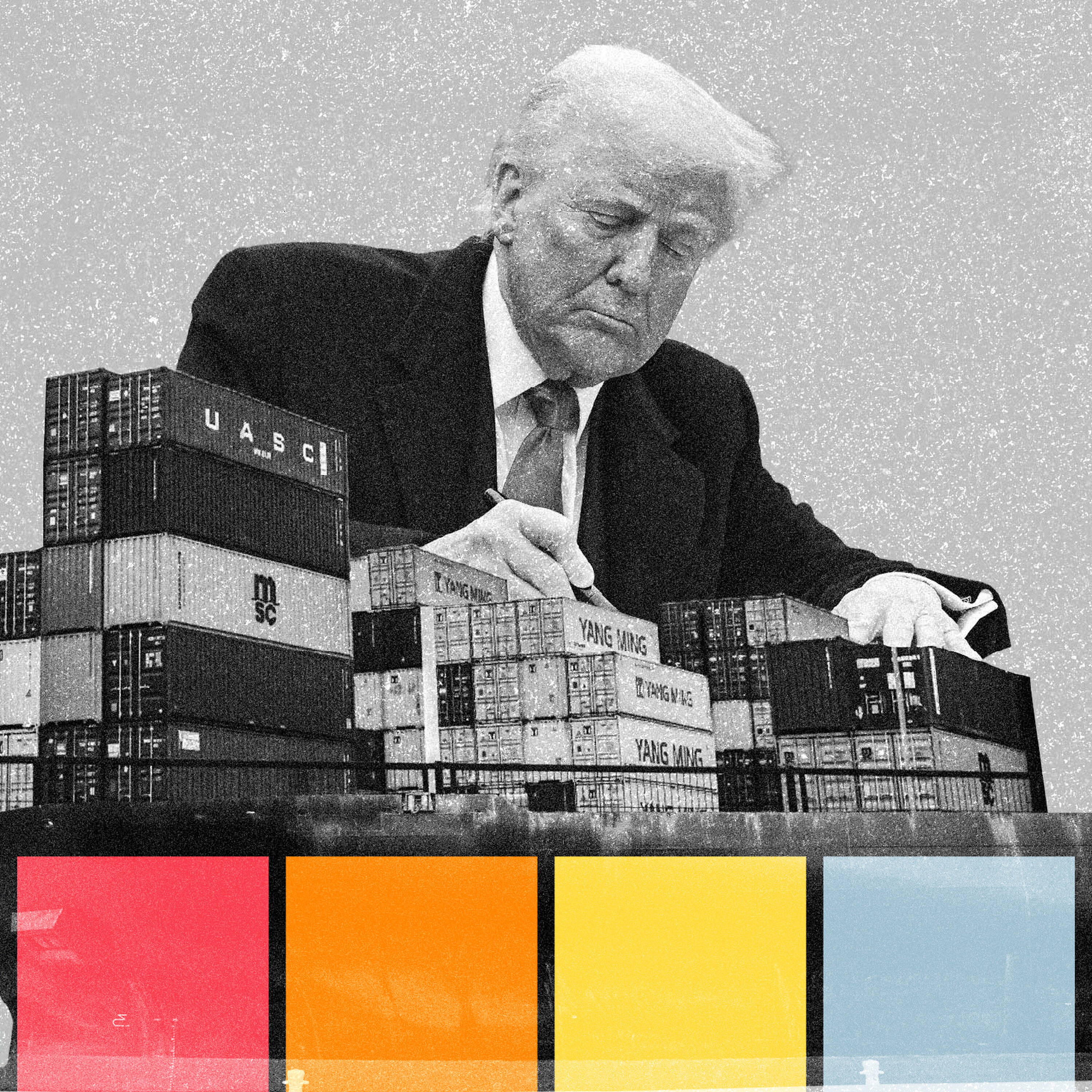
the war with Iran is at an inflection point. That's according to Bloomberg Economics. President Trump is considering his next steps and over the weekend there was a pause in strikes by both the US And Iran. But Houthi militants aligned with Iran have fired missiles and drones at Saudi oil facilities, impacting crude prices. That has added to concern about inflation ahead of this week's meeting of the Federal Open Market Committee in the Middle of all this, President Trump decided to impose a raft of new tariffs after the U.S. supreme Court overturned the tariffs the President had put in place on national security grounds, using the International Emergency Economic Powers Act. Countries all over the world waited to see how Trump would try to rebuild his tariff wall. First, there was a temporary measure, a short term 10% global tariff that expired last week. While that was in place, the Trump administration put the finishing touches on another policy in it hopes will be more permanent.
- [03:18]
Brendan Murray
So Section 301 allows the US Trade Representative, after an investigation into certain unfair trade practices, to impose tariffs based on a number of different reasons.
- [03:30]
David Gura
That's Brendan Murray, who's Bloomberg's Global trade editor. Section 301 is part of the Trade act of 1974.
- [03:38]
Brendan Murray
Essentially, if American companies, American workers are being disadvantaged in any way from competition overseas, this allows the government, government to legally justify tariffs against certain countries imports. And that's what we've seen here.
- [03:55]
David Gura
Countries from Australia to Switzerland have expressed their disappointment and they've denied what the US has alleged that they haven't done enough to keep forced labor out of their supply chains. These new tariffs went into effect on Friday at midnight New York time. And now companies and countries are trying to make sense of them and lawyers are considering court challenges that will determine whether the policy sticks. I'm David Gura and this is the big take from Bloomberg News. Today. On the show, Bloomberg's Brendan Murray breaks down the latest levies imposed by the Trump administration, how they came about, who they impact and what they reveal about the administration's approach to trade. In announcing these tariffs, Jamison Greer, the US Trade Representative, said in a statement, the United States has had a forced labor import ban for nearly a century and rigorously enforces it. It's well past time, he said, for our trading partners to do the same. Brennan, what do we know about the rigor of these investigations if the administration's claims against these countries are in fact founded?
- [05:02]
Brendan Murray
So what we're gonna see over the coming weeks is a lot of legal debate about whether these are justified or not. American importers are gonn why am I paying a duty based on forced labor from the products that I'm importing from Switzerland? Probably as far from forced labor as you might think a country could be. That's because the administration has judged that countries, including Switzerland and Canada and many in Asia have not enforced their forced labor rules and regulations adequately enough or they don't have the rules on the books at all. So what we're seeing is the administration say, look we're just trying to level the playing field for American workers. Now, there are arguments that this won't hold up in court as well. Some people point to the fact that. And the apparel industry would raise these issues too. There are Americans in prison who are producing goods that are bought in the marketplace. And doesn't that qualify as forced labor for people who work and get paid 50 cents an hour or nothing at all? So there's going to be a lot of finger pointing, but ultimately the question is going to come down to how can you justify these tariffs on so many countries, paint them all with the same brush, and impose a tariff of 10 to 12.5% on them?
- [06:28]
David Gura
How strongly are they making the case here that this is about human rights? I drew the connection between those IPA tariffs being struck down and they having to kind of scramble to find some other means by which they could put these tariffs in place. Are they pushing back against the notion that they were looking for another means of doing this? Are they saying this really is about human rights? How are they making that claim in this release?
- [06:50]
Brendan Murray
Yeah, that's one of the main criticisms that the administration has already heard, that this is just a pretext to collect money and to pad the treasury revenue. You know, it's kind of hard to argue against crackdowns on forced labor. No one wants to see that. But whether you can justify tariffs based in such a broad way is a whole nother issue that the lawyers are going to try to figure out. And, you know, the President and his advisors now say that they are trying to follow the letter of the law to take these procedures. There were public hearings on these forced labor tariffs. Governments came to the table and said, hey, look at what we're doing. And so there's a lot of documentation about whether the countries are abiding by their forced labor rules and not. And so we're going to see a lot of that sort of aired as countries try to push back against this.
- [07:44]
David Gura
How does it break down by country? How do you differentiate sort of who gets a higher tariff than another?
- [07:48]
Brendan Murray
It depends on a couple things. Number one, do you already have a trade deal with the administration? And the U.S. trade Representative, Jameson Greers, told Congress the other day that he has 19 of these. And so if you negotiated the other country negotiated a 10% cap, then that's basically you're in the 10% bucket. Countries with more to prove, with less evidence to defend against the U.S. s accusations wound up with 12.5%. So some countries, India was among them, moved from a proposed 12.5% to the 10% basket between the time of the proposal in early June and the announcement that we just got.
- [08:29]
David Gura
How about exemptions? Do we see a lot of exemptions in this decision so far? Are there likely to be more of them?
- [08:34]
Brendan Murray
Yeah, I mean, Bloomberg Economics has calculated that this hits about a trillion dollars worth of US Imports. And so that's roughly a third of all US Imports. And so there are a lot of carve out energy, food, things that are subject to other tariff authorities like cars and steel and aluminum, USMCA, the U.S. mexico, Canada Trade Agreement. Goods that flow under those terms aren't subject to this. So there are a lot of holes in this tariff wall that the President is reconstructing after his Supreme Court loss. And a lot of those are meant to address the concerns that consumers have and that companies have. But that still doesn't completely explain away that the president from day one of his first administration and his second administration loves tariffs, thinks tariffs are the best economic tool at his disposal, and that hasn't diminished in the least.
- [09:34]
David Gura
Bren, the tariffs went into effect just after midnight on Friday New York time. How has the market reacted to the imposition of these tariffs?
- [09:41]
Brendan Murray
The market is kind of shrugging this off so far. We'll have to wait and see how it plays out. But the market seems to be absorbing this as this is just a continuation of a roughly 10% tariff. The Bloomberg Economics estimate of the average U.S. tariff rate now went from 10.6% to 10.7%. So not really much more than a blip in the overall kind of economic impact. But it's something that we see as really just the first, a first step rather than the end of the game. This is the administration trying to piece back together some protectionism around the industries that it's trying to revitalize.
- [10:25]
David Gura
Coming up, we discuss the legal challenges the administration faces and what this latest round of tariff says about the administration's strategy going forward.
- [10:36]
Public.com Advertiser
Support for the show comes from public.com if you're actively involved in your portfolio, you probably catch yourself repeating the same actions. Buying the dip, manually sweeping idle cash, putting on a hedge on public. You can now create AI agents that handle all these tasks on your behalf. Just describe what you want to do in plain English, like if the Vix hits 25, buy a put option on the S&P 500 or if my cash balance goes above $20,000, move the excess into my direct index. You approve the workflow and your agent handles the risk, monitoring the market, watching for your conditions and executing your strategies exactly as defined. An investing platform driven by your intent, not just your clicks. You can also get full read and write access to your account via the public API. Go to public.com market and fund your account in five minutes or less. That's public.com market paid for by Public
- [11:32]
IBM Representative
Investing Brokerage Services by Open to the Public Investing Inc.
- [11:35]
Brendan Murray
Member FINRA and SIPC Advisory Services by Public Advisors, LLC. SEC registered advisors. Complete disclosures available at public.com disclosures Amazon Pharmacy presents Painful Thoughts it's been a
- [11:51]
Optum Representative
long, bumpy road dealing with yet another bladder infection and driving to the pharmacy to pick up meds. I went over a pothole and a little pee came out. So now I get to stand in line with pee pee pants.
- [12:05]
Brendan Murray
Next time skip the pain and get fast free delivery. With Amazon Pharmacy Healthcare just got less painful.
- [12:16]
Wasabi Representative
Innovation is what gets your business to market and Wasabi is designed to give every business a shot at competition. How break free from skyrocketing storage costs and unpredictable egress fees from old and top heavy legacy providers. You know the big guys. Wasabi is the world's hottest cloud storage company and the go to provider for professional and collegiate sports teams and leagues around the world. And here's why. Innovation from Wasabi's AI enabled intelligent media storage, Wasabi Air to the industry's only cloud storage service with triple protection against cybercriminals, data deletion and ransomware. The world's top companies trust Wasabi. Remember, Wasabi is up to 80% less than market competition and doesn't charge a cent for businesses to access their own data. Wasabi Another championship story. Check them out for free@wasabi.com Wasabi Hot Cloud Storage proud partner of iHeart podcast network.
- [13:20]
David Gura
I spoke with Jameson Greer, the U.S. trade representative, in mid July on Bloomberg TV and he walked me through the process that ultimately led to the imposition of Section 301 tariffs on and I think that was seen as kind of a test case for these new tariffs that we've seen on other trading partners.
- [13:36]
IBM Representative
So our section 301 investigations, they are legal investigations. We have two sets of hearings, we do two sets of public comments and we're focused on unfair trading practices by Brazil. So we have to have a legal basis to do this.
- [13:49]
David Gura
It does seem somewhat representative, Brendan, of a more kind of measured and deliberate approach to tariff policy this time around. And I'm curious sort of what we know about what went into this broadly, how the administration decided which countries to target, what justifications to use and more broadly than that sort of what kind of tariffs are gonna have the highest likelihood of standing up in court?
- [14:08]
Brendan Murray
The administration would say that their number one priority is to reduce the trade imbalances that exist around the world. And in places where American farmers and American manufacturers face an unlevel playing field, they're trying to fix that situation and they're trying to open up markets in other places for US Exporters to sell what they make. And so these latest authorities that they're using are really designed to piece by piece, reestablish what the President tried to do last year with his so called reciprocal tariffs, where he just kind of imposed them at will. And so what we're seeing now is a more flexible and durable impression court method. And a lot of people say, look, there's no going back from these. These are, these are not going to come off if a Democrat wins the White House next or a pro free trade Republican wins the White House next in the next election. So these tariffs, for the most part, economists would say, aren't going anywhere.
- [15:13]
David Gura
Are we likely to see legal challenges to these Section 301 tariffs? Any indication of that from the reception they've gotten so far?
- [15:21]
Brendan Murray
Well, it was only a couple hours after these tariffs took effect that two small businesses filed a lawsuit in the U.S. court of International Trade accusing the Trump administration of misusing its tariff authority. Again, basically saying that this was too broad a use, that the 301 statute is something that should be used in a more targeted way at countries specifically, rather than targeting a whole group of countries like the White House has done with its latest action. And, you know, and I would imagine that the administration is prepared for that. And they, you know, but they feel like that they've covered all their bases. Don't forget there was another trade headline with the President going after Canada with a never before used authority.338 this one kind of came out of nowhere and a lot of people had sort of taken it off our list of potential tools that he could use. He threatened to put 50% tariffs on Canada in 30 days. And Canada's got to figure out how do they come to the table now and negotiate their way out of that situation. And so it adds to the uncertainty. Most of the attorneys who've reacted to those 338 tariffs threats against Canada have said that's going to be interesting to watch in the courts as well, because number one, it's never been used before, and number two, it's being used in a way against a single country that will certainly hit American Importers, their big question is will that example of Canada become the new normal for the president when whether he wants to go after the European Union or China or any other big trading partner where the US Runs a big deficit.
- [17:09]
David Gura
We've been talking about these investigations into forced labor. There's another series of Investigations under Section 301 centering on excess capacity. What's the government looking into here?
- [17:20]
Brendan Murray
So this is essentially a government policy that allows factories to produce too much and ship it around the world and kind of flood the market.
- [17:28]
David Gura
China, notoriously has done this for many years.
- [17:31]
Brendan Murray
Exactly. So the real focus of the excess capacity case that you're referring to is China. And so that investigation is ongoing. Jamison Greer, the US Trade Representative, has said it's going to take longer. We don't know if longer means a couple more weeks or a couple more months. But it's a lot more complicated than looking into a forced labor case. You're talking about trying to understand the supply chains of lots of industries and how they intersect with other economies. And there's a real factor there that will be difficult for the US to put its finger on. And there are capacity problems in the US Trade Representative's office. They're just, you know, that takes a lot of people. As Jamison Greer said the other day. He said, I've got dozens and dozens of attorneys working on this particular case. And in their perspective, it has to be built on a solid basis. And so sounds like it's going to take longer. If it takes a couple of months, then you're kind of bumping up against the Trump Xi summit meeting that's supposed to take place in September. And so do you really want to be imposing more tariffs on China ahead of this big meeting that President Trump wants to have with the Chinese leader?
- [18:49]
David Gura
Brendan, let me ask you lastly, just for your perspective on how high this tariff wall is, how far along job is. So we've got these 301 tariffs. Sounds like more on the way you mentioned the section 338 tariffs on Canada. Meanwhile, negotiations continue with all of these other nations separate from this. Where are we in this process? How close are we to that wall being finished?
- [19:13]
Brendan Murray
I sort of feel like we're at the beginning of the new wall and that this 301 on forced labor was kind of the foundation that the US Trade Representative's office has laid. Don't forget we' to have. You know, there are all sorts of tariffs threatened on pharmaceuticals, all sorts of other kinds of imports that the US Administration wants to protect. President Trump threatened to put tariffs on the European Union for the fines that it's imposing on Google. Almost a billion dollar fine. President Trump said he was going to order an immediate investigation under 301 into this practice by the European Union. And so this is really the beginning of the new wall. And what we can expect is it's going to be bumpy, it's going to be difficult to predict, and it will bring its own kind of uncertainty, different from the kind that we experienced when President Trump wielded his tariff authority that the Supreme Court struck down. This new process promises to be complicated, maybe slow, and it will have holes in it as well as inflation kind of rears its head again with the Iran war dragging on. The administration, by its own account, wants to keep rolling out tariffs right into the teeth of the midterm elections. And you know, how's that going to sit with the American consumer that are paying higher prices at the pump at the grocery store pretty much everywhere you look. And Democrats really hammered Jameson Greer on the Hill on those issues. Is, you know, how could you, how can you do this to my constituents? And the administration had better have its talking points pretty sharpened for those kinds of attacks on the political front.
- [21:09]
David Gura
This is the Big Take from Bloomberg News. I'm David Gura. To get more from the Big Take and unlimited access to all of bloomberg.com subscribe today@bloomberg.com podcastoffer if you like this episode, make sure to follow and review the Big Take. Wherever you listen to podcasts, it helps people find the show. Thanks for listening. We'll be back tomorrow.
- [21:33]
Optum Representative
Healthcare doesn't always work great. If you've ever waited on a refill or couldn't schedule an appointment, you get it. That's the kind of stuff Optum is changing. They're using data and technology to integrate patient care, pharmacy and everything else. So healthcare is connected, not complicated. What's that look like? Cheaper prescriptions that are easier to get and care that looks at the whole person how you need it. Optum is helping make healthcare work as one for everyone. Learn more@business.optum.com
- [22:04]
Public.com Advertiser
we learned how to love dogs from the dogs that loved us and waited for us to get home from school. They were the dogs that raised us. We returned the love with Pedigree Dog Food. It was good then and it's better now. Every bowl has 100% complete nutrition supporting six health essentials and now it includes Vitamin Good Bites, a nutrient boost your dog will love. Pedigree Good then, better now. M and M'S popped caramel do sound different.
- [22:37]
Wasabi Representative
Oh, no.
- [22:37]
Public.com Advertiser
People are gonna be obsessed.
- [22:39]
Brendan Murray
What do you mean?
- [22:40]
IBM Representative
Hmm.
- [22:41]
Public.com Advertiser
People hate the sound of chewing. Maybe they won't like the crunch.
- [22:45]
Brendan Murray
Maybe we're saved. Wait a minute.
- [22:48]
Wasabi Representative
Yellow.
- [22:51]
Public.com Advertiser
Have you been eating them this whole time? Mmm.
- [22:54]
Wasabi Representative
So tasty.
- [22:56]
Brendan Murray
Hands off us, M. And M's popped caramel. It's more fun together.