Loading summary
Transcript45 lines
- [00:00]
Microsoft Windows 11 Pro Representative
Okay, before we get into it, little side note for the IT leaders listening in. I was reading up on a Microsoft Commission survey the other day and learned that teams using Windows 11 Pro PCs report 62% fewer security incidents compared to Windows 10 PCs, including three times fewer firmware attacks. Pretty significant. With security built in, you'll have AI ready it that sets you up for operational efficiency as well as long term resilience. Upgrade to Windows 11 Pro@Windows means business.com
- [00:34]
Cincinnati Insurance Representative
if you follow markets, you know the value of long term thinking. You plan, you diversify, you prepare for volatility. But in life, even the best strategies can't prevent every bad day a fire, a loss, a disruption that demands immediate attention. When that happens, what matters isn't just what you planned, it's who shows up. That's where Cincinnati Insurance comes in. For more than 75 years, they've helped individuals and businesses navigate life's toughest moments with care, expertise and personal attention. Together with independent agents, Cincinnati Insurance focuses on relationships, not transactions. Their approach is grounded in experience, follow through and trust built over time. Bad days happen, and when they do, you deserve an insurance partner who understands risk retirement, respects what you've built, and is ready to help you move forward. The Cincinnati Insurance companies Let them make your bad day better. Find an independent agent@cin fin.com so there's
- [01:35]
IBM Representative
a lot of noise about AI, but time's too tight for more promises. So let's talk about results. At IBM, we work with our employees to integrate technology right into the systems they need. Now a global workforce of 300,000 can use AI to fill their HR questions, resolving 94% of common questions, not noise. Proof of how we can help companies get smarter by putting AI where it actually pays off. Deep in the work that moves the business. Let's create smarter business IBM,
- [02:07]
Cincinnati Insurance Representative
Bloomberg Audio
- [02:08]
Sarah Holder
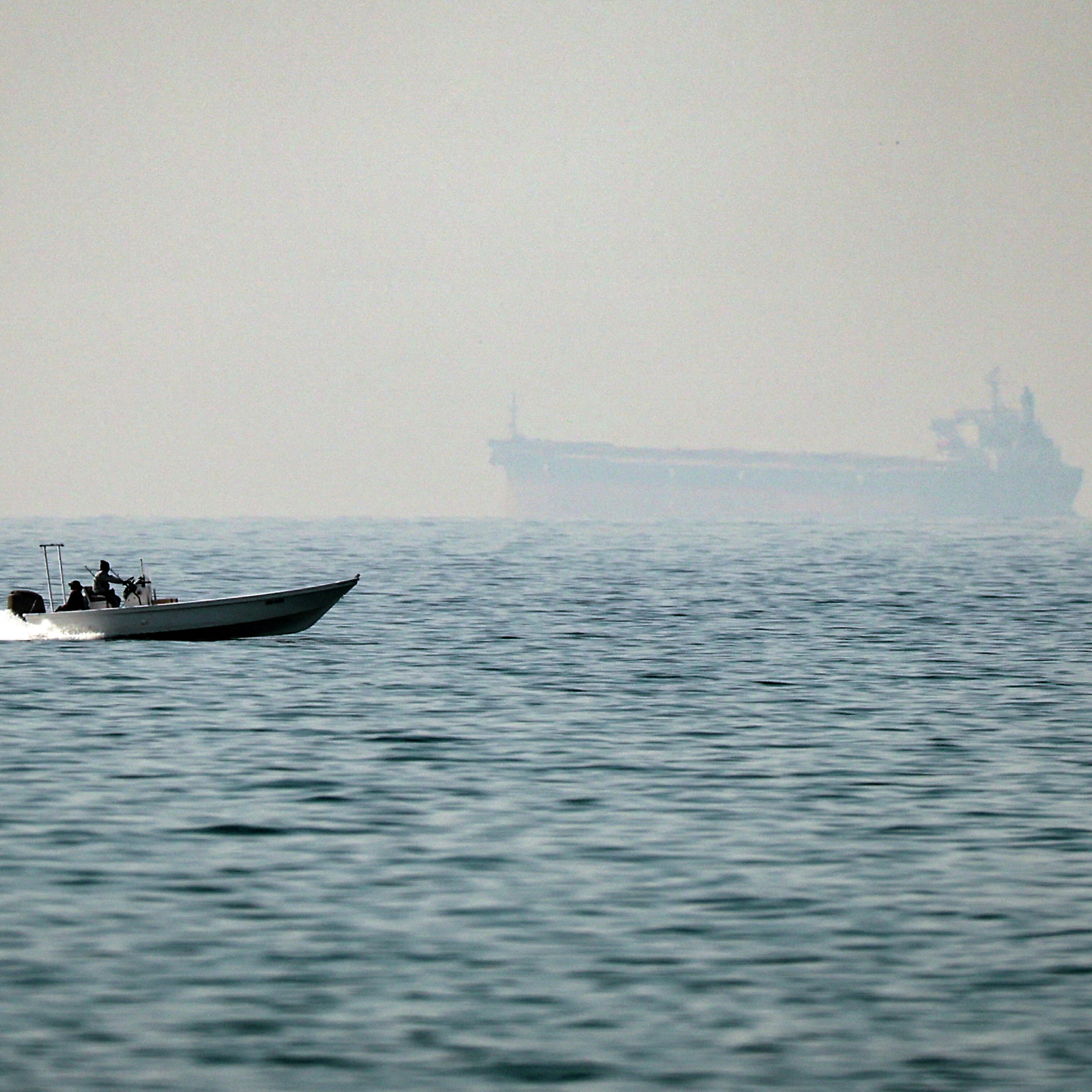
Studios Podcasts Radio news the ceasefire between the US and Iran is set to expire next week. And following an inconclusive round of peace talks in Pakistan, the the US is trying a different tactic to pressure Iran into a deal a naval blockade.
- [02:27]
Becca Wasser
President Trump says the U.S. blockade in the Strait of Hormuz has begun.
- [02:31]
Microsoft Windows 11 Pro Representative
Two tankers under U.S. sanctions turning around as the restrictions went into effect.
- [02:35]
Becca Wasser
President Trump announcing that any Iranian who fires at us or at peaceful vessels will be blown to hell.
- [02:43]
Sarah Holder
The blockade was implemented Monday, further cutting off the Persian Gulf from the rest of the world.
- [02:48]
Becca Wasser
It seems as though President Trump has been saying, you know, the strait must be open, the strait must be open, the strait must be open. But we're going to close it in order to get it to reopen.
- [02:58]
Sarah Holder
Becca Wasser is the defense lead for Bloomberg Economics.
- [03:01]
Becca Wasser
But the logic for at least what I can piece together is the idea of this economic pressure on Iran is going to either force them to concede at, you know, the negotiating table right now or, or over time, that pressure is going to lead them to make some of those concessions, to agree to terms that the US Feels quite strongly about.
- [03:25]
Sarah Holder
People familiar with the matter told Bloomberg that the US And Iran are in talks about holding a second round of negotiations in the coming days. And Becca says the blockade only raises the stakes.
- [03:38]
Becca Wasser
The risks here are really the escalation risks in an already fragile ceasefire, in a, in a really fraught conflict. And that could ratchet up tensions further at a time where it does seem as though there are some signals from all sides to try and de escalate slightly.
- [03:59]
Sarah Holder
I'm Sarah Holder and this is the big take from Bloomberg News today on the show how the US Naval blockade of the Strait of Hormuz works, what could happen if it's tested, and how this latest pressure tactic could influence another round of Iran US Peace talks. Becca, my first question for you is just what is the status of the US Blockade in Iran? What do we know about what's actually been set up so far?
- [04:27]
Becca Wasser
President Donald Trump said that it was a total blockade in the vein that he said for Venezuela, in which it would be almost all ships. But U.S. central Command issued a more restrictive definition of the blockade where they said that they were going to blockade all maritime traffic, intending to enter Iranian ports both in and outside the Persian Gulf. But it said that it would enforce the blockade not in the strait itself, but right outside it. So that would be in the Gulf of Oman, that would be into the Arabian Sea. And that starts to get you closer towards the coastlines of various Gulf countries.
- [05:07]
Sarah Holder
I've seen reporting that the US is deploying as many as 15 ships to create this blockade. What is their role here?
- [05:16]
Becca Wasser
So I think a lot of folks think of a blockade as a cordon that you're going to have, you know, a group of ships stopped at the end of the strait no one can go past. But that's not likely exactly what's going to happen. I think what you are going to have is constant monitoring of the strait, which the US Is likely doing with various intelligence, surveillance and reconnaissance assets, potentially potentially even space based assets, as well as potentially even communication with those ships. And whenever there's any vessel that the US Thinks might be headed for Iran or coming from an Iranian port or is part of, you know, the shadow fleet or sanctioned vessel. You know, they'll communicate with them and they will try and get more information, but also in many respects try to issue warnings and say that if you proceed, you will most likely be interdicted. And this means that either the vessel is going to be diverted, either sent back, or there's the chance that it could be boarded and eventually seized.
- [06:21]
Sarah Holder
What might Iranians do to counteract this blockade?
- [06:25]
Becca Wasser
A blockade is technically an act of war, and there's a high chance that Iran sees it that way. So that could mean that Iran may, might retaliate, attacking Gulf ports and infrastructure in response. Right now it seems as though there's a chance that communication and diplomacy is still alive and that might give Iran pause on any type of potential retaliation. However, I think it's notable where the US has said that the blockade area is going to be. What they've done is they've tried to take some of the ships and move them a little bit further away from some of the potential threats in the Strait of Hormuz, negate any, all of the threats. You know, some of the US Warships could still be at risk of drone attacks or anti ship cruise missile attacks, but it's taken it away out of the most threatening geography. And I think you do see a little bit of positioning on both sides right now to leave some space for communication and to leave some space for diplomacy to hopefully bear fruit.
- [07:31]
Sarah Holder
I want to talk a little bit more about how the US Might enforce this blockade. What do we know about enforcement here?
- [07:40]
Becca Wasser
I think some of the bigger unknowns right now are really whether the US Is going to take the narrow interpretation of a blockade that US Central Command put forward, or whether they're going to try and implement what President Trump initially tweeted, which is the idea of interdicting every vessel in international waters that paid a toll to Iran. If that the case, then you're likely to see a lot more US Operations outside of the Middle East. That's when you could see the US Trying to interdict vessels that are in the Indo Pacific, perhaps maybe some of those dark fleet vessels that are trying to ship oil to China. And that in itself opens up a potential host of other questions as well as some potential risks.
- [08:31]
Sarah Holder
In some ways it seems counterintuitive, maybe that in order to achieve one of the military aims here, which is reopening the Strait of Hormuz, the Trump administration is essentially closing traffic near the Strait of Hormuz. Can you explain the logic there.
- [08:48]
Becca Wasser
The logic for at least what I can piece together is the idea of this economic pressure on Iran is going to either force them to concede at, you know, the negotiating table right now, or over time, that pressure is going to lead them to make some of those concessions, to agree to terms that the US feels quite strongly about. But in order to create that pressure, the US needs to essentially exert it, which by their calculation is the best way that they could do so is to enforce a counter blockade, if you will, of what Iran has been able to do in, you know, threatening to close the Strait and essentially, you know, freezing all traffic.
- [09:39]
Sarah Holder
So how could the blockade affect negotiations between Iran and the us? And what is Israel's role? That's after the break. The closure of the Strait of Hormuz has snarled global oil supplies and become a key flashpoint in negotiations between the US and Iran. To understand how the US's naval blockade could affect talks moving forward, I called up Bloomberg's Middle east breaking news editor, Patrick Sykes. So, Patrick, Iran has denied the world access to the Strait of Hormuz. Now the US is attempting to deny Iran access to the rest of the world by placing this naval blockade on Iranian ports. I'm wondering how you read this move. Does it look like a knee jerk reaction to the failure of the first round of peace talks between Iran and the us, or is it part of a bigger plan for this war in Iran?
- [10:40]
Patrick Sykes
It's interesting. It's been framed as a kind of third way, right? The choices that the US had, crudely speaking, were to strike a deal or to go back to war. And this Iranian media are reading as an attempt to find an alternative way through that. I think related to it, it's definitely seeking to deny to Iran this asymmetry around the whole Strait of Hormuz situation. Right? The fact that Iran, with relatively limited military capabilities, in some cases just the threat of an attack or the general instability around the war, was able to, as you say, deny access to, while maintaining access for itself and reaping the rewards of those higher oil prices in the process. So the us, in doing this latest move, is trying to cut off at least a new flow of cash to Iran that it's been able to generate.
- [11:39]
Sarah Holder
And how do you see the blockade sort of fitting into the US's overall negotiation strategy then?
- [11:45]
Patrick Sykes
It's a pressure move, right? It's not the kind of thing that's going to, I think, make Iran either run back to the negotiating table nor to abandon talks altogether in their Minds, you know, this is still a fight for survival. And they, they claim they have alternative routes. They might be able to, you know, send some limited volumes over land. They might be able to draw on ports that are less exposed to the, the Strait as such. So I think they will try to resist and, and they'll make the best of that newly limited situation.
- [12:20]
Sarah Holder
And, I mean, as a move intended to put pressure on Iran, I'm wondering how this naval blockade compares to something like a ground invasion that Trump has been threatening. Is this a preferable escalatory move that avoids troops on the ground for the US for sure.
- [12:40]
Patrick Sykes
Right. We have to assume that while no doubt ground options were among those presented to the President in Washington, it obviously comes with huge risks, the kinds of risks that what's largely been an air campaign so far don't have. Right. From the US Defense planners perspective, this was quote, unquote, the beauty of the campaign so far, that from a relative distance and with relatively few, from their perspective, casualties, they were able to cause widespread destruction to the enemy. That whole equation changes if you're there on the ground, if you're actually on enemy territory. I think that the real test of it would be what happens if a ship tries to challenge the authority of this blockade. Right. Because then you may end up in territory where you're looking at conflict on the water. We've had the Venezuela precedent a few months back where we had ships deliberately trying to evade that blockade and the US Having to chase after them. So there's both kind of reputational risks and obviously more plainly military risks as and when they're challenged.
- [13:57]
Sarah Holder
I mean, from Iran's perspective, is that something they're willing to do to challenge this blockade?
- [14:05]
Patrick Sykes
I mean, with the timescales that we're operating in. Right. This ceasefire is supposed to end early next week. So we have to assume that the sides will try and arrange another round of talks by then. So if we're looking at another round of diplomacy, and best case scenario, a deal by the end of the week. Iran has suffered this situation for a couple of days at that point, and that is definitely something that they're very happy to swallow longer term, obviously, as the duration of any blockade increases, it becomes more and more painful. And that's in the context of an economy that's already, even before the war, the currency has been in free fall, inflation over 30%, and the war has just obviously added to that in terms of damage to civilian infrastructure, disruption to businesses and ordinary people's lives. But I think both sides are making that calculation. Right. Iran is also making the time calculation that the US doesn't want this to drag on and US consumers, US buyers of gasoline, don't want this to continue.
- [15:13]
Sarah Holder
A lot of what comes next here depends on how quickly and how well peace talks go between Iran and the us. I want to talk about the state of negotiations a little bit more. What kind of progress can we say was made during that first round of talks?
- [15:31]
Patrick Sykes
I think the progress might be structural, if anything.
- [15:34]
Becca Wasser
Right.
- [15:34]
Patrick Sykes
These were, regardless of the contents, at the format level, these were the highest level talks between American and Iranian officials in a very, very long time. Right. These are obviously two countries that have been sworn enemies largely since the 1979 revolution. So it is extremely rare for the speaker of the Parliament, the head of one of the three branches of government, who's also thought to be a key decision maker in the defence establishment, to be there on the other side of the table as the American Vice president. That in itself was remarkable. And I suppose we can only hope that with that contact at such a high level, the two sides got something of a sense of each other.
- [16:22]
Sarah Holder
I want to talk about another factor here, which is Israel.
- [16:25]
Becca Wasser
Right.
- [16:25]
Sarah Holder
Iran has layered in a demand that Israel stop attacking Lebanon. Israel and the Lebanese government are engaging in their own talks this week in dc. So, Patrick, what roles are Israel and Iran's proxies playing in this negotiation process right now?
- [16:44]
Patrick Sykes
Yeah, it was really interesting on the day of the Islamabad talks, you know, the Iranians came, they turned up and they kind of started the process with this initial meeting with the Pakistani officials. But it was only once they claimed that Israel had pulled back on, that it limited some of its strikes on Lebanon, that the Iranians said that they're happy to go ahead, enter the actual room and start talking with the Americans. They were very keen to make that a condition of their participation. Now, it's worth stressing, I think the US pushed back on that, on that account of things. But it does underline that Iran wants this to be the end of not just the conflict in Iran right now, but the end of future aggression both against Iran and against those regional allied militias that it has, like Hezbollah in Lebanon, like the Houthis in Yemen, because from Iran's perspective, Iran feels it's been burned a couple of times now by this back and forth of diplomacy and then war, and it's really keen to restore deterrence so that there's some semblance of balance again in the region. At the same time, it's using whatever leverage it's been able to build up in this hot war with the US and Israel to kind of display, I think, a sense of solidarity with those regional militias like Hezbollah in Lebanon and so on. So it's very keen to present a united front that if needed, it can activate again, but in peace also has to enjoy the peace dividend.
- [18:27]
Sarah Holder
This is the Big Take from Bloomberg News. I'm Sarah Holder. To get more from the Big Take and unlimited access to all of bloomberg.com subscribe today@bloomberg.com podcastoffer if you like this episode, make sure to subscribe and review the Big Take. Wherever you listen to podcasts, it helps people find the show. Thanks for listening. We'll be back tomorrow.
- [18:58]
Cincinnati Insurance Representative
If you follow markets, you know the value of long term thinking. You plan, you diversify, you prepare for volatility. But even the best strategies can't prevent every bad day. For more than 75 years, Cincinnati Insurance has helped individuals and businesses navigate tough moments. With expertise, personal attention and independent agents who focus on relationships, not transactions, the Cincinnati Insurance companies let them make your bad day better. Find an agent at C I N
- [19:32]
Danielle Robe
F I n.com hi, this is Danielle Robe, the host of Bookmarked by Reese's Book Club, a podcast by hello Sunshine and I Heart Podcasts. I'm partnering with Simple Mills and I've just found my new go to reading snack. Simple Mills Almond Flour Crackers. Think of this as a quick book style review because these crackers deserve it. The premise? A snack that feels light, not heavy. Made with almond flour, sunflower seeds and flaxseeds. Nutrient dense ingredients your body can use. Not empty carbs and the taste crunchy classic flavors that leave you feeling energized. For a good plot twist, try Popums. Cheesy, airy, poppable crackers packed with veggies. Final verdict these are a shelf staple. Find simple meals at your grocery store.
- [20:19]
IBM Representative
Ryan Reynolds here from Mint Mobile. I don't know if you knew this, but anyone can get the same Premium Wireless for $15 a month I've been enjoying. It's not just for celebrities. So do like I did and have one of your assistant's assistants switch you to Mint Mobile today. I'm told it's super easy to do.
- [20:36]
Sarah Holder
@mintmobile.com Switch upfront payment of $45 for 3 month plan equivalent to $15 per month required intro rate first 3 months only then full price plan options available, taxes and fees, extra fee, full terms@mintmobile.com.