Loading summary
Transcript55 lines
- [00:02]
LPL Financial Narrator
What if you could make that stop? With LPL Financial, we remove the things holding you back and provide the services to help push you forward. If you're a financial advisor, what if you could have more freedom but also more support? Ready to invest? What if you could have an advisor that really understood you when it comes to your finances, your business, your future? At LPL Financial, we believe the only question should be what if you could
- [00:25]
Bloomberg Host Sarah Holder
Paid Advertisement Anna Kendrick is not a client of LPL Financial LLC and receives
- [00:28]
Advertisement Voice
compensation to promote lpl.
- [00:29]
Bloomberg Host Sarah Holder
Investing involves risk, including potential officer Principal LPL Financial LLC Member Finras IP Being
- [00:33]
Advertisement Voice
a small business owner isn't just a career, it's a calling. Chase for Business knows how much heart and effort go into building something of your own. Manage all your business finances, from banking to payments to credit cards, all in one place with Chase's digital tools. Plus access online resources designed to help your business thrive. Learn more@chase.com business chase for business Make More of what's yours the Chase Mobile app is available for select mobile devices. Message and data rates may apply. JP Morgan Chase Bank Naomi Member FDIC Copyright 2026 JPMorgan Chase Co.
- [01:08]
The thing about AI for business? It may not automatically fit the way your business works. At IBM, we've seen this firsthand. But by embedding AI across hr, IT and procurement processes, we've reduced costs by millions, slashed repetitive tasks, and freed thousands of hours for strategic work. Now we're helping companies get smarter by putting AI where it actually pays off, deep in the work that moves the business. Let's create smarter business. IBM,
- [01:41]
Bloomberg Audio Studios Podcasts, Radio news
- [01:46]
Bloomberg Host Sarah Holder
Congressional Republicans and Democrats in the US don't agree on a lot these days. But the Department of Justice and President Trump recently agreed on a deal that has lawmakers on both sides of the
- [01:58]
Eric Wasson
aisle pushing back this is an illegal political slush fund to give payouts to Trump's supporters and friends.
- [02:08]
Chris Strum
I mean, this is just stupid on stilts.
- [02:12]
Bloomberg Host Sarah Holder
Last week, the DOJ announced that as part of a settlement of Trump's $10 billion lawsuit against the IRS, it would establish a new federal fund meant to pay people who claim they've been targeted unfairly by the federal government. It's a pot of nearly 1.8 billion taxpayer dollars called the Anti Weaponization Fund.
- [02:34]
Chris Strum
Democrats would say it's just pure corruption.
- [02:36]
Bloomberg Host Sarah Holder
Bloomberg Congress reporter Eric it's beyond unusual,
- [02:40]
Chris Strum
and certainly Republicans are very worried, both about the optics and the timing of this release of this information before the midterm elections, where they're vulnerable The Trump
- [02:49]
Bloomberg Host Sarah Holder
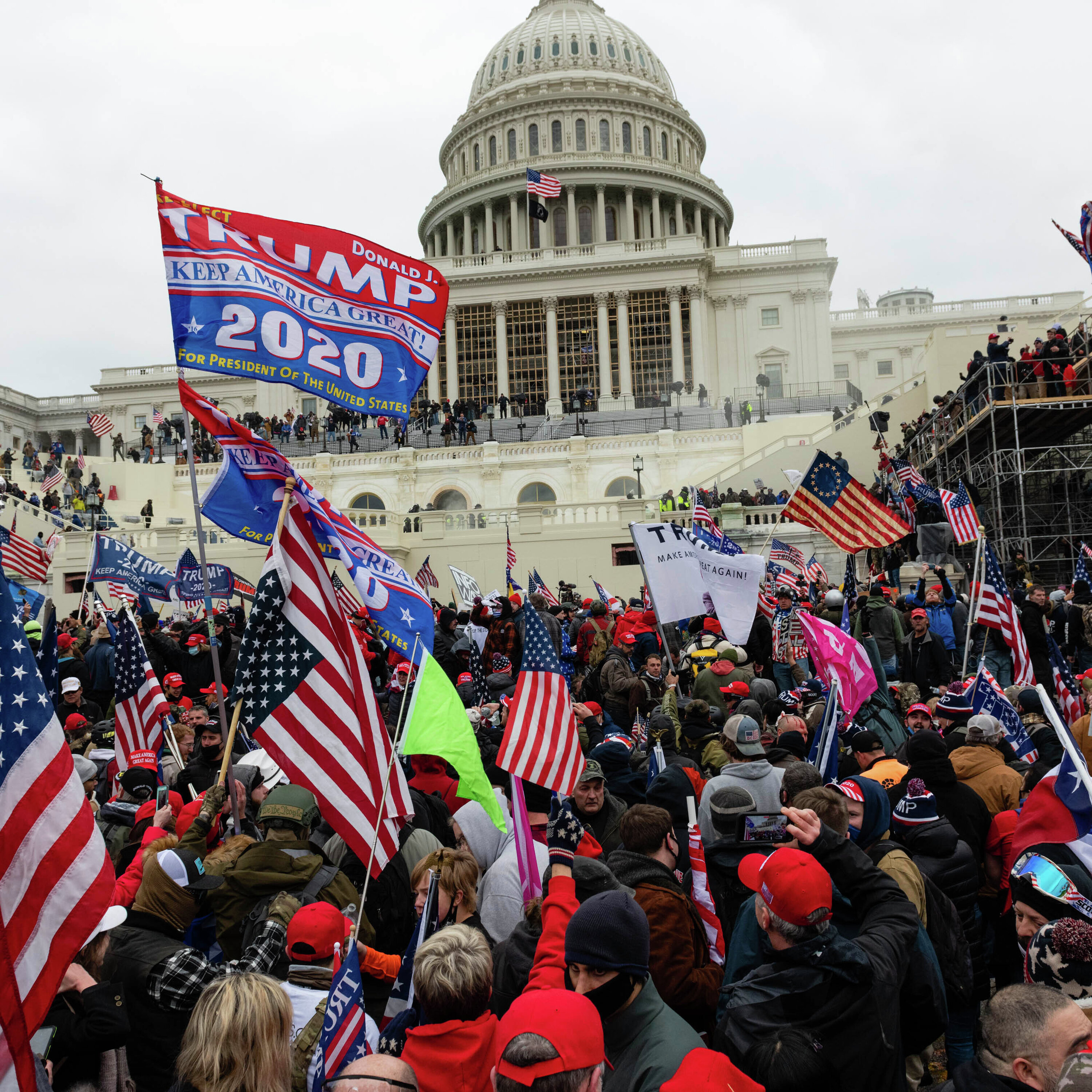
administration says anyone who fits the fund's criteria can apply anyone who alleges they're a victim of government weaponization. But critics say in practice, it could be a way for Trump to line the pockets of his allies and supporters, including rioters who stormed the Capitol on January 6, 2021.
- [03:10]
Eric Wasson
Traitor.
- [03:11]
Bloomberg Host Sarah Holder
Traitor. Traitor.
- [03:15]
Eric Wasson
The idea that some people should be able to go to the government and seek compensation for being unfairly investigated and unfairly prosecuted, I don't think it's so controversial.
- [03:29]
Bloomberg Host Sarah Holder
Chris Strum covers the DOJ for Bloomberg.
- [03:32]
Eric Wasson
I think what's so controversial is that the way this whole thing was rushed and the way it's being set up appears to be engineered just to benefit Trump and allies and conservatives and the causes that MAGA believes in.
- [03:55]
Bloomberg Host Sarah Holder
I'm Sarah Holder, and this is the big take from Bloomberg News today on the show. Trump's anti Weaponization fund, how it could work, who stands to benefit, and why. It's making some prominent Republicans nervous. Chris, last week, the Justice Department announced they'd be creating something called the Anti Weaponization Fund. What is that?
- [04:22]
Eric Wasson
Well, essentially, what they're setting up is a pot of money that individuals and organizations can apply to if they feel that they can make a case that they've been attacked, victimized by the government. And the arguments that they're making is that the previous administrations took actions against Republicans and conservatives and Trump and Trump's allies that were unjustified and went overboard and either investigated or prosecuted and in some cases put people in jail in ways that were considered to be weaponizing the use of law enforcement tools.
- [05:12]
Bloomberg Host Sarah Holder
Where does the money for this fund come from?
- [05:15]
Eric Wasson
The fund is taxpayer dollars that is set aside to make payments to people for compensation. The way that they've set this up is they're holding the money in the Treasury Department. There's a section within treasury that's called the Judgment Fund. And it has historically been used to make payments to individuals and organizations who get judgments against the government. So it involves either settlements that the government reaches with individuals or court rulings where individuals or organizations are awarded compensation, and the money will come directly out of the Treasury.
- [05:58]
Bloomberg Host Sarah Holder
How have different presidential administrations used this fund in the past? And what's different about the Trump administration's approach?
- [06:06]
Eric Wasson
So previously, money was taken out of this fund after people and organizations went through years of litigation or years of negotiations with the government. And there was some kind of a independent or outside person or judge or jury that made a decision on awarding compensation. And Trump has done away with that in this iteration of what he's trying to do. Because when this fund was announced by the Justice Department, by essentially Acting Attorney General Todd Blanch, it came with no direction or construction of how this is going to work. What the administration is saying right now is that the Justice Department essentially is going to identify five individuals who will sit on a commission and that individuals or organizations can make applications to this commission. We don't know who's going to be on the commission. We don't know what process they're going to use to make decisions. We don't know if there's certain categories that will be prioritized. We don't know if there's certain claims that cannot be made. The commission has to be set up. It doesn't even exist yet.
- [07:19]
Bloomberg Host Sarah Holder
So, Eric, Chris has laid out where the money for this fund comes from. But I'm wondering what led to its creation? How did the anti weaponization fund come about?
- [07:29]
Chris Strum
Well, what led to the creation was Trump suing himself. As Rand Paul, who's no liberal, said, this is an extraordinary situation of someone settling with himself, his party to both lawsuits. Trump and his lawyer basically sued for $10 billion over an IRS contractor's leak of Trump's tax returns to the New York Times. And they released them and a certain
- [07:50]
Advertisement Voice
firm released them, which was, I guess,
- [07:53]
Chris Strum
a private firm, but it released them to a lot of the fake news and the fake news went and you're just not allowed to do that. The judge in the case was showing some skepticism of this, and then it was quickly settled before the judge could really weigh in.
- [08:10]
Bloomberg Host Sarah Holder
Why did the DOJ settle?
- [08:12]
Chris Strum
Well, I mean, I have no direct internal communication proof, but Trump is in charge of the administration, so certainly he's pressuring the doj. He fired the first attorney general who was pushed out. And now we have his former personal attorney, Todd Blanch, acting as the acting attorney general, who has certainly shown himself to be very compliant to the president's wishes. In defending the settlement and social media, the president has said he could have easily won the $10 billion and that this is a very generous act on his part to find victims of weaponization and pay them money.
- [08:49]
Bloomberg Host Sarah Holder
But the anti weaponization fund wasn't the only thing the DOJ agreed to in the settlement. Right. Eric, what else did Trump get out of this deal?
- [08:57]
Chris Strum
Well, it turned out he had an extraordinary annex to the agreement saying that all of his past tax returns, including those of his family and associates, would no longer be able to be audited by the irs. Trump has kept his tax returns secret. Unlike opponents in his presidential races under the claim that they're being audited by the irs, there's an extraordinary get out of jail free card, some estimates put at $100 million penalty that was potentially going to be lodged against the president for underreported income in the past and other tax dodges that may be illegal that his organization has employed.
- [09:31]
Eric Wasson
Eric is absolutely correct that Trump was on pace to lose his lawsuit against the irs. This fund was announced just days before the Justice Department had to make a filing in Trump's lawsuit against the irs. And in standard practice, the Justice Department disputes whatever claims are being made against a federal agency. And so the Justice Department was going to have to take an adversarial position against Trump. And that's when this fund was announced. And by all accounts, the judge looking at this was going to rule against Trump.
- [10:06]
Bloomberg Host Sarah Holder
Chris, you started to tell us a little bit about what we know and what we don't know about how this anti weaponization fund will work. Who is expected to benefit from it and how will they apply for these funds?
- [10:19]
Eric Wasson
It is clearly being set up to benefit people who are in MAGA and believe that the government was weaponized against them. And one of the big categories of people that is raising the most concern right now are, are those individuals who attacked the Capitol on January 6, 2021, in order to stop the certification of Joe Biden to be president. They were Trump supporters, they broke into the Capitol, they beat cops, and there have been hundreds and hundreds of individuals who have either pled guilty to crimes or been convicted by juries. Trump pardoned all of them. And so now they are considered to be one of the biggest categories of people who will be in line to make claims to get funding from this weaponization fund.
- [11:14]
Bloomberg Host Sarah Holder
Well, you mentioned one category of likely applicants to this fund, the January 6th rioters. But I'm wondering about the other side of the coin. For example, could citizens who've been detained or targeted by ICE access this fund?
- [11:31]
Eric Wasson
Absolutely. The administration has made it clear that anybody can apply. And so you could very well expect James Comey to apply, the former FBI director.
- [11:41]
Chris Strum
The operative word, though is apply, Chris. I mean, this five person panel is likely to be construed with just Trump allies. And notably, the fund is slated to run out in 2028. So, like, there's no real chance a Democratic president would have control of this money. So, sure, they came out and said they can apply, but chances of getting it, I would peg, is very low, wouldn't you?
- [12:02]
Eric Wasson
Yeah, I would. I mean, the way this whole thing is being engineered is that the money's gonna be directed toward people who Trump favors. Also, the way the commission is being set up, Trump can fire any commissioner at any time for any reason. There's no redress. They don't even have to make public why these people were removed. And additionally, the way the commission is set up, it only takes two individuals in order to make a decision. So they could put three, let's say they put three Democrats on and two hardcore MAGA loyalists on. Those two individuals could just go ahead and steamroll everybody and make the decisions.
- [12:41]
Bloomberg Host Sarah Holder
Can Trump apply? Can his family apply?
- [12:43]
Eric Wasson
Not under the current construction. They laid out very limited conditions. But one condition they did put in there is that Trump and his family members cannot apply. However, they haven't ruled out that Trump's political action committee could apply. They haven't ruled out that Trump's lawyers could apply in order to get reimbursement. So there's ways in which money could flow into Trump's coffers on some level without a direct payment to Trump or his family members.
- [13:17]
Bloomberg Host Sarah Holder
Plans for the fund have faced bipartisan backlash since they were announced. So what could happen next? That's after the break. The U.S. department of Justice's announcement of a nearly $1.8 billion anti weaponization fund meant to pay victims of alleged government lawfare has drawn backlash from both sides of the political aisle. Democrats have framed it as a slush fund to enrich Trump loyalists, and it's also drawn criticism from some Republican lawmakers. I talked to Bloomberg reporters Eric Wasson and Chris Strum about what that could mean for the plan. Eric, why are Republicans coming out against this?
- [14:09]
Chris Strum
President Trump had a very difficult week toward the end of May in Congress with pushback from Republicans. They're trying to pass $72 billion in ICE and CBD. That's Immigration Enforcement funding through the rest of the Trump's term. They need all Republicans, or almost all Republicans to stick completely together through this arduous budget process to ram this through. They were on the cusp of doing that in the Senate when this fund was announced. Todd Blanche went up to the Hill in a closed door meeting and he was absolutely shelled by Republicans. People like Thom Tillis and others screaming, yelling, saying this is completely morally wrong. Others who are closer allies of the president, like Kevin Kramer of North Dakota, just saying the timing is terrible. Why would you drop this right before we're trying to do this big vote? And in general, it's before a midterm where suddenly the Senate looks like it's up for grabs. And there's a sense that the Trump administration is not doing really much at all to help Republicans stay in power, that Trump is focused on talking about the ballroom instead of how to lower prices, continuing to wage an unpopular war. And this just fed into that general frustration. There's a real push, I think, among Republicans to get some kind of guardrails on this. I think the most important one would be to stop anybody who beat up cops or was convicted of assaulting police officers from getting money. There's just a feeling this creates a perverse incentive for people to, in fact, assault police officers if they're going to be paid for it. There's also talk about rearranging the way this committee of five works, making it subject to congressional confirmation. You know, we're attuned to whether any kind of deal can be worked out, but I do not see that $72 billion bill moving forward unless there's at least some kind of change to this fund, because Republicans are just outraged about it.
- [15:49]
Bloomberg Host Sarah Holder
So there are a few things that could come out of this Republican backlash you're describing, Eric. One is, you know, changing the way that this fund works, putting more guardrails on it. Is there a sense that this fund could be stopped or shut down if enough Republicans or lawmakers across the AIs oppose it?
- [16:10]
Chris Strum
I think it's a realm of possibility, but perhaps not likely. In the House, we have a group of moderate Republicans led by Brian Fitzpatrick, who is in a district that Trump lost three times. He's put together a bill to essentially block this. He has a method for getting a vote called the discharge petition. He's gotten several votes on his bills. Essentially, you just need three or four Republicans and all Democrats to sign a piece of paper and force a vote. If that's forced onto the House floor, it could very well pass. Whether it goes into the Senate and gets through the Senate seems a bit more doubtful, but it could put pressure on them to try to come up with some kind of solution.
- [16:46]
Bloomberg Host Sarah Holder
What has the Trump administration and the DOJ said in defense of the fund and the way it's structured?
- [16:52]
Eric Wasson
I mean, they're saying that anybody can apply. So they're saying it's not just limited to Trump allies and MAGA types that can make applications to get money from this fund. So that is the polish that they're trying to put on this. I just don't think that anybody's really buying that at this point. There are lawsuits that have already been filed, making different arguments about why this fund should be stopped. The problem is that the fund isn't in existence right now and the commission hasn't been set up. It's kind of like a chicken and egg thing where the fund needs to come into existence and the commission needs to take action in order to create a class of people who have standing to file lawsuits against the fund.
- [17:43]
Bloomberg Host Sarah Holder
So it might be too soon to tell how exactly this fund is going to work, who's going to be paid out, but in the meantime, have we seen anyone apply to the fund yet?
- [17:52]
Eric Wasson
Nobody can apply officially, but we've seen people put up their hands and say they are going to apply. Michael Flynn, for example, he might be somebody that would want to apply. Roger Stone, he a political operative for Trump. He was part of the organizing around the January 6th attack on the Capitol. These are Trump allies who they were indicted by the Justice Department for certain actions that they took. Trump pardoned them. And then you have a whole slew of people who were involved in January 6th who were actually charged by the Justice Department. And either they pled guilty or they were convicted at trial. And, you know, I think it's important to say that you have a lot of examples of people who had due process through the courts in order to try to litigate their claims of innocence and either eventually pled guilty or they were convicted by a jury. And there's no sense of how anybody on this five person committee is going to be able to replicate what would happen in court. And so you could have a situation right now where somebody already filed a lawsuit against the government claiming that they were victimized and a target of weaponization by the Biden administration and their case was dismissed by an independent judge and now they just bypass that. You know, all of that process that was done is completely set aside and they just go into this committee and the committee secretly authorizes payments to them. The way that they come to their decisions in the amount of money that they pay may never be made public. The settlement that was announced just says that the committee has to make a report to the attorney General, Todd Blanche, but it doesn't say that that report ever has to be made public.
- [19:47]
Bloomberg Host Sarah Holder
This is the Big Take from Bloomberg News. I'm Sara Holder. To get more from the Big Take and unlimited access to all of bloomberg.com, subscribe today@bloomberg.com podcastoffer if you like this episode, make sure to subscribe and review the Big Take. Wherever you listen to podcasts, it helps people find the show. Thanks for listening. We'll be back tomorrow.
- [20:15]
Advertisement Voice
If you follow markets, you know the value of long term thinking. You plan, you diversify, you you prepare for volatility. But even the best strategies can't prevent every bad day. For more than 75 years, Cincinnati Insurance has helped individuals and businesses navigate tough moments. With expertise, personal attention and independent agents who focus on relationships, not transactions, the Cincinnati Insurance companies let them make your bad day better. Find an agent@cin fin.com It's 10:01am on
- [20:52]
a Monday all at once. Your sales leader needs to know which deals are at risk, your PM wants feature adoption by cohort, and your CFO needs one last graph for the board. Now your data team has to say no to somebody. Hex changes that. Ask any data question in plain English and get an analyst grade response, all backed by your actual business context as defined by your data team. Start saying yes to more data questions at Hex AI okay tech leaders, Word
- [21:24]
Chris Strum
on the street is security incidents are dropping way down with Windows 11 PCs built in. Security for the Win upgrade to Windows 11 Pro at windows means business dot com.