Loading summary
Transcript54 lines
- [00:00]
Chase Business Advertiser
Being a small business owner isn't just a career, it's a calling. Chase for Business knows how much heart and effort go into building something of your own. Manage all your business finances, from banking to payments to credit cards, all in one place with Chase's digital tools. Plus access online resources designed to help your business thrive. Learn more@chase.com business chase for business make more of what's yours. The Chase Mobile app is available for select mobile devices. Message and data rates may apply JP Morgan Chase Bank Naomi Member FDIC Copyright 2026 JPMorgan Chase Co.
- [00:36]
Wise Advertiser
This podcast is brought to you by Wise the Smarter Way to manage your money Internationally if you're getting a headache from juggling different currencies and different bank accounts in different countries, there's a better way to receive money in the currency you need without the slow transfer times or hidden fees. Meet Wise, the savvy way to handle your money internationally. Hold balances in up to 40 currencies with the mid market exchange rate on every conversion. Whether you're receiving payments from tenants abroad, earning as a digital nomad, or converting DIV dividends from your international investments, the Wise Multi Currency account is for you. Be Smart Get Wise Download the Wise app today or visit wise.com Terms and Conditions apply.
- [01:14]
Adobe Acrobat Advertiser
You need to make a huge presentation in an hour. Luckily, Adobe Acrobat Studio uses AI to take all your documents and generate a presentation with a single click, building slides faster than ever before. So if you need a last minute pitch deck, do that with Acrobat. Need to level up your presentation design? Do that with acrobat. You have 30 plus documents that need to be simplified into a proposal. Do that with Acrobat. Learn more@adobe.com do that with Acrobat.
- [01:45]
Chase Business Advertiser
Bloomberg Audio Studios Podcasts Radio News.
- [01:55]
Juan Ha
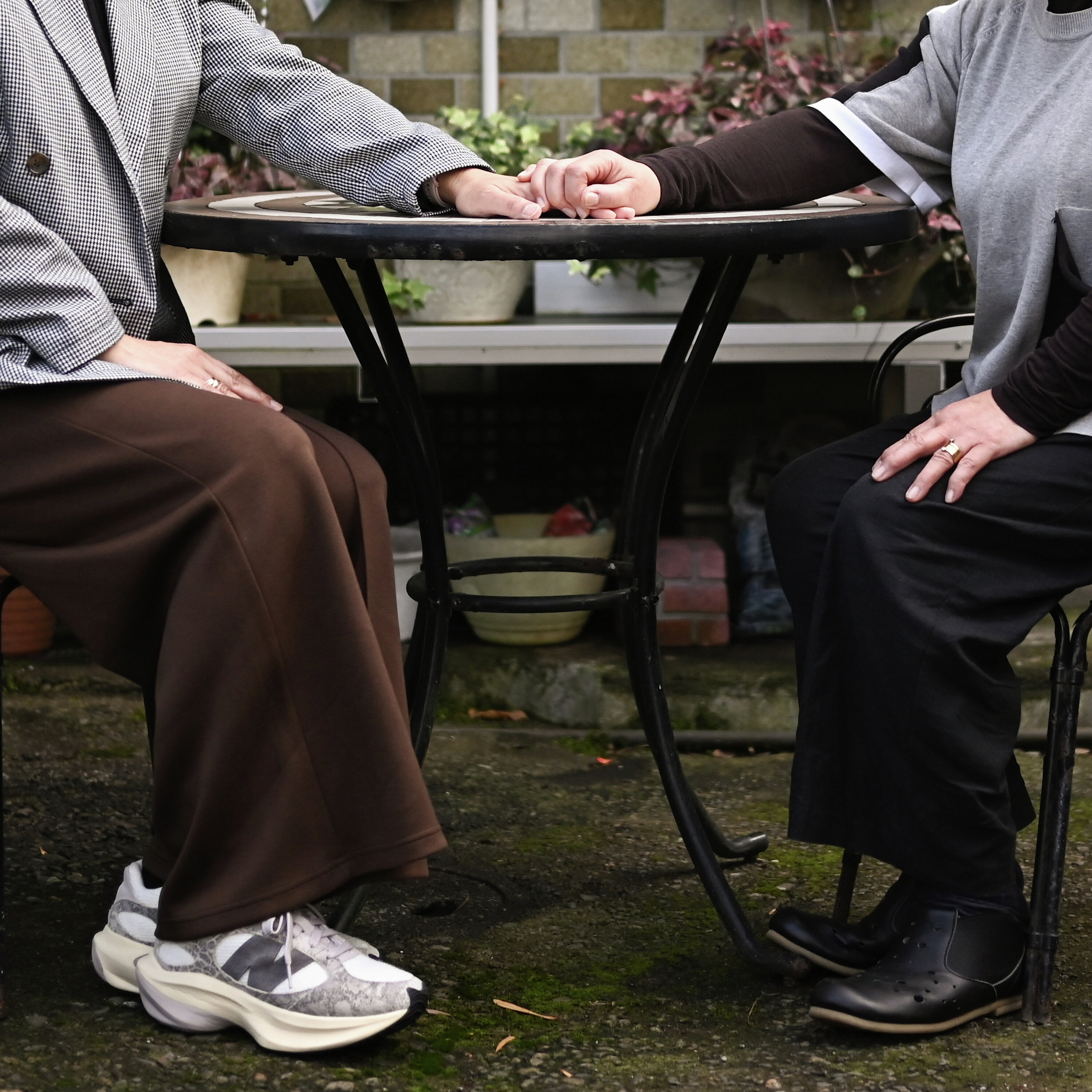
Shizuko is a 76 year old retiree who lives in the Japanese rural district of Fukui just north of Kyoto. Her daughter Mai is 55. Chizuko and Mai are pseudonyms that they've asked us to use for privacy because they're talking about their family's finances. They were interviewed by Bloomberg in October.
- [02:16]
Alice French
So Chizuko, she lives in, you know, one of the rural parts of the prefecture, kind of surrounded by a lot of forestry and rice fields.
- [02:25]
Juan Ha
That's Alice French, who covers the Japanese stock market out of Tokyo.
- [02:30]
Alice French
She's been an active stock investor since she was kind of in her 30s or 40s, so her finances are important to her. She's built up quite a nice nest egg. Obviously she's a pensioner now, and she relies quite heavily on those savings that she's built up.
- [02:44]
Juan Ha
Like many Japanese families, the pair rarely talk about money. But recently, Chizuko's daughter heard something that pushed her to finally broach the topic of financial planning with her mom.
- [02:59]
Alice French
Mai. The daughter was telling us that she's kind of been hearing stories recently, one of which came from another relative, one of her relatives. Basically their account was found frozen after they passed away.
- [03:16]
Juan Ha
Mai said the children of her elderly relative had no idea the account had been frozen. When it came time for them to handle the estate, they were shocked to discover that they couldn't access their parents money.
- [03:29]
Alice French
And this kind of really triggered an anxiety for Mai. You know, she's thinking, you know, her parents are also kind of getting to that age. They're relying on a pension. And obviously, you know, one never really wants to have to think about your parents kind of becoming unable to handle things themselves. But it is a reality and that's something that you have to think about.
- [03:48]
Juan Ha
It's a reality playing out all over the world as populations age and families plan for their futures. In Japan, home to the world's oldest population, there's a greater sense of urgency to the planning. That's because almost a third of the country, around 36 million people, are over the age of 65.
- [04:08]
Alice French
More and more seniors are now reaching that age where they might be experiencing dementia or, you know, these kind of financial risks that come with aging, whether that be kind of rash purchases, sudden selling.
- [04:22]
Juan Ha
In Japan, these financial risks aren't confined to small pocketbook. Seniors with symptoms of cognitive decline now control trillions of dollars in liquid assets. That's cash and investments in stocks, bonds and other securities, assets that are at risk of being mismanaged or not being put to use in the economy.
- [04:44]
Alice French
It's almost half of Japan's GDP that falls into this category. And you know, from health economists to think tanks to lawyers, all of the people that we spoke to are basically saying, as that pile of assets grows, it's going to slow down consumption, it's going, going to slow down markets, it's going to start impacting economic growth. It's kind of got to a level now where I think it's becoming difficult to ignore. And that's really started to raise alarm bells in Japan, but, but also across other economies.
- [05:17]
Juan Ha
This is the big tech Asia. From Bloomberg News, I'm Juan Ha. Every week we take you inside some of the world's biggest and most powerful economies and the markets, tycoons and businesses that drive this ever shifting today on the show, Japan's dementia dilemma. A growing share of the country's financial assets are controlled by the elderly, many at risk of cognitive decline. Why? That's a problem for everyone, not just Japan and what the Japanese are doing about it. In Japan, older people have a lot of financial power. Those over 65 control more than half of the $14 trillion in cash and securities held by Japanese households. But Bloomberg's Alice French says a big chunk of those liquid assets is held by people with dementia and cognitive issues.
- [06:20]
Alice French
We understand from data from Sumitomomitsui Trust bank that it's at around $2 trillion, which is around 300, 315 trillion yen. Now that includes people who have an actual dementia diagnosis, but it also encompasses people with something called mild cognitive impairments. Now this is usually something that comes in kind of in the years before you might get an official dementia diagnosis. You know, sort of from the age of 65 onwards. Many older people do start to experience kind of lapses in memory, you know, struggling with judgment and things like that and just kind of overall cognitive decline.
- [06:57]
Juan Ha
People may develop cognitive decline and dementia due to a variety of factors including genetics and lifestyle choices. But age is the strongest known risk factor, with research showing that the risk of developing dementia rises after 65. In Japan, the population of elderly with cognitive decline is growing fast. And Alice says there are big financial risks associated with what some are calling dementia money.
- [07:26]
Alice French
I've heard stories of seniors with dementia or kind of cognitive issues, for example, suddenly donating huge amounts to charities that they love or you know, buying into, into schemes that it's not necessarily scamming, but it's sort of just perhaps what one would describe as ill advised spending. It can also creep in in ways like missed bill payments. That obviously affects credit scores and then kind of on a bigger scale, you know, obviously fraud is a huge problem. We know that in over 60% of financial scams in 2024 were targeted at over 65s, which is pretty staggering. The older population are seen as more vulnerable to this. And of course that's only exacerbated if you have dementia or some, you know, cognitive issues.
- [08:12]
Juan Ha
Financial firms can freeze accounts or place limits and restrictions on them if they identify what they consider to be erratic spending patterns. Research from Tokyo's Keio University shows that about 11% of adult children who take over elderly parents finances have found those accounts frozen.
- [08:32]
Alice French
In terms of how they're actually implemented these freezes, it really does vary from sort of company to company and from bank to bank. One of the firms that we spoke to said that their staff makes annual visits to clients who are aged over 75 and sort of judges their cognitive abilities. Now of course, you know, in most of the cases, these sort of securities firms employees, they don't have a medical background and they're sort of having to just use their best judgment. Obviously one would assume with the client's best interests, you know, at heart. But it is a very difficult judgment call.
- [09:05]
Juan Ha
Money in a frozen account can't be stolen by a scammer or squandered by an older person who might not understand how they're spending. But it can't be accessed by the account holder's children either. And that's a problem. They might need that money to pay for their parents care and if they can't access it, they might end up paying for that care themselves. The accounts can be unfrozen, but that can be a long bureaucratic process and it doesn't always happen. In some cases, money in those frozen accounts is not claimed at all and ends up in the hands of the government.
- [09:40]
Alice French
So that means that a lot of this money ends up dormant, whether it's in cash piles under seniors mattresses at home or whether it's sitting in bank accounts.
- [09:49]
Juan Ha
Alice says this growing pile of dormant dementia money has implications for Japan's economic. Japan is struggling to boost its economy after decades of deflation. The country needs its people to spend that money, not let it sit idle in frozen or dormant bank accounts.
- [10:08]
Alice French
One of the think tanks that I spoke to for this story, for example, had this stat that said that if the kind of dormant money that the over 60s are sitting on, if only 0.2% of that money was actually actively spent, it could boost GDP by 1%.
- [10:23]
Juan Ha
There's an irony here. Some banks are worried that their older customers might be taking too many risks with their money. Some corporations, on the other hand, are concerned that their older investors might not be taking on enough risk. 42% of retail investors in Japan are over 60, Alice says if those people become too risk averse as they age, that could affect a company's liquidity and even its corporate strategy.
- [10:50]
Alice French
If a big chunk of your shareholders, for example, have dementia or are either unable or unwilling to kind of actively use their shareholding rights, that can get in the way of acquisition deals. That can get in the way of things like corporate governance decisions.
- [11:06]
Juan Ha
She says. It's becoming a big issue for family owned companies. More than 90% of businesses in Japan are family owned and over half of Companies are run by people age 60 and older. This all adds up to a looming issue for corporate Japan.
- [11:22]
Alice French
For example, if the founder is still the majority shareholder, but maybe has dementia or is just aging and is unable to use those shareholder rights, M and A deals have been collapsing. You know, you can't even do something as simple, for example, as appointing a new board member if you can't get majority shareholder approval. And of course, this is all happening against the backdrop of Japan trying to push forward with corporate governance with better capital efficiency. We've got an M and A boom that's continuing here and is expected to boom even more in 2026. So this kind of is, I think, a real tangible risk and that will start to have, I think, a rippling effect across the markets and across lots of different asset classes.
- [12:09]
Juan Ha
What is Japan's government doing to protect its aging investors? And how does it plan to tap into those dormant trillions? That's after the break.
- [12:25]
Adobe Acrobat Advertiser
You need to make a huge presentation in an hour. Luckily, Adobe Acrobat Studio uses AI to take all your documents and generate a presentation with a single click, building slides faster than ever before. So if you need a last minute pitch deck, do that with Acrobat. Need to level up your presentation design? Do that with acrobat. You have 30 plus documents that need to be simplified into a proposal. Do that with Acrobat. Learn more@adobe.com do that with Acrobat.
- [12:55]
Alice French
Did my card go through?
- [12:57]
Juan Ha
Oh no.
- [12:58]
Wise Advertiser
Your small business depends on its Internet, so switch to Verizon business and you could get LTE Business Internet starting at $39 a month when paired with select Business Mobile plans. That's unlimited data for unlimited business.
- [13:10]
Juan Ha
There we go.
- [13:11]
Wise Advertiser
Get the Internet you need at the price you want. Verizon Business Starting Price for lte Business Internet 25 Mbps Unlimited Data Plan with select Verizon Business Smartphone Plan Savings terms apply.
- [13:24]
Okta Advertiser
So have you heard the story about the prescription plan with savings automatically built in, it's where a family of any size can feel confident the cost of their medication won't hold them back. Go to CMK Co Stories to learn how CVS Caremark helps members save just by being members. That's CMK Co stories.
- [13:55]
Juan Ha
Japan's population is aging faster than any other in the world, and the number of Japanese people with dementia is growing fast too. That makes the problems that come with having assets controlled by people living with cognitive issues hard to ignore. Bloomberg's Alice French says the Japanese government is taking action. That includes reviewing Japan's guardianship law. Similar to power of attorney in the U.S. the law allows family members to take legal control of a relative's finances if dementia sets in.
- [14:30]
Alice French
Only around 5% of dementia sufferers in Japan right now are using that system and the government would like to boost that Now. It seems that one of the main reasons that people are a little bit wary of using the system right now is that once you're in it, once you sign sign on for this guardianship system, you can't get out. That does kind of put off some people who might, for example, change their mind. So the government is looking at the possibility of bringing in that option that you could withdraw at a later stage once you're in it. And they hope that that kind of new level of flexibility will bring more people into the guardianship system.
- [15:04]
Juan Ha
Alice says the committee reviewing changes to the existing law could propose amendments as soon as this year. But it could take years for those changes to take effect. Until then, banks and securities firms are coming up with their own solutions to ensure that their elderly clients assets are protected and some older people, alert to their circumstances, are working with them. Chizuko and Mai, who we met at the beginning of this episode, had a frank conversation about Chizuko's financial situation. They decided that Chizuko would make Mai a guardian of a special family support account offered by a local securities firm. Now if Chizuko is unable to manage her finances, Mai can make decisions on her behalf.
- [15:53]
Alice French
I think in many ways this mother, daughter, couple were kind of a best case scenario and the challenge here is kind of scaling them to be the majority. The sense that I've got for sure is that the finance industry is really kind of at the forefront of sort of pushing this issue forwards and raising the awareness. Imamura, who I spoke about which Chizuko uses, they were very frank with us. You know, they were telling us that they've seen a spike in, in fraud and scams, particularly amongst their elderly clients. And they really want to kind of crack down on that because it's a risk for them too. And in recent years they have started, like I say, bringing in these kind of solutions for their senior clients so that they can manage their assets alongside a younger family member. So these family support accounts are kind of gaining traction. There's company called Kagawa which is on Shikoku, one of the sort of more southern islands of Japan, which has brought in a similar system just in the Last sort of 18 months or so and has said that they've been surprised by the amount of Demand. The steps are gradual and small at this stage, but there's definitely a sense that momentum is building and companies are.
- [17:02]
Juan Ha
Beginning to look for ways around the issues that come with having too many older shareholders. Japanese telecoms provider NTT found in 2023 that almost half of its share were aged over 70. The company solved the problem with a stock split which had the effect of diversifying the age of its shareholders.
- [17:22]
Alice French
So NTT, for example, did a 25 for one stock split in mid 2023 and they've now seen the proportion of over 70s among their shareholders down below 20%. So in that sense it was pretty effective. Right. And we've seen stock splits kind of shooting up over the past few years. There are lots of reasons for it. It's partly because of the sort of corporate governance drive and the Dr. Shareholder returns. Of course, if you can attract younger shareholders, they'll hold your stock for longer.
- [17:51]
Juan Ha
But Alice says one of the biggest challenges is the lack of awareness of this looming financial dilemma.
- [17:57]
Alice French
It is quite a taboo topic and it's one of the biggest challenges that we found actually in trying to rapport on this theme, right, is that a lot of people don't really want to talk about it. It is a bit of a touchy subject. And I think that's not just in Japan. I think all across the world, part of the problem is almost a kind of unwillingness to want to confront your own weakness. We know that, you know, a lot of market players across the world obviously fall into the over 65 category. And nobody kind of wants to think that they might not be making, you know, the best financial decisions on, on the day to day. So I think there is definitely that resistance there to kind of confront the reality. People don't necessarily want to think of themselves potentially losing independence and the ability to handle things by themselves and having to rely on their kids.
- [18:44]
Juan Ha
That's if they have children to rely on. More seniors are living al in Japan. A government study estimates that by 2050, as many as 20% of Japanese households could be occupied by elderly people living alone and potentially handling their finances without any support. That means the burden would ultimately fall on the government and the financial industry. Japan is working hard to find solutions and the world is paying close attention. That's because dementia and cognitive decline are beginning to take a toll on economies across the world.
- [19:25]
Alice French
In the US around $6 trillion could be owned by dementia sufferers in the States right now. Now, that is not a number to sniff at. And obviously that's something that again, is only going to grow as the population continues to age. South Korea, another Asian nation that is often in the headlines for its aging population. Over $100 billion held by dementia sufferers. A lot of that in illiquid real estate.
- [19:51]
Juan Ha
There's a lot of talk about the rising tide of dementia in Japan's population and a lot of worry about the knock on effect that this dementia money is having on economic growth. But Alice says she's not seeing much in the way of solutions.
- [20:07]
Alice French
I think for me what surprised me or I suppose worried me the most most, was kind of how haphazard the solutions are at this stage. So for the financial industry, they are desperately trying to get a handle on a problem that I think has somewhat crept up on them. You know, there is no overarching playbook about how to deal with this. The pace of aging in Japan is so fast and I think a lot of people didn't really think about the risks that will then come with that from the financial side.
- [20:53]
Juan Ha
This is the Big Take Asia from Bloomberg News. I'm wan ha to get more from the Big Take and unlimited access to all of bloomberg.com, subscribe today@bloomberg.com podcast offer. If you like the episode, make sure to subscribe and review the Big Tick Asia. Wherever you listen to podcasts, it really helps people find the show. Thanks for listening. See you next time.
- [21:22]
Okta Advertiser
These days it seems like AI agents are just about everywhere. You turn every field and every function. But without identity, you can't trust they'll serve your business instead of jeopardizing it. Fortunately, Okta helps you get identity right by securing your AI agents identities, giving you a single layer of control, a single standard of trust. So whether an AI agent supports a single user or your entire enterprise, with Okta you'll turn risk into opportunity. Secure every agent. Secure any agent. Okta secures AI.
- [21:53]
My Policy Advocate Advertiser
Here's a paradox. We buy insurance for peace of mind. Yet the very policies we trust can deliver the biggest financial shocks. Across America, millions of claims are denied every year, not because people did anything wrong, but because policies quietly excluded the things that happened. The psychology of trust tells us we assume the contract is fair. But in insurance, the information gap is massive. The insurer knows every detail of what's covered. The policyholder rarely does. That's where my policy advocate comes in. For just 27 cents a day, their platform reads your policies and shows you in plain language where you're vulnerable. They're not selling insurance. They don't do that. It's about transparency, giving ordinary people the same understanding and insurance companies have had for decades. Because when you know what's really in your policy, you can plan, protect and avoid surprises. Before you trust your policy to protect you, let my policy advocate tell you what it really says. Visit mypolicyadvocate.com today. Peace of mind starts with knowing the truth. Mypolicyadvocate.com this podcast is brought to you.
- [22:57]
Wise Advertiser
By Wise the Smarter Way to manage your money internationally if you're getting a headache from juggling different currencies and different bank accounts in different countries, there's a better way to receive money in the currency you need without the slow transfer times or hidden fees. Meet Wise, the savvy way to handle your money internationally. Hold balances in up to 40 currencies with the mid market exchange rate on every conversion. Whether you're receiving payments from tenants abroad, earning as a digital nomad, or converting dividends from your international investments, the WISE Multi Currency account is for you. Be Smart, Get Wise, Download the Wise app today or visit wise.com Terms and Conditions apply.