Loading summary
Transcript61 lines
- [00:01]
Safeway/Albertsons Announcer
Safeway and Albertsons have made saving easier than ever with great savings on family favorites this week at Safeway and Albertsons. USDA Choice Beef, boneless, tri tip, whole or flankin style ribs bone in our $6.99 per pound member price and asparagus or $1.99 per pound member price plus 16 ounce strawberries 6 ounce raspberries or blackberries are $1.97 each. Limit three member price with digital coupon. Hurry in. These deals won't last. Visit safewayoralbertsons.com for more deals and ways to save.
- [00:33]
Javier Blass
Bloomberg Audio Studios Podcasts, Radio news We could call it a tremendous success right now as we leave here. I could call it. Or we could go further. And we're going to go further.
- [00:48]
Stacey Vanek Smith
President Trump began to signal on Monday that the US had already achieved victory in Iran, saying in a press conference that evening that the war will end, quote, very soon.
- [00:58]
Javier Blass
But soon. Days, I think so okay, and with respect, very soon.
- [01:02]
Stacey Vanek Smith
The comments triggered a 25% drop in crude oil prices, bringing some relief to the global economy after oil had surged to a four year high of nearly $120 a barrel overnight Sunday into Monday.
- [01:13]
Javier Blass
The more that we spend on energy, the less that we spend on something else.
- [01:18]
Stacey Vanek Smith
Even though the spike in oil prices was brief, Bloomberg opinions Javier Blass says that sustained high oil prices can quickly become an issue for the US and for global economies.
- [01:28]
Javier Blass
If it's a few days, no problem. It's a few days, a few weeks, it starts to be a problem. If it's a few months, certainly it is a problem. It's not just gasoline. But the bigger impact, the more potentially damaging for inflation, is that everything else needs to be repriced at a higher level because everything gets transported. The Uber driver is spending more money into gasoline. Their fares need to go up. Jet fuel goes higher. Every airline in the world increase their fares. But also think about the supermarket. If the cost of transportation of groceries go up, that means that at some point the grocery costs have to go higher.
- [02:07]
Stacey Vanek Smith
The jump in oil prices is due to a near standstill in the Strait of Hormuz, a crucial shipping lane off the coast of Iran, where 20% of the world's oil is transported. Now, Trump has suggested the US can offer oil tankers safe passage through the Strait, but oil supply will likely be constrained for as long as the conflict drags out. That's in part by design, as that's one of Iran's major points of leverage.
- [02:32]
Javier Blass
Unless the traffic on the Strait of Hormuz restart, the prices are going to go creeping higher and higher, and that's bad news for the economy, but it's also bad news politically. President Trump doesn't want to be fighting midterm elections with those kind of prices because the price of gasoline is also very visible and it has this kind of magnifying impact.
- [03:00]
Stacey Vanek Smith
I'm Stacey Vanek Smith in for Sarah Holder and David Gora. And this is the big take from Bloomberg News today on the show why the global economy is so sensitive to oil hitting $100 a barrel and how long the impact of even a brief spike could last. Javier, you watch the price of oil a lot and you spend a lot of time thinking about the implications all over the world. When you saw oil go up over $100 a barrel, what went through your head?
- [03:31]
Javier Blass
My day is ruined.
- [03:33]
Stacey Vanek Smith
What do you mean? What do you mean your day is ruined?
- [03:38]
Javier Blass
Well, the market reopened on Sunday at 10 o' clock at night in the evening here in London, where I'm based. I was watching the market reopen. I was expecting more or less $100 oil almost immediately because I was talking to traders I knew were more or less where everyone was going to go into the opening. I mean, what is the difference between 99 and a half and 100? Well, it's not a triple digit. It's completely psychological. But I know that the moment that we hit $100 is on every news bulletin at night on television and everyone is worried. My dad is phoning me and saying, should I buy more petrol, more gasoline for the car? Everyone is talking immediately about oil. And that means that the stock market probably is going to go down. The bond market is going to also suffer. Just $100 oil puts oil absolutely center of the global economy. You think about the last time that we have high oil prices was in 2022 after Russia invade Ukraine. I was checking before I came to the studio, how Many days in 2022 the price of oil closed at the end of the day, about $100 a barrel, 110 days. We so far on this crisis have yet to get at the time that we are recording this, we have yet to see a closing price above $100. You know, we need many, many, many days of $100 plus to really damage the economy. So we are really at the beginning of this. If three months from now we are still talking about this, then certainly we have a problem.
- [05:19]
Stacey Vanek Smith
Why is this conflict and this little passageway between the Persian Gulf and the Arabian Sea, why is that able to have such a huge impact on Global prices.
- [05:32]
Javier Blass
Well, there are three reasons why the crisis is having such an impact on the market. One is that around that body of water we have some of the world's largest oil producing countries. Saudi Arabia, Kube, Iraq, Iran, Qatar, the United Arab Emirates, Bahrain. These are the kind of countries that are associated with oil production. Then it's a very narrow strait. The channel on the water where the vessels, the big oil tankers can go into is only 2 miles wide, is really, really narrow.
- [06:03]
Stacey Vanek Smith
Have you seen it?
- [06:03]
Javier Blass
I have seen it. I've been in the Strait of Hormuz. I have been with a small boat going in and out. And you know, the tankers are humongous. I mean, we are talking about 350 meters long tanker. I mean each tanker carries about 2 million barrels of oil, which is enough to supply for a full day a country like France. So it's narrow and then you cannot really bypass in size. It's 20 million barrels a day of crude oil and refined products. We have some bypass options, but they give us about 7 million barrels a day of bypass at best. So even if you get all the bypass working, you can bypass about a third, but you still have 2/3 of problem. Typically when we have a problem with oil production anywhere in the world, we say, okay, can we tap the spare capacity? So say that we have a hurricane hitting the Gulf coast in the United States and we lose production, we lose a million barrels a day, which has happened in the past, over the last 20 years, a couple of times. So Saudi Arabia ramp up production and offset that, that, that loss. The main problem is that all the spare capacity is concentrated inside the Strait of Hormuz. Now you cannot go to Saudi Arabia because they cannot get the barrels out. And that's really what is exacerbating the crisis.
- [07:26]
Stacey Vanek Smith
I wanted to run some basic math by you, so I spoke over the weekend with Christopher Knittle, he's an energy economist at MIT and he gave me this kind of useful equation that I wanted to run by you.
- [07:36]
Christopher Knittle
So a good rule of thumb is every $10 increase in the price of oil raises our gas prices by about 20 cents.
- [07:46]
Javier Blass
Yeah, that's about right. That's a very well known back of the envelope math that you could use in the industry. As always, this is a rough estimate.
- [07:54]
Stacey Vanek Smith
Oil before the conflict I think was at around 65 ish dollars a barrel. Is that right?
- [07:59]
Javier Blass
Yep.
- [07:59]
Stacey Vanek Smith
What is it now?
- [08:00]
Javier Blass
We are at 88 actually.
- [08:02]
Stacey Vanek Smith
Okay, so 88, like that's roughly $20 a barrel more than it was before the conflict. So that would be roughly 40 cents a gallon more.
- [08:11]
Javier Blass
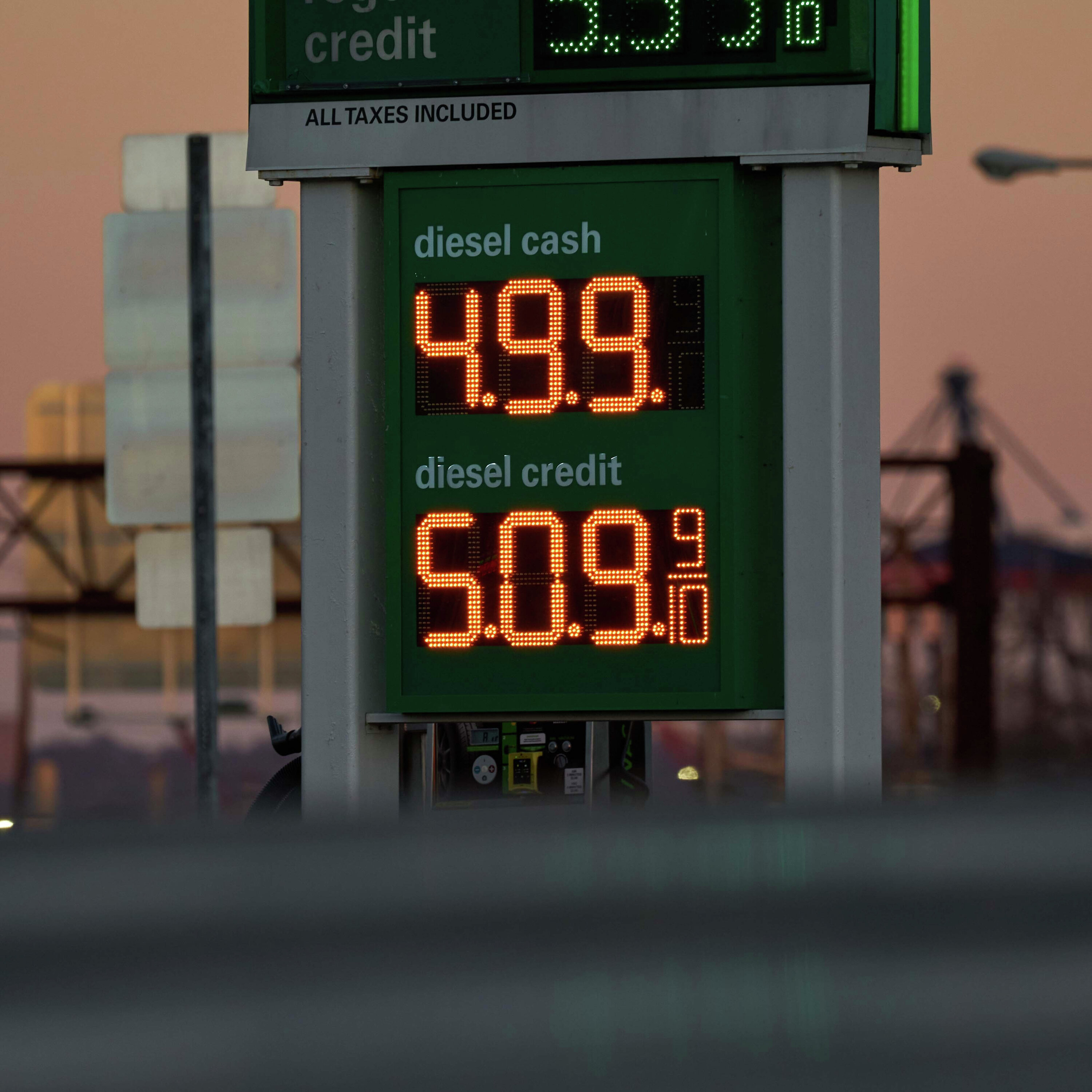
Yeah, that's about 40 cents a gallon more. And that's more or less what we have seen already happening on the market. And the US Gasoline price, it just goes immediately. There are other countries, particularly in Europe, where taxes are very important on price formation for gasoline, but in the U.S. they really, the drivers, feel the impact of the oil market. Literally the following morning.
- [08:33]
Stacey Vanek Smith
Well, it was interesting because when I spoke with Knittle, he was actually driving and he was actually thinking about gas prices while he was mapping out his trip.
- [08:42]
Christopher Knittle
I got it in Tewksbury, Massachusetts, and it was $3.99 a gallon.
- [08:51]
Javier Blass
Whoa.
- [08:51]
Stacey Vanek Smith
What did you think when you were filling up your car?
- [08:55]
Christopher Knittle
I. I actually didn't fill up all the way because I know I'm going to be stopping later where I'm in New Hampshire, where I'm expecting it to be much lower.
- [09:05]
Stacey Vanek Smith
So this is. This is apparently happening all over the country. People are kind of mapping out their trips and thinking about gas prices all the time. What other prices might we see go up in addition to gas prices?
- [09:18]
Javier Blass
If the conflict lasts? And I think that that's the big if. I mean, we were to be in a situation of many, many, many weeks, I will start really getting worried about diesel. Diesel is important because of the freight industry, transportation, all those big trucks servicing everything else, so groceries that will go up over time. Inside the Strait of Hormuz area, we have not only lost production of crude oil, we have also lost production of refined products. There are a number of refineries, and
- [09:50]
Stacey Vanek Smith
one that would be jet fuel. Gasoline, like all the things that come
- [09:53]
Javier Blass
from oil, all those kind of things that they come from the barrel. But we rely a lot in certain parts of the world. We rely a lot from that region, refining capacity for jet fuel. So I'm expecting the first impact that we are going to see, all of us, the price of gasoline. Second impact, traveling around holiday summer airfares. They're going to go up.
- [10:14]
Stacey Vanek Smith
Hmm. Take Asia right now. Like, what is the situation there? Is their situation the same as we're seeing in the US or is it different?
- [10:23]
Javier Blass
It's worse, much worse than the United States because Asia relies on the Middle East a lot for their oil. In the oil market, we talk about being priced out from the market. We have less supply, so we need to destroy some demand. And typically that demand destruction happens in poorer countries that they don't have. Their citizens don't have exactly the same money to keep up with every other person in every other country that Is happy, is not happy, is unhappy, paying the high price, but they can't afford it. So places like Bangladesh, Pakistan, other place, Vietnam, Philippines. In Asia we are beginning to see demand destruction via, you know, there is less oil, there is less gasoline, diesel, et cetera, et cetera. So governments have to announce some measures like, you know, asking citizens not to travel too much, etc. Etc. So in Asia is really where this crisis is hitting harder.
- [11:24]
Stacey Vanek Smith
How have the markets been reacting to these kind of increases in all this volatility in the price of oil?
- [11:30]
Javier Blass
It has been a wild period on the market. We have seen trade range in one single day where the price of oil at the lowest point of the day compared to the highest point of the day will be more than $30. That is very unusual. I have been covering this market for 25 years. I have seen that a couple of times on my career. I mean, there's a lot of tension on the market. We see the price at times reacting 5, 6, 7, 8%, using like 2, 3 seconds because a headline has flashed on the screens of oil traders saying that, you know, Iran has done that or the United States is saying that.
- [12:06]
Stacey Vanek Smith
Do you see the markets pricing in a long term conflict or do the markets seem to think it's going to be pretty short lived?
- [12:12]
Javier Blass
No, at the moment the market is pricing a very short conflict. If the market was pricing a long conflict, measuring months rather than days where we were trading above $150
- [12:24]
Stacey Vanek Smith
after the break, what happens if this conflict stretches out for weeks or even months? And how hard will it be to bring prices back down.
- [12:37]
Sonesta Red Lion Hotels Announcer
From coast to coast? Unlock adventure at Red lion hotels by Sonesta, where restful sleep, friendly service and trusted local knowledge are part of every stay. Red lion makes it easy to feel welcomed, comfortable and connected. Wherever the road takes you, whether you're traveling for business or pleasure, you, you can spend less and make more of every trip. When you sign up for Sonesta TravelPass, you'll get their best rates instantly. Go to sonesta.com to book your stay and unlock the best rates with Sonesta Travel Pass. Here today, roam tomorrow. Join now@sinesta.com Terms and conditions apply.
- [13:15]
Stacey Vanek Smith
Javier, we talked about the possible reverberations of high oil prices around the global economy. Let's talk about some of the fallout we could see from all of that, from that chain reaction. First of all, one of the things that's been coming up a lot is US Treasuries, US treasury bonds. Is this conflict destructive or helpful for US Treasuries, what have we been seeing?
- [13:38]
Javier Blass
We are a week and a half into the conflict for getting really too painful action to the treasury market or even the dollar. We will need many, many weeks of the conflict and very high prices.
- [13:53]
Stacey Vanek Smith
We talked about the relationship between oil prices and the cost of gas, also the cost of goods and services and the increased volatility in the market. So if the conflict ended tomorrow, how long would it take for things to come back down in cost? The price of oil to restabilize and the price of gas to come back down to where it was before the conflict?
- [14:16]
Javier Blass
It's always, it goes up very fast and it comes down a bit slower. But in the US Typically, that process is very quick. So, you know, at most a week of a difference between the price of oil coming down and the price of gasoline coming down.
- [14:31]
Stacey Vanek Smith
If it goes on a little longer, might it take longer for the price to fall? One of the things that Chris Knittle told me from the road was that there's something called the rocket and feather phenomenon.
- [14:43]
Christopher Knittle
Gas prices track oil prices almost immediately when oil prices are going up, but then when oil prices are going down, oh, my God, lag behind. And we call it the rockets, the rockets and feathers phenomenon.
- [14:59]
Stacey Vanek Smith
So that's the, I guess the idea that when oil prices go up, gas prices go up really fast, almost in tandem. But sometimes when oil prices fall, gas prices take their sweet time.
- [15:09]
Javier Blass
It's almost more than a feather. I think it's a feather with a parachute. At times it takes not a few hours, it takes maybe a week. But we are talking about a week. I mean, what I will be concerned is if we have, say, three months of high prices because it filters around the economy, and then will a supermarket have to increase my box of cereals, Will they immediately lower the prices? No, because they have to go through all that stock that was transported by that truck where the freight was more expensive, and that's where things take a bit more time. But we are not really there yet in terms of those kind of impacts.
- [15:45]
Stacey Vanek Smith
I mean, that delay in the return to normal, if the conflict isn't resolved in days, that does seem like a really big political risk for President Trump. I mean, if gas prices stay high through the end of the year, even, I mean, that would go through the midterm elections. I mean, how might that impact Trump's party, the Republicans, and that midterm election?
- [16:06]
Javier Blass
It is one of the reasons that I have been skeptical that this is going to go for long. I have taken a view that this is not going to turn into an energy crisis. And the main reason for that is because I don't think that President Trump wants that, and I don't think that politically he can afford it. So sometimes when something cannot be possible, it's just not going to happen. I think that at some point, President Trump will declare victory. Whether that's right or not. He will say, look, we achieve our objectives. We destroy a lot of the missiles, they, their drones, the navy, the supreme leader is gone. I won. Of course, one knows how he starts a war, but he doesn't know how he's going to finish it, because the Iranians have a boat here. President Trump may declare victory and say, I'm done. I'm not going to fight anymore. We got what we wanted. And the Iranians may say, well, actually, we don't. I mean, like, we are going to continue hitting you with missiles, and we're going to make the life of the oil tankers in the Strait of Hormuz impossible.
- [17:07]
Stacey Vanek Smith
Is there anything the US can do to bring down oil prices if the conflict does not wrap up quickly?
- [17:13]
Javier Blass
Naval escorts through the Strait of Hormuz are a possibility. The United States can use the Navy to protect oil tankers crossing the Strait of Hormuz. That has been done in the past. It's possible, but it's very risky and probably will put American lives and military assets at risk, and it may not completely work. So that's one option. The other option is that the United States can release their strategic petroleum reserves, and that will really flood the market, bring the prices down for a while, et cetera, et cetera.
- [17:45]
Stacey Vanek Smith
President Trump said the war objectives were largely complete and oil did fall. It went down to under $90 a barrel. Is that a signal that he's feeling the pressure of high oil prices? And can he. Can he keep talking oil down?
- [18:02]
Javier Blass
The White House has started really to try to talk down the market over the last couple of days very, very heavily. So that's an indication that close to $100, it starts to be painful. I think there is also, you are going to see countries like China, Japan, some of the Europeans, India, certainly phoning the White House and saying the White House, I mean, the White House team around the president, what's going on? What's the plan? This is bad for our economies. So I think that that's one of the questions. But the reaction of the market also, it was very interesting because it really indicates to us that the moment that the war is over, prices can go down quite rapidly. And this is the whole premise of the White House right now, the messaging is, yes, we know prices are high. We knew this was going to happen. I have some questions, Mark, about whether they really anticipated that we were going to go all the way to $100. But the messaging is, yes, we know, we hear you, but this is going to be over soon. And when it's over, the prices are going to go down sharply.
- [19:16]
Stacey Vanek Smith
Is that true?
- [19:18]
Javier Blass
I think largely is true, provided that the war really ends soon, and I mean days rather than many weeks and certainly not months. And is true as far as Iran doesn't damage any production facilities because at the moment all what we have is a blockade on the Strait of Hormuz. But nothing is wrong with oil production facilities. Everything is working. Some of the vessels are already loaded with crude oil, ready to go the moment that that reopens. So I think that it is true. But if Iran was to attack oil fields or oil terminals and destroy them, that will be a complete different scenario because that will mean that when the war ends, we don't have a quick resumption on production and esports. And that will be a big problem.
- [20:10]
Stacey Vanek Smith
This is the Big Take from Bloomberg News. I'm Stacey Vanek Smith in for Sarah Holder and David Gora. To get more from the Big Take and unlimited access to all of bloomberg.com, subscribe today@bloomberg.com podcastoffer if you liked this episode, please make sure to follow and review the Big Take wherever you get your podcasts. It helps people find the show and thank you for listening. We'll see you tomorrow.