Loading summary
Transcript59 lines
- [00:00]
Public.com Advertiser
Support for the show comes from public on public you can build a multi asset portfolio of stocks, bonds, options, crypto and now generated assets which allow you to turn any idea into an investable index. With AI. It all starts with your prompt. From renewable energy companies with high free cash flow to semiconductor suppliers growing revenue over 20% year over year, you can literally type any prompt and put the AI to work. It screens thousands of stocks, builds a one of a kind index and lets you back test it against the S&P 500. Then you can invest in a few clicks. Generated assets are completely customizable and based on your thesis, not someone else's. Go to public.com market and earn an uncapped 1% bonus when you transfer your portfolio. That's public.com market paid for by Public.
- [00:50]
Public.com Legal Disclaimer
Investing Brokerage Services by Open to the Public Investing Inc. Member FINRA and SIPC Advisory Services by Public Advisors llc. SEC Registered Advisor Generated Assets is an interactive analysis tool. Output is for informational purposes only and is not an investment recommendation or advice. Complete Disclosures available at public.comDisclosures Small businesses.
- [01:10]
Chase Business Advertiser
Are the pulse of every community. They bring people together, create opportunities and drive growth. Chase for Business helps business owners like you with personalized guidance and convenient digital tools all in one place. With that guidance and your determination, you can take your business farther and help build a brighter future for your community. Learn more@chase.com business chase for business make more of what's yours the Chase Mobile app is available for select mobile devices. Message and data rates may apply JPMorgan Chase Bank NA Member FDIC Copyright 2026 JPMorgan Chase Co. You need to make.
- [01:47]
Adobe Acrobat Advertiser
A huge presentation in an hour. Luckily, Adobe Acrobat Studio uses AI to take all your documents and generate a presentation with a single click, building slides faster than ever before. So if you need a last minute pitch deck, do that with Acrobat. Need to level up your presentation design? Do that with acrobat. You have 30 plus documents that need to be simplified into a proposal. Do that with Acrobat learn more@adobe.com do that with Acrobat.
- [02:18]
Chase Business Advertiser
Bloomberg Audio Studios Podcasts.
- [02:21]
David Gura
Radio News Today we are producing more than 3 million pages, including more than.
- [02:28]
Jason Leopold
2,000 videos and 180,000 images.
- [02:34]
David Gura
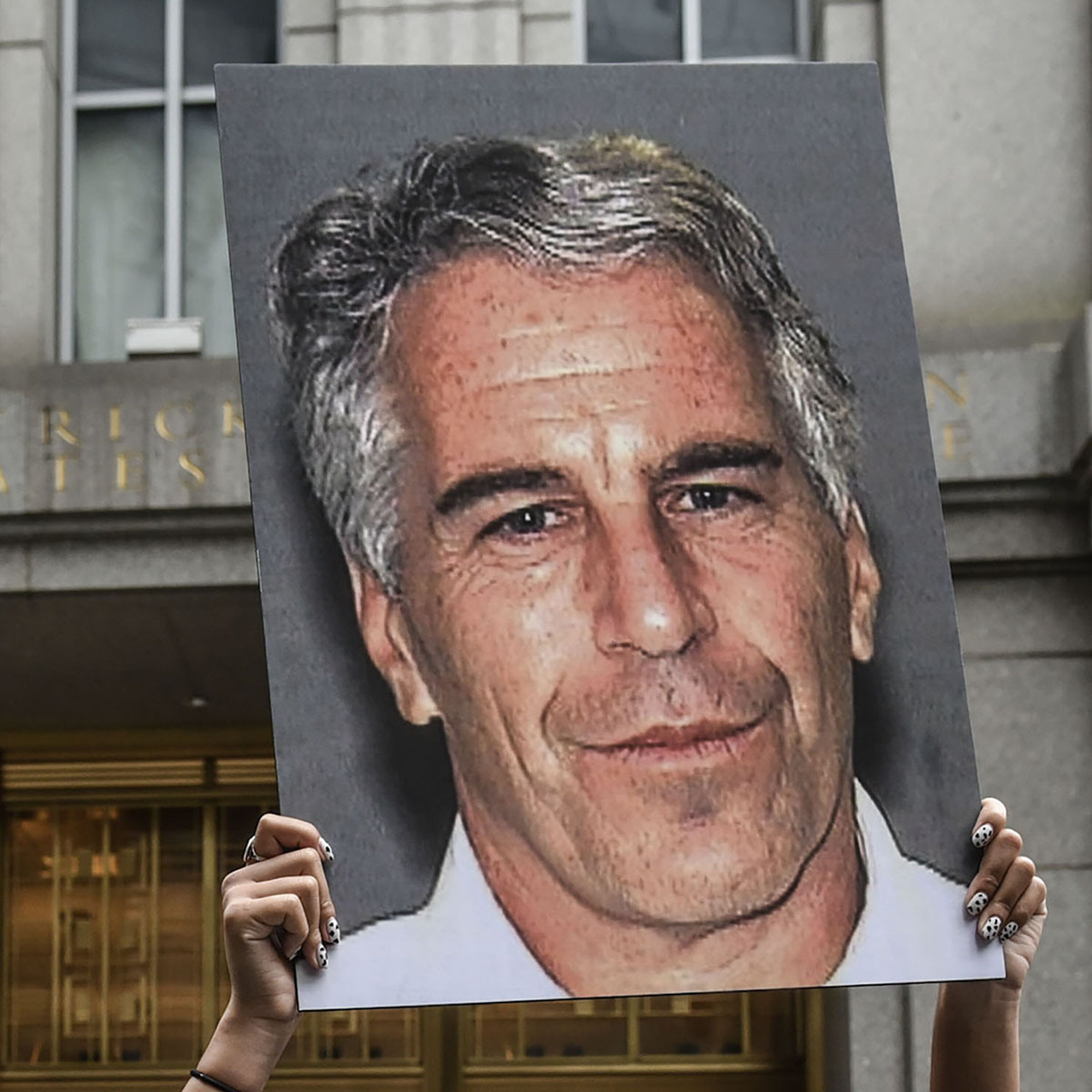
On Friday, Todd Blanche, the deputy Attorney General, who was previously President Trump's personal defense lawyer, announced the Justice Department was making public a massive cache of documents related to the federal investigation into the convicted sex offender Jeffrey Epstein, who died in 2019. Today's release marks the end of a very comprehensive document Identification and review process to ensure transparency to the American people and compliance with the DoJ has published nearly three and a half million pages from the so called Epstein files since late last year. Blanche says that the latest batch, coming more than a month after Congress's deadline, fulfills the Justice Department's obligation to lawmakers from from the Epstein Files Transparency Act.
- [03:18]
Jason Leopold
My biggest takeaway from these documents is that every powerful name or individual that you could think of somehow found their way to Jeffrey Epstein.
- [03:34]
David Gura
That's Bloomberg investigative reporter Jason Leopold with a slight exaggeration. He spent his weekend poring over the.
- [03:40]
Jason Leopold
Documents, whether it was wanting to do business with him, wanting to take a trip to his island. Here we're seeing these emails back and forth between people in business, banking, in entertainment, in politics. So it's not a huge surprise. It's just the fact of how long the list of names are.
- [04:06]
David Gura
Many of these names are familiar, but being in these files doesn't mean an individual or a company engaged in wrongdoing. Jason specializes in requesting federal documents through transparency laws like the Freedom of Information act records he can use to piece together how the government works behind the scenes with the Epstein files. Jason is on a team of reporters here at Bloomberg sifting through a flood of names and allegations. Jason points out these documents aren't in any particular order and pretty much everything lacks context. But he says he's still looking for some key files that appear not to have been released.
- [04:43]
Jason Leopold
Todd Blanche, the deputy Attorney general, said that about 200,000 pages were withheld due to privilege. They were privileged materials.
- [04:56]
David Gura
These are files that the Justice Department says it has a legal justification for holding back for privacy reasons or to keep from interfering with a live investigation.
- [05:06]
Jason Leopold
That's a lot of material that they withheld, but we don't have a real understanding of what was exactly in those records.
- [05:17]
David Gura
I'm David Gura and this is the big take from Bloomberg News today on the show. What's in the latest drop of Epstein files and what isn't? And will this be the last set of files made public by the Justice Department? My colleague Jason Leopold on what's likely to happen next. Jason, we now have access to 3.
- [05:39]
Interviewer
And a half million pages of Epstein related documents. I assume you've gone through all of them over the course of this weekend.
- [05:49]
David Gura
But seriously though, this is just an.
- [05:51]
Interviewer
Incredible quantity and I'm very curious, sort of what your strategy has been trying to make your way through them.
- [05:56]
Jason Leopold
There's instances where I'm typing names of certain individuals into, you know, a search box on the Justice Department's website or trying to download, you know, a bunch of files and see if I can thematically review a set. But, you know, my interest has been in following the money to really get an understanding of how Epstein made his money, looking at anything that may revolve around, you know, money laundering or, you know, financial crime. So I've been focusing on that and trying to separate records, because it's not just emails, you know, we're also talking about business documents as well and really separating those records, reading through them, and that's essentially where I'm starting.
- [06:49]
Interviewer
You mentioned you've been searching for names. I'm genuinely curious how good the search functionality is, is.
- [06:55]
Jason Leopold
I'm going into it immediately using the Justice Department's own search engine, and it's not bad. It's just a lot to plow through. But what I've been noticing over the weekend is that there have been documents disappearing. Essentially, they've been taking it down. So a document I may have been looking at on Friday on Deutsche bank, for example, would disappear, and then other documents would reappear. I'm still unsure of why that is the case. If there's anything that maybe needed to be redacted and they're pulling it down and maybe adding later on.
- [07:34]
Interviewer
You and our colleagues have reported on what this redaction process was supposed to be like, and maybe you can remind us sort of what's been happening behind the scenes in the federal government over the last few months as they've been preparing these documents for public release.
- [07:47]
Jason Leopold
The Justice Department, because the agency had to respond to the Epstein Files Transparency act, had been working overtime going through these records and having their lawyers review and redact certain material. The law itself dictated how the redaction in some way should work, right? Or at least what needed to be disclosed first. Let me just note, they had more than 400 Justice Department attorneys working on this pretty much exclusively for the past month and a half. And there are names of victims that are redacted. But then there is. There's a ton of victims names, victims who never came forward, revealed over the weekend. Then there is. I looked at a document, and it kind of blew me away. They redacted the JP In JP Morgan. Just the JP I don't know why they did that, David, but they just redacted the JP So easy to figure out. They're talking about JP Morgan, but there's no real understanding, like, why is this being redacted? There's no index to go along with it to see this was redacted for national security. This was redacted for privacy. This was redacted for, you know, the deliberative process. So it's been chaotic.
- [09:18]
David Gura
Jason, you mentioned the victims, who of course are front and center here. And I saw a story in the New York Times over the weekend that reporters there found in all of these documents photographs of victims. Those reporters flagged that to the Department of Justice and ultimately the DOJ took many of those photos down. We have heard a lot of talk from the DOJ about how important it would be to protect victims in this process, to hide their identities, to not re traumatize those victims. What have you taken away from the care with which they've approached it in that regard?
- [09:51]
Jason Leopold
I think that the way in which they have approached redacting victims names or trying to protect victims has been really messy. There are names that have been revealed while other names, say on the same page were victims that were redacted. So it begs for a deeper understanding as to why did they leave this name unredacted. How did that happen? The fact that you have Justice Department attorneys handling the redactions is problematic because that's not usually how it works when government documents are being released. You have document experts, people who are experts on the Privacy act and going through records and handling the redactions. Here you have attorneys who are working on cases that have been kind of shifted over to this process in some ways. You have to understand that they were going through millions and millions and millions of pages and trying to meet a deadline that has since passed. You're bound to have some details that are just going to be left unredacted. It's just, it's not a surprise for me. I think it's really, really unfortunate though.
- [11:20]
David Gura
Coming up, the most surprising details in the Epstein files Jason has identified so far and what comes next.
- [11:30]
Public.com Advertiser
Support for the show comes from public. On public, you can build a multi asset portfolio of stocks, bonds, options, crypto and now generated assets which allow you to turn any idea into an investable index. With AI it all starts with your prompt. From renewable energy companies with high free cash flow to semiconductor suppliers growing revenue over 20% year over year. You can literally type any prompt and put the AI to work. It screens thousands of stocks, builds a one of a kind index and lets you back test it against the S&P 500. Then you can invest in a few clicks. Generated assets are completely customizable and based on your thesis, not someone else's. Go to public.com market and earn an uncapped 1% bonus when you transfer your portfolio. That's public.com market paid for by Public.
- [12:21]
Public.com Legal Disclaimer
Investing Brokerage Services by Open to the Public Investing Inc. Member FINRA and SIPC Advisory Services by Public Advisors, llc. SEC Registered Advisor Generated Assets is an interest interactive analysis tool. Output is for informational purposes only and is not an investment recommendation or advice. Complete disclosures available@public.com disclosures you need to.
- [12:40]
Adobe Acrobat Advertiser
Make a huge presentation in an hour. Luckily, Adobe Acrobat Studio uses AI to take all your documents and generate a presentation with a single click, building slides faster than ever before. So if you need a last minute pitch deck, do that with Acrobat. Need to level up your presentation design? Do that with acrobat. You have 30 plus documents that need to be simplified into a proposal. Do that with Acrobat. Learn more@adobe.com do that with Acrobat.
- [13:13]
iShares Advertiser
With Bali from Ishares you get access to both monthly income and growth potential in one simple ETF. It's the best of both worlds. Discover Bali iShares Large Cap Premium Income Active ETF iShares the market is yours. Visit www.ishares.com to view perspectives for investment objectives, risks, fees, expenses and other information that you should read and consider carefully before investing. Risks include principal loss and the use of derivatives, which could increase risks and volatility. Monthly income is not guaranteed. Prepared by BlackRock Investments, LLC.
- [13:44]
Interviewer
Jason, you and I last spoke in December. So in the run up to this, this big release and something you mentioned then, is that you'd obtained what's basically an index of the Epstein files. How good a guide has that been for you as you've begun to go through this latest tranche of documents?
- [14:00]
Jason Leopold
I don't think that has been a very good guide in terms of what's been in here. I believe what is missing based on what the index says is communications with foreign governments, additional banking records, financial records. This was an index that we, when we discussed, came from the FBI, right? So the FBI was documenting all of the records that they had collected during the course of their investigation between 2007 and 2008 and a few years beyond. I have not seen much of the material that they documented. There are some FBI interview summaries. That's something that I had been waiting for, but there's a lot missing.
- [14:57]
David Gura
Jason, I want to talk about the.
- [14:59]
Interviewer
Sweep of federal investigations into Jeffrey Epstein. So the first was in Florida. Federal investigators started looking into allegations back in 2006, but Epstein signed a plea bargain pleading guilty to one state charge before federal charges could be filed. That deal became notorious for its leniency. Victims later said they weren't told about it.
- [15:18]
David Gura
Then almost a decade later, federal prosecutors.
- [15:21]
Interviewer
In Manhattan investigated and then indicted Epstein and he died. The ruling was by suicide while he was in jail in 2019.
- [15:29]
David Gura
What have we learned about that federal.
- [15:31]
Interviewer
Investigation and potential offshoots?
- [15:34]
Jason Leopold
So in the 2006-2008 investigation, what the files that we do have shown, the emails, right, particularly the ones that have been released over the weekend, it really shows how this investigation evolved, how the U.S. attorney's office in Florida approached it, notably, you know, one particular prosecutor there pretty aggressively, and how this prosecutor was in many instances kind of blocked from higher ups in terms of going further, really, really going to the mat in terms of wanting to indict Epstein and being forced into negotiations in order to get him to, you know, sign a non prosecution agreement and plead to a state charge. And you could see the evidence she was collecting. And it was pretty extraordinary. You know, you fast forward to the investigation that took place more than a decade later and that was quite aggressive as well. What stood out from that investigation is that there were co conspirators, right? That the government had alleged that there were a number of co conspirators that they were interested in indicting as well. They were scooping up evidence in the form of records from banks. They interviewed a number of people in Epstein's orbit. It looked like they had the goods already. That first investigation, you could see it moving aggressively and aggressively and it was, you know, the evidence was damning and then, you know, they were blocked.
- [17:20]
Interviewer
You mentioned, Jason, these FBI documents indicating that there had been tips about a number of individuals, including Jeffrey Epstein. How should we look at those particular documents?
- [17:29]
David Gura
What do they tell us?
- [17:30]
Interviewer
What don't they tell us? And do these files indicate what the FBI did with those tips that they received?
- [17:36]
Jason Leopold
The FBI documents? There are interview summaries. So there's interviews that the FBI conducted with people who may have been witnesses who provided information to the FBI, confidential human sources, essentially informant. And then there are folks that just called up the FBI offering up tips. And the FBI memorializes this and you know, in a document that's what we're looking at. None of those records are something that you can rely upon in terms of verification because it doesn't appear that the FBI followed up on it. And if they did, we're not seeing the records in here that states, you know, that they did follow up on the tips or that they investigated any of the allegations that were being made. And that's one of the problems with these records, right, is that we have three and a half million pages of records, millions of pages of emails, but they're completely out of context. So when we're reporting it, we're actually going out and doing additional reporting to understand what it means, what happened in this particular time frame. So there's lots of FBI documents that contain allegations against President Donald Trump, but we don't know if it's true.
- [18:58]
Interviewer
You mentioned your interest in following the money, Jeffrey Epstein's money, how he made it, how he used it.
- [19:04]
David Gura
Any more specifics on what you have.
- [19:05]
Interviewer
Learned from this cache of documents or what you are learning about that?
- [19:09]
Jason Leopold
What I'm kind of blown away by from reviewing the documents thus far is the inclusion of of suspicious activity reports from various financial institutions. And the suspicious activity reports comes directly from FinCEN. FinCEN is the financial Crimes Enforcement Network. It's part of the U.S. treasury Department. And their job is to combat money laundering and other financial crimes. And so financial institutions, whenever they see signs of money laundering or financial crime, they send over to FinCEN a suspicious activity report. FinCEN then puts it into a database here. Those are impossible to get. First of all, you can't FOIA them. They're never usually introduced in court cases. But there are a whole bunch of them here in these files. They come in around 2019, and they show how some of the financial institutions flagged Epstein's movement of money. And there's a lot of it there. And to me, that really stands out as a noteworthy document because it provides a bit of a roadmap to understand one, how he was moving the money, why it may have been suspicious, and potentially following it up in a much deeper way.
- [20:46]
David Gura
There was a moment when Todd Blanch.
- [20:47]
Interviewer
The Deputy Attorney General, took the stage at Main justice around the release of these documents and said, effectively, this is it. Here you go. These are the last documents that we're going to make public.
- [20:58]
David Gura
Can he do that? Can the DOJ do that? How do you see that part of.
- [21:01]
Interviewer
This story evolving from here, if at all?
- [21:04]
Jason Leopold
Yeah, I was actually surprised that he said that. That's it. We're done here. We're not going to release anything else. I mean, he, as I noted, he said they're going to withhold 200,000 pages. One thing that they're supposed to provide Congress with is a document that explains what names were redacted, what information was redacted, justifying the redactions, what records were withheld why they were withheld. So we do need to see that. But this fight will play out between Congress and doj. However, when we spoke late last year, I mentioned the Freedom of Information act case, right? That had been winding its way through the courts to try and gain access to this. Well, there was a hearing in the Second Circuit Court of Appeals in New York last week and in fact that case is still alive. There may be, in fact, you know, additional records that come out as a result of that Freedom of Information act case. So I don't think this is the last you're going to see of the Epstein files, but we do already have three and a half million pages. It's a lot, and I believe over the next six, seven months, you know, you'll see some deeper reporting about what this reveals, including from us here.
- [22:26]
David Gura
This is the Big Take from Bloomberg News. I'm David Gura. To get more from the Big Take and unlimited access to all of bloomberg.com, subscribe today@bloomberg.com podcastoffer if you like this episode, make sure to follow and review the Big Take. Wherever you listen to podcasts, it helps people find the show. Thanks for listening.
- [22:44]
Interviewer
We'll be back tomorrow.
- [22:49]
Jason Leopold
Foreign.
- [22:53]
Wise Advertiser
This podcast is brought to you by Wise the Smarter way to manage your money internationally if you're getting a headache from juggling different currencies and different bank accounts in different countries, there's a better way to receive money in the currency you need without the slow transfer times or hidden fees. Meet Wise, the savvy way to handle your money internationally. Hold balances in up to 40 currencies with the mid market exchange rate on every conversion. Whether you're receiving payments from tenants abroad, earning as a digital nomad, or converting divide dividends from your international investments, the Wise Multi Currency Account is for you. Be smart, Get Wise, Download the Wise app today or visit wise.com Terms and Conditions apply.
- [23:35]
iShares Advertiser
With Bali from iShares. You get access to both monthly income and growth potential in one simple ETF. It's the best of both worlds. Discover Bali iShares Large Cap Premium Income Active ETF ETF iShares the market is yours. Visit www.ishares.com to view perspectives for investment objectives, risks, fees, expenses and other information that you should read and consider carefully before investing. Risks include principal loss and the use of derivatives, which could increase risks and volatility. Monthly income is not guaranteed. Prepared by BlackRock Investments, LLC.
- [24:01]
CBS Caremark Advertiser
So have you heard the story about the prescription plan with savings automatically built in? It's where a family of any size can feel confident the cost of their medication won't hold them back. Go to CMK Co Stories to learn how CBS Caremark helps members save just by being members. That's CMK Co Stories.