Loading summary
Transcript28 lines
- [00:00]
David Gura
At CES. Michael McDermott, EVP of Samsung, spoke with Bloomberg Media Studios about what the company calls its next AI chapter, your companion to AI Living. It's a shift from AI as a feature to AI as a trusted partner in everyday life.
- [00:18]
Becca Wasser
Bloomberg Audio Studios Podcasts Radio news Over.
- [00:24]
David Gura
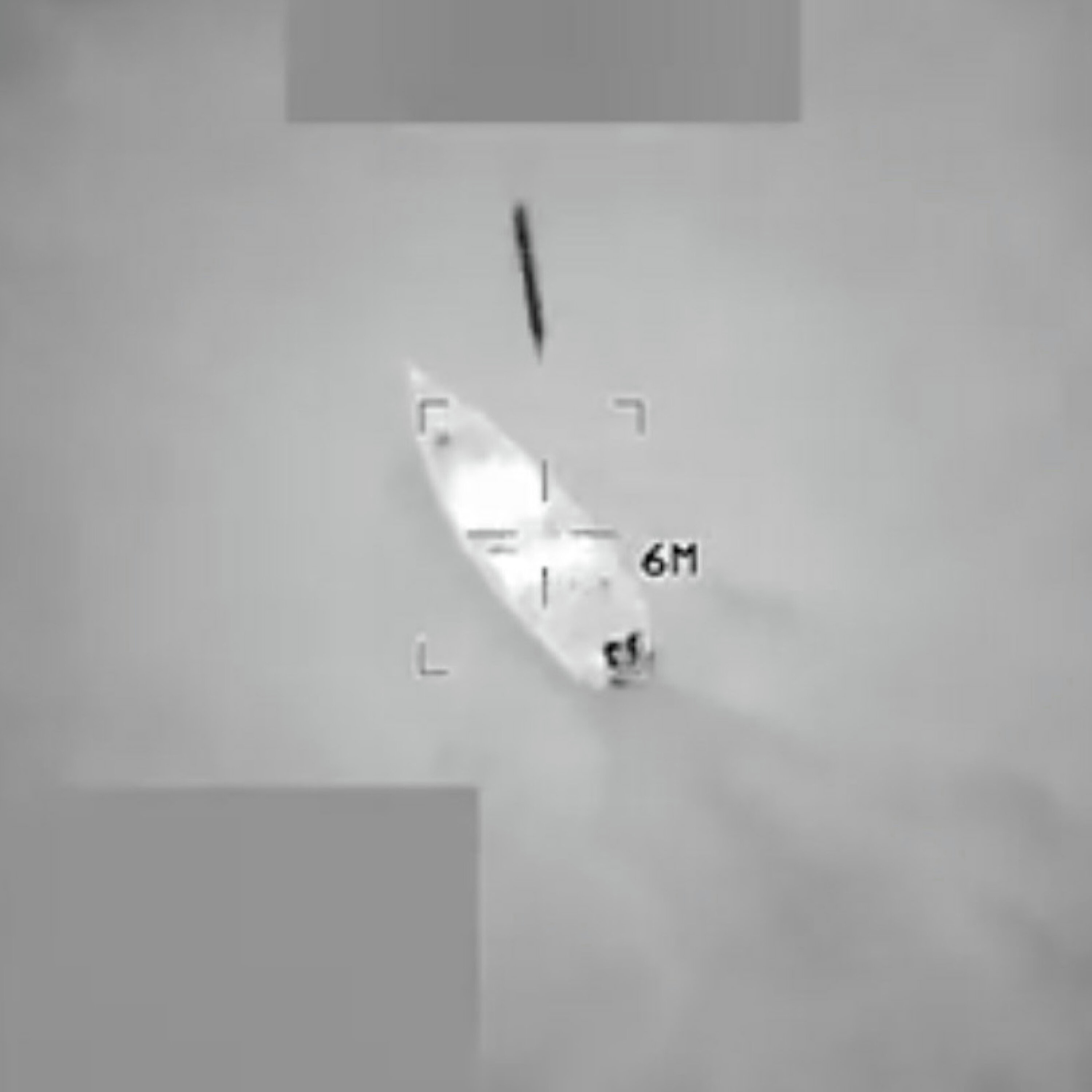
The last two months, the United States has launched a series of strikes off the coast of Venezuela. The US Military carried out another lethal.
- [00:32]
Nick Wadhams
Air strike, another US Strike, new strike.
- [00:34]
David Gura
On a suspected drug boat in the Caribbean. The massive explosion sending debris raining down in international waters.
- [00:40]
Nick Wadhams
Despite questions about evidence and due process, the administration insists lethal strikes like these will continue.
- [00:47]
David Gura
The Trump administration says it's targeting narco traffickers.
- [00:51]
Nick Wadhams
The president keeps making this claim that every time he strikes one of these boats he prevents about 24,000 drug related deaths in the United States.
- [01:00]
David Gura
Nick Wadhams heads up Bloomberg's national security.
- [01:03]
Nick Wadhams
Team is obviously a highly dubious claim, but he's basically making the equation. You know, if you have X tons of fentanyl on the boat and a tiny dose of fentanyl can kill a person, that's how many drug related deaths are being saved in the US So they essentially see this as an invasion by drug runners flooding the US Market and this is the way they're going to stop it.
- [01:26]
David Gura
Experts say these strikes violate international law.
- [01:29]
Nick Wadhams
The real motivation for why these are actually happening is something that has remained a very elusive reporting target.
- [01:36]
David Gura
The US Is also building up its military presence in the Caribbean, which is fueling intense speculation over what the White House is planning to do next and what its overall objective is. CBS News Norah o' Donnell asked President Trump about that in an interview that aired on 60 Minutes on Sunday.
- [01:54]
Becca Wasser
On Venezuela in particular, are Maduro's days as president numbered?
- [01:59]
Nick Wadhams
I would say yeah, I think so, yeah. Foreign.
- [02:05]
David Gura
I'm David Gura and this is the big take from Bloomberg News today on the show. As the Trump administration continues to authorize strikes on boats off South America, we take a look at the military hardware President Trump has ordered to the region, why he's taking aim at Venezuela now and what could happen next. Over the last two months, strikes carried out by the US Military on vessels in the Pacific and Caribbean have killed more than 60 people. The Trump administration says those strikes and a growing military presence off the coast of Venezuela are meant to hinder the flow of drugs from South America to the United States. I asked Bloomberg's Nick Wadhams if there is more to the story.
- [02:49]
Nick Wadhams
The element that's very high in a lot of people's minds is Venezuela's leadership, President Nicolas Maduro. The US Says he's essentially the head of this drug running criminal enterprise, though as far as we know, not a lot of drugs are produced in Venezuela. It's mostly a transit point for drugs flowing from elsewhere. But that has fueled a lot of suspicion that the US Basically wants regime change in Venezuela. I mean, we know for a long time that the US has wanted Nicolas Maduro out. They've put a multimillion dollar bounty on his head for any information leading to his arrest. They tried in Trump's first term to usher him from power. They failed. And now you have a Secretary of State and Marco Rubio who has been even far more explicit about his desire to see Maduro leave power. And so that has then fueled a lot of speculation that the military buildup is not really about targeting these boats, but it's laying the groundwork for airstrikes or possibly even an invasion that would lead to Maduro's ouster.
- [03:52]
David Gura
Nick, how effective has this campaign been as a way of ratcheting up pressure on President Maduro? What do we know about what's happening on the ground in Venezuela?
- [04:00]
Nick Wadhams
It has ratcheted up a great deal of pressure on Nicolas Maduro. There's no question that he is feeling the heat. He has called up troops. He's put his country on high alert. The question, though, is what the ultimate effect will actually be. The opposition in Venezuela. You may recall that opposition leader Machado just won the Nobel Peace Prize for her efforts, efforts. But you know, she essentially argues that all this pressure is going to put so much of a squeeze on Nicholas Maduro that he's going to be forced to leave power. The flip side of that is the argument that actually by creating this extremely tense environment that only gives Maduro additional strength and support and attracts more people to his side and essentially entrenches his position so that he emerges from this even stronger. So there are a lot of questions about how tenuous his grip on power really is. But you know, there has been deal of reporting, including by Bloomberg, that he is looking for a way out and he would prefer, vastly prefer a diplomatic solution to this. There had been some reporting that he was even looking for a strong economic deal where he would essentially sell all Venezuela's oil to the United States.
- [05:14]
David Gura
I asked Becca Wasser, the defense lead at Bloomberg Economics, to detail just how much military might the US has mobilized off of South America.
- [05:23]
Becca Wasser
Well, we've got a lot of sea power, air power and firepower now in the Caribbean and in the Eastern Pacific. And honestly, this is probably the most that we've seen in those two regions for quite some time. So we've got multiple guided missile destroyers which tend to carry missiles, including Tomahawk land attack missiles that could be used in potential strikes. We also have an amphibious ready group which allows the US to have a number of forces in the region. So this is where you see a Marine Expeditionary unit embarked upon, and it should be there in about a week or so. And that's going to bring not only sizable number of sailors aboard, but also aircraft, fighter aircraft that can take off from the decks of the carrier and potentially do strikes on either ships, whether it's these narco trafficking boats or perhaps even strikes on land. In addition to that, we've seen some Special Forces assets in the region as well, which has added to some of the potential pressure campaign that right now this buildup is likely placing on Maduro, where it is almost a bit of a psychological operation. It's not just about the buildup itself and what those capabilities could bring, but as Nick was talking about, what it is that that pressure could force Maduro to actually end up doing, which could could be potentially stepping down from power.
- [06:54]
David Gura
Yeah, Nick, I think of this piece that retired Admiral James Stavridis wrote for Bloomberg Opinion, which he said, look, if the goal here is to take out narco traffickers, take out these boats, there's no way you would need this much manpower and this much military equipment. So what does it indicate to you? Just all that's being marshaled there?
- [07:10]
Nick Wadhams
Right. I mean, it's a great question, because when you're deploying an aircraft carrier strike group, and then you look at the size of the boats that the administration has essentially been blowing out of the water, there does seem to be a real imbalance balance there. So the big question we've really been trying to answer is how much of this is actually heading toward some sort of massive conflict where the US Would strike the land, which, after all, is something that President Trump has said he's willing to do. And how much of it is essentially the president using military assets at his disposal to basically act as a deterrent to send a threatening message, that it's all bluster. You know, the administration, when we have asked them about this, have said, hey, we've deployed military assets all around the world for many years, and then when we deploy them in our own backyard, suddenly the media freaks out. Why shouldn't we be interested in what's going on in our own hemisphere? And that really is sort of part of the problem where in past administrations when you had strikes like this, a lot of it was done in secrecy, but then there would at least be some attempt to sort of explain or walk people through a lot of the details, maybe on background or even off record, sort of making the case in a very clear way about what the strategy actually was for doing all of these things, which on the surface seem to be rather contradictory. And right now, aside from some pronouncements, we have not really been able to interrogate the administration in a public way about why precisely they feel if this is a campaign designed to target narco traffickers, they need to deploy an aircraft carrier strike group and a submarine and all of these other assets which would in any other circumstance be seen as essentially a prelude to an invasion.
- [09:07]
David Gura
After the break, what a US Attack on Venezuela could look like and how that country's oil reserves are shaping the Trump administration's plans. How do you shift AI from being a flashy feature to a trusted partner in consumers everyday lives on the ground at CES Bloomberg Media Studios? Asked Michael McDermott, EVP of Samsung. Our 2026 vision is built around an AI companion. It understands you and responds intuitively. This intelligence works quietly in the background across TVs, home appliances and mobile devices. By putting AI at the center of everything we do, we're simply improving everyday life for everyone everywhere. Becca, something you have a lot of experience with are war games gaming out sort of what might happen in a scenario like this. How do you look at sort of the way that this might evolve and what that might mean, how it might play out?
- [10:08]
Becca Wasser
Yeah. So with my wargaming hat on, thinking about all of the games that I've run for the Department of Defense and for other militaries around the globe, I sort of see this as there being a few different options. One would be using some of the COVID assets that the US uses, trying to use special operations forces to do some type of regime change from within. I think that that's a little more of a less likely scenario. So instead that makes me think that there's probably two potential strike options if we're looking at the assets that are currently in theater. The first one is going after infrastructure, having these big showy strikes that are very visible and very public and can last for several days, maybe a few weeks. The second option would be one that's more so going after the various nodes of the cartels, so going after different transportation routes, going after cartel leadership, particularly when they're on the move. And this is going to look a lot like some of the counterterrorism operations that we've seen in places like Afghanistan and Iraq. It's going to require a bunch of air power and airstrikes. So really, I think what we're seeing here are two kind of options. These big attacks, kind of a little bit like what we saw the administration do against the Houthis earlier this year, and then also these almost counterterrorism style attacks where they're going to go after transportation nodes and key leadership. In both cases, there's a fairly limited track record of success. And so that doesn't necessarily give me a lot of hope that if the US Were to conduct any of these strikes, that they would be successful at going after and stopping the flow of drugs, if that truly is what the impetus for these attacks would be.
- [12:02]
David Gura
Nick I know that Venezuela has an awful lot of oil, and I wonder how that might be shaping the way the administration is thinking about its course forward.
- [12:09]
Nick Wadhams
David that is really at the heart of so much of this, because when you look at this conflict through the perspective of oil, you really start to peel back a lot of layers and see some hidden currents that have been coursing through this administration since Trump came back. So you've essentially got two polls. One is Marco Rubio, who wants to ramp up even further the sanctions that have been imposed on Venezuela, choke off its oil industry, stop the flow of oil, and really starve Maduro of the hard currency he needs to stay afloat. On the other hand, you have a Trump advisor who's now actually runs the Kennedy center for Donald Trump. He's the former ambassador to Germany, someone named Richard Grinnell. And he had been pushing this idea that, no, let's open it up entirely. Let's essentially create a situation where we lift all the sanctions and then the United States buys all of Venezuela's oil, and then we can tariff the heck out of everything coming in from Venezuela and essentially make Venezuela the 51st state of the United States. So a very different approach and sort of playing. You have these two advisors playing to different aspects or different impulses from the president, one being his desire peace through strength and desire to get tough. And then the other, hey, tariffs and business deals and let's make a deal art of the deal. You know, I don't care so much about your values and whether you believe in democracy, as long as we have a business partnership between the two countries. And safe to say right now, the Rubio approach has definitely won. There is absolutely no indication that President Trump is going to be willing anytime soon to lift those sanctions and pursue any sort of oil deals with Venezuela. But he is getting pressure from some of his allies, obviously, the oil majors. Chevron still does some business in Venezuela. They would love to get into that market. And the question is, well, how long does Trump's patience last? Is he really, after coming to the presidency, billing himself as the peace president, he's solved a bunch of wars. He didn't start any new ones. Is he really going to commit to the idea of a massive campaign? I mean, right now they're essentially, there's very little notion that the US Would put actual boots on the ground in Venezuela. But is he willing to enter into a lengthy air campaign against Venezuela when it goes against so much of the reasons why he said he deserved to be president a second time? And how much is he going to lose patience for that effort and then try to lean into some other effort where he could essentially cut a deal with Maduro the way you saw him try to cut a deal with Vladimir Putin, North Korea's Kim Jong Un, and even in some cases, you know, has said he wants to cut a deal with Iran?
- [14:58]
David Gura
This is the big take from Bloomberg News. I'm David Gura. The show is hosted by me, Juan Ha and Sarah Holder. The show is made by Aaron Edwards, David Fox, Eleanor Harrison Dengate, Patty Hirsch, Rachel Lewis, Christie Naomi Ng, Julia Press, Tracy Samuelson, Naomi Shaven, Alex Segura, Julia Weaver, Yang Yang and Taka Yasuzawa. To get more from the Big Take and unlimited access to all of bloomberg.com, subscribe today@bloomberg.com podcastoffer thanks for listening. We'll be back on Monday.