Loading summary
Transcript69 lines
- [00:00]
Optum Narrator
Healthcare doesn't always work great. If you've ever waited on a refill or couldn't schedule an appointment, you get it. That's the kind of stuff Optum is changing. They're using data and technology to integrate patient care, pharmacy and everything else. So healthcare is connected, not complicated. What's that look like? Cheaper prescriptions that are easier to get and care that looks at the whole person how you need it. Optum is helping make healthcare work as one for everyone. Everyone. Learn more at business.optum.com Shelby Power Nitroplus
- [00:31]
Shell V Power Nitroplus Advertiser
Fuels every drive from the Pacific coast to the high desert with a fuel like no other. It provides engine performance that lasts to give you more time on the road. That means more protection with active ingredients for longer lasting engines. Shell V Power Nitro plus Premium Gasoline engine performance that lasts Chances are you're not far from a Shell station. Find it using the Shell app formulation unique to Shell compared to minimum detergent gasoline with continuous use of Shell V Power, Nitroplus and gasoline direct injection engines. Actual effects and benefits may vary. See Shell Us More Dash Protection for more information. Amazon Health AI Presents Painful Thoughts I
- [01:06]
Ruth Carson
I can't stop scratching my downtown.
- [01:09]
PayPal Narrator
Yeah, but I'm not itching to go
- [01:10]
Wan Ha
downtown and tell a receptionist I'm here
- [01:13]
PayPal Narrator
to talk about my downtown.
- [01:16]
Ruth Carson
Some things you'd rather type than say out loud.
- [01:19]
Shell V Power Nitroplus Advertiser
There's no question too embarrassing for Amazon Health AI. Chat your symptoms and get virtual care 24. 7 Healthcare just got less painful.
- [01:33]
PayPal Narrator
Bloomberg Audio Studios Podcasts Radio News
- [01:39]
Wan Ha
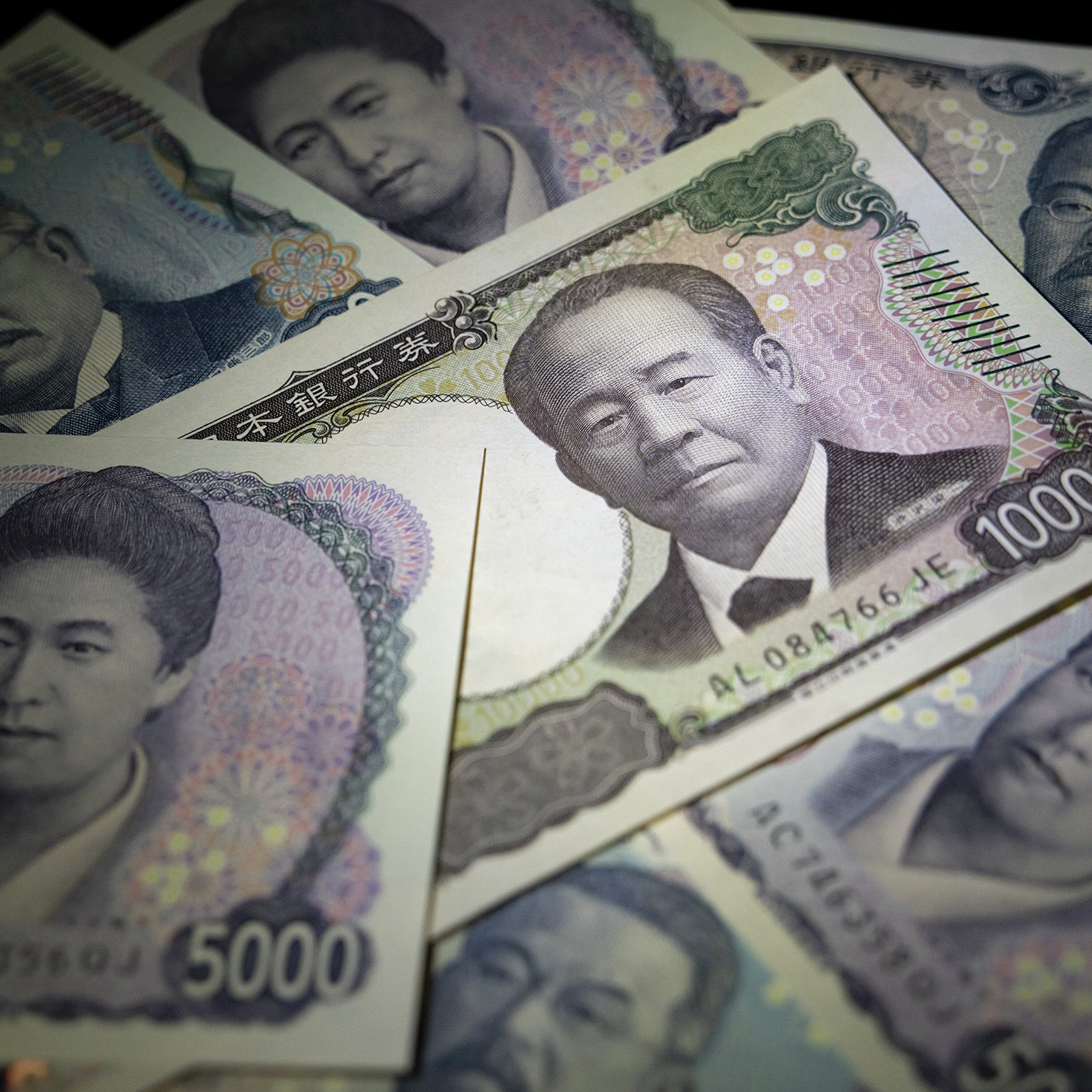
Investors are watching the currency markets with bated breath this week as a historic high stakes intervention by the US And Japanese governments sends shockwaves through the global financial system. At the center of the storm the Japanese yen. A quick look at the yen as Japan and the U.S. warned of further
- [01:58]
Optum Narrator
coordinated action intervention, the U.S. u.S. And
- [02:01]
Ruth Carson
Japan warn they won't hesitate to defend the currency further.
- [02:04]
Wan Ha
We haven't seen something like this in what, 15 years? President Donald Trump said the joint intervention was a signal of Washington's friendship with Tokyo.
- [02:13]
Shell V Power Nitroplus Advertiser
They have a weakening yen and they
- [02:15]
Ruth Carson
wanted a little bit of help and we're always there for Japan.
- [02:17]
Wan Ha
Japan the Japanese yen had been slumping for months, hitting a 40 year low against the US dollar. Treasury Secretary Scott Bessant raised concerns about the yen volatility earlier this year, and currency traders have been on high alert for the US to step in to support the yen. But the most telling clue that the US Might make a move came at a Cabinet meeting last Friday at Camp David. It's an honor to be here in this historic place. During that meeting, a photographer looking over Besant's shoulder spotted something that caught his eye.
- [02:50]
Ruth Carson
A photographer from Reuters captured an image of Scott Bessant's notepad.
- [02:56]
Wan Ha
And scribbled across the page were a few words that would soon grab the attention of investors around the world.
- [03:03]
Ruth Carson
The notepad clearly displayed underlined words to do. And on it it showed by Japanese yen 5 to 10.
- [03:11]
Wan Ha
Bill that's Bloomberg's Ruth Carson. She covers Asia's foreign exchange markets from Singapore. The US Stepped in to buy the Japanese yen on Friday. Ruth says it was a rare move. The US has intervened in the market for the Japanese yen only twice in the last 30 years.
- [03:30]
Ruth Carson
The fact that you've got the US essentially coming in a way to Japan's rescue shows that this is not just a Japan problem any longer.
- [03:45]
Wan Ha
This is the big take Asia From Bloomberg News, I'm Wan Ha. Every week we take you inside some of the world's biggest and most powerful economies in the markets, tycoons and businesses that drive this ever shifting region. Today in the show, Japan and the US Play tag team to rescue the yen. What's at risk for American consumers if the plan doesn't work? And why a weak yen is a problem for the global economy, not just for Japan. Ruth, to understand what's happening this week, we actually need to flash back to Japan in the 1980s. Can you paint a picture of Japan's economy then?
- [04:30]
Ruth Carson
In a word, booming. The Nikkei gained more than 450% over a decade. It was explosive. Interest rates were still low. Banks were gangbusters in terms of lending aggressively. There was optimism about the Japanese economy. So that fueled a frenzy of buying stocks, property and then suddenly it came crashing down. In 1989, the bank of Japan raised interest rates in a big way. Over the coming months, rates went from 2.5% to 6%. It was a mental crazy increase. And suddenly almost overnight, borrowing became so much more expensive. Credit growth and the banks that were happily landing just no stived.
- [05:26]
Wan Ha
How did that long period of economic stagnation affect Japan's interest rates?
- [05:31]
Ruth Carson
So it went on for decades. One piece of action over the period of months, a year ended up being decades of lost growth. The BOJ eventually cut rates to zero, tried to revive growth and Japan became the pioneer in zero interest rates to try and bolster the economy. But it wasn't until recently that we've seen Japan begin to normalize.
- [05:58]
Wan Ha
After decades of deflation, the bank of Japan has come under Pressure to cool inflation. In March 2024, the central bank exited its zero rates policy, raising interest rates for the first time in 17 years. Including that move, the BOJs raised interest rates five times in total.
- [06:20]
Ruth Carson
Where are Japan interest rates today? About 1%. Okay. US versus Japan. The interest rate gap at the moment is 275 basis points against Australia is 335 basis points with emerging markets. With Indonesia for example, there's a 475 basis points difference. With Brazil, it is over 1300.
- [06:50]
Wan Ha
That's crazy. So Japan's interest rates are very, very low compared to the rest of the world. Correct.
- [06:55]
Ruth Carson
As much as a journalist, I write about Japan raising interest rates. As a trader, you will look at it and go, you know what that carry trade to buy something like U.S. treasuries or that wind farm in Europe or you know, the cost be Korean stocks. I'm better off putting my money where I'm going to get growth. And if I'm going to get a cheap funding currency to fuel that batch, absolutely, why not? And that currency is the yen.
- [07:28]
Wan Ha
And how does that borrowing in yen and investing overseas put pressure on the yen?
- [07:35]
Ruth Carson
So to answer that question, you need to understand the size of this carry trademark investment. By some estimates it's over US$4 trillion bigger than the size of India's economy that is invested offshore. So investors are selling the yen, trillions of dollars of it, in order to fund investments offshore that are getting them more bang for their buck. What does that mean for the yen? It means continued pressure.
- [08:05]
Wan Ha
So these low interest rates are really locking in that pressure for the Japanese yen. I wonder if you can tick through some of the other factors weighing on the Y.
- [08:15]
Ruth Carson
Okay, so if we take a macroeconomic look at Japan, it's not just a carry trade which is obviously fueled by interest rate differentials. Japan's national debt is over 200% of its GDP, by far the highest among developed economies. On top of that, you've got the ongoing Iran war. Remember, Japan is a huge importer of energy from the Middle East. And if you're import bill is higher because of the war, that only fuels inflation problems in Japan. And if the BOJ is seen behind a curve to raise interest rates to combat said inflation, the yen is another release or escape fall for investor angst. And one critical component to this story of a weak yen is also the impetus of local investors to invest offshore. You've got pension titans, life insurer titans that are some of the biggest investors in the world and they have liabilities to match, they have to pay people their pensions. If inflation is eating into your returns, do you have an incentive to pull that massive amount of money offshore back home? Or do you hedge your bets and continue investing offshore and take only some of that money back onshore? All this is it's not good for the yen.
- [09:39]
Wan Ha
Now there are pros and cons of a weak yen for Japan, right?
- [09:42]
Ruth Carson
Absolutely. It becomes more desirable, isn't it, to visit a destination like Tokyo or Kyoto. But there's equally lots of cons as well.
- [09:53]
Wan Ha
Well, yeah. And especially if you are a Japanese consumer, if you're living here in the country, you're feeling the pain of that weak yen, right?
- [10:00]
Ruth Carson
Absolutely. Import costs and household expenses are soaring. Small businesses are getting squeezed as well. And that's why we're seeing some of the policies that have come through right from Prime Minister Sanae Takaichi with tax initiatives to help with that cost of living.
- [10:21]
Wan Ha
So that high cost of living has become a huge issue here in Japan. That's also contributed to really the downfall of the two previous prime ministers.
- [10:29]
Ruth Carson
Absolutely right. Voters will vote and if they are feeling the pain that's stemming from a weak yen. Absolutely. We have seen the downfall of Prime Minister's leaders who have failed to address voters pain and concerns.
- [10:57]
Wan Ha
This isn't the first time that the Japanese yen has needed support from its government. After the break, we'll find out why the US feels the need to get involved this time around.
- [11:12]
Carol Massar
This is the Bloomberg Tech Minute brought to you by ChatGPT. Now with ChatGPT work, I'm Carol Massar. Globetrotters hunting for airfare bargains are in for a rude awakening as the days of stumbling across a cheap seat on a popular flight could soon disappear. Bloomberg's Wan Ha reports that airlines from Delta to Virgin Atlantic are adopting artificial intelligence to change seat prices more quickly by weighing dozens of variables in real time, helping capture more revenue while shrinking pricing gaps that once allowed travelers to find bargain fares. Machine learning models can more accurately forecast demand by analyzing historical booking patterns, seat inventory and seasonal trends, while also continuously tracking competitors fares and capacity changes to update prices in near real time. The technology could lead to higher fares on busy routes as airlines pack flights closer to capacity, but may also result in lower fares on off peak and lower demand routes. That's the Bloomberg Tech Minute brought to you by ChatGPT. Put ChatGPT to work on your most ambitious ideas and projects. Get started@chatgpt.com today by selecting work mode available on plus and Pro plans.
- [12:32]
PayPal Narrator
Every sale comes down to a single second, the one between buy now and maybe later. PayPal is built to help your business win that moment with a checkout experience that feels certain, reliable and familiar with a global two sided network and hundreds of millions of buyers who already know us all to keep you in control. However buying happens next. New markets, new AI powered selling services. A whole new agentic era where you decide how your business will show up and stand up. PayPal is built to help your business come out ahead. We're built for payments, Built for growth, built for Agentic. PayPal open. Built for all business. Visit PayPalOpen.com to get started. That's PayPalOpen.com
- [13:27]
Becca Tilly
this is Becca and Tanya from Scrubbing in with Becca Tilly and
- [13:30]
Tanya Rad
Tanya Rad Becca, can I ask you a question? How do I convince myself I need something before I buy it?
- [13:37]
Becca Tilly
Oh, so we're doing that today?
- [13:39]
Tanya Rad
Well, I'll be shopping online and suddenly I'm like, well technically this counts as self care.
- [13:45]
Becca Tilly
You're definitely not alone there.
- [13:47]
Tanya Rad
That's why Klarna stands out. It's about smarter tools that help you feel more confident with your money.
- [13:52]
Becca Tilly
Klarna brings payments, cash back and money management together in one place with flexible ways to pay. It helps you make smarter money moves without the stress.
- [14:01]
Tanya Rad
That's the goal, right? Having tools that make your money work with you.
- [14:05]
Becca Tilly
Download the Klarna app today or visit klarna.com to learn more. California resident Loans made or arranged pursuant to a California Finance Law License NMLS Number 1353190 Klarna Balance Account required to be eligible for cashback points. Limitations, terms and conditions apply.
- [14:31]
Wan Ha
The Japanese yen has needed a lot of support recently. Bloomberg estimates that the Japanese government has been spending significant, significant amounts to prop up the currency. Almost $74 billion in April and more than 80 billion over two days at the end of last week. It's still unclear how much Washington has actually spent to help lift the yen from its four decade low. The joint intervention was likely larger than those undertaken in 1998 and 2011, when U.S. contributions didn't surpass a billion dollars. Bloomberg's Ruth Carson says the huge U.S. purchases show that a weak yen isn't just a problem for Japan.
- [15:13]
Ruth Carson
So the currency market trades at $9.5 trillion a day. A day. So we're talking the biggest asset class in the world. The yen is the third most traded currency every single day in the world. That shows you the amount of capital that's sloshing about when it comes to yen Bets. So if something goes awry with the yen, for example, in this case it's ultra, ultra weak. Its impact isn't felt just in Tokyo or onshore. It's a problem that can fester as far away as Jakarta through to, you know, Sao Paulo. So a couple of key points to note. Japan, for example, is the largest foreign investor of U.S. treasuries in the world. If they start selling to fund efforts to prop up the yen, it pushes down the price of US bonds, it pushes yields higher and that means higher borrowing costs for the US Suddenly it's no longer just that homeowner in Tokyo that's feeling the pinch. If you have higher treasury yields in the US say in the 30 year, that's impacting that New York mortgage holder. Right, right. And on top of that, we talked about the yen carry trade and it's trillions of dollars around the world and it's cemented. Right. So we saw that, we saw that happen in August 2024 when the yen suddenly surged and wiped out profits of hedge funds, stock investors, credit investors were trembling. And it's, it's impactful to the point where it can destabilize global markets.
- [17:04]
Wan Ha
What does it mean for government to intervene in the currency markets? How does that actually work in practice?
- [17:11]
Ruth Carson
In this case, the chain works like this. Japan sells dollars which could be backed by assets like treasuries, U.S. treasury bills to bolster the yen. So Japan's Finance ministry decides to intervene. We're acting now, the boj, the bank of Japan, will act as its agent. Japan sells US dollars from its reserves. It uses the dollar to then buy the yen. To put this into context, Japan has more than $1 trillion in FX reserves. That's a ton of firepower. Goldman Sachs in May after April's intervention then said that Japan could intervene about 30 more times at its April intervention size.
- [18:05]
Wan Ha
And Ruth, how effective were these interventions? What happened to the yen after Japan's government intervened in April?
- [18:13]
Ruth Carson
Okay, so the yen weakened past 160 per dollar. Japan then conducted a yen buying operation on April 30 according to people familiar with the matter. And dollar yen plunged. It went from around 160 to 155. Huge, huge moves and wiped off a lot of that bearish yen sentiment. Did it work? In short, no, because they had to intervene again recently. Dolly JPY continued to creep higher and it comes down to that rate differential story again. So investors came back and they just kept coming back to sell the yen.
- [18:57]
Wan Ha
What's your take, Ruth, on What's different about this latest intervention?
- [19:04]
Ruth Carson
So the US Involvement is historic. It's decades since we had seen anything coordinated like this. But the fact that you've got the US Essentially coming in a way to Japan's rescue shows that this is not just a Japan problem any longer. That sends a strong signal whether or not markets heed it is something else altogether. But the fact that they have come out to work together is highly, highly significant.
- [19:37]
Wan Ha
What's been the message on continued interventions? Is this the last of it?
- [19:43]
Ruth Carson
So if we listen to Donald Trump, he's obviously underlined that friendship with Japan, which kind of, in a way sort of lends heft to further intervention efforts. At the same time, you've got the finance minister of Japan coming out to say that there will be, there could be further coordinated intervention. So that definitely puts investors on high alert. This may not be a one off. It is likely not going to be a one off when that rate differential story is still, still very much in play.
- [20:17]
Wan Ha
And Ruth, what does a successful intervention look like for the markets?
- [20:21]
Ruth Carson
It's hard to answer that again, because it hasn't worked. So successful intervention, one would say, is where the yen does not only strengthen but keep its strength. Where you will get investors in Japan and mega funds coming out to say, we are buying Japanese assets en masse once more, we are bullish on the yen, and that sends strong signals to the rest of the world that, hey, you know what, it worked. We are now believing the story of a stronger yen, but I don't see firm evidence of that just yet.
- [21:00]
Wan Ha
And what do you think needs to happen for Japan to wean itself off of the need for these interventions, raise
- [21:06]
Ruth Carson
interest rates and raise it fast and high without destabilizing one of the world's biggest and most important economies. When I speak to investors, when I speak to traders, the number one reason they cite as to why they're selling the yen is because of Japan's wide interest rate gaps with the US and the rest of the world. Now, remember, we can debate about bank of Japan policy and how careful they are and they have to be without destabilizing their own economy and balancing a weak yen. So they have their reasons to act the way they do. But while the Japan interest rate gap with the US Is so large, investors will still return to it and go, that's a juicy trade right there. To keep selling the yen.
- [22:05]
Wan Ha
This is the Big take Asia from Bloomberg News. I'm wan ha to get more from the big take and unlimited access to all of bloomberg.com, subscribe today@bloomberg.com podcastoffer if you like this episode, make sure to follow and review the Big Take Asia. Wherever you listen to podcasts, it really helps people find the show. Thanks for listening. See you next time.
- [22:36]
Optum Narrator
Healthcare doesn't always work great. If you've ever waited on a refill or couldn't schedule an appointment, you get it. That's the kind of stuff Optum is changing. They're using data and technology to integrate patient care, pharmacy and everything else. So healthcare is connected, not complicated. What's that look like? Cheaper prescriptions that are easier to get and care that looks at the whole person how you need it. Optum is helping make healthcare work as one for everyone. Learn more@business.optum.com Every sale comes down to
- [23:08]
PayPal Narrator
that single second between Buy now and maybe later. PayPal is built to help your business win that moment across new markets and a new agentic era. With a checkout that's reliable and a global network of hundreds of millions of buyers who already know us all to get keep you in control however buying happens next. We're built for payments, built for growth, built for Agentic. PayPal open built for all business. Get started at paypalopen.com There are exciting
- [23:38]
CVS Narrator
things happening at your local CVS shop. New Extra Big Deals with extra care every two weeks. No coupon needed. Plus get access to exclusive sale prices, personalized deals and more. As a member, extra care is the way to save at cvs. Join for free online or in store and start saving. Visit your local CVS store or cvs.com extra big deals for this week's deals.