Loading summary
Transcript47 lines
- [00:00]
Commercial Narrator
Being a small business owner isn't just a career, it's a calling. Chase for Business knows how much heart and effort go into building something of your own. Manage all your business finances, from banking to payments to credit cards, all in one place with Chase's Digital Tools. Plus access online resources designed to help your business thrive. Learn more@chase.com business chase for business make more of what's yours the Chase Mobile app is available for select mobile devices. Message and data rates. May apply JP Morgan Chase Bank Naomi Member FDIC Copyright 2026 JPMorgan Chase Co. You need to make a huge presentation in an hour. Luckily, Adobe Acrobat Studio uses AI to take all your documents and generate a presentation with a single click, building slides faster than ever before. So if you need a last minute pitch deck, do that with Acrobat. Need to level up your presentation design? Do that with acrobat. You have 30 plus documents that need to be simplified into a proposal. Do that with Acrobat. Learn more@adobe.com do that with Acrobat.
- [01:05]
Sponsor Announcer
Support for the show comes from Public. Public is an investing platform that offers access to stocks, options, bonds and crypto, and they've also integrated AI with tools that can assist investors in building customized portfolios. One of these tools is called Generated Assets. It allows you to turn your ideas into investable indexes. So let's say you're interested in something specific like biotech companies with high R and D spend, some small cap stocks with improving operating margins, or the S&P 500 minus high debt companies. Chances are there isn't an ETF that fits your exact criteria, but on Public you just type in a prompt and their AI screens thousands of stocks and builds a one of a kind index. You can even backtest it against the S&P 500. Then you can invest in a few clicks, go to public.com market and earn an uncapped 1% bonus when you transfer your portfolio. That's public.com market ad paid for by Public Holdings Brokerage Services by Public Investing member FINRA SIPC Advisory Services by Public Advisors SEC Registered Advisor crypto services by ZeroHash sample prompts are for illustrative purposes only, not investment advice. All investing involves risk of loss. See complete disclosures@public.com Disclosures.
- [02:20]
Commercial Narrator
Bloomberg Audio Studios Podcasts Radio News New data from the.
- [02:27]
David Gura
Bureau of Labor Statistics shows that inflation in the US has continued to cool from its pandemic era. Peak inflation rose just 0.2% in January from December, according to BLS data released on Friday that's lower than Wall street expected. The report also showed drops in energy costs, used vehicle prices and the cost of eggs, which are down 30% from a year ago. But it's a different story. In one corner of the economy, the.
- [02:53]
David
Backstory has been that consumer prices have been coming down for the last couple of years. David, that's great. But there are pockets of the grocery store where prices are still raising like it's a pandemic. One of those is beef.
- [03:04]
David Gura
Beef costs have risen faster than most other items in the consumer price index, with the broad beef and veal category up 15% over the past year as of January blood. Bloomberg's Enda Curran says it's a price surge that runs counter to the broader trend of cooling inflation, and that is why it's worth paying attention to.
- [03:23]
David
So we took a look to see what's going on there and the reason beef prices are going up at the rate they are. It's pretty complicated.
- [03:29]
David Gura
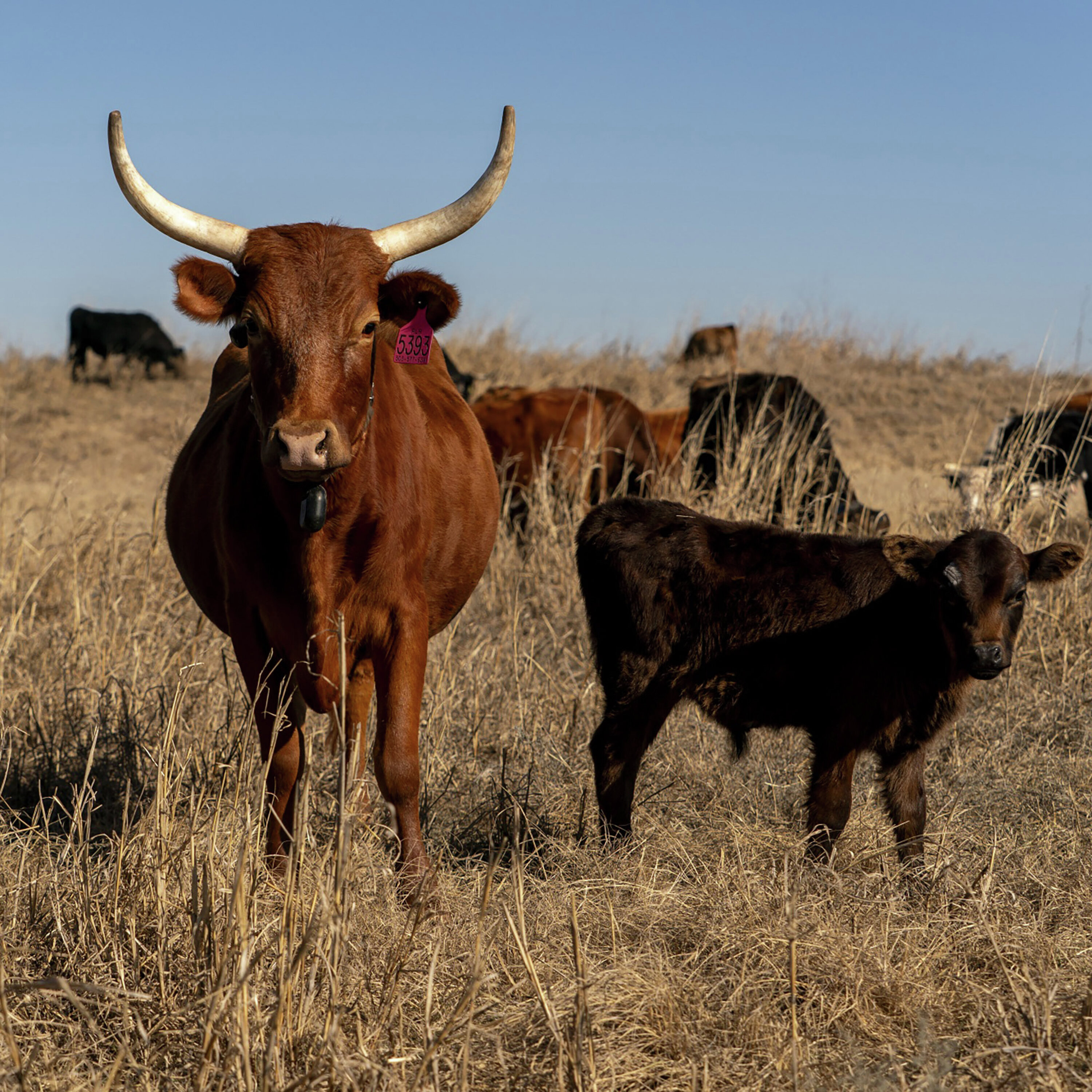
That's because the price of beef is driven by a lot of overlapping factors. The US is the world's largest consumer and one of the largest exporters of beef, but it's facing an historically low cattle herd and soaring production costs that are putting a squeeze on American ranchers.
- [03:47]
Casey Scherler
My family landed in Oklahoma in the early 1900s and we've been farming and ranching on the same land ever since.
- [03:54]
David Gura
Casey Scherler is a fifth generation cattle rancher who runs a ranch with her husband called R.E.
- [04:00]
David
Farm.
- [04:00]
Casey Scherler
I think a lot of people assume that when cattle prices are high, it must be really good for ranchers right now, but it's actually a really challenging and volatile time.
- [04:09]
David Gura
She says the inflationary environment in the cattle industry is putting pressure on their business.
- [04:14]
Casey Scherler
It's getting really, really hard to continue operating a profitable business. We can't continually depend on government bailouts. For example, for farmers and ranchers, we have to think like business people. We have to make decisions that are better for our bottom line and we have to be willing to adapt.
- [04:30]
David Gura
That squeeze is being felt all along the beef supply chain too, from ranchers and meat processors to consumers.
- [04:37]
David
I think it's a reminder, David, that the inflation story hasn't fully gone away. It just demonstrates that there are parts of the economy where prices remain quite persistent, remain quite high. And that's what's feeding the whole cost of living story. That's feeding into the whole political cycle ahead of the midterms. That's one of the reasons why the Federal Reserve hasn't brought down interest rates maybe as fast as Some people would hope, certainly as fast as President Trump would hope, but because they continue to warn there are pockets of inflation still in the economy. Beef prices are not the be all and end all. Not everyone wants to buy beef, of course, but it's just an illustration of how fragile the overall supply lines do remain in the economy that there are still these pockets of food that are increasing like just like it's a pandemic.
- [05:27]
David Gura
I'm David Gura and this is the big take from Bloomberg News. Today on the show, beef flation. What Ryan beef prices show us about the state of the US Economy and what it could take to bring them down. And when you look at beef, the broad beef and veal category, it's gone up 15% over the last year as of January at a high level. What is going on with beef prices?
- [05:54]
David
There's a lot happening all at once. So on the one hand, you've got the cattle herd in the US Shrinking. You have issues like drought. You have issues like the cost of production for the ranchers. So they're juggling high interest rates, high labor costs, high costs associated with their equipment and the like. You have other factors too, structural factors like retiring ranchers retiring, not being replenished. It's a tough job. And of course, now we have the latest issue with disease in the cattle herd coming in from Mexico. That's a top concern for ranchers.
- [06:25]
David Gura
Dangerous flesh eating parasite, the new World screwworm has been spotted just miles from the Texas border in northern me. That's raising alarms for Texas livestock producers, pet owners.
- [06:36]
David
So there's a whole series of issues there that I'm conflating into one sentence. But the net takeaway when you speak to ranchers is that that's what's hammering production. They can't get cattle to meat factory and then to the store in time to meet consumer demand.
- [06:49]
David Gura
How dire is the situation for ranchers, for producers and for consumers?
- [06:55]
David
So it's a difficult situation. It depends where you are on the supply line. And there are some different views on this. If you're at the very start of a supply line whereby you're in cow and calf territory and you're producing those calves, calves are in hot demand right now. You know, one of the ranchers we spoke to said, for example, he gave the example of a bottle calf, that's a calf reared by bottle, that once upon a time wouldn't be considered a premium buy. But you know, a few years ago that might have fetched you a couple of hundred dollars. Now it can be anywhere up to 1500. So if you're producing calves, getting them out the door, hot demand, you should be making money. But the further along the supply line you go, and if you want to keep those cattle and fatten them up as you would traditionally, and then send them off to the market, send them off to the meat factory. That's where it's getting a lot harder. They're feeling a squeeze. And of course the processors, the meat processors, they're under a lot of scrutiny from the White House for what? The White House says they want to promote more competition in the sector. They complain of their own high processing costs. So as I say, if you're at the very beginning, you may be doing okay, but along the rest of that supply line, you're facing all those issues.
- [07:54]
David Gura
I spoke about, like the issues threatening the supply of beef in the US the supply chain itself is complicated. Cattle rancher Casey Scherler says the process of raising and prepping cattle is long and expensive. Coming out of a downturn in the industry is not something that can happen overnight.
- [08:12]
Casey Scherler
A cow is pregnant for about 283 days when she has a calf. You raise that calf to wean for another nine months. And then if that calf is a heifer, a female, and you decide to keep her, she's not going to have her first calf for about two more years. So you're talking about a four year production cycle right before it adds any sort of meaningful value to the beef supply. There's no quick fixes to fixing this. Part of the reason this is happening is because the number of cattle in the US is at an all time 75 year low. And the cattle cycle naturally goes through these periods of expansion and contraction. We're in a period of contraction and we can't, we can't legislate our way into a bigger calf crop next quarter or even next year because biology is slow. And so we just, we have to focus on things outside of strictly policy, I think, to fix these things. And we have to be really careful about what we say and what we do because it does cause some fallout for farmers and ranchers. You know, we are a country who loves beef, and if we want to keep doing that sustainably, then ranchers have to have a way to make viable living.
- [09:26]
David
Got problems around the cost of land, problems around the cost of equipment, problems around levels of interest rates, issues with the drought and so on, so forth. And it's a classic example of a young rancher family clearly getting squeezed at the very beginning and facing very different Circumstances of what ranchers in previous times would have faced.
- [09:46]
David Gura
Then you spoke to another rancher, Patrick Montgomery, who runs KC Cattle Co. Outside of Kansas City, Missouri. He said something astonishing, that there were no cattle left in America. Tease that out for us.
- [09:58]
David
He's illustrating the point that the herd is at the smallest since the 1950s, and that's because production cannot keep up with demand. David, let's not forget demand among consumers is another part of the story. It's not just a drought. It's not just the impact of disease. It's not just the issues around costs as to why ranchers cannot produce the beef. It's also that Americans want to eat more beef and, and they're moving up the value chain in their own diet. And that's why we're having this crunch. And he wanted to replenish his herd, the genetic line in his herd last year, so he sold a chunk of his cattle and he wanted to come back to market this year and to buy new cattle to replace those. He does specialize in wagyu beef, I should say, so he's maybe a little bit up the value chain compared to others. But when he came back, they were around 30% more expensive to buy, so it wasn't economical for him. He's yet to replenish the cattle he sold last year. So he's pretty frustrated. He's among the ranchers I spoke to who has a pretty dam and where things are going at the moment.
- [10:54]
David Gura
When you're not wandering around ranches or feedlots, your day to day job is at the Federal Reserve. You're following what the Fed chairman and other policymakers have to say. How interested are they in this facet of the American economy, in the fact that beef prices are going up?
- [11:07]
David
I think it's fair to say that the price of a hamburger is not going to change the trajectory for US Monetary policy. I don't think the Fed policymakers are sitting around talking about ground beef prices. But when we do hear officials come on and when they use the official jargon and when they say, listen, inflation remains persistent in some areas, they're not fully comfortable with where it's at. And they have this inflation target that they set, and one of the reasons it's not back to that target of 2% is because of pockets like this. And don't forget, of course they're very aware of the staples that people buy and the cost for those staples. And putting food on the table is one of those. So they're not setting monetary policy based on the price of beef. But it certainly builds into the picture that the inflation story in the US has not yet totally gone away. It's headed in the right direction, but it still remains above target.
- [11:58]
David Gura
So with meaty pockets of inflation still showing up in economic data, what is the White House doing to turn things around? And will it be enough to shift the picture before midterms? That's after the break.
- [12:15]
Sponsor Announcer
Support for the show comes from Public. Public is an investing platform that offers access to stocks, options, bonds and crypto, and they've also integrated AI with tools that can assist investors in building customized portfolios. One of these tools is called Generated Assets. It allows you to turn your ideas into investable indexes. So let's say you're interested in something specific like biotech companies with high R and D spend, small cap stocks with improving operating margins, or the S&P 500 minus high debt companies. Chances are there isn't an ETF that fits your exact criteria. But on Public you just type in a prompt and their AI screens thousands of stocks and builds a one of a kind index. You can even backtest it against the S&P 500. Then you can invest in a few clicks, go to public.com market and earn an uncapped 1% bonus when you transfer your portfolio. That's public.com market ad paid for by Public Holdings Brokered services by Public Investing member FINRA SIPC Advisory Services by Public Advisors SEC Registered Advisor crypto services by ZeroHash sample prompts are for illustrative purposes only, not investment advice. All investing involves risk of loss. See complete disclosures@public.com disclosures being a small.
- [13:28]
Commercial Narrator
Business owner isn't just a career, it's a calling. Chase for Business knows how much heart and effort go into building something of your own. That's why they make business growth their priority. The Chase team takes the time to understand your mission, where you are now and where you want to go. Their broad range of solutions is designed with you in mind so you can bring your ideas to life. From banking to payment acceptance to credit cards, you can conveniently manage all your business finances all in one place with their digital tools looking for tips and advice, their online resources are always available to give you the solutions you need to help your business thrive. See how your business can get stronger and go farther with Chase for Business. Learn more@chase.com business chase for business Make More of what's Yours the Chase Mobile app is available for select mobile devices. Message and data rates may apply. JPMorgan Chase Bank NA member FDIC. Copyright 2026 JPMorgan Chase Company.
- [14:27]
4imprint Announcer
Finding the right promotional products can feel overwhelming. But with 4imprint, it can be easy. They call it 4imprint certainty, which means the process is stress free, straightforward and backed by real peace of mind. Not sure what promo products to order? No problem. You can get free samples, product guidance, even free help with your logo, so everything can meet your expectations. Need options? They've got thousands, including branded apparel, drinkware, outdoor and all the trade show essentials. And when your order arrives, it's backed by their 360 degree guarantee. That's 4imprint's promise. Your order will be packed with care, show up looking great and right on time in a rush. 4imprint has quick turnaround options too, to help you hit your deadline. Whether you're prepping for an event or just refreshing your promo lineup, 4imprint helps you get it done. Head to 4imprint.com to explore. That's 4imprint.com for Imprint for Certain.
- [15:28]
David Gura
And we've got the midterms coming up. And the key issue, of course, is cost of living or affordability. How is the higher cost of beef shaping that, that conversation among voters and between voters and politicians, it clearly has.
- [15:42]
David
Bubbled up to the White House, David, because the White House has made several pronouncements on beef prices. President Trump has spoken about the need to import more beef from Argentina, for example. He's brought down tariffs and imported beef. And we know that they're taking actions to boost competition among meat processors. Antitrust, a DOJ investigation have all been floated and spoken about by the White House. So, you know, when you consider that they're the experts, they're the politicians, they know what people on the ground are thinking. So it's obviously bubbling up enough to the level that the White House is having to pull levers on it. Now, they do cite the example of egg prices. Egg prices were soaring when they came into office and they brought those prices down through a mix of insuring supply, for example. So they're talking about doing the same with beef. But beef obviously is a much different kettle of fish. It's going to take a lot longer to get more beef supply in the mix than it takes to get more chickens on the supermarket counter. And in fact, according to some experts, they say that even if the US Heritage was to increase this year, it would take several years before you start to see that flow through the whole food production line to the point where it starts to offer relief. So near term, White House pulling levers, boosting imports, cutting tariffs, and it's clearly a hot political issue for them.
- [16:55]
David Gura
Trump signed a directive earlier this month to boost the amount of beef imported from Argentina to the US Under a new trade agreement. White House press secretary Caroline Levitt talked about that at a briefing last week.
- [17:06]
Commercial Narrator
Cattle, beef prices are coming down slightly and the President wants to see that continue. He believes a minor import to the country with cattle might be a short term solution with respect to bringing down prices. But of course, protecting our American cattle and rancher industry is a priority for the president.
- [17:26]
David Gura
And is that an easy solution here? What do ranchers say about that?
- [17:30]
David
Well, one would assume, I mean for the consumer on the ground. If beef is coming into the country and it's hitting supermarket shelves and it's at a competitive price, you can imagine how the consumer will see that's an option for them. But certainly within the system, ranchers will care. They're not especially sure. Their solution to their issues is imported beef from Argentina. You know, they want support in bringing costs down. They complain about higher interest rates, they complain about a drought and that kind of thing. So you've got political sensitivities around that.
- [17:59]
David Gura
Then there's the meat processors. Trump ordered a federal probe of the meatpacking industry, blaming the companies for soaring beef prices. The Meat Institute, a lobbying group representing more than 350 Meatpacking and processing companies, pushed back on the probe in November, saying the companies welcome a fact based discussion about beef affordability. Meanwhile, those meat packers are also feeling the strain. The beef side of Tyson Foods posted consecutive quarterly losses since 2024. And Tyson, along with Cargill and JBS have closed beef plants or announce plans to close them. As you talk to ranchers and what did they say would help policy wise could make a difference in their lives and getting those beef prices down.
- [18:42]
David
Well, so one message from the ranchers is that this will take time when you consider that drought is part of this story. Cost of labor, cost of equipment, cost of renting land, for example, the level of interest rates. Now of course you have the story of threat of disease. You have structurally higher demand among consumers. I mean, you're lining up a lot of issues there that you're not just going to solve with a press release overnight. It's going to be a long road back before, you know, they can get to a point where this crunch is evened out and there's beef supplying to the supermarket stores in the way that can save consumer demand.
- [19:22]
Casey Scherler
You know, a lot of ranchers out there are essentially paying for the privilege of working 80 hour weeks and this math is, is really sobering. So essentially, you know, when people ask, well, the cattle herd's small, so why aren't ranchers investing in expansion? I think a big part of this answer is just, you know, the capital requirements are huge and the returns are not. And eventually something's got to give here because it's becoming just harder and harder for ranchers to stay afloat.
- [19:56]
David Gura
This is the big take from Bloomberg News. I'm David Gura. To get More from the big and unlimited access to all of Bloomberg.com, subscribe today at Bloomberg.com podcastoffer if you like this episode, make sure to follow and review the Big Take. Wherever you listen to podcasts, it helps people find the show. Thanks for listening. We'll be back tomorrow.
- [20:26]
My Policy Advocate Announcer
With Bali from Ishares. You get access to both monthly income and and growth potential in one simple ETF. It's the best of both worlds. Discover Bali iShares Large Cap Premium Income Active ETF iShares the market is yours. Visit www.ishares.com to view perspectives for investment objectives, risks, fees, expenses and other information that you should read and consider carefully before investing. Risks include principal loss and the use of derivatives, which could increase risks and volatility. Monthly income is not guaranteed.
- [20:50]
David Gura
Prepared by BlackRock Investments, LLC.
- [20:52]
4imprint Announcer
With four imprint, finding the right promo products can be easy. They call it four Imprint Certainty, which means you get free samples, expert help, art assistance and their assurance your logo looks great. 4imprint offers thousands of options to choose from, including branded apparel, drinkware, outdoor and more. And it's backed by their 360 degree guarantee. That's 4imprint's promise that your order will be packed with care and delivered on time. Need your order faster? 4imprint offers quick turnaround options too. Visit 4imprint.com to explore forimprint.
- [21:25]
My Policy Advocate Announcer
For certain, here's a paradox. We buy insurance for peace of mind. Yet the very policies we trust can deliver the biggest financial shocks. Across America, millions of claims are denied every year, not because people did anything wrong, but because policies quietly excluded the things that happened. The psychology of trust tells us we assume the contract is fair. But in insurance, the information gap is massive. The insurer knows every detail of what's covered. The policyholder rarely does. That's where my policy advocate comes in. For just 27 cents a day. Their platform reads your policies and shows you in plain language where you're vulnerable. They're not selling insurance. They don't do that. It's about transparency, giving ordinary people the same understanding insurance companies have had for decades. Because when you know what's really in your policy, you can plan, protect and avoid surprises. Before you trust your policy to protect you, let my policy advocate tell you what it really says. Visit mypolicyadvocate.com today. Peace of mind starts with knowing the truth. Mypolicyadvocate. Com.