Loading summary
Transcript74 lines
- [00:00]
Chase Sapphire Reserve Business Advertiser
When you own your own business, you own every decision. Now own the card that rewards you for it. Chase Sapphire Reserve for Business is a pay in full card that elevates your travel experience and offers premium benefits that will take your business to the next level. Sapphire Reserve for business offers 8x points on all purchases through Chase Travel, 3x points on social media and search engine advertising, airport lounge access, and more. Chase Sapphire Reserve for Business it's the card that gives back all you put in. Learn more@chase.com ReserveBusiness Chase for Business make more of what's yours Accounts subject to credit approval restrictions and limitations apply. Cards are issued by JPMorgan Chase Bank NA member FDIC the thing about AI for business?
- [00:46]
IBM AI Business Representative
It may not automatically fit the way your business works. At IBM, we've seen this firsthand. But by embedding AI across hr, IT and procurement processes, we've reduced costs by millions, slashed repetitive tasks, and freed thousands of hours for strategic work. Now we're helping companies get smarter by putting AI where it actually pays off, deep in the work that moves the business. Let's create smarter Business.
- [01:13]
Wise Currency Service Advertiser
IBM Wise is the smart way to manage the currencies you need around the globe. When you send money abroad using your bank, you could get hit with hidden fees and exchange rate markups. There's a better way. Try W Wise uses the exchange rate you'd usually find on Google, with no unwelcome surprises. Plus, most transfers happen in under 20 seconds, which means your money arrives in less time than you've been listening to me. It's simple and free to sign up when you download the Wise app. Be Smart, Get Wise T's and C's Apply.
- [01:46]
Greenies Dental Treats Advertiser
Bloomberg Audio Studios Podcasts, Radio News Congress
- [01:53]
Sarah Holder
recently came together across party lines to pass a bill tackling one of the country's most pervasive and politically salient issues housing affordability.
- [02:04]
Katie O'Donnell
It's an issue that's been almost 20 years in the making.
- [02:07]
Sarah Holder
The legislation is called the 21st Century Road to Housing act, and it's mostly focused on addressing the nation's housing shortage.
- [02:15]
Katie O'Donnell
Construction rates cratered after the global financial crisis, and they haven't really recovered.
- [02:21]
Sarah Holder
That's Bloomberg housing policy reporter Katie o'.
- [02:23]
Megan Scully
Donnell.
- [02:24]
Katie O'Donnell
So the bill is designed to address that by boosting the supply of new homes as a way of bringing down prices by kind of increasing supply to meet demand.
- [02:34]
Sarah Holder
The legislation had early support from President Trump and overwhelmingly passed the House and the Senate.
- [02:41]
Megan Scully
What was so unifying about this issue?
- [02:43]
The midterm elections and the focus on affordability and growing frustration among voters that neither party is doing enough to bring prices.
- [02:54]
Sarah Holder
That's Megan Scully, who leads the Bloomberg team covering Congress.
- [02:57]
Megan Scully
There was a recognition that this is not sort of a cure all for housing prices, nor is it a cure all for the broader economic concerns voters face. But it was a good faith effort.
- [03:08]
Why hasn't it officially passed yet then?
- [03:12]
There's one reason, and that is Donald Trump. He announced that he would not be signing the piece of legislation. He wanted to basically hold it hostage for, the Save America Act, a voter identification bill that he has said is his top priority ahead of the midterm elections.
- [03:31]
Donald Trump
Some people say it's wonderful. To me, compared to the Save America act, just about everything is a big yawn.
- [03:43]
Sarah Holder
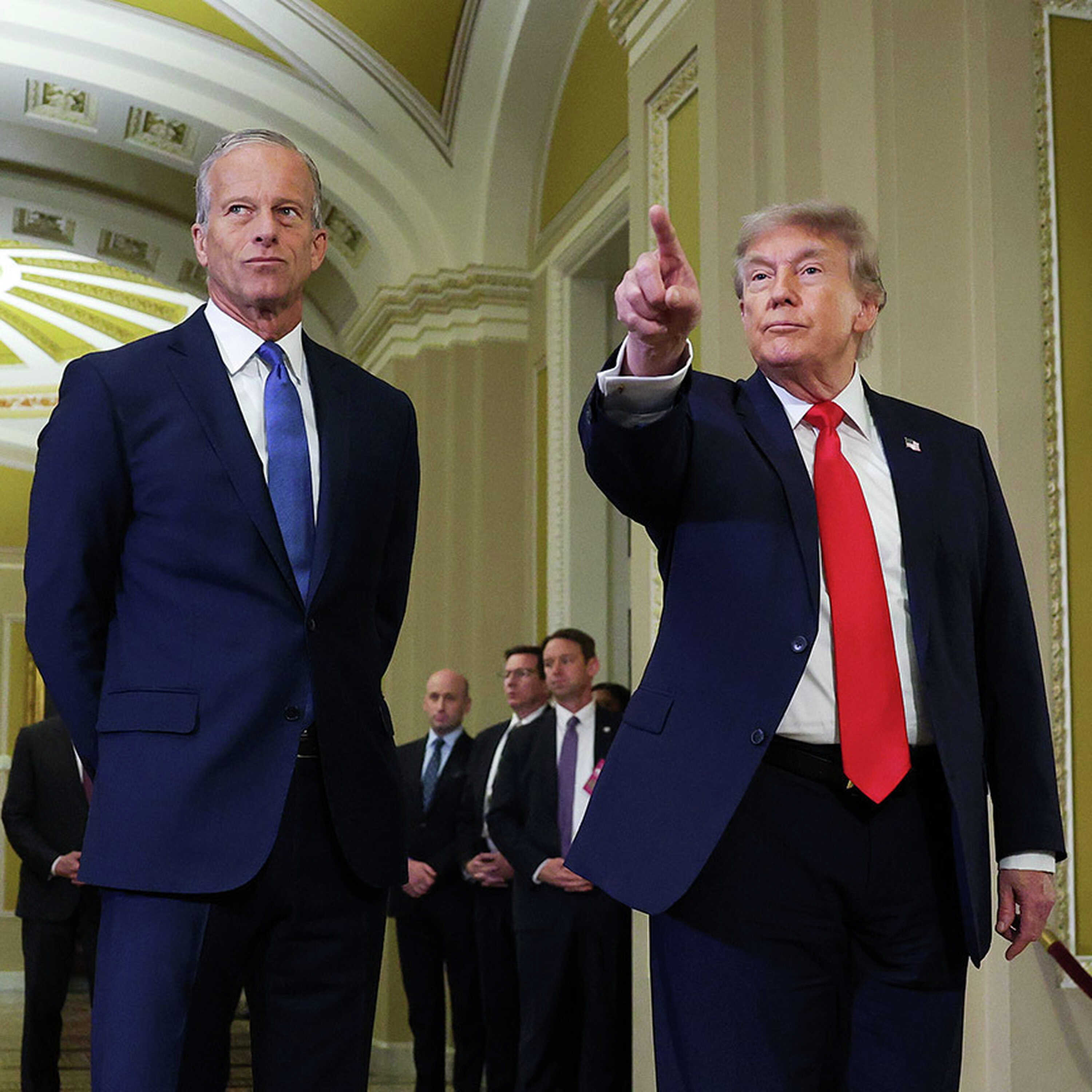
I'm Sarah Holder and this is the big take from Bloomberg News. By 12am Saturday morning, a major bipartisan housing bill could become law or fall to a presidential veto. Today on the show, Bloomberg's Megan Scully and Katie o' Donnell on the housing legislation's strengths and limitations, Trump's calculus behind holding it up, and how the saga could complicate Republican messaging for the midterms. Katie, this bipartisan housing package had a long journey to get where it is today. It's the product of a lot of back and forth between the House and the Senate over the past year plus and in its final form, it has 60 provisions. Dennis Shay from the Bipartisan Policy center told you and your colleague it marked a paradigm shift in housing policy. Why do experts see this housing package as such a paradigm shift?
- [04:44]
Katie O'Donnell
Everyone agrees that a supply shortage is at fault here, which is a new thing. That's not always been the case. There's been a lot of movements to, for instance, substitution, subsidized demand. And when you have constricted supply, subsidizing demand makes prices go up. So the fact that everyone could kind of agree on the root cause was seen as this big moment. There are a few provisions people are really excited about, though. There's one that would remove the permanent chassis requirement for manufactured housing. So that removes this requirement that this big steel frame plate that is used to transport manufactured homes under current regulations that must stay there even though most of These homes, like 90% of these homes, don't move once they're sited. That is expected to save consumers some $10,000, but also to make it easier to put manufactured housing in localities that have various restrictions about, you know, cladding and the way it looks.
- [05:39]
Sarah Holder
Another piece of this legislation tackles an issue Trump himself has elevated.
- [05:44]
Donald Trump
America will not become a nation of
- [05:46]
Sarah Holder
renters in January at the World Economic for Trump said that the dream of buying a home was out of reach for too many Americans.
- [05:55]
Donald Trump
That's why I have signed an executive order banning large institutional investors from buying single family homes. It's just not fair to the public.
- [06:03]
Megan Scully
One of the major sticking points in this reform package as it was being drafted involved the role that institutional investors, like private equity firms have played in this housing affordability squeeze. There were debates over how exactly Congress should regulate Wall Street's ownership of single family homes, especially where exactly lawmakers land.
- [06:24]
Katie O'Donnell
It's interesting. It was something that largely was negotiated by the White House with Senator Elizabeth Warren, the top Democrat on the Senate Banking Committee. It was critical for the White House, and it was something that Democrats have been behind in the past. But interestingly, As a senator, J.D. vance had supported a bill to kind of kick Wall street out of the housing market. So the way this bill defines those investors is institutions with 350 single properties or more. I should say. What's interesting about this, though, is that those investors only own like 2% of the single family rental stock and something like 0.5% of overall single family housing stock in the country. So just numerically, it's not going to have a huge impact on housing prices just because they're not actually a huge player here. It's an easy thing for people to kind of scapegoat. But most analysts would agree that that's not what's driving up housing prices.
- [07:20]
Megan Scully
I'm wondering how this legislation addresses local roadblocks to housing production, because there's a lot that the federal government can do. But a lot of the things blocking supply end up being these zoning restrictions that cities and municipalities enforce, right, Katie?
- [07:38]
Katie O'Donnell
Absolutely. So most of the determinants of home price sort of growth are determined at the local level. You have environmental reviews, which this bill would sort of streamline. At the federal level, it's kind of been this interesting thing to watch Washington try and deal with the housing affordability crisis because they are so limited. But this bill basically takes a carrot approach rather than a stick approach. So it encourages localities to reduce restrictive zoning, to reduce barriers to construction. It would establish these pre approved home design plans that could sort of speed up various permitting processes. In theory, it doesn't do anything like say, tie federal highway dollars to removing zoning barriers. It's very like, here's a competitive grant program, here's an encouragement on how to do this. Here's some ways you could do this. But it's not punishing localities that don't do it now.
- [08:36]
Megan Scully
Building housing takes time. Some of the potential effects from this bill would take years to be felt in a real way by renters, by
- [08:44]
Sarah Holder
home sellers, home buyers.
- [08:46]
Megan Scully
But where might we see the most immediate effects from this housing bill if it ultimately becomes law?
- [08:53]
Katie O'Donnell
I think the hope is that it will encourage the proliferation of factory built housing. It has the manufactured housing chassis requirement that I mentioned. It would establish HUD as the regulator of modular housing, which is very similar, but it's sort of the prefab elements that are put together in a factory, but then they're assembled on site. They're not transported to the site as a house. That hope may be like a little Pollyanna ish, to be honest, because manufactured housing still has kind of a branding problem, for lack of a better word. Like, people think of trailer parks and they zone against it. It's interesting. Even though, like young people in Gen Z are growing more amenable to manufactured housing, they're seeing that it can be very different from manufactured housing of the 60s and 70s that you think of as like the double wide, et cetera. They had a manufactured housing advocate tell me that, like, oh, but the planning commissions are still Gen X and boomers and like those are the people we need to convince. And so even though this would sort of reduce prices for manufactured housing and allow it to be built in more places, in theory you still have to get people to want it to be built. This is definitely like a bill that's sort of long term, not short term.
- [10:02]
Sarah Holder
The Bipartisan Road to Housing act headed for Trump's desk, seemingly a slam dunk for lawmakers. So how did things go wrong? I'll be back with housing reporter Katie o' Donnell and Congress editor Megan Scully after the break.
- [10:20]
Public.com Advertiser
Support for the show comes from public.com if you're actively involved in your portfolio, you probably catch yourself repeating the same actions. Buying the dip, manually sweeping idle cash, putting on a hedge on public. You can now create AI agents that handle all these tasks on your behalf. Just describe what you want to do in plain English, like if the Vix hits 25, buy a put option on the S&P 500. Or if my cash balance goes above $20,000, move the excess into my direct index. You approve the workflow and your agent handles the risk. Monitoring the market, watching for your conditions and executing your strategies exactly as defined. An investing platform driven by your intent, not just your clicks. You can also get full read and write access to your account via the public API. Go to public.com market and fund your account in five minutes or less. That's public.com market paid for by Public
- [11:16]
Public.com Legal Disclaimer
Investing Brokerage Services by Open to the Public Investing Inc. Member FINRA and SIPC Advisory Services by Public Advisors, LLC. SEC registered advisor complete disclosures available@public.com disclosures
- [11:30]
Starbucks Advertiser
the Starbucks Iced Torchata Shaken Espresso is back for the summer. Crafted with cinnamon, vanilla and nutty notes of toasted rice, handshaking with smooth blonde espresso and finished with oat milk for a creamy touch. Made for summer only at Starbucks.
- [11:47]
Greenies Dental Treats Advertiser
As a pet parent, I love those everyday moments. Morning cuddles, post walk lounging and of course, treat time. But let's be honest, keeping up with your dog's dental health isn't always easy. Until we found Greenies dental treats. What I love is how something so simple can make such a big difference. These treats aren't just incredibly tasty, they're vet recommended and designed to support the four areas vets check the plaque, tartar, gums and breath. The unique texture helps clean right down to the gum line to support cleaner teeth after 28 days when fed daily. That's a win for both of us. And as a bonus, they're made with natural ingredients plus vitamins, minerals and nutrients, so I feel good about giving them
- [12:28]
Megan Scully
to her every day.
- [12:29]
Greenies Dental Treats Advertiser
It's one of those small routines that turns into something more, a moment we both look forward to and a simple way to support their health and happiness. Greenies Make Health a Treat shop now@greenies.com.
- [12:46]
Megan Scully
So Megan, this bill was baked. It was ready to go after lots of debate. Congress was aligned and on June 23 the House passed it 358 to 32. What happened when the bill was sent to Trump's desk?
- [13:00]
What happened essentially was Trump changed his mind. We were expecting him to sign this bill in a public ceremony with House lawmakers and others who had supported the legislation and cameras were set and they were ready to go. And he posted on Truth Social that he would not be signing the bill because he wanted this Save America act, this voter ID legislation that Democrats oppose and has pretty much no chance of passing the Senate. He wanted that before he would sign this housing bill. In the interim, he has said it's not so important that the Save America act is more important. Of course, the one doesn't have anything to do really with the other, aside from he can use the housing bill as leverage over lawmakers to try to get something on voter identification. You know, with the midterms four months away, this has become sort of an all consuming topic for Trump when he's
- [14:05]
Katie O'Donnell
been sort of minimizing the importance. He has also denigrated the bill and the idea of the bill, which I think is even more kind of unsettling to the bill's co sponsors who have been working with the White has expressed ambivalence about home prices coming down because that would hurt equity that existing homeowners have built in their homes. He has said interest rates are the main thing here, but there's no indication interest rates are going to come down. So the thinking is that he ultimately will sign this or that it will just become law without him signing it.
- [14:35]
Megan Scully
And how did Republicans react when Trump did not immediately sign this bill that they had worked so hard alongside Democrats to get to the finish line?
- [14:47]
Megan it was a rather uncomfortable moment on Capitol Hill. You had essentially the speaker of the House trying to explain Trump's actions and then you had the Senate, John Thune had been a big advocate for this legislation and Trump essentially pulled the rug out from under him. And then he still came up to the Hill to have lunch. The lunch itself was somewhat fraught because of other issues regarding the Iran war, regarding candidates that Trump had backed. ACT for the midterms so the whole lunch was going to be tense already and then you sort of threw this bomb on top of it.
- [15:26]
So the reason that Trump has not yet signed the Road to Housing act was because he wanted action on his SAVE Act.
- [15:36]
Sarah Holder
Tell me a little bit about the SAVE Act, Meghan.
- [15:38]
Megan Scully
What would it do? Who would it impact and why is passing it such a priority for Trump?
- [15:43]
So the Save America act is probably the most expansive piece of voter identification legislation that has been produced and in recent memory. And while in theory voter ID is widely accepted, you know, I believe polls have it at north of 80% voters approve of it. In practice, there are concerns among Democrats that this could really disenfranchise voters.
- [16:14]
Sarah Holder
Advocacy organizations opposed to this bill have pointed out that those voters could include women who change their last names when they get married, transgender people whose legal names don't match the ones on their birth certificates, tribal citizens whose tribal IDs don't list a place of birth, and overseas military members who can't provide in person documentation to register for mail.
- [16:37]
Megan Scully
In voting.
- [16:38]
Somewhere in the realm of 22 million Americans could be disenfranchised with this piece of legislation. Trump has pushed for this. It feeds into the false narrative that he has put forth without any evidence that non citizens are voting in US Elections, there is no indication that that is happening in any large numbers. But Trump has continued to beat this drum.
- [17:04]
It seems like a risky political move, stalling on signing this popular bipartisan housing bill, which is a big issue for voters heading into the midterms, while pushing this potentially less popular voting restriction bill.
- [17:20]
Sarah Holder
Walk me through that calculus.
- [17:22]
Megan Scully
You know, as is always the case with Trump, a lot of this is in the show, right? He was able to produce this very dramatic moment on the Hill and he was able to really try to hold his Republican senators feet to the fire on this. The only way that this voter identification legislation could pass the Senate, and it's not even clear this could pass the Senate if this were to happen, but would be to do away with the filibuster. The filibuster is essentially what gives the minority in the Senate power over the majority. And Senate Republicans know that doing away with this essential roadblock would, would take away their power should they lose or when they lose the majority at some point. The only legislation that can get through the Senate that is not subject to a filibuster are things like the budget bill. This would not fall under that bucket, though. It is not budgetary in nature and would be rejected. So this is, this is essentially a power play on his part.
- [18:27]
So Meghan, does this power play change Republicans position heading into the midterms to have the President on the record saying housing affordability legislation, quote, pales in comparison to the Save America act when housing affordability is such a big issue for voters?
- [18:45]
Absolutely. You know, Republicans have been trying to unify around a message of affordability and they've been trying to get Trump to stick with this message of affordability. Without that, and certainly with Trump denigrating it, it undercuts their arguments and makes it that much more difficult to present this case to voters.
- [19:08]
And ultimately, Katie, Trump's signature could be symbolic. Right. As long as he doesn't veto this legislation, the road to housing bill will become law 10 days after the bill was originally presented to him. Excluding Sunday's. That's Friday, right?
- [19:22]
Katie O'Donnell
That's 11:59pm on Friday. It technically becomes law midnight Saturday morning. And so he can sign it up until 1159, basically.
- [19:32]
Megan Scully
I just wanted to add too, like until that time, until that deadline approaches, he could veto it.
- [19:38]
And do you think that's gonna happen? Might he veto it?
- [19:42]
I have long since stopped trying to project what may or may not happen in a Trump administration. But it's certainly a threat. It can loom over the bigger debate whether it's on Save America or whether it's on the Iran war or whatever the topic du jour is. So he can sort of lord this over Republicans, forcing them then into a point of do they hold a vote to override a veto? And they probably do have the votes to do that, but that just presents a clash with the administration and further presents the Republican Party as being in disarray.
- [20:22]
So say he ultimately does sign it, or this bill ultimately passes. What does this whole saga tell you about the state of US Politics right now and where housing policy fits in?
- [20:34]
Katie O'Donnell
If you are an existing homeowner and you're not trying to sell right now, things are great. And if you're a renter, rent is falling off. It had risen a lot. It's coming down. If you want to buy and you just can't because prices are too high and mortgage rates are too high, which mortgage rates have gotten higher because of the Iran war, then you're incredibly frustrated. Right. People have different experiences of the housing market. And that's always been sort of the question about housing is it's not like a clear, you know, if homeowners like a policy, homeowners are more likely to vote than renters. Right. And so there's always been this balancing act of trying to preserve the existing gains that people are able to feel in their wealth while at the same time expanding access. So I think housing policy, I mean, it is the fact that everyone's talking about it, is a huge deal. It's a sign that Washington knows there's a problem. But in terms of the ways they can fix it, the ways they're able to fix it, and the ways they will fix all comes down to details.
- [21:43]
Megan Scully
This is the Big Take from Bloomberg News. I'm Sarah Holder. To get more from the Big Take
- [21:48]
Sarah Holder
and unlimited access to all of bloomberg.com, subscribe today@bloomberg.com podcastoffer if you like this episode, make sure to subscribe and review. The Big Take. Wherever you listen to podcasts, it helps people find the show.
- [22:03]
Megan Scully
Thanks for listening. We'll be back tomorrow.
- [22:14]
Chase Sapphire Reserve Business Advertiser
Healthcare doesn't always work great. If you've ever waited on a refill or couldn't schedule an appointment, you get it. That's the kind of stuff Optum is changing. They're using data and technology to integrate patient care, pharmacy and everything else. So healthcare is connected, not complicated. What's that look like? Cheaper prescriptions that are easier to get and care that looks at the whole person how you need it. Optum is helping make healthcare work as one for everyone. Learn more@business.optum.com by the time I hit
- [22:45]
Karen Moscow
my 50s, I'd learned a few things, like how family is precious, work can always wait, and 99% of people over 50 already have the virus that causes shingles. Not everyone at risk will develop it, but I did. The painful, blistering rash disrupted my life for weeks. Don't learn about your shingles risk the hard way. Talk to your doctor or pharmacist today. Sponsored by GSK get the news you need in just 15 minutes.
- [23:16]
Nathan Hager
Start your day with Bloomberg Daybreak, the podcast with a global view on the stories that matter. I'm Nathan Hager.
- [23:22]
Karen Moscow
And I'm Karen Moscow. Join us each morning for curated stories on current events, politics, business and foreign
- [23:28]
Nathan Hager
relations, plus one conversation on the day's biggest developments, all in just 1515 minutes.
- [23:33]
Karen Moscow
Subscribe to Bloomberg Daybreak for a precise, thoughtful take on the stories that matter.
- [23:38]
Nathan Hager
Listen to Bloomberg Daybreak each morning on Apple, Spotify, or anywhere you listen.