← Big Technology Podcast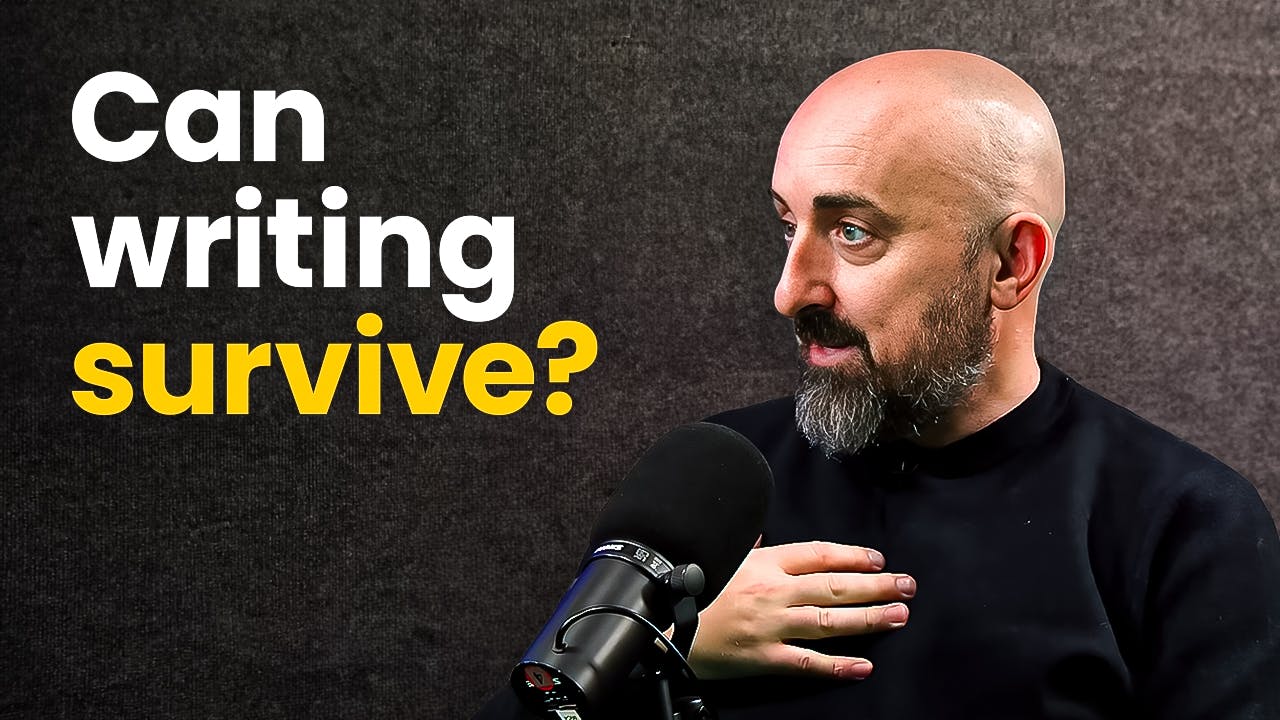
Loading summary
Transcript164 lines
- [00:00]
Kevin Roose
What is the future of writing in the age of AI and what does Medium want to be? We'll cover that right after this. Welcome to Big Technology Podcast, a show for cool headed and nuanced conversation of the tech world and beyond. Today we have a the truth is.
- [00:14]
Podcast Sponsor/Announcer
AI security is identity security. An AI agent isn't just a piece of code. It's a first class citizen in your digital ecosystem and it needs to be treated like one. That's why Okta is taking the lead to secure these AI agents. The key to unlocking this new layer of protection, an identity security fabric. Organizations need a unified, comprehensive approach that protects every identity, human or machine, with consistent policies and oversight. Don't wait for a security incident to realize your AI agents are a massive blind spot. Learn how Okta's identity security fabric can help you secure the next generation of identities, including your AI agents. Visit okta.com that's Okta. Capital One's tech team isn't just talking about multigentic AI. They already deployed one. It's called chat Concierge and it's simplifying car shopping using self reflection and layered reasoning with live API checks. It doesn't just help buyers find a car they love, it helps schedule a test drive, get pre approved for financing and estimate, trade and value. Advanced, intuitive and deployed. That's how they stack. That's technology at Capital One. Great conversation for you because we are.
- [01:27]
Kevin Roose
Being joined in studio by the CEO of Medium, Tony Stubblebine. Tony, it's great to see you. Welcome to the show.
- [01:34]
Tony Stubblebine
Thank you for having me in person. This is great.
- [01:36]
Kevin Roose
It's great to have you here. We're going to cover a lot of ground today. I think one of the things that's fascinating about Medium is your sort of ground zero for a lot of the questions we ask about AI. Do we want AI writing? How should AI be crawled by generative AI agents, AI engines? All the above. We're going to get into all of it. Let's start right away with AI Slop because why start slow? There was a story in Medium talking about how AI slop is flooding me. Is flooding media. Sorry, a story in Wired talking about how AI slop is flooding. Flooding Medium. You took issue with the story. Let me just at least put the premise of it out there and give you a chance to respond. Wired spoke with this company called Pangram Labs, looked at more than 270,000 stories. It found that something like 47,047% were AI generated. Is AI slop a growing problem on the Internet? How is.
- [02:30]
Tony Stubblebine
Oh for sure.
- [02:31]
Kevin Roose
How is Medium dealing with it? Is this a fair study that they did on your content?
- [02:36]
Tony Stubblebine
Oh, these are multiple questions. Yes. Slop is a important thing going on right now.
- [02:43]
Kevin Roose
Should we define it?
- [02:44]
Tony Stubblebine
Yeah.
- [02:45]
Kevin Roose
What's your definition of AI? Because AI generated stories aren't necessarily slop. Or are they?
- [02:50]
Tony Stubblebine
Right. There's a spectrum of it. So let's start with like every platform is mostly deleting and hiding the things that get posted to it. So like this whole idea that censorship is bad, it's sort of like bullshit. Because if you run a platform, the majority of what people try to post on your platform is spam. And this is like no one would debate whether or not we're doing the right thing by getting rid of it because it's like Viagra ads or are just like really like, like outright financial scams or like content that's literally made illegal for good reason, CSAM and whatnot. So we're already in the business of trying to prevent certain types of content from making it out into the algorithm. And what happened in the age of AI generated content is that there's this like slightly more human form of content or that, or at least it looked more human, but it's really nothing. It's just a new form of spam. And so we treat it the way we treat all spam. It's like if we can, like if we can catch it and block it outright, we catch it and block it outright. If we can't be 100% sure that the user should be blocked or removed from the platform, we'll allow it onto the platform. But really try hard not to let it make its way either into the Google search index or into our own recommendations. This article from Wired. I think my favorite thing about it, for what it's worth, is the way that they created a meme, like just this phrase, AI slop. I had not seen it anywhere until that one article. And then they wrote some follow up articles.
- [04:32]
Kevin Roose
Yeah, it was already a pretty common term. It's actually surprising to me that you hadn't really.
- [04:36]
Tony Stubblebine
You were already using that. I just, it, it just felt like that term became the de facto term in that moment. And I just like, yeah, I like to see like kind of the curve of, of a meme takeoff. And it's a good term. It's the right. We should all be using it. What I took issue with, honestly was that it was asking the wrong question. Does it matter how much slop is on medium or does it matter which is the question they were asking and does it matter how much slop our readers are seeing? Which is the question I'm asking. Right. So we do all of this work to prevent readers from seeing the slop. And I think we're doing a really good job. I think for the most part when I get complaints about AI content on medium, it's what's showing up in the comments, it's not what's showing up in the posts. Their recommendation system is quite good. I think that was the first thing I took issue with. And then there was something just suspect about the service provider that they use where it's like at the same time this article is coming out, that service provider is using the article to try to get me to hire them. And it felt like a conflict of interest.
- [05:44]
Kevin Roose
Oh, so by the way, AI slope, just to define it, just low quality written content, sometimes images and videos, but in your case, I think written, that's just being posted on the Internet for engagement hacking.
- [05:58]
Tony Stubblebine
Yeah. Right. I mean you could just think of it as like a prompt. Like, you know, it's like, oh, explain AI, you know, and you go to ChatGPT and say write 5,000 words about AI for me and then you just cut and paste that into medium.
- [06:12]
Kevin Roose
But I think a lot of it is also, it is following the incentives of the Internet already because if we're being honest, there's a ton of content out there on the Internet that is being sort of generated in really low quality ways, whether it's outsourced writing or whatever it might be that's sort of responding to these incentives to like get stuff in front of search engines.
- [06:33]
Tony Stubblebine
And how, how different does this feel to you than pre AI slop? I mean those incentives already existed.
- [06:40]
Kevin Roose
Not different. But the question I have for you is the scale because you're seeing this on the provider end.
- [06:45]
Tony Stubblebine
Yeah.
- [06:45]
Kevin Roose
Are you seeing a real increase in this type of content showing up on medium because of the scale?
- [06:50]
Tony Stubblebine
We saw like a 10x increase in what people were trying to post on medium, but also at some level it was kind of a non issue because the tools we used to battle it are the same tools we were already using to battle spam and to filter out the. Filter the good stuff into the network and leave the bad stuff out. So we got a huge increase in volume, but not in what the readers see. And still I'm like somewhat perplexed that that article made it to print because it was really a nothing burger for us. It just, it was a little bit of extra work, but the same type of work we were already doing.
- [07:30]
Kevin Roose
It's funny you say we got an increase. Is that increase still being sustained, that 10x increase?
- [07:36]
Tony Stubblebine
Yeah, it didn't, it, it didn't turn out to be exponential. It just, it came and I think we tightened up and maybe became less interesting. But you know, it's like it was just a step function and the change in price and that, that there's not a. As significant of a change in price to create that slop anymore. And you know, it gets incrementally cheaper, but it's still like it was somewhat cheap and then it became very cheap. And that's just like night and day. And that night and day, I think just created a one time change in the amount of trash that was getting thrown at platforms. And I think that's true for all platforms.
- [08:18]
Kevin Roose
You said something very interesting, that the provider, the tech company that went wired with this data then came to you and tried to sell you their AI detection services. I hadn't known that.
- [08:29]
Tony Stubblebine
I mean, the reporter knew, really. I.
- [08:33]
Kevin Roose
This was happening while the story was underway. Did they write, did they include that in the story?
- [08:39]
Tony Stubblebine
I can't quite remember. It was like, I don't know. This is sort of a little bit. To me, the story is a little bit sus just because of that. But the reporter did, you know, at least give our, you know, our case that what gets read matters more than what exists.
- [09:01]
Kevin Roose
Yeah. In the deck it was Tony Stubblebine says shouldn't matter at all. But let me give in this counterpoint here about why it should matter. You already brought up search engine indexing and you're trying to make sure that this stuff is not indexed via search engine. One thing that Medium. As someone who writes on Medium, I also write on Substack. We're going to get into the difference between Medium and Substack in a bit. But as someone who writes on Medium, one thing I see is Medium ranks really high in search. I wrote this story, this profile on Dario Amodei. You cannot find it on Substack, but I posted the same post on Medium. And it ranks up way up there when you're searching for Dario. And I imagine that if I was someone who was in the business of putting up AI slop trying to get traffic and revenue from search engines, uh, even if Medium is not recommending that to readers, it's actually a great venue to try to get in front of people because of the search ranking.
- [10:02]
Tony Stubblebine
I for. I mean, I feel like I'd rather just lean into. For your. For your Listeners, Yeah, like SEO on medium is great. And that's the reason to write on medium. For as far as fighting the AI slop, it the, the thing that we do for them is the same as we do for spam, is we, we literally remove them from the Google index. Like we, we spend a fair amount of time actually making sure that, that the quality of what we index on Google is, is high. And I think what we've heard from Google actually is sometimes they're confused by what we're saying no index to. And I've gotten emails that are, that are, that have brought up stories that literally ask why these 10 stories aren't indexed. And we look at them and we think, yeah, because we don't think they're real enough. We don't think they're authentic enough. We don't think they're deep enough.
- [10:58]
Kevin Roose
Yeah, it's fascinating because it gets right into this conversation about whether all AI generated content is slop. And I even let off this conversation asking, what's the future of writing or blogging in the age of AI? And it seems like AI is getting better at writing. And is there going to be a point where people in the position that you are in say, you know what, it's better than most humans at writing. Let's just let it rip.
- [11:31]
Tony Stubblebine
I am always confused by when people worry about the future of writing. So let me just start with first principles, right? Like, writing is thinking. And smart people like to think that's not going away. When you have a thought and you put it onto paper or put it, you know, type it out, Suddenly this, like, all these subconscious, like, feelings about that thought, all of your, like, life lessons get articulated in a way where just as the writer, you understand it better. And so the role of AI in there is not to replace you. Like, if you're someone that thinks there's value to your life and being smart, like, you're not going to stop writing. And it's the same with reading. We've been down this path with, is it valuable to get a summary rather than read the whole thing? Right? This is like the Cliff Notes story, right? The Cliff Notes did not replace the book because there's something about the way our brains work that learn through story. And a lot of what we're learning is the human components of that story. It's not just a set of facts. It's the humans involved in that story. What did they, you know, what did they learn? What did they think of it? Like, if they're giving advice, why you know that all of that stuff ends up mattering. And it's why, it's why self help books are as long as they are. You know, the advice is usually a page, but then half the book is social proof. And that's for a reason, is to help you understand why you might make the effort to take that advice. And so I just, I never have any doubts about trends about writing because I just, I don't think that, that there is ever going to stop being a market of people who think their life gets better if they get smarter. Like that's not going away. Right. And so where people are getting confused is it just turns out there's a lot of writing that's only done for bullshit reasons. Right. It's like I'm required to give a report or I have to pass some writing up to some bureaucracy. Right. And so you're just checking the box on having provided any writing at all. And yeah, AI can do that, but that was never about thinking or being smarter in the first place.
- [13:48]
Kevin Roose
Yeah, I think we'll both agree that there is real virtue in writing. I mean, I do it as living. You've done it as a living for a long time. That idea of going from something that you think you know and then you start writing it and you realize you don't really know it at all. Yeah, there's great value in trying to get connect those ideas on the page. That's obviously, you know, we're big technology podcast. That's why Amazon does their six pagers is to try to. Although maybe those are going to be AI generated. And that's a real question. And they, they do it so they can, you know, instead of having a PowerPoint where your ideas are disconnected, you, you write it down so you actually know what you're talking about. And I think that's been a big driver of success within that company for a long time. Similarly, when I'm trying to get into the bottom of concepts or think I know certain things and I'm writing it down, I'm like, oh God, I got to make another phone call because I have no idea what happened in the middle of that story that I'm reporting.
- [14:41]
Tony Stubblebine
So I love that. Like, that anecdote is so powerful. Right. It's that you think you understood what you were talking about and until you had to force yourself to put it into words. And then you realize there's huge gaps. Right. That's like. That is the proof of how important writing is to thinking.
- [14:59]
Kevin Roose
Yeah, no, I, so, so I think we're we're both in agreement here that, that writing. Writing is good. Let's preserve it.
- [15:05]
Tony Stubblebine
Yeah.
- [15:06]
Kevin Roose
The other side of it though, is that. Is that I think that we. I think actually, I don't even think I know that both of us believed that AI wasn't going to be or was not very useful in writing, and now we both believe that it is becoming more useful. This is something that you wrote in August. Is. Is there a way to use AI to deepen understanding or help writers tell their human stories? Two years ago, we thought the value to writers and readers was less than zero. The AI companies had leached value from your writing without offering consent, credit or compensation. They enabled a wave of spam that tried to replace your writing with hallucinated slopes. As we've continued working on making medium the best place to read and write, we've noticed and heard something we've noticed and heard from our readers and writers that some use of AI is starting to be useful. So it is starting to be a process.
- [15:58]
Tony Stubblebine
I thought I was going to regret having written that when you started reading it, but now having heard it back, I love it. I pulled no punches on that. I think what I was saying there is just like a blunt commentary of the state of AI at any given moment. And not that AI could net like two years ago. It wasn't. I thought AI could never be valuable. I thought in that moment it was literally just creating problems. And, and I mean, that was true. Like, it. It was not good enough to really help the writers and it was providing more spam and more slop. And I mean, it wasn't a ton of work to fight it back, but it was some. And it was creating a real sense of unfairness in the community. I mean, our community thinks that their content got stolen and not for a legal reason, but for like, for a reason of society. Right? Like. Like societies run on exchange of value. And for these AI companies to train on the content and offer nothing in return just breaks that, like that sense of fairness that, well, if you got something, I should get something too.
- [17:14]
Kevin Roose
And they crawled and trained on medium content.
- [17:16]
Tony Stubblebine
Oh, yeah, for sure. So here's a lesson that I'm bringing up more often because I think if they don't get their act together, we're going to do it again. It's. We learned really early on that Medium is a big enough, big enough corpus of data that we can poison the, the results of any large language model. And the way we learn this is because my found my boss and the founder of Medium. Evan Williams, when he started Medium, he was a huge fan of EM dashes. And so he's the one that built it early on into Medium that if you do a double dash or dash in certain points, it gets automatically converted to EM dashes. And so as a result, EM dashes became just like, automatically added into Medium content for a decade. And then also just culturally part of Medium, like writers who'd never heard of EM dashes are suddenly seeing EM dashes. And so the medium training, the training set of just the medium corpus is so heavy on EM dashes, because that's what Evan Williams, like, thought. He just thought they were beautiful. Among many typographical opinions of.
- [18:29]
Kevin Roose
Wait, this is why ChatGPT writes on em dashes?
- [18:31]
Tony Stubblebine
I'm saying it's because of Medium. Absolutely. It's because, um, we, in part, we popularized it in other parts of the Internet too, but the medium corpus is very, very deep in those. And so. Right, so when you hear, oh, this must have been written by AI because it's got so many EM dashes, it's because the AI is trained on Medium, which does have a lot of EM dashes, naturally. So, like, I think that if we, if we can't find some fair exchange of value, if we can't get something going, if they insist on continuing to train and work around our blocks and continuing to avoid even paying for what they're training on, I think we're just, like a lot of other platforms are going to quietly catch their crawlers and poison the content that they're training on and who knows what weird hallucinations we can fit into their. Their training.
- [19:31]
Kevin Roose
So you would play dirty like that.
- [19:33]
Tony Stubblebine
I mean, this is a prisoner's dilemma, right? You start collaborative. If you're matched with collaborative, you stay collaborative. If you're not matched, then you, you have to switch too. Right? Like, you know, effectively, they. They're antisocial, is the what I would say. Like all, all of these companies, OpenAI, Google and Anthropic, they could have started with, hey, we want to do this thing. We think we're going to get a lot of value out of it. We want to train on your content. How can we help you get value out of it? That could have been the starting point, and instead their choice, completely their choice. They took the starting point of, we're going to train on your content. What are you going to do about it? It's taken the industry a while to react, but we are reacting right now, and I wish we had reacted as an industry earlier, but now that we do, I think we're going to have to, you know, have to see which of these companies want to come to the table and which are going to continue to be antisocial. And if they are, they're going to be met with antisocial behavior. Of course.
- [20:38]
Kevin Roose
Yeah. Okay, so we have. We have some news about the steps you're taking here to fight back. We're going to get to that in a minute. But I just want to keep following the thread that we started on, which is this idea that this was not very useful for writing. AI tools, not very useful for writing a little bit ago. Now they're becoming useful. So where have you found the useful areas?
- [20:59]
Tony Stubblebine
Oh, yeah. I think the thing we're most excited about is the idea of an AI agent acting as your assistant as you're writing. So as we're building, we're building writing tools right now, we're about to actually announced that we've broken ground on a new writing app for Medium.
- [21:21]
Kevin Roose
We can say more about that.
- [21:22]
Tony Stubblebine
I mean, come to Medium Day on Friday. When does this go live?
- [21:26]
Kevin Roose
This is going to go live after that, so you can talk more about it.
- [21:28]
Tony Stubblebine
Yeah. So we're the companion to Medium for all of your writing, for your notes, for your drafts, for things you're planning to publish, for things that you're sharing and containing, like all. All of the things that feed into that writing, you know, saved articles, your reading history. Sometimes we found a couple things. Is one, AI applied to your own writing is such a helpful way to search and organize it because now instead of a keyword search, you have this freeform kind of way to say, oh, I've got all these deadlines coming up. Can you summarize all my notes about this upcoming project and list out the deadlines and date order? You can just tell an AI that now, but we've only been able to look at it through the lens of the entire Internet. That's what ChatGPT will do that for everything that's on the Internet. But we haven't really seen a lot of that applied to everything that you've ever written. There's a lesson I had learned in the past. I used to come from world of productivity. I spent a big chunk of time there, which is productivity nerds are always making complicated systems that are fragile and break down. And the ideal system allows you to be messy. And I think that's what AI lets you do there. And then there's this other piece of AI as the writing assistant and our view There is that, actually, you can kind of put the AI to the side, and what it'll allow you to do is stay in your train of thought. Right. So this is not AI replacing you. This is actually AI letting you be more human. Like get your thoughts onto paper and then. And then when you're coming back around for the edit pass, AI has, like, a lot of really smart suggestions alongside of it. So that's what we've figured out as we start to actually fold the current state of AI into helping people write more.
- [23:50]
Kevin Roose
Okay, so let's talk about a couple of these things. So first of all, AI allowing you to be messy. Am I reading it right that for these old productivity tools, you'd have to, like, really, like, use their systems and. Yeah, I'm thinking about roaming with Rome. I tried to use that. It broke my brain. It was so complicated to use. It was like you have to make headings and subheads and subheads of subheads and subheads of different children and parent things. And some people who, I don't know, whatever, their brain works that way could use it. I couldn't use it. And so what you're saying is what AI will allow you to do on the productivity end is maybe just dump all your notes and writing and emails into one thing, and then you just query it and it will be able to handle that unstructured data.
- [24:31]
Tony Stubblebine
Well, yeah, there was a word we were using, which is not the app name, but we'd been using the word bucket for a while, which is just the idea of what does it take for you to feel safe, to think like, this is a bucket that I can throw anything into it and I don't have to spend time organizing it, and I know I'll be able to get it out when I need to. What's required to design an app to do that? And I think it's possible now. Right.
- [24:56]
Kevin Roose
And before, it was just like, you would have to, like, goodness gracious, the amount of work that went into. It's called building a second brain.
- [25:04]
Tony Stubblebine
Yeah.
- [25:04]
Kevin Roose
It's like your entire first brain is being used to build this second brain. I'm sure it worked well for some people, not for me.
- [25:10]
Tony Stubblebine
It did. It did. And if you're extremely motivated. Yeah, I would say I think the second brain concept is mainstream, but the current implementation is not. Because it's too hard. Right. Yeah.
- [25:22]
Kevin Roose
Sorry to all the productivity folks that I've offended with that. But having a better tool, and I think you're right, generative AI could enable that type of thing. Being built. I'm looking forward to using yours. And then the writing side of things. This will enable the writer to basically have an AI editor. It's funny because I use that now with ChatGPT. I'll drop my drafts in my interviews in and I'll ask what did I miss? Did I capture the tone of the interview faithfully? And so you're going to build something purpose built for that?
- [25:53]
Tony Stubblebine
Yes, and some of the things you've seen already are good and we'll include those. But we have some unique takes on it that I think reflect that we are actual writers and we've written a lot over the years and we have a deep understanding of all the writing processes from idea to publication. Yeah.
- [26:19]
Kevin Roose
Okay, so how. How AI changes the future of writing. We've talked a little bit about the production of writing and why that is important. There's the other side of it is since we're here with the CEO of Medium is the. The other side of it is how. How a publication or a platform handles this writing. Now you've talked a little bit about how you don't want low quality AI content on Medium and we'll treat it as a spam. But also in that post where you talked about how AI is becoming more useful, you clearly say we're going to limit the distribution of AI generated content and you'll say no to AI generated content in your partner program. But then you had something interesting that you said after that headline about not including AI generated content in your partner program, which I think pays some humans to write on Medium. You wrote, even if ChatGPT could generate a perfectly valuable story, we still want our partner program to incentivize human storytellers. And that even if is interesting, because you really went from a place where you thought that there was no use here to now even acknowledging the fact that ChatGPT could write a valuable story. So we both see this stuff improving and making more useful content. So what does a world look like where ChatGPT could write as well? Again, I'll go back to it. Forget like we both agree there's a virtue to writing, but forget the production side of it. Now I want to talk about the publication side of it.
- [27:54]
Tony Stubblebine
I wonder if you have a go to good research example. The one I've been using is I spend most of my time a little bit north of New York City and I have a go to research prompt which is go find events in my area in the next two weeks. And then I go on to say specifically look for These sporting events, I'm in the boonies, so my sporting events are minor league baseball, minor league soccer and roller derby. But that's what like, I just want to know, are they in town? Are there? What's going on at the county fairs, what's going on at like art openings? Like what's going on at the movies? Like just like find all of that and give it to me. And so this is a customized event calendar for me essentially that is probably relevant to anyone.
- [28:50]
Kevin Roose
Thousands of people.
- [28:51]
Tony Stubblebine
Thousands of people. So why wouldn't I publish that? Right? There's, I think that would be for me an example of valuable AI generated writing. The human element is my own taste in the prompt. And then the result is fairly factual. And I think, let's be completely honest, it would be tough, it would be rude to publish that without at least double checking that it was factually true. Because I've many times thought I was getting good research out of one of these AI tools and then only to find that, that, yeah, it had hallucinated the whole thing. But let's say it's the human effort is in the prompt and then in the fact checking and otherwise that's AI written top to bottom. Yeah, I think that should be published and I think someone publishing it would be doing a service. What we're saying in this really kind of niche part of medium, which is 80% of what gets published on Medium is by people that are just using the tool and the Medium network for distribution. They're not. You know, the vast majority of the Internet is non professional writers, like just people who are looking for a way to communicate with the world. Right. And that's what I, that's like the part of Medium and the part of blogging that got me excited in the first place and with a lot of what they're communicating is just a life lesson. This thing happened to me and I want to share it, share it with you. And those life lessons are not in the AI training sets yet. Right. And those life lessons, if they're not published, won't show up in the AI research because that is just scouring the Internet. So where are we going? How are we going to get people to continue sharing the lessons of their life? Right. There has to be some incentive systems. And to date it has been Google, right? Like the idea that you can just write something on the Internet and traffic will just show up out of the blue. That's kind of like, Matt, like Google made the public Internet. And so a question that I wonder is, you know, Is Google taking that away? If they take the incentives away, is public Internet going to go away? And the small part that we play is that there's a section of medium that. Where we pay the writers and we pay them essentially to make our subscription business work, to get some of the best writing, not all of it, but some of it behind the subscription. And that's how we've made a business. And so that's what you're saying is our partner program. So for them, we were just like taking a stand and saying, the thing that we want to pay for to make sure it exists on the Internet, is your real life lessons. And this idea of paying you to spend 15 seconds generating a ChatGPT transcript just doesn't even make sense to us as a worthy thing to pay for. But that's different than saying whether or not it's valuable. It's like we're saying we're paying to make something exist on the Internet that otherwise wouldn't exist.
- [32:07]
Kevin Roose
I see. So what does the web look like if we're going to have a lot of writing that's generated by AI Given, like thinking about your event calendar sitting alongside and probably outnumbering human content. Human generated content.
- [32:23]
Tony Stubblebine
Yeah. Yeah.
- [32:24]
Kevin Roose
If it doesn't already. Probably does already. But the quality question, it will keep getting better, though.
- [32:30]
Tony Stubblebine
It could. Do we. Are we going to. My head originally went straight to relationships, right? Are we going to get tired of having relationships with each other? Are we going to prefer an AI for a relationship too? And of course, that's like the weird edge of AI right now too. You have an AI girlfriend, AI boyfriend. Because it's like the degree to which that shifts is that's one of the other reasons that people write and share online is because we're trying to create connections with each other. Right. I mean, I don't think that will ever disappear. I hope it never disappears. I still like connecting with people, so I think that'll continue to drive a lot of activity. But the question I've been posing to friends and advisors is if. If Google Gemini reduces search traffic enough that there isn't an incentive to post in public, will people retreat in private? And the example I usually give, because we already see this happening, which is we think Twitter. There was a Twitter exodus and it went to, like most people think, the Twitter exodus went to Blue sky and to Threads and originally a little bit to Mastodon. I would make the case that a lot of it went to discord. And that's an example of the public Internet retreating Into private spaces where it's safer to be yourself and to be weird and to be. Yeah.
- [34:09]
Kevin Roose
It's also less noisy.
- [34:12]
Tony Stubblebine
Well, I've never seen a discord that didn't make my head explode, but.
- [34:15]
Kevin Roose
Well, you should. I mean, you should join. We have one for big technology subscribers, I think the plugin. I mean, seriously, like. But I was going to say that I've seen exactly the same thing that you've seen, is that a lot of my. I could go like weeks now without tweeting or a week. Let me be realistic. But I'm in the discord all the time. And it's just. It is less noisy. It's. It's friendlier. Not all of them are, but it is friendlier than Twitter, which. It's easy to be friendlier than Twitter and it's. It's more information dense and less madness inducing because you don't have that home tab driving you nuts.
- [34:49]
Tony Stubblebine
That.
- [34:49]
Kevin Roose
Right.
- [34:50]
Tony Stubblebine
Well, all right, you've convinced me. Smart people. Join the big technology discord.
- [34:54]
Kevin Roose
You heard it here first.
- [34:56]
Tony Stubblebine
Yeah, that I think. I'm not worried about, like the end of civilization or something. I just think. I just think the Internet is shifting a lot right now.
- [35:05]
Kevin Roose
Right.
- [35:06]
Tony Stubblebine
And that's probably one of the shifts that will happen is if you don't. If the incentives for public discussion disappear or you guys see people shift into. Into different ways to get kind of the same. The same thing that they had been getting.
- [35:22]
Kevin Roose
Yeah. On the AI relationship thing, it's interesting and it's curious. I'm curious about the way that you put it, because it's not necessarily a preference like the people prefer AI girlfriends over human girlfriends and boyfriends. It's more just like it's a substitute when those relationships are not there.
- [35:42]
Tony Stubblebine
Sure. Right. Right.
- [35:44]
Kevin Roose
I wonder if something can be said for content as well.
- [35:46]
Tony Stubblebine
Yeah, it could be a. Yes and Right. Yeah. I think there's a lot of placeholder content fill your time, but it's not the pinnacle of a deep, substantial experience. I think that's true in human relationships and it's, I think, true in certain writing.
- [36:10]
Kevin Roose
Yeah. Well, for now, see how things change. Okay. I do want to talk a little bit about the approach that you're taking at Medium to sort of. We've had Matthew Prince on in the same chair talking about how Cloudflare is trying to force AI companies to pay if they want to crawl. Publish your content. You recently started a similar program along with a number of others. So talk a little bit about your. Your way to protect the content. From human content creators.
- [36:39]
Tony Stubblebine
Matthew is like my hero. I really. I see it very similarly to how he sees it. And so I think, to go back to this, like, we're in antisocial relationships between, with the AI companies right now. Like, it's not. It didn't start collaborative, it started antagonistic. Right. So what I read in his announcement with Cloudflare, which it was that we need to make it easy at Cloudflare for a lot of our customers to block all the AI crawlers. And if we do that for enough content sites, then they're going to have to negotiate. And it really sounded like what he was saying was leverage first. Like, everything else can be figured out later, but first you need enough leverage to bring them to the table. So that makes perfect sense to me. What is not ideal to me is that doing that would rely on a single service provider, that we could only bring them to the table if we're Cloudflare customers. Now, Medium is a cloudflare customer and a happy one. And we do use Cloudflare to block basically any crawler that isn't crawling in a way that drives traffic back to us, we're blocking right now. And it's because the Cloudflare tools are so good. But I always would have preferred an open license. And so there is one that just launched a real simple licensing standard, rsl. And what it's getting is a coalition of platforms and media properties. Quora and Reddit are part of it. Yahoo is part of it. To say, here's an Internet standard that we're going to put out that lays out how we want AI companies to use or not use our content. And of course, the default thing we're going to say is, no, we don't want you to do anything until you talk to us. But at least now we can say that in an official way. And for people that are not for AI companies that are not respecting it, then we use tools like Cloudflare to block it. Then there's this other reason why Cloudflare doesn't work for us. The initiative that they put out, because they have this one where they'll negotiate the payment for you. It's that Medium, and I think we're the only platform that wants to do, do this is we want, if we get any money out of these AI companies, we want to give all of it back to the creators. Like, so far, every other platform has been doing side deals and then just pocketing the money. And, like, I don't. That doesn't make sense to me. Medium's never been in the cell your data business anyways. And it's not our, like we don't own this content. I don't know even know how we could sell it. But you know, people are, our other companies have tried to do it that way and so we're.
- [39:46]
Kevin Roose
Which others? Like Reddit?
- [39:48]
Tony Stubblebine
I think so, yeah. That's what it, that's what the press releases made it seem like. And so I think not only, I don't know why I'm so combative, it's like not only are we trying to shame the AI companies, we're trying to shame the other like social media platforms that like, it's like we're all in a position to negotiate on behalf of our content creators. Like I want, I'm in the business of negotiating for our writers to get some compensation out of these AI companies. And if we can do that, the intention is just to pass it directly back to them. My CFO is like a, like, like just shake me. Every time she hears me say this, she's like, well, shouldn't we like, okay, take that money? Not just that, but it's like, okay, look, if we have like significant legal fees, yes, like we'll cover costs. Fine, fine. But yeah, I think it's just really important that we get back to those incentives for all creators, not just writers, otherwise they're going to disappear. Like the thing that we love, this Internet, it will disappear if you take all the incentives away. And so it's not just. I don't actually don't understand why the AI companies aren't more worried. I think they're building something on a very shaky foundation because like these new rag based searches where they're doing all this research for you, like the, the information they're pulling in, it is literally going to stop showing up on the Internet. And it's like ChatGPT will give you good advice for 2025 and earlier, but nothing beyond that.
- [41:27]
Kevin Roose
I don't think they care because they could just hire people to write directly for them. That's what they're already doing that basically through third parties, like with scale. So doesn't seem like they're too worried.
- [41:37]
Tony Stubblebine
They never present as worried about anything.
- [41:39]
Kevin Roose
Other than I guess when you're, you're happy to raise $40 billion a year and then lose $100 billion in five year period.
- [41:47]
Tony Stubblebine
I wouldn't.
- [41:48]
Kevin Roose
You're chill.
- [41:51]
Tony Stubblebine
That style of business is beyond me.
- [41:54]
Kevin Roose
Not your thing. Yeah. All right, I want to take a quick break and then talk to you a little bit about why I, as an independent publisher am happy to play ball with AI companies and want my stuff to appear even without compensation in places like ChatGPT. And then of course I want to talk to you a little bit about what Medium is and how it's different from Substack, which is something that I'm sure some of our listeners have questions about. So let's do that right after this.
- [42:19]
Podcast Sponsor/Announcer
Capital One's tech team isn't just talking about multi agentic AI. They already deployed one. It's called Chat Concierge and it's simplifying car shopping using self reflection and layered reasoning with live API checks. It doesn't just help buyers find a car they love, it helps schedule a test drive, get pre approved for financing and estimate trade in value. Advanced, intuitive and deployed. That's how they stack. That's technology at Capital One. Did you know your credit card points and miles can lose value to inflation? Credit card companies often reduce the redemption value of your points and miles. Now imagine a credit card with rewards that can grow in value. With the Gemini credit card, you can earn Bitcoin or one of over 50 other cryptos instantly with no annual fee. Every swipe at the store or gas pump earns you instant rewards deposited straight to your account. Plus sign up now for a $200 Bitcoin bonus to kickstart your rewards, visit gemini.com card today. Check out the link in the description for more information on rates. Again, if you're looking to invest in Bitcoin but don't know where to start, the Gemini Credit card makes it easy. The Gemini credit card is issued by WebBank. In order to qualify for the $200 crypto intro bonus, you must spend $3,000 in your first 90 days. Some exclusions apply to instant rewards in which rewards are deposited when the transaction posts. This content is not investment advice and trading Crypto involves risk. The Gemini credit card cannot be used to make gambling related purchases.
- [43:55]
Kevin Roose
And we're back here on Big Technology Podcast with Medium CEO Tony Stubblebein. Tony, before the break I talked a little bit about how I am an independent publisher. I'm on Medium, I'm on Substack, and I kind of want these AI bots to crawl. I think I'll have an advantage if the AI bots crawl my content, and that is because it seems to me more and more that the way that people are getting information is through these AI chatbots. It's not a majority of search by any means. It's not anywhere close. But ChatGPT does have 700 million monthly users or weekly users, and Gemini has lots of users. Meta's tool is starting to increase in usage. If people are talking about talking to these bots more and more about things that I cover, I want my, my work to be a source there a because it is already starting to drive some referral traffic. I'm seeing ChatGPT as a source for paid subscribers for big technology. But also, if you think about, again, this reason of, like, why people who write and create content do what they do is they want to have it reach other humans. And now a good channel is through these bots.
- [45:06]
Tony Stubblebine
So here's the I have data and that's happy to share it. So ChatGPT is about 1% of what we see from Google right now. So not nothing. But the thing that's really important to us is that it converts into paid subscribers four times higher than Google traffic. So I think it may be more accurate to say for what you know, from a business standpoint and like, what you're saying too, about having paid subscribers is that ChatGPT, ChatGPT is like 4% as big as Google right now already. I don't, I'm. We're a little bit confused by the growth curve because it was on a tremendous growth curve from the fall of last year to the spring of this year and then leveled out and a bunch of people said, oh, it's only, it's all college students and it'll pick back up when school starts again. We haven't seen that. So ChatGPT jumped so fast, and then it's just flat sense.
- [46:02]
Kevin Roose
Okay.
- [46:04]
Tony Stubblebine
Google is almost the opposite. And I'm hopeful and I think they're making noises that, you know, they don't want to destroy the Internet and they're going to find some way to be a better partner to the world. But right now, you know, to S I would estimate that we lose about 100 clicks from traditional Google search for every one click we get back from a Gemini summary. And that's huge. And what is less good than ChatGPT is that there's no difference in conversion rate. These aren't like somehow higher intent visitors. It's just suddenly a lot less traffic. And I would say my worry is even if they paid, I think a lot of the writing that I'm most interested in reading wouldn't care. It wouldn't be enough. Because most of the writers on the Internet are not even doing it for money. They're doing it for validation. And if they don't get readers, the point of it goes away for them.
- [47:18]
Kevin Roose
But this is what I'm saying, that they will get maybe even more readers by having their work summarized into an AI answer. Well, sure, why should they not want that?
- [47:27]
Tony Stubblebine
Well, this is what I was getting at with that Data is that ChatGPT maybe feels additive. It's like, oh, here's another way that another traffic channel. But if you look at it just through the lens of Google, it's diminishing. Right? That overall Google traffic to most sites has dropped quite a bit. And like the way that Medium sees it actually is that our SEO optimizations which you were noting earlier, have been effective enough to grow Google traffic, but that the click through rate when Gemini launched dropped nearly in half. I think that that trade off is not a good trade off. It's 100 to 1 against us.
- [48:12]
Kevin Roose
Let me run this by you. If most people like you say are writing for validation or connection, doesn't matter that people are going to their actual website or reading their thoughts and experiences at all. Because if it's really connection and validation and I'm just like throwing this out there because it's worth talking through, it's subtle.
- [48:30]
Tony Stubblebine
We have to tease it all out for sure.
- [48:31]
Kevin Roose
Then they're getting that just distribute their arguments are just being distributed instead of their website through ChatGPT where people are still reading them.
- [48:40]
Tony Stubblebine
Do you think you'll change how you write to focus less on depth and more on a memeable idea that can travel through the AI summaries?
- [48:50]
Kevin Roose
So I would say no. To me, actually the best performing story, and it's not always like this, but the best performing story that I wrote this year has been this story, this profile that I wrote on the Dario, Dario Amanda, the anthropic CEO and that that went through all channels. So through substack, through Medium. Thank you. You guys highlighted it on me.
- [49:09]
Tony Stubblebine
And the SEO is better on medium.
- [49:11]
Kevin Roose
Yeah, great. SEO on medium obviously put on YouTube, we put on the podcast. You don't always get that return on a story that you work a couple months for. And that's really frustrating, but when it works, it's really great. So that to me was indicative of like, maybe that's the direction and this idea of writing this memeable content that gets produced, gets put forward in AI engines is less exciting to me, I guess.
- [49:38]
Tony Stubblebine
Well, I got my start in media essentially working for this tech publisher, O'Reilly Becky, before Stack Overflow existed, like the Internet was built by people that had O'Reilly books on their shelf. Right. And I was there in that era. And what I liked about the founder Tim O'Reilly is like, you know, essentially the business was selling the most in depth information possible, like the best books with the best, like the best authors and the best tech reviewers. Like, really good, high quality stuff. But he was also in the business of trying to name things because he thought, I think if he could name it, he could then build a business, you know, underneath it. So, like, O'Reilly coined the phrase Web 2.0 and then had a conference business behind it. Right.
- [50:23]
Kevin Roose
Yeah.
- [50:23]
Tony Stubblebine
And so it is. The modern Internet kind of works both ways sometimes. And maybe sometimes people specialize. But it is true that, you know, both ways can be powerful ways to like, kind of get that validation of you changed people's minds.
- [50:41]
Kevin Roose
Yeah. I went and visited Tim in his Oakland home a couple years ago. It's 2022, so three years ago already. The story I wrote, and I wrote it for medium was Tim O'Reilly, Coinweb 2.0. He thinks web3 hype is naive. I think he was right. He said, if the bubble pops, are we going to find value in those bored apes? I don't think we did.
- [51:03]
Tony Stubblebine
Okay.
- [51:04]
Kevin Roose
Tim has been right about things for a while.
- [51:06]
Tony Stubblebine
Yeah, for a long time.
- [51:07]
Kevin Roose
But, you know, it's interesting. I'm looking at this story and it's on Medium, and it was part of, like, this program that Medium was running to get, I guess, journalists and folks of that nature to write exclusively for Medium. And that has since gone away.
- [51:25]
Tony Stubblebine
Yeah.
- [51:25]
Kevin Roose
And so obviously, you know, I'd say looking from the outside, it seems like Substack has, you know, has emerged and picked up a lot of that energy and, and it leaves me wondering what Medium is for and who Medium wants to serve. And now that I'm sitting across from the CEO of Medium, I thought this would be a good opportunity to ask.
- [51:44]
Tony Stubblebine
I think Medium is a place for real people to write. And I think that there is a space on the Internet for professional writers. And it's kind of amazing how that class of writers is growing right now. But those people should be using specialized tools. And I think Substack is one of them. Patreon Kit Gumroad. Right. Like, these are all paths to professionalize your life, but your, the, your average person, most people, the majority of people are not trying to quit their day job to be content creators. And what I, what we, what it looked like to us is that the Internet had really shifted to serve content mills, content creators, independent media, people like you, which you would qualify for, right?
- [52:36]
Kevin Roose
Definitely. In that category you've gone in not content mill, but independent creators qualify.
- [52:40]
Tony Stubblebine
It's in clear, right? And like, like, and you must, like, feel like, so much opportunity that you don't have to be, you know, like, doing your profession in this, like, big corporate ecosystem that maybe is, like, stifling and also not always stable. Right?
- [52:58]
Kevin Roose
That's a good read.
- [52:59]
Tony Stubblebine
And. But that's not the majority of the Internet. And that's not the part of the Internet that I fell in love with. What I fell in love with was the idea that every single person is learning something just through the act of their life that's worth sharing and that other people would get value from. Like, we threw the word validation around a couple of times. Like, that's really validating, just about the act of living. And sometimes the lessons are quite trivial. But this is the thing I learned from Tim O'Reilly, is you don't get a journalist to write a book about programming. You get a programmer to write a book about programming. That idea of, I could learn how to do my job because someone else who's better at my job just happens to be writing about it on the Internet. Like, that's the most commercially viable content on the Internet. Like, I hate to break it to you, to anyone that's, like, trying to, like, make a go of it, dude. Like, people with killer jobs sharing how to do it. Like, everyone makes money on that because it's like, the readers want to pay for it. The people publishing it, they get paid in the secondary. Like, they get paid on reputation. They get paid a lot of times. They're just. A lot of great writers are doing it to try to get people to come work for them. So they're advertising, like, hey, I'm a good person to work for, or they go independent and they're working as, like, business consultants or whatnot. So, like, that. That group is not trying to be a be on the content treadmill. Because by definition, their value comes from not being on the content treadmill. It comes from being, like, living somewhere. Right? Like, and I just, I'd always rather hear from someone that's so busy living that they don't have time to learn all these Internet games. And so, like, the. The number one thing I did with at Medium, which was all based on lessons that had I'd learned by being a partner to Medium before I was the CEO, is just to switch us and be clear, we're not. We're focused on real people and regular people, which does not mean Average. I mean a lot of them are spectacularly informed, but if we can serve them and be the best place for them to write, then we're golden. And so then all of this like the professional class. You're a small but welcome part of our community, but not the core of it.
- [55:35]
Kevin Roose
Yeah, no, it's not news to me that those, the programmers are the best folks to write about programming because I mean the proof is if you look at the substack leaderboard actually like they're. Two of the top three are Gergey Orsos and Alex Yu who both write about. Gerge writes about engineering, Alex writes about systems. So what you're saying is instead of having the people who've left like those programming jobs and want to do that professionally, you would rather have like one programmer who like is doing this full time, look at Medium as a place to write about something that they know expertly but without the interest of being a professional content creator. So they wouldn't want to start a substack.
- [56:17]
Tony Stubblebine
There's this, there's a skill in being an everyday writer is that you have to manufacture some. Something to write about. And I like hearing from people that didn't have to like manufacture anything. It's just like when you have something to say, say it and if it's a while till you have something to say again, that's fine too. That's healthy.
- [56:35]
Kevin Roose
Yeah, I mean that was my original use case for Medium. I've been writing on medium. So it's 2025. Yeah, I think since 2010. 11.
- [56:43]
Tony Stubblebine
Yeah.
- [56:44]
Kevin Roose
And it was these. I was, I was not a professional writer. I was marketing and sales and just like doing these one offs like you know, things that I observed that I thought might be interesting. I was using a lot of different platforms, Medium and Tumblr and stuff. But I was like some good stuff. I think some of my best stuff on Medium because I knew that there was a chance that that algorithm would show it to more people. It worked well with Twitter and.
- [57:07]
Tony Stubblebine
Yeah.
- [57:08]
Kevin Roose
And I think it's actually what got me like. Yeah, when I got hired at buzzfeed to be a reporter in San Francisco, I was a reporter adage at the time, but I pretty sure it was the stuff I was writing on Medium that caught the attention of the editors there and got me that full time job.
- [57:24]
Tony Stubblebine
Writing is like the universal portfolio and that is also one of the innovations of tech is that people started moving from resumes to portfolios. GitHub is a portfolio for engineers. Dribble is a portfolio for designers, but if those don't work for you, just write about your job and that can be a portfolio for you. And I like, I love to hire people who I can read how they think and how they approach a problem. Like that's way more informative than where they had worked. Right. And what bullet points they put on their resume.
- [57:59]
Kevin Roose
Yeah, but. But what my counterpoint would be that you need news on. On a platform.
- [58:05]
Tony Stubblebine
You need news on the platform like yours.
- [58:07]
Kevin Roose
Well, I think so, actually. Let's talk this through, because to me, like, one of the biggest moments of Medium history. I'm curious what you think about. This was like, when was it Jay Carney at Amazon and Obama or. No, he was working for Obama. Jake Harney was doing this back and forth. Let me make sure I have this right now. I see I'm really showing. Because I can't remember exactly what happened.
- [58:34]
Tony Stubblebine
I feel like. I feel like I might fall down on some key part of Medium history here.
- [58:38]
Kevin Roose
Okay, okay, so. Oh, all right, here it was. The New York Times wrote a story about how people at Amazon were crying at their desks.
- [58:47]
Tony Stubblebine
Yeah.
- [58:48]
Kevin Roose
And the entire battle back and forth actually happened on Medium where Jay Carney, the person running public affairs at Amazon, wrote this post. What the New York Times didn't tell you? Then Dean McKay, the editor at the time, wrote a response to that. And then there's Jay Carney. He wrote a comment based off of what Dean McKay wrote. All this happened on Medium. And the interesting thing to me is that there was the urgency there because the news was taking place on it. And that when you saw people like Jay Carney and Dean Baquet going back and forth, it made you want to write stuff on Medium because you knew it had that ability to blow up. But maybe I'm just looking at that from a journalist perspective and I'm not seeing the big picture.
- [59:32]
Tony Stubblebine
Well, this is the sort of the op ed of the Internet sort of vibe that Medium sometimes has where Jay Carney is not building an audience. He's not hustling to be an everyday content creator. This is one of the use cases for Medium. It's just not the daily use case. Right. Like how, like how many people per month on Medium are fighting some, you know, public dust up? You know, very few. Like, I don't even think this doesn't even cross my radar like once a month. But now that you, like, bring it up as a pattern. Yeah, I mean, look, Jeff. Jeff Bezos had an affair that he posted about on Medium. Right. And because it was about to leak through the National Enquirer. I've seen Tony Robbins defend him.
- [60:20]
Kevin Roose
Was it an affair or was it the. The food photos or something?
- [60:25]
Tony Stubblebine
I'm sorry, Jeff Bezos.
- [60:26]
Kevin Roose
It was really. It was actually quite a good. Bezos. Speaking of good writing, I mean, Bezos is a great writer.
- [60:33]
Tony Stubblebine
Exactly.
- [60:33]
Kevin Roose
That was very well written, right? I think it was. Anyway. I won't say the title.
- [60:37]
Tony Stubblebine
I think it was. Seen the CEO of Carta, you know, use Medium that way. I mean, it happens. And I think it's like, what's nice is to go to a platform that's going to elevate a story based on the. The merit of that story, rather than how much audience you've already built. So it is actually like a good place to just land if you have just one major thing to write. And I was thinking for us, what we would say the most newsworthy stuff was the start of COVID because there was a lot of really big Covid information that was coming from people, thankfully, who weren't in the audience building game, but were doing pretty deep research and analysis and posting it on Medium.
- [61:20]
Kevin Roose
Yeah, I remember reading those posts. It was fascinating. Well, look, as a happy Medium user, publisher and reader, I want to say thank you for your time. And I think you're profitable. And it's not going anywhere, right?
- [61:35]
Tony Stubblebine
It's better than that, I think. It's like we had a rough. A rough stretch. We got out of it. We were profitable. And then this, like we're trying to say, like, we're not competing with the creator economy. And for a while, one of the things that people don't see is how many people are writing on Medium. It had been flat during our struggles, and it's like our writer numbers are 50% higher than they were on January 1st. And that's because we got out of, like, kind of being in this weird competition that we didn't want to be in, and now we're back to being just being like, a place to just go and start writing and not having to worry about all that other stuff.
- [62:13]
Kevin Roose
Yeah, it's interesting because for me, so Medium, after starting big technology, Medium was my first contract. Yeah, first. So that was. Signing a contract with Medium was like the first moment where I was like, maybe this will work. That was in 2020. Then you came in and canceled it. And I said, you know what?
- [62:30]
Tony Stubblebine
I'm not the one who canceled it, but I agree with the cancellation. No, no, it wasn't right for us.
- [62:34]
Kevin Roose
Once you came in the program that I was in went away. But I. And you know what I said? I said, really? I said, it's fine, though, because it's one of those things where I was.
- [62:42]
Tony Stubblebine
Like.
- [62:45]
Kevin Roose
I obviously would love to have kept. And I'm still publishing on Medium, just not as much I would have loved to have kept going. But now seeing the direction you've gone, hearing you talk through, because we've spoken a couple times now, both on Mike and not. It makes a lot of sense that you're taking it this direction as opposed to what could have been.
- [63:05]
Tony Stubblebine
Yeah.
- [63:05]
Kevin Roose
And also ran Creator economy. That's just running after.
- [63:09]
Tony Stubblebine
Yeah.
- [63:09]
Kevin Roose
The substacks.
- [63:10]
Tony Stubblebine
And no one wants.
- [63:11]
Kevin Roose
Who wants to do that.
- [63:12]
Tony Stubblebine
Yeah.
- [63:12]
Kevin Roose
So anyway, yeah, I wish.
- [63:14]
Tony Stubblebine
I think because we had hired so many journalists and then let them go, there's this, like, lingering bad blood which you're not presenting.
- [63:20]
Kevin Roose
I do not. I seriously, I respect the direction that you guys went. I have no bad blood. And I think both of our businesses are okay.
- [63:27]
Tony Stubblebine
Yeah. I. I want to, like, always try to have some. Yes. And it's like, yes. I want professional media to exist and thrive. And Medium has a different business. Like, we're not the ones that are going to make that happen, so.
- [63:41]
Kevin Roose
Well, it's good to see everything going as planned. And good luck on your continuing fight against AI Slava.
- [63:46]
Tony Stubblebine
I appreciate it. All right, great discussion. Thank you for having me.
- [63:50]
Kevin Roose
All right, Everybody, the website's medium.com go check it out. All right, thank you all for listening. We'll see you next time on Big Technology Podcast.
- [64:12]
Podcast Sponsor/Announcer
Did you know your credit card points and miles can lose value to inflation? Credit card companies often reduce the redemption value of your points and miles. Now imagine a credit card with rewards that can grow in value. With the Gemini credit card, you can earn Bitcoin or one of over 50 other cryptos instantly with no annual fee. Every swipe at the store or gas pump earns you instant rewards deposited straight to your account. Plus sign up now for a $200 Bitcoin bonus. To kickstart your rewards, visit gemini.com card today. Check out the link in the description for more information on rates. Again, if you're looking to invest in Bitcoin but don't know where to start, the Gemini Credit card makes it easy. The Gemini Credit Card is issued by WebBank. In order to qualify for the $200 crypto intro bonus, you must spend $3,000 in your first 90 days. Some exclusions apply to instant rewards, in which rewards are deposited when the transaction posts. This content is not investment advice and trading crypto involves risk. The Gemini credit card cannot be used to make gambling related purchases.