
Podcast
Big Think
Hosted by bigthink · EN
Big Think is the leading source of expert-driven, actionable, educational content -- with thousands of videos, featuring experts ranging from Bill Clinton to Bill Nye, we help you get smarter, faster. Get actionable lessons from the world’s greatest thinkers & doers. Our experts are either disrupting or leading their respective fields. We aim to help you explore the big ideas and core skills that define knowledge in the 21st century, so you can apply them to the questions and challenges in your own life.
11episodes
Episodes
Newest firstAll episodes
You don’t need a 10-year plan. You need to experiment. | Anne-Laure Le Cunff
Nov 1800:25:53Tap to summarizeFolllow this Podcast for daily Episodes -------------------- -----------------------------------------------------------06:30-17 --------------------- Learn more about your ad choices. Visit megaphone.fm/adchoices
Transcribe →
New to Big Think? Start here. An Introduction.
Nov 1800:02:10Tap to summarize*Big Think* brings together the world’s leading minds to explore the questions that matter most. From philosophy and science to psychology, technology, and beyond, it challenges conventional wisdom and encourages critical thinking. Through expert insights and bold ideas, *Big Think* pushes the boundaries of knowledge, helping audiences navigate complex topics with clarity and curiosity. Whether questioning the nature of reality, exploring human potential, or seeking practical solutions for a better future, *Big Think* delivers thought-provoking conversations that inspire action and deeper understanding. ----------- Folllow this Podcast for daily Episodes ---------------------------------- --------------------------------------------06:30-17 ------ Learn more about your ad choices. Visit megaphone.fm/adchoices
Transcribe →
Psychopathy can be treated—but here’s why it rarely is | Prof. Abigail Marsh
Nov 1800:13:46Tap to summarizePsychopathy is actually a spectrum, and care is the variable that differentiates true psychopaths from highly empathetic people. Here’s why that matters, and how it can be treated, according to Professor Abigail Marsh. Humans are among the most altruistic species that we’ve studied, due to our alloparental instincts – a trait we evolved into that allows us to care for offspring who are not our own. Across species, the ones who alloparent the most appear to be the most altruistic. Very altruistic people seem to be the opposite of those who are psychopathic in terms of their neural structure, neural function, and characteristic emotional traits. Science has been studying psychopathy for decades, but only more recently have we been identifying the basic neurocognitive building blocks of those deficits in psychopathy, says Abigail Marsh, PhD. Here, Marsh explains how the psychopathic break is different, early warning signs that may indicate a lack of empathy, and how psychopathy can be treated. Timestamps: 0:00 - The psychopathy spectrum 1:08 - An alloparental species 2:32 - The physiology of psychopathy 5:53 - The lateral prefrontal cortex 6:29 - Treating psychopathy About Abigail Marsh: Abigail Marsh is a Professor in the Department of Psychology and the Interdisciplinary Neuroscience Program at Georgetown University. She received her PhD in Social Psychology from Harvard University in 2004. Folllow this Podcast for daily Episodes ---------------------------------------------------------06:30-17 --------------------- Learn more about your ad choices. Visit megaphone.fm/adchoices
Transcribe →
The memory-enhancing effects of movement, backed by science | Wendy Suzuki: Full Interview
Nov 1801:23:33Tap to summarize“We know that as little as 10 minutes of walking can improve your mood, getting that bubble bath with the dopamine, serotonin, endorphins going. Anybody can do that.” After years of studying the hippocampus, the brain's memory center, Wendy Suzuki made a surprising discovery: Regular physical movement dramatically improved her memory, focus, and overall cognitive performance. Even 10 minutes of walking can trigger a powerful "neurochemical bubble bath," boosting mood and mental clarity. From the science of long-term brain growth to the emotional benefits of movement, Suzuki reveals how exercise is one of the most effective—and overlooked—tools for improving brain health today. 00:00:00 Part 1: Exploring the neurological effects of exercise. 00:00:12 What inspired your study of the brain-exercise connection? 00:04:32 Exploring the “runner’s high” neurobiology 00:05:16 What is happening during the neurochemical bubble bath? 00:10:52 What is the body-brain connection? 00:11:02 How do active and sedentary brains compare? 00:13:49 How do you convince people of the neurological benefits of exercise? 00:15:24 What is the minimal amount of activity needed to start reaping benefits? 00:16:42 How necessary is goal-setting for a more active lifestyle? 00:17:49 Is working out in the morning or evening more beneficial? 00:21:00 Is caffeine recommended as an aid for morning workouts? 00:22:08 Are there negative effects from late night workouts? 00:23:52 What are the most effective motivators for working out? 00:24:27 What are exercise’s long-term neurological effects? 00:26:17 What are the neurological effects of meditation? 00:28:45 What is your distilled message? 00:29:44 Part 2: The formula behind exercise-driven brain 00:30:13 What brain benefits do we receive at differing levels of exercise? 00:38:39 What are you still hoping to discover in your research? 00:40:01 Part 3: Are the neurological benefits of exercise overstated? 00:40:12 What skeptical responses does your work receive? 00:43:27 On what grounds are critiques of your work based? 00:44:14 Is the skepticism mutual across scientific disciplines? 00:45:15 Is there a potential future for interdisciplinary collaboration? 00:46:41 Part 4: Exploring the neurological effects of anxiety 00:46:51 What is anxiety? 00:48:36 What is negativity bias? 00:50:01 What areas of the brain are responsible for anxiety? 00:51:12 What is brain plasticity? 00:52:10 What is “flipping” in the context of anxiety? 00:53:26 How have you flipped your mindset personally? 00:54:54 What are the superpowers of anxiety? 01:04:34 What is cognitive flexibility? 01:07:44 What is resilience? 01:11:26 How do you dispel the notion that anxious people aren’t resilient? 01:12:35 What is an activist mindset? 01:14:32 How does an activist mindset affect our cognitive flexibility? ----------------------------------- About Wendy Suzuki: Dr. Wendy A. Suzuki is a Professor of Neural Science and Psychology in the Center for Neural Science at New York University. She received her undergraduate degree in Physiology and Human Anatomy at the University of California, Berkeley in 1987, studying with Prof. Marion C. Diamond, a leader in the field of brain plasticity. She went on to earn her Ph.D. In Neuroscience from U.C. San Diego in 1993 and completed a post-doctoral fellowship at the National Institutes of Health before accepting her faculty position at New York University in 1998. Dr. Suzuki is author of the book Healthy Brain, Happy Life: A Personal Program to Activate Your Brain and Do Everything Better. Folllow this Podcast for daily Episodes ------------------- ----------------------------------------------------06:30-17 --------------------- Learn more about your ad choices. Visit megaphone.fm/adchoices
Transcribe →
What is life? A Nobel Prize-winning scientist answers | Paul Nurse Full Interview
Nov 1800:50:55Tap to summarize"If we're related to every living thing on the planet, do we not have a special responsibility for every living thing on this planet? They are really all our relatives." What does it truly mean to be alive? Nobel Prize-winning geneticist Paul Nurse answers biology’s most fundamental (and elusive) question in his full interview with Big Think. Drawing from decades of research, Nurse explores how five core ideas redefine life, from the hidden power of the cell to the bizarre machinery inside us all. Chapters: 00:00 Why title the book ‘What is Life'? 00:53 What is the current biological definition of "life"? 02:38 What is the cell, and why is it important for understanding life? 07:09 What is the connection between humans and yeast? 11:37 The genetic advantage of yeast 13:45 Genes, dna, and evolution 22:39 What exactly is cell division and how is it important for understanding life? 23:50 How important is natural selection? 26:29 What are the consequences of natural selection? 30:25 Our responsibility to steward nature 31:09 Life = Chemistry + Information 40:39 What is the basis of all life? -------------------------------------------------- About Paul Nurse: Paul Nurse, Ph.D, is a British biochemist. He was awarded the 2001 Nobel Prize in Physiology or Medicine with Leland H. Hartwell and R. Timothy Hunt for their discoveries regarding cell cycle regulation by cyclin and cyclin dependent kinases. He became Rockefeller University's ninth president in 2003 ---------------------------------------------------------06:30-17 --------------------- Learn more about your ad choices. Visit megaphone.fm/adchoices
Transcribe →
The one mistake to resist post-election: Good vs. evil | Amanda Ripley
Nov 1800:06:26Tap to summarize“Most of us aren't sure what to think about everything, but we don't really see that modeled anywhere, right? You're supposed to know for sure, and there's very little intellectual humility on social media or on TV.” **"How Political Division is Ripping Us Apart—And the Simple Fix"** Why do we turn every debate into *good vs. Evil*? In times of anxiety, humans crave certainty, forcing the world into rigid camps of "us" and "them." But what if that’s an illusion? In this eye-opening discussion, we uncover the hidden forces fueling division—social media distortion, political “conflict entrepreneurs,” and our own psychological biases. Turns out, most people *aren’t* as extreme as they seem. But misunderstanding breeds hate, and hate breeds chaos. The good news? There's a proven antidote: real relationships with people who think differently. When we see each other *as we really are*, the walls start to crumble. Today, you see it among many, many millions of people because there's a lot of anxiety about the future and fear about the present. We assume that the other side is more extreme than it is, partly because we hear so much from them. 95% of political tweets are written by around 10% of users, so we extrapolate and assume everyone on the other side thinks a certain way. So, are we being manipulated into conflict? And more importantly—can we break free? This episode holds the answers. About Amanda Ripley:Amanda Ripley is a New York Times bestselling author, Washington Post contributor, and co-founder of consultancy firm, Good Conflict. Her books include The Smartest Kids in the World, High Conflict, and The Unthinkable. Folllow this Podcast for daily Episodes -------------------------------------------06:30-17 Learn more about your ad choices. Visit megaphone.fm/adchoices
Transcribe →
Why most people are only giving 70%—and what happens at 100% | John Amaechi for Big Think+
Nov 1800:15:52Tap to summarize“The voice in your head is not you. You are listening to that voice. It’s a heckler, trying to make you feel bad.” Success isn’t about talent—it’s about paying the FEE: Focus, Effort, Execution. 0:00 A high performance mindset 1:20 How to achieve remarkable things 2:27 A psychologist first 3:04 What do I need to do today? 3:49 The FEE model 6:24 Get dunked on 7:29 A heckler in your head ### **Key Takeaways** 1. **Success is built on boring work** – NBA stars train for hours on fundamentals like pivoting. Mastery comes from repetition, not just talent. 2. **The FEE Formula** – **Focus** (100% attention), **Effort** (full intensity), **Execution** (perfect practice). Skill grows through **deliberate** effort. 3. **Failure = Proof of Ambition** – If you’ve never been "dunked on," you’re playing too safe. Setbacks are part of growth. 4. **Silence Your Inner Critic** – Negative self-talk is just a "Frankenstein’s monster" of past doubts. Challenge it: *"Why do you say that?"* 5. **You Can’t Succeed Alone** – Build a tribe that pushes you. John’s family kept him accountable during his NBA journey. ### **Actionable Insight** - **Love the process, not just the outcome**. Greatness is a stack of small, disciplined actions. *(Host: John Amaechi | NBA Psychologist)* **Want more?** Follow **Big Think** for mindset-shifting ideas. 🚀 About John Amaechi: John Amaechi OBE is a world-renowned organizational psychologist, bestselling author, and Professor of Leadership at the University of Exeter Business School. As the founder of APS Intelligence Ltd., John leads a global team that transforms leaders and cultures by combining cutting-edge behavioral science with psychological insight. His bespoke programs aren’t about quick fixes—they drive sustainable growth, ethical leadership, and organizational well-being. From his roots in Stockport, near Manchester, to becoming the first Briton to play professional basketball in the NBA, John’s personal journey exemplifies resilience and ambition. Inspired by his mother’s words—“The most unlikely of people in the most improbable of circumstances can become extraordinary”—John has spent his career challenging expectations and helping others unlock their potential. An adviser to FTSE 100 boards, a LinkedIn Top Voice, and the recipient of the Sport Industry Integrity and Impact Award, John is recognized as one of the most influential voices in leadership and organizational culture. His bestselling book, The Promises of Giants, inspires leaders worldwide to embrace authenticity, drive ethical change, and create lasting legacies. Folllow this Podcast for daily Episodes --------- ------------------------------------------------------------------06:30-17 --------------------- Learn more about your ad choices. Visit megaphone.fm/adchoices
Transcribe →
Why loneliness feels so real, even when it’s not | Kasley Killam
Nov 1800:12:00Tap to summarizeFrom a young age, we’re taught that being alone means something’s wrong with us 😔 — that the person sitting by themselves is a *loner*. We absorb this belief early, and it shapes how we see others… and ourselves. But here’s the truth: 🔍 **Loneliness isn’t a flaw — it’s a signal.** It’s not *who* you are. It’s *what* you need. 🧭 👋 I’m Kasley Killam, author of *The Art and Science of Connection* and an expert in **social health** — the often-overlooked third pillar of wellness, alongside physical 🏃 and mental health 🧠. When we feel lonely: - 🤯 We overthink social situations - 😟 We assume people won’t like us - 🛡️ We enter interactions guarded That mindset creates a loop: 🔁 Negative belief → anxious behavior → shallow connection But it can go the other way too: 💪 Self-trust → openness → meaningful relationships 🤝 🧘♀️ **Self-compassion meditation** can help. It’s about redirecting the love you give others — toward *yourself*. That inner safety helps you become more vulnerable, and research shows vulnerability builds **trust and emotional intimacy**. 💞 🌍 Culture also plays a role: - In *individualistic* societies, people feel lonelier 😶🌫️, but have more freedom to branch out 🌱 - In *collectivist* cultures, loneliness clashes with expectations — leading to poorer health outcomes ⚠️ And yes, loneliness affects the body: - 🧬 Raises cortisol - 🔥 Increases inflammation - 🛡️ Weakens the immune system Want to reconnect? Try this: ✅ Help someone ✅ Volunteer ✅ Show up for others (and yourself) 💗 Your social life literally rewires your brain 🧠⚡ It shapes how you process pain, respond to stress, and experience joy 🎉 💡 **Loneliness is just one sign of poor social health.** Whether you feel it or not — 👉 *everyone* needs connection 👉 *everyone* should prioritize their social well-being And it all starts with the most important connection of all: ✨ The one you have with yourself 💖 Folllow this Podcast for daily Episodes -----------------------------------------------------06:30-17 --------------------- Learn more about your ad choices. Visit megaphone.fm/adchoices
Transcribe →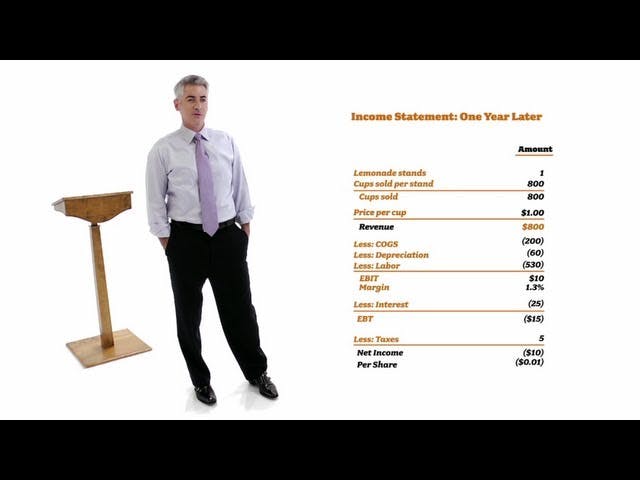
William Ackman: Everything You Need to Know About Finance and Investing in Under an Hour | Big Think
Nov 1800:50:56Tap to summarizeBill Ackman is one of the top investors in the world, and he's said that he's aiming to have "one of the greatest investment track records of all time." As the CEO of Pershing Square Capital Management, the hedge fund he founded, he oversees $19 billion in assets. But before he became one of the elite, he learned the basics of investing in his early 20s. This Big Think video is aimed at young professionals just starting out, as well as those who are more experienced but lack a financial background. Ackman takes viewers through the founding of a lemonade stand to teach the basics, explaining how investors pay for equity, a word interchangeable with "stock." In the example, the owner starts with $750, with $250 of that coming from a loan. WILLIAM ACKMAN: William Ackman is founder and CEO of Pershing Square Capital Management. Formed in 2003, the hedge-fund has acquired significant shares in companies such as JC Penney, General Growth Properties, Fortune Bands and Kraft Foods. Ackman advocates strategies of "activist investing," the practice of using stock shares in publicly-traded companies to influence management practices in a way that benefits shareholder interests. Folllow this Podcast for daily Episodes ----------------------------------------------------------06:30-17 --------------------- Learn more about your ad choices. Visit megaphone.fm/adchoices
Transcribe →
Who will you become during a crisis? | Amanda Ripley
Nov 1800:13:26Tap to summarize**How You’ll Really React in a Disaster (And How to Survive)** You think you know how you'd handle a life-or-death crisis—but the truth is, most of us *freeze, delay, or deny* reality when disaster strikes. In this eye-opening episode, we uncover the hidden forces shaping your "disaster personality" and why survival isn't just about bravery—it’s about *preparation and mindset*. From the shocking psychology behind why people ignore alarms to the real reason heroes emerge, we break down the phases of crisis response and how you can train your brain to act *before it’s too late*. Because in a real emergency, hesitation kills. Are you ready? "Humans, like most mammals, tend to shut down in really frightening situations for which they have no training or prior experience. Researchers call it negative panic. People do nothing. They shut down." We all have ideas about how we're gonna behave in a crisis or emergency, but it’s almost never how it actually plays out when we’re faced with a disaster situation, says bestselling author Amanda Ripley. In fact, you have another personality – a ‘disaster personality’ – and it's helpful to understand what it is before you are forced to embody it. Studying human behavior in different disasters across history reveals a huge spectrum of responses. Sometimes people start hysterically screaming, others shut down. Some laugh in the face of a life or death situation. In Ripley’s book, "The Unthinkable," the author followed people who had survived disasters of all kinds, and found that there's a pattern, even across very different contexts, from plane crashes to earthquakes. Almost always, people go through a period of certain emotions. Do you want to learn how to master your disaster response before facing a crisis? Ripley explains how. Timestamps: 00:00: The psychology of surviving a crisis01:20: The crisis pattern01:52: Denial03:06: Deliberation04:54: The decisive moment About Amanda Ripley:Amanda Ripley is a New York Times bestselling author, Washington Post contributor, and co-founder of consultancy firm, Good Conflict. Her books include The Smartest Kids in the World, High Conflict, and The Unthinkable. Folllow this Podcast for daily Episodes --------------------------------06:30-17 Learn more about your ad choices. Visit megaphone.fm/adchoices
Transcribe →