Loading summary
Transcript7 lines
- [00:00]
A
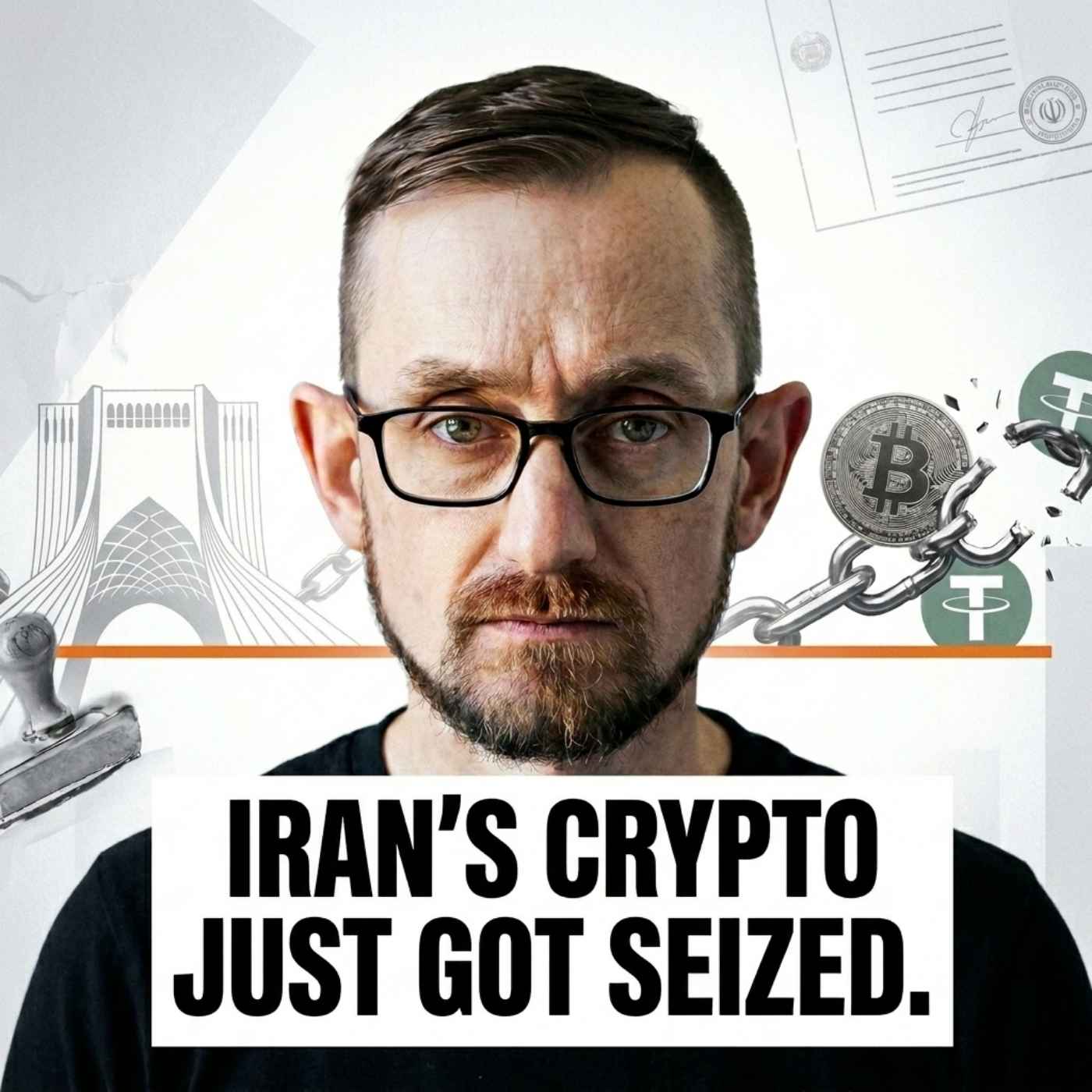
So the Iran war is going great and the two weeks to total victory is now in its six month or something like that. And Iran, thanks to the fact that we totally control the situation, is now charging literally millions of dollars worth of Bitcoin to pass through the Strait of Hormuz in order to just keep global trade alive. One of the most important global trade routes that we have. But the Treasury Secretary just said that they grabbed a billion dollars worth of Iran's crypto and there was nothing Iran could do about it. So the question is, is Bitcoin saving Iran in the middle of this war or can the US steal all the Bitcoin as easily as they can confiscate the dollars, the bonds and lock them out of the global financial infrastructure? There's a literal like blanket of capital controls on Iran. I actually having some family in Iran is actually interesting because the dollar is actually scarce inside the country, so it carries an entirely different price than it does outside. And the inflation rate is horrible. The inflation rate is miserable in the Iranian currency itself. The, they're taking Bitcoin because they believe it's a neutral money here. And it is, it is. That's the whole selling point of Bitcoin, right? That's the power of Bitcoin, is that it is radically neutral in this conflict. But then the Treasury Secretary said it just grabbed all their wallets. Besant just came out and said we stole a billion dollars worth of their crypto. They're probably typing it in right now and they don't even know we got it.
- [01:46]
B
I believe that we have seized about a billion dollars of their crypto and
- [01:52]
A
just outright seized it.
- [01:53]
B
Just outright grab the wallets. Some of the, some of them may be like typing in right now and realize they might not realize that their wallet had been grabbed. And we are working with our allies all over Europe to grab villas and houses and properties. And this is money that's stolen from the Iranian people.
- [02:13]
A
So immediately there's a flood on social about Bitcoin's not censorship resistant. Oh, they can just confiscate it. This is why Bitcoin's selling off. And they probably quantum broke all the bitcoin keys. What's the reality of this situation? Basically everything in Bitcoin is managed by cryptography. And if you create your keys locally on a hardware wallet like bitbox or you just put it in your software, then there's actually no exposure to that from some from externally. It's not a central institution. You can't call Bitcoin up on the phone and say, freeze these accounts. Like you are the only one who has the capability to move it because you're the only one who can cryptographically prove that you have the keys behind it. How does this play into the situation with Iran? Like, didn't they just get a billion dollars worth of bitcoin confiscated from them? If you read social media, that's what you'd believe. Turns out just a tiny amount of digging. All you have to do is really ask AI and you'll find out that it was a billion dollars worth of tether. It's not anything to do with bitcoin. It's not even really anything to do with crypto. It's really just a different kind of bank. And so obviously if you call up tether central, they can confiscate the funds. It was usdt. It has nothing to do with bitcoin. It's like saying that, you know, I hacked into your computer because something was on the Internet. It's like, well, the Internet is not your computer. Sure, they kind of look the same. It's, it's both digital. It's the same thing. It's the same thing. Mike, to the contrary of suggesting that this means bitcoin is confiscatable, it proves the exact opposite. It means that shitcoins are centralized, as bitcoiners have been saying forever, that shitcoins are centralized, that stablecoins are just banking reinvented in a slightly different way, and that the only thing that is unconfiscatable and the only thing that is decentralized and censorship resistant is bitcoin. And what they should have done if they weren't stupid is they would have immediately moved their USDT to Bitcoin and this wouldn't have been a problem for them. This is kind of the universal problem of people not actually adopting bitcoin, but taking quote, unquote ownership of some account that says it's labeled in bitcoin and an amount somewhere by some centralized entity. If Iran had been holding their keys, had generated their keys and been holding it in a bitbox with their own hardware wallet, this, this would never have been a problem. The kind of depressing point is that most users are in this same situation and they have no idea. They think they're holding bitcoin, but they're holding an ETF, they're holding BlackRock points that are in a trust and they're actually holding shares of the trust that are supposedly one to one to Bitcoin. But that's entirely if BlackRock actually has those Bitcoin. And the same thing with Coinbase. You think you have Bitcoin in your account, but that's an iou. You have a debt. And I promise you, if Coinbase goes under, they're not going to owe you the amount of Bitcoin. Whatever the Bitcoin is worth at the time that they finally pay you back in 15 years, they're going to try to pay you some of the dollar amount that you have. You need to hold your own keys. You need to actually own Bitcoin for the first time. Because if you do not have, if you did not generate your keys, if you do not have a hardware wallet or just a software wallet on your computer where you generated your keys and then you moved your Bitcoin to it, you've never actually owned Bitcoin. The easiest way to do this is to get a good hardware wallet, get a bitbox, get something safe and secure and easy to use. Set it up. It's like four steps. Write down your seed phrase, move your Bitcoin to it. It's an entirely different experience. You will feel different about it and you will never end up like Iran. Nobody's going to just come in and take your account. And it just so happens that I have a discount if you do get a bitbox and an affiliate link which, which helps support my show. So take your keys, hold your own Bitcoin, sleep like a baby at night and help me out. And you got a link right down, right down in the show notes in the description. Check it out. You know, in 2022, a huge portion of Russia's reserves were confiscated by the US because the US owns the global banking infrastructure. Like the entire thing is permissioned. Like when we say that like a bank is centralized, well also all of the things that the bank runs on is centralized. There is no independent source of value in the entire stack. Most of the US Reserves and most of the global reserves are just US bonds. They can just be revoked. In the same year as Russia's treasury reserves were confiscated, their treasury reserves, like it was just like taken from them. Like they just signed a paper and it's like, oh, well, now it's all gone.
- [07:28]
B
What?
- [07:29]
A
It's gone. It's all gone. They did the exact same thing to Afghanistan. They took billions of dollars of their reserves and they confiscated and, or redirected it for more valuable use cases. I think the transition to Bitcoin won't be because Bitcoin's like the super cool feature rich thing. It doesn't need to or have to be. And it ought not be. Actually, the point is, is that Bitcoin is radically neutral and it never stops working. As all other reserves become politicized, as the global financial infrastructure is constantly being weaponized against anybody who is seen as not the good guys by whoever arbitrarily holds the power. At any one point in time, Bitcoin is going to be the thing that just keeps working. The transition to Bitcoin will be slow and painful because it will be one out of necessity. As every currency hyperinflates, as all of the bills for the debt come due, as every country attacks each other because that debt is coming due and everybody desperately wants to put the bill onto somebody else's shoulders, they're all going to be used to attack each other. Everything that can be confiscated will be confiscated by the person who has the power. And ultimately we will switch to the thing that simply keeps working in such a volatile and conflict ridden environment. And that will be Bitcoin. And the fact that Iran takes bitcoin today, Iran still has their bitcoin. They only lost their stable coins. And the fact that the US is considering a bitcoin reserve at the exact same time because they both know it's something they can hold that the other can't with, I think that puts us in a bitcoin world.