← Black Entrepreneur Experience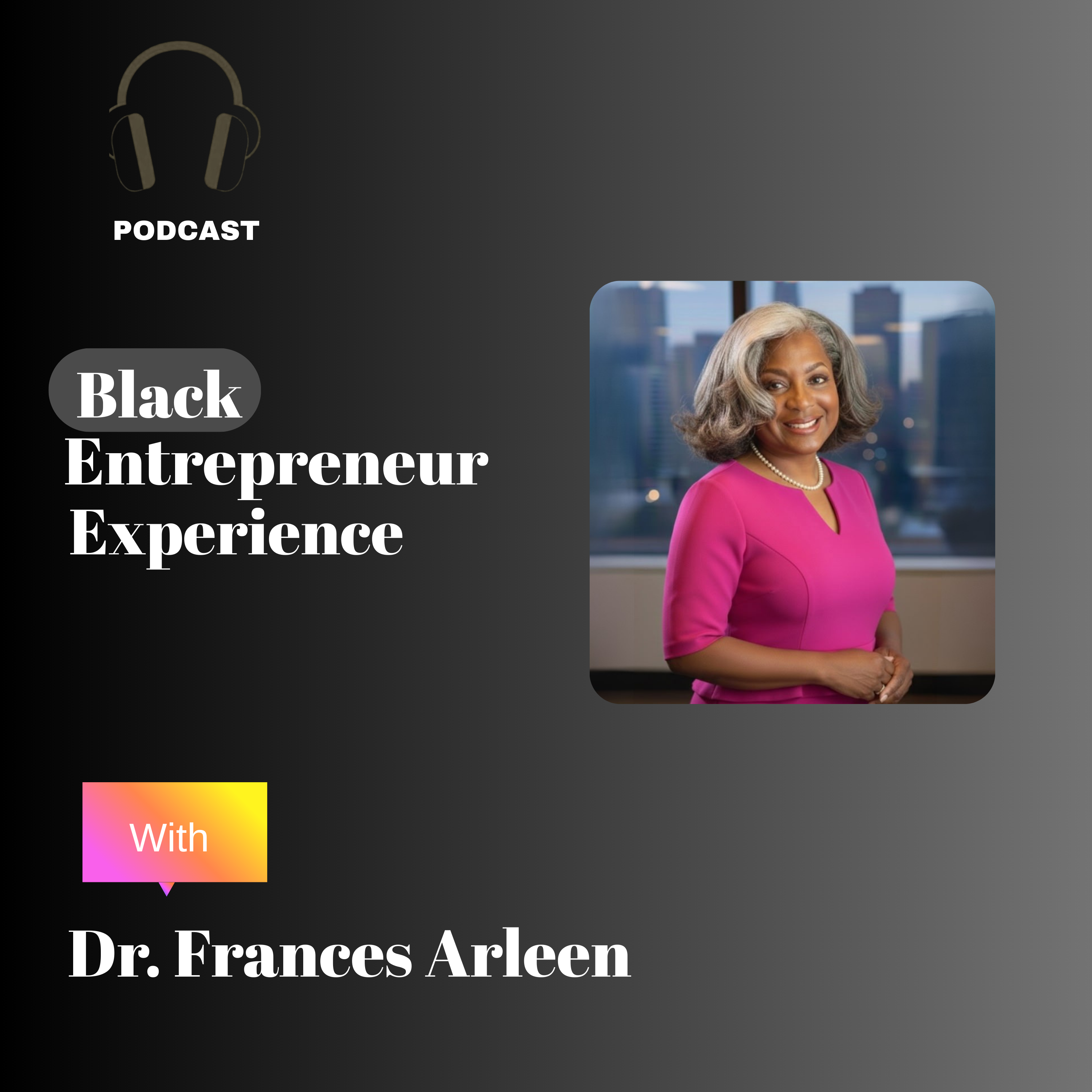
Loading summary
Transcript89 lines
- [00:00]
Dr. Frances Arlene
Foreign.
- [00:05]
Podcast Announcer
Welcome to the Black Entrepreneur Experience Podcast Inside the business buzz and brilliance of Black Entrepreneurs. Here is your host, Dr. Francis Arlene.
- [00:23]
Dr. Francis Arlene (Host's Pre-Show Message)
Quick note before we get into today's episode. If you're a small home health agency owner, you already know this. Most agencies don't fail because of census they fail because of continuity and compliance gaps that don't show up until it's too late. I've been working directly with small agencies around continuity, planning, compliance, readiness and operational stability, especially owners who are wearing too many hats and don't have a real plan if key people, systems or processes break. This isn't coaching and it's not a course. It's hands on consulting to help you reduce risk and build something that can actually survive audits, turnover and growth. If that's you and you want to talk, you can find me@drfrancisrichards.com all right,
- [01:23]
Dr. Frances Arlene
let's get back to the show. What happens in Vegas goes all over the world on Black Entrepreneur experience, episode number 5:42. Thank you for joining us as we elevate the Black Entrepreneur experience by interviewing CEOs, thought leaders, innovative thinkers and black entrepreneurs across the globe. I'm your host, Dr. Frances Arlene J. Byron Brazer is redefining urban development, turning an $895 million project into into community wealth while preserving culture, opportunity and history. Welcome, Jay Byron thank you.
- [02:03]
Jay Byron Brazier
Dr. Arlene.
- [02:04]
Dr. Frances Arlene
I've given our audience such a brief bio. Why don't you fill in the gaps and share with our audience what you'd like them to know about you and your business.
- [02:15]
Jay Byron Brazier
Thank you for the opportunity to talk with you and your audience. I always appreciate being able to share ideas and innovations as we are continuing to grow into the future. Specifically and especially as Black American, we have a very unique experience here in the country. And I think that's one of the things that's always driven me is this idea of what Black excellence really, truly looks like. I am a third generation of spiritual leaders. My grandfather, Bishop Brazier, and then my father, who has now just become Bishop Brazier Part 2. They are not just pastors, but they are community leaders. And my grandfather is also community developer and he did about 17 different projects in Woodlawn, which is where ultimately we are ending up doing our flagship project. But I started my entrepreneurship when I was 25. I decided that I did not want to work for anybody. I have just always been this very independent thinker and creative and artist and I wanted to really kind of craft my own path into what I believed I wanted to see myself as in the future. And I started out with an adaptive reuse project in the south side of Chicago in Bronzeville. And it was a warehouse and a cleaners plant on 41st Estate. And I turned that into a art facility and event space for artists and other entrepreneurs to do networking events and music events and. And so forth and so on. Bronzeville specifically has a huge history in the arts. Being able to be a part of the process of re engaging that spirit was really unique. And it taught me a lot about how to work with our municipal partners and community leaders and so forth and so on. So that was kind of my first entrance into entrepreneurship. It was actually pretty successful as of a business. I was able to really connect with the subcultures of the city, begin to kind of craft this identity for myself as a leader in a creative space. Shortly after that, I worked in another community called Pilsen and created a art commune, work shared space called Lacuna Lofts. It was we work before wework actually happened. It was really kind of ahead of its time and became really a landmark for that particular part of the community and something very iconic and very sustainable. It was a proof of concept for me, me, because I wanted to prove that you can build something where nothing exists. And that is where Lacuna actually comes from. It's an Italian word that means empty space. Being able to market it, brand it, design it, fill it, do all of the process and procedures and administration, it was really kind of the next iteration of leveling up in this entrepreneurial spirit of how to really understand the moving parts of working in contracts and working with a staff and building a staff and building rules and regulations and working with people and all types of conflict management. As you can imagine, artists can be a little special, but that was the whole part, was making sure that they had a space to be special. Then shortly after that, I began to look at how to develop more on the macro and more what we call district development. I'd start talking to a state rep in Illinois, and there was a former public housing site that had been torn down. And this site was maybe about six or seven football fields long and wide. And he said, why don't you build a project here? And I was like, of course, you know, who wouldn't want to do something like that? So I worked with Gensler, who's a very well known kind of global architecture firm, on a feasibility study. And that feasibility study created over 10,000 jobs. It was a answer to the mayor, Rahm Emanuel. He was the mayor at the Time it was an answer to his 2012 cultural plan. And so we used that as the framework to create the feasibility studies. And this was my first entrance as a developer to be able to craft this idea of what the black community could look like if we focused specifically on bringing culture and commerce together in the same space. 2012 through about 2014, we had worked on that, we had started shopping it around. It was at that point I realized that it was more difficult than just putting together a feasibility study and some really beautiful renderings and things of that nature, because you had to work through the political process. And if anybody has ever been in Chicago, they know that politics in Chicago are murky. That was a huge learning lesson. And about the private sector and understanding the need to bridge the private sector and the public sector in our community is quite challenging and for a number of reasons. But shortly after that, I said, you know what, let me expand my education. Let me go and really delve in and dive into not just culture in America, but culture around the world. And so I started traveling internationally, Ended up living in Australia for about two years and really was able to broaden the vision on what I wanted to be as an entrepreneur and a developer. But what I also wanted to leave behind as a continued legacy from my family to the next generation came back. Started working with my father, started working more into the community of Woodlawn, and we did a 2060 plan in Woodlawn which looked at another repurpose project with four closed down schools. The organization that had been created was called the Network of Woodlawn and they are a community developer organization where the community actually has a lot more input into the development process, which normally doesn't happen, which is why you get gentrification and displacement. So as my father and I were working together, I said, okay, this is really great. I love the organization. I love how you guys put this together. The pillars and economic development, health, safety, education. So if you all are the developers, then what's your project? He was like, oh, well, that's a great question. I said, well, how about looking at this, taking these schools and turning them into cultural destinations and we'll do this as a 2060 plan, right? So we're doing this as a generational view of what this community would look like in 2060, not starting in 2060, because development in and of itself does take it's a decade to decade, right? And so we want to look at not just doing one development or a corner development, which only changes the, the character of the community, but we Wanted to do district developments, which changed the condition of the community both socially and economically. And so we started working on that 2060 plan. Then Covid hit and we didn't let the grass grow under our feet. We said, all right, Dr. Brazier, you're sitting on 11 acres and eight acres of those are parking lots. The world is changing. People are not probably going to come back in cars. They're probably going to continue to watch church and do all these things online. So you're going to have a lot of land here that's not doing anything. So why don't we use your land as a private project to create this micro version of the 2060 plan, which then turned into our flagship project called Woodlawn Central, which is about 870 to maybe 1,000 residential units, all mixed income, mixed generational, 215,000 square feet of commercial space, a business center that focuses on teaching AI and AR and VR for youth and adults. There's a hotel, 150 Key Hotel. There's 550,000 cubic feet of vertical farming space. And all of this was based on these ideas of culture that were not reductively looked at, but streamlined. So we could say, here's technology, agriculture, visual arts and performing arts and that go along with retail. And so within Woodlawn Central, there's also a 300 seat black box theater. So we really hit every point in the 2060 plan to the Woodlawn Central model. We've been working on that. We announced that in 2021, we are now preliminary funded. We've got grants, we've got private equity, we've got partners, and we are looking to break ground this year.
- [11:34]
Dr. Frances Arlene
Wow, that is amazing. That was a mouthful.
- [11:38]
Jay Byron Brazier
It was.
- [11:39]
Dr. Frances Arlene
And I want to say, and you, aunt, you pinpointed something when I. One of the questions I was going to ask is, how are you funding this? But you did answer that, I want the audience and we definitely hope to get this on video. We're going to make it a point if they could see your backdrop, because the backdrop is a early rendition of what the project is going to look at. Someone's looking at you, which I am looking at you, Jay Byron, and you Talked about at 25, you had this epiphany and someone of my stature would look and say, gosh, you don't even look a day over 23. So, like, how did this happen? Take us back. Talking about becoming Jay Byron, what was that industry you were in prior to coming into development?
- [12:36]
Jay Byron Brazier
Thank you for the compliment. I'll be 49 this year.
- [12:38]
Dr. Frances Arlene
So amazing.
- [12:41]
Jay Byron Brazier
Thank you. Thank you. I was a freelance graphic artist and I worked for the church and I also worked for private clients as well. And before then I did a lot of other growing up jobs, but I really did a lot of service industry, from waiting tables to cocktailing to bartending to hosting, worked at catering events. So a lot of that taught me how to talk to people, how to not be a people pleaser, but to be a servant. Right. And to. And when I say servant, I mean one that is doing what they do because they understand how it makes other people feel. And when you give to other people in a way that is selfless and engaging, it does something for your character. And I think that was the part of the character building, becoming Jay Byron and then understanding my identity, which is what I do, is being a creative. And then how was I going to understand being a creative and then making that a part of a vision? It took some time to get there. I've made a lot of mistakes, but those mistakes were a part of the process and I didn't hold on to them as if they made me a bad person or they made me a bad entrepreneur, but I held on to them to remember those moments so I didn't make those mistakes again.
- [14:19]
Dr. Frances Arlene
And speaking of mistakes, what is a costly mistake that you made and what lessons did it teach you?
- [14:26]
Jay Byron Brazier
I think the one that stands out to me the most is hiring my best friend. And I would advise no one to hire their best friend because they will pull that friendship card on you after making really, really bad mistakes and life changing mistakes. And I think that's the one thing that if I could go back, I would have changed that.
- [14:53]
Dr. Frances Arlene
Did real estate development marry you or did you marry real estate development?
- [14:58]
Jay Byron Brazier
Ooh, that's a great question. Real estate. So my mother was a broker for 30 years and had her own firm. And so I would actually go on all the showings with her as her bodyguard. And really she taught me everything I know about real estate, from commercial to residential, so forth and so on. And the differences between the two. And I even took some real estate classes bored me to tears. So I knew I couldn't be an agent or a broker, but I still loved homes and the design and it's really a very creative field. But I think at one point when I started with the development piece, I think we married each other. We met at the right time, and it's just kind of one of those serendipitous types of encounters where you said, hey, why don't you look at doing this, and I'm like, hey, that makes sense. And I love this. And so it really came together between development and me as a creative and being able to use that background and being able to use that experience and being able to use my talents in that way.
- [16:05]
Dr. Frances Arlene
I like what you mentioned about the farm piece, the AI piece, the education, the culture, the theater, all of that. And I'm seeing, as I travel and living in Las Vegas, and I'm seeing a lot of this mixed use in terms of income level, and I'm seeing a little bit of how they're doing some of the designs and tell me what you're doing differently and that's causing you to stand out.
- [16:39]
Jay Byron Brazier
And apart from other developers, that's another great question. One of the things I think maybe we agree on is that some of this architecture is uninspired and it looks very cookie cutter, it looks very boilerplate, and it looks like they're just building dwellings. That is something that I just am vehemently opposed to. And the fact that they build this way, the life expectancy of those buildings are only 10 years. So we're looking at this in building more institutionally. So like churches and schools, they're built to last a hundred years. And not only are we going to build to last a century, but we're also looking at making sure that design and sustainability is also integrated into, into the campus itself. So whether we are using solar, whether using geothermal, whether we're using different types of window panes, and making sure that we're planting the right plants and flowers and creating gray water storage, we've thoughtfully thought through making sure that this was designed to stand out, because the last thing we wanted to do was to look like every other side of Chicago, Right. So whether you're in the north side or the west side or wherever, we wanted Woodlawn to have its own specific identity. One, because when you go around the country, you go to Chinatown, you go to Little Italy, you go to Greek Town, you go to Ukrainian village, right? And you come to our communities. It almost lacks the culture that we contribute. Right. And we are unable to actually benefit from the. From the culture that we contribute. So bringing this idea of not just building buildings, but building people and our people is really a part of the core in which I think answers the question of what sets us apart.
- [18:40]
Dr. Frances Arlene
And in your planning, and only share what you can share, are you doing anything regarding next generation in terms of giving them that skill set for building and community planning and city planning? That's One of the things that I've seen over the years, I don't see. And perhaps they're not saying that it doesn't exist, but I don't see a lot of us in city planning, in developing. And so I admire what you're doing and just humbly grateful that we've met.
- [19:15]
Jay Byron Brazier
Me, too. Yeah. Just to give you some stats, there's 112,000 real estate developers in the United States, and 111,000 of them are whites. And so that leaves the remaining thousand of the multitude of different minorities. So you're absolutely correct that we are not well represented in this space. And I think it's also strategic why we're not represented in this space because real estate is truly the one way that economic sustainability happens. Right. I don't think anybody planned on a black church owning 11 acres of land in the middle of the city. Right. And. Because what it does is it gives opportunity for us to dream, and it gives us opportunities to build vision. And when you dream and build vision, you automatically create this internal sustainability. And so there's a. There's a lot of spiritual guidance in this and divine timing in this. But it is something that I truly want to do in making sure that we do build more architects, we do build more engineers, we do build more urban planners and urban designers. We do build more furniture designers. Right. So this is. Woodlawn Central is simply a catalyst. Right. Because I can't put all of it in there, but I want to make sure that we get the core of it, and then we can grow from this space into these four other buildings in that 2060 plan.
- [20:45]
Dr. Frances Arlene
I talked about earlier, talked about legacy. When it's all said and done, how do you want to be remembered? Jay Byron.
- [20:54]
Jay Byron Brazier
I want to be remembered as a team player. I want to be remembered as somebody who truly cared more about building people than building buildings. And specifically creating a model, or not just a model, but actually a manual to go with the model for how to develop from the inside out, specifically designed for the black community. And sometimes people will say, well, you know, it can be for everybody, but everybody doesn't have our experience without understanding what that experience is. It may sound like we should be sharing this information. And it's not that the information is esoteric. It is that it's specific because of the specific nature in which we live, and it can be scaled to other communities. But what I'm doing is designing it for ours.
- [21:46]
Dr. Frances Arlene
I appreciate that. Thank you for that. I want you to have a monologue. I want you to name this person, living or not. They've inspired you so much. Who is that person and what are you saying to that person?
- [22:00]
Jay Byron Brazier
Thank you for teaching me everything that has become invaluable to who I am today and who I will probably be tomorrow. And without your embrace and embracing me, I'm not sure who would have taken the time out to impart so naturally and so givingly to shaping me. And I honor every moment that we have spent together. And I miss you very, very much.
- [22:36]
Dr. Frances Arlene
And who is the person?
- [22:38]
Jay Byron Brazier
This is Kevin Lewis. He was a mentor. He was a boss. He taught me. I worked in advertising. He was the advertising director in this agency that I worked in in Chicago. And he took me to every meeting. He taught me how to talk the talk and walk the walk. He was a brilliant visionary. He really knew how to pull framework together. And so I learned everything I know about those pieces from him.
- [23:10]
Dr. Frances Arlene
Thank you for that.
- [23:11]
Jay Byron Brazier
Yeah.
- [23:12]
Dr. Frances Arlene
What problem exists in the world today that you would like to solve?
- [23:17]
Jay Byron Brazier
What I would like to solve in a problem that exists today is cohesive strategic planning from not just a diagnostic space, but from a prognostic space where we're not just looking at lacking of housing, but we're looking at lacking of housing due to jobs and the lack of jobs. We're looking at crime because of the lack of jobs. We're looking at poor education because the lack of funding. How do you bridge this entire issue, all of these different issues, under one specific understanding, and then do it at the very highest level? Right. We're looking at policy. Right. We're looking at competency with our leaders in understanding and really, truly being organized and managed very, very well.
- [24:12]
Dr. Frances Arlene
Advice you wish you had followed.
- [24:15]
Jay Byron Brazier
Don't hire your friends. You know, I am a steward of accountability, so all of the advice I've ever gotten, I've followed. And I like being able to. It feels good that, you know, those who have imparted things in me, whether it be professionally or spiritually or personally, I've really been able to be accountable to them, taking the time out to me to make sure that I'm accountable to them. So I can't say that there's not any advice that I didn't take except,
- [24:50]
Dr. Frances Arlene
don't hide in your frame. I love that, you know, entrepreneurial ship. There's a lot of risk and there is a lot of rewards. There's a lot of wounds, but there's a lot of wins in entrepreneurial ship. Talk about an early wound. And what lessons did it teach you?
- [25:15]
Jay Byron Brazier
An early Wound, I would say political betrayal is an early wound. Sitting in elected representative's office and them and you pouring out your whole vision and things that you really put a lot of thought and energy into, and then them saying, well, I'm not saying yes, but I'm not saying no. Right. And that cuts deep because what it does is it says, no matter who you are, if I don't understand it or if I don't like you, then I'm not doing it. And that was, I think, early on kind of that gut punch that where a young entrepreneur could feel defeated. But I utilized that to harness that. I didn't get angry, but I'm certainly going to get even.
- [26:11]
Dr. Frances Arlene
Fill in the blank. I am better because I am better
- [26:17]
Jay Byron Brazier
because I no longer look for validation in others or permission to share my
- [26:26]
Dr. Frances Arlene
vision and tell me what's on the horizon for your business. What do you see in the next six months? And then where do you see five
- [26:37]
Jay Byron Brazier
years from now on the next six months we should be breaking ground in Woodlawn Central, which is a very huge milestone because we would have gotten through all of the city planning and all of the permitting and all the entitlements. So that would be probably the biggest thing that would happen in the next six months. In the next five years, I'd like to be able to work overseas and internationally in the vein of geospatial information science, or gis, which looks at how to not just build a district, but how do you build an entire city? So citywide development through geospatial information systems, urban planning and design is something that I'd like to see myself doing in five years.
- [27:30]
Dr. Frances Arlene
And you mentioned Australia. Out of all the places you could have visited, why Australia?
- [27:37]
Jay Byron Brazier
One of those divine leadings, you know, I met, well, who became a good friend in Chicago who was from Australia, and you know, they were like, hey, you know, come out and visit. And I said, well, yeah, I'm already traveling. I'll just come there. You know, I'll come there as well. And I loved it so much that I ended up staying and utilized. I was living in Melbourne specifically, and I utilized Melbourne as. As a guide to building creative cult. They have this amazing creative community and mural work and artwork and they really do move mountains. Allowing the artists in Melbourne to actually be artists and not just a semblance of what art should be, but they really gave them the freedom to do it. And being able to see that and live in that firsthand was something that just. It's undescribable.
- [28:36]
Dr. Frances Arlene
Now, did you work there? What did you do? How did you sustain your lifestyle?
- [28:41]
Jay Byron Brazier
I had saved a lot of money and I had also had bought and sold a couple homes in that space and time. And so I just had to, you know, I just relatively managed my money well enough to be able to do that. And then I was also freelancing and I can freelance from wherever in the world. This whole. I was a nomad before. Nomad was.
- [29:02]
Dr. Frances Arlene
No, was a thing before they knew it exists.
- [29:06]
Jay Byron Brazier
Exactly, Exactly. Awesome. Yeah, yeah.
- [29:10]
Dr. Frances Arlene
Let's talk about mental wellness. How do you maintain your mental wellness?
- [29:17]
Jay Byron Brazier
Excellent question. I do work out six days a week, and I eat well. And I find that meditation and prayer and when necessary, fasting is a way to be able to center myself, both mind, body and spirit. The trajectory of aligning those three things has been something that I've worked on my entire life. Sometimes I'm really good in the physical. Sometimes I'm really good in the spiritual. Sometimes I'm really good in the emotional. But now where I'm at in life, I've learned to balance those things. Age has given me a lot of wisdom as well as patience. So I'm not as anxious about what is eventually going to happen anyway because I've stayed focused and I think that particular mindset and understanding how that works. And I'm a proponent for therapy, too. I did do some therapy for a year because I found out I had seasonal affect disorder, which is why we talked about being snowbirds. And it really does a lot for regulating my nervous system and being. Making sure that I go to quiet places when I need to think, and making sure that I take time out for me to share time with just me and then share time with others as it fits in.
- [30:46]
Dr. Frances Arlene
What is something to our audience, Jay Byron, about urban development or development period? What is something that we don't know about your industry that we should know?
- [31:00]
Jay Byron Brazier
Something that you should know that you probably don't know? I'm going to take this from the perspective of our community, and that is how long this process is. I know that when we're just living life and one day we see a vacant lot and then we see a hole in the ground and then we see a building. But that whole process took five to seven years, depending upon what. What region you live in. There's some states that are better in development, in timing, development than others, but it is a very insular community. I call them the usual suspects because they are the ones who have, number one, the capital to do it and the relationship with capital to do it. And if you wanted to get into this field, you'd have to be able to kind of sit back and look at it from the outside in, but then understand that you know nothing when you get inside of it. Yeah.
- [32:03]
Dr. Frances Arlene
Let's talk about trends. There's two topics I'm going to bring up and they're trending and I want to get your viewpoint on them. The first one is teeny houses. What's your take?
- [32:16]
Jay Byron Brazier
Only if you live in a rural, kind of woodsy area does that make sense. Right. Because you're still looking at the same tax assessment on that property. So whether you live in a thousand square foot home or a 5,000 square foot home, you're still going to be paying the same level of taxes as somebody's going to be paying right next to you with a larger, a larger footprint. But I think that if you are somebody who wants to live off grid, you want to live a little bit more of a streamlined life. You like gardening, you like, you know, all that kind of fun stuff. I think tiny homes has a place, but specifically in an urban area, I don't see that, that being feasible.
- [33:04]
Dr. Frances Arlene
Thank you for that. And so someone that's considering a teeny house or they're investigating, you definitely want to take another T. The taxes. Yeah, that was a gym. The next thing that's trending is AI, artificial intelligence. What's your take on it?
- [33:24]
Jay Byron Brazier
Love it. I think that when you look back in the 80s when the computer came on and everybody was up in arms, oh, the computer's gonna, you know, take away jobs and they're gonna, you know, leave us in destitute. And I think we work more now than we ever did in the 80s. Right. I think AI is going to streamline a lot of the solutions that we're working on in our workshops and our frameworks and conceiving new things through innovation, we're moving, what I would say we're moving out of the era of conservation and into the era of innovation. But there's a gap of translation that has to happen between those two eras. And I think that's where we're moving into this idea of utilizing another fast paced tool to give us the answers or a subset of answers that come from historic relevance. Right. Because AI can go back as long as it has been programmed to and give you all of the data that you need to be able to say, okay, here's my new idea and here's the data that backs it up. And I think AI, because it's fresh. It has a long way to go before it becomes anything that we need to be cautioned about. As far as losing humanity. I think we are in a space where young people are kind of teched out, young people are putting their phones away, they're going out more, they're getting away from the apps, and I think we're going to move back into humanity and back into human connection while using AI.
- [35:09]
Dr. Frances Arlene
What keeps you up at night, if anything?
- [35:13]
Jay Byron Brazier
What used to keep me up at night because I sleep very well now, what used to keep me up late at night was doubt. Am I doing the right thing? Am I working with the right people? Is, am I going to, you know, are they going to say yes? Are they going to say no? And I realized. And then I'm going to put on my PK hat for a second and say, my steps have been authored already. And being able to come into this place that says everything that I've touched God has turned to gold. And knowing that I'm in alignment with the vision that has been divinely given, I have such peace and peace of mind in everything that I do and in everything that I want to do. Because I started in a place where I had to remove ego and remove me out of that space. And that was. I mean, that was the pathway to peace, like, just not being, you know, like, I can sleep on my own.
- [36:20]
Dr. Frances Arlene
I want you to give me three words only that describes Jay Byron, Creative, patient, and giving. What is the biggest takeaway that you want our audience to leave with today?
- [36:38]
Jay Byron Brazier
The biggest takeaway that I would love for your audience to know or to take with them from this interview is that you can do anything. And you can go from having little to nothing to everything you would have ever thought that you wanted and needed simply by focusing on things that are outside of yourself. And if you want to do big things, you can do big things. And you can't be afraid to do it, and you can't be afraid to think big. People will reduce you whenever they have an opportunity. And it's not because they don't like you. It's just because they don't like not being able to do what you do. And don't be discouraged when people tell you no. Right? No is just a jumping point to negotiations to get a yes. What do I need to do to get the yes? If something's not happening right at this moment, are there things that I could be doing in this moment that can get me to where I want to be? So when I get there I'm completely prepared. And everybody knows when I speak, I'm speaking from experience, I'm speaking from knowledge, I'm speaking from thoughtfulness. And just know everything that you need to know about what you want to do. Know everything about it from front to back. You need to know if you're in film, you need to know how to do the camera, you need to know how to edit, you need to know how to do sound, you need to know lighting. You're carrying something that is bigger than you and you want to make sure that within that time and space, you're speaking everybody's language.
- [38:14]
Dr. Frances Arlene
If you conducted this interview, what is the one question you would have asked yourself? I want you to ask the question and answer it.
- [38:24]
Jay Byron Brazier
You've done a really great job. How does raising capital really work? And would you like me to answer that?
- [38:34]
Dr. Frances Arlene
Absolutely.
- [38:35]
Jay Byron Brazier
Okay. When you're raising capital for a project, and it could be any project really, there's a subset of understanding who has the capital for what you want to do. And you have to look at it both from a private sector space as well as a sector space, is something that I'm doing, supports humanity in any way. That's your public sector ask, right? So whether it's for kids, whether it's for the environment, whether it's for the community, you've got to get relationships with your elected officials who are passionate about those things that you're passionate about. Because there's grants literally for everything. You just need to know how to get them and where they are and who to get them with. And then on the private equity side, it's again, it's about relationships. Banks aren't the only people who have money, right? You've got venture capitalists, you've got family offices, research. Who within those spaces are supporting startups, who are supporting creative entrepreneurship, who is supporting government contracts, right? Go into those spaces, delve into those spaces, have a fully realized vision. Vision with a pro forma and in not just your intention, but that also has your impact. People who fund, they love ideas, but they want to make sure that those ideas create the impact that is going to change lives or transform communities. Right. And again, think big, right? Don't reduce yourself down so you can get a yes row out so you can get multiple yeses. And that's what I probably would have asked myself.
- [40:26]
Dr. Frances Arlene
I like that.
- [40:27]
Jay Byron Brazier
Yeah.
- [40:28]
Dr. Frances Arlene
We've come to the part of our interview, it's called the Rapid round of Fun. I'm going to ask you a series of questions. I would like you to Give me very quick answers. Okay. If there's something you desire not to answer, feel free to say pass. Okay, are you ready for the rapid round of fun?
- [40:45]
Jay Byron Brazier
Let's hit it, Doc.
- [40:47]
Dr. Frances Arlene
Your first job.
- [40:48]
Jay Byron Brazier
Stock boy four for white hen. Pantry at a corner store.
- [40:59]
Dr. Frances Arlene
What food do you eat every week? No matter what.
- [41:03]
Jay Byron Brazier
Eggs.
- [41:04]
Dr. Frances Arlene
Your favorite comfort food.
- [41:07]
Jay Byron Brazier
Pancakes.
- [41:08]
Dr. Frances Arlene
You relax. Doing what?
- [41:10]
Jay Byron Brazier
Designing. On my laptop. Up.
- [41:12]
Dr. Frances Arlene
Designing what?
- [41:14]
Jay Byron Brazier
Designing spaces. Interior spaces.
- [41:17]
Dr. Frances Arlene
Your favorite singer or rapper?
- [41:20]
Jay Byron Brazier
Favorite singer.
- [41:22]
Dr. Frances Arlene
All right. Pk.
- [41:23]
Jay Byron Brazier
Oh, Jesus.
- [41:25]
Dr. Frances Arlene
Don't embarrass the family.
- [41:27]
Jay Byron Brazier
I know, I know. Favorite singer. I don't want to be basic and say Whitney Houston, but I'm going to say Whitney Houston.
- [41:35]
Dr. Frances Arlene
Your favorite dance song.
- [41:37]
Jay Byron Brazier
Feel so Good by Sonique.
- [41:40]
Dr. Frances Arlene
Work out or hit the couch?
- [41:42]
Jay Byron Brazier
Work out.
- [41:43]
Dr. Frances Arlene
Jay Byron, thank you so much for being a guest on Black Entrepreneur Experience podcast. Before we let you go, I want you to share with our audience the best way for them to connect with you and do business with you. And please share with us how we can support your project. What do you need? What is your ask? How can we support what you're doing?
- [42:04]
Jay Byron Brazier
The best way to support me is to connect with me on LinkedIn. You can also connect with Woodlawn Central on LinkedIn as well. And we are expanding our communications as we begin to grow this project and this, this transformative development out into the groundbreaking. And so we're going to be doing a lot of things. And so we are@woodlawncentral.com and Jay Byron Brazier in LinkedIn. And yeah, just staying connected would be great.
- [42:35]
Dr. Frances Arlene
Thank you. That's a wrap.
- [42:36]
Podcast Announcer
Thank you for listening and subscribing to Black Entrepreneur Experience. We would love for you to leave a review and rating on itunes and share with your friends. For show notes and more episodes, go to www.beepodcast.com. join us next Wednesday. And remember, green is the new black, so keep your bank accounts and your business in the black.