← Black Entrepreneur Experience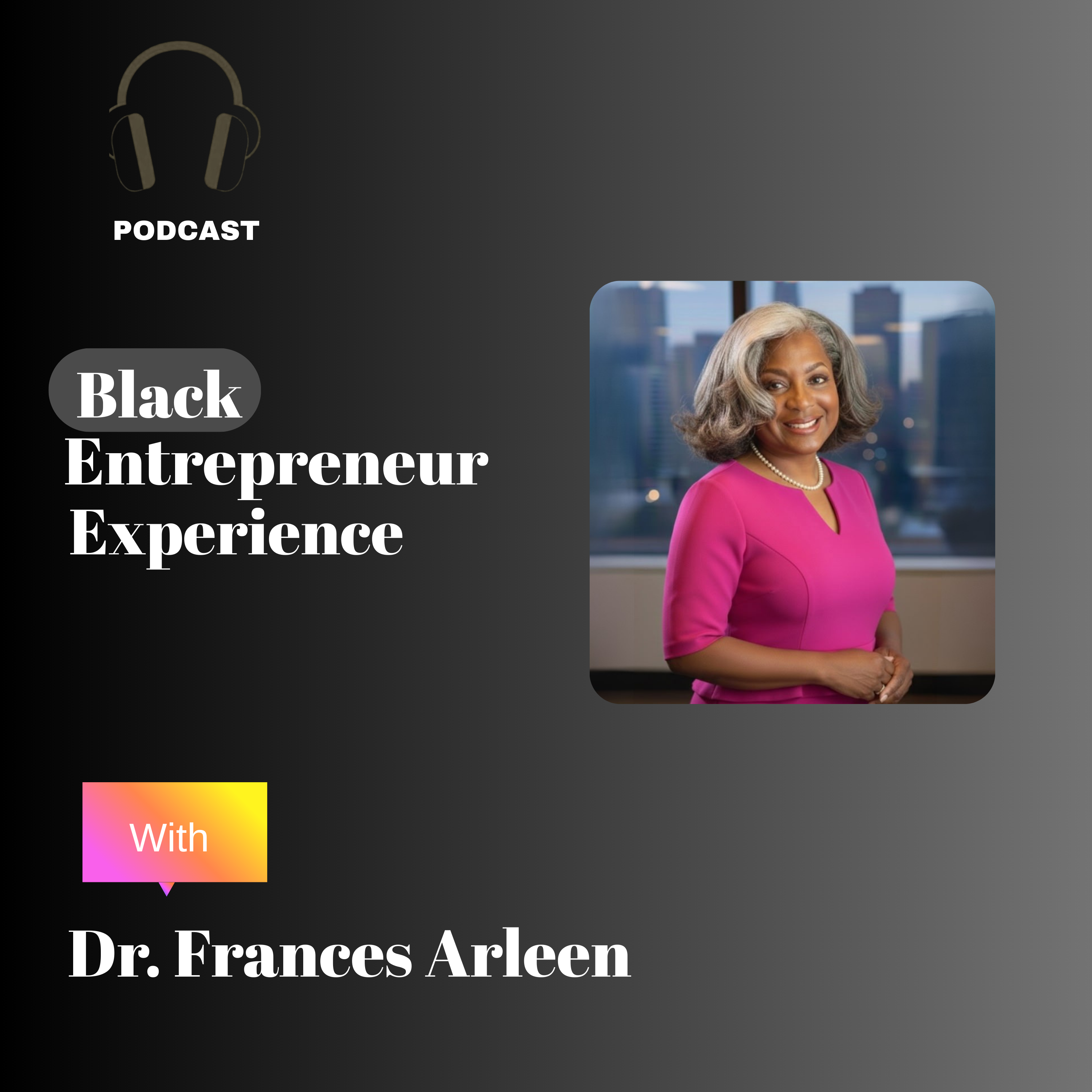
Loading summary
Transcript108 lines
- [00:00]
A
US Traders who wanted to go long or short with leverage using their own crypto as collateral had two go offshore or don't. That just changed. CFTC regulated spot margin trading is now live on Kraken Pro. Up to 10 times leverage, long or short your crypto as collateral, unleash your trading potential. Download Kraken Pro on the App Store or Google Play. Spot margin trading involves substantial risk of loss and is not suitable for everyone. Leverage magnifies gains and losses. View Ninja Trader Disclosures for more information on brokerage services. Geographic restrictions apply. Terms apply Foreign. Welcome to the Black Entrepreneur Experience Podcast. Inside the business buzz and brilliance of Black entrepreneurs. Here is your host, Dr. Francis Arlene.
- [00:52]
B
What happens in Vegas goes all over the world. Black Entrepreneur Experience Episode number five for thank you for joining us as we elevate the Black Entrepreneur experience by interviewing CEOs, thought leaders, innovative thinkers and black entrepreneurs across the globe. I'm your host, Dr. Frances Arlene. From Normstrom Sales Associates to global fashion trendsetter Eula Smith turned ambition into impact. Now the founder of EMS Consulting, she's shaping the future of fashion and the next generation behind it. Welcome. Eula Smith.
- [01:29]
A
Hi. Good morning, Dr. Francis. Nice to see you.
- [01:32]
B
Thank you. I've given our audience such a brief bio. Why don't you fill in the gaps and share with our audience what you'd like them to know about you and your company.
- [01:41]
A
Sure. So I actually have been in my in retail my entire life. I went to college to study merchandise, fashion, merchandising and business. And I always knew I wanted to be in retail. So I had a great, great career with one of the top retailers for 20 years. And then I walked out literally on faith and started my own company, which was EMS Consulting. And with EMS Consulting, I consulted with different retailers on how to build their businesses. Nordstrom's actually hired me to consult for them as well. I opened up stores for people, I trained sales associates, and I just, I really enjoyed the action with salespeople, with management. And at one point as I was consulting, I kept getting a lot of questions like, can you help us find a certain brand? Or can you help us develop a brand? I used to travel to New York and to Europe, so I had contacts in Italy, I had contacts in China, I had contacts in India. So when a customer would come to me and say, can you do cashmere sweaters for us? I'm like, oh, let me call in my factory. So I started doing product development and pretty much that was the base of my from consulting to product Development, really, that kind of took over my consulting. I still did a little consulting, but that took over because I was. I was doing product development for Nordstrom, for Saks, for Kohl's, for Walmart, and it was great. I love developing product for different companies under their own labels. And in the midst of all that, I was traveling a lot, and I was on a plane probably every month. And I never liked using the airplane blankets. And so I carried this huge blanket with me, which is like a cashmere blanket, like $300 cashmere blanket. And I realized every time I got off the plane, I had to dry clean it because it was on the plane. So at one point I was like, I have bought this blanket over and over again. Basically between the dry cleaning and all the above. You know, I paid for this three or four times over. So I decided I need to create something that was still a blanket that traveled well, that still looked fashionable. And my friends who have great style wouldn't mind carrying it as well. So I created Imari Travel, and it was a travel blanket out of a need. So now I have EMS Consulting and I have Emery Travel.
- [03:53]
B
That's awesome. I want to step back a minute. And you talked about when you were young, you knew at that moment that you wanted to be in retail.
- [04:03]
A
I did.
- [04:04]
B
What was that aha moment? And how did you discover that? Because I think a lot of people, they think they know what it is they want to do, but they don't. And I'm always impressed when individuals say, I knew when I was very young, I wanted to be a doctor or a nurse, or in your case, even going not only into fashion, but entrepreneurial ship, which is amazing.
- [04:29]
A
I knew I wanted to be in fashion because when I was young, I was very, very tall. I'm six one now. So when I was growing up, I was always the tallest child in the class. And I was very, very, very thin. So. So I had to always have my clothes made. So my mom and I would go to the pattern stores, the fabric stores on the weekend, and I would go through the fat, the pattern books and pick out looks that I liked. And we would find fabric and I would go home and make my clothes. So I loved it. I loved, you know, creating fashion, even though I wasn't creating it. Cause I was following a pattern, but still I was picking up the fabric. I was able to lengthen the length on the sleeves and on my legs. I just loved it. And then my mom would like to go shopping, so we'd go to these malls And I'd be like, oh, these stores are so great. Look at the clothes in the stores. I fell in love with this. So my first major job, besides my first job was actually Burger King when I was 16, which I knew I'm staying here one year, that I'm gonna go work for the local department store. And I did. When I turned 17, I went and filled application at JCPenney, which was in my town. I come from a very small town in Northern California. Was like, everything. And so I applied for a job and got it, and that just sealed it for me. And from there, I just really dug into fashion.
- [05:38]
B
What is your zone of genius?
- [05:40]
A
Probably connector. I love connecting people. I love for great people to meet great people. I love for great people to be in the room together, to bounce off ideals and to share and to help and help, you know, each other thrive. So I think really connecting is my. When it comes to my lifestyle. But as far as fashion, I think I have a great eye for fabrics, for colors, for texture. I love all that being creative. When I was a buyer, I was a buyer for 15 years for a major retailer, a lot of things came. Even though you go into a showroom to look at a line, there might be something missing. And I'd say, oh, if you could take the sleeve off and add this, I think I'd buy it. They're like, okay, we'll do it. And they would do it for me. Or I'd say, oh, I like the color palette, but I think you're missing a color. And they say, okay, we'll do it for you. I was always in a showroom working a line that was already done by the design team and. And tweaking things, and they were fine with it.
- [06:33]
B
What is something we as consumers don't know about the fashion industry that we
- [06:37]
A
should know that is not as glamorous as we all think it is? I mean, you know, it really isn't. I mean, we're lucky. We get to travel, we wear great clothes, but that's what people see. They don't see people in fashion in the back offices, you know, one, creating fashion or two, being a buyer trying to figure out you're open to buy so you can place the right dollars and making sure that what you purchase is going to retail, and if it doesn't, how do out of it. So it's. It's a. It's a lot they don't see.
- [07:05]
B
I want you to have a monologue. I want you to name this person, living or not, and they've inspired you so much. Eula, who is that person and what are you saying to that person?
- [07:17]
A
Oh, the person inspires me so much. And this person has inspired me since I was a young girl. Susan L. Taylor I literally lived off of those magazines my whole childhood, into my teens, into my adulthood. And I would even save her column. Every month she'd have a column and I would tear it a column out and I had stacks of her columns. I have every magazine you can think of. And I actually kept all my old Essence until I bought my house. And my friends was like, you cannot take all these magazines senior home. Like, please let me keep them. I think Susan Taylor, because one, she's fabulous. She really is. There's no other woman like her. And she was always someone who supported me, who believed in me no matter what. She was the first one who saw me. I felt like she really saw me as a black woman to a black woman. And she always made me feel special. I get emotional thinking about it because you grow up, you look for someone to be a mentor and then you find one and they're really that. That mentor to your whole soul. And then, you know, she had a phenomenal career at essence. She, you know, she is, she is our barometer to being better and being the best at all times. And when she left, of course, it was painful when she left, but she rebounds. She became an entrepreneur, she would speak at conferences, and she created her own foundation, which is phenomenal. And to this day, she's still my number one.
- [08:42]
B
And what would you say to her? And what have you said to her
- [08:46]
A
besides everything I've always said to her, how much I love her, how she really, I would probably tell her how she really did change my life to make me, for me to allow myself to see myself, because I didn't see myself growing up in other women because I was, you know, I grew up in an all white town and it was just a different way to grow up, which I'm not complaining about, because small towns bring out the best in people because you have values that some people don't. But I didn't have a lot of great examples around me besides my mother, obviously. So, Susan, you know, when I went out on my own, went away to college, just reading her, you know, her issues and reading her column just made me like, oh, I can do anything. So I would thank her for that.
- [09:26]
B
Who is your ideal client? I know you have the E Travel and then you have the consulting, and if there's other ideal clients, please tell us who your ideal clients are.
- [09:40]
A
Ideal clients for consulting would be talent who's looking to create a brand and stick with it. And I would be able to help them from A to Z and they would really stick with. Because a lot of times people say, oh, I want to go into fashion, I want to do this. And then when you break it down to them that it's not as glamorous as you think it is, it's a lot of work. Like, maybe not. I aspire to help someone from A to Z and to really grow their brand to it could be world renowned. That would be the ideal client. And for Emery, you know, I love working with specialty stores and hotel boutiques, high end hotel boutiques, they tend to really care about the product. And once you get in there and you're consistent, they continually buy from you, and it's a nice relationship.
- [10:24]
B
Thank you for that. What is the takeaway from this interview? What would you like our audience to take away from you, from this conversation?
- [10:35]
A
So, you know, for me, speaking from a woman's point of view, it's just one surround yourself with people who support you, who cheer for you, who want you to win. And is anybody in your circle right this minute who you don't feel is there to do those things, you got to let them go. Because that energy will just impact you. You know, you come home, you're excited about a project you've worked on, you tell your quote unquote friends, and when it goes, oh, it's okay. I mean, that's not the kind of energy you want. You want people who are in your corner cheering for you. They want you to get to the finish line. They want to be able to say, my friend did this, and I'm so happy for her. So I think it's really about your community, really getting a supportive team. And then block out the noise is always going to be naysayers, especially in fashion, like someone to say, oh, I want to do a denim line. Nobody needs another denim line. It's like, well, why not? And they'll say, I want a T shirt line. Who needs another T shirt? This world is huge. A new product is every single day. So why not you? Why can't you do it? Because I never tell someone that what they want to do is not valuable or not going to be successful. Because people build brands every single day.
- [11:47]
B
That's a great statement because I remember someone saying, I want to do shoes. And you think about it, there's millions of shoes.
- [11:56]
A
Absolutely.
- [11:56]
B
Also millions of different types of feet. And Style. So just because you may not like Nike, but you may like something else. I appreciate you saying, no matter what your brand is, once you're very clear on your audience, there's someone for you when you for that. So it's never too much.
- [12:16]
A
Never too much and never too late.
- [12:19]
B
Talk about your transition from working 9 to 5 to going into entrepreneurial ship. And what I want you to pinpoint, did you marry entrepreneurial ship or did entrepreneurial ship marry you?
- [12:34]
A
Yeah. So first of all, when you work in corporate, it's never nine to five. It is like six until six or you know, just depending. And I'm a workaholic, so I didn't mind sometimes being at my store. I was a store manager from 7 in the morning till 10 o' clock at night, that part. But you learn a lot when you work a lot of hours like that with good people. For me, I think I personally feel like entrepreneurship found me because I did not plan to be an entrepreneur. I actually, when I decided to leave corporate America, I had been working since I was 15. So I said, this is a good time to travel and maybe go back to school, take some more courses. And then my phone started ringing from people calling me going, oh my God, I heard you just left. Can you consult? Can you please come to our showroom? Can you? And so I was like, oh, give me a week and I'll get back to you. And then literally a week after I left, after that I was working, I was consulting for different brands for different showrooms, I was consulting for different retailers. And this kind of happened because I was thinking, oh, I'm going to get, I'm going to get a job, I'm going to go back into retail and work for another top retailer and continue my retail journey. But I was working and people kept calling and calling and calling and I just, it just kind of happened.
- [13:50]
B
What is one of the most valuable lessons that you've learned as an entrepreneur that you wish you knew before starting?
- [13:58]
A
Honestly, to be an entrepreneur, you have to have passion about it, you have to be self motivated. And I'm so that's, that's where I won because I was always a hard worker. So if I'm going to work hard for somebody else, I'm going hard for myself as well. However, I wish I would have known that you know how to hire the right people to work with me because I'm very kind. Oh, I can. You can work with me. Then they work for me and they just would not work. Wasn't working out so really taking my time to hire the right people. I have one person who's been. Been with me for almost 30 years. She came with. She worked for me when I was at Corporate America, and then she came with me. So she's been a part of my growth for 30 years, and I love her. And I have a couple other ones to still kind of do projects for me, but I had a few that just did not make it. And it's just frustrating when, you know, you're working so hard and they. And people don't respect entrepreneurship. They really don't.
- [14:51]
B
Right.
- [14:51]
A
You know, people work for you really don't expect. I'm sorry. Appreciate it. Until they see the volume going up, up, up, up, up, up. So they work. A lot of people will work at that low, low level. As you're growing, you're trying to get there, but they're just going, oh, you know. So picking the right people on your
- [15:08]
B
team and what have you learned about vetting and hiring the right person?
- [15:14]
A
First of all, I want them to have the kind of passion I have. I'm never going to ask you to do something I won't do. If I ask you to sweep the floor, that's because I'm sweeping the floor. If I asked you to empty the trash just because I'm doing it, because I jump in, I'm not going to ever have somebody go get me a cup of coffee. Oh, can you get me coffee? I can get my own coffee. And if I ask you to get coffee, I'm going to get you a cup of coffee as well. I'm going to pay for it. So. So I just, you know, for me, it's just having people who just want to be with you on this journey and really support you and believe in your vision. And if they don't, it's fine, but if they don't see your vision, they can't be a part of your team.
- [15:48]
B
And what was that aha moment that you knew you were going to be successful as an entrepreneur?
- [15:55]
A
I don't know if I've had that yet. I mean, I thank God I've been successful, but I don't know if I ever had an aha moment like, oh, I guess, you know, with any entrepreneur, being able to pay all your bills on time and still keep your same lifestyle, still travel, still go on vacation, still give back to charity. So I think that's. That's a blessing when you can still do all those things. When you're making your own money, you're not getting A paycheck or a bonus. Everything is based on what you do.
- [16:22]
B
There's a lot of rewards and risk in entrepreneurial ship. Talk about that. Someone might say it was the worst moment in business, and I like to say it was an opportunity for growth.
- [16:36]
A
So the worst moment in business for me was probably hiring the wrong person.
- [16:41]
B
Okay.
- [16:41]
A
Who did not know what they were doing and they kind of overspent our budget to the point where it's like, oh, my gosh, what are we going to do? And I trusted this person because they had been in the business for many, many years as well, and they've been very successful, quote, unquote, as what we thought. So when we brought them on board to help us, it was a disaster. Disaster.
- [17:01]
B
How did you recover?
- [17:03]
A
Hard work, digging deeper into my pockets, paying the bills they lost, you know, the money they lost, and you just recover. You're just like, okay, what do you do?
- [17:13]
B
Advice you wish you had followed.
- [17:15]
A
I would say maybe with going back to the same situation, be more conservative. I trust this person. I. And I kept saying, no, I think that's too much. And I should have just followed my first gut.
- [17:25]
B
Talk to a younger you. Eula, what advice would you had given to a younger you?
- [17:31]
A
To block out the noise? Because the younger me listened to everybody and everything. And it was just like sometimes it would just drag me down from, you know, listening to people who didn't support my vision or didn't even support me, but I thought, oh, they're my friend, and they really weren't. So learning at a young age. Have a spirit of discernment with people because, you know, I think just like with these young kids and social media and the bullying, it's all. It's all what people say and hear that destroys your vision or destroys your hope. So really just get rid of the noise and learn that early. Be a very quick study on the people who are around you and what you see and what you read.
- [18:10]
B
Yeah, and I like that when you said about there's so much noise, and I think that it's amplified. I think about when I was younger, it was less noise. I want you to speak to that person, that aspiring entrepreneur. And it is so much noise out there in social media. How do you literally block out that noise?
- [18:32]
A
You stay off of social media. One, because it's not. I mean, it's not for everybody. It really isn't. And two, you find a mentor. Find a mentor while you're young that really wants to mentor you. And I say that because so many People are so busy that when you say, oh, I have a mentor. But when you call them, you can't catch them, they don't call you back. That's not a mentor. A mentor is going to be there for you, even if it's only a two minute call. They see your name pop up, they're going to answer the phone, how can I help you? What do you need? And when you have a mentor, listen to that mentor because they're there to help you. So if I'm mentoring you and I give you all this advice and you don't take it, then you come back and say, oh, everything's terrible. I'm like, well, did you do A, B and C? Well, no. Well, because a great mentor can change your life.
- [19:14]
B
And how do you vet that mentor? How do you find that mentor?
- [19:20]
A
For me, it's about relationships. It's about, I would never walk up to someone said, can you be my mentor? Just because I heard you on a panel. Because you might be a whole different person once you step off that panel, off that stage. So it's really watching someone, reading about them. If you have the opportunity to sit down and have coffee with them, you know, feeling their energy, feeling their vibe, and if it's someone you feel like, gosh, I really want them in my life because they really motivate me and inspire me and I, I just feel them in me. That's who a mentor is and that's how I feel about it.
- [19:51]
B
You know. What is the best decision you have made as a leader?
- [19:56]
A
Well, I guess I don't know if it's the best decision, but, you know, I had a beautiful office downtown L. A, that's where I live for like 15 years, almost going with 16 years. And, and business has started changing and my team who works for me, they lived, you know, they. It took them 45 minutes, sometimes an hour and a half to get to work every day. And so I was thinking, oh, you know, downtown isn't what it used to be, it's not thriving, and let's move our office to closer to my home, which is really thriving and doing extremely well. New businesses, fashion, tech. I decided I was going to not renew my lease and close my office and open a new office. And right when I made that decision, Covid hit. It was actually perfect timing. I closed my office, but we never opened an office in la and where I live, close to my home. Because at that point it wasn't necessary because nobody was working, no buyers weren't traveling, everyone was doing things Online. Everyone was doing things on Zoom. So I guess that would probably be my best decision to close my office downtown.
- [20:54]
B
Absolutely. And the. What I'm hearing in that story is the fact that you did it before because a lot of individuals who were trying to get out of their leases or close during COVID they were still held responsible and liable for that because everyone was still trying to stay afloat. So that was amazing.
- [21:15]
A
Yeah, that's perfect timing. My lease was up, so it's great.
- [21:20]
B
There are so many brands and businesses that are dominating. Talk about a brand or a business that's dominating that you admire and work.
- [21:27]
A
Why I admire skims. I think that what they have built is strong. I admire. There's a young woman named Brooke Devart. She has a podcast called Naked Beauty. She's amazing. She speaks all things beauty and she has this specialness about her that makes you want to listen to her. She has phenomenal voice and a great eye and a great. She's just great for the culture. I love, love, love supporting her. And is there anyone else who I just love supporting I think is really on trend. I have friends who are in the spirits business who have their own wine brands and I said that's huge. To be a black owned business in a wine wine category. And they're thriving. Hard work, hard work, hard work. But they're thriving.
- [22:19]
B
And speaking of spirits, there was a young lady who came on the show and she made me think about you when you were talking about the fashion industry. And she ended up hiring a fashion designer, someone to actually design her bottles. And it was incredible. And she just talks about how she obsesses over her clients and she's always thinking about what they're thinking about, which is women and individuals who just want to relax with a. She does a high end wine. I thought about like when we think about trend transferable skills or even in this day and time, what is happening and those young people that are getting ready to graduate from high school and college, how can you take what you've learned and turn it into your passion? It is your passion into profit. That's awesome. Yeah. Let's speak about legacy. Eula Smith, when it's all said and done, how do you want to be remembered?
- [23:29]
A
I want to be remembered as someone who was God fearing, kind, and loved helping people. I love connecting people. I love helping people. I'm just. I'm the kind of person who. I'm always watching people wherever I'm at. If I see someone having an issue in a store, I want to Jump in and help them. If I see someone who is short on money when they're buying coffee, I want to jump in and pay for the coffee. So just the kindness, you know, because I've just always been who I've been.
- [23:57]
B
Yeah, thank you for that. What do you need right now that you don't have to move the needle forward?
- [24:04]
A
Well, you know what I'm going to say because this is, this is the honest truth, just more faith. And I literally, I, I'm a true believer and faithful to my Lord in Christ. But that faith is always something that I need more of. Yeah. You know, you can talk about it, you can hear about it every day when you go to church or when you're listening to a message. But it's still something that I need every single day.
- [24:27]
B
Absolutely. Let's talk about AI, Artificial intelligence. What is your take on it and how do you use it daily?
- [24:37]
A
So I use it and I actually, I'm not afraid of it. So many people are afraid of it. I do think there's pros and cons to, especially in fashion because a lot of people now, when they do their websites, they're AI, they're not really using real models or just, you know, they're creating this image of what a model looks and adding their clothes to it. I think that's going to stop though, because customers, I'm telling you, you cannot fool a customer. Customers want to be, want you to be authentic. If they're spending money with you, they want you to be authentic. So if they go on your website and it all looks like this perfect AI model, they're like, they're offended. Even though it's not about the model, it's about the clothing or the, the handbag or the shoes. People are offended. It's like you're taking jobs away from real people. So you have to be really careful, AI, because you know, we have a very assertive group of people now. You know, people have voices and they, they love sharing their opinions.
- [25:29]
B
Let's talk about trends. What's trending in your industry and why?
- [25:36]
A
So when it comes to fashion, I love high end fashion, but also people are toning it down. They're not as label branded as they used to be. Like so many people would be head to toe Gucci or Chanel and you don't see that as much. And I don't know if it's because people are being respectful about spending money. So it doesn't seem like with the world being in just upside down, people are kind of taking it down a little bit. So I think we're seeing more casual looks, you know, anywhere from jeans and of course a great T shirt and sweatshirt. But also you could wear a pretty dress with tennis shoes. So I think we're changing our image. It's not as, it's not as designer focused. I've got to be all that. It's just what works for you.
- [26:16]
B
This is interesting. I'm going to say something that I heard and I want you to tell me if you know if it's correct or not. And I was listening to a gentleman who supposedly was in high end luxury, and he said that when they design a bag and the bag is, they'll send the bag to China. The bag is made for 20 bucks. And in the laws in Italy, if the last stitch or the last whatever must be performed in Italy, you can put the sticker made in Italy. So they all have the bag made in China for $20, send it back to Italy and Italy will put the last sticker stitch and that bag went to $3,600. And they can claim it's made in Italy.
- [27:08]
A
Yeah. I don't know how true that is, to be honest. I've heard that. I've heard that several times. I would hope that luxury brands like LVMH and Chanel, I would hope they don't do those things because, you know, Italy is known for their quality. If you're going to buy quality luxury skins, you're going to buy from Italy. So that's my take on it. So I'm hoping no one does that.
- [27:32]
B
I hope that's not true.
- [27:34]
A
Exactly.
- [27:35]
B
Let's talk about your. Why. Why do you do what you do?
- [27:39]
A
Because, like, I've always loved it. I've loved it from a very young age. So I still enjoy it. These days though, when I'm like, okay, open a window, let me jump out. Because I've had it. Trust me, there's been days like that. But overall, I still love fashion. I love people. So.
- [27:55]
B
Awesome. And if there was an autobiography written about you, what would be the title of that autobiography?
- [28:04]
A
That's a good question. I would say small town girl who took the risk. Because when you grow up in a small town, a lot of times you don't leave small towns. A lot of people are born and raised in small towns and they either go away to college and come back or they stay. And I took a leap of faith and came to the big city.
- [28:23]
B
Yeah. And I think I hear faith, fashion and entrepreneurial ship. If you lost everything and you had to rebuild in 30 days. What industry would you rebuild? And why Fashion? Okay. And why?
- [28:40]
A
Because I think fashion speaks to everyone. To everyone. And for me, I love what people watching and I do that all the time. I can see people being, you know, dressed in suits and T shirts and I can see these amazing grandmothers with so much style, like in their 80s, and they're wearing like really hip jeans and the jewelry and the hat. And I just think it's just so universal that you can always rebuild in fashion. You can always rebuild in fashion.
- [29:10]
B
What is a common strategy or rule that you've broken in your industry and why did it work for you?
- [29:17]
A
But I think because I started so young in, in retail, there weren't a lot of black women doing what I was doing at all. I was kind of one of the first, but not the first, but one of the first. And it's really nice to see so many black women and men in fashion now. Everything from buying, having their own stores to designing. So much talent out there, so much creative talent in our community. And I love seeing it.
- [29:43]
B
What is the next goal for you? What is that milestone? And I want to look at just within the next 12 months. What is that milestone that you'd like to accomplish in the next 12 months?
- [29:57]
A
I think for me, next 12 months, because I still love consulting, I still love building things. Finding a phenomenal company to consult with that has so much vision and so much potential that they'll be around for the next 20, 30 years.
- [30:11]
B
Okay.
- [30:12]
A
Basically helping somebody not new in the business, but someone who loves as much as I do and has a vision to be the next either major retailer or major designer in fashion or beauty, male or female?
- [30:28]
B
Let's talk about a do over or a redo. Is there anything in your life that if you could do over or redo, you would do over NY and if not, why not?
- [30:42]
A
Well, you know, you're not supposed to look backwards because we do turn to salt like Lot's Wife. So I don't want to look back because that is just. It is what it is. And unfortunately we don't get to look back and say, oh, I'm going to redo it, because you really can't. So I don't think there's anything I would redo. I think just for my journey ahead. It's just being more assertive in what I want in business for myself and for my company. So, yeah, I don't think I have any do overs.
- [31:10]
B
And what is it that you want for you and your Company continued success, but growth, okay.
- [31:16]
A
Expansion of our brand, Emery, and also just growth in the consulting industry because, you know, when I consult, I learn a lot too. When you, whenever you consult and you go into someone's office or someone's factory, you get to see how they work, how they think, how things are done. And it's just more knowledge for me that I can share with other people I consult with or even for my own company.
- [31:40]
B
How do you see the industry changing regarding computers, AI, how do you see the impact in your industry?
- [31:50]
A
I think it's actually good. I mean, like, for example, I remember when I worked on the sales floor, we had registers and everyone was at the register ringing up. Now there's handhold devices that when you want to invite them, they can just ring you up right there in the dressing room or wherever. I think, you know, AI is helpful for getting information out. You know, your, your phone. Once you sign up for a newsletter or you sign up to be on someone's list, you will never miss an email from them because you will get one almost daily about new products coming in, sell coming in, you know, a personal appearance. So AI and technology are going to keep us really on our feet, really. I don't believe in robots. I think that's just crazy. I don't see stores having robots as salespeople. I think that would be a disaster because people want to talk to people. You know, I was always very successful salesperson because I love talking to my customers. And they're not just my customer. You know, they're not just people who I, oh, I'm going to bring up a sale for. I become friends with my customers. I became friends with my customers and grew great relationships with them. And so they trusted me when I suggested things for them, like, oh, I saying, you should wear this. You know, it's like you are saying this is something you should wear. You know, gaining a customer's trust.
- [33:03]
B
You know, that's interesting you say that because I'm seeing an evolution in that, like shopping over the years. And so I think over the years, and I'm speaking from personal experience, where you went from, you could find someone in the store to help you that was knowledgeable and that you wanted their advice. And then, then it got to a season where they were always hovering over you and that wasn't good. And then now I think it's where the individuals, to me that's in the store, they lack the training and the knowledge. And so I don't feel like I can trust them. And so Even if I go into Lowe's or wherever I'm shopping and I even look at their appearance, it's just like shopping for a hairdresser. And I'm like, no, you're not the one. Or a nail technician. Right. And so I'm thinking it's a very lackadaisical. I know you talked about people becoming more casual, but I think that it's a balance. Like, even when I'm on the airlines, I don't know if the person just got out of their pajamas, if they're working. And I have to say, are you working? You know, they're like, yeah. Like, don't you see that I'm. And I'm like, I don't know if you have on pajamas, flip flops. I don't know who you are. I think that that's interesting that when you talk about. And even finding someone in the store to help you.
- [34:27]
A
Absolutely. Yeah.
- [34:28]
B
Yeah. We are in a very different environment now, so it'll be interesting. And we're asking the audience, what is your take on that? What is your experience when you're in the stores now? Do you feel the level of confidence with that salesperson? Right.
- [34:47]
A
Well, I think luxury stores still do the best. If you go into Dior, Chanel or doj or Hermes, those employees are dressed impeccable, and they know how to sell. They know how to not approach you too soon. They know how not to. I mean, it's a whole different thing versus going to a department store or to a specialty store when, like you said. Sometimes I'm like, do you work here? Because you got on a crop top and some short shorts, and I don't know if you work here or not. Oh, yeah. I'm like, oh, okay. And it's just like, so if I'm in store and I'm spending, I don't know, $1,000 on a dress, and someone who doesn't look the part wants to summon the dress. I'm like, wow. I don't know if I believe that you understand the product right. You know, it's definitely different. When I used to work at. In retail, I was a store manager, and we had rules, and people didn't mind following them. How you dress, how you came to work, how you showed up with customers. But those good days are gone. Yeah.
- [35:47]
B
Eula, if you conducted this interview, what is the one question you would have asked yourself? I want you to ask the question and answer it.
- [35:56]
A
Oh, probably. And it's really no big deal, but how do I balance my life, my Work life and my personal life. Because, you know, sometimes people go, all you do is work. I'm like, no, no, I don't all just work. I am very committed to myself, meaning I work out five days a week. I try to eat right because I can't. And I try to get my rest because I can't do and run the way I run if I don't do those things first. Like, I wake up every morning and of course I do my prayer, I read my daily devotion, and then I go work out and then I come home and I shower and walk my dog and then I start my day because I can't start my day by first rolling over and picking up my phone. That's just gonna, you know, you hope there's a beautiful message, but usually it's like a fire to put out. I don't want to deal with that in the morning. I just want my mornings to be really about me.
- [36:47]
B
Thank you for that. We've come to the part of our interview. It's called the rapid round of fun. I'm going to ask you a series of questions and I'd like you to give me very quick answers. If there's something you desire not to answer, feel free to say pass. Are you ready for the rapid round of fun?
- [37:03]
A
Sure.
- [37:04]
B
The last movie you saw, one bad after another. What is your favorite comfort food?
- [37:11]
A
Eggs. I love eggs.
- [37:13]
B
What food you eat every week, no matter what?
- [37:17]
A
Salmon.
- [37:18]
B
Your favorite singer or rapper?
- [37:21]
A
Mary J. Blige. My favorite singer, my favorite rapper is Dr. Dre.
- [37:25]
B
Your favorite dance song?
- [37:28]
A
Blow the whistle.
- [37:29]
B
I like that. Eula Smith, thank you so much for joining us on Black Entrepreneur Experience podcast. Before we let you go, share with our audience the best way for them to reach you and to do business with you. And feel free to leave all your social media handles.
- [37:46]
A
Oh, wonderful. Thank you. First of all, Dr. Francis, this is really fun and you enjoy to speak to and I wish you much, much success in your podcast world. You're a great interviewer, so thank you.
- [37:56]
B
Appreciate that.
- [37:57]
A
So you can follow our brand on ig Get Emery. That's our travel blanket and also our loungewear. You can reach me@eula msconsult la.com Best way to reach me and check out our website, giddy marietravel.com it's just actually getty marie.com.
- [38:20]
B
thank you. That's a wrap.
- [38:21]
A
Thank you for listening and subscribing to Black Entrepreneur Experience. We would love for you to leave a review and rating on itunes and share with your friends for show notes and more episodes go to www.beepodcast.com. join us next Wednesday. And remember, green is the new black, so keep your bank accounts and your business in the black.
- [38:45]
B
A Better Help Ad therapy isn't just for times of major challenge. It's a valuable tool for anyone wanting to improve their well being. It can help you develop healthy coping skills, set boundaries, and Support personal growth. BetterHelp makes it easy to get matched online with a fully licensed therapist right from your phone. No commuting, no waiting rooms, and you can switch therapists at any time. Sign up@betterhelp.com and get 10% off your first month. That's betterhelp.com.