← Black Entrepreneur Experience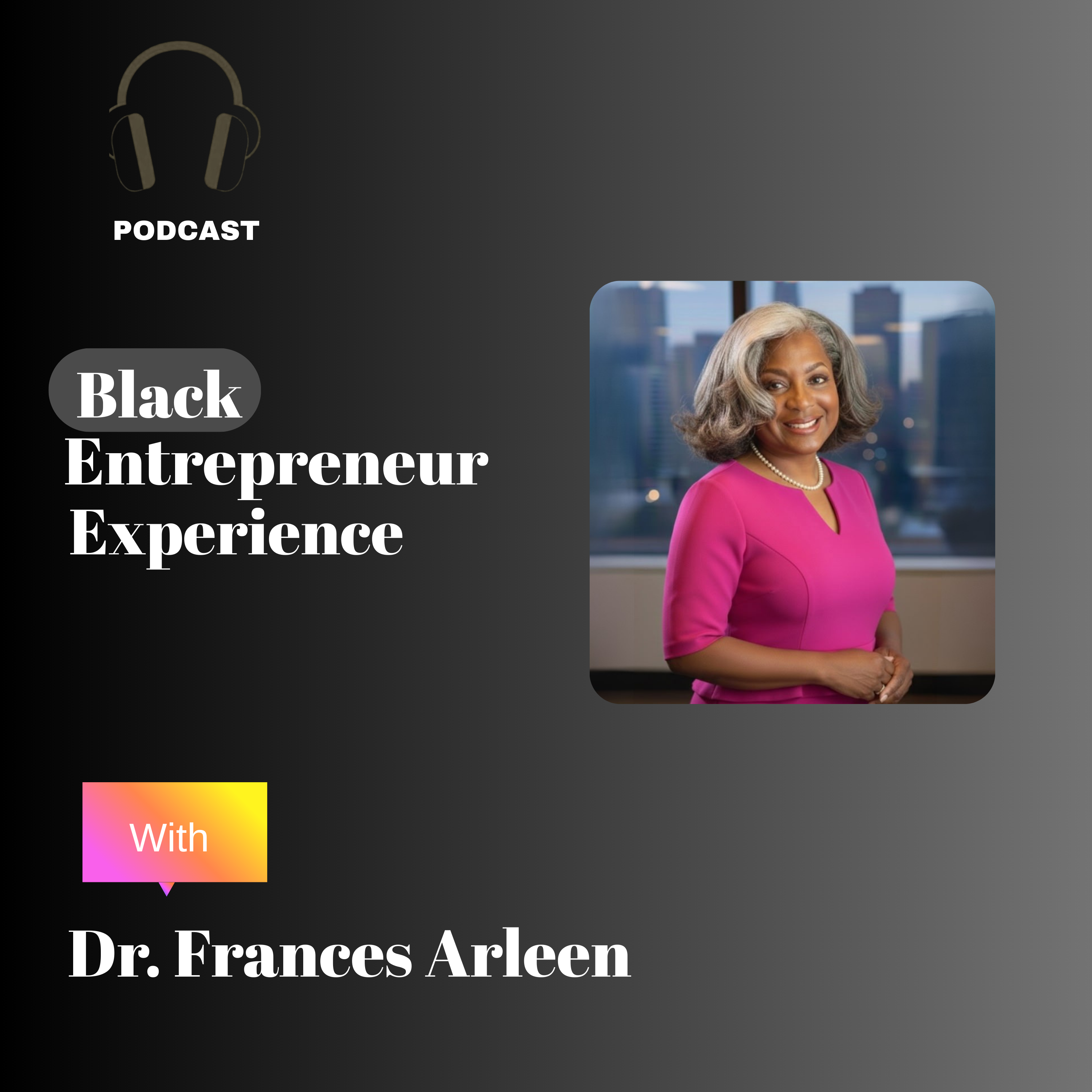
Loading summary
Transcript98 lines
- [00:01]
A
Summer's supposed to be the easy season, so why are so many people quietly googling a therapist between summer Fridays? Because more daylight doesn't fix the hard stuff. Sometimes it just turns the volume up. Grow Does Therapy Differently Therapy is not only for when you're in crisis. Grow therapy is here for all the moments when you decide you want more. More support, more clarity, more tools. Mental health isn't a destination you reach, it's something you build. And Grow makes that easier. Grow connects you with thousands of high quality licensed therapists across the US Offering both virtual and in person sessions, nights and weekends. You can search by what matters like insurance, specialty, identity or availability and get started in as little as two days. There are no subscriptions, no long term commitments. You just pay per session. Grow helps you find therapy on your time. The therapist you want takes your insurance on. Grow Grow accepts over 125 insurance plans. Sessions average $21 with insurance and some pay as little as $0 depending on their plan. Visit growtherapy.com booknowtoday to get started. That's growththerapy.com booknow growththerapy.com booknow availability and coverage vary by state and insurance plan.
- [01:32]
B
Welcome to the Black Entrepreneur Experience Podcast where we bring you conversations with entrepreneurs, CEOs and innovative thinkers from around the world. I'm your host, Dr. Frances Arlane Ince. What happens in Vegas goes all over the world on Black Entrepreneur experience, episode number 556. Thank you for joining us as we elevate the Black Entrepreneur experience by interviewing CEOs, thought leaders, innovative thinkers and Black entrepreneurs across the globe. I'm your host, Dr. Francis Arlaine. Our guest today is a powerhouse leader dedicated to building and protecting community wealth. Jeffrey Hines is an Oak park based State Farm agent serving families and businesses across Chicago's west side. Beyond insurance. He's a vital voice on the Austin Chamber of Commerce, a graduate of the Leadership Lab, and serves nationally as the Strategic Chair for Alpha Phi Alpha Fraternity Incorporated. He's here to talk strategy, growth and legacy. Welcome Jeffrey Hines.
- [02:49]
C
Well, thank you so much. I'm going to stand just so I can catch up with you here.
- [02:53]
B
All right.
- [02:55]
C
Good deal.
- [02:56]
B
All right. I've given our audience such a brief bio. Why don't you fill in the gaps and share with our audience what you'd like them to know about you and your business.
- [03:08]
C
Well, thank you for the opportunity. I am originally from Memphis, Tennessee, so raised in the South. I've been in Chicago for about nine years. My previous career was in operations and management consulting and I bring that kind of energy to this business. One of our focal points is to be able to educate people around the asset of insurance. Oftentimes people think about insurance as a. A bill to pay, so to speak. But it is really something that we can be looking at as an asset. It can help with wealth creation, it can help with risk management, personal risk management, and it can also help to, you know, send kids to school, buy houses, those kinds of things. And so that's what I think I would like for people to take away from this conversation.
- [03:57]
B
Talk about your transition into the insurance business. What made you go that route?
- [04:04]
C
Yeah, thank you for the question. In my previous life as a consultant, I ran the financial services arm of a small consulting company. So I've always been in the financial services business, the operations side of financial services, but financial services nonetheless. When I started to get more versed in how insurance could be an asset, I believed that it was an opportunity for me to take a step in that direction also. At the same time, we were going through the end of COVID and transitioning out of government service, and this opportunity to help both entrepreneurs and individuals came up. So it was a perfect storm of things that happened, you know, kind of all at the same time.
- [04:48]
B
And talk about, there are so many insurance agencies. Why did you opt to go into. And you tell me I want. Before I even ask that question, when you look at becoming a State Farm agent, is it, are you buying into the franchise or how does that work? Explain to the audience.
- [05:11]
C
Okay, so I'll get to the second part first, and then I'll go back to your first question. So the competitive nature of how to be selected as a State Farm agent is just that there is a competitive interview process, there is a profile that you have to complete. You have to get into the opportunity in the context of if there is a, you know, an area that we want to get into, or if there is a book of business, for example, in my case, someone was retiring. I competed against other well qualified candidates and was selected to take over this business. There is a bit of an investment, and it depends on which programs that you get into in terms of how much that investment is. But then there's also the benefits that come along with it. So once you're selected, there are programs and stipends that come to you as an aspiring agent. You're getting a lot of media support, a lot of marketing support. You're starting to learn what is now a 104-year-old company. Pretty stable. It is, you know, depending on which poll? You look at the number one insurance company across the country. We insure millions of autos, millions of homes, millions of life insurance, million, you know, customers, millions of health insurance customers. And we're now making the intentional leap to get more into financial services. So not just life insurance and personal risk management space, but we're also getting into the conversation around how to protect assets as people are retiring or starting their, you know, journeys as entrepreneurs, or they're taking their personal savings and trying to make sure that they can guarantee. Guarantee your return on investment.
- [06:54]
B
What is something that we as consumers don't know about the insurance industry that we should know?
- [07:00]
C
Well, there's a couple of things. If we're looking at car insurance as the most common insurance that people get, oftentimes we think about if people will have, quote, unquote, full coverage. They think that regardless of how big the accident is, that the company is going to cover that. The limit of liability, which is how much the company, how much you have agreed to take on in terms of the limit of liability with the company is the extent of how much would be paid. So it's important that you understand what your limits are. For example, in Illinois, the state limits, the minimum State limits are 25,000 per person and 50,000 per accident. What that means, the layman's terms, is if you're involved in an accident, you'll get a $25,000 maximum payout if it's one person in the car. If it is multiple people in the car, there's a maximum payout of $50,000. Now, that sounds like a lot of money, but I'll give you an example which is a real life example that happened to us. We have a customer, let's call this customer Mr. Smith was involved in. He has a Honda Accord, 20, 24 Honda Accord, so Fairly new was involved in an accident with someone in a Range Rover. That Range Rover was fully, you know, signature edition, all the bells and whistles. That Range Rover was about $140,000. Mr. Smith had the minimum state coverage. In the gap between that 140 and the 25 that Mr. Smith had, he was on the hook for that. So it's important that we know what our limits of liability are. It's important that we understand how insurance works and we understand what it cover in the event something happens and speak
- [08:47]
B
in terms of what is something as entrepreneurs that they should know about insurance that they don't know.
- [08:54]
C
So the entrepreneurial track has been quite interesting and I'm continuing to learn every day I think the big piece of it is if you have a brick and mortar business, you want to make sure that you have enough insurance if someone comes into your business and hurts themselves, if someone slips on a piece of ice, whatever the case may be, that you have enough coverage to cover your assets. And you also want to make sure that if you have employees, that you have a workers comp policy in place, because if said employee comes in hurts themselves, there's a workers comp policy that could absorb some of the impact if you're having to make payments to a customer. So I think those are a couple of things that are important. The other thing is if you can, to retain, to attract and retain employees, you want to try to get a group life insurance or a group health insurance plan in place, because that gives employees an additional benefit that they may not enjoy in some of your smaller businesses. So oftentimes in small business, we start out with, you know, the bare bones, and we can try to build up as we can, and those benefits will allow you to operate into scale and operate as a larger business.
- [10:07]
B
What about consultants and having error and omission insurance? Talk about that.
- [10:15]
C
Absolutely. That is critically important because the errors and omissions insurance gives you coverage. For example, my policy is a $2 million policy. So if there is something that happens either through my, you know, I hate to use this word, but if something happens in our business or one of my employees does something, then we have coverage in that regard. It gives us a cushion for if something happens, if we give advice that, you know, proves to be incorrect, or if you're in the consulting space and you're advising someone and you give them, you know, information that they can prove is incorrect or negligent, that everything omissions insurance gives you a little bit of cushion and coverage. Because again, insurance from an entrepreneur perspective is to bridge the gap between your personal assets and the company's assets. So it's important to make sure you have a line of demarcation between your personal assets and the company. And then those tools. Arizona Missions Insurance Workers Comp Business liability insurance if you're driving a vehicle, if you have a company car, you want to have a company or corporate car insurance, because again, you want to draw the line between your personal assets and your corporate assets.
- [11:31]
B
Let me ask you this, Jeffrey. Did the insurance industry marry you or did you marry the insurance industry?
- [11:41]
C
I think it was a marriage of both, actually, because I had a pre mixed experience in the financial services space. Then I wanted to better understand both personal and corporate Risk management. So that was always something that I was seeking out. But at the same time, as we continue to grow and morph as an organization, being State Farm, they're looking for entrepreneurs who have a better understanding of how to run an operation, how to interview candidates, how to grow a business, how to sustain the business, and looking at the risk management aside from it. So I think it was a marriage of convenience in the way that we both came to it stay from, from the corporate perspective, looking for high energy, well versed people like myself. And then I came to it, you know, looking for the entrepreneurial experience. For me, this experience was a little less risky than starting, you know, completely from scratch. But I do know that there are some great entrepreneurs out there that start, you know, with an idea and a piece of paper. So there's no wrong way to it. But I think that the marriage came, you know, from both sides.
- [12:49]
B
I want you to have a monologue and I want you to name this person, living or not, and they've impacted your life so much. Who is that person and what are you saying to that person?
- [13:00]
C
Ooh, that's a tough one. I think this one is probably going to be a layup in this context. My mother has inspired me in so many ways. She started off, you know, as a young college student. My parents were married shortly after their 18th birthday. I was born after my mother's 19th birthday. She continued to persevere, go to school, finish undergraduate school, got a job, worked through, you know, having children. Then she went back to law school and finished her career, you know, as an attorney working for the federal government. So I think, you know, she inspires me daily in terms of how she approaches life. And even still that, you know, in her 70s, she's still very active in doing all the things. She's also just a good person. And I know people say that about their mothers and that kind of thing, but she's just a very good person. So it's one of those things that you see this person, if you didn't know her, you get this, you know, great energy. So she continues to inspire me daily. I think the other that I will add to that, I know you asked for one, but I'm going to cheat a little bit. One of my uncles has been very inspirational to me and my family. He is in his, you know, kind of mid-80s now and he was like a lot of us were very active in the civil rights movement, taught a lot of lessons to my family and I as we grew forward. There are pictures of him with Martin King and others that just continue to think about, you know, the connection between the past and the present. And he is still pretty actively pastoring a church, you know, to this day. So he's doing quite well. So those are the two that I would. But there are many others. But those are the two that are top of mind for me.
- [14:48]
B
And thank you for that. Say your mother's name and your uncle's name to honor them.
- [14:53]
C
Thank you so much. My mother's name is Hallie Marie Jeffries, and my uncle's name is the Reverend Dr. Harold Albert Middlebrook.
- [15:04]
B
Thank you for that.
- [15:05]
C
Thank you.
- [15:07]
B
Let's talk about artificial intelligence. Give me your take on artificial intelligence and how you are incorporating that in the business, if you are.
- [15:21]
C
So I am a proponent of AI for this reason, so I probably should have said this at the outset. My degree is in mechanical engineering and applied mathematics, so I am a technologist at heart. I spent time in consulting spaces and learning the tools that will help us get better, faster, stronger. So then we think about AI, specifically in how we research information. How do we quickly gather policy information for a customer? Let's say you're a customer and you call and say, hey, I need to know. You know, what are the three risks for this policy type? As an example, AI can quickly give me those summary points that I can then deliver that information back to the customer. It doesn't completely answer the mail, but it definitely gives you a quick start on some of the things that you need to know so that you can communicate with the customer. It also gives us the opportunity, as a still small business, even though we're attached to a large brand, it gives us the ability to scale. One of the ways in which we're scaling is to be able to look at some of the data and to develop strategies of how to approach a customer segment or how to think about a marketing event in a way that may take us many more hours of research if we were doing it by hand. So I am a big fan in a controlled kind of way, because I think if you turn over your whole business to AI, then it'll just be as smart as whatever AI tool that you're using. Um, I think the other thing about it is it gives us the opportunity to sometimes validate things that we already know. So you may have a position on a thing, and then you, you know, go to your AI partner and say, hey, this is what I'm thinking. Yep, this is correct, except you missed this one thing. So it also helps with the fine
- [17:12]
B
details as well, Jeffrey, if you'd lost everything and you had to rebuild in 30 days, in what industry and why?
- [17:21]
C
I assume that is a financial question. I think the quickest thing to do for me would be to still stay in the same industry I'm in because it is a. There are some necessary or some built in markets for us. So in the car industry, for example, if you have a vehicle, you need to have car insurance. In most cities and states, it is a requirement by law. So that creates a lane for us. The other part of that is on the homeowner's side of things. If you have a mortgage, your mortgage company is going to require that you have a homeowner's policy. I will say quickly about the homeowner's policy for your listeners is when you're looking at that homeowner's policy, oftentimes it is designed to make sure that your mortgage company is made whole. It is not always built to, you know, advance you and your family. So as you're examining those homeowners policies, you want to make sure that you're looking at the ways in which you can both satisfy the mortgage company's requirements, but also to advance you and your family if, you know, in the event something happens. So to answer your question, I think it's still this industry. There are lanes in this industry that I can quickly kind of pivot to and then there's built in revenue, if you will, that I can, you know, that I can drive into pretty quickly.
- [18:42]
B
What problem exists in the world today that you'd like to solve?
- [18:48]
C
I think if we look at current events, we have this absence of, I will borrow this from Barack Obama, this absence of facts that we seem to operate in. In a lot of ways we can see something right in front of us and someone will say, no, that's not what you see. So I think that that is one of the problems which in turn feeds into some of the venom that we see in the news. It is what fuels some of the world decisions that are being made at the moment. So this absence of facts, I think is something that I would want to jump into. I think continuing that same theme, it creates racism and homophobia and all of these things because people make decisions sometimes based on the absence of facts. They may not know the issue, they may not know what a person is like, but they make a decision, you know, based on a superficial item, advice
- [19:49]
B
you wish you had followed.
- [19:51]
C
I had an opportunity to invest in a temporal thermometer company. So, you know, think back to Covid 2020, at some point everybody was buying, you know, thermometers, specifically the non contact temporal thermometers. I had an opportunity to invest more money into that. I invested the minimum, I did not invest the maximum. And one of the things that came up, of course, is everybody was buying these thermometers. You know, you go to a store, you go to a doctor's office, those things were very popular. So that's probably one thing that I wish I had done. So a missed investment opportunity is probably what I would say I wish I could redo.
- [20:34]
B
Are your top two mentors? They could be influencers, mentors or individuals that have helped you in your business. And what lessons do they teach you?
- [20:46]
C
Oh, great question. So one of them is actually a very dear friend of mine from my hometown of Memphis, Tennessee. His he's a gentleman named Henry Hooper. He was a 30 plus year state farm agent, but his resume reads somewhat like a James Bond novel. He was originally an Army Ranger slash paratrooper. He at one point was an amateur boxer and sparred with a young Cassius Clay. He was one of the first African American Secret service agents. And you know, going back to the 70s and you know, late 70s, early 80s. And then he got into the successful State Farm business. So when I decided to consider this opportunity, I gave him a call, took about two or three minutes as we were talking. And as we were talking he's like, I'll call you back. He hangs up the phone. But literally five or six minutes after that, he connected me with people, you know, in and around the Chicago area, gave me a lot of advice, gave me a lot of kind of things to consider as we move forward. So I think that's probably the biggest one. And the other one, I think, you know, even as he was injuring his later years, my father actually inspired me a lot because there are things that I have been able to do that my father was, you know, from an entrepreneur perspective that he was not able to do. He worked for a couple of companies for a long year, a lot of years. He was in the transportation industry for about 45 years. And one of the things that he would often, you know, from a curiosity standpoint, asked me about, which drove me to think about things a little bit differently. So I think those are the two things that, you know, inspired this business and continue to inspire me today.
- [22:28]
B
Jeffrey, what is your zone of genius?
- [22:32]
C
That is a great question. I think you may have heard this term of Renaissance man from time to time. I feel like I know a lot of Things. I know a little bit about a lot of things, so I don't know that I have a particular zone. I do think that I learned quickly. I think that I adapt to changing situations quickly. And I believe that I am eager to learn. I am eager to roll up the sleeves and do the things that are necessary to, to, to get better every day.
- [23:01]
B
Let's talk about your definition of success. How do you define success?
- [23:08]
C
Success for me is, you know, the ability to have choices. One of the things that I enjoy about my life currently is that I have choices of what I want to do. I can choose the way that I want to work. There are things financially that I can do that allow me to, you know, enjoy my time with my family and friends. So the ability for choices. Some people look at success as the financial aspect of it, but there are people that are, you know, extremely wealthy, but they're unhappy. I'm at a place where I am very happy, certainly would love to have the accolades and the money that other people have, but I'm at a place where I have choices and I believe that is what defines success for me. I think it also creates this space of when you have choices. You can also back to one of your earlier questions. If the world ended today and changed, I could go back into my previous industry or I could learn a new industry. And so that gives me some choices. So that is what defy success. Success for me.
- [24:12]
B
Thank you for that.
- [24:13]
C
Yes, ma'. Am.
- [24:15]
B
What is, what, if anything, would cause you to stop doing what you're doing?
- [24:22]
C
I believe if the industry, you know, imploded and it just. There was no way for me to make a living, then I might have to think about doing something else. Because we all have to make a living to do the things that we want to do. So I would say if the industry imploded, that would probably be the thing. But the financial services industry is really one of the fastest growing industries. As we think about people that are, you know, starting to think about retirement and people are starting to, on the other end, people thinking, entering the workforce and those kind of things. So it's a sustainable industry in that way. But if the, if the industry imploded, that would probably be the thing that would cause me to think about it.
- [25:03]
B
What is something you desire to do that you have not done yet?
- [25:08]
C
I travel a lot as of this point. I've been to 38 countries, I believe is the last number. I have not been to Australia, so that would be one of the things that I want to do. At some point, I think that's probably the big thing. I'm not a big adventure guy. Like, I don't have a desire to jump off the, you know, World Trade center and that stuff. Like, I don't. I don't have those things. But I do enjoy the idea of seeing the world and learning more about it.
- [25:36]
B
Okay, let's take a snapshot of the last 30 days. What was your biggest win?
- [25:43]
C
I think the biggest win for me was in the last 30 days. I've spent some time with my. With my parents. I've spent some time with my children. I have gotten a chance to see some really good friends of mine. I got to see my goddaughter graduate from high school. The last 30 days for me has been, you know, personally very fulfilling professionally. I think the big win is identifying who I think is going to be our next great teammate. And so we're looking to bring on a new person to help us grow one of our product areas. And I'm hopeful that we can make that work. And then there's clarity about what the future looks like. So we have learned some things about how our industry is changing and then what that impact is going to mean for us, and we've developed a strategy
- [26:31]
B
going forward and speak about changes in the industry. Share what you can about what you would tell consumers to look out for from your industry perspective.
- [26:47]
C
So I think the big creature is to think about reviewing your current policies, understanding the language of what's in them, and thinking about how you can maximize the benefits for you and your family. I would say the changes around the. Or the impact, sorry, of tariffs and those other things which can impact the pricing of things to better understand how they impact you individually and then develop a strategy with your agent to be able to go through and say, hey, these are some things I'm concerned about. And just go through with that person to make sure that they can help you to identify a strategy for you and your family. One of the things that we like to do is that we, every year or so, we invite customers to spend some time with us talking about changes, talking about, are there discounts that we have missed? Are there things that we should be doing together to plan for the future? For example, I have a customer who has three children that'll be going to school, going to college around the same time. What can we do to help? In the event something were to happen to this person, he's developed a strategy so that the. They all happen to be girls, but so that the girls could go to school if his salary disappeared, you know, they, they don't have much to worry about. And so those are things I think I would encourage every customer, every consumer to look at their own individual situation and spend some time with their agent to go through those things to make sure they understand and can ask questions, but also to develop a strategy because similar to going to the doctor or similar to, you know, other things that we do yearly, a look at your financial portfolio or a strategy meeting, if you will, with your family and your financial professional is something that I would highly recommend.
- [28:39]
B
We just came off of Father's Day, so happy belated Father's Day talk about
- [28:45]
C
fatherhood and well, thank you for the well wishes. I think the intersection between fatherhood and entrepreneurship is important because the work that I do allows me, you know, I'll go back to my word choices. I have, my youngest child is a dancer and she's in competitive dance and doing all these things. My current career allows me to spend time with her. My current career allows me to not miss a recital or a rehearsal or, you know, my current career allows me financially to be able to support the things that she's doing. And then my older two children, same thing. I, I, you know, didn't get it. I didn't miss, you know, any of their, you know, sporting events. I didn't miss any of their academic events. And so I. That entrepreneur, you know, that intersection between father grinning and entrepreneurship is kind of what drove me to come to this place. I wanted to be able to do the things that were important to me, and those things are important to me, and we've been able to do that.
- [29:48]
B
There are so many brands and businesses that are dominating. Talk about a brand or business that's dominating. And you admire Jeffrey and why this
- [29:59]
C
one's probably unpopular, but I would say we look at the Amazon model in the way that Amazon decided that they wanted to be number one. And they, you know, relentlessly went after that. They looked at ways to control the entire supply chain. They looked at ways to influence shipping laws. They looked at ways to advertise. They looked at ways to get in front of us in many different ways. So they have developed a complete strategy aimed at, you know, their strategic plan, if you will, was to be number one. And they did everything that they could to be number one. And they have driven themselves, you know, to be top of mind. Most of us now when we think of buying things, Amazon is part of that conversation. It has made, you know, millionaires, multimillionaires, and, you know, now billionaires. Out of some of the people that were involved in that vision, I like what they've been able to do. I like what they've been able to continue to do, to grow and evolve and continuing to think about what the future looks like.
- [31:01]
B
What is the biggest achievement so far for you in life and business?
- [31:09]
C
I think the biggest achievement is to. I'm always learning, but I think my biggest achievement has been so far, being a successful father. I think that I modeled the successful fathers around me. I also modeled or I took the behaviors that I didn't like, and I've been able to drive those things out and continue to be a successful father. So I think those are the things that have been most inspirational for me and the biggest achievement for me so far. The other things that enhance that are my career that allows me to spend more time with them and to be able to do the same thing with my parents when my father passed away last year. But, you know, I spend a fair amount of time with my mother and my siblings and those things, so I think that is my biggest achievement so far.
- [31:58]
B
And our sincere sympathy for the passing of your father.
- [32:02]
C
Thank you.
- [32:04]
B
There are so many rewards and risk in entrepreneurial ship. Starting your own company and being in business. I like to say it's an opportunity. What is the. Your most costly lesson that you have learned? And what was your lesson, but what did you not only learn from it, but what was the opportunity for growth?
- [32:30]
C
So the most costly lesson that I learned was at the beginning when I started bringing on employees. I had this, you know, boy Scout view of the world in the way that I thought everybody wanted to come to work and do a great job and, you know, show up with their best self and those kind of things. I quickly learned that, you know, people have different motivations for why they do certain things, and you have to figure out how to tap into those things. So the lesson was lost wages, if you will, for people that really weren't interested in being in our business. There's nothing wrong with that. But I've learned since to quickly identify those traits that will make a person be successful in our industry. I've learned quickly to identify people that really want to achieve certain levels of success. And there's, in my viewpoint, a certain competitiveness that's important to be able to be successful in this industry. The lesson that I learned at the outset was, you know, I poured money into, you know, some. Some team members that just weren't interested in this industry. We've, you know, parted ways in you know, still friends, if you will, but, you know, just learning to quickly identify those things was the lesson. So, you know, the money that you spend paying a person that really doesn't want to be there is a really, it's really a challenge because it takes away the asset that you need to be able to do other things in your business. It slows down growth. It, you know, keeps you from investing in marketing. That keeps you from investing in other things.
- [34:05]
B
And what do you need right now that you don't have to move the needle forward in your business?
- [34:11]
C
Two things. Great employees and great enthusiasm. Great employees, in the context of people that are curious, intellectually curious, want to learn, want to be better. We have invested in training tools and modules. We partner with some of the most successful agents across the country so that we can learn the things that they're doing. So we can then part that to our team members. We partner with some AI technology which will help us to be able to do training quicker. We also partner with some really great mentors and coaches in this business because we believe that investment in that space will return itself, you know, tenfold. So I think great employees with enthusiasm is really what I need right now. And additional exposure, more opportunities to the people, more conversations, more time, you know, people that don't understand insurance to be able to answer their questions. And hopefully by answering their questions, we get an opportunity to have further conversation with them.
- [35:11]
B
Looking forward, what do you hope for the future for the business?
- [35:17]
C
One of the things that I developed when I first started this business was called my four plus one plan. So by the end of the fourth cycle or the end of the fourth year, we wanted to have double the business that we took over. We are still tracking to do that. And I'm really hopeful that we end the year with, you know, with that goal being achieved. But the plus one is by the end of the fifth year, we wanted to be able to potentially grow our business with an additional storefront, be that through acquisition or throughout as agents retire and leave the business, that we're able to take over those other businesses and not for the sake of just growing the footprint, but we want to be able to employ more people. We want to be able to give people the opportunity to grow their careers as well. And I want to be able to coach and mentor a few people because I was coached and mentored myself, so I want to be able to do that. And then lastly, we have a couple of scholarships that we're hoping to grow in terms of value those. One of which is named after my grandmother and the other of which is named after one of my aunts. And the more we grow as a business, the more we can impact the community in those ways.
- [36:31]
B
Jeffrey, talk about mental wellness and entrepreneurial shit.
- [36:36]
C
I think mental health is one of the most important things that we can have. One of the ways that I am able to maintain that, you know, mental balance, if you will. I have a really great group of friends. It is unusual, at least in my circle, to have, you know, 10 to 12 guys that you can call on and say, hey, look, I got this happening. Let's have a conversation about it, and one or more of those guys will reach back to you within, you know, 10, 15 minutes. We all happen to be in the same fraternity with one exception. So that's how we connected and met. But the way that we've maintained is we have grown together. We have started businesses together. We have, you know, seen children grow up, you know, in some cases, lost parents in grieves together. This current group of folks, we. We developed a retreat, a yearly retreat, and we pick a city in the US and we go just have fun. I mean, we don't really do. There's no agenda. We just get together and spend some time together. So I think that helps with my mental health or mental stability. I think the other thing that also helps me, and this is maybe true for other people, is finding a place to think. You know, if you consider what happens when most of us wake up in the morning, the first thing we do is we reach for a phone or we turn on the TV or something like that. I intentionally spend 10 to 15 minutes a day in complete silence. No phones, no TVs, any of that. And it gives me a chance to clear some things from my, you know, from my mental, you know, mental shelf, if you will, because there's so many things that go through our heads throughout the day. You need a few minutes just to reset.
- [38:27]
B
Talk about legacy, Jeffrey, when it's all said and done, how do you want to be remembered?
- [38:32]
C
I hope that I'm remembered as a person that tried to treat each, you know, everybody well. I hope that I remembered as a successful businessman. I hope that, you know, my children have fond memories of my time with them and my parents, you know, that I never disappoint my parents. So those would be the things that I think would be a great legacy for me. I think that as we continue to grow and make mistakes and learn from those mistakes, I think it's also the ability to say, you know, hey, I Didn't make the right decision there, but I'm going to do better next time.
- [39:10]
B
Jeffrey, if you conducted this interview, what is the one question you would have asked yourself? I want you to ask the question and answer it.
- [39:19]
C
Oh, that's a great one. I think, you know, something that is often forgotten is when, you know, we don't get to know people in a deep kind of way. Right. So you asked the question about success, but I will turn it around this way. So there is a really great book about a guy who interviewed a bunch of jazz musicians and he asked them three questions. And those three questions were things about, you know, what are the three things that make you happy? So if I were conducting that interview, I would throw that out and I would say, for me, the three things that make me happy. I'm a huge music fan and music across the board, like, I'm a huge music, you know, no matter what genre, I pretty much get into it. My grand. My great grand. My great grand. My grandfather was a blues musician. So I have gone everywhere from the blues to hip hop to, in some cases, classical music. So music makes me happy. I'm a big fan of sunlight. Sunlight makes me happy. So about once a week, I spend time once a week or, you know, a couple of times a week. And when it's spring and summer, I ride my bike to work. I take the long way around just so I can get some song and say hello to some folks and do those things while listening to music. And then the third thing is, you know, as I said earlier, my family is incredibly important to me. I think the more that I'm able to support and help those folks, I think it makes me happy. So those are my three things.
- [40:50]
B
Tell us the name of the book.
- [40:52]
C
I will have to look it up, actually. Okay.
- [40:55]
B
Email me.
- [40:56]
C
Yeah, I will, definitely. But it's a book that I found in a. In a coffee shop somewhere and I just picked it up and it's, you know, one of the main questions is, you know, tell me your three things so I'll find it for sure.
- [41:07]
B
Okay, I appreciate that. We come to the part of our interview, it's called the Fun Fact Lightning round. And I'm going to ask you a series of questions and I'd like you to give me very quick answers. If there's something you desire not to answer, feel free to say pass. Are you ready for the Fun Fact Lightning Round?
- [41:30]
C
I'm ready. I'm ready.
- [41:32]
B
Your favorite comfort food.
- [41:36]
C
I'm a big fried chicken person. I mean, I probably shouldn't be, but I'm a big fried chicken person.
- [41:43]
B
What food you eat every week, no matter what?
- [41:46]
C
I usually have some sort of pasta every week.
- [41:51]
B
Your first job?
- [41:53]
C
My first job, I worked at McDonald's for about three weeks. It was a very, very far commute for a minimum wage job. My uncle was one of the managers at this McDonald's. So I worked there for three whole weeks. And then my mom at some point says, it's like, this is too far. We're, you know, we're spending more money than we're making kind of. Kind of situation.
- [42:18]
B
So you relax. Doing what?
- [42:21]
C
Listen to music and listening to music.
- [42:23]
B
Your favorite singer or dancer?
- [42:27]
C
My favorite singer. Oh. Oh, that's tough. I'll go to dancer. I think my. My. My favorite dancers or dance scene. The Nicholas Brothers did an amazing dance improvised dance scene in the movie. So I think they kind of brought me to dancing itself. So I think that's. I'll go with that. Your favorite dance song, Most recently, I would say Whitney Houston's I Want to Dance with Somebody. Because my youngest daughter and I, there's a video of the two of us dancing together when she was maybe a year and a half, you know, barely standing. But it is, you know, one of those things that kind of brings a great memory to my mind.
- [43:13]
B
Your ideal car?
- [43:15]
C
Ideal car. I would love a 65 Mustang. I don't have one, but, you know, my ideal car would be able to restore a 65 Mustang.
- [43:25]
B
And you don't have it yet?
- [43:26]
C
I don't have it yet, thank you. I don't have it yet.
- [43:29]
B
Work out or hit the couch?
- [43:32]
C
I should say workout. I will say that I don't do that as much as I would like. I do have a great group of guys that I play basketball with pretty regularly and I do have another group of guys that I golf with regularly, but it is not as frequent as I would like.
- [43:49]
B
Jeffrey Hines, thank you so much for joining us on Black Entrepreneur Experience podcast. Before we let you go, share with our audience, the best way for them to connect with you, to do business with you and feel free to leave all your social media handles.
- [44:06]
C
Yeah. Thank you very much for the opportunity. I've enjoyed getting to spend some time with you. The best way to contact us is through social media at Heinz Insurers. H I N E S insurers. I N S U-R-E s.com or you can reach out to our office at 708-628-5100.
- [44:29]
B
Thank you, Jeffrey. That's a wrap.
- [44:32]
C
Thank you so much.
- [44:34]
B
Thank you for listening to Black Entrepreneur Experience Podcast. If you enjoy this episode, please leave us a review, share it with your friends and help others discover the show. For more episodes and show notes, visit www.beepodcast.com. join us next Wednesday day for another episode. And remember, Green is the new Black. So keep your bank account and your business in the black. When it's time to scale your business, it's time for Shopify. Get everything you need to grow the way you want.
- [45:19]
C
Like all the way.
- [45:23]
B
Stack more sales with the best converting checkout on the planet. Track your cha chings from every channel right in one spot and turn real time reporting into big time opportunities. Take your business to a whole new level. Switch to Shopify. Start your free trial today.