← Black Entrepreneur Experience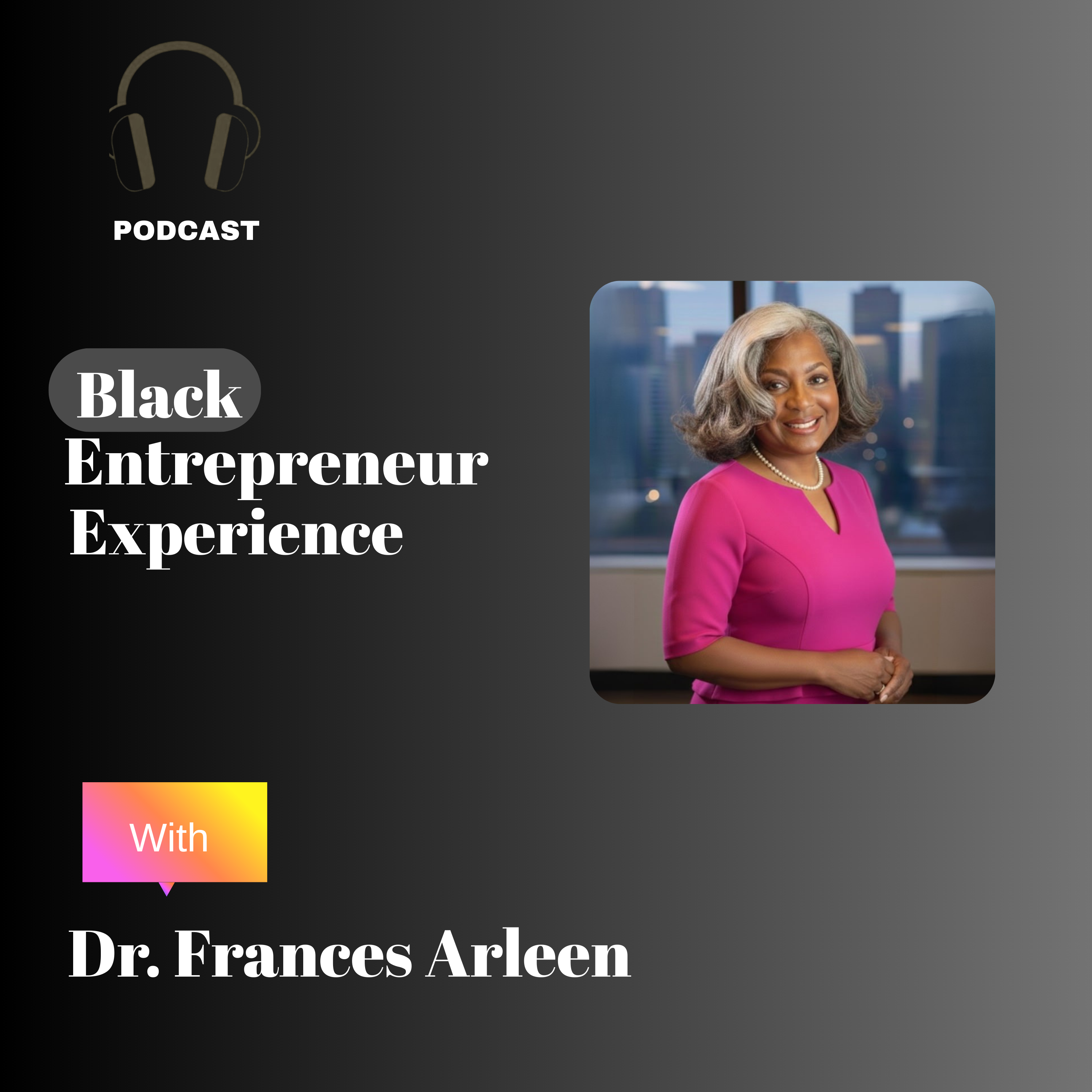
Black Entrepreneur Experience
BEE 559 Reframing Nonprofits: Innovation & Impact with Veronica & Ashley
00:41:38
Loading summary
Transcript100 lines
- [00:00]
A
CFTC Regulated Spot margin trading is now
- [00:03]
B
live on Kraken Pro Trade with up
- [00:05]
A
to 10 times leverage, long or short, your crypto as collateral. The conviction was always there. Now the platform is too. Unleash your trading potential. Download Kraken Pro on the App Store or Google Play. Spot margin trading involves substantial risk of loss and is not suitable for everyone. Leverage magnifies gains and losses. View Ninja Trader Disclosures for more information on brokerage surfaces. Geographic restrictions apply.
- [00:28]
B
Terms apply. Welcome to the Black Entrepreneur Experience Podcast Inside the business buzz and brilliance of Black Entrepreneurs. Here is your host, Dr. Francis Arlene,
- [00:54]
C
Innovative thinkers episode number 559, Innovative Thinker. Thank you for joining us as we elevate the Black Entrepreneur experience by interviewing CEOs, thought leaders, innovative thinkers and Black entrepreneurs across the globe. I'm your host, Dr. Frances Arlene, who says nonprofits can be innovative and exciting. Veronica Simpkins and Ashley Green are Proving it with latched support, a 1.3 million dollar nonprofit transforming maternal and infant health. Welcome.
- [01:31]
B
Thank you. Thank you for having us.
- [01:34]
C
I've given our audience such a brief bio. Why don't you fill in the gaps and share with our audience what you'd like them to know about you and your nonprofit.
- [01:44]
B
Yes, so we have now been operating for nine years and Ashley and I are both registered nurses, lactation consultants that really took our perspective from health care and decided to make it mission driven in the community to make sure that the community was better prepared throughout their pregnancy and postpartum period and making sure that once they got to that hospital system that they were able to navigate it. So we bring a very unique perspective as registered nurses to the nonprofit sector because oftentimes health care and policy don't really consider how nonprofits can really be part of the bigger picture.
- [02:27]
C
Let's back up. Tell me your backstory each how did you get into this specific work?
- [02:35]
B
I've been now a nurse for over 15 years now and I started as a labor and delivery nurse and during that time I would see doctors that would want to be home by dinner and that would result in young women having to get C sections that they really didn't need. It was more at the convenience of the doctor trying to rush their delivery. So I saw a problem and I didn't want to be a part of that and really thought of, well, how different can I allow my nursing career to take me? So I've been able to work in home visitation with military families and learn about how military families are so uniquely positioned too, with resources wherever they Are if they're geographically separated from their family. I've been able to work with the city of San Antonio with congenital syphilis and making sure that moms that are diagnosed with syphilis are getting the treatment that they need. And then I was able to work in the nursery and as a lactation consultant. So I've really been able to prepare myself in the work that we're doing with our nonprofit that is a full wraparound service, to have that exposure to all the different areas that we know that our clients are facing to make sure that they can get supported when they come to latch.
- [03:53]
A
Yeah. And I think on the other side of that, while Veronica really leaned into the labor and delivery, I leaned into postpartum and newborn care. So I've been a registered nurse, like Veronica said, as well, over 15 years. I need to actually tally up the years, but quite some time, but had the opportunity of working in different hospitals, like I said, whether it be in the postpartum unit or newborn care.
- [04:15]
B
And.
- [04:16]
A
And then also went back to specialize and become an IBCLC lactation consultant. So I was able to also support families with breastfeeding in the hospital and also in their home as well. Um, and then I also experienced my own lived experience with my second daughter, where I went home and I experienced postpartum eclampsia that led to heart failure. And even being a nurse at that time, well educated and like I said, specializing in postpartum care, I was ignored. And that first week postpartum, when I went to the ER three different times. And it wasn't until I did enter heart failure that I got the help that I needed. So from there, I've been blessed to be able to work with Veronica to start latched and really support families to prevent them from experiencing what I did.
- [04:58]
C
And how did you guys connect in terms of business partners?
- [05:03]
B
We always say everything happens for a reason. So during my period of expanding my landscape of learning, I took a job as a lactation consultant. And actually the one that was orienting me to the floor. So during our first shift, which is 12 hours long, we started talking about what we wish that we saw that parents were have the access to in the community once they get discharged home, because they would often say, well, can you just come home with me? Or can. How do I get in contact with you once I'm home? And it's just like, that's just not how the system set up within the hospital. But we thought, well, why not? Why can't there be a continuity of care. And if nobody's doing it, why can't we do it? So it kind of started just from a conversation of us sharing what we wish we saw in the community. And literally from that conversation, we started planning that August for Breastfeeding Month. The last week of the month is dedicated to Black Breastfeeding Week. So we decided to host a small community event and just to see people's interest in two random nurses coming to your home to. To help you with lactation. And we had a good number of women that showed up and supported what we were trying to do. And they said, hey, y' all can't stop. You'll have to continue. So it literally just started from that conversation that we had from the moment we met each other, and it has now evolved into a great friendship and business relationship over these last nine years.
- [06:35]
C
So are you still currently working in the profession of nursing? Both.
- [06:40]
A
So we're no longer working in the hospitals, but we are 100% working for latch support and supporting families preventatively before they deliver.
- [06:49]
C
What is something that we ask consumers or if someone is thinking about starting a nonprofit, what is something that they don't know that they should know about starting a nonprofit?
- [07:02]
A
Yeah, that's a good question.
- [07:04]
B
Yeah. I think a lot of times people have a perspective of if you're starting a nonprofit, you're not a business, because our product, our service may be free to the community. Some that don't see that as value because it doesn't have a monetary value that the consumer has to pay to receive. But I think we are have always approached latched as it is a business. Our strategy has to be different. And I think a lot of times because of just nonprofits having the ability to have a tax exemption, they are maybe not seen as legitimate businesses, but we as CEOs really focus on strategy, fundraising, operations, leadership. All of those things are so important for us to be sustainable, just like a business. And there's competition within the nonprofit world. It looks different because it's within grant writing. We're competing for certain fundings, and that may be short term or long term. And, you know, it's just because we're not McDonald's or Burger King competing. It's similar for a nonprofit that may be similarly offering maternal health services. We're competing with them as well for that funding. So I think that's a common misconception.
- [08:23]
A
Yeah, I think I'd add to that that the nonprofit world, what we have learned over the last nine years, is very competitive. But like Veronica mentioned, We are all going after similar funding. And so you do have to be innovative in your approach to reach the families and then also to continue to make a difference as you evolve.
- [08:41]
C
And speaking of funding and reaching your goals in terms of funding, talk about that first funding client or whether it was a venture capitalist. Talk about that.
- [08:56]
B
Yeah. You know, we have a really unique story too in that aspect, that when we are first starting off, we were offering our services for free on in the community. So we were just posting on Facebook. We had a Google number and said, call us if you want us to come and help you. And it just so happened that another nonprofit was starting a breastfeeding initiative, and they saw that posting and had their director reach out and say, hey, can we offer or have these nurses come in so we can learn more about what they're doing? So through that conversation, we were able to walk away with our first contract, and we didn't even have a bank account set up. Talk about everything lined up for us for this to truly be a lesson and a journey that we weren't exactly. We knew we wanted, but we didn't exactly know. Know how quickly it was going to come. So I think through that first contract of just being available in the community, it authentically came to us. And honestly, that's really how Latch has continued to grow, with grassroots community outreach and allowing the people that we help to really be our marketing and advertising for all the good work that we're doing.
- [10:12]
C
And where are you located?
- [10:14]
A
For those that are listening, in San Antonio, Texas. Okay.
- [10:18]
C
And is there a goal to expand beyond San Antonio?
- [10:23]
A
You know, there is. Our first focus really was San Antonio. And then now in our next year, as we enter 10 years, we're looking to expand throughout Texas first, and then after that, we'll reassess what expansion looks like outside of the state.
- [10:37]
C
What was the most challenging moment when you were getting started or growing the nonprofit?
- [10:44]
B
I would say, honestly, our biggest challenge, even though we both have had our own lived experience with having our children, the biggest challenge still came from sharing the value of our perspective and of the services that we brought to the community. I think there's still a bias in that women need support if they are pregnant. Fathers need to know how we can get them involved. And there are lots of fathers that want to be involved, that we just need to make the education applicable for them and understandable for them of how they will help their wives, our partners, and I think the proving the value of our services. We did it. We have to do it a lot over explaining even to health professionals why teaching about having a healthy pregnancy is so important and how early we should be talking about it and seeing how that can ultimately reduce the amount of women that are going in for prenatal care. But yeah, I think the proving the value has been one of the biggest challenges.
- [11:51]
A
I think I would agree since the very beginning. And this is something Veronica and I often talk about and still get frustrated with. It was a lot of proving the value of our organization, but also proving ourselves along the way when we entered those rooms too. You know, we're two young nurses at the time with a crazy idea of just wanting to support families. And we knew the need and we knew the impact that we could make, but we had to prove it. And even to this day we're still, now we're proving it to bigger organizations, right? So now we're proving it to hospitals of the benefit of working with a community based organization. So it's been interesting to see every phase that we grow into, we're now having to prove the impact in a different way. So I think that has been the greatest challenge.
- [12:39]
C
What keeps you motivated and moving forward when things get tough?
- [12:45]
A
So that's a layered answer for me. And then I'll let Veronica add too for that one. It is seeing the impact that we make when we're walking into our office, seeing the families leave full of gratitude, and then also just the life saving education that we're able to provide. I read almost every single survey that comes through and hearing families say that they're so appreciative, they're so thankful for the information that they've learned something. And then on the flip side, for instance, our doula program saying that they felt like they couldn't have done it without a doula there, they really helped them use their voice and advocate for them during the process. So that is a huge motivator. But I also think our dynamic is a little different being a co founders and, and I will say that over the years we've motivated each other. There are times over these last nine years that we have wanted to quit some days because it was hard. It is very hard starting your own organization and then not even starting it with the thought of the magnitude it would reach. So it does get tiring. But I think we lean on each other and motivate each other as well.
- [13:52]
B
I think I'll echo the same thing. I think initially from the time we had that conversation back in the hospital and we were the ones that were providing that breastfeeding Assistance and going into the homes to now seeing that vision come to life with now business strategy and being resilient through Covid and coming out on the other side. There's a lot of nonprofits that came before us, that have been established way before us, that are not still standing. So I think it's a testament to also say that there is some good strategy behind what we are doing. Even though our staff may look at us like, oh gosh, what are they thinking right now? But I think it has proven to be something that is sustainable even beyond the years of when me and Ashley step away and we're no longer leading something that we founded. So I think, I think I have the most gratitude with that, knowing that we've established something that will be able to live beyond even the time that we're leading it.
- [14:55]
C
Talking about impact, I'm sure you have many stories and only share what you can share. Is there a specific client or story that you want to share that can kind of summarize what you're doing and the impact you're making?
- [15:13]
A
Yeah, there's a lot of different stories, but there is one that really comes to our mind that we often share and it was when we first started and Veronica and I were doing the home visits ourselves and we got a phone call from Nurse Family Partnership who we were partnered with and they wanted us to go in to support a teen mom with breastfeeding. We thought we were just going in with our lactation hat and we were going to help this mom breastfeed. She was an 18 year old female and we thought she had a healthy delivery and all was well. However, when we spoke to her over the phone, there were a few flags that we heard and so we wanted to take a deeper look and knew what we wanted to focus on when we got into the home. But when we got there, we started to peel back the layers to an onion and we learned different situations were going on. So with this mom, she had gone to the hospital, delivered vaginally, all was well, but her nurse actually told her postpartum that it was normal to run a fever and that if she did, she should take Motrin 800 and Tylenol codeine around the clock. So this young 18 year old mom was doing that. She did have her mom there, so grandma was there to support. However, grandma only spoke Spanish, so there was a language barrier with the nurse and the nurse unfortunately didn't take the time to explain it to grandma. So mom, the 18 year old female, she did think I needed to take Tylenol, codeine and Motrin 800 around the clock because she did have a high fever. So she was taking that around the clock masking a fever. However, when we got there we saw baby and our intention was we're going to help with breastfeeding. But at that time baby was already listless so it was extremely tired. We couldn't wake baby up and we were trying to get mom to now pump. Since we couldn't latch baby to the breast and we were unable to get extract any milk with the pump. We even tried to hand express for us. As lactation consultants and nurses, we knew this many days postpartum, if this is truly a young, healthy 18 year old female, we should be able to collect breast milk at this time. But we couldn't. So then once we started to talk to her, that's when we found out that she was experiencing that fever and masking it with the medication. So at that time we said pause on breastfeeding and we put our nursing hat on. We had mom call the doctor, the doctor admitted her. Actually she had retained placental fragments left behind from her C section and and she had already gone septic. So she actually ended up staying in the hospital for 10 more days. And that was a life saving experience that really woke us up in the early start of our mission and that's one that has really stuck with us. And when we train our team and teach them when they go into the home, we do teach them different things to look for and how to converse with a mom to make sure that you do find out if any red flags that could be life saving.
- [18:05]
C
That is a very impactful story. Veronica, anything you want to share?
- [18:10]
B
Yeah, I think a lot of the stories that I would share have just really been from families that have allowed themselves to be vulnerable. I think when you're on hard times and our families are coming in maybe because the lights got shut off or they don't have food for them themselves or their children. I think those families that are coming in and we're able to serve them like the tears that they cry from just the appreciation. It's like they all stick out to me because it's just so amazing that I'm blessed and fortunate in my own home that I don't have to worry about those same things. But I can allow bias to not be in the care that I'm providing and allow that person to be vulnerable in front of me and teach our team to also share that same space of safety. There's probably More people that know my name than I know their name just because they know about the organization. And I think that is those stories are just their most important to me. And also fill me up, too, when I'm looking for that motivation to keep going.
- [19:20]
C
Talk about the day quit when you both decided to sunset your nursing jobs. And how did that conversation come about? And talk about the feeling of actually going full time.
- [19:38]
A
The conversation. I think I took the jump first. And it was an interesting time, too, I want to say. I'm trying to recall. So correct me if I'm wrong, Veronica. I had two little ones at home. I have a supportive husband as well. I took the jump at that first time. And again, like Veronica said, those first three years, we were working for free, volunteering our time. So took the jump. And I remember, I don't think I was scared in any way because I believed in what we were doing. And we saw the end goal, too, of our next phase. But I will say I think it was shortly after I took the jump. My husband experienced a layoff at that time from his job. So then it was kind of thought of, do I return to nursing or do I keep pushing forward and really believe in what we're doing and know that it will make a difference and it will grow? And thankfully, he was able to bounce back. And of course, now, nine years later, Latched has. Has grown for sure. Yeah.
- [20:41]
B
And I think my time frame, I was still working in the hospital. And, you know, when we started latch, there are other lactation consultants that we were working with that we were sharing what we were hoping to build. And to our surprise, we thought it was going to be met with a level of excitement because it would be something of value added to the community. But it really was almost a level of just jealousy and just almost a disrespect of something of like, oh, you two. How are you two going to do that? Oh, y' all will be back. Oh, no. This idea, this is a hobby that y' all think is gonna work. A lot of people have tried and not succeeded type of a thing. But ultimately, what led me to tell Ashley is like, look, this is done. Was I experienced a not so welcoming work environment. And it caused me to literally go into at the start of that shift, thinking, this is my last shift, I quit. And telling the director at that time, thank you for what y' all have offered, but I believe in what I'm doing, and I'm not going to be felt to, made to be little in when I come to work. Because I shouldn't be. So I think I remember it was Martin Luther King Day, and I had to call Ashley and said, I did it. We're about to live this dream out.
- [22:04]
A
I don't know what we're going to
- [22:05]
B
do, but I think the path was already laid for us. And as soon as we both took that first step and walked away, we have been busy ever since, so. And the work has literally provided every worry or stress that has come across us on this journey. Literally the money and the finances have come with a phone call within the next week or the next email. And it's. It blows our mind every time, but it just reminds us to have faith and continue on this path of being true to what we believe in and also not sacrificing anything that we don't for a dollar because we have walked away or moved away from opportunities just because it didn't feel right. And honestly, it probably was the best thing for us. And now, years later, those same opportunities are coming back around, but we have a different value now. So we can tell them how the relationship will go. As before, we may have not had that leverage.
- [23:10]
C
Looking back, what mistake or setback taught you the most and how did you overcome them?
- [23:17]
B
It's a good one. I think one of our biggest. I feel like it was a blessing in disguise, but it was a setback. I remember when Covid happened, Latch was still at that point. I think me and Ashley at that point still haven't gotten paid. So we were still 100% volunteer. And I think up until that time, we had done a lot of partnerships with colleges. So we had a lot of work study students volunteering at the organization to kind of help us collect data and serve clients. Well, when Covid happened, the whole university shut down. There was no more work study. There were no volunteers. Our 15 students that we had rotating, they immediately left. And it was just back to me and Ashley. So I think for. It was scary because it was like, well, how do we pay employees? We don't really even have a money coming in right now. But I feel like there were a couple within the bunch that said, no, I believe what you're doing and we're going to still make this work. And, you know, getting them laptops real quick to figure out how do we work remote and still answer calls. Because during that time, there were still families in need. They were on our Facebook page and saying, no, y' all can't close. Y' all are considered essential. And we're like, we are essential. Yeah, I Guess we are essential. We need to figure out how this is going to work. But I think that setback really set us up to also have faith and be calm in the chaos and also still adapt the mindset of stay ready so we don't have to get ready. We were already ready for it, even though it was kind of scary when it was happening. And then a lot of people from that time after they're able to see us in person, they came back and told us how we were one of the few organizations that stayed open to help provide diapers and formula and things that they needed for their family. So I think that was one of our biggest, scariest setbacks.
- [25:17]
A
Yeah, I don't know if we had any that I would identify as major mistakes and setbacks. I think that when we got a rejection, we finally started to realize this is a protection. And anything that did happen, what I value about us is that we're able to really sit on it and think about what are we supposed to learn from this moment and how do we apply it moving forward. So if it was a setback for a moment, it was a set up for us to move forward with more momentum. So I'm blessed to say that nothing drastic has really set us back. If anything, we've learned from so many different maybe missteps that we've taken.
- [25:59]
C
I like that and I. And I like how you both actually frame that your setbacks was a setup for your success.
- [26:08]
B
Absolutely.
- [26:08]
A
Thank you.
- [26:09]
C
Let's talk about. I love when you said you continue to volunteer that consistency, that resilience, even though you were not getting compensated. Talk about, or I want you to talk to the business owners out there, some not necessarily nonprofits. And we know the nonprofit sector can be a lot. It can be very challenging from the standpoint. There's very few nonprofits that are like the NFL or Goodwill that extremely profitable. Those are nonprofits. And I always say the NFL. And a lot of people don't know that they are a nonprofit. But even for me, I study those nonprofits as a business owner to look at the model. And just because it's a nonprofit doesn't mean it's not profitable. Because we know that Big Brothers, Big Sisters, Goodwill, all of those organizations are extremely profitable. And look at the amount of money that their CEOs are making, you will know that it's extremely profitable as nonprofits. Not on that level, but moving to that level. Speak to those owners out there, whether it's for profit or nonprofit, that is at that juncture where they're not profitable. We've seen statistically that there are a lot of diverse businesses that some they barely make 50,000 a year. Talk to them. What advice would you give them?
- [27:45]
B
Yeah, I think the biggest thing would be what we have tried to stay on is stay ready so you don't have to get ready. That means even if it doesn't feel like it's coming fast, there's nothing wrong with planning. There's nothing wrong with preparing for. If I do get that contract, do I even have the capacity right now to really live it out and fulfill the expectations that they would have of me? I know sometimes in the beginning when the money is funny, that's what I tell Ashley. Our money funny. When the money's funny, it feels like you're always in crisis. But you also have to make sure that when you're entering into opportunities, that you're ready. And if you're not ready, that means there needs to be more planning and structure. And that comes with time. It doesn't come overnight. And for some people, maybe you have a really great idea or a business, and it comes quickly, but it can also fall apart just as quick if you don't have those structures in place. And for us, we always look at, there's three different pillars. It's either either the person, it's either the place, or it's the process. And if something is not right within any of those three pillars, it will. Something will happen and it will fall apart. I think it's most important if you're starting something as an entrepreneur for profit or nonprofit, it's really being able to allow yourself to grow in that space of leadership so that you know when the time to go forward or it's actually a time to pause. Yeah.
- [29:20]
A
I think the only other thing that I would add to that also is strategy really taking the time to step back from the work, reflect. If you have an advisory board, lean in on them and really look at what is your strategic plan for the next one to three years and does it make sense for the audience that you serve and then also for yourself in the capacity of your organization? I think I've met so many different nonprofits that they have the heart and the passion and great intentions, but they get caught up in mission creep and they start to add so many layers of services, trying to chase different grants, but it doesn't align with what they really set out to do. So I would really pay attention to your strategy. And if you don't have an advisory board, then definitely developing that. So that you can have that support of what it would look like growing
- [30:18]
B
and just adding to the strategy point to making sure you're working within spaces where you're celebrated and not tolerated. Just because you have a relationship with someone doesn't necessarily mean that you need to work with that person. You know, you have to make sure that you're celebrated in that space. And those ideas and curation of innovation it's being met with. We both get something and win something out of this and it's not one sided and they're just tolerating the relationship, but you're not really receiving anything.
- [30:50]
C
If someone wanted to start their own nonprofit today, what key advice would you give them?
- [30:57]
B
I would tell them to make sure that you are filling a gap that has not been felt because within the nonprofit space now it's very mission driven. But in order for you to survive and thrive, you have to be filling a gap that makes a difference for the community. And meaning, if you are not of existence, what gap is continuing to grow? Or how are the lies continuing not to improve for families? If your service or whatever you're hoping to offer is not there, you have to be very strategic in that you're not doing something that is already being done in the community, or if it's doing something that's similar, how do you make it different to continue to meet a gap that is not being met within that sector?
- [31:54]
A
I think also for the nonprofit world, I really encourage founders to lead with intention. Making sure that whatever your mission is, whatever services you're going to provide, that they are of quality. That is something that we definitely lead with and value. We do not add another program or service unless we know what the intention is. Also, we remain grassroots. We make sure that the community wants it. We don't just assume that they want or need it. We stay in that aspect too. Making sure that we listen to the voice of the community, lead with intention and make sure it's done with quality, dignity and respect.
- [32:37]
C
And speaking of difference and quality, what makes Latch different?
- [32:44]
A
That's a good question. There are other organizations, especially in San Antonio and surrounding areas, and they may offer one of our program services. So there may be another organization that offers our doula services and that's all that they offer. Or there may be an organization that offers car seat services. But for us, what we pride ourselves in is that we have identified ourselves as a complete wraparound organization. So we support families from the time they find out they're pregnant because we do offer free pregnancy testing and then also until their child enters pre K. So making sure that they are pre K ready too. So making sure that they have everything that they need to thrive, whether it be material assistance to decrease parental stressors. And then also making sure that we provide quality education that is RN backed so that the families stay informed of not only how to take care of and advocate for themselves, but also how to continue taking care of their child and advocate for them as well.
- [33:46]
C
Did you want to add anything, Veronica?
- [33:48]
B
No, I think she nailed it with that one. Thank you.
- [33:52]
C
What's the next goal or milestone for Latch and what excites you about the future?
- [34:01]
A
The next goal for us is to continue doing what we've been doing. Because this year we really did reflect and we said while we are light years ahead, which we're proud of, of other organizations, we have that quality, we have that innovative approach. So we lead with what a nonprofit could and should look like rather than what it has looked like in the past. And we're looking forward to maintaining the quality that we currently have and strengthening that and also expanding. And right now we're really strategic with our partnerships. And like I mentioned before, our hope and prayer is to continue to partner with different hospitals throughout San Antonio and surrounding areas so that we can be a first line support for families that are delivering before they deliver with the education in the hospital, with our doulas, and then also postpartum making sure that they're recovering and also their child is safe too.
- [35:01]
B
Yeah. I would add I'm most looking forward to us continuing to build our workforce development out. We really are empowering others and building that next generation of community leaders because we have the ability to train community health workers and doulas. So. So being in that position to not only hold accountability, but a quality of education and training that really is different than what is currently being offered in our community. And being able to offer that throughout San Antonio, Texas and other states in partnership with that training. I'm really excited of what that will look like for LATCH to be a part of that.
- [35:43]
C
And Veronica and Ashley, what is your zone of genius individually and another way to say that, what do you see your superpower as?
- [35:56]
B
I think I like the business stuff. I like the numbers, I like the spreadsheets. I like that side. I think that is my super part, my superpower. And I think I my space of genius. I think it balances with Ashley because I think she's the creative of the two of us. So I know the creator made us, but he told us to be creative. But I, I, I believe Ashley, but you can answer too, Ashley. I think that's how we balance each other. I like the business and the, the strategic thinking of it all. And then she's the creative of the two of us.
- [36:35]
A
Yeah, I agree. And I think that's why we work so well, too. I love the creative component. I love building a program, strategizing how that we should approach the community. I love creating a curriculum. I love creating products for the families. Nothing lights me up more than seeing us create a workshop that the families wanted. Then they love it and it changes lives. So I love the creative aspect of programming, curriculum, and all of the products.
- [37:05]
C
What is something that you don't have that you need right now that you desire? What is your ask?
- [37:13]
A
I think just more awareness. I think that we have a great footprint in San Antonio and we're doing amazing work, but we do still come across organizations or hospitals that say that they hadn't heard of us in San Antonio, which is shocking to me because of the large traffic that we do have. So I think just more awareness of the impact that LATCH Support is making in San Antonio and then hopefully throughout Texas and then, like I said, with potential hopes to continue to expand outside of the state.
- [37:46]
B
Yeah, I agree.
- [37:48]
C
All right. If you conducted this interview, what is the question you would have asked yourself? I'd like you to ask that question and answer it.
- [37:59]
B
I think if I had conducted it, I may have asked, what have you done new lately? Because that is constantly the question that we ask. New partnerships and new relationships that want to start business relationships with latch, we want to see that they're also innovative. So we ask them, what have they done new lately? And I think what we've done new lately is at least within the last quarter or two, we've added two additional locations to the organization. So we're expanding our footprint throughout latched.
- [38:33]
C
Thank you.
- [38:34]
A
I think the one thing I may have asked is, because I love to ask others or organizations this as well, is what is your innovative approach as a nonprofit, in particular, when you serve the community? For us, we do it in layers of everything that we do, from branding to social media to the programs and the education we offer. We're always trying to stay 10 steps ahead and keep it innovative and make sure that it's staying relevant with where our community is at.
- [39:08]
C
We come to the part of our interview, it's called the Fun Fact Lightning Round. I'm going to ask you a series of questions and I'd like you to give me very quick answers if there's something you desire not to answer, feel free to say pass. And so I'm asking this question, but I'm asking for you both individually and. And feel free to say pass if you like to say pass. What is your favorite comfort food?
- [39:36]
A
Anything salty.
- [39:37]
B
Me too.
- [39:38]
A
Chips. Yeah.
- [39:39]
B
Potato. Potato chips.
- [39:41]
A
I got a bad chip habit.
- [39:44]
C
The last movie you saw?
- [39:46]
A
Oh, no, I can't remember the last movie I saw. But I am going to see Goat with Stephen Curry soon.
- [39:52]
C
This week you relax. Doing what? Massages, meditation, your favorite singer or rapper.
- [40:03]
A
Right now on my Spotify, I have three in rotation. I have Leon Thomas Giveon and Daniel Caesar and Brandy's always in my mix.
- [40:14]
B
I've been on a Whitney Houston like theme lately for some reason.
- [40:22]
C
Your favorite dance song.
- [40:24]
A
Oh, what do we. Well, Veronica and I love Drake. Started. Was it started from the.
- [40:30]
B
Oh, started from. That's why now we're here.
- [40:32]
A
Yeah, that will hype us on a sad. On a low day. Or what's the. Oh, gosh, I forgot the other one. Back then they didn't want me.
- [40:40]
B
Oh. Oh, yes. I can't remember. It's a throwback.
- [40:45]
A
But anyways, those two get us. They get us going.
- [40:49]
C
What food you eat every week no matter what?
- [40:53]
A
I'm kind of boring. But I do eat a egg white and spinach taco. Breakfast taco.
- [41:01]
B
Yeah, I don't know. I'm kind of. I'll say pass on that one. I'm not all over the place right now with food cravings, so I don't know.
- [41:08]
C
Veronica and Ashley, thank you so much for joining us on Black Entrepreneur Experience podcast. Before we let you go, share with our audience the best way for them to connect with you and to support Latch. And feel free to leave any and all social media handles.
- [41:26]
A
Absolutely. Our website. You can always find us@latch support.com and you can always support the organization through our website as well. You can also volunteer there are links on that website and learn more about the organization and impact we're making. And then you can also follow us on Instagram and Facebook at Latch Support.
- [41:46]
C
Thank you, Veronica and Ashley. That's a wrap.
- [41:49]
A
Thank you for listening and subscribing to black Entrepreneur Experience.
- [41:53]
C
We would love for you to leave
- [41:55]
A
a review and rating on itunes and share with your friends. For show notes and more episodes, go to www.beepodcast.com. join us now next Wednesday. And remember, green is the new black,
- [42:10]
B
so keep your bank accounts and your
- [42:12]
A
business in the black.