← Blank Check with Griffin & David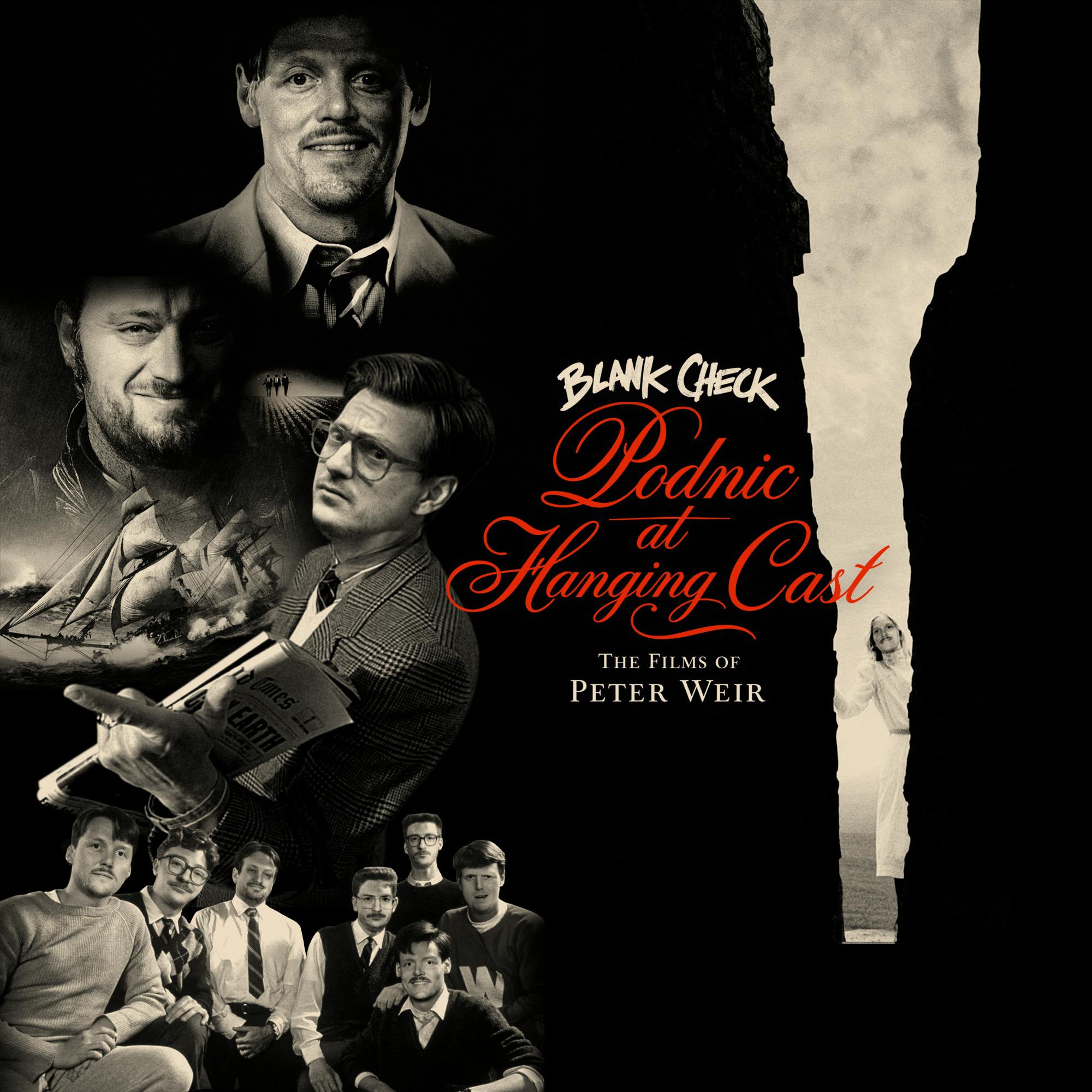
Loading summary
Transcript2,084 lines
- [00:01]
A
Blank Jack with Griffin and David. Blank Jack with Griffin and David. Don't know what to say or to expect. All you need to know is that the name of the show is blackjack. On St. Valentine's Day in 1900, a party of schoolgirls set out to podcast at Hanging Rock. Some were never to return.
- [00:30]
B
That's the tagline.
- [00:31]
A
That's the tagline. Apart from podcasts, this original poster, I
- [00:35]
B
think, is quite sick.
- [00:36]
A
Beautiful.
- [00:37]
B
It's so good.
- [00:38]
A
But it is funny how much that tagline.
- [00:39]
B
How do you not want to see
- [00:40]
A
that movie as so much more of a horror film? Well, of course, yes.
- [00:45]
B
But the p. I love the pink border.
- [00:48]
A
It's really.
- [00:48]
B
I just think it's so good.
- [00:50]
A
It actually sells the aesthetics of the movie pretty well. Yeah, it visually represents.
- [00:56]
C
I did Google or I think I clicked through on Wikipedia. St. Valentine's Day. I was like, what is St. Valentine's Day?
- [01:02]
A
Is it different?
- [01:03]
C
No, it's just Valentine's Day
- [01:07]
B
honors the Roman saint, Saint Valentine. Guys, you guys, you know, we got to give it up for her.
- [01:11]
A
Shut out. I, I. Excuse me. I celebrate an agnostic Valentine's Day. The only God I respect on Valentine's Day is the Lord of Hallmark.
- [01:21]
B
Okay, well, do you know who, what Saint Valentine is the patron saint of.
- [01:26]
C
No.
- [01:27]
A
What?
- [01:27]
B
Logistics.
- [01:29]
A
Excuse me.
- [01:30]
B
Epilepsy and beekeeping.
- [01:32]
A
May I ask how the fuck this guy got the romance holiday?
- [01:36]
B
I don't know.
- [01:36]
A
This guy sounds like a boar.
- [01:38]
B
He died in the year 273. I don't think he really knew this was all going to happen.
- [01:43]
A
Offense to our epileptic listeners.
- [01:45]
B
No, I just don't know why that.
- [01:47]
A
Isn't there, like, a more romantic saint? Isn't there, like a Saint Pepe Le Pew or something? A character who has never done anything wrong? Pepe Le Pew. Can I defend him? 2026.
- [01:57]
B
Sure.
- [01:58]
C
Yeah. No, he's back.
- [01:59]
A
He's back.
- [01:59]
B
He's Pepe back. Pepe's back because. Because Woke died. So Pepe returned.
- [02:04]
A
He's got a podcast on the Gas Network. He's headlining Skank Fest.
- [02:09]
B
Here's my. Here's my thing about.
- [02:10]
A
Also, Pepe the Frog is back.
- [02:12]
B
I never liked Pepe Le Pew when I was a kid because I always found those. Those cartoons boring.
- [02:18]
A
Yeah, they're always the same.
- [02:21]
C
There's another one of these.
- [02:22]
B
Yeah. And it's like, okay, he's gonna try and kiss the, you know, street lamp or whatever it is that he's obsessed with this time, Right?
- [02:27]
A
Well, no, no. Excuse me. Excuse me. He's trying to kiss a cat.
- [02:31]
B
It's always the same cat who he
- [02:33]
A
thinks is a skunk.
- [02:34]
B
Right. And then she kind of got away with something.
- [02:37]
A
A street lamp. And then he's too dumb to recognize that he's kissing a street lamp. Now that we're breaking it down, it's kind of very funny.
- [02:44]
C
Yeah. No, that's good.
- [02:45]
A
It's actually really good.
- [02:46]
C
And I. Yeah. You remember the paint on the tail?
- [02:51]
A
The paint was the good bit.
- [02:52]
C
Yeah.
- [02:53]
A
I do think there was perhaps a conceptual flaw in the format where, like, Roadrunner and Wile E. Coyote, they had something to do.
- [03:03]
C
You could. You could do some variations on a theme.
- [03:05]
A
Jane. The exact word I was going to use. Even if the structure was the same every time, the variation of the traps and the devices was huge. Pepe Le Pew. It's always the same cat.
- [03:14]
C
Yeah.
- [03:15]
A
Just got, like, three moves. And the more they bring them back, the more you just feel terrible for her.
- [03:21]
C
Totally.
- [03:22]
A
This hell she's living in.
- [03:24]
B
Sure. Well, then, fuck it. Pepe is canceled.
- [03:27]
A
We're gonna cancel.
- [03:27]
C
Pepe the Ice King is a post Pepe Le Pew cartoon character.
- [03:32]
D
You're saying?
- [03:33]
A
Adventure Time. Adventure Time. I like this take because he's, like, in Cel. Pepe.
- [03:38]
C
Yeah, yeah, yeah, yeah. It's the same thing. He's. He's just kidnapping princesses. Yeah.
- [03:43]
B
But he's. He's got the sort of. I know we learn his backstory later, but current Ice King has the kind of. The deep insecurity. Right. He's always shaking. Right. I loved Adventure Time. I admit I have not thought about it in quite a long time.
- [03:56]
A
That might be an interesting one to throw at your daughter.
- [03:59]
B
She. She has tried it and she digs it, but it obviously disturbs her because Adventure Time's like, you know, at a
- [04:06]
C
certain point, it becomes. For adults to be right.
- [04:09]
B
Exactly. And my wife actually forbade me from showing it to her.
- [04:13]
A
Really?
- [04:14]
B
Because she was like, this is too disturbing right now. And my daughter was pretty interested in it. But I think we'll wait a year
- [04:20]
A
or two into watching the Wire right now. Right, you guys, Trolls World Tour is the one.
- [04:25]
C
What does she think about season two of the Wire? Yeah.
- [04:28]
B
She's like, why do I have to care about the sabakas? And then later, she's like, you know what? Season two might be the best one. The journey everyone goes on with the Wire.
- [04:37]
A
Did you go through, I Guess World Tours 2? Did you do the first Trolls?
- [04:41]
B
She watched the first Trolls once. She loves Trolls World. Something I really struggled To Trolls World War.
- [04:47]
A
Trolls World War.
- [04:49]
B
Because she loves the hard rock trolls. She loves the villainous, you know, heavy metal trolls.
- [04:55]
A
Rachel Bloom.
- [04:55]
B
Rachel Bloom and Ozzy Osbourne.
- [04:57]
A
RIP.
- [04:59]
C
The Minions are from a different. They're not.
- [05:01]
B
They are.
- [05:01]
C
They are not in that one.
- [05:02]
B
So what Troll. Trolls is about a bunch of trolls who sing. And then Trolls World Tour reveals that there are genres of trolls based on the kind of music that they sing. And the trolls we know are the pop trolls, but there's also classical trolls, country trolls, heavy metal trolls, techno trolls, funk trolls.
- [05:21]
C
Was this post or pre Barbie?
- [05:23]
B
It's pre. Pre Barbie.
- [05:25]
A
Yes.
- [05:25]
B
And the heavy metal trolls are trying to take over and turn all music into heavy metal.
- [05:30]
C
Oh, that's fun.
- [05:30]
B
Which is Trolls.
- [05:33]
C
What about. I feel like this is also like spider verse.
- [05:37]
B
It's got a little of that post
- [05:38]
A
spider verse, but just post. The big legacy of Trolls World Tour already semi forgotten was. It was the canary in the coal mine.
- [05:46]
B
It was the first straight to streaming.
- [05:48]
C
That's right.
- [05:49]
A
It was supposed to come out end of March. And it was the first movie, like 10 days into lockdown that studios announced. This will be a $30 rental on Apple tomorrow.
- [06:00]
C
They probably made a ton of money.
- [06:02]
B
I think they made a ton of money.
- [06:03]
A
Amount of money.
- [06:04]
B
And now my daughter watches it on Peacock about twice a day.
- [06:07]
A
Wow. It sounds like you're living through a really fun time.
- [06:12]
C
It's a little unfortunate for some people. The pandemic never ended.
- [06:16]
A
Yes. You're stuck in pandemic hell.
- [06:19]
B
It's okay. It's okay. I don't mind Trolls World Tour. Although I do mind saying it.
- [06:24]
A
Yeah, it's terrible.
- [06:26]
B
Welcome to Blank Check with Griffin. David. So fuck are you.
- [06:30]
A
What is this?
- [06:30]
B
I'm one of the hosts.
- [06:31]
C
You don't say that.
- [06:32]
B
Well, you say it then.
- [06:34]
A
Can you say please?
- [06:35]
B
Yes, please.
- [06:37]
A
This is Blank Check, a podcast about filmographies, directors who have massive success early on in their careers and are given a series of blank checks to make whatever crazy passion projects they want. And sometimes those checks cleared. Sometimes they bounce, baby. One time we covered the first Trolls movie on Patreon. This is a miniseries on the films of Peter Weir at David's insistence. It is called Podnik at Hanging Cast. That's right, because David. David thought podnik was a really funny word.
- [07:04]
B
I thought that was funny.
- [07:06]
A
I thought Podnik, Podster and Castmander. The pod side of the castle.
- [07:11]
B
Too much.
- [07:12]
A
That's a supreme slice of pizza. That's all the toppings.
- [07:14]
B
Yeah.
- [07:15]
C
Dead Podcast society. Simple.
- [07:17]
B
Very that's very melancholy. That makes you want to sit by the fire or stand on a desk.
- [07:22]
A
Yes. A Noble Tear.
- [07:24]
B
Was that a big movie for you, though? You've mentioned it twice already.
- [07:27]
C
No, no, not at all, actually. Yeah, I've seen it once and I've seen it years ago. I just. Like, Peter Weir is. Is such an interesting weird. He's a weird, weird one.
- [07:38]
B
He's a weird one.
- [07:38]
C
And. And I have to admit, kind of
- [07:40]
B
works in every genre.
- [07:41]
C
Kind of.
- [07:42]
B
Couldn't.
- [07:42]
C
This is me being, I guess, reverse racist.
- [07:46]
A
I can't wait to hear this.
- [07:47]
B
So thrilled for.
- [07:48]
A
Cannot wait to hear this.
- [07:51]
C
I always get his filmography confused with Nicholas Rogue's filmography.
- [07:55]
B
Well, that's interesting. That. And I don't think that's reverse racist. It is kind of.
- [08:02]
A
What?
- [08:02]
B
Like, what. What is the commonality between those two guys? They're just. They feel like guys who wear cravats but are freaks.
- [08:08]
C
There's something like aboriginal going on.
- [08:10]
B
Sure, sure.
- [08:11]
C
Or like. I think it's Walkabout is maybe the.
- [08:15]
B
You're thinking of Walkabout.
- [08:16]
A
That makes a lot of sense.
- [08:17]
C
Walkabout. And I'm thinking about, like, the. Like. Like there. There's this thing, especially in the. Because then I looked up the Peter We Filmography and I was like, oh, I can't talk about. What's the one with Albert Einstein and Marilyn Monroe perform. No.
- [08:31]
B
Performance is one.
- [08:33]
A
Eureka. Eureka.
- [08:34]
C
No, no, no.
- [08:36]
A
It's not conversation. It's called. These are all movies, though. They are.
- [08:42]
B
I'm gonna find it.
- [08:42]
C
That movie rocks. Yes, but that.
- [08:46]
A
That's one of the more quietly insane movies ever made.
- [08:49]
B
I think insignificant is the film.
- [08:51]
C
Wonderful name, too.
- [08:53]
B
And it was easy to remember, of course. Teresa Russell, I think, as Marilyn Monroe.
- [08:58]
A
Correct.
- [08:59]
B
Gary Busey. As, I think, Joe DiMaggio.
- [09:01]
A
That's right.
- [09:02]
C
Yeah. Where have you gone? Gary Busey.
- [09:06]
B
Wait, who played DiMaggio in Blonde.
- [09:09]
A
In Blonde was also Gary Busey.
- [09:11]
B
They brought him back.
- [09:12]
A
Wasn't it Adrien Brody? No. Was it?
- [09:15]
B
Oh, boy.
- [09:16]
A
I remember thinking they got DiMaggio wrong.
- [09:21]
B
Kind of.
- [09:21]
C
In Blonde, Gary Busey was Albert Einstein.
- [09:24]
B
In Blonde, Gary Busey did come back. Is Gary Busey alive or did he recently leave us?
- [09:29]
A
He's alive. He's alive. But let's just say this episode's a month away.
- [09:33]
B
Yeah, right, right.
- [09:34]
C
As Peter Weir.
- [09:35]
B
Peter Weir is alive, retired. And I truly think, like, gardening and chilling.
- [09:39]
C
Yeah, yeah.
- [09:40]
B
He seems to be taking it easy.
- [09:41]
A
Yeah.
- [09:42]
C
What was I going to say? So I think. I think the. Because there's this thing especially in like the Australian Peter Weir movies, at least the ones that I've seen where there's like, there's like something grotesque or there's some kind of like, like, like the, the guy from the. The. What's the plumber one? The guy. The plumber. The plum. The titular plumber. I feel like I like, I relate that to the. Like there's a lot of that kind of guy in. In the. Nicholas Rogue.
- [10:10]
A
Rogue is like, I think a classic dang ass freak through and through. Whereas Peter Weir, for a guy who left it behind.
- [10:18]
C
He left it behind.
- [10:19]
A
That's. Think there's a baseline darkness to his.
- [10:23]
C
Yeah, I think so.
- [10:23]
A
I think part of what was good was he was able to jump over to Hollywood and work with big stars. But what they appreciated was that he brought a surprising amount of edge and depth and darkness.
- [10:34]
C
And in this way there's a little bit of like Milos.
- [10:37]
A
Yes. And another guy like that there is. He does have a kind of bifurcated the Australian half in the Hollywood half of his career. This is absolutely his guarantor in the terms that we usually apply on this podcast.
- [10:48]
C
This film.
- [10:49]
A
This film, his. His second feature film, which is basically canonically accepted in Australian culture as the great Australian movie.
- [10:58]
B
I think it was named the number one Australian movie in some survey. That's true.
- [11:02]
C
Yeah.
- [11:03]
B
I can. I can.
- [11:04]
C
More than a Mad Max or a Heavenly.
- [11:07]
B
I guess the question is right now we're. Now we get into the question of what. What's the competition?
- [11:11]
A
I think it's a little bit because this is seen as the supreme artistic achievement.
- [11:16]
C
Yeah.
- [11:16]
A
And Ben and I were watching some of the special features producer Ben and I on the Second Sight box set and they. Weir was talking about that in the sort of reconstructed Australian new wave in cinema, they had like comedy breakthroughs. Mad Max, of course, is semi inspired by the Cars that Ate Paris and Comes After Weir, but kind of concurrent in this time. But they were like succeeding in genre. They were succeeding in character based comedy. And there was this feeling in the industry of can we identify our Ingmar Bergman? Can we have our like elevated auteur who we can point to the other countries and go, we got a guy. And this movie was sort of received as I think we finally have.
- [12:00]
C
We found that. We found our guy. Yeah.
- [12:01]
A
And then, you know, Noyce and other people come out kind of like simultaneous with him. But I think this is culturally seen as such an important breakthrough of kind of serious legitimacy.
- [12:14]
B
I mean, who, who are the. I mean, George Miller, obviously We mentioned him. Who are the other big guys? Baz.
- [12:22]
C
Baz is Alex Prius. Australian.
- [12:24]
A
He is, yeah. He comes later.
- [12:26]
C
He's a little later.
- [12:27]
A
Yeah. Let's see who's identified as part of the Australian New wave.
- [12:32]
C
I feel like Wake and Fright has been maybe reclaimed as a significant one.
- [12:36]
A
But he's interesting because that's Ted Kochev. He jumps over to America very quickly and then does, like, First Blood.
- [12:44]
B
Yeah.
- [12:45]
A
There's like, Weekend at Bernie, short Dallas 40.
- [12:47]
B
Weekend fright is really cool, though. That's like. But like, that's. There are those Australian movies that would pass over that would basically be like, you know, Australia is basically just like a burning wasteland filled with, like, people with sticks who will hit you. Yeah. People are like, I guess it is. Right. You know, like. And then Paul Hogan comes over and he's like, no, we're just a bunch of mates who love to have a big beer, you know, like, there was that.
- [13:10]
A
Gillian. Yes. Is part of that same wave, but I think a lot.
- [13:14]
C
The Leftover season three.
- [13:15]
A
Yes. I do think Peter Weir kind of stands out as the guy who made the translation over to the studio system the best, as I was saying. Right. Philip Noyce becomes first and foremost. Kind of like Hired Hand elevated adult thriller guy.
- [13:35]
B
Thriller guy.
- [13:36]
A
Right. Damon Lindelof has cited this film, Hanging Rock.
- [13:43]
C
That's right. I read that actually season two of the Leftovers.
- [13:46]
A
Yes.
- [13:46]
C
The best season.
- [13:47]
A
And that's the other thing about this movie is like the cultural tale of its influence on other major works is humongous.
- [13:54]
B
Sure.
- [13:54]
A
This feels like such a turning point movie of helping to define.
- [13:58]
C
It's a fascinating. It was. I watched this movie for the first time. Hi, I'm Jane, by the way.
- [14:05]
B
Yeah. I was about to say Griff, who's our guest?
- [14:07]
A
Our guest today is Jane Schomburn, returning to the show for the second time. Director of I Saw the TV Glow and we're going to the World's Fair. We're all going to the World's Fair. The title of your next film is
- [14:18]
C
It's Teenage Sex and Death at Camp Miasma.
- [14:21]
A
I was going to get like 60% of that. Right. But I didn't want to make it.
- [14:25]
C
Somebody said Teenage Death Camp.
- [14:27]
A
This is why I didn't want to take.
- [14:29]
B
That sounds touchy.
- [14:30]
C
Yeah.
- [14:31]
B
That sounds like we could be going in the wrong direction.
- [14:34]
A
Yes.
- [14:35]
B
I definitely would have just said, like, Camp Miasma. I would have not been sure.
- [14:39]
C
Can't Miasma for short. There was a moment early in. In, like, production or prep when Some emails were being sent and they. They were just being sent with the shorthand. Teenage sex.
- [14:48]
B
Right.
- [14:49]
C
And I said, you know what? Go into camp Miasma.
- [14:51]
A
Yeah. Have you figured out what the acronym is? Is there a catchy kind of.
- [14:58]
C
Yeah, yeah. No, it's great. It's even better than ist.
- [15:05]
A
You have some good. Yeah, yeah.
- [15:07]
B
But then your TV go. You could just call tv.
- [15:09]
A
Yeah.
- [15:09]
C
No.
- [15:09]
A
Or you could call it.
- [15:11]
C
It's miasma. We. You know, we've been saying miasma.
- [15:14]
B
You do love a long title.
- [15:15]
C
I. I have been accused of this. And, you know, you have things to
- [15:19]
A
say and you're going to start saying them.
- [15:20]
B
You should call your next.
- [15:21]
C
Where does it come from? I think it comes from, like, God speed you black,
- [15:27]
B
Lift your skinny fingers to heaven.
- [15:29]
A
Yeah.
- [15:30]
B
Or whatever that song was called. Or album. Remember Death from Above, 1979.
- [15:36]
C
Sure.
- [15:36]
B
Remember them?
- [15:37]
D
They were great.
- [15:38]
B
Yeah.
- [15:38]
A
But, Jane, thank you for coming here. Thank you for doing this episode. I. I'm stoked we were trying to find the right person for this one because it feels like such a big one. And I forget what it was I stumbled upon first. But you citing this as kind of like an important.
- [15:53]
C
Yeah.
- [15:54]
A
Synthesizing of kind of dream language in cinema in a modern way.
- [15:59]
C
What I was gonna say is I. I feel like I had this period in my 20s where, like, I took my, like, kind of like, random film video, like, video store, teenage year, film nerd, dumb. And I was like, okay, I gotta, like, if. If I'm gonna go toe to toe with, like, the boys at Metrograph, I gotta, you know, I got. I gotta watch them all.
- [16:19]
A
You gotta level up.
- [16:20]
C
I got a. They shoot pictures, don't they? Top 1,000, and just, like, work my way down. And. And this was very early in that for me. Like, I watched this one, like, pretty early on in, like, learning film history in the canon. And this was like, an early one where I was like, well, there are films like this from the 70s.
- [16:39]
B
What's interesting about it, because I also, like, first watched it probably in college or whatever. Is like. It's so hooky.
- [16:44]
C
Yeah.
- [16:44]
B
Like, premise.
- [16:45]
C
Yeah.
- [16:45]
A
That you.
- [16:46]
B
You do. Like, there's no barrier to entry with this movie because you're like, oh, fuck.
- [16:50]
A
What?
- [16:50]
B
It's a mystery. And then you watch it and you're left with a completely different set of feelings than what you might have imagined of. Like, it's definitely not about, like, you know, trying to figure out where the girls went in a meaningful way. Like, it's not a practical film.
- [17:04]
A
We'll Dig into this further. But the great anecdote that Peter Weir tells about showing the film to an American distributor for the first time after it had, like, broken out in Australia and it was buzzy title. And the movie ends and the guy throws a cup of coffee at the screen, right. And goes. There's no answer.
- [17:21]
B
Yeah, yeah, yeah.
- [17:23]
A
But that's the whole reason he wanted to make the movie. The. The dream film syllabus that you wrote.
- [17:29]
C
Yeah.
- [17:29]
A
Yes.
- [17:30]
B
So what was this for? Was this for TV Glow? Or was this was before.
- [17:34]
C
I mean, maybe even. Yeah, this was definitely before TV Glow. A friend who had a site, I think, called Syllabus.
- [17:41]
A
The Syllabus Project.
- [17:43]
C
Yeah, that's right. I was asked to write a syllabus of my choosing and I was like, okay, I'm going to write a short syllabus of movies that I think. I think I called it, like the Oneiric. You know, like film. Film language.
- [17:54]
A
Yes.
- [17:55]
C
And, yeah, I would update it if I was. If I was writing it now.
- [17:58]
A
But, I mean, I had seen this when I was scanning for potential. Guess I hadn't looked at it in some.
- [18:05]
C
I'm glad you did.
- [18:06]
A
And looking at this list again now, these were the things I was thinking about. Many of the titles I was thinking about while watching this. Trying to understand or kind of place where the movie comes from. No, because. No, that's the point you were making, which I think is correct. Which is like, there was a kind of dream logic that existed primarily in the silent cinema when it was harder to tell more conventional narratives because you didn't have dialogue. And things tended to be more visually expressionistic and dreamlike. And then there was a sort of formalizing and a normalizing of stories that. It does feel like Picnic at Hanging Rock started to break again. And to like. Because you put in here, like, Trip to the moon, Cabinet of Dr. Calgari and Chand Andalou, Meshes of the Afternoon. Like, there is something very indebted to that era for sure. And I think, like, the Jean Vigo movies, which have. Sound obviously the least movies ever made. But that's like, people watch those now and they're like, when the fuck was this made? Why? This feels so modern. And things start to get more narrow
- [19:08]
C
after that golden age of, like, Cocteau and all those guys, too.
- [19:12]
A
Yes.
- [19:13]
C
But I have honestly agree that looking at this movie now, like, I was thinking a lot about Antonioni, Right. Like, this is like Laventura.
- [19:21]
B
It's Laventura, but more people vanish.
- [19:23]
C
It's like Laventura meets the Wicker man.
- [19:26]
B
Which like.
- [19:27]
C
Yeah, totally. No, totally.
- [19:29]
A
Yes.
- [19:29]
B
But like plus Australian accents, which just like Laventura will always have black and white and Italian in its back pocket. Where you're like, this is classy. Whereas Australians, you're always like, this is earthier. Because like the way people talk in Australia is just feels different.
- [19:44]
A
I think that's part of the fascinating juxtaposition of this movie where you're like, oh, it's like dainty upper class Australian period film.
- [19:53]
C
Yeah.
- [19:54]
A
At a time where everything else that coming out of the Australian new wave was like earthy first and foremost. Like dirty, ragged. There's an oddness to like from a distance. Is this a Merchant Ivory movie? And you're like, no. There's that like Australian chaos to it.
- [20:14]
C
Yeah.
- [20:14]
A
And like there's obviously the line from this to all of Sofia Coppola's work is so direct and so short. Straight to just like Virgin Suicides being her first movie. Oh.
- [20:25]
C
Sure.
- [20:25]
A
Feels so. Not iterative of this, but influenced by this. And she has cited it as being like a big turning point movie for her. But I also think Malik is like on the same spectrum as this and obviously is just a couple years away.
- [20:41]
C
I thought of Memoria.
- [20:43]
A
Watch this movie. Yeah.
- [20:45]
B
That's maybe the other best movie ever made.
- [20:47]
C
Yeah.
- [20:47]
B
Am I crazy?
- [20:48]
C
I love Memoria.
- [20:49]
B
That movie is the best movie ever
- [20:51]
C
made certainly of the decade.
- [20:52]
B
I should have put it so far sight and soundless. Like, what was I doing?
- [20:55]
A
I've shared my up with that movie. Right?
- [20:58]
B
What?
- [20:58]
A
I went to mute? No, even worse, I went to see it with an ex girlfriend at the Alamo Drafthouse. That is the worst movie to see as a dine in experience.
- [21:10]
B
God bless. Yeah.
- [21:11]
A
God forbid. An emotionally charged. Are we getting back together?
- [21:14]
B
Crunching.
- [21:15]
A
Is this the end of mozzarella sticks? Yeah, it was like a reconnection point that ended with me. Bad night.
- [21:21]
B
That movie made me want to just run into the street. I was so happy about the ending. I was. Yeah.
- [21:26]
A
I instead I was just like very self conscious about when I took bites of my chicken tenders.
- [21:30]
C
But this is a weird one. Like this like feels like sci fi. Right. Like picnic and hanging around.
- [21:35]
B
Absolutely.
- [21:35]
C
At moments it is really flirting with that.
- [21:38]
A
It was one of the Coen brothers movies where you said this, David. And I've thought about it a lot where it's like, great point by me. Well, wait until you hear what it is. The point was I'm big and smart. No, the point was you said Something like this movie just feels like it has the answers.
- [21:56]
B
What movie was I referring to?
- [21:57]
A
I'm trying to remember. It might have been Lebowski.
- [21:58]
B
Sure.
- [21:59]
A
But these movies that somehow feel like, is there more going on? Is it, like, retaining secrets? It's not sharing with me. And beyond the fact that this movie is, like, pointedly unsolved.
- [22:10]
B
Right.
- [22:11]
A
I think there's something to watching this where you're like, is this religious? Is this supernatural? Is it existential? Is it all of that?
- [22:19]
C
Is it, like, gen. There's something of, like. Like the 60s and the 70s. You know, there's something of, like, that generational moment that it's coming at the end of.
- [22:28]
A
But there's something really magical to a movie like this where you're like. You watch it, and you get the feeling of confidence that it knows what it's about, but it's just not telling you. Versus sometimes, I think when people try to affect the style of a movie like this from the outside in, and you're like. You're just being vague.
- [22:48]
C
There's the lynch quote where he says, I wanted it to feel like the answer was, like, in the next room over.
- [22:54]
A
Yeah. Perfect way of saying it. Yeah.
- [22:57]
B
Isn't it crazy, though, to watch the Gianvigo movies, all, like, one and a half of them?
- [23:03]
A
Yeah.
- [23:03]
B
And just be like, this was the best it ever got. Like. And not in, like, a pessimistic way, just in a kind of like, oh, yeah, this is right. It was all there pretty early, and we've never beaten it. That's how I feel about them.
- [23:15]
A
I dropped out of film school very quickly, but my favorite teacher in my very short period of time was a guy named gary mares at CalArts who, before screening us lots a lot, said if. What was his phrasing? It was something. I'll paraphrase this, but it was something to the effect of if 1% of movies were 1% of as good as LA to land every year, we would be living in a perpetual golden age of cinema. Jesus Christ.
- [23:44]
C
I think that. I think it's like. Like, who is like. And I do feel that relationship between Laventura and this film where like. Like Lavin. It's like. It's how I feel about the Blair Witch Project also, which is like, you did. You weren't like, let's make a found footage movie. You were. You were like, let's make a movie. And here's like. Like. Like you invented the language.
- [24:07]
B
And so without even totally meaning.
- [24:09]
C
That's how I feel about, like, Elliot Smith songs versus, like. Like. Like a litany of, like, other singer songwriters who are sort of, like, occupying a genre. You know, there's like something like. Like, it. It was inside him and then everyone else copied it or something totally. And.
- [24:25]
A
And yeah.
- [24:26]
C
Laventura to Picnic at Hanging Rock. Cause I feel like I don't watch this movie and. And maybe it's just that I know we're not gonna get the mystery solved, but Laventura is, like, the essence of that. Like, what if the third act didn't come?
- [24:38]
B
Right. Yes, right. Right. What if it's like. And that's that and I leave you with your thoughts, like, not with an answer or a explanation.
- [24:47]
C
Whereas this almost feels like it's like playing in that genre. Like, that genre existed for this so that this could swim and run and make it a little sci fi.
- [24:55]
A
Well, and also that sci fi feels
- [24:56]
B
like a simulation sometimes.
- [24:59]
A
Something to the fact that it is so seismic stylistically and in terms of what it contributes to the modern film language. And yet, unlike what you're talking about, someone like Malik or Antonioni or Sofia Coppola or Elliot Smith or whoever, where you're like, this is the only way they would know how to make something. They're not looking to break the form. This is just the purest expression of the way they view the world and their emotional landscape and all of that. You get into the making of this movie, and Peter Weir, like, just breaks it down logically. This is not a style that's really shared by any of his other films. He gets there incrementally in terms of problem solving. The best way to adapt this novel and, like, serve the material and also make something that is sellable and ends
- [25:47]
C
up sort of like, stumbling into this.
- [25:50]
A
Right. It's like the guy who, like, creates silly Putty while trying to remove wallpaper, glue or whatever.
- [25:55]
C
Yeah.
- [25:57]
B
Blair Witch Project is actually. Is a great comparison to this movie also, because it is another movie that you watch where you're like, this isn't real. Right? Because, like, my wife was like, is this based on a true story? And I'm like, no. Like, people didn't vanish, like, in. In like, a mystical way. But you watch it and you're like, this is a real thing that happened in Australian history.
- [26:18]
A
It. It feels weirdly real. And there also was the cultural reputation that preceded this movie of the book being framed almost as, like, a mini Fargo. Is this real or.
- [26:28]
B
Right. Like, what inspired this?
- [26:29]
A
Right.
- [26:30]
B
God, Blair Witch is the best. How do we. I guess we would do the series on Patreon.
- [26:34]
A
Yeah, that's what we've talked about.
- [26:35]
B
It's a weird movie to talk over, but yeah. Anyway, I could watch. All right, we're not doing Blair Witch. I still maintain the scariest stuff in Blair Witches at the beginning.
- [26:48]
C
I don't.
- [26:48]
B
Or maybe that's crazy, but I do. I love that movie.
- [26:52]
C
It's incredible.
- [27:03]
A
David. Yes? Watch this. Watch this.
- [27:09]
B
Can you tell me what's going on?
- [27:10]
A
I'm trying to hit home, but it's a foolish effort because nothing hits home like home cooking.
- [27:18]
B
That's true. Oh, boy. Well, it's really tough, man. Wait, Griffin, what are you doing?
- [27:23]
A
I'm trying to hit home, but nothing hits as hard as home cooking.
- [27:27]
B
I just need a way to beat the winter blues, not get delivery. Something kind of unsatisfying. It's much easier if I could choose from maybe 100 recipes every week. Cuisines from around the world.
- [27:39]
A
Let's see, I have 99 right here on my desk. But that's not 100. And we might have to outsource this job to someone else. How about our friends at Hellofresh?
- [27:47]
B
Yes, Hellofresh is a place that makes it easy to do more home cooking every year. With recipes that feel good and taste delicious night after night. They got more than 35 high protein recipes each week. Mediterranean options, GLP1 friendly options. They've got sustainably sourced seafood. They've got 100% antibiotic and hormone free chicken. They got three times the seafood for no upcharge.
- [28:13]
A
Upcharge is gone.
- [28:14]
B
They're beefing up the seafood. They've got grass fed steak ribeyes. They've got seasonal produce, pears, apples, asparagus.
- [28:23]
A
I love to entertain, of course, at my palatial estate.
- [28:26]
B
Yeah, of course. I've been there.
- [28:27]
A
So my manner. I love nothing more than when I can impress guests by whipping out a great recipe that I have cooked all by myself for the dinner parties that I throw nightly. And hellofresh is great for that, but also great. Just if you want to treat yourself. Ben, any. Any recipes you've been jamming on hard recently?
- [28:46]
B
Oh, yeah.
- [28:47]
D
Actually, I was just checking out old school barbecue pork Sloppy Joe's. That's a super high protein item.
- [28:54]
A
Slop it up.
- [28:55]
D
Yep. And we mentioned seafood. There is, of course, prep and bake Tex Mex salmon tacos.
- [29:03]
A
That is exciting because I'm on a bit of a seafood diet right now, if you catch my meaning.
- [29:08]
B
Seafood.
- [29:08]
A
You eat it. No, I'm eating mostly, of course, creatures from the sea.
- [29:12]
B
So go to hellofresh.com check10fm to get 10 free meals and a freeze willing knife that's 144.$99 value $144.99 on your third box offer valid while supplies last. Free meals applied as discount on first box. New subscribers only. Varies by plan that is hellofresh.com check10fm10fm. I'm going to open the dossier About Picnic and Hanging Rock Lady Joan Lindsay wrote this book. She was a painter. She studied art at the National Gallery of Victoria Art School in Melbourne. She wrote unpublished plays and then she wrote a debut novel under a pseudonym and didn't and this is all in the 20s and 30s and didn't become successful until she was in her 60s and 70s. She wrote a book called Time Without Clocks. Sounds cool. Fact Soft and Hard I assume nobody
- [30:21]
D
has read these books.
- [30:22]
B
Say that last title, Facts soft and hard CTs.
- [30:28]
A
It sounded like you were saying Fats. Like Fats Domino.
- [30:30]
B
Like Fats Dominoes.
- [30:32]
A
Dominoes.
- [30:33]
B
No, I don't know what those books are about, but those were Those came before 1967's picnic at Hanging Rock. She was labeled a bit of a mystic by her friends. Sort of said that she could see things others couldn't, knew things without being told, could tell what had happened in the past. I mean, what apparently this is what her friend said about her. Time without clocks refers to the fact that she could sort of stop clocks and watches in her presence. I mean, cool and. I mean, she sounds cool.
- [31:07]
A
Yeah.
- [31:07]
C
Get her on the podcast.
- [31:09]
B
I think she she might be very dead, but maybe we can come, you know, summon her from another side.
- [31:13]
A
Anyone we can summon, it's her. And also sounds like it. She probably likes League of Their Own.
- [31:17]
B
Now, Hanging Rock is a real place. She'd had a weird dream about a picnic there. She knew this place well from her childhood holidays. And she wakes up from this dream and she can feel the breeze blowing through the trees and hear the laughter. And like she starts writing and wrote this in 10 days? Supposedly, yes. The novel as though possessed. Correct.
- [31:40]
A
Now the novel opens with whether Picnic at Hanging Rock is fact or fiction. My readers must decide for themselves, as the fateful picnic took place in the year 1900 and all the characters who appear in this book are long since dead. It hardly seems important, and the book was warmly received. But much like the opening of Fargo, it like sparked a bunch of fucking conversation of is she trying to convince us this is real? Is this a con? Is this like a scandal that's been covered up, et cetera, et cetera.
- [32:11]
B
Now here is a painting called At Hanging Rock by William Ford that inspired
- [32:17]
C
her clearly as well.
- [32:20]
B
Exactly. And indeed, as you point out, she kind of does the Fargo thing of like, is it true or not? To her, true is different. That's how she puts it. And so Peter Weir had made Holmesdale. Right, Griff, which is like, is it a short film or is it a TV movie? It's like 50 minutes long.
- [32:44]
A
Yeah, he made a couple 50 minute. Guys. I haven't seen Holmesdale yet. I watched his section called Michael of an omnibus about young people in Australia. Okay, that's very good. But Holmesdale is seemingly the one that got him on the map.
- [32:59]
B
And it was the movie that attracted the attention of Pat Lovell, who is like an Australian sort of show busy person.
- [33:09]
A
She was like a TV person.
- [33:11]
B
Yeah. And she kind of takes the book to Peter. He was writing Cars, the de Paris. Right. So he hadn't, you know, even started work on that. And she leaves the book with him. He reads it late into the night, can't put it down. He loved that it was open ended. Like he's basically reading the book, being like, they better not solve this and then they don't. The quote I heard him say, not Sherlock Holmes.
- [33:33]
A
He always thought about Hitchcock saying that a mystery was the hardest kind of story to crack.
- [33:39]
B
Right.
- [33:39]
A
But in his experience as a viewer, he always felt disappointed when mysteries had to solve themselves.
- [33:43]
B
Well, because Sherlock Holmes, it is annoying when he's like, actually it was a robot, you know, and then sometimes it's awesome. Sometimes it's awesome. Yeah.
- [33:50]
A
Excuse me, David, if Sherlock Holmes said it was a robot, that would be awesome.
- [33:55]
B
The Hound of the Baskervilles was a big fucking robot.
- [33:57]
A
That would be cool. No, but it's very hard to make the ending that is more satisfying than the anticipation and the mystery, which I think what he was saying that often it feels like even if an ending is surprising or catchy, that it still isn't as exciting as the tension at the center.
- [34:15]
C
Kind of how I felt about weapons.
- [34:18]
A
Interesting. I mean, yes.
- [34:20]
C
I mean, you know, I was like, ooh, where these. I hope I don't find out where these kids went. Then they were like, it was a witch.
- [34:25]
B
It was a witch.
- [34:26]
C
It was a witch. And she did a specific thing. She did very stuff.
- [34:29]
A
She did some very specific things. She had a very particular set of skills. Tangling hair around a stick.
- [34:35]
C
Yep.
- [34:35]
B
Cutting water's involved a bowl of water. Yep.
- [34:39]
A
But yes, he read this. And was like, I fucking love that. This just doesn't have an ending, that it doesn't solve it. That's my perfect kind of mystery movie.
- [34:48]
B
He meets with her because he has to be approved by her to make the movie. They meet, and at a certain point he says, forgive me, but can I ask you. I'm not supposed to ask you this, but is it true she looks the novelist? You're saying he asks the novelist?
- [35:02]
C
Yes.
- [35:02]
A
Yeah, he was, in fact, specifically, he was told going into the meeting, the only thing we forbid you from doing is asking her if it's real.
- [35:10]
B
And she said, I really don't want to discuss that. Please don't ask again.
- [35:14]
C
Wow.
- [35:14]
A
But then she also said she still was into it.
- [35:17]
B
She was like, you can make the movie.
- [35:18]
A
I believe she said something to him to the effect of, it feels true to me in a way, and that his interpretation of it was, this is in some way in conversation with some experience she had that she would not share. Obviously, it is set in a time she didn't, you know, would not have lived through in that way. But it felt like in the same way that it came out of a dream, it was some processing of something that she had deeply repressed, which is why she was so non committal always. And it was sort of a warped interpretation.
- [35:50]
C
And then for us, watching the movie, like, watching someone else doing their best to, like, honor that experience that someone else had, that's interesting.
- [36:03]
A
Yes. And I. He also asked her, he said, you don't need to explain it to me, but can you tell me, is there a definitive answer in your mind? And she said, yes.
- [36:11]
C
Wow.
- [36:12]
B
Ooh, right. Said Portal.
- [36:14]
A
Well, he was like, do they want Dimension X? Are there aliens? Did something supernatural happened? Whatever? And she goes, I know what it is. Which is kind of what he needed to know, even if he didn't need to be told.
- [36:27]
B
Right. He needed that mood to exist in some way. He's recommended David Williamson, an Australian playwright, to write the book Doesn't Happen. But that guy does end up writing Gallipoli and Year of Living Dangerously. So they do work together. But he suggests a guy called Cliff Green, who wrote the screenplay, who said the whole thing was a magical experience. This is what I like about him. This is the quote I like that JJ highlighted. The first 20 minutes of the film were easy to write because it's straight line chronologically, but the moment when Edith comes screaming down the hill becomes a more complex story. So much of it is atmosphere and setting. It's really a book about the atmosphere of Australia. Love that. That's like, again, that this guy just reads the book and gets it. That, like, I am not, you know, being asked to make this more linear or make this more about something. In a way, a movie needs to be about something. You know what I mean? Like, it'd be so easy to read this book and be like, okay, but, you know, it can't just be about the atmosphere of Australia, whatever that fucking means, right? Like, that it's, you know, gotta be more about, like, no. And then a bunch of guys came with metal detectors and waved them around. Hanging Rock. And then a bunch of, you know, spiritualists came or whatever, you know, like, however, I mean, there was a TV miniseries version of this recently.
- [37:40]
C
I kind of wanted to watch it.
- [37:41]
B
What was that like? I mean, I don't know. Like, what does that do to the story?
- [37:44]
A
There's a musical that has been, like, it just finished a run here in New York. I was trying to get to it, but, like, it's been like 15 years of, like, redevelopment. This is a story that people keep coming back to. I just want to throw out a little bit and, like, just move back one step for one second. The bizarreness of this project coming together in the way that it did. Patricia Lovell, the person you mentioned who reached out to Weir after seeing his short film, was like, as a bad analog, like, the Kelly Ripa of Australia, like, someone who had started in radio and then was, like a children's TV presenter and then was, like a morning television person and, like, did not have a footing in film. Reads this book, decides I should option this, right? And I've seen the short film and I guess I haven't made a feature yet. And I'm going to reach out to where Peter Weir's like, when I got the call, it didn't even fucking make sense. What was being presented to me, why she was the person, why she would believe in me. And then when she brings him to meet with Joan Lindsay, he and Joan Lindsay hit it off immediately. And she was, by all accounts, a very kind of tough, guarded customer. And everyone's just like, this feels like the right combination of people. Even though it belies any sort of traditional thinking.
- [39:03]
B
They could barely scrape together a budget. Obviously, they're promising to make a movie with no resolution. It's not an easy sell. The book was at least famous in some way. They get 220,000 pounds is how he puts it, about 440,000 Australian dollars. You know, their money is laminated. Yeah, it's like plastic because they all go in the beach, they all go in the water. Australians are going to get so mad at me on this miniseries because everything I know about Australia is from uninformed opinions that British people had that I learned when I lived in Britain. And Bluey, I was going to say, I'm like, and Bluey presents a very utopian Australia.
- [39:37]
A
You think they're the best of us, right? And I have noticed anytime we talk about Australia on this podcast, your British upbringing comes into place where you're like,
- [39:45]
B
they're very, you know, they look down on me like.
- [39:48]
A
But you describe them like they're a bunch of loony tunes.
- [39:51]
B
That's how British people talk about
- [39:55]
A
jail cells.
- [39:56]
B
Like, British people are English people, I should say, because it' not British people. English people are basically like, Scottish people are like drunk mad men. Welsh people are like simpletons. Australians are just right, like raving criminals living in this like semi lawless landscape.
- [40:10]
A
You make sideswipe comments as if it's so Thunderdome is toned down from the everyday. And then you watch the modern Australia
- [40:20]
B
like, ah, what a fine place this is.
- [40:22]
A
Right? Have they solved emotional intelligence? Are they the ones, the McElroy brothers, my brother and Peter Weir Hallingen McElroy who produced this and also produced Cars that Ate Paris and later produced the Last Wave. They said they were having such a hard time getting Cars that Ate Paris off the ground. They knew how difficult it was for that movie not having a clean hook and a weird title and a murky plot, that one of the strategic decisions they make is we're already thinking about how to sell this movie that's not going to satisfy in a conventional mystery way. Let's make the girls who Disappear as like, ethereal and poetic and enticing as possible. Not just so we can put them at the center of the poster, but so that the tension of the movie comes from the rug pull of, oh, shit, they're gone.
- [41:23]
B
Right?
- [41:23]
A
That. The dreaminess. Right, Right.
- [41:27]
B
Really hook you into these girls, right?
- [41:29]
A
A psycho framing that they pitch to Weir and he's on board with. With like, how do we make the first 30 minutes so intoxicating? And even just the visual language of Pan Flu. These girls in their flowing white dresses, the front of the poster with these dreamy color scheme and then we're gonna freak you out.
- [41:45]
C
And I think that on rewatch, a thing that I kind of like vaguely remembered being left with. I think this movie maybe peaks in those first 30 minutes.
- [41:57]
A
For me, it is.
- [41:58]
B
There's nothing like it.
- [42:00]
A
That's the thing.
- [42:00]
B
I don't know if you can sustain that mood.
- [42:02]
C
Yeah, no, 100%.
- [42:03]
B
Right. So it's sort of unavoidable.
- [42:05]
A
Yeah.
- [42:05]
B
But you are a little bit like, take me back. You know, when it's right. Like, I just. It is a movie where I'm like, I'm not sure I care who's sleeping with each other or who's having a conversation right now. Mm, Not. But that's not true because I love the movie, you know, of course I do. You know what I mean?
- [42:20]
C
Like, I want to go. I love the movie also.
- [42:23]
B
Yes.
- [42:23]
C
And those first 30 minutes are like that. That's the thing that if you don't watch it for four years, you're like, yeah, you're full in on.
- [42:30]
B
It's also why her screaming is so upsetting. Even though, like, nothing, you know, violent happens and nothing, you know, nothing really at all happens. But it's like Grace Zabriskie screaming in Twin Peaks, which Jane, of course, has discussed on the show with us, where you're just like, jesus, why is she making that noise?
- [42:50]
C
I don't know.
- [42:51]
B
Like, it snaps you out of the reverie in a really disturbing way. What?
- [42:55]
A
Chris? No, I also forget which ones are which. And hopefully JJ has answered this. Which ones are which? No.
- [43:00]
B
Oh, okay.
- [43:01]
A
I see women as different people.
- [43:03]
C
No, I definitely differentiate. I could not in this movie. You know, there are some characters at the picnic. You know, you're like, oh, glasses girl. But.
- [43:11]
B
Right.
- [43:12]
A
Yes. No, what I was going to say.
- [43:14]
C
Where is Jack? Jackie. Jackie.
- [43:16]
A
Jackie Weaver is.
- [43:17]
C
Where is Jackie?
- [43:18]
A
She's not one of the girls. Oh, wow. She's. She's the maid. Getting a little something. Something on the side.
- [43:22]
C
Oh, sure, sure, sure. Yeah.
- [43:24]
A
But it is. She is one of those people where you, you know, Jackie Weaver in the present tense. Right. Reintroduced as like, you know, character price
- [43:35]
B
£10 million or whatever. Right.
- [43:38]
A
Kind of like one of the weirdest two time Oscar nominees. Oh, rules. But like, she's in this. She has a run of Australian work, then she kind of like disappears from Australian film for a long time.
- [43:49]
B
What's the second nom for? Obviously the over playbook. Right. She's like, I'll have you. Where's my money? Is she liking that one?
- [43:56]
A
Yeah, yeah, that's exactly what she said. Go Eagles.
- [43:59]
B
I'll have you. Eagles.
- [44:01]
A
Yeah. Water, Ice? What?
- [44:03]
B
Wood. Wood or ice?
- [44:04]
A
Wood or ice.
- [44:04]
B
Right. Yeah.
- [44:06]
A
John.
- [44:08]
B
What I was gonna say, pissing off Philadelphians too, now.
- [44:11]
A
Yes. I think Five Year Engagement is the movie she Makes right after getting the Animal Kingdom nomination.
- [44:18]
C
Yeah.
- [44:18]
A
That was her first Hollywood film ever, right?
- [44:21]
C
Yeah.
- [44:22]
A
And even before Animal Kingdom, she hadn't done a movie in like a decade. Had mostly been doing theater.
- [44:27]
B
Sure.
- [44:27]
A
Like, she's in the most iconic Australian film in a supporting part and then even still has this drips and drabs career. Doesn't even become like Australian character actor royalty until decades later. And. And you see her, you hear that she was in Picnic at Hanging Rock. And you just looking at her face present day are like, it's gonna be so hard to pick out who she is because there's no way she looked like this when she was.
- [44:51]
C
I think I even like, googled, like, totally what character that she plays and then was like, well, you're not Sarah, so.
- [44:58]
A
Right. Who. Who fucking knows?
- [45:00]
C
You're not Irma.
- [45:01]
B
Erma.
- [45:02]
A
Irma. Have you seen Fearless Jane, the Peter Weir movie with Jeff Bridges?
- [45:08]
C
No.
- [45:09]
A
It is another movie where I think the whole thing is very good. And the first 30 minutes feel transcendent.
- [45:17]
B
That's true. As similarly dreamlike. I mean, not similar to this, but just, you know, just in a fugy kind of scene.
- [45:23]
A
He's come to replicating this style and has a similar, like, well, that movie rocks. Reality needs to splash water in your face. This tone can't maintain forever. And it is one of these movies where you're like. It's not like the movie falls off a cliff after the first 30 minutes, but the first 30 minutes are just activating something that is like, yeah, it's thrilling. It's a miracle. It still feels otherworldly.
- [45:43]
B
It's funny that we're saying that right? The. Oh, no, he never really replicated this tone again. And then I'm like, no, you're right about Fearless. And then like, the Truman show is like that Truman show, especially before the
- [45:53]
A
show also has a similar kind of structure of like 40 minutes of like, what is this weird transmission from space?
- [45:59]
C
Yes. And the reason I was thinking about Dead Poets Society is because I. I imagine, like, the big difference is that, like, this doesn't have, like, characters like that movie has. Maybe.
- [46:10]
B
No, but also.
- [46:11]
C
But it. It certainly has this, like, boarding school,
- [46:17]
A
right? Yeah.
- [46:18]
B
You watch Dead Poet Society now and you're like, that's Ethan Hawke. That's Robert Sean Leonard. But, like, I don't know if you felt that way as much when that movie came out and there was a bunch of boys.
- [46:25]
A
Part of those guys becoming those guys was that movie takes its time to, like, sell you on each of Those guys individually versus the inverse of this, which is like, we need to sell you on a vibe and an energy of what these girls represent that is enjoyable for you to watch because we don't have time to build them individually as characters.
- [46:42]
C
Don't have time. Like, it feels like the movie is disinterested in, like, it's just kind of
- [46:47]
A
nasty all the way through.
- [46:50]
C
And like, even, like, those. Those men and, like, the school mistress. And then at the end of the movie when you just like, find out in quick succession that, like, the two main characters left, like, die.
- [47:01]
A
Yes. Very.
- [47:02]
C
It's like, it's. It's not logical. It's not like, emotionally logical or it's clear that it's like clearing space to do something else than story.
- [47:10]
B
Yes. So that when they're like. And everyone died, I'm like, yes. Right. I suppose you would never get over the 60s.
- [47:16]
A
Everything's unraveled. Right. Already at this point when you were saying, like, I don't really care about the conversations towards the end of who's sleeping with who when it gets into the this, you know me.
- [47:26]
B
I hate gossip.
- [47:26]
A
You hate gossip. This movie is in that, like, somewhat limited canon of decade plus later director's cuts that take footage out. Interesting.
- [47:38]
B
He trimmed it down about 10 minutes.
- [47:40]
A
It is hard to find the theatrical version now.
- [47:42]
C
Wow.
- [47:43]
A
Like, the Criterion has always only put out the director's cut, which is about 10 minutes shorter. And the 10 minutes that are cut out are mostly in the last 30 minutes of the film and are kind of shoe leather stuff. It's like more stuff with the coachmen and shit. None of it's bad. But it does feel interesting that he makes this film in 1975 and then in like, 97 or 98, he's like, in decades of re watching this film as part of retrospectives. Maybe we just get to the end faster. Maybe past the first act. I could have tightened this up.
- [48:17]
C
Well, because it's like, it's such a spell for those first 30 minutes. And then it's not exactly that the spell is lifted. It's more that, like, the spell just has this, like, slow, like, denouement. Yes.
- [48:28]
A
Yeah.
- [48:29]
B
Just give you a little more context on the film. Obviously, money comes from Australia Film Development Corporation and South Australia, you know, like government money. But he says, like, the Australian New wave is basically happening concurrently with indie dramas being made in Austria. If that makes. He's like, the people came first, then came the money. Like, I feel like the country starts to get aware of, like, oh, there's something artistically happening here with Australian film that is brand new and we can give a little money to him, not like a ton of money to it. Weir calls it kind of like the sort of hippie hang, you know, like, post hippie kind of thing is, you know, like, these people, the flower children, the anti war movement, are now kind of just rattling around, getting a little older, and some of them are starting to make movies.
- [49:19]
A
It's similar to what, like, Easy Rider Kickstarted over in Hollywood. And he said, like, that's. They wanted to put the money into that to angry young person movies, character studies, things that were kind of like sexually charged social comedies. And when they were pitching this movie, even though the book was successful, people were like, who the fuck wants to watch a period piece that. That they were facing so much opposition to? Like, that's not what's going on in the culture right now. And that he was so frustrated that there was this limiting in a, like, film market, a film scene that had finally, like, opened up and they were already trying to pigeonhole it to. This is the only thing we export. And that after Picnic at Hanging Rock, people were angry that he was making the Last Wave and that he wasn't sticking with period films because Picnic had had such a big impact that everyone flipped the other way.
- [50:12]
B
Weir's take is that the rock literally opened up and swallowed them, by the way.
- [50:17]
C
Whoa. He's got a. He's got his.
- [50:19]
B
Because he says over the years, he talked with her a lot over, you know, as after she. He makes movies, she sort of trusts him more where she's like, basically, like, of course she made it up, quote, unquote.
- [50:30]
C
The rock opened up and swallowed him.
- [50:33]
A
Rock.
- [50:34]
B
Just people, right? Hanging Rock. More like hungry rock.
- [50:40]
C
Hungry rock.
- [50:41]
B
And, like, then eventually, at one point, he's like, did a UFO get them? And she's like, maybe. And he's like, all right, you're too much, like. And then she dies. But then Peter Weir is like. He's like, I just had to have an answer in my head. And I've decided that they just got swallowed by essentially, the earth.
- [50:58]
C
I love that.
- [50:59]
B
Right? But I don't know. And he also was basically like. She was kind of shocked by the movie when she saw it for the first time and said, he kind of changed the tone. And I didn't really write it with that kind of feeling, which is interesting to think about, but what she was imagining versus this sort of dreamy thing that she's seeing.
- [51:21]
D
But they.
- [51:22]
B
They were friends for Life.
- [51:23]
A
But that's part of the. This is a dream that felt really real to her.
- [51:28]
B
Totally.
- [51:29]
A
You know, she doesn't need that translation in tone to sell the lapse in logic because it makes emotional sense to her, which is the part that I think made him Weir feel like this was in conversation with something real. She had experienced some emotional truth.
- [51:47]
B
Yes.
- [51:47]
A
Right.
- [51:48]
B
Peter Weir is like, obviously, a bunch of girls didn't just vanish.
- [51:51]
A
Right.
- [51:51]
B
That would be in the news even in 1900. Like, and there's no evidence that that.
- [51:55]
A
But that's what I think he was smart about. Talking about him, like, kind of landing on the style pragmatically is like, she thinks of this like it's the French Connection. And if I present this as the French Connection, people are going to ask 8,000 questions. What do you mean? Where did they go? If it feels on unreal from the beginning, that's part of the juice. He also said that when he went to the real location, once he had signed on to make the film, he was like, oh, fuck. Everyone's like, an energy.
- [52:23]
B
Everyone, when they shot there, said, like, it was spooky as hell and we hated it.
- [52:26]
C
When you see it in the movie, no offense. I was like, that's Hanging Rock.
- [52:29]
B
So that good.
- [52:30]
C
It's just. It's like they're, like, going on this long trip to Hanging Rock.
- [52:34]
A
Yes.
- [52:35]
B
Australia sucks, guys. No, I'm kidding. I'm totally kidding. It seems to rock. They get these girls mostly from Adelaide, from, like, fancy schools. Like, he basically, like, realizes they looked at lots of girls, but they realized, like, no, we need kind of, like, posh private school girls who are 16 years old.
- [52:51]
A
This was the thing I was going to say what. Before I lost my point. A thing that has never happened before in the history of this podcast that he. They dubbed over a majority of the schoolgirls because for him, he was like, I'm ready to cast two different parts. The look and the energy is so important. Yeah. That I will cast based on that. Even if they can't deliver lines and
- [53:14]
C
there's a lot of them.
- [53:15]
A
And get voiceover actors to, like, sell the line delivery later because it's not like they have that much dialogue.
- [53:20]
C
Well, it seems. It's one of the things that I love about the first 30 minutes of the movie is that. And the quality, like, continues on. But this. That, like, painterly quality where it's like you're almost looking at these, like, wide shots that look like these old. These old, like, impressionist paintings, you know, like these, like, Groups of girls in nature, you know. Yes.
- [53:41]
A
And, like, literally holding fabrics over the lens to make things feel more. Not synthetic, but, like, pointedly artificial.
- [53:50]
C
Yeah.
- [53:51]
A
And unreal. Yeah. I'm just going to keep using the word unreal. This movie was made using Unreal Engine. Right. This was the original.
- [53:58]
B
It's actually an Unreal tournament.
- [53:59]
A
It is.
- [54:00]
C
Yeah.
- [54:03]
B
But, like, they. The way the producers and we're described, you know, it's like they were a bunch of hysterical teenage girls, like, in the best way. Like, they just had the right energy. Once you got them all together, most
- [54:15]
A
of them never act again.
- [54:16]
B
Yeah. One of them has a story about, like, the author seeing her and calling her Miranda and being like, it's been so long. Everyone seems a little high on, like, how insane it was to make this movie and how it felt like it was real. Do you know what I mean? Like, when. And I'm not being dismissive of this,
- [54:32]
A
I was gonna say I love your dance between loving movies more than anything. Sometimes you read like this and you're like, get over yourselves. So what? You made a 10 out of 10 masterpiece.
- [54:43]
B
It's not that. It's more just like you're telling this anecdote of, like, the author was looking at me with shimmering eyes, addressing me as this long lost girl in her past or whatever. And, like, that was obviously very meaningful. But it does feel like everyone got kind of, like, intoxicated by, like, being in this location, being in these costumes.
- [55:00]
C
It's cool, though. You make movies, I make movies.
- [55:03]
A
Rules.
- [55:04]
B
I bet you that's exactly how it feels.
- [55:06]
C
You kind of need it, too. If you're gonna make a movie.
- [55:10]
A
You need.
- [55:10]
C
You need to be like.
- [55:11]
B
To be like, whoa.
- [55:12]
C
Like, it gets very tarot cardi, you know, it gets very like, whoa, this must be cosmic.
- [55:18]
B
It's so funny how people only talk about movies like that, right? Like, where it's like, yeah, we kind
- [55:23]
C
of got like, something's happening.
- [55:27]
B
Or they were like, yeah, making that sex scene was really weird. They had to, like, put baby powder on me every take. And, like, every setup is really boring. You know, where you're like, wasn't it awesome to do this thing of, like,
- [55:36]
A
no boring and terrible Amazon fulfillment?
- [55:39]
C
It's like, there is the, like. Like the Marvel. Like the Robert Downey Jr. Land making a movie. You know, there's the, like, all right, we're, you know, call me out when you're ready for me.
- [55:50]
A
I'm gonna have a Jane Land, right?
- [55:53]
C
Yeah, the Jane. The Jane Land is. Is. Is. Is just a Big box of jelly beans.
- [56:01]
A
You're inside the box like it's a fucking ball pit.
- [56:05]
C
Yeah. But then like if you're. Yeah. The other, the other option for making a movie is that like you care a lot and everyone is not sleeping and you enter a state that's like one step below war level psychosis. And by the end of that. Yeah. You're going to be like that fucking rock, man.
- [56:25]
A
I mean I, I guess it was because I was, I was digging this movie and the surrounding stuff, but I ended up watching last night. A peak pandemic Zoom. 20 year reunion of the Virgin Suicides cast.
- [56:40]
B
Sure. Okay.
- [56:43]
A
Hartnett, Dunst, Dunst and the other daughters, most of whom.
- [56:47]
B
Right. Didn't really.
- [56:48]
A
Right. One of them was young Jenny and Forrest Gump. But that was kind of her last major, major role.
- [56:54]
B
Isn't one of them A.J. cook?
- [56:56]
C
Yes.
- [56:56]
B
Who then like the Criminal Minds girl for the next.
- [56:59]
A
She's.
- [57:00]
B
She's still on that show.
- [57:01]
A
Yes. Because I watched fucking Final Destination 2 and I was like, what happened to this person?
- [57:05]
B
She's really good once.
- [57:06]
A
And you're like, oh, she made $47 trillion on 800.
- [57:10]
B
She's been on Criminal Minds since I started college and I'm 40 years old.
- [57:14]
A
Here's what's so crazy about this. If I can go off for half a second here, she joins like four or five seasons in and you're like, oh, late. She only did 600 episodes of criminal Minds. She's now on a Criminal Minds spin off, I believe.
- [57:29]
B
No, you are incorrect. Criminal Minds has merely been retitled Criminal Minds Evolution Insane. Yes.
- [57:34]
C
Okay.
- [57:35]
A
And the other thing that happened is
- [57:36]
C
at the way, because Criminal Minds went
- [57:39]
B
the air for two whole years and CBS was just like, need it back. And so they just brought back the same cast. Montana's back, A.J. cook is back. They called it Criminal Minds Evolution. I guess to distinguish something had happened
- [57:50]
A
because Charmander used to be on the show.
- [57:52]
B
Right now he's Charlean.
- [57:54]
C
Yeah.
- [57:55]
A
But they at one point kicked her off the show because they were like, I gotta tighten the budget.
- [57:59]
B
Yes. They kick her off.
- [58:00]
A
Fans protested so much they brought her back. And even still you're like, she joined late, she was kicked off the show, died. And yet she's been doing it for.
- [58:09]
B
Why are you bringing up the origin Suicide Zoom. I'm sorry, what was this? The original.
- [58:12]
A
They were talking about how like, for like Dunst and Hartnett, they had done other things, but those things felt way more traditional up until that point. And this was the first kind of like cool, artsy movie they had worked on. And the rest of the group were either like non actors or actors who were kind of at the beginning of their career.
- [58:31]
B
Right.
- [58:32]
A
Or James Wood, the young cast.
- [58:34]
B
Yeah, sure.
- [58:35]
A
And they were all like. It was kind of incredible how well you established an energy. Like not in a woo woo way, but you created this feeling of like, we're all in this together. This is the vibe. It is safe, it is protected, it is experimental.
- [58:52]
C
It's such a huge part of like. Because it's, you know, it's like circus shit.
- [58:56]
A
Right.
- [58:56]
C
And like, it's not just like for the people. Viewers at home.
- [58:59]
A
Yeah.
- [59:00]
C
It's like if you. You gotta. Yeah, we. We talked about portals a lot on this new movie.
- [59:04]
A
Cool.
- [59:05]
C
It's just like we're going through a portal. Guys. Welcome to the portal. We're on the other side of the portal now and, you know, everyone is so sleep deprived and also like in a manic state of something that like, people are ready to buy into that.
- [59:18]
A
I feel like Paul Thomas Anderson always talks about time travel, that like, that's what he's trying to push everyone through. And even less like because he's not literally depicting periods in a very accurate way. Most of the time it's like the feeling of that. But it is like there are things that are just feel like the technical work and still through everyone being on the same page, have a consistent energy to them. But this is a movie where as much as it doesn't feel like Weir tried to design that by purpose. Everyone was kind of in this suspended state the whole time.
- [59:58]
C
There's something like uncanny in both. In the energy.
- [60:03]
A
Yes. And then part of that is Rachel Roberts. So we can talk about how she got involved in this, but like seemingly was a Gene Hackman and Royal Tannenbaums esque terror to this young cast and this young director in a way that, like, only helped the movie.
- [60:23]
B
She's an Oscar nominee from the Sporting Life and they structure everything around. It was gonna be this actress, Vivian Merchant, she was the original.
- [60:33]
C
Who's the, like the. The woman. The boarding school the.
- [60:37]
A
Yes.
- [60:38]
C
The mean woman.
- [60:38]
B
Mrs. Appleyard. Yes. And Vivian gets ill. Can't come to Australia. She's a British actor, was married to Harold Pinter and famously super chill guy.
- [60:50]
A
And Weir was like. The way she would perform his material is what I was looking for. And the intensity and the sharpness gets ill. They lose her, like 10 days before she's supposed to arrive in Australia. They have to find someone in less than 24 hours, basically, to get him on a plane. Rachel Roberts says yes immediately, but also says I won't. Arrives and says I won't wear her wig.
- [61:15]
C
Correct.
- [61:15]
A
Just fair. Right? She said there's a supernatural kind of like tradition in the British theater that if you wear a wig designed for another actor, your production is cursed.
- [61:27]
B
Yes.
- [61:28]
A
And Peter Weir's like, well, we're in Australia and this is a movie, so maybe that doesn't count. And they were like, she was so fucking strong headed about it. And beyond that, shows up in Australia with her own wig, which is the wig she wears in the movie. And everyone's like, well, we hate that.
- [61:44]
C
I'm team her on this.
- [61:45]
B
I agree, she's right.
- [61:47]
A
But they all talk about being like,
- [61:49]
B
she's just like with their, you know, best laid plans and they. This tiny movie.
- [61:55]
C
She's pulling rank. Come on.
- [61:56]
A
That was the whole thing. Like, how much of this is pulling rank versus, like how much of this is. She's on her own wavelength. And what's like you're doing a movie,
- [62:05]
C
let's say Thomas, middle dish.
- [62:09]
A
Okay.
- [62:10]
B
Good job casting that guy. Things are going good.
- [62:12]
A
Yeah.
- [62:14]
C
And he's got a. He's got his own wig.
- [62:16]
B
Yeah, probably does.
- [62:17]
C
Then they hire you.
- [62:18]
A
Yeah.
- [62:19]
C
Because he drops out last minute.
- [62:20]
A
Yeah. I would ask, would you wear that wig first? I would ask, did he ever wear this wig in his personal life or
- [62:28]
B
is it only has this wig gone to any location?
- [62:30]
C
Meanwhile you've got the perfect wig sitting at home with you.
- [62:34]
A
No, I think she was creatively right. I don't think I'd have any hang ups about it in the same way.
- [62:40]
B
Beyond that, whatever this energy was works in the movie so well. You are like, what's wrong with this woman? But in a perfect way.
- [62:47]
A
It's just so funny that the chain of it is like, what the fuck is she talking about? We don't have the money for another wig. And she's like, don't worry, I'm bringing my own. She shows up with the wig. Everyone's like, we hate this. How do we talk her down from the wig? And it's like the lady killers where they're submitting one person at a time to talk her down from the wig. Wig. And the person comes out the door bloodied and is like, she's not moving on this. And they're all like, we hated the wig. We still hate the wig. It took 10 years to recognize she was right.
- [63:14]
B
She was totally right.
- [63:15]
A
While we were filming, we were like, this wig's gonna up the entire movie.
- [63:19]
C
Flawless wig.
- [63:20]
A
But that they were all terrified by her. She had a reputation for getting dead drunk.
- [63:25]
B
Yes.
- [63:26]
A
And doing an impression of a dog that she was apparently very skilled at. That would quickly turn into her just being committed to acting like a dog for the rest of a party.
- [63:36]
B
My daughter does that a lot.
- [63:37]
A
Would start biting people on the legs
- [63:39]
B
and she doesn't bite people.
- [63:41]
A
She was like Rex Reed's third wife of six.
- [63:44]
B
I'm sorry, what?
- [63:45]
A
And Rex Reed. I'm sorry, not Rex.
- [63:48]
B
Yeah, I'm sorry, Rex. We don't have no wives.
- [63:52]
A
Rex Harrison. Excuse me. She was married to Rex Harrison, who then had three wives after her and spent the rest of her life trying to get Rex Harrison back. In between divorces. She dies of suicide five years after this film.
- [64:08]
B
That's too bad.
- [64:09]
A
Yes.
- [64:10]
B
But 53 years old.
- [64:11]
A
Yes. Was like an incredibly extreme, somewhat tortured woman.
- [64:15]
B
Yes, totally.
- [64:16]
A
And like this effect on everyone else working on the film, they viewed her. The way she sort of the energy she holds over all the characters in the film.
- [64:27]
B
Harrison, Legendary Stickman.
- [64:29]
C
But it's not like. But it's not like a Nurse Ratchet, you know, you're not like, whoa, she is the breakout. Like.
- [64:35]
B
No, she's very woven into the movie. Totally.
- [64:38]
C
Yes.
- [64:39]
A
Yes. The other fascinating thing is there's the early scene. I think it's basically her introduction where she's on the steps of the school addressing all the students.
- [64:49]
C
There will be a dinner served when you're home.
- [64:52]
A
And that was maybe her first scene she shot. And she does two takes and she goes to Weir and she's like, could you just put a tape mark on a C stand and send all the actresses away? The way they are looking at me with the level of fear they have in their eyes is throwing me off. And I can't concentrate in the dialogue because I feel too bad. And he sends them away and was like, she nailed it in one take. And her theatrical training was like, oh, she can just do whatever you ask her to do. And he was like. She was the first time I'd worked with an actor where I could give such a specific note of. Try doing it with a little more of this energy. And she would make an adjustment.
- [65:32]
B
Dial change. Sure.
- [65:33]
A
That would be almost like.
- [65:34]
C
Like it's.
- [65:35]
A
It's unnoticeable to anyone else.
- [65:37]
C
Yeah. When I went from working with like non actors or early career actors to like trained theater actors. Yeah. It's a crazy thing to experience that
- [65:46]
A
she was so fine tuned. She didn't need a created reality around her, that she could just take what you asked of her and give it to you immediately. But that the energy throughout had the proper effect on all the other actors. Yeah, yeah.
- [66:01]
B
She's in one of my favorite movies of all time, which is Saturday Night and Sunday Morning. She's amazing in that movie. She rocks and she's amazing in this movie. Obviously she is one of the few performances I remember versus the Girls where you're right, you're more just like. The vibe is so correct. Russell Boyd, the great cinematographer who shoots all of Weir's movies, as you said, Griff puts all these filters and nets would shoot close ups at 32 frames a second and then cut that together with 24 frames per second dialogue shots to like basically make things feel strange. Like is. Is the like. Cuz he's basically like, we have no money.
- [66:40]
A
Right.
- [66:41]
B
Like, and Weir is saying to him, like, we have no money. You have to make things feel weird.
- [66:45]
C
Yeah.
- [66:45]
B
Like you just have to do tricks. And so they would basically be like, can I shoot you a little faster? Don't blink. And then we'll like mix it with regular speed stuff and it'll. You'll barely detect what's going on, but it'll just feel odd. And that's his big trick. Does this make any sense, Jane?
- [67:05]
C
Yeah, yeah, yeah, yeah. We did a little frame rate stuff on my new one.
- [67:10]
B
Frame fudging.
- [67:11]
C
It's fun. A little Wong Kar Wai, you know.
- [67:14]
B
Yeah, exactly. Yes. I mean, the king of that. They did very shallow depth of field. Obviously. They put gauze over the lens.
- [67:23]
A
I mean, it's often literally like bridal veil fabric.
- [67:27]
B
Right. They would go buy bridal veil stuff. John Seal is the camera operator on it, obviously. John Seal is a, you know, legendary cinematographer in his own right. And you know, they just wanted to capture this kind of hallucinatory, rhythmic, mesmeric kind of atmosphere.
- [67:47]
C
I have a question, please. I'm going to pose it to you, David, as the foremost expert on Australia.
- [67:52]
A
Here we go.
- [67:53]
B
Jesus.
- [67:55]
C
Why so cool? She had this dream. He made this movie. They made it dreamy. They never solved the mystery.
- [68:02]
B
No.
- [68:02]
C
But why does this capture Australia?
- [68:06]
B
That is a great question. So like, what. What does that. What does he mean? That screenwriter said this, of course, Cliff Green. By like, he must mean this mood. I'm going to take back that he must mean anything because I am not definitive on anything here. But he might mean like this mood of the country, quote unquote, civilizing. Right. Which is what these. This school represents. The school is so English, right? Like, it feels like. Yeah, because, like, I feel like so much of Australian culture is this push and pull of like, well, we're from England. Like, so many people who came to Australia to settle the country originally.
- [68:39]
A
Right.
- [68:39]
B
Are being sent there from England to the English Empire, British Empire, you know. And so, like, we're gonna build our own England here. But it's like you're in a completely different environment. There's people already here. You know, you're creating a culture that is not English. But then there's like, Englishness that's being clung to with this, like, this school.
- [68:56]
A
Well, to be really blunt about it, it's like, here's second generation colonizers trying to be like, we got our boots on the ground now let's start building Britain too. Different climate. And this is a movie that's literally about, like, the Earth attacking them. Yeah, in a way.
- [69:14]
B
Right. They're like, like, right. They're violating this sort of hostile space, like, natural space. Like, it's not like a inviting place that they're in. No, it's pretty. I guess it's hot, but it's hot.
- [69:28]
D
There's snakes.
- [69:29]
C
They warn about those snakes about animal time.
- [69:31]
B
I mean, it's the whole thing for me with Australia, where again, my reasonable and correct opinion of what Australia is like is like scorpions far from the sky on you every 30 seconds.
- [69:42]
C
Like, girls, you're going on a picnic to Hanging Rock today.
- [69:45]
B
I'm like, bring your spear gun.
- [69:50]
A
Just for context, just for the listener. My brother moved to Australia, like, less than two weeks.
- [69:56]
B
He just got there.
- [69:58]
A
Yeah, but he is, as of 21 days ago at the time of this
- [70:04]
D
recording, did he get bit by a snake?
- [70:06]
A
No, I'm just saying. Rattler. It's just so funny to, like, talk to my brother and be like, I'm loving it here. And David's like, hell is taken over.
- [70:14]
B
I'm well aware that Sydney, I think especially is incredibly cosmopolitan city. It's very nice. Yeah, I know Australia is nice. I live in America. We can barely feed people. Like, most of these countries are quite
- [70:26]
A
a shitty place right now.
- [70:28]
C
Yes. Go to Hanging Rock.
- [70:31]
A
Yeah, Australia maybe got.
- [70:33]
B
Kept my ass to hanging around.
- [70:34]
A
You got snakes and bats in the woods here. We got them in the Oval Office. You know what I'm saying?
- [70:43]
C
I was told this was not a political podcast.
- [70:45]
A
We lied to you. This is the most political podcast.
- [70:47]
B
You want some whole and or raw milk?
- [70:50]
A
Yeah.
- [70:50]
B
What if that's. I'm all in on that.
- [70:51]
A
This year, Raw asked David I was going to say it. It is a through line of Weir's work. The Australian films very much feel about that tension of Australia being a culture taken. Built hostilely upon another land that can never totally be conquered. Right. The history, the people, the actual, like, geographic landscape and the. The flora and fauna and all this sort of stuff. And then when he goes over to Hollywood, it does feel like his movies retain that core theme of the tension between two levels of society, you know, or two aspects of reality fighting each other.
- [71:31]
B
That is true.
- [71:32]
A
It is true, is it not, David?
- [71:35]
C
This one is like, I feel like everything that we're saying. Yes. And it, like, where is then the space for, like, the thing that I actually remember about, like, what this movie makes me feel like, and I presume for the Sofia Coppola, the same thing, which is just like. How about all that, like, pent up sexual energy?
- [71:51]
A
Well, that's the big thing we have to talk about.
- [71:52]
B
Right. Which I assume is another thing. I don't know much about Australia in the turn of the century, but there were sexual revolutions happening all over at that time. People were reckoning more with, like, can we still keep women in a box and teach them to be good, proper girls who, you know, never misbehave. Right.
- [72:08]
D
Have to wear those awful corsets.
- [72:11]
C
Yes.
- [72:11]
B
And, you know, there's. There's, you know, God, we talk about
- [72:14]
A
how hot they must have been making this movie. When you see the guys in like
- [72:18]
D
four piece suits or the policeman in
- [72:21]
A
like an all black.
- [72:22]
C
Here's my line. I told you I had one line watching this movie, said, I don't think you should wear white to Hanging Rock.
- [72:32]
A
It's a bad choice.
- [72:33]
C
They're all. They're like every girl.
- [72:37]
A
Yeah.
- [72:37]
C
Flowing white dress.
- [72:38]
A
Right.
- [72:39]
C
Even without. Even if you're not gonna go onto Hanging Rock.
- [72:42]
A
Yeah.
- [72:43]
C
And get lost on Hanging Rock. Get swallowed by the rock. You probably don't want to be in that.
- [72:47]
A
Maybe wear like a Hanging Rock. A brown jumpsuit with Crocs.
- [72:51]
C
Yeah.
- [72:52]
A
Maybe that's what you wear. Hanging clothes.
- [72:54]
D
Oh, man, those shoes, too. Those are not shoes for the woods.
- [72:58]
C
For Hanging Rock.
- [72:59]
B
Yeah.
- [72:59]
C
No, I think.
- [73:00]
A
I think this movie is tapping into in a way that's like very similar, very linked to Twin Peaks for me, where it's like, it's got this dreamlike logic, it's got the central mystery, but the core thing is sort of interrogating the unspeakable tension of sexual danger for young women in society. Right. Like, the whole movie is like, working off of this kind of dreamlike fetishization of the purity of the kind of young girl in a painting frolicking on a countryside and what no one wants to discuss. Which is like the threat of danger that is surrounding them at all times, just in their very being, but also their own.
- [73:50]
C
I mean, like that. I think that the thing that's. That's interesting in this one and that you see in Virgin Suicides is like, like, whereas something like. And there are elements of it here. Yeah. When that, that guy, I see him in like a top hat. That guy, when he first shows up, he's like. In my brain, he's like. And he's like a real like Dickens kind of guy. And he's like. Yeah. I'm like, I'm scared about what he's gonna do to those girls for sure. But it seems like it takes a backseat to those girls being like, I'm taking off my knickers, like, I gotta get up on this rock.
- [74:23]
B
They're in this pushing against euphoric collective. You know, they cut the heart cake.
- [74:28]
C
Yeah.
- [74:29]
B
It feels like, you know, they're pushing against. There's some pent up, transgressive boundaries.
- [74:34]
C
They're pent up, they got some energy. They gotta get out of here.
- [74:36]
A
But that's definitely the paired virgin suicides thing. Which is like. It's these swarms of young boys who are obsessed with the idea of these girls. Their look, their energy, them being unattainable. Yet none of them are actually kind of the threat or the answer to what was going on inside of them. Which is a little unsolvable. And this movie establishes such a web of men surrounding the rock and observing them where in a dumber movie you could see it being a. Not a whodunit in a traditional.
- [75:10]
C
No, I thought of like, I spit on your grave. Which would.
- [75:12]
A
Around the same time you're pegging all these guys in the vicinity who are all kind of clocking these girls. And yet they're all at a pretty severe distance and they're all just completely freaked out by what happened.
- [75:24]
C
Yeah.
- [75:24]
A
And if anything, are trying to rescue them. But it's like in the Twin Peaks way. And Twin Peaks obviously, like provides straight answers at a point, but it's incredibly straight answers. The most normal answers. But it's more like turning that sexual tension in both directions. What they're feeling internally and what is being projected onto them into a supernatural force that's just hanging over everything.
- [75:52]
C
Which I think is pretty cool.
- [75:54]
A
Really cool.
- [75:54]
C
It's pretty cool for like. Like I. I There are so many like like Lindsay Anderson type movies about like boys going wild at school. I can't think of a ton like like between this and virgin suicides like
- [76:10]
B
or right just in general the pent
- [76:12]
C
up like female sexual energy.
- [76:14]
B
Now if I google movies about girls at boarding school.
- [76:18]
A
Yeah I, I recently will arrest you.
- [76:22]
C
I, I, I recently asked chatgpt which I try to not use. You know I, I try, I try to not ask it but I was like I'm really curious about this AI like if I asked it based on all of the information online about my new movie which is called Teenage Sex and Death and can't miasma to tell
- [76:36]
A
me the plot of the movie.
- [76:38]
C
Yeah in the style of a Jane Shonbren movie. Like I wanted to see how close it could get. And it said to me I can't tell you that because you're asking me for descriptions of teenage sex and that is lewd and indecent.
- [76:50]
B
How and and it said, and it said how dare you you.
- [76:53]
C
And it said and I put you on a list.
- [76:57]
A
More like chat gentleman PT so above board, It's time to believe in the Hail mary. Go long. 2418. Three and a half hike. I don't know if that's proper football terminology. I like to say Hail Mary. Pass. It's one of those sports phrases I like to reappropriate without really knowing what it means. But here's something I do know about Project Hail Mary, one of the most beloved adventure stories by Andy Weir, is soon becoming a major motion picture. And because because this major motion picture is about to be released, there has never been a better time to immerse yourself in the best selling audiobook. Here's the basic logline. As the sole survivor on a desperate last chance mission, Ryland Grace must save the Earth from disaster in this incredible science based thriller. Fan favorite narrator Ray Porter brings every moment to life with humor, hard heart and pulls pounding tension. He's a great actor with an incredible voice. With the blockbuster movie's release date approaching. And that's a blockbuster movie starring Ryan Gosling. Directed by Phil Lord and Chris Miller, scripted by Drew Goddard. There has never been a better time to start listening to the universally acclaimed audiobook. Part scientific mystery, part dazzling interstellar journey, emphasis on interstellar project. Hail Mary is a tale of discovery, speculation and survival. It's also kind of about two friends. Not the two friends, but there are two friends. Listen to the audiobook, available now on Audible. Before the movie starring the aforementioned Ryan Gosling hits theaters on March 20, Project Hail Mary. Listen, Watch Save the world. That's a really simple three point actionable plan. Anyway, listen now@audible.com Hail Mary. David. Right, right, right, right. I am correct. That's your name. It's time to take a break from your school or work routine. But. But stay consistent. That's the tough balance we should.
- [79:28]
B
A school routine. Take me back to school, baby.
- [79:31]
A
Well, you have a school routine. You got. You got to get kids to school.
- [79:33]
B
Oh, that's true.
- [79:34]
A
That is a school routine.
- [79:35]
B
All right, well, can I take a break?
- [79:36]
A
No, you can.
- [79:38]
B
Okay, okay, okay.
- [79:38]
A
Take a break from that while staying consistent with your health.
- [79:42]
B
I do need to do that because
- [79:43]
A
AG1 provides easy support with travel packs to celebrate the adventure. We love you, AG1.
- [79:48]
B
AG1. You know, you're a big fan. We've talked about all the time.
- [79:51]
A
It is a load bearing product in my life.
- [79:53]
B
Exactly. It's holding this batch of popsicle sticks and pipe cleaners that I call Griffin Newman together.
- [80:00]
A
And. And they've been a sponsor for so long. It makes me so happy every time they re up. And it makes me so happy every time a new bag of powder gets delivered to me via mail. And they've really leveled up. You know, it used to be. Oh, blank check. Needs to get the word out about AG1. They got Hugh Jackman as a sponsor now.
- [80:20]
B
That's true.
- [80:20]
A
Hugh Jackman's doing video ads saying that's how he stays healthy.
- [80:24]
C
And he.
- [80:25]
B
He needs it.
- [80:25]
A
And we have the body, we look the same. AG1 has the same effect on the two of us. Ding dong boy.
- [80:33]
B
All right. Hello? Creek. Who's at the door?
- [80:35]
A
Hello. I thought I could maybe offer my support to help be an ad read character for her to AG1.
- [80:40]
B
Okay. Are you Hugh Jackman?
- [80:41]
A
No, I'm do Gray Scott.
- [80:44]
B
This is weird.
- [80:45]
A
Is it?
- [80:45]
B
It's a little awkward. Do Grace got. You're married to someone? I was recently married.
- [80:49]
A
Claire Forlani.
- [80:49]
B
Yeah. Love it.
- [80:50]
A
Yeah, I love her. I don't call her it. I say I love her.
- [80:54]
B
Well, that's good.
- [80:55]
A
Yeah.
- [80:56]
B
Hey, you've been happily married for almost 20 years. So congratulations to you. We'll see you later, Duke. Grace slam. Anyway, AG1, you know, it's a daily health drink clinically shown to support your gut health, fill in some nutrient gaps. It's got 75 or more than 75 ingredients, including clinically studied probiotic strains. Replaces the need for multivitamin probiotics and more. So it's one consistent scoop. Right.
- [81:19]
A
That's why you like it? Just one scoop and it's over with. I dump it into my shaker filled with 8 ounces of water. I shake it up and I drink it and it goes down real nice.
- [81:29]
B
Look, we've showcased that AG1 fits very deeply into your life. Okay, so go to drinkag1.com Jason check to get an AG1 flavor sampler and a bottle of vitamin D3 plus K2 for free in your AG1 welcome kit with your first AG1 subscription. Order only while supplies last. That's drinkag1.com check.
- [82:03]
C
Here's what I'll say It passes the
- [82:05]
A
Bechdel test, this movie does it does not.
- [82:08]
B
Talk more talking about rocks than boys in this one.
- [82:10]
A
Absolutely snakes. But. But I think you're right that like most especially in a supernatural or vaguely like horror mystery adjacent thing, there is almost always largely because of how few women got to tell these stories ever in this medium. There was almost always this undercurrent of like. Like, is this pointedly kind of salacious and titillating? Are we demonizing the sexuality? Is the sexuality something that's kind of scary that has to be punished versus it all happening in this kind of like the movie's like mercifully non literalized in those ways and non judgmental in a way that now feels like saying that is a ultimate faint praise award. But in the 70s, you're like, this was not a thing anyone was fucking doing.
- [83:02]
C
Totally. And like the, the like, you know, this. The sickness.
- [83:11]
A
Yeah.
- [83:12]
C
If you try to like find the culprit, obviously, like the culprit is very diffuse and kind of comes for them all by the end of the movie.
- [83:19]
A
Right. But that. It's not a movie about like these girls and their hysteria.
- [83:24]
C
Right?
- [83:24]
B
No.
- [83:25]
A
Which down in this weird.
- [83:28]
C
No. If anything, they're like hysteria is the humanizing thing about them.
- [83:33]
A
Yes.
- [83:33]
B
You almost want them to be more hysterical or anyone to be hysterical at a certain point.
- [83:37]
A
Yeah.
- [83:38]
C
Yeah.
- [83:40]
D
There's
- [83:43]
B
an article I read, I just called it up on something called Cinephilia beyond by Tim Peel. And I have no idea what that site is, but I'm reading it where he talks about like the. The aboriginal idea of. I want to find the exact thing Dreamtime, where there's this sort of four aspects of Aboriginal Dreamtime, the beginning of things, the lifeline, influence of ancestors, the way of life and death, the sources of power in life. He's like, he feels like this movie is about like they are, you know, encountering an ancient aboriginal force that like they can't Understand in some way that's like the sort of Australian ness of this movie that it's like we continue to tamper with like a natural environment we never understood in arriving here. Right. And like trying to civilize it. He points out something that I certainly would never thought about, which is that the girls go right to left when they enter the frame.
- [84:47]
A
Interesting.
- [84:48]
B
And the hero journey tends to be left to right. And right to left is more unsettling. Have you ever heard that before? I've never considered this, like, visual language.
- [84:58]
C
I'm thinking about reading Hebrew.
- [85:00]
B
Absolutely. Or Farsi, those classic right to left languages. He's got a lot of other ideas like that that are sort of interesting to consider.
- [85:10]
A
But I feel like when I hear people talk about that. Directors talk about that with intentionality. It's usually in terms of establishing
- [85:20]
B
a
- [85:21]
A
visual language of characters progressing versus regressing. It's interesting to make it a kind of like, are they going against cultural tides thing rather than like moving backwards in their own story.
- [85:33]
B
Right.
- [85:34]
A
Yeah.
- [85:34]
C
I think to me it's like the thing like that. Like something like that is only as good as how much it like, sticks with you subconsciously afterwards. And like, when I think about the like, language of the girls movement in this movie, I think the thing that sticks out more to me is just like how they're really. Like. They're not really captured in close up that much until pretty like far into the movie. Or like it feels much more interested in this, like. Yeah. This. This panoramic painted.
- [86:03]
A
Yeah.
- [86:03]
C
Kind of aesthetic of like you're. What you're just seeing like 11 of them together, wandering around as.
- [86:09]
A
As sort of almost like a hive mind.
- [86:12]
C
Yeah. They're like animals, you know, out in their landscape or something.
- [86:16]
B
Did anyone see this movie not knowing that they would disappear? Because it's so much part of the selling of the movie.
- [86:21]
A
Yeah.
- [86:22]
B
Because it's lovely to think about the idea of just watching it being like, what is this
- [86:28]
A
a cool hangout?
- [86:28]
B
Because the first 30 minutes are completely beguiling if you don't know that it's building something. Not beguiled, but like you're just like kind of squinting looking.
- [86:37]
A
Hangout rock.
- [86:38]
D
But they give it away in the beginning.
- [86:39]
B
That's what I'm saying. Like, I feel like there's no. It's too bad.
- [86:41]
A
And it was the whole selling point. Yeah, I'm sure. On the. On the TV adaptation, the picnic lasts for six episodes and they only disappear in episodes.
- [86:50]
C
Flashbacks to the picnic.
- [86:51]
B
Oh, are you serious?
- [86:53]
C
No, I don't know, I haven't seen it. Okay.
- [86:55]
A
You're right, though, that it's.
- [86:56]
C
It's flashbacks to the picnic. And you see it from a lot of different people's perspective. And by the end of it, you've learned something that wasn't it.
- [87:03]
A
Sounds like someone knows how interrogated process
- [87:05]
B
works for streaming television.
- [87:07]
A
Natalie Dormer plays the headmistress, right?
- [87:10]
B
She does. She's Mrs. Appleyard.
- [87:12]
C
Let's see what the super structure kind of wig did they get her?
- [87:16]
A
Oh, God. It's. Oh, my God.
- [87:17]
B
Weaving was in there.
- [87:18]
A
I'm sorry. I'm sorry. I'm sorry.
- [87:20]
B
Please.
- [87:21]
A
The series starts with her purchasing the house and being like, I could build a school here. Yeah, it's that one.
- [87:27]
B
At least it's not like explorers from, like 100 years ago being like. And what should we call this rock? Well, it's kind of hanging.
- [87:34]
C
Yeah.
- [87:35]
B
I don't know.
- [87:35]
A
Starts with the rock being straight, and
- [87:37]
C
then you see the rock hanging rock.
- [87:39]
B
I mean, it sounds like the miniseries is a little more what I was describing of like, it's got a bunch of theorizing after.
- [87:46]
C
Yeah, totally. It's like people thinking, right?
- [87:49]
B
Like, what did happen? Could it have been this? Could have been that.
- [87:51]
A
And that's definitely how you improve on this movie.
- [87:54]
B
It's a movie just screaming out for improvement. Look, tell me.
- [87:57]
D
There's this one element that I feel like sticks out to me a little bit.
- [88:03]
A
Okay. Ben's playing the music.
- [88:04]
B
The pan pipes.
- [88:05]
A
Yeah.
- [88:05]
D
I believe some throughout the entire movie.
- [88:09]
A
Yeah.
- [88:09]
D
But damn, did I vibe with that?
- [88:11]
C
Yeah. No, it rocks.
- [88:12]
D
It made me actually really appreciate pan flute again.
- [88:16]
A
And just to be clear, I never stopped. Isn't playing this from his console. He's whipped out a pan flute and he's blowing hurt on that shit in between throwing in some hot takes.
- [88:27]
D
I just remember it being such a thing. And in malls, pan flutes, you'd see them on the street.
- [88:33]
A
It's like a form of ventriloquist. Can drink a glass of water while the dummy talks. There's a saying. And playing the pan flute.
- [88:40]
C
I think the pan flute has gotten a much worse rap than it deserves.
- [88:44]
A
Agreed.
- [88:44]
C
Yeah, I think it's like something about Enya and pure moods.
- [88:50]
B
That's exactly what it is. It's that 90s world music chill out compilation thing.
- [88:56]
A
Thing.
- [88:56]
B
The pan flute became associated.
- [88:58]
C
These are also the ones I'm hearing in my headphones are kind of like high note pan flutes. Like, I love. I love a deep, you know that, like.
- [89:05]
A
Oh, yeah.
- [89:06]
C
Like rainforest.
- [89:07]
A
Well, you're talking about the best restaurant in the world.
- [89:12]
B
Basically they were looking for the sound of the movie to, to speak to
- [89:15]
C
the panel and they found it.
- [89:16]
A
Yeah.
- [89:17]
B
And Jim McElroy said like he had just watched some, you know, like, documentary that there'd been this weird haunting music. Music. And he called the producer.
- [89:27]
A
They.
- [89:27]
B
They played it. They. They were like, we love this. It's George Zamfir is the. The flutist. Flautist. Pan flautist, sure. And apparently was like, I recorded all that years ago. You don't want that. You want some new stuff and start sending new stuff. And they're like, no, no, no, no, no. We want the like haunting pan flutes.
- [89:47]
A
Like that's plugged in his electric.
- [89:49]
D
I already missed the pan flute.
- [89:51]
B
Flute.
- [89:51]
D
And we just played it for a little while.
- [89:53]
B
I could listen to it all day
- [89:55]
A
curled up on the floor going through pan flute.
- [89:57]
C
At this point, my main YouTube algorithm suggestion is like, it's. It's like an eight bit image of like a night by a fire and it's just 10 hours of that pan flute music.
- [90:07]
B
Yeah.
- [90:08]
A
Can I just say, I think, I think you folks are right that there was like a cultural. Throwing the baby out with the bath water because. And yeah. And fucking deep moods and whatever was seen as.
- [90:17]
C
Which by the way, I love Enya.
- [90:20]
A
Exactly what I want to say. And here's the thing. We actually. We have not gotten anywhere further in relaxing music technology. That was the peak. Everything people have tried to do since then to far us out backwards.
- [90:37]
C
Jean Michel Jarre, the X Files theme with some drums underneath it.
- [90:42]
B
The X Files theme is so good. There's going to be a new X Files. Right? And Ryan Coogler's producing his new X Files. Oh, really?
- [90:47]
A
Yeah, yeah.
- [90:48]
B
And like that's fine. Like I'm all for new X Files.
- [90:50]
C
Yeah.
- [90:50]
B
I don't care. Like, I'm not. I'm not worried about the sanctity of the X Files, which is one of the.
- [90:54]
A
Don't touch.
- [90:55]
B
The messiest franchises to ever exist. Sure.
- [90:58]
D
But it will be, it will be set in contemporary times.
- [91:01]
B
Yeah, yeah, yeah. But they better not mess with the theme song.
- [91:04]
C
I asked Jillian Anderson on set if she was gonna go back.
- [91:07]
A
She's in your movie.
- [91:08]
B
I've heard there's space for her.
- [91:11]
C
I forgot what she said.
- [91:12]
B
I'm like, oh, you forgot, huh?
- [91:13]
A
Hear me out.
- [91:14]
B
I asked someone that question. I was like, is Duchovny and Anderson back? And they, I was told, like, there's, there's room for them to be Back. Like, it sort of can go either way.
- [91:22]
A
I got a blockbuster pitch.
- [91:23]
C
I bet Skinner.
- [91:24]
A
What? What if all three of them try hooking up? It'll work this time.
- [91:28]
B
Wait, wait.
- [91:29]
A
All three?
- [91:29]
B
Sorry, you say Skinner's the third.
- [91:31]
C
Who's the. Is that. Was that his name?
- [91:33]
A
Mitch?
- [91:33]
C
Peggy. Yeah. Skinner. Yeah.
- [91:34]
B
He's still going.
- [91:35]
A
Who is the Robert Patrick character also
- [91:37]
C
the cigarette smoking man. That guy's still alive.
- [91:40]
A
He's with us.
- [91:41]
B
It's why the Bills can't win the Super Bowl. Cigarette smoking man is still alive.
- [91:44]
A
Yeah.
- [91:46]
B
William B. Davis is the actor. I mean, the thing that happened with X Files, which is like, I like the X Files. It's, like, foundational to growing up and all that is Chris Carter came back, did the new stuff, and it was, God bless it, so heinous.
- [92:01]
C
Yeah, it was.
- [92:02]
B
For us, it was kind of like, can we take this guy out back, please?
- [92:05]
A
Crazy.
- [92:06]
B
Give the X Files to anyone else.
- [92:08]
A
Three times. He was like, I think I'm ready to return. And people were like, like, yeah. Movie sucks. He's like, got it. Took the feedback. We're returning with a new season.
- [92:18]
D
Yay.
- [92:19]
A
That sucks. Don't worry. I heard your feedback. Next season's gonna be really. Three times in five years.
- [92:27]
B
And Anderson bring it. Like, it's like they're. It's just him.
- [92:30]
C
There's, like, a sushi restaurant. You remember that one there? And that's Suit. They're stuck in that. And it's like technology, Kev. You know, it's like. It's.
- [92:36]
B
It's.
- [92:37]
C
It's Siri Sex Files doing Siri.
- [92:40]
B
Sometimes you don't have the rope of what people are thinking about anymore. He let go of the rope.
- [92:46]
A
Let go of the rope.
- [92:47]
B
It's fine. And you watch the X Files now. And you're like, if someone did. Mulder falls into a coma and a Native American man revives him. Now, that wouldn't work. But I'm okay with it. Because it's the 90s, right?
- [93:00]
C
100%.
- [93:00]
B
Yeah. Exactly.
- [93:01]
A
But also, is that a perfect example of a show that needed the churn and the pressure of 22 episodes a season. Yeah. And needing to, like, spread out the work and bring in other voices and knock it up your own ass and think about it too much.
- [93:15]
B
That's why 22 episodes is how TV should be. Because then you have to make 10 random episodes about bullshit.
- [93:22]
A
Right.
- [93:23]
B
Which rocks.
- [93:23]
C
I asked for no one. No one will let me take a meeting on the Buffy reboot. But I've been asking, obviously. And the Thing I keep saying when I ask is you have to do 22 episodes and six of them need to be unwatchable.
- [93:38]
B
Yeah, right, Right. There should be six that are canonically scalable but good, you know, in their bad way. Six that are just about like some, like they pick up a toy and they're like, oh, it's like Buffy.
- [93:49]
C
Buffy's got like a new cousin that
- [93:51]
A
you've never heard about anymore. This is my problem is that now people go like, I'm going to take four years to make 10 or eight episodes of a season with complete intentionality and control. And you watch it and you're like, still six episodes are bad. It's still. It's always going to be six episodes. And it's better that you have a 22 episode season. And those six episodes are at least kind of like 22.
- [94:17]
C
I mean, Zach, I've been thinking about this because I'm working on TV and like a 10, a 22 episode season. Also like the holiday episode of Dead Art.
- [94:26]
B
Absolutely.
- [94:27]
A
Well, yes.
- [94:28]
B
Sweeps week is gone. Where does like sweet secrets, like, everyone wants to fuck each other for three weeks on the show. And then. And then all the repression gets stuffed right back in the bottle, you know, like, we don't do it again for a while.
- [94:39]
A
It is a crazy thing to consider that even the biggest TV shows used to be able to go like for one week only. Bruce Willis. Yeah. And the ratings would Spike up by 10 million people. It didn't matter if everyone else had, like, I haven't watched that in two years. They're like, well, I got to see the Bruce episode. I got to see the episode where it's all dream sequences whatever. The third Rock 3D episode after the super bowl or whatever.
- [95:03]
B
Yeah, I mean, also episodes after the super bowl, another thing that's gone. I know they still exist, but like, I want to see House watch the Super Bowl. Right. Like, you know, or like Terrell Owens appears. Whatever. Whatever dumb shit they would do to
- [95:17]
A
acknowledge the calculation of. Even if this episode isn't in conversation with a Super bowl, it has to nod to it.
- [95:24]
C
The biggest episode we need a little something extra.
- [95:28]
A
Needs to be worthy of the post. Super Bowl.
- [95:30]
B
TV used to be so good.
- [95:32]
A
Jane, the TV show that you were doing is based on a very specific fix work and one we have talked about for years because so many blank check filmmakers have like flirted with adapting it. And it's a thing that we are constantly telling Ben he needs to read. And when it was announced that you are adapting Charles Burns's Black hole. Ben was like, it's finally time. If Jane's doing it, I got to.
- [95:53]
C
Did you read it?
- [95:54]
D
Not yet, but he's.
- [95:56]
A
But I'm gonna do it. He's saying he's gonna to.
- [95:58]
C
Really?
- [95:59]
A
In the comics lately in.
- [96:00]
D
I will make a promise that within a month when this episode is released,
- [96:05]
A
you'll devour it once you start it. Yeah.
- [96:08]
B
I loved those Charles Burns Tintin things. You ever read those?
- [96:11]
C
No.
- [96:11]
A
Xed out really good.
- [96:13]
D
You know what's great, too, I. I'll say is Pan flute.
- [96:16]
A
You're back. Let's circle back to pan.
- [96:18]
B
Good.
- [96:19]
A
And maybe let's play it again.
- [96:20]
B
Sure.
- [96:26]
C
Now that's lower, right? Okay.
- [96:28]
A
This is your thing, Jane. This is your jam.
- [96:30]
C
No, it doesn't.
- [96:31]
A
Not lower.
- [96:32]
C
It is.
- [96:32]
A
There it is.
- [96:32]
C
There it is.
- [96:33]
B
Slightly. Yeah. Octave down.
- [96:35]
A
David, you love, like, spas and massages, and I do.
- [96:38]
B
And this is what's playing, baby.
- [96:39]
C
I love this stuff because I. I
- [96:41]
A
got a massage for the first time in a very long time. Where'd we go somewhat recently. I'll tell you off my. Okay, fine. And they were playing like the techno version. Sometimes that's what I hate is these hip places feel like, oh, pan flute is lame. I can't play it. And I'm like, you're stressing me out right now.
- [96:58]
B
Yeah. It's time to return with a V.
- [97:00]
A
Yeah, I will calm down.
- [97:02]
C
I think it has something to do with like, like some of that, like, Lilith Fair scorn.
- [97:07]
A
Sure.
- [97:08]
C
You know, like, kind of spilled over into the Pan flute.
- [97:11]
A
What else? Rules.
- [97:12]
C
Affair.
- [97:15]
A
Good. And you.
- [97:16]
C
Good.
- [97:17]
B
Now, is this just that I'm growing older and I miss my youth.
- [97:20]
A
Yeah. Are we lame now? Probably. Almost definitely.
- [97:23]
B
So the girls disappear. Not to do the plot of Picnic and Hanging Rock, which is a, you know, not a plotless film, but a loosely scripted film, I guess.
- [97:35]
A
They go up to the rock.
- [97:36]
C
Yeah.
- [97:36]
A
They take a nap. A kind of mysterious, eerie nap.
- [97:40]
B
You kind of want to take a nap app in the best way.
- [97:43]
C
They. They seem like they're on drugs.
- [97:45]
A
Yes. They're in some kind of odd trans.
- [97:47]
B
It's like euphoric. Right. Like they're in a state. They've worked themselves into this, like, because they probably never get to do something like this and be like, remotely independent.
- [97:55]
A
But it also. It looks like a cult like ritual. Despite you knowing that there was not a kind of intentionality or planning. They all just kind of like lay down.
- [98:04]
C
One of them knew she was going to disappear.
- [98:06]
B
Right.
- [98:07]
A
Right. That's Glasses girl had the premonition, right? Is it glasses girl?
- [98:10]
B
And isn't she talking about a dream within a dream? She's like, quoting Edgar Allan Poe.
- [98:14]
C
I wrote one line that I really liked. What did they say? They said Joseph Gordon Levitt was chasing
- [98:20]
A
me up the walls. Isn't that what she's saying?
- [98:23]
C
Where is it? I have it. I have it here somewhere. Most human beings are without purpose, but they're performing some function unknown to them.
- [98:32]
B
Oh, good.
- [98:33]
C
Shit.
- [98:33]
B
Shit rocks.
- [98:34]
A
That's like the pan flute of quotes.
- [98:39]
B
And then they wake up.
- [98:41]
A
The bugs crawl on them when they're sleeping.
- [98:42]
B
Yes. Although not on the girls who don't get taken and then eventually return.
- [98:50]
D
But, yes, it was Miranda, I think, is the one who says that she is going to disappear.
- [98:57]
B
Yes. Miranda's kind of the main one.
- [98:59]
C
That's so Miranda.
- [99:01]
B
And she's a lawyer, right. And she's, you know, she's a little spikier than the other girl.
- [99:05]
A
Evan Handler.
- [99:07]
B
Yes. That. No, that's Charlotte. I mean, Evan Handler plays Charlotte's husband.
- [99:11]
A
Okay.
- [99:11]
B
That's what you're referring to, right? Miranda is the one who marries the guy who's like. I'm like Death.
- [99:15]
A
Right. With glasses.
- [99:16]
B
And then in. In the new. The new show, she's. She's exploring her.
- [99:20]
A
She introduces us to Trey Diaz.
- [99:21]
B
There's Trey DS Really?
- [99:22]
C
She explores her sexuality.
- [99:24]
B
She sure does. You never watched what's it called? And just like that, you didn't check that?
- [99:30]
C
I haven't seen an episode.
- [99:30]
A
How many episodes did they have per season?
- [99:33]
B
Not enough.
- [99:34]
C
22.
- [99:34]
A
I'm gonna make this case because people are like, it's kind of demented. And I'm like, imagine if they got 22. Imagine the they would have done if they had to.
- [99:42]
B
10 episodes season.
- [99:43]
C
No. I think it's like America is waiting in bated breath to see, like, what the Pit, season eight, feels like.
- [99:49]
A
Yeah.
- [99:49]
B
Oh, God, that. But the Pit is right. I mean, that's why people are freaking out about the Pit, because you're. It's, you know, it's like it feels like old TV churn it out.
- [99:58]
A
Isn't this some of the juice of the Taylor Sheridan shows, too? I keep reading these clickbait headlines. Sure. You're like, I haven't seen Bell Thornton Answers a Door with a Boner. And I'm like, this sounds like when TV was good.
- [100:08]
B
Well, that's also that even if Those shows are 10 episodes each, he's writing all of them. So he's getting so tired, he's Found a way to.
- [100:17]
A
To get into the psychological head space of 22 episodes a season.
- [100:21]
C
No. Not enough people. Not enough main characters, but not lead characters dying in car crashes.
- [100:26]
A
Perfect.
- [100:26]
B
Oh, my God. Or abruptly not die. Episode 14, episode ends with. With car accident. You know, just like a car, like, flipping over.
- [100:33]
C
Yeah.
- [100:33]
A
Yeah.
- [100:34]
B
And then it's. To be continued.
- [100:36]
C
The greatest Native Americans.
- [100:37]
A
Yes. Bring.
- [100:38]
C
Bring Mulder back.
- [100:39]
A
The greatest shit in the world was when that happened to the X Files,
- [100:42]
B
like, season two, when it didn't take them long.
- [100:44]
A
When TV was, like, produced on, like, a podcast schedule where you're like, they're filming the episode now. I will see in a month. And you would read, like, Michelle Rodriguez and Cynthia Watros got arrested for drunk driving. Yeah. And then three weeks later, it's like, oh, both of them are dead. Fuck.
- [100:59]
B
Ana Lucia bought it.
- [101:00]
A
Nothing was under wraps.
- [101:01]
B
RIP Ana Lucia, she was a wild one.
- [101:04]
A
She was. She was great.
- [101:05]
B
Did you watch Lost, or were you not Lost? Oh, yeah, of course. I remember we once talked about Firefly. Oh, you were activated by the save fire.
- [101:15]
C
Yeah, that was long ago. That was my originary trauma.
- [101:19]
B
Right.
- [101:19]
A
Was there. Was there a campaign to, like, send in something? Were people sending in?
- [101:24]
B
It was kind of the.
- [101:25]
C
One of the original was. What. What are they?
- [101:28]
A
The. What was the object?
- [101:29]
C
Brown coats, maybe?
- [101:30]
A
Well, that's how. How Firefly fans identify themselves.
- [101:35]
B
Yes. They call themselves Brown.
- [101:36]
C
They might have also sent some coats in.
- [101:39]
A
I just always like, that thing where you'd be like, this network has threatened to cancel a show, and you're scared to rewatch Firefly. In 2026, 20,000 people sent in plastic knives because it's their way of communicating to the president of the network that they want their show back.
- [101:54]
B
Jane. I haven't watched it since. Yeah, since college.
- [101:57]
A
I wonder.
- [101:58]
B
I truly wonder, because I really loved Firefly so much, and it was important to me. And to. It, like, lifted me out of it.
- [102:05]
C
Did they. Do they have a word that they used instead of fuck?
- [102:10]
B
Yes, they did. What is it? Because they had the whole, like, they would speak Chinese as well.
- [102:16]
C
Oh, totally.
- [102:18]
B
I can't remember what they would say, but what was, of course, Battlestar Galactic. Cat frack.
- [102:25]
A
Right?
- [102:25]
B
Yeah, Yeah, I remember the show. It was the CBS Apocalypse show. Jericho built a Ferris wheel.
- [102:32]
A
Right?
- [102:33]
B
Right.
- [102:33]
A
Yes.
- [102:33]
B
There was some show that built a Ferris wheel outside the, like, office of whoever ran, like, cbs. And she was just, like, fine. Jesus. And like, another season.
- [102:43]
C
Yeah.
- [102:43]
B
What are you doing?
- [102:47]
A
That just felt like there's something that felt so innocent to that versus like the Snyder cult is building bombs or whatever they're doing.
- [102:56]
B
So the girls wake up and they walk.
- [102:58]
C
Anthrax in the mail, the clock stop at noon.
- [103:01]
B
All this spooky happen happens, and they walk in a trace, like into a crevice, I guess.
- [103:06]
C
Yeah.
- [103:07]
B
And Edith just screams. And that's it.
- [103:10]
D
Well, I feel like the four girls break off before.
- [103:13]
B
Yeah. They've already climbed up to the hanging rock or climbed to the.
- [103:16]
C
And there's one who's like, no, no, we gotta go back.
- [103:19]
B
Right? Yeah. And then they come back later and they're like, the girls are missing.
- [103:24]
A
Right. The rest of the. The class comes back late at night.
- [103:27]
C
I love that scene.
- [103:28]
B
Scene.
- [103:28]
A
Yeah.
- [103:29]
B
With the like. Like talking to the headmistress.
- [103:31]
A
Yeah.
- [103:32]
C
Because you're like, if I was that headmistress, you're really in her shoes, figuring out something's gone wrong.
- [103:37]
A
Well, she just like, launches immediately into, like, reprimanding and, like, laying down the law. And then the other adults have to come and be like, you don't understand what just happened.
- [103:46]
B
Right. But we're.
- [103:47]
C
We're also.
- [103:47]
D
We're skipping over the rocks, are talking kind of. They're like shaking and making noises.
- [103:52]
B
There was like.
- [103:53]
D
They're seeing vapor kind of coming out. It's so mysterious. I was really.
- [103:59]
A
It's awesome.
- [104:00]
D
Like, so hypnotized by it.
- [104:02]
C
Yeah.
- [104:03]
D
And there's no way to define even what it really is.
- [104:06]
B
They got a recording of an earthquake that they use for like some of those weird primal noises. Like, they would slow it down and fudge with it and stuff, you know? But like, that was. That was what they're doing.
- [104:17]
D
But maybe what it is is. It's. It's the rock's tummy rumbling because he's so hungry.
- [104:21]
C
Oh.
- [104:21]
B
He's like, need girls.
- [104:23]
C
Again, the rock is not. Not very big to my. To my eyes when we see it in wide shots. It's kind of like an aggro crag style set of, you know, or.
- [104:33]
B
Thank you for acknowledging the importance of the actor crag. And I do hope the agro crag was specifically inspired by picnic.
- [104:39]
D
And we should say that Mo will be on the next episode.
- [104:43]
A
Yeah, Mo. Mo is on the next episode.
- [104:44]
B
But like, the kids who lost it guts should have just been like, disappeared into a void.
- [104:48]
A
Yeah.
- [104:48]
B
And it's like, they shall never return.
- [104:50]
C
But you're kind of like, where did these girls even find space to disappear?
- [104:54]
B
Yeah. Right. That's what. Like, they just go behind a rock and like, you know, and then, of course, one of them is eventually found. Like in there.
- [105:02]
A
Yes. Well, we'll get to that. Permission to make a bad joke?
- [105:04]
C
Yeah.
- [105:05]
B
Okay.
- [105:05]
A
Is the ex show a little excitement.
- [105:08]
B
Yes. Make your bad joke.
- [105:09]
A
Permission to make a great joke.
- [105:11]
B
Yeah, let's hear it.
- [105:12]
A
Okay. Is the reason they disappeared because it was the Rock's cheat date and he
- [105:18]
B
eats whatever he wants on his cheat day.
- [105:20]
A
Right. That after like six days of. Of grilled chicken breasts and. And teramanic tequila.
- [105:28]
B
See three Victorian girls, he has like
- [105:30]
A
a stack of 15 pancakes and will
- [105:33]
B
the Rock even go to the Oscars
- [105:36]
A
machine just got the one nom it did for makeup.
- [105:38]
B
Which excellent makeup, don't you think he'll
- [105:40]
A
go to plug Live action Moana.
- [105:42]
C
Oh, I thought you were asking about Hanging Rock.
- [105:45]
A
I was conflating.
- [105:46]
B
That actually feels like a Conan. Like I wish Conan could host in a picnic at hanging Rocky.
- [105:51]
A
Yeah.
- [105:52]
B
Like, he's like, I know the Rock from picnic and Hanging Rock.
- [105:54]
A
And then he starts screaming rockier at the Oscars. It's been a little while.
- [105:59]
C
I've made this joke with the AR15 from weapons that should.
- [106:02]
B
That should host. Where it's just like costume design is integral to, you know, it's floating like this.
- [106:09]
A
Well, dune stand where I'm playing the piano was fun.
- [106:11]
B
It was great.
- [106:12]
A
But I do want now that like, Conan's returning for a second year. I want him to go full, like character parade.
- [106:20]
C
Preparation H. Raymond.
- [106:22]
A
Right? Like some masturbating bear. 20 anthropomorphized objects from Oscar nominated films.
- [106:28]
B
No, the pitches. And he should steal this. The fucking opening video is Amy Madigan makes him run like this through all of the other movies. That's good, right? Like she just kept and. Because like Conan and Amy Madigan is cooking with gasoline. Like, the two of them will be great together. Yeah, he's just doing this. I mean, running through Marty supreme or
- [106:47]
A
whatever it was there. Intent to bring back the.
- [106:51]
B
I think they were going to do
- [106:52]
A
it got foiled for a couple reasons that make sense. But I. I'm hoping. I'm praying this episode comes out the day.
- [106:58]
B
The day after the Oscars. I hope Conan did a great job.
- [107:01]
A
I hope he went through all the movies.
- [107:02]
B
I hope he ran through them all. I'm sure he went.
- [107:06]
C
How did Blue Moon do in those nominations?
- [107:08]
B
Two Best actor, best screenplay. Not bad.
- [107:11]
A
You like Blue Moon?
- [107:12]
C
I loved Blue Moon.
- [107:13]
B
Blue Moon rocks.
- [107:14]
A
Fucking.
- [107:14]
C
I love.
- [107:15]
B
We need more bar movies.
- [107:16]
A
You know my favorite thing about Blue Moon? That they had to take an approach to shooting around him being fake short yeah. In a way that makes sense. Feel like a Muppet.
- [107:26]
C
Yeah, that.
- [107:27]
A
It feels like the visual strategy they employ for incorporating a Muppet into a real world set.
- [107:32]
C
I mean, when. When. What's his name?
- [107:34]
A
E.B.
- [107:35]
C
white. Yeah, when E.B. white shows up as the, like, you know, the celeb cameo.
- [107:39]
B
Yes.
- [107:40]
C
That's when, you know, like, when.
- [107:42]
B
Like, he's the Captain America of Blue Moon.
- [107:46]
A
Crazy that that movie, like.
- [107:48]
B
And he's like. And I'm thinking, writing a book about a little mouse.
- [107:50]
A
It is insane. That movie is so good that it does, like six walk Hard Little Stephen Sh. And I. I don't ding it for any of them.
- [108:01]
C
It's awesome.
- [108:01]
B
Blue Moon is a blast. That was just. I was hooting and hollering and feeling crazy about, you know, Lauren's heart.
- [108:07]
A
Yeah.
- [108:07]
C
Oh, my God.
- [108:08]
A
I went through the arc of being like, yeah, no, this is good for what it is. It's fun to, by the end being like, is this the most devastating thing I've ever seen? Does this rock and roll?
- [108:17]
B
So ours link later is good.
- [108:18]
A
Yeah.
- [108:19]
C
I went to see it. I did my own double feature at the little movie theater upstate. Was playing both that and the.
- [108:25]
A
The Black Phone 2.
- [108:26]
C
No new. Yeah, I did see Black Phone 2.
- [108:28]
A
Nouvel Vogue.
- [108:29]
C
Vogue, yeah.
- [108:30]
A
Because there were two different kind of Barbenheimers you could do. You could do Nouvel Moon or you could do Black and Blue.
- [108:38]
C
Blue Phone 2.
- [108:39]
A
You could do the two Hawks.
- [108:42]
C
Oh, that's true. That's true. Because I forgot about Ethan Hawke. Ethan Hawke. Not really in Black Phone two. That much.
- [108:47]
B
I think he's. He phoned that one in. Did you like Nouvelle Hawk?
- [108:52]
C
Not really.
- [108:53]
B
Yeah, it was okay.
- [108:54]
C
You know what? I was also hungry and I knew I was doing the second one, and so I did leave halfway through to go get a chicken parm. Gyro.
- [109:01]
B
Well, I mean, Chicken Giro. That didn't put the movie over the
- [109:05]
A
line for you carried the lead on this.
- [109:08]
C
Let's talk about Black Phone too, though, because, please, I feel like I, you know, and choose your battles in terms of, like, I'm a filmmaker. It's not.
- [109:17]
B
You don't want to talk shit.
- [109:17]
C
You don't want to talk too much shit about other filmmakers. But one film I feel comfortable talking shit about is Black Phone 2, I have to say.
- [109:26]
B
Did you like Black Phone 1?
- [109:27]
C
I didn't, but neither did I. I think that it's a whole different ball game because I. And I.
- [109:32]
B
Sure.
- [109:32]
A
Yes.
- [109:33]
C
I only saw Black Phone 2 because people were like, but this one's kind of fun. It's kind of like nightmare. It, like, makes it nightmare.
- [109:38]
A
Elm Street.
- [109:39]
B
So he's just like a weird monster.
- [109:41]
A
Felt like, like a pretty complete statement. Yeah. And I was puzzled by them attempting to make a second one. And then I saw the trailer, and I'm like, if you're using this as a way to back door the new
- [109:52]
B
Black door, a new kind of, like, Blum House, like, yeah, you know, whatever. There's a new, like, Black Phone,
- [110:00]
C
right?
- [110:01]
A
The phone goes to hell. Like, whatever.
- [110:03]
C
But I will say the Grabber.
- [110:05]
B
The Grabber.
- [110:06]
C
Try harder.
- [110:06]
B
He grabbed.
- [110:07]
A
Absolutely.
- [110:07]
C
Try harder.
- [110:08]
B
He grabbed people.
- [110:08]
A
I understand that was his name in the first one, but if he's going to become Supernatural, he's got a rebrand.
- [110:13]
C
Yeah. Yeah.
- [110:13]
B
So to what?
- [110:15]
A
Phony Freddy Grabber?
- [110:17]
C
Yeah, he.
- [110:19]
A
Bobby Krueger.
- [110:20]
C
Full spoilers ahead for black phone 2.
- [110:23]
B
Warning.
- [110:24]
C
No one dies. He kills. Not a single victim.
- [110:27]
A
Good.
- [110:28]
B
Okay.
- [110:29]
C
Everyone survives, right? Everyone is Christian.
- [110:33]
A
Good.
- [110:33]
C
The Christian stuff in that movie is amazing. It's. So did you guys. Neither of you guys saw Black Phone 2?
- [110:39]
A
You saw it, didn't you, David? I didn't see it.
- [110:41]
C
All right. I'm speaking into.
- [110:43]
A
No, no, no, I heard. I hear. I think it's good because I. For too long, these horror films have presented lead characters with abominable behavior and actions that I don't condone. And these filmmakers are presenting it like they're heroes. I watch these Jason movies. I'm supposed to be rooting for this guy. He's killing people. I like to hear that the Grabber is. Is obeying the law, but there's this
- [111:04]
C
kind of, like, the attitude that the movie takes is that being a Christian is sexy.
- [111:10]
B
What?
- [111:10]
C
Yeah.
- [111:11]
B
Like, like, in a good way.
- [111:12]
C
Yeah. That, like, there's, like, one character who's like, and I believe in God, and then someone else is like, that's sexy. It's really. I, I. This would have been better if you guys had seen it, but is the Grabber Jewish?
- [111:25]
A
Like, what. What is the framework here?
- [111:28]
C
The Grabber is basically Black Phone.
- [111:30]
B
It's like a camp, Right. Or there's some element of that.
- [111:33]
C
They get him to a camp somehow. And guess what is lurking at this camp Grabber?
- [111:39]
A
A phone.
- [111:39]
C
A payphone.
- [111:40]
B
Sure.
- [111:41]
C
And guess who's calling on that payphone.
- [111:44]
B
Grabber.
- [111:45]
A
Yeah.
- [111:45]
B
Okay, good. I got it that time.
- [111:47]
C
And also the Grabber's victims again. That's because it's like they're just repeating the trope. Like, oh, the classic thing that happens with The Grabber. Is that the dead?
- [111:56]
B
They talk to you?
- [111:57]
C
Yeah. The victims help you and pump you up.
- [112:01]
B
Right. Which I didn't really.
- [112:04]
A
When they pick up the phone is Ethan Hawke. Like, they offered me 10 of first dollar gross and I didn't even have to come to sis.
- [112:12]
B
Really. Worked out with Sinister and.
- [112:15]
A
And the Purge.
- [112:16]
C
He did one day on. On set of Black Phone too.
- [112:19]
B
That's what I heard.
- [112:20]
A
He's great.
- [112:21]
C
And he is grabbing on the storm
- [112:25]
A
also, like, honestly, like, do not bemoan Ethan Hawke pulling.
- [112:30]
B
Whatever.
- [112:31]
A
Nice work. If you can grab it.
- [112:32]
C
He's got. He's got one of those like, you know, like the grabby kind of hand things.
- [112:37]
A
Are you kidding me?
- [112:38]
C
No, I wish.
- [112:38]
B
Like one of the toys.
- [112:40]
C
Yeah, he's got a couple of those toys, you know, extenders.
- [112:43]
A
You're making the sound excellent.
- [112:45]
C
Most of the movie takes place on like a CGI frozen lake.
- [112:49]
B
I will not be tricked into watching this movie as I was tricked into watching the first Black Phone by some people being like, that's kind of interesting. And I watched and I was like, no, thank you.
- [112:59]
C
But it has the same, like, pretension of seriousness.
- [113:02]
B
That's what I find is often true with Scott Derrickson movies.
- [113:04]
A
It's about trauma. Yeah, the Black Phone is about trauma.
- [113:09]
B
I recently watched His Day the Earth Said still remake. Don't know why I did that. It's not for very good. He's made a couple movies.
- [113:15]
C
I like name them.
- [113:18]
A
Doctor, Doctor, give me the news.
- [113:21]
B
I. I like Sinister. I think Sinister is like pretty effective. Like, I don't think it's like some.
- [113:26]
C
I know that. I've seen Sinister.
- [113:28]
A
I never saw Sinister.
- [113:29]
B
Sinister is like actually gnarly haunted projector up home movies.
- [113:36]
A
Okay.
- [113:36]
C
It seems like there's something fundamentally at odds in the Black Phone. One thing that where it's like, it wants to be like, this guy is like actually just like a pedophile and we're just gonna like linger in his like absolute grotesque. And also like, we don't like that. We want you to know that.
- [113:56]
B
That the Grabber is no good.
- [113:57]
C
Yeah.
- [113:58]
B
I think the Grabber actually should be arrested and maybe like taken to court for some of his crimes. Maybe the justice system needs to have a say on the Grabber.
- [114:07]
C
The Grabber meets Lady Gaga in prison.
- [114:10]
A
Someone's gotta save the gr.
- [114:12]
B
I guess that's kind of it. I mean, I sort of enjoyed Doctor Strange, but like that, you know, the Marvel movies are always a grab bag of who really.
- [114:18]
A
Grabber bag.
- [114:19]
C
Yeah.
- [114:19]
B
Indeed. That's about It. Because I didn't like Exorcism of Emily Rose, which is sort of his breakout.
- [114:24]
A
Never saw that one. Deliver Us from Evil.
- [114:26]
B
That's a movie he made.
- [114:27]
A
Never saw that one.
- [114:28]
B
No, I haven't seen that one. Yeah, that's an F cinema score, I think.
- [114:32]
C
I'm trying to figure out what movies to play at my birthday party. And I was googling best comedies and I came across a letterboxd list that he.
- [114:39]
A
The. The Derrickson Man.
- [114:41]
C
A Scott Derrickson letterbox list of the 100 best comedies of all time.
- [114:45]
B
And you're gonna do those for your birthday?
- [114:47]
C
Chronological. It was a good list. You know it was.
- [114:49]
B
He seems to have perfectly.
- [114:50]
A
Yes. Do you remember his number one?
- [114:53]
C
It was chronological. I don't think that was.
- [114:55]
B
Okay, Fair enough.
- [114:56]
C
It was more like 100 years. 100.
- [114:58]
A
Exiting the. The factory.
- [114:59]
C
I was just. I was looking for. For inspiration, you know?
- [115:03]
B
Do you do a theme for your birthday?
- [115:05]
C
You know, I did last year.
- [115:07]
A
What'd you do last year?
- [115:09]
C
Well, actually, this year I was like, I'm thinking I might do VR as a theme. And my best friend was like, wasn't that last year's theme?
- [115:16]
B
So, like Lawnmower Man.
- [115:17]
C
And then I was like, no, last year's theme was time travel. And then my best friend was like, didn't you show Strange Days last year?
- [115:24]
B
Great movie.
- [115:24]
C
There's no time travel in that movie.
- [115:26]
A
No, no, there is. VR Squids.
- [115:28]
C
I don't think I'm going to do a theme this year. I think I just. I want to show Pee Wee's big adventure.
- [115:32]
A
Adventure, I mean, cannot go wrong. I like that. Peewee and Picnic now get to sit next to each other in the Criterion closet.
- [115:41]
B
Oh, sure. Alphabetically.
- [115:43]
A
Yeah. Close to.
- [115:44]
B
Absolutely.
- [115:45]
A
Yeah. Performance in between the peas, man, that's where it's at.
- [115:50]
C
Perfumed nightmare.
- [115:51]
A
Yeah. David.
- [116:02]
B
Yes.
- [116:04]
A
Ah.
- [116:04]
B
Who's that?
- [116:05]
A
No, David. In fact, I see why you were confused. It sounded like a doorbell or perhaps even the ringing of a phone to introduce an ad read character. But in fact, it's not Ad read character. It's an exciting new ad read prop. My hand chimes.
- [116:20]
B
Okay. What? Oh. Then why are you ringing those?
- [116:27]
A
Well, I'm ringing my ceremonial chimes to announce our new sponsor on the podcast Chime Chime.
- [116:33]
B
Listen, Chime is changing the way people bank. Not like this old school banks that charge you when you overdraft charge you with monthly fees built for you, not the 1%. And it's not another banking app. It unlocks smarter banking for every people with products like MyPay, which gives you access to up to $500 a year paycheck anytime and getting paid up to two days early with direct deposit. Some old banks still don't do this. There's no overdraft fees.
- [117:01]
A
Yeah.
- [117:01]
B
No minimum balance fees.
- [117:02]
C
Yeah.
- [117:03]
B
No monthly fees. Like I said, it makes your everyday spending work harder by delivering real rewards and progress.
- [117:09]
A
It's got some stacked benefits if you ask me.
- [117:13]
B
You can earn up to 3% APY on savings that's 7 times higher than a traditional bank.
- [117:17]
A
Add that to the stack.
- [117:18]
B
Rated 5 stars by USA Today. Real Humans 24.7rate of 5 stars is the customer service. Well, so the people will pick up the phone when you call them and
- [117:28]
A
you go, good job. Thank you for that. Good service.
- [117:32]
B
Sounds like you're sort of dragging out the call there, but I mean, that's nice enough. And they've got a great way to build credit history with your own money. They've got a new card that unlocks, say for credit. Building cash back.
- [117:43]
A
That's the sound of me running the card against the chimes again.
- [117:46]
B
No annual fees, no interest, no strings attached. You're going to get 1.5% cash back on eligible Chime card purchases.
- [117:52]
A
There are strings attached to the chimes. That's the structure of how chimes work
- [117:55]
B
when you get qualifying direct deposits. Okay. My younger self would have benefited from this. I needed something like this back when I was overdrafting. Once in a while, little data with those speeds.
- [118:06]
A
The adventures of Lil David.
- [118:09]
B
I could say I was a little bit odd in those days.
- [118:13]
A
You were a little odd.
- [118:15]
B
A little odd.
- [118:16]
A
Okay.
- [118:16]
D
I was ODing over drafting.
- [118:19]
A
It took a while to get there, but.
- [118:21]
D
And you know what?
- [118:22]
A
It could have meant some other things and I'm.
- [118:24]
D
I'm glad I did it.
- [118:26]
A
Good, good.
- [118:26]
B
Chime is not just smarter banking. It's the most rewarding way to bank. Join the millions who are already banking. Be free today. It takes just a few minutes to sign up. Head to chime.comblankcheck that is chime.com blankcheck
- [118:39]
A
Chime is a financial technology company, not a bank. Banking services. A secured Chime Visa credit card and MyPay line of credit provided by the Bancor Bank NA or Stride Bank NA. MyPay eligibility requirements apply and credit limit ranges 20 to 500. Optional services and products may have fees or charges. See chime.com feesinfo advertised annual percentage yield with Chime+status only. Otherwise 1.00% APY applies. No min balance required Chime card on time. Payment history may have a positive impact on your credit score. Results may vary. See chime.com for details and applicable terms. David?
- [119:04]
B
Yes.
- [119:07]
A
We're both stroking our chins.
- [119:09]
B
Okay.
- [119:09]
A
And narrowing our eyes and kind of staring off into the middle distance. Do you know why I don't? Because we're trying to thoughtfully build a wardrobe.
- [119:18]
B
Oh. And we don't mean a piece of furniture.
- [119:21]
A
Put that hammer and nail down, down. We're talking about what goes inside the wardrobe. And I'm not talking about a portal Narnia either. I'm talking about the clothes.
- [119:29]
B
That's right. You know, you want premium fabrics and you want considered design. You want every mix.
- [119:35]
A
Well and last.
- [119:36]
B
Obviously that's true. And they, they should be everyday essentials that feel effortless to wear.
- [119:40]
A
Yeah.
- [119:41]
B
And dependable even as the seasons change, as they are doing currently in New York.
- [119:44]
A
They should be items that you love so much that you would be crestfallen should some snow from Narnia creep in.
- [119:51]
B
Oh, yeah. And Mr. Tumnus shows up offering you Turkish delight. I know the queen does that.
- [119:55]
A
He's like, can I borrow pants? And you're like, what's that going to do to the pants?
- [119:59]
B
Right. You have like horse feet which have different leg shapes. Okay, look, they've got lightweight cashmere sweaters. I've got a couple of those. They got short sleeve Mongolian cashmere polos. I think I might need to get some of those linen bottoms, short shorts, tees, and 100 Pima cotton.
- [120:17]
A
I won't settle for 99 European Jersey linen.
- [120:19]
B
All kinds of versatile pieces that make a wardrobe work season to season. This, we're talking about quints. They work directly with factories. They cut out the middleman. So you're not paying for brand markup or fancy retail stores. You're just playing for quality clothing.
- [120:31]
A
That's all it is, just quality clothing.
- [120:32]
B
Cashmere is 100% Mongolian. That's the luxury stuff. Okay.
- [120:36]
C
Yeah.
- [120:36]
B
The Pima cotton, it's long staple.
- [120:38]
D
It stays soft.
- [120:38]
B
It doesn't pillow that. European jersey linen. Breathable and lightweight.
- [120:42]
A
Okay.
- [120:43]
B
It's rated between 4.5 and 5 stars by thousands of people wearing it every day.
- [120:47]
A
I was worried there might be a 4.4 in there somewhere.
- [120:50]
B
Terrible.
- [120:50]
A
They only partner with factories that meet rigorous standards for craftsmanship and ethical production.
- [120:57]
B
So I've got all kinds of quint stuff, as I point out all the time. Also my bed sheets.
- [121:01]
C
Yeah.
- [121:02]
B
Okay.
- [121:02]
C
Yeah.
- [121:03]
B
My comforter quint.
- [121:04]
A
And they're hitting.
- [121:05]
B
Yeah, you're pissed.
- [121:06]
A
I love Being in bed, falling asleep.
- [121:07]
B
Well, right now go to quint.com check for free shipping and 365 day returns. That's a full year to build your wardrobe and love it. And you will now available in Canada too. Don't keep settling for clothes that don't last. Go to Q U I n c e.com check for free shipping and 365 day returns. Quint.com check. What do we discuss? Well, the girls are gone and that's been reckoned with. But I'm like, what are the other things?
- [121:47]
C
Here's some, here's some things in this movie. There are these like late movie revelations that I kind of did a double take on when we find out that now we're getting really deep into the. The lore. But that Sarah, who's essentially the main
- [122:05]
B
character, is sort of the main character. The girl who doesn't get to go on the trip.
- [122:09]
A
Right.
- [122:11]
C
She's. Is she the sister of.
- [122:14]
A
Yes.
- [122:14]
C
Of that other guy?
- [122:15]
A
Yes.
- [122:17]
C
Why? How.
- [122:19]
A
That's one of the. I will say the deleted scenes in theatrical.
- [122:24]
C
Maybe explain that.
- [122:25]
A
No, no, I watched them. They're more in depth on that. And I think that feels more elusive in the director's cut where you're like, why is this kind of just nodded at without really thinking?
- [122:37]
C
There's like five minutes left in the movie and all of a sudden I'm finding out that those two characters who never interacted are brother and sister.
- [122:43]
A
Yeah. There's like earlier scenes in the theatrical cut that are not bad, but I understand him just being like, no, this is not. Not where the action is.
- [122:52]
B
Right.
- [122:54]
D
They basically just got separated when the. Because she was at the orphanage and then I guess somehow ended up at this school and they lost touch.
- [123:03]
B
I think it is. It turns out that she. Her tuition hasn't been paid at a certain point. Right.
- [123:08]
D
Like some benefactor, whatever guardian.
- [123:10]
A
Right. But it's, it's a reflection of like if you are not born into class and wealth in this kind of society.
- [123:18]
C
Right. Yeah.
- [123:19]
A
Like there are two pathways. They can put a man to work and they can try to like finish a young woman to be married off to someone rich.
- [123:29]
B
Right.
- [123:29]
A
And so she's sort of sent into this like coddled training ground to try to make her a proper lady of value.
- [123:37]
D
Whereas he is sent to work for some well off family.
- [123:42]
A
Yeah.
- [123:42]
D
But befriends their son.
- [123:45]
A
Yeah.
- [123:45]
D
Yes.
- [123:46]
B
Whose son?
- [123:48]
D
The rich family. That other boy, Bernie works for that other boy. And they together in the woods when they witness girls walking to the top of the Mountain.
- [123:59]
B
And then. Right, okay. Yeah, yeah.
- [124:01]
A
And then. Yeah. Make this effort to try to. If not rescue them, at least try to follow up and understand what happened.
- [124:10]
C
Did this come after the Go between, the losing film?
- [124:13]
B
Incredible movie. Thank you for shouting out Question. That film came out in 1971.
- [124:18]
C
Yeah.
- [124:19]
B
It's also based on.
- [124:19]
C
I feel like there's some go between leading into this one.
- [124:23]
B
A movie that. My father's favorite movie of all time. It was the Go between.
- [124:27]
C
Sensitive Man.
- [124:29]
A
No, Saturday Night and Sunday Mornings was his.
- [124:31]
B
No, that's the movie that my dad was like. That movie is about my life.
- [124:34]
A
Right.
- [124:35]
B
When I was that age.
- [124:36]
C
Right.
- [124:36]
A
The way my father reacted to Marty Supreme. That's you. That's the kid at the end.
- [124:41]
C
The way my father reacted to Black Phone, too.
- [124:46]
A
I always wonder why your name was Jane Grabberson, bro. Hyphenated.
- [124:52]
B
But Go Between. Todd Haynes used the score from Go between for me. December, of course, just used it just one for. And when I brought it up to him, he was like, yeah, it rocks. Right? Doesn't that movie rock?
- [125:03]
C
It does rock. Also. That book is incredible. The book is incredible.
- [125:06]
B
I read it a few years back. It is incredible. But. So. Right. So you. Michael, who's the. The English boy, The. The rich boy who is just, like, haunted by that, I guess. Haunted by that. He can't fix it. Right. Is that the simplest way to put it? He's. He has these vivid dreams of Miranda where she's sort of like a bird. Right. Or swan, like. But, like, it's like. It feels like he's also just like, I was there. I was watching her.
- [125:30]
D
He was the last. They were the last two people to see them.
- [125:32]
B
And I, like, let that to say
- [125:35]
C
that, like, it feels like the film. Film. There's something like a little rapey with those two.
- [125:39]
B
There's something at least, like, creepily voyeuristic about what they're doing. They're like, look, a bunch of girls. Like, they also just kind of appear in front of them.
- [125:47]
A
The movie is playing off the energy of something significantly worse and more inexplicable happening before.
- [125:55]
C
Yeah.
- [125:55]
A
Anything bad is able to happen from there.
- [125:58]
C
Like, if I was writing the miniseries, those boys would be suspecting.
- [126:04]
A
Sure.
- [126:04]
B
Right.
- [126:05]
A
Yes.
- [126:05]
B
And it's quiet in the movie, but it is, you know, it's not hard to read that in.
- [126:10]
A
And then instead, they become almost obsessed
- [126:13]
B
with figuring it out.
- [126:14]
A
They almost feel a little emasculated by the fact that it's not a thing they can't solve. They can't be like Prince Charming and save the princesses. But I also think part of it is the inexplicable nature of it is breaking their brink to witness something that they cannot even get their heads around.
- [126:34]
B
But his buddy is Bertie. Albert. Right. Who's, like, Australian. Albert's the one who finds Irma. The one who doesn't disappear but doesn't know what happened.
- [126:46]
A
Yes.
- [126:47]
B
And, like, her feet are untouched. Right. So it's like. It's not even. It's like she does seem to have maybe been suspended and returned.
- [126:53]
A
Doesn't he go pass out, ends up with the same bruises. And then when they find him, he has the swath of cloth in his hand.
- [127:03]
C
Totally.
- [127:03]
B
No, it's Michael who does that.
- [127:04]
C
Yeah, that's fine.
- [127:05]
B
And then Albert goes to the rock after that happens, finds Irma. She doesn't know what happened. And then Albert is the one who. Yes. Recounts the dream where. Yes. It's sort of revealed that Sarah was his sister. Yeah, I guess. And that she, in this dream, essentially said, I've gotta go. And then it's revealed that she. She, you know, threw herself off the building and crashed through the greenhouse. This is the end of the movie.
- [127:29]
A
Well, now. Yeah. You're jumping all the way to.
- [127:30]
B
I'm just telling you because.
- [127:31]
A
No, this whole as. As we were saying, the whole other thing is that she's told Mrs. Appleby, the headmistress.
- [127:39]
B
Whatever.
- [127:39]
A
Yeah. That they're behind on the payments.
- [127:43]
B
Right.
- [127:43]
A
And she's also doing the brass tax of like, the great tragedy in her eyes of three girls going missing is that's three fewer tuitions in the immediate. It beyond even the fact that now the reputation of the school, they're surrounded with these horrible vibes and the business is never going to recover from this.
- [128:01]
D
Yeah.
- [128:01]
B
So, yeah, I don't think I want to send my kid to the Hanging
- [128:04]
A
Rock School, but so just as a way to immediately cut cost, she's just
- [128:08]
C
sending them to Looming Rock.
- [128:10]
B
Right. Yeah. Maybe black phone 2 school or whatever.
- [128:14]
A
Let's kick this freeloader to the curb.
- [128:15]
B
Yes. Yeah.
- [128:17]
A
Cruel and merciless in this.
- [128:19]
D
And she's, you know, expresses. She had a terrible experience at the orphanage previously, but she.
- [128:25]
C
I don't know. But then. But the headmistress, in the end, it's like she's, like, coping with something too. It almost feels like.
- [128:33]
D
Well, I think she had a connection to her colleague, who we haven't really mentioned is also one of the people that disappears.
- [128:41]
C
Totally.
- [128:42]
A
Yes. Right.
- [128:43]
C
Oh, and there's some kind of like maybe there. There's some sexual repression. Yeah. Going on. There's.
- [128:48]
D
It's very hard to read into some of this stuff, but it feels like
- [128:51]
B
it's there, I believe is her name.
- [128:53]
C
Because then there's also Jackie Weaver.
- [128:57]
B
Yes. Who's the.
- [128:58]
C
Who is sleeping with that guy? The.
- [129:01]
A
The sort of groundskeeper.
- [129:03]
C
Yeah. They kind of have like a Gosford
- [129:04]
B
park upstairs between thing, Right. Yeah, exactly.
- [129:07]
C
And you get the sense that the headmistress is kind of pissed off about that.
- [129:11]
A
Yes.
- [129:11]
C
You guys are having sex.
- [129:13]
A
Yes. Yes. But it's.
- [129:15]
B
This is all stuff that's happening in the movie where you are like, what am I to grab. Grab on.
- [129:20]
C
Yeah.
- [129:20]
B
Like what's the plot? Like what, what, what is.
- [129:22]
C
The girls have already left the hanging rock.
- [129:25]
B
Right. The girls are gone. And now I'm with everybody who's sort of grasping on for an explanation or a way to proceed.
- [129:31]
D
The detail of the teacher who disappeared. Sorry again, I don't remember.
- [129:36]
B
Ms. McCraw.
- [129:37]
D
Ms. McCraw is witnessed by the girl who runs off.
- [129:40]
B
Yes.
- [129:41]
D
That she is just in her underwear, walking around.
- [129:44]
B
Weird.
- [129:44]
D
What's going on there? What happened with. She Hypnotized, Possessed. Like, it's, It's. I don't know.
- [129:50]
C
I think they were horned up. I think that rock was horning them up as a hot day. It's St. Valentine's Day.
- [129:57]
A
Yeah.
- [129:57]
B
And then there's this. It's true. You know, we discover Irma and there's this moment where Irma is brought to say goodbye to the girls and they're all hanging out. They're doing like a dance lesson. Cuz it's like those wooden boards that they're all holding on to that are suspended from strings. Right. To like do their posture. Right.
- [130:13]
D
I assume like their ballet.
- [130:15]
B
They do ballet stuff. And then they all just go feral and start like screaming at it.
- [130:19]
C
Yeah.
- [130:19]
B
Because they're like, you did it. Like it's your fault.
- [130:21]
C
They want. They are the American critics saying, explain it. Solve the mystery.
- [130:27]
A
I. I think not to simplify it.
- [130:34]
B
We can just be like, we can't simplify it. And we leave it to you.
- [130:39]
A
You're saying now we. The podcast.
- [130:40]
B
Exactly. Now that we've said that, you can also go ahead and simplify. You know, we all acknowledge that. Yes. Part of it is just.
- [130:46]
A
I don't claim to have the ultimate reading, but this is what I, I feel while watching this movie. We talked about it a bit in our True Grit episode in our Cohen series. But that like the ending of that film, which I Find so powerful is kind of like this young girl is broken by this experience because after this going on this fucking adventure that, like, leaves her down an arm, but also has these, like, high highs and low lows. The notion of, like, great, and now go to finishing school and, like, make yourself a proper wife for someone to buy and, like, you know, funnel into this system is just a thing that she cannot wrap her head around anymore. And I think a lot of this movie is about, to me, in my view, a society that is not giving these women any outlet to ever, like, express any emotions or autonomy. So all these things of, like, what are these, like, repressed, unspoken things going on beneath the surface, it's not that the movie isn't communicating them to us. It is that these characters do not even see a pathway to being able to communicate them to each other or perhaps even admit them to themselves. And what is like, motivating them to go to that rock is like being horned up. But it's also this feeling of, like, jesus Christ, are we just, like, stuck on this conveyor belt for the rest of our fucking lives? And I think it's part of what makes everyone so freaked out about them disappearing is, to a certain degree, it's like, well, this is scary. What ominous kind of unknown thing is lurking around here? But also, other than that, what's our future? We're all going towards the exact same fucking thing.
- [132:23]
B
Don't like it.
- [132:24]
A
No. And, like, you know, this girl gets told that she's gonna get kicked out of the school. She immediately is like, well, I guess it's suicide. There's, like, no third option for these people. And not that the. The group of girls go to the rock with ideations of death to begin with, but it's more just this feeling of, like, exploration of, is there anything else out there, even for a moment, before we have to return to, like, the straight line we're expected to walk on? Because the world of this movie is very small. And some of that, you can say is, like, budget limitations. But I think much like Halloween gaining power from not being able to afford extras, there's something about how limited the scope is of the world. This is contained within the fact that we see the police coming in and trying to solve it. But the movie doesn't zoom out to this becoming a national news story in a way that really, really broadens its aperture. You're stuck in this, like, very kind of claustrophobic existence the whole time, and death is, like, kind of the only way out of it.
- [133:32]
B
Sure, I Mean, that is the way out for sue and we learn it's the way out for Mrs. Zavilyard.
- [133:40]
A
Right.
- [133:41]
C
Like the rock comes for them all.
- [133:43]
B
She goes to the rock, climbs it and dies. Is what doing, we're told. Right. Like her body was found.
- [133:48]
D
She freaking jumps off.
- [133:49]
B
Or she jumped off.
- [133:51]
C
Lose.
- [133:52]
D
Lost her dang mind.
- [133:53]
A
Can I give you my read on what I think happens?
- [133:55]
B
You're like the Australian cop at the scene, like chewing an apple or something. Lost her damn mind.
- [134:02]
C
Yeah.
- [134:03]
A
I think. And this is just. You know how I've always read the movie. They go inside the. The slit in the rock and Bill and Ted are just there with their phone booth.
- [134:13]
C
Totally.
- [134:13]
A
And they're like, come with us.
- [134:15]
B
We're going to go see. So crates.
- [134:16]
A
They bring them to San dimas in the 80s and have a grand old time. And they're like, if you don't mind, we'll stay here.
- [134:20]
B
I mean, do Bill and Ted each other?
- [134:24]
A
Are they should the medieval babes. What are you talking about? They're married. They have children.
- [134:28]
C
Yeah. One of them is played by Jack Han.
- [134:30]
A
Yeah.
- [134:30]
D
Cool.
- [134:31]
A
And Samara Weaving.
- [134:33]
B
I saw that movie once in Covid. It's. It's gone. I'm sorry.
- [134:36]
C
Not bad.
- [134:37]
B
I remember having a totally fine time with.
- [134:39]
A
I've been pushing to do it on Patreon. We had it on the schedule for a moment.
- [134:42]
B
We did think about it.
- [134:43]
A
We did.
- [134:43]
B
We can bring it back.
- [134:44]
A
Yeah. I. I just love all three of those movies.
- [134:46]
B
Movies.
- [134:48]
D
Same.
- [134:49]
B
Yeah, they're great. They're fun.
- [134:50]
A
Yeah.
- [134:51]
B
So the second one is so good. The Bogus Journey one. That movie distressed me as a child.
- [134:55]
A
Well, it's.
- [134:56]
B
Because it's weird.
- [134:57]
A
It's very scary. Yeah. Yeah.
- [134:58]
B
Do you like Bogus Journey? It's the one with the death.
- [135:01]
C
I don't think I've ever seen it.
- [135:03]
A
Oh, Jane.
- [135:03]
B
Cool. But it's cool.
- [135:06]
A
I would have guessed that Bogus Journey was like one of the most influential films on your work.
- [135:10]
C
I've like seen parts of it on Comedy Central for sure.
- [135:13]
A
You clearly have gotten there without having seen it. But I would strongly recommend you see.
- [135:18]
C
You know what else I. I haven't seen?
- [135:19]
A
What?
- [135:19]
C
Princess Bride.
- [135:21]
B
You know what? That's one for me too. I've seen the Princess Bride like once maybe. But like, it's one of those movies that's canonical for people that I am. Like, I don't have much of a relationship with that movie.
- [135:31]
C
The other big one for me that I think it might finally be time for cuz I just had an idea yesterday for like a, like, not a gender swap, like more of like a moral swap. Like make. Take good and make it evil. Is Forest Gun Gump?
- [135:45]
A
Well, hey, now, I mean, you're onto something here.
- [135:49]
B
That's a good, good starting point.
- [135:51]
A
Right? So your idea is to take Forest Gump and turn him into a good character instead?
- [135:55]
C
Yeah, exactly.
- [135:56]
A
Yeah. See what I did there, Ben? I liked it.
- [135:59]
C
I've never seen Forest Gump, but I know. I know the idea.
- [136:01]
A
It's quite a film.
- [136:02]
B
Forrest Gump is stupid and bad, but also, you know, pretty watchable.
- [136:09]
C
I watch. I've been on a zemeckis kick. I watched.
- [136:12]
B
He's made some amazing movies.
- [136:13]
C
Who Framed Roger Rabbit? I watched for the first time in a while. What a mo. What a picture.
- [136:17]
B
The best.
- [136:17]
A
Unbelievable.
- [136:18]
B
It's my favorite of his.
- [136:18]
C
I think I was actually, the last time I was on here, maybe talking a lot about the Polar Express, because I had just watched it for the first time.
- [136:24]
A
We. So we covered him years ago. We covered him. Deepest, darkest pandemic.
- [136:28]
B
Y.
- [136:29]
A
And we.
- [136:31]
C
We.
- [136:32]
A
We spent a lot of time thinking about the man. But David, I, I.
- [136:36]
B
My daughter loves the Polar Express, and
- [136:38]
A
David has been stuck in a hell of polar.
- [136:40]
B
It's not a hell. It's a. It. It's a strange world.
- [136:42]
C
I don't know how you feel about Express. I loved it. I loved it.
- [136:45]
B
So, you know, I watched it before I had kids and I was like, what a weird, waxy movie. And then I watched it with my daughter on tv and I was like, yeah, but at least she likes it, or whatever. Then I took her to see it in theaters. The Nighthawk had it. Some of it kind of rips.
- [137:00]
A
You're also skipping over 80 additional times she made you watch it at home.
- [137:03]
B
I've seen it a lot.
- [137:05]
C
That movie is like, whatever. What do they call this, like, thing? This. That. That. People say my movies are like, where it's kind of like, like liminal, you know?
- [137:13]
A
Yeah.
- [137:13]
C
Like, that's a liminal movie.
- [137:15]
B
It. That Polar Express is a liminal movie. I don't think your movies are.
- [137:19]
C
Although they're not liminal. Like Polar Express. I'll tell you that.
- [137:22]
B
Polar Express, like, you're like. Because to me, liminal, which of course is in the eye of the beholder. But, like, it's like you're in the train car of the Polar Express and you're like, I can imagine this going on forever.
- [137:32]
C
I'm in hell, right? Exactly.
- [137:33]
B
Like, I go to another train car.
- [137:35]
A
Looks the same.
- [137:35]
C
You Know who would fit it in that movie is Salad Fingers.
- [137:40]
B
And now we're getting a liminal space movie this year, right? We're getting the back rooms.
- [137:43]
C
Oh, yeah, totally.
- [137:44]
B
Directed by like a 19 year old, which I'm all for. I'm like, yes, let's have 19 year olds make creepy pasta movies.
- [137:50]
A
And the train conductor's in that, right? Yeah. He's going to be there.
- [137:52]
C
Yeah.
- [137:52]
B
He's going to be like, welcome to the ball.
- [137:54]
C
That little.
- [137:55]
A
That little hot, hot, hot, hot.
- [137:57]
B
I mean, it's something that my daughter has not clocked. And I keep waiting to see if she ever does where I. I'm like, this movie is sinister. Like, he's not nice. No, he's really weird and mean to them.
- [138:08]
A
He's quite mean.
- [138:09]
B
Yeah. And I know that's sort of the bit of like, oh, he's kind of stern, but like, you know, he's got
- [138:14]
A
a heart kid who I feel reacts to those.
- [138:17]
B
Yeah, but she likes the rules, you know. And there's a lot of rules in Polar Express.
- [138:21]
A
A tremendous amount of rules.
- [138:22]
B
Right.
- [138:24]
A
One of them, of course, being feel free to put ice cubes inside your hot chocolate.
- [138:27]
B
Oh, no, Never, never let it Cool. Number this film came out. Out doing the box episode.
- [138:33]
A
He's. He's skipping so far ahead. He was about to tell us. Number five.
- [138:36]
B
Number five. No. This film came out in Australia in 1975.
- [138:39]
A
Do we have any final thoughts on Picnic at Hanging Rock? Well, I had to create the space to leave it open.
- [138:46]
D
Oh, should I just play pan flute there?
- [138:48]
C
Do that in there?
- [138:50]
A
Yeah.
- [138:50]
B
This film came out in Australia, 1975, but then, you know, sort of slowly works its way around the world. It does make a lot of money in Australia. It doesn't come out in America, as far as I can tell. Griff, until 1979. February 2nd, the year of Alien. The year of. There you go.
- [139:09]
A
Yeah, there we go.
- [139:11]
B
Number so I'm finding the. I'm giving you the box office week for the 2nd of February, 1979. Okay.
- [139:16]
C
Okay.
- [139:16]
A
Okay.
- [139:17]
B
Number one at the box office is a superhero film. It's been number one for like two months. It's a big movie.
- [139:22]
A
It's called Superman.
- [139:23]
B
Superman? Do you care about Superman, Jane?
- [139:26]
C
Who's that?
- [139:27]
B
Christopher.
- [139:30]
A
He's kind of a Superman.
- [139:31]
C
Is that guy who played Atticus Finch?
- [139:33]
A
No, he's a. He's a newspaper.
- [139:35]
C
I've actually never seen the original Superman.
- [139:37]
B
It's pretty good.
- [139:37]
C
I should watch it. Richard Donner.
- [139:40]
A
75% of it is the best on. Is It.
- [139:42]
C
Brando.
- [139:43]
A
Yeah.
- [139:43]
C
Oh, I got to see it.
- [139:45]
B
Brando has been tightly woven into a Kryptonian suit.
- [139:48]
C
Did I watch? I. And I haven't seen the new Superman, but I kind of wanted to.
- [139:52]
B
Superman's fun. Yes.
- [139:53]
C
Maybe I should do them both back to back.
- [139:55]
A
Yeah. And skip everything in between. Yeah.
- [139:57]
B
You'd be fine if you did that. Absolutely. Number two at the box office is a. A comedy.
- [140:02]
C
A comedy.
- [140:04]
B
An ensemble comedy.
- [140:06]
A
Anthology. It's an ensemble anthology comedy. Kentucky Fried Movie. Is it?
- [140:11]
C
No.
- [140:11]
B
Think Airplane worse than those two movies. Or think less cool than those movies. Movies.
- [140:17]
A
But is anthology.
- [140:18]
B
It's not like sort of the Groove
- [140:21]
C
Tube less cool than Kentucky Fried Movies.
- [140:24]
A
Too early for Amazon? Women on the moon?
- [140:26]
B
No. So you guys, again, you're thinking cool.
- [140:28]
A
It's really.
- [140:29]
B
No, it's not even lame. It's just like very mainstream comedy of the era. One of the big comedy figures of this era. Oh, oh.
- [140:36]
A
Is it the Neil Simon?
- [140:37]
B
It's a Neil Simon.
- [140:38]
A
It's the hotel one.
- [140:39]
B
Yes. He made multiples, but this is one of them.
- [140:41]
A
Yes. It's called.
- [140:43]
B
Is it one? An Academy Award.
- [140:45]
C
He made multiple. There's multip.
- [140:48]
B
Correct. Like we're at a hotel and there's going to be like four mini stories about four rooms.
- [140:54]
A
This is California Suite. Which Maggie Smith won her first or second?
- [140:58]
B
Second.
- [140:58]
C
Sure.
- [140:59]
A
Wild.
- [141:00]
B
She's good in it. I've seen California Suite. Bill Cosby's in it.
- [141:05]
A
Great.
- [141:05]
B
And Richard Prior.
- [141:07]
A
Well, yeah. I don't know. Yeah.
- [141:11]
B
Jane Fonda, Walter. Walter Matthau, Elaine May.
- [141:14]
A
Okay.
- [141:14]
B
Richard Pryor, Maggie Smith. Pretty fun. No, it's not. It's okay. It's like one of the four stories is pretty good. The Maggie Smith one. One's okay. The Richard Pryor one. Like it's like. And one of them is kind of bad. You know what I mean?
- [141:26]
A
It's like it made like $3 billion adjusted for inflation.
- [141:28]
B
Made $42 million.
- [141:30]
C
Wow.
- [141:30]
B
It was a big hit. Number three at the box office is something I have never heard of. Look it up.
- [141:37]
A
Okay. That's exciting.
- [141:38]
B
Okay. It's okay. I'm not going to tell you what it's called because you have to guess. Okay. So there was a book.
- [141:44]
A
Okay. I like it so much.
- [141:45]
B
A nonfiction book.
- [141:47]
A
Okay.
- [141:47]
B
28 million copies of it were sold.
- [141:49]
A
Okay.
- [141:50]
C
A secret.
- [141:51]
B
It is a treatment of what I want to call dispensational premillennialism. Comparing end time prophecies in the Bible with current end time prophecies. Right. Of the time.
- [142:04]
A
Uh huh.
- [142:05]
B
So it's like doing all that stuff. This book gets turned into a film narrated by Orson Wellesley. That's just him being like Old Testament, you know, like and talking about all this.
- [142:18]
A
I know this movie.
- [142:19]
C
You do?
- [142:20]
A
Yeah. Cuz it's like a. A bizarre curio.
- [142:24]
B
It is.
- [142:26]
A
It's not called. It's not called the Final Something, is it?
- [142:31]
B
No. I'll tell you what it's called.
- [142:33]
A
Yeah.
- [142:33]
B
The Late Great Planet Earth.
- [142:35]
C
Who.
- [142:35]
A
Okay, that's a different movie that was thinking of.
- [142:37]
B
Okay, well that's what it is.
- [142:39]
A
I just, when I watch like old Siskel and Eberts, they will rail about how like once a year there's a movie like this.
- [142:46]
C
Yeah.
- [142:47]
A
And they were like the weird faith based box office phenomena of their time. Which were like quote unquote documentaries that stoked like end time spheres. Yeah, there's, there's the, the Search for Noah's Ark was like a really big one. A couple years later they would also just.
- [143:03]
B
There would be movies that was just like we have a hot air balloon and we took some fucking pictures of
- [143:07]
A
the ground from it.
- [143:08]
B
Totally. And people didn't have have like, you know, other ways to see that. That's color.
- [143:12]
A
That's an earlier, more innocent time. By the time you get to the 70s, there's a documentary that's like, did we film an interview with God? It costs you $2 to find out. And people would rush out and they'd be like, no. And they're like, haha, we got your money. And they'd run for the Hills.
- [143:28]
B
Number four at the box office is
- [143:29]
A
an action comedy that was a gigantic hit in 1979. Is it silver Streak?
- [143:34]
B
No, it stars a guy who didn't make a lot of comedies. And in fact, fact we wanted to talk about him indirectly with Jane and this is a way to do it.
- [143:42]
A
Here we go. Is it is one of the two Clyde the Orangutan movies.
- [143:46]
B
It is one of the two films in which Clint Eastwood acted alongside.
- [143:49]
C
To talk about Clint with me.
- [143:51]
B
No, we want to talk about Sully.
- [143:53]
A
We're building a bridge over here. We forgot to do it last time. We got to do it before this episode ends.
- [143:59]
B
But what the film is called.
- [144:00]
A
Okay.
- [144:00]
B
It's the first one. Have you seen either of the movies? Which is kind of mucks it up with a.
- [144:06]
A
It's actually insane that I haven't seen.
- [144:08]
C
A lot of my like movie knowledge comes from the critic.
- [144:12]
B
Yeah, sure.
- [144:13]
C
I feel like there are a couple bits on the critic about this. Yeah.
- [144:16]
A
I just feel like one of my top five favorite movie stars of all time is a monkey.
- [144:23]
C
Totally.
- [144:23]
A
Like, I actually monkey on camera.
- [144:26]
C
Did you see the news yesterday about Keenan and Kell meet Frankenstein?
- [144:29]
B
Yes, I did.
- [144:29]
A
Really?
- [144:30]
C
I, I, yeah, I, I just booked this country. This country's back on the right track.
- [144:36]
A
I, I hope they do a all.
- [144:39]
B
There had better be a tie in Orange Soda that I can buy for that.
- [144:43]
C
There had better be like a long exposition eight months later about how much they were at each other's throats.
- [144:50]
A
Do you know what I love about it most of all?
- [144:52]
B
They buried the hatchet within five days of shooting. They were not speaking.
- [144:56]
A
Those are their real names, right? They have to use their real names.
- [145:00]
B
Sure.
- [145:01]
C
That's right.
- [145:01]
A
It feels like this movie is not legally affiliated with the Nickelodeon series at all.
- [145:05]
C
That's. That's right.
- [145:06]
A
So I'm really fascinated to see how
- [145:08]
B
they play themselves in a new way. Right.
- [145:11]
A
Like, are there going to be like, weird legal lines of like, maybe Kel Mitchell can love Soda, but Orange Soda is owned by Nickelodeon?
- [145:18]
B
Well, I love Orange Soda and I hope Kel does.
- [145:21]
C
He was kind of stupid. Was that like, kind of the excitable
- [145:25]
B
and, like, was easily tricked.
- [145:27]
A
Yeah.
- [145:28]
B
And Keenan was the schemer. Keenan was always like, here's what we're going to do. We're going to do all this crazy stuff.
- [145:32]
A
So Honeymooners.
- [145:34]
C
You can only imagine what's going to
- [145:35]
B
happen when, when they meet Frankenstein.
- [145:37]
C
Yeah. Frankenstein's monster, too.
- [145:39]
A
But also I think the classic.
- [145:41]
B
It better be a Lordy. He's just doing the exact same thing.
- [145:46]
A
The classic Keenan Kel thing is that Kell's always a little smarter than you think he is.
- [145:50]
B
Yeah. Kell has kind of like a sort of.
- [145:52]
C
Right, right. That's right at the end of the episode.
- [145:54]
B
And Keenan shines himself up with.
- [145:55]
A
Right. He overthinks it.
- [145:57]
C
They should get a Lordy. And who's. Who's Maggie Gyllenhaal's bride?
- [146:01]
B
Yeah, they should get Jesse Buckley as the bride. What's the film called? Griff.
- [146:08]
A
Okay, so I always get the two titles or wrong comedy Any which way you can.
- [146:13]
B
That is the sequel.
- [146:14]
A
The original was called Any which way but Loose.
- [146:17]
B
Every which way.
- [146:18]
A
This is what I always mess.
- [146:20]
B
Oh, my God. In which. Yes. Clint Eastwood, a bare knuckle brawler, roams the American west looking for a lost love, accompanied by his brother manager Orville, who is played by Jeffrey Lewis, and an orangutan called Clyde.
- [146:32]
A
Clyde.
- [146:32]
C
Kind of sounds like it. Straight out of the Australian New Wave.
- [146:35]
A
It does.
- [146:36]
B
Kind of does. Humongous movie, directed by James Fargo, who's one of his guys, was like maybe
- [146:41]
A
Clint Eastwood's biggest hit at the time.
- [146:42]
B
It made $105 million, which is a lot humongous.
- [146:45]
A
There were like 10 movies in history that had made 100 million at that point.
- [146:49]
B
What did you want to say about Sully? Sorry, just to. This is the Sully space.
- [146:53]
C
This is your chance to talk to me.
- [146:55]
A
Used to run a Sully Tumblr, correct? Yeah.
- [146:59]
C
Who are you? Nardwar.
- [147:02]
A
Am I wrong about this? You're correct about that. Thank you.
- [147:04]
B
What was it called?
- [147:06]
C
My Sully fan art.
- [147:07]
A
Because I told people you were doing our Twin Peaks return finale episode, and multiple friends of mine were like, you gotta ask Jane about the Sully Tumblr. And then when the episode came out, several people on the Reddit said, I cannot believe they didn't bring up the Sully Tumblr.
- [147:23]
C
I am happy to hear this because I felt like the Sully Tumblr never got its due.
- [147:28]
A
This is your moment.
- [147:29]
C
Yeah.
- [147:29]
A
To reclaim it.
- [147:30]
B
I think it still exists. Tumblr.com myself.
- [147:33]
C
So basically, here's what happened.
- [147:36]
A
This is pre movie.
- [147:37]
C
This is.
- [147:37]
A
Oh, yeah, this was the real man. The real hero.
- [147:39]
C
Yeah, this is pre transition. This was. I. It was 2006. No, the movie had come out or was just coming out.
- [147:47]
A
Let me check the dates here.
- [147:49]
C
I had just quit my day job.
- [147:52]
A
Movies. 2016.
- [147:53]
C
I kind of had the. These like dark years between 2016 and 2019, 20 that were sort of like, am I trans? This is one of the main coping mechanisms was my silly fan art.
- [148:08]
A
Yeah.
- [148:08]
C
Yeah. I think I, I saw something in it. I, I was trying, I was trying to find my voice. That voice that people love so, so much now. And a lot of that was going into the. The conceit was sort of like, you're
- [148:24]
B
kind of tearing pages out of moleskin.
- [148:26]
C
Yeah, I was tearing a page out of moleskin notebooks and I was doing little one panel comic strips where Sully is like, I, I think as we now know him to be like, just, just like a hero of our time. But, but, but then I, Yeah, I was interested in like the Sully backstory.
- [148:45]
B
Sending you guys an image from it.
- [148:46]
A
Thank you.
- [148:47]
B
You're welcome.
- [148:48]
C
Do.
- [148:48]
A
Do you know that Dave and I like wholeheartedly.
- [148:50]
C
There's a big Sully thing.
- [148:52]
A
We, we, we. We defend that movie really hard.
- [148:54]
C
I don't think I ever actually saw the movie. That was the other thing.
- [148:57]
A
Wow.
- [148:57]
C
I hadn't seen the movie.
- [148:58]
A
I mean, the idea of him is so powerful. But imagine a whole movie of that.
- [149:02]
C
No, I think that. And that was where the comics came from. My silly fan art was sort of like, you don't have a man like Sully who's real. Very often it's the man and the mythology.
- [149:14]
A
I mean, that's the. The drive.
- [149:16]
B
Songs about a real human being.
- [149:18]
C
No, and. And it's.
- [149:19]
B
It. It's true.
- [149:21]
C
It's. I feel like it was a different time to have a, you know, a fascination with Sully in 2016. I feel like now post the rehearsal, season two.
- [149:31]
B
That's true.
- [149:32]
A
We were so ahead of that curve. You know what drove me crazy? People texting, saying, you got to watch the rehearsal. You're going to love it. Why? Because someone else stood up for Sully when we've been here doing the work for years.
- [149:44]
C
Me as well.
- [149:45]
A
They tried to with us.
- [149:46]
C
2016 or 17.
- [149:49]
A
Three of us were doing the work.
- [149:50]
C
Yeah.
- [149:50]
A
Boots on the ground.
- [149:51]
C
I gave Sully a sidekick named Tully, who is his.
- [149:56]
B
There's also little Sully as a child.
- [149:58]
C
Sully's dad gives him advice. Sully's dad is a character, and his dad is kind of always like, if you ever have to land an airplane on.
- [150:06]
A
Because there are bir.
- [150:07]
C
You know, he. He's sort of. There's a lot of that.
- [150:09]
A
Yeah. Oh, he's constantly fighting birds.
- [150:11]
C
Yeah. Yeah.
- [150:12]
A
Do you folks know, since we've already, like, spoiled Black Phone two.
- [150:16]
C
Yeah.
- [150:17]
A
Do you know the ending joke of Daddy's Home, too?
- [150:22]
B
Yes, we've talked about it on this podcast.
- [150:24]
A
Do you know what, James?
- [150:25]
C
No.
- [150:25]
A
Tell me the first Daddy's Home. Obviously, it's like, Will Ferell.
- [150:29]
B
Don't set up the first Daddy's Home. We have to go very quickly. No.
- [150:32]
A
Mark Wahlberg. Will Frell. Stepdad versus birth dad coming back into the picture.
- [150:37]
C
Oh, I got to watch this.
- [150:37]
A
And he's feeling emasculate. Sophia Copeland loves it.
- [150:40]
B
It's okay.
- [150:40]
C
Hold on. Because the. I actually didn't know. What's the movie called?
- [150:45]
A
It's home. See, Stepfather.
- [150:48]
C
Because it sounds a lot like step brothers.
- [150:50]
B
It's sort of that vibe.
- [150:51]
C
Yes.
- [150:51]
B
But I mean, not as surreal, but
- [150:53]
A
invented Nickelodeon family comedy, right?
- [150:56]
C
Yeah.
- [150:56]
A
So the reveal at the end of the movie is that they're actually father and son. Mark Wahlberg remarries. And she goes like, unfortunately, you are going to have to meet the father. My children. My ex. Husband. Husband. And he shows up and it's John Cena. And it's like, oh, here's the Guy who can emasculate Mark Wahlberg.
- [151:15]
C
Now it gets. It gets passed down.
- [151:17]
A
Right. So the second movie.
- [151:19]
C
Is Cena in there?
- [151:20]
A
They're a blended family. Cena's in there. They're all getting along, but there's a little tension between them. But now the grandfathers come in, and
- [151:27]
C
so the chain is Will Ferrell.
- [151:29]
A
Or Will Ferrell's dad is John Lithgow.
- [151:31]
C
Got it.
- [151:32]
A
Mark Wahlberg's dad is Mel Gibson.
- [151:34]
C
Oh.
- [151:35]
A
And they save John Cena's dad for the end of the movie.
- [151:37]
C
Movie.
- [151:38]
A
And the reveal is that it is Captain Sully Sullenberger playing himself. That's good, Sully.
- [151:42]
C
And that's good.
- [151:43]
A
It's the only man who could emasculate Mel Gibson.
- [151:46]
B
Right.
- [151:46]
C
I do like that. And I'm glad that Sully got a paycheck. Yeah.
- [151:50]
A
And probably, like, pretty good residuals. Yeah.
- [151:53]
B
Did you want to say anything about WADO before I move on to number five at the box office?
- [151:57]
A
Yeah. You also. You're fluent in Watto.
- [151:59]
C
Because I. Yeah.
- [152:00]
A
When you first came in here for the. The last episode. Episode. You clocked the water standy. There's a big Watto Pepsi standee. And you said, oh, we gotta talk about Watto. And then we forgot to do it.
- [152:10]
C
Now we can write that wrong.
- [152:12]
A
It's the moment it.
- [152:13]
C
Actually, I have a friend, my oldest friend, who is a big fan of the Blank Check podcast, so shout him out.
- [152:18]
A
That's crazy, because that's the podcast you're on right now. Bob.
- [152:21]
C
What up, Bob?
- [152:22]
A
Okay.
- [152:23]
C
We grew up together, and it was like, hi, Bob. Yeah, we had this sense of humor. Right. Like. Or like a Watto. You know, you always. You're looking for the things that don't quite add up in pop culture in the year 2000 or whatever. 99. When was 99? 99. Yeah. And we were collecting those Pepsi cans.
- [152:44]
A
Absolutely.
- [152:45]
C
And I feel like it was like my brain was still small enough that. And it was such a big event. Those prequel. It was like, oh, this is going to be like. This is. We're about to get our can. Canon.
- [152:57]
A
Yes.
- [152:57]
C
Like, we kids, our parents got it. It was Luke. It was Chewie.
- [153:01]
A
Right.
- [153:01]
C
We're about to get our canon. It's these guys.
- [153:04]
A
Well. And they were pushing Watto so hard, I think, because of him being a cgi, like, visual effects breakthrough. And then you watch the movie and you're like, Jew. He is, in fact, a flying space Jew. He's a bit of a shylock, and he's like a very unsavory character in the film without having the coolness of a village. There's also a slave owner. He is a slave owner and a gambling addict.
- [153:26]
C
There's a good mad TV sketch. Do you remember that one?
- [153:28]
A
Oh, about Watto.
- [153:29]
C
Yeah. Where they go to, like. They go to, like, George Lucas's ranch, and he's, like, showing them the new characters. And it's just like, here's like, Aunt Jamato, you know.
- [153:38]
A
Right. The Jar Jar discourse was so loud at the time that Watto kind of
- [153:43]
B
got drowned up and the Nemoidians almost got.
- [153:45]
A
And I'd say the Neans were second. And I think we all are, like, of the same broken brain. Where even in 1999, we were like,
- [153:52]
C
we were able to see that there
- [153:54]
A
are some weird culture, like, circled back around 10 to 15 years later.
- [153:59]
C
I feel like Wato also has, like. There's something like very Donkey Kong about Wado. Like, Wato feels straight out of the, like, not the. Not the Nintendo. The rare universe.
- [154:09]
A
I was gonna say Donkey Kong country.
- [154:11]
B
You're speaking my language right now.
- [154:13]
A
There's some banjo kazooie energy to Watto.
- [154:15]
B
Yes. But I mean, thank you for.
- [154:17]
C
And let's. Let's just, you know, put it in the parlance of these times. Watto is a scenery chewer.
- [154:23]
A
He is.
- [154:24]
B
What do you mean by that?
- [154:26]
C
If you're in a scene with Wat to get out acted.
- [154:29]
B
And look, Neeson admits that to this day. Yeah, he blew me off the screen.
- [154:35]
C
And then you find out who Sully's father is.
- [154:37]
A
Yeah, I. I mean, let me put it in the parlance of our day. Watto is straight up aura farming. And I don't say this to glaze him.
- [154:45]
B
Oh, my God.
- [154:46]
A
But the man was absolutely serving.
- [154:48]
B
So weird. That Qui Gon is like, I'll break any rule. I'll train. I'll train a kid. I'll gamble for his life. Right. I'll bring him, you know, cuz. And then the kid's like, can I have my mom? And he's know things are done a certain way here.
- [155:01]
A
All right.
- [155:01]
B
I'm not going to just take your slave mom from Watto.
- [155:04]
A
Yeah, this giant ship's a little crowded.
- [155:06]
B
I won one slave in the bet.
- [155:08]
C
Okay. Jedi mind trick.
- [155:10]
B
Watto Watt says that.
- [155:11]
A
Excuse me.
- [155:12]
B
They don't work on him. Mind tricks don't work on me. I'm a toy. So he can't. He can't be. And of course, Watto, instead of flipping a coin, rolls a chance cube to produce a red Or Blue outcome.
- [155:25]
C
Part of the charm of Watto.
- [155:26]
A
Is that.
- [155:27]
C
That, like. I feel like the name Watto. That was the first draft.
- [155:33]
B
Yeah. I think we did a good job. Number five at the box office is a. A romantic drama about ice skating. What's it called?
- [155:42]
A
Well, it's not the cutting edge.
- [155:48]
B
No. Famously, it stars Robbie Benson, who is best known as.
- [155:52]
A
As the voice of the beast on
- [155:54]
B
the video archives podcast in Beauty and the Beast. They did. That's right. And. And recently was on severance.
- [156:00]
A
Who is the female lead of this movie?
- [156:03]
B
Her name is Colleen dewurst.
- [156:06]
A
Yeah.
- [156:07]
B
Big sort of theater actor.
- [156:08]
A
Yeah. This movie is called. Is it called the Something.
- [156:14]
B
No, I'll tell you what it's called.
- [156:16]
A
It's called Enchanted Hearts Castles. Yeah, there we go. There you go.
- [156:20]
B
Okay, so that's the top five, the all. You've also got the Further Adventures of the Wilderness Family. What the hell is that?
- [156:29]
A
Sounds good.
- [156:29]
B
That's a Janesque title.
- [156:31]
C
Yeah, I fed it into chat GPT.
- [156:35]
A
You should look into that ip, see if anyone's got a hold on it.
- [156:38]
B
Right now that is a sequel to a movie called Adventures of the Wilderness Family. Perhaps, unsurprisingly, I don't know, looks like some kind of like, you know, Little House on the Prairie adjacent shit. You've got the Ralph Bakshi Lord of the Rings. Whoa, cool. Which Roxanne is insane.
- [156:58]
A
Yeah.
- [156:58]
C
Wait, he did Lord of the Rings too? I thought he just did the Hobbit.
- [157:02]
B
No. So the Hobbit was ranked in bass. That thing is. Okay. And then there's the insane Ralph Bakshi. What's. You know, where you trace over it. What's it called?
- [157:10]
A
Rotoscope.
- [157:11]
B
Rotoscoped Lord of the Rings. It is so weird and nightmarish. It's got all kinds of cool stuff. It unfortunately ends in the middle of the two towers.
- [157:18]
A
And then he did Return of the King.
- [157:20]
B
And then there is a crappier Return of the King animated movie.
- [157:23]
A
Yeah.
- [157:23]
B
But that was all that ever existed until Peter Jackson. Number eight is the Sean Connery movie the Great Train Robbery.
- [157:29]
A
Oh, sure.
- [157:30]
B
Number nine is a movie called Movie Movie.
- [157:33]
A
Yeah, that's a Stanley Donan. Huh? It's. It's sort of two movies. It's Stanley Donen's Grindhouse. I'm not kidding you.
- [157:41]
B
Dynamite hands. A boxing movie. And Baxter's beauty of 1933 is sort of gold diggers.
- [157:46]
A
It's basically him doing 2D different golden age pastiche mini movie, fake trailer in the middle. Yeah, it is. I. I wasn't Kidding. It's his grind.
- [157:54]
B
Wow.
- [157:55]
A
Movie. Movie is like A, I think an incredible title. Yeah. And B, it is a fun concept, but it's also fascinating that anytime anyone's tried to do this, it has not worked. The public has said you and then
- [158:07]
B
number 10 wrong every time.
- [158:08]
A
Every time.
- [158:09]
B
Yeah. Grindhouse rocked. Number 10 is across the great divide. What is that? That to film Western with Robert Logan. Whatever. Doesn't matter. I have to go see the Sam Raimi movie in a second, so we got to wrap up.
- [158:22]
A
That's a humble brag.
- [158:23]
B
Sure.
- [158:24]
A
You were saying I got to go this whole time. I thought you got to make pasta dinner for your family.
- [158:28]
B
No, it's why I could do a later pod today, because I have a screening.
- [158:32]
A
Well.
- [158:33]
B
Well, I have to go to the Fortress of Doom, AKA Disney headquarters.
- [158:37]
C
Wow.
- [158:38]
B
You haven't been there?
- [158:39]
C
No.
- [158:39]
B
Oh, they should let you in.
- [158:41]
C
They haven't invited me.
- [158:42]
B
Let you mess around with some stuff.
- [158:44]
A
They should let you develop a live action.
- [158:46]
B
Where's Watto? Where do you keep him?
- [158:48]
C
Where's Watto is not a bad title.
- [158:50]
A
I'll tell. I'll tell you some Watto rights stuff off mic, but I feel like it's about time, Jane, that you attach yourself to some random liveaction Disney remake that never actually happened.
- [159:00]
B
Right. Some IP play that seems to work
- [159:03]
C
out well for everyone. My peers.
- [159:05]
A
Yeah, yeah, yeah. It's perfect.
- [159:07]
B
Not nightmarish and annoying.
- [159:09]
C
It's like about as good mileage as everyone involved in that Hanging Rock case.
- [159:14]
A
It's one of those. A lot of people just kind of disappear. Yeah.
- [159:18]
B
Thank you for joining us.
- [159:19]
A
Thank you for being here.
- [159:20]
C
Thanks for having me. This is so fun.
- [159:22]
A
Very excited to see the new film which will hopefully come out sometime in this calendar year.
- [159:27]
C
Yeah. This year.
- [159:28]
B
And you are working on Black Hole.
- [159:30]
C
I'm in the whole.
- [159:31]
A
Cool.
- [159:32]
B
Which rocks. But yeah. That's what you're doing, right? Nothing else to plug.
- [159:35]
C
The book will be out in the fall.
- [159:37]
B
That's right. I knew you had another.
- [159:38]
C
It's like a 600, 700 page novel.
- [159:41]
A
Hell yeah.
- [159:41]
B
Wait, you wrote Ant Kind?
- [159:43]
C
Yeah, I wrote Ant Kind. Starts Richard Brody.
- [159:46]
B
What's the book called? I'm sorry?
- [159:47]
C
The book is called Public Access Afterworld.
- [159:50]
B
Very cool.
- [159:50]
C
I think it's good.
- [159:51]
B
It's a novel.
- [159:53]
C
It's a novel. It's going to be my Dune. This is my.
- [159:57]
A
My.
- [159:57]
C
Is my opus.
- [159:59]
B
Music to my ears. Nothing better.
- [160:01]
A
And.
- [160:01]
D
And pan flu music.
- [160:03]
A
Yeah, yeah. Play it up again. My. My Sully fan art.
- [160:07]
C
Still my Sully fan still on Tumblr.
- [160:09]
A
Yeah.
- [160:10]
C
Yeah. If you want to see my true first. First project.
- [160:15]
B
And yeah, I saw the TV glow, obviously. And we're all good in the World's Fair.
- [160:19]
A
The best. Yeah. Yeah. Honor and privilege to have you here.
- [160:23]
C
Seriously, thank you to be here. Oh, my God. So fun.
- [160:26]
A
Music's really chilling me out.
- [160:27]
B
I'll see your ass tomorrow. Well, hey, not to spoil for the listeners, but recording episodes tomorrow we are. In fact, what are we doing tomorrow?
- [160:35]
A
They'll have come out like two months earlier. We're doing Mailbag and Return to Oz.
- [160:39]
B
Or. No, we move them out back. We're doing Carl Paris.
- [160:42]
A
Yeah. Which you'll have heard. Yes. Last week. Great. Thank you all for listening. Thank you, Jane, for being here again. Tune in next week for.
- [160:52]
C
For
- [160:55]
D
Doop doop do do do.
- [160:56]
A
Is it Gallipoli next?
- [160:57]
D
The Last Wave.
- [160:59]
A
The Last Wave, of course. Tune in next week for the Last Wave, with our buddy Ben David Grabinski returning to the show, who also has a new movie coming out. And as always, I. I just gift to you the listenership, the opportunity to listen to some chill ass pan flute music.
- [161:31]
D
Blank Check with Griffin and David is hosted by Griffin Newman and David Sims. Our executive producer is me, Ben Hosley. Our creative producer is Marie Barty, Solomon Linus, and our associate producers, AJ McKeon. This show is mixed and edited by AJ McKeon and Alan Smithee. Research by JJ Burch. Our theme song is by Lane Montgomery in the Great American Novel with additional music by Alex Mitchell, artwork by Joe Bowen, Ollie Moss, and Pat Reynolds. Our production assistant is Minick. Special thanks to David Cho, Jordan Fish and Nate Patterson for their production help. Head over to blankcheckpod.com for links to all of the real nerd dirty shit. Join our Patreon Blank Check special features for exclusive franchise commentaries and bonus episodes. Follow us on social at Blank checkpod. Subscribe to our weekly newsletter Checkbook on Substack. This podcast is created and produced by Blank Check Productions.