Podcast
Blankenship On Trial
Hosted by Unknown Author · EN
On April 5, 2010, 29 men were killed in an explosion at the Upper Big Branch Mine in Montcoal, West Virginia. Federal regulators say a history of unsafe practices led to the explosion and prosecutors are now trying to prove that culture at Massey Energy came from the top down, starting with former CEO Don Blankenship. These are the stories as they are told in the courtroom, the evidence as presented by both sides and the community's reactions to the trial of Don Blankenship.
100episodes
Episodes
Newest firstAll episodes

Us & Them Encore: Housing Options Are Few & Far Between In Appalachia
Apr 9Tap to summarizeFor some Americans home ownership is a way to build wealth for future generations. But West Virginia presents the complexities and nuances of that reality. The Mountain State has the nation’s highest homeownership rate but the second lowest personal income rate. And much of the state’s housing is old and needs repair. In one West Virginia county, 67% of the homes are more than 80 years old and half rate below normal on standard quality measures. By several measures, there are 500,000 people living in such conditions. In this encore Us & Them — which was recently honored by the Virginias Associated Press Broadcasters for Best Podcast — we travel just across the state line to western Virginia to experience a side of the housing crisis we don't often see — structures in disrepair that people call home. This episode of Us & Them is presented with support from the CRC Foundation. Subscribe to Us & Them on Apple Podcasts, YouTube Music, Spotify, the NPR app and wherever you get your podcasts. Jim King, CEO of FAHE, speaks about the challenges of housing in Appalachia. FAHE works with more than 50 community-based nonprofits across six Appalachian states to bring together resources, organizations and people to build homes and strengthen communities in one of the most difficult regions in the country to serve. Photo courtesy of FAHE "We have about 3.8 million households in Appalachia, and by several measures, there are half a million people living in homes built before 1930 or in families earning less than 30% of area median income. Cuts to the HUD budget this year have hit federal assistance hard, leaving people with less buying power. All things equal, if your income is very low, your ability to find a decent place to live is very limited." — Jim King, CEO of FAHE Joyce Vest speaks about her experience living in substandard housing in rural Virginia. She has spent most of her life on a piece of land near Faber, Virginia, and was 76 when we talked in fall 2024. Vest, who suffers from emphysema, once lived in a home in desperate need of repairs. For several years, she resided in a makeshift dwelling made of two trailers pushed together beneath a patched roof over the jerry-rigged structures. She had no running water or electricity, and over time, storms damaged her walls.Photo Credit: Trey Kay/West Virginia Public Broadcasting “Back then I would get the water in a barrel for cleaning and cooking and all that stuff. I got a big pot out there that I use to heat water in to bathe and stuff. I used wood and had a flue that I had built in for heat.” — Joyce Vest Stacey Reeder, a veterinarian in rural Virginia, speaks about helping Joyce Vest access safer housing. Reeder met Vest while treating her dog and later visited her home, where she found challenging living conditions. She helped connect Vest with the Southeast Rural Community Assistance Project (SERCAP), which provides services ranging from septic and well systems to indoor plumbing and community development across the region.Photo Credit: Trey Kay/West Virginia Public Broadcasting “I just realized when I came out here that that’s not a way for her to live, and if I could help her, we were going to do so. We started searching and looking [to find a service to help], and it took a couple of years before we had the house. It was one of those things that was on my heart that I had to do. To be honest, I didn’t realize people lived like that — without electricity and without water. I’m not sure how she did it, but she did. She managed. It was an eye-opening experience for me, and it made me realize that I needed to do some things.” — Stacey Reeder, veterinarian in rural Virginia Kenneth Rogers, a rural housing specialist with the Southeast Rural Community Assistance Project (SERCAP), speaks about helping Joyce Vest access basic housing infrastructure. After veterinarian Stacey Reeder raised concerns about Vest’s living conditions, Rogers was assigned to the case. SERCAP helped Vest enroll in its Indoor Plumbing and Rehabilitation program, which provides essential services for low- to moderate-income homeowners. Photo Credit: Trey Kay/West Virginia Public Broadcasting “The Indoor Plumbing and Rehabilitation program is designed for low- to moderate-income homeowners who have no indoor plumbing, no potable water or a failing septic system. In her case, she had no well, no indoor bathroom and no septic system — so she qualified for the program. It’s a common challenge: even if a septic system was installed 50 years ago, it may now have failed or be underperforming and must be replaced to meet current regulations and prevent groundwater contamination. And if someone who is 70 or 80 years old — who has lived in their home for decades — suddenly finds that their septic system has failed, they may be forced to install an alternative system that can cost up to $40,000, an expense that is often unaffordable on a fixed income.” — Kenneth Rogers, rural housing specialist with Southeast Rural Community Assistance Project (SERCAP) Before-and-after composite images of Joyce Vest’s home document conditions before the Southeast Rural Community Assistance Project (SERCAP) built a new structure with electricity and running water. The images were provided to Us & Them by SERCAP. Photo by Trey Kay/West Virginia Public Broadcasting; composite images courtesy of SERCAP <img src="https://wvpublic.org/wp-content/uploads/2025/02/021225_Joyce-Vest-Exterior-Home_Trey-Kay_UsThem-700x933.jpg" alt="The outside of a home. The house is white with a gray roof. There are planters and other items in the yard out front. The sky is blue with some clouds." class="w...
Transcribe →
A Look At The Housing Crisis, This West Virginia Morning
Apr 9Tap to summarizeOn this West Virginia Morning, by some measures, West Virginia has the nation’s highest homeownership rate. However much of that housing is old and needs repair. Our latest episode of Us & Them is a recent award winner from the Virginia AP Broadcasters. Trey Kay uncovers an aspect of the housing crisis we don't often hear about – structures without electricity or running water that people call home. We listen to an excerpt. Also, state education leaders are highlighting some of West Virginia’s most successful schools. And, DirecTV workers, represented by the Communications Workers of America — or CWA — have voted to give union leaders the authority to call a strike if negotiations with the company fail to reach a fair agreement. Finally, democrats in the House of Delegates held a press conference Wednesday to call for a special session to address skyrocketing gas prices. West Virginia Morning is a production of West Virginia Public Broadcasting which is solely responsible for its content. Support for our news bureaus comes from Shepherd University and Marshall University School of Journalism and Mass Communications. Maria Young produced this episode. Listen to West Virginia Morning weekdays at 7:49 a.m. on WVPB Radio or subscribe to the podcast and never miss an episode. #WVMorning
Transcribe →
The Connection Between A Mineral And Data Centers, This West Virginia Morning
Apr 8Tap to summarizeOn this West Virginia Morning, fluorspar is a mineral used to make everything from steel, aluminum and gasoline to uranium fuel and batteries. For the Appalachia Mid-South Newsroom, WKMS’ Lily Burris reports the largest known deposit of the critical mineral in the U.S. is in western Kentucky – and its applications in artificial intelligence (AI) could reawaken the region’s mining industry. Also, the West Virginia office of Miner’s Health Safety and Training has released their initial findings from last week’s two fatal accidents. And, state leaders from both parties are calling on Gov. Patrick Morrisey to help alleviate skyrocketing gas prices. Finally, state and federal grants are coming to West Virginia for workforce development. West Virginia Morning is a production of West Virginia Public Broadcasting which is solely responsible for its content. Support for our news bureaus comes from Shepherd University and Marshall University School of Journalism and Mass Communications. Maria Young produced this episode. Listen to West Virginia Morning weekdays at 7:49 a.m. on WVPB Radio or subscribe to the podcast and never miss an episode. #WVMorning
Transcribe →
How To Better Understand The Economy, This West Virginia Morning
Apr 7Tap to summarizeOn this West Virginia Morning, the economy is everything we buy or sell and services we use. It can be a broad category and most of us struggle to understand what it all means. The show Planet Money from NPR dives into those topics and attempts to make sense of it. And now, the show has published a book called Planet Money: A Guide to the Economic Forces That Shape Your Life. WVPB’s News Director Eric Douglas spoke with the author of the book, Alex Mayyasi, and one of the show hosts, Sarah Gonzalez, to break it down and learn more about what readers and listeners can gain. Also, a new program to ease communications between law enforcement and people with disabilities was recently signed by Gov. Patrick Morrisey. And, the state Attorney General’s office is trying a new approach to help keep West Virginians informed about scams. West Virginia Morning is a production of West Virginia Public Broadcasting which is solely responsible for its content. Support for our news bureaus comes from Shepherd University and Marshall University School of Journalism and Mass Communications. Eric Douglas produced this episode. Listen to West Virginia Morning weekdays at 7:49 a.m. on WVPB Radio or subscribe to the podcast and never miss an episode. #WVMorning
Transcribe →
A Conversation With ‘Verity Vox And The Curse Of Foxfire’ Author, This West Virginia Morning
Apr 6Tap to summarizeOn this West Virginia Morning, Verity Vox and the Curse of Foxfire is a young adult novel set in Appalachia. Written by West Virginia native Don Martin, the book follows the story of a witch-in-training who uses her magic to help a forgotten mountain coal town. It was an instant New York Times bestseller after it was released last year. Inside Appalachia Producer Bill Lynch spoke with Martin about the book and his podcast Head on Fire. Also, there were two fatal mine accidents at the end of last week. The first took place in Raleigh County, followed less than 24 hours by an accident in Marshall County. And, it’s well known that smoking can lead to lung cancer. New research also finds a connection between lung cancer and air pollution. The Allegheny Front has the story. Finally, this past weekend saw the finals of the women’s NCAA tournament and the final game for the men is tonight. West Virginia Morning is a production of West Virginia Public Broadcasting which is solely responsible for its content. Support for our news bureaus comes from Shepherd University and Marshall University School of Journalism and Mass Communications. Eric Douglas produced this episode. Listen to West Virginia Morning weekdays at 7:49 a.m. on WVPB Radio or subscribe to the podcast and never miss an episode. #WVMorning
Transcribe →
Vetoes, Vaccines And Data Centers, This West Virginia Week
Apr 4Tap to summarizeOn this West Virginia Week, Gov. Patrick Morrisey vetoed 12 bills that made it through the legislative process. We hear the latest in the battle over which vaccines are required for school attendance in the state. And, we learn about a Cardinal Institute analysis on the state’s distressed school districts – and learn about West Virginia’s new Office of Entrepreneurship. Also, a growing interest in data centers has the attention of people around the state – both for and against. And last weekend, thousands of West Virginians came together to have their voices heard at ‘No Kings’ rallies. Liz McCormick is our host this week. Our theme music is by Matt Jackfert. West Virginia Week is a web-only podcast that explores the week’s biggest news in the Mountain State. It’s produced with help from Bill Lynch, Chris Schulz, Eric Douglas, Randy Yohe, Maria Young – and occasionally, Liz McCormick. Learn more about West Virginia Week.
Transcribe →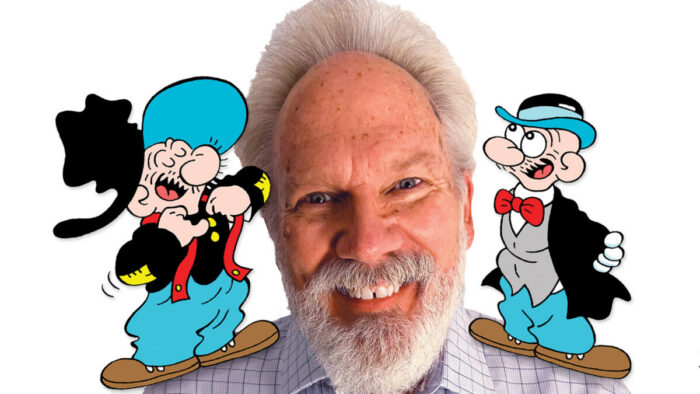
John Rose And The Snuffy Smith Comic Strip, Inside Appalachia
Apr 3Tap to summarizeHaving a very specific talent can lead to a dream job. It’s how cartoonist John Rose got his foot in the door to draw the comic strip "Snuffy Smith." Also, there are dos and don’ts for treating poison ivy. And, a young, old-time musician wants to save her family’s lost ballads. You'll hear these stories and more this week, Inside Appalachia. In This Episode: Snuffy Smith In The 21st Century Folk Cures For Poison Ivy What's The Buzz With Bees? Mussel Restoration In Tennessee River Preserving The Music Of The Mountains Big Emma: Remembering Appalachia's Steam Locomotive Rosalie Haizlett Explores Tiny Worlds Snuffy Smith In The 21st Century The logo for the comic strip "Barney Google and Snuffy Smith." Snuffy is shown on the left. Courtesy of John Rose/King Features Syndicate Like it or not, the hillbilly stereotype still permeates American pop culture. It’s been used to degrade and shame folks in the mountains, but there are gentler versions. Like "Snuffy Smith," the long-running comic strip character who still appears in newspapers. Although these days, it’s easier to find Snuffy online. He originally started out as a supporting character in his comic strip, which first launched in 1919 when Billy DeBeck created "Barney Google." Artist Fred Lasswell was brought in during the ‘30s to create Snuffy Smith and his friends. And now the strip is written and drawn by John Rose, who lives in Virginia’s Shenandoah Valley. Host Mason Adams spoke with Rose. Folk Cures For Poison Ivy About 80% of people will develop an itchy series of blisters from poison ivy, but about 15% will have a reaction so severe, it resembles chemical burns. strawberrymochi/Adobe Stock With warmer weather, more folks are spending time in the woods or yards, and it’s just a matter of time before some will get into a patch of poison ivy. You can find ways to treat the itchy rash that comes from poison ivy at the pharmacy, but there are plenty of people who still use folk remedies. Folkways Reporter Wendy Welch explored the intersection of folk cures and mainstream medicine. What's The Buzz With Bees? Mason bee habitat at the Blandy Experimental Farm in Boyce, Virginia. Ayse Pirge/WMRA When we think of livestock, we might think of animals like cattle and sheep. But, what about honeybees? Both honeybees and native bee species face challenges some in common, and some not. WMRA’s Ayse Pirge reports. Mussel Restoration In Tennessee River Tracking tags developed for freshwater mussels. Photo Credit: Michael McKinney/University of Tennessee, Knoxville The Tennessee River runs like an artery through Knoxville, Tennesee. It feeds the recreation and tourism business and also a rich ecosystem. And some of the river’s biggest protectors are really very small: freshwater mussels. They live on the riverbed and clean up the river. But their numbers have been declining for generations. WUOT’s Heather Haley spoke to a group working to protect these creatures. Preserving The Music Of The Mountains Murphy Campbell plays a ballad in the Blue Ridge Public Radio studios. Photo Credit: Gerard Albert III/BPR News North Carolina musician Murphy Campbell is trying to preserve old ballads from Yancey and Mitchell counties. And some of them come from her family. Blue Ridge Public Radio’s Gerard Albert III has more. Campbell’s performance in the BPR studios can be found here. Big Emma: Remembering Appalachia's Steam Locomotive Big Emma 1977 hauls empty coal cars from Winchester to Ravenna, Kentucky, in June 1956. The big locomotive was retired that year and scrapped in 1959. ...
Transcribe →
The Legacy Of Comic Strip ‘Snuffy Smith,’ This West Virginia Morning
Apr 3Tap to summarizeOn this West Virginia Morning, for nearly 100 years, Snuffy Smith has been a staple of newspaper comic pages, though these days, it’s easier to find him online. Snuffy Smith was brought to life by artist Fred Lasswell in the 1930s, but now the strip is written and drawn by John Rose, who lives in Virginia’s Shenandoah Valley. Inside Appalachia host Mason Adams spoke to Rose about drawing the famous hillbilly. Also, 12 bills that made it all the way through the legislative process have been vetoed by Gov. Patrick Morrisey. And, Frontieras North America has patented a new process that brings hope to the coal industry – and it’s bringing that new technology to Mason County. Finally, a Shepherdstown chef has been named a finalist for a prestigious award. West Virginia Morning is a production of West Virginia Public Broadcasting which is solely responsible for its content. Support for our news bureaus comes from Shepherd University and Marshall University School of Journalism and Mass Communications. West Virginia Morning is produced with help from Bill Lynch, Chris Schulz, Eric Douglas, Maria Young and Randy Yohe. Eric Douglas is our news director. Teresa Wills is our host. Maria Young produced this episode. Listen to West Virginia Morning weekdays at 7:49 a.m. on WVPB Radio or subscribe to the podcast and never miss an episode. #WVMorning
Transcribe →
Panel Explores Data Center Development In State, This West Virginia Morning
Apr 2Tap to summarizeOn this West Virginia Morning, a panel discussion consisting of community, political and data center industry leaders Tuesday night at Shepherd University has reignited the debate over local control of data center development in the state. Chris Schulz has the story. Also, after a nearly three-month delay, WorkForce West Virginia has released state unemployment figures for January. And, Amazon this week celebrated the grand openings of two news operations facilities in West Virginia. West Virginia Morning is a production of West Virginia Public Broadcasting which is solely responsible for its content. Support for our news bureaus comes from Shepherd University and Marshall University School of Journalism and Mass Communications. Maria Young produced this episode. Listen to West Virginia Morning weekdays at 7:49 a.m. on WVPB Radio or subscribe to the podcast and never miss an episode. #WVMorning
Transcribe →
A Look At The State’s New Office Of Entrepreneurship, This West Virginia Morning
Apr 1Tap to summarizeOn this West Virginia Morning, it has been a week since the bill creating the state’s new Office of Entrepreneurship was signed into law – with an official opening date of July 1. Assistant News Director Maria Young caught up with Secretary of State Kris Warner, to find out what the new office can do to help would-be new business owners turn their hopes and dreams into reality. Also, West Virginia has just racked up a top national tourism award. Gov. Patrick Morrisey called it part of the state’s comeback story. And, high school athletes interested in transferring schools will have to do it as freshmen and sophomores to retain their eligibility. West Virginia Morning is a production of West Virginia Public Broadcasting which is solely responsible for its content. Support for our news bureaus comes from Shepherd University and Marshall University School of Journalism and Mass Communications. Maria Young produced this episode. Listen to West Virginia Morning weekdays at 7:49 a.m. on WVPB Radio or subscribe to the podcast and never miss an episode. #WVMorning
Transcribe →