Podcast
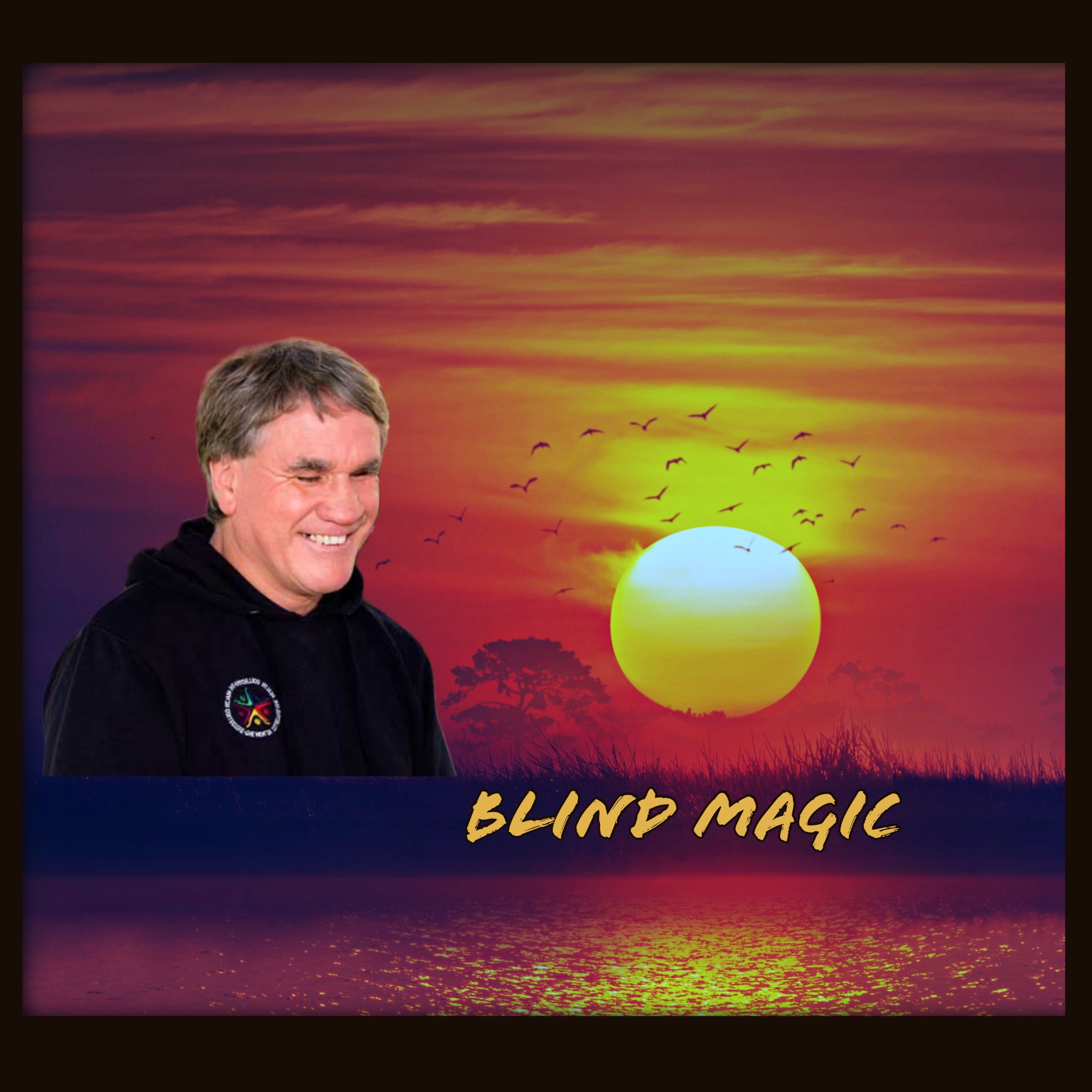
Blind Magic in Alice Springs
Hosted by bridgeovermurray · EN
Blind Magic, experience the power of the things you cannot see!
100episodes
Episodes
Newest firstAll episodes
Episode 1556 Learning to Surrender: Blind Magic in Cairns (Episode 1556)
Jul 300:09:50Tap to summarizeMurray Stewart presents episode 1556 of Blind Magic Communications from Cairns, Tropical Queensland. In this reflective solo episode he shares a personal voyage of learning to surrender control while on holiday, describing a smooth but delayed flight caused by a technical fault and the relief of trusting pilots and engineers. Murray recounts spending time with his daughter Heather and grandson, enjoying local venues and small comforts, and learning to hand over responsibility instead of always being the chief organizer. A major segment focuses on the unexpected emotional and physical benefits of letting others care for you — illustrated by a visit to a pedicure salon where Murray, a Type 2 diabetic with recent ankle issues, emphasizes the importance of foot care and blood flow for overall health. He also explains his love of reflexology and how this experience helped him appreciate professional care and the value of trust. Murray discusses his ongoing rehabilitation after multiple serious health events over the past four years — heart attacks, strokes and seizures — and frames this holiday as a ‘recharge station’ that will help him regain independence, energy and resilience. The episode closes with an encouraging message to listeners about the power of surrender: letting go, accepting help, and using rest to come back stronger, not as a tale of woe but as a strategy for recovery and renewal.
Transcribe →Episode 1555 Sunshine Therapy in Cairns: How Vitamin D Lifts the Spirit
Jul 300:11:33Tap to summarizeJoin host Murray Stewart and senior support Heather in episode 1,555 of Blind Magic as they soak up the relaxed Cairns vibe. Broadcasting from Palm Cove and the Cairns esplanade, Murray and Heather share morning walks, a catch-up with Murray’s daughter Jasmine (who owns Pilates studios), and a lighthearted visit to a sleek Pilates studio. The conversation mixes travel anecdotes with local color: civic pride in Cairns, scenic beachside views, and the tourist charms of Palm Cove. The hosts explore the health benefits of sunshine—how sunlight supports serotonin production and vitamin D synthesis, and why regular sun exposure and exercise can improve mood and wellbeing. Murray recounts chatting with an Uber driver about sun deprivation during the wet season and the impact of seasonal sunlight on mood. Practical suggestions include considering supplements and exercise when sunlight is limited. Personal safety and lifestyle choices are also discussed: Murray explains why he avoids ocean swimming due to a seizure risk and local crocodiles, and he reflects on the pull between life in Alice Springs and the tempting tranquility of Cairns. The episode blends humor and warmth—touching on family, travel, and mental health—while encouraging listeners to mind their headspace and enjoy their day. This episode is produced by Blind Magic Communications and features friendly, conversational banter between Murray and Heather, with local anecdotes and practical takeaways about sunlight, mood, and making choices that suit your life and companions (including Murray’s dog, Santa).
Transcribe →Episode 1554 — From Alice to Cairns' Coral Sea
Jul 200:09:19Tap to summarizeIn episode 1554, host Murray Stewart broadcasts from Cairns after recently relocating from Alice Springs. He sets the scene from an Airbnb on Charles Street — steps from the blue Coral Sea — and travels around town with his senior support person Heather, catching Ubers, visiting Cairns Central Shopping Centre, and enjoying a memorable haircut. Murray shares vivid travel anecdotes and roadside observations, including conversations with local Uber drivers who moved from other Australian cities and now speak passionately about how much they love living in Cairns. One driver’s colorful comment — “not for all the tea in China” — illustrates the strong civic pride Murray encounters, and a passenger’s note that this place is “as close to perfect as you’re going to get” becomes a springboard for reflection. The episode contrasts the fervent local affection Murray hears in tropical Queensland with his own deep attachment to Alice Springs. He explores themes of civic pride, why people fall in love with where they live, and what that devotion might mean for broader national attitudes — including a wish that more Australians, especially political leaders, would embrace and celebrate that love for country. Guests on the episode are informal and local: there are no scheduled studio guests — instead, the episode features Murray himself, his senior support worker Heather, his daughter (who takes the lead on an impromptu dinner outing), and the everyday people he meets while out and about. Key points include the emotional contrast between regions, the contagiousness of local pride, personal travel highlights, and an open-ended sign-off as Murray heads out to an unknown dinner destination. Listeners can expect a warm, observational episode full of place-based storytelling, candid conversations with locals, reflections on community and belonging, and Murray’s characteristic humor and affection for his home in Alice Springs.
Transcribe →Episode 1553 From Turbulence to Triumph — Murray Stewart’s Cairns Arrival (Ep.1553)
Jul 100:09:51Tap to summarizeHi folks, away we go. This is episode 1553. Host Murray Stewart opens from beautiful Cairns after a bumpy journey — delayed by a technical hold on the plane and a sleepless night — and shares the emotional and practical fallout of travel anxiety and fatigue. In candid, personal detail Murray describes how his post-stroke epilepsy and ongoing rehabilitation produced a few unsettling left-side motor quirks on the flight (knocking over a cup, spilling apple juice) and even caused a bag on his left shoulder to become dislodged — thankfully recovered by security. He explains how these moments reveal lapses in the brain-arm messaging and how he interprets them as part of recovery rather than defeat. Murray turns those incidents into motivation: a late-night declaration of war to 'get even' with the challenges and to teach his brain new tricks. He discusses neuroplasticity — building new neuropathways and grey matter through persistence and purposeful practice — and frames rehabilitation as an opportunity to elevate oneself. The episode is both practical and inspirational: Murray is honest about vulnerability and anxiety, yet consistently uplifting, urging listeners who feel down that they cannot fall any further and that upward movement is possible. He shares the podcast’s purpose — not to wallow but to offer real-life stories that helped him and may help others rise again. What to expect: a heartfelt solo conversation with Murray (with Heather present), first-hand accounts of travel disruption and post-stroke aftereffects, reflections on resilience and brain recovery, and an encouraging message for anyone facing setbacks. This episode is a Blind Magic Communications production — episode 1553 — focused on hope, determination, and practical optimism.
Transcribe →Episode 1552— Your Brain: The Ultimate Supercomputer
Jun 3000:05:13Tap to summarizeEpisode 1552 of Blind Magic with host Murray Stewart opens with Murray preparing to head to tropical North Queensland, promising listeners on-location episodes from places like the Crystal Cascade and Palm Cove in Cairns. He thanks his audience for their support and teases that tomorrow’s shows will be recorded from his travels. The core of this episode is a spirited mini-lecture about the human brain as the most powerful computer on earth. Murray discusses the brain’s structure and speed, noting it contains roughly 86 billion neurons and intricate neuropathways that underlie everything we think, feel, and do. Practical tips are offered for protecting and expanding your brain’s capacity: practice memorizing important numbers (credit cards, Medicare, etc.), avoid excessive alcohol and mind-altering drugs, keep solving problems, and engage in learning activities such as languages or musical instruments. Murray emphasizes that these habits can increase gray matter and help you get the most from your “built‑in supercomputer.” This episode features Murray Stewart alone (with a thank-you to Heather) and is a Blind Magic Communications production. Listeners can expect a mix of travel updates, upbeat commentary, and straightforward, actionable brain-health advice as Murray heads off to record from Cairns.
Transcribe →Episode 1551 — Celebrating Generations of Progress
Jun 2400:09:58Tap to summarizeEpisode 1551 of Blind Magic Communications features host Murray Stewart broadcasting from Alice Springs with a reflective and celebratory monologue about generational achievement. Murray opens by praising the hard work and technological advances delivered by his generation and those before, highlighting transport, computing and communications as foundations that give today’s youth unprecedented opportunity. Topics covered include intergenerational responsibility, the role of risk and experimentation in progress, and the inevitability of mistakes when pushing boundaries. Murray argues that failing to try is the greatest risk, celebrates the achievers and commentators who spark conversations, and urges younger listeners to embrace gratitude and opportunity rather than negativity. He also offers a personal perspective on disability advocacy and inclusion—recounting how he and his brother were among the first children with vision impairment integrated into mainstream schools in New South Wales. Murray reflects on how that trailblazing helped open doors for others and stresses the importance of recognizing abilities rather than focusing solely on disability. Listeners can expect a heartfelt, opinionated episode that blends social commentary, encouragement to seize opportunity, and a proud testimony about the power of integration, education and perseverance. Murray’s message is one of pride in past achievements, a call for positivity in younger generations, and a celebration of those who dare to lead change.
Transcribe →Episode1550 : The Case for Resilience
Jun 2400:10:01Tap to summarizeEpisode 1550 of Blind Magic in Alice Springs with host Murray Stewart delivers a candid, baby-boomer perspective on generational change, government policy, and the crisis of resilience among young people. Murray critiques current political moves he views as a socialist-style redistribution—changes to taxation and superannuation—that he says risk taking hard-earned wealth from older Australians to give to younger generations. He argues that this sends the wrong message and undermines personal responsibility. The episode examines the cultural decline in resilience, the failures of the education system to teach grit and practical life skills, and the rising mental-health challenges among children and young adults. Murray shares personal experience—his brother’s recovery after a catastrophic accident—to illustrate how hardship can be the catalyst for growth when resilience and hard work are embraced. Murray also speaks about his work as a coach and his desire to reform education to restore optimism, practical skills, and a stronger sense of purpose for the next generation. Listeners can expect a forthright, opinionated discussion on intergenerational fairness, personal responsibility, the role of government policy in wealth transfer, and the need to re-teach perseverance and real-life problem solving.
Transcribe →Episode 1549— Rewiring Your Brain at 63
Jun 2400:12:20Tap to summarizeDescription: Join host Murray Stewart in episode 1549 from Alice Springs for a thoughtful, practical conversation about living with epilepsy, personal growth, and everyday resilience. Murray opens with candid reflections on a recent disagreement and how his experience with epilepsy shapes both the challenges and opportunities in his life. Using the memorable metaphor “the brain is a bank,” Murray shows how past skills and experiences are stored and can be withdrawn when needed — from offering sound advice to simple physical routines. He shares examples you can borrow: a combined stationary bike and boxing exercise, touch techniques to provide comfort, and ways to intentionally shift your voice or accent to suit different situations. Murray gives concrete, actionable practice tips: count five seconds to let heated moments pass, log environmental sounds to improve hearing, practice touch and tactile comfort methods, and experiment with voice projection and tone. He also emphasizes the power of listening — even to those you disagree with — because every conversation hides useful lessons you can “plagiarize” for self-improvement. Expect an uplifting mix of personal storytelling, practical exercises, and thoughtful philosophy on how we can keep improving at any age. The episode closes with a brief production shout-out to Heather and Blind Magic Communications.
Transcribe →Episode 1548 Push‑Ups for the Heart: Murray’s 5‑Minute Routine That Dropped His Resting HR to 51
Jun 2300:12:47Tap to summarizeEpisode 1548 of Blind Magic in Alice Springs features host Murray Stewart celebrating a major milestone—50,000 downloads—and talking directly to listeners about a simple, time‑efficient exercise approach that anyone can adopt. Murray shares how his podcast connects with listeners worldwide and why he prioritizes short, effective health habits. The main topic is exercise: Murray explains his five‑minute routine he calls "push‑ups for the heart." There are no guest interviews in this episode—Murray voices his personal story, methods and results. He emphasizes that exercise doesn’t have to be long or grueling to be effective, and that consistency and intensity management are key. He describes the routine in detail: using a stationary bike while removing hands from the handlebars to pump the arms up to eyebrow level, pedaling with the feet, and alternating effort between roughly 80% and 100% intensity. His usual structure is 30 seconds at 80% followed by 30 seconds at 100% for a total of five minutes, with optional variations such as 20/10 splits once you get fitter. The combination of arm pumping and pedaling mimics running while remaining low‑impact. Murray outlines the benefits he’s experienced—at age 63 he’s achieved a resting heart rate of 51, improved blood‑sugar control, better weight management, clearer thinking and a sustained dopamine/endorphin boost. He recommends pairing the routine with a morning prayer session, doing it first thing each day, and committing to around 20 consecutive days to start feeling the lasting effects. Practical takeaways: a five‑minute, high‑intensity interval approach can be fun, prevent boredom, protect joints versus pounding surfaces, and leave plenty of time for daily goals. The episode closes with encouragement to try the routine, monitor results, and enjoy the time‑efficient health payoff. This is a Blind Media Communications production.
Transcribe →Episode 1547 The Voice, The Mind, The Touch
Jun 2200:10:19Tap to summarizeIn episode 1,547 of Blind Magic in Alice Springs, host Murray Stewart explores what truly makes someone attractive beyond superficial looks. Speaking from his experience as a vision-impaired coach and communicator, Murray argues that wisdom, life experience, a confident voice, and tactile skills are the core qualities that deepen attraction as we age. Murray shares personal reflections and anecdotes — including an interaction with a younger woman and lessons from past relationships — to illustrate how inexperience can lead to poor choices and how maturity brings a different kind of appeal. He emphasizes training the mind and voice, practicing honesty and integrity, and developing trustworthiness and loyalty through lived character. Topics covered include how aging enhances attractiveness, practical coaching on speaking with confidence and resonance, the value of tactile connection, and a reminder to cultivate these qualities for yourself rather than for others. Listeners are encouraged to embrace aging, judge themselves kindly, and recognize the growing beauty of their minds and voices. This episode is a mix of heartfelt advice, coaching insight, and uplifting encouragement from Murray Stewart, produced as part of the Blind Magic Communications series in Alice Springs.
Transcribe →