← Blocked and Reported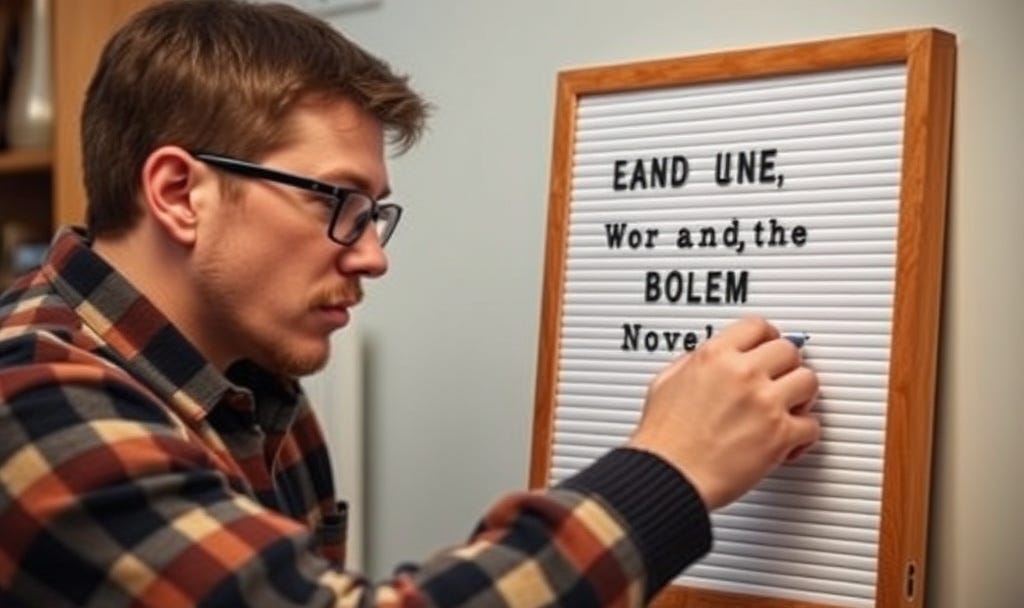
Loading summary
Transcript111 lines
- [00:00]
A
Hello, you're listening to a premium episode of Blocked and reported. This is a preview. You'll get to hear part of it. If you want to hear the whole thing, which I highly Recommend, go to BlockedReported.org and become a premium subscriber. This is a really, I think, interesting and dark episode about facilitated communication, which is supposedly this technique that can help severely disabled people communicate. It is back in the news and we talk about why. Hope you like it. Hope you Enjoy the preview. Blockedreport.org thank you for listening. Katie. I understand you have breaking Lindy west news.
- [00:38]
B
I do. So this comes thanks to friend of the pod, Lee Stein.
- [00:42]
A
Wait, hey, sorry. Remind everyone who Lenny West. I'm just kidding. You don't need to do that. Just. Let's go back to the beginning for anyone who hasn't been listening back in 2010.
- [00:52]
B
Okay, so Lee Stein just forwarded me a. A column of New York, New York magazine's book gossip column. Didn't know that existed. Headline is, is controversy helping Lindy west sell books? Not as well as you might think. Let's dig into this. Jesse, let me read you a little bit here. What's undeniable is that a lot more people have opinions about West's personal life than have bought her book. Not a good sign.
- [01:18]
A
Yeah.
- [01:19]
B
According to Bookscan, the leading industry tracker that captures mostly print sales with a week or so delay, total adult braces, sales stand as of this writing at just over 3,000 copies.
- [01:31]
A
Oh, my God. That's. Look. And again, my book hasn't sold well, but that's really bad.
- [01:36]
B
And that's like. That's only, like, slightly better than my book sold.
- [01:40]
A
You. You know this. But it is. Book sales are so fickle. And it doesn't matter how many podcasts you do, how much people are talking about it. Yeah, I am a little bit curious about going forward. Like, the utility of BookScan, given how many people now buy ebooks, they could be missing some, but it would have to be missing so many e books for that to not be a disastrous.
- [02:01]
B
Yeah, that's true. We don't know about ebook sales. Yo. Or audiobook sales. And audio books are like, I don't know how Lindy's contract is. I got a flat fee for my audiobook. So it's like, even if my audiobook was a bestseller, I wouldn't.
- [02:16]
A
That should not be that. There's no way that's. Well, what do I know? I really don't think that's normal. Those. You should get a cut off well,
- [02:22]
B
maybe you have like a nontraditional yes to say nontraditional. I. Let's say my agent was not involved in the selling of my book. For various reasons. I went rogue.
- [02:33]
A
Here's what I think is happening right now. Not far from you in the Lindy west households. Aham calls him in for a meeting.
- [02:41]
B
Lindy, Roya, you got to get a job.
- [02:43]
A
No, I literally was going to say he sits him down and he's like, guys, this is a tough conversation. You both need to get more jobs. I have a four day diorama display at the Wilbur at the Beacon. Yeah, I have a project at the Beacon. I think it was. That's kind of sad. Oh, man. It's sad. Especially because in the. Well, in the interview surrounding the book, she was pretty much like, I need to sell this.
- [03:08]
B
Yeah.
- [03:09]
A
Oh my God, that's really bad. I'm not, I'm not doing a show. I'm not doing a shot in Friday. Even though Lindy west surely would hate us. I, I don't want her book to have sold that poorly. I don't have it in me.
- [03:19]
B
I want her book to sell better than her sister in law Ijama's book.
- [03:23]
A
That's fair.
- [03:23]
B
So I hope she wins that contest. But my God, it doesn't seem like she is. So this is, I mean, the amount
- [03:28]
A
of discourse to sell. Think of like she's done individual posts. Surely that gets, you know, 5, 6, 7,000 likes.
- [03:36]
B
So 3,000 book sales. There have been way more than 3,000 substacks about this.
- [03:41]
A
There's been.
- [03:42]
B
Although I did, I did pass the galley around to about 10 people. So that could be a problem. Here is everybody's got one bootleg copy.
- [03:48]
A
Katie, anything else on. On Lindy?
- [03:50]
B
Let's just, let's just read the. Follow the next paragraph after that one. For all the online discourse, we've sold a lot fewer copies of Adult Braces than you might think, said Jack Keono, the director of marketing at Manali Jackson. I'm surprised he admitted that. Kiono mentioned that he had seen a fair number of bookstore patrons pointing at the COVID summarizing the drama, and then summarily moving on.
- [04:12]
A
That's okay. That is amazing.
- [04:15]
B
Yeah.
- [04:15]
A
Because that's exactly what you would worry about is that like, if you're a publicist, is this controversy leading to people buying the book or literally walking past the book, pointing at it, hey, that's that controversial book. And then moving on to like, oh my God, that's rough.
- [04:31]
B
You know what? I think I figured out why this book is doing so poorly. You know what they say.
- [04:36]
A
What?
- [04:36]
B
Sex sells. There's no sex in this book. It's a book about a polycule with zero sex. She should have made it a little bit hotter.
- [04:45]
A
I maintain that she's mostly a good and engaging writer, except for the exclamation marks. But once again, the. The complete failure to even explain anything about the new arrangement. Just like, oh, we're doing that. Okay. We don't need a. Should we move on, Katie?
- [04:59]
B
Poor Linda. Yes. What are we talking about today, Jesse?
- [05:01]
A
Not actually moving on. Because this is gonna be about facilitated communication, which is somehow back just this merciless zombie. But before we get to that, can I just tell a quick story? This is always the sign of a good story. Can I tell a story about a hike I went on?
- [05:15]
B
How heavy were your hiking boots? 10 pounds, 20 pounds?
- [05:18]
A
Wait, is this a reference to something?
- [05:20]
B
Yes.
- [05:20]
A
What?
- [05:21]
B
We had, like. I think we got probably more emails when discussing your hiking boots than we have anything else.
- [05:26]
A
Oh. Versus Hiking shoes.
- [05:28]
B
And yes, you went. You bought a fresh pair of hiking boots and then went on a hike, which a. Was stupid. And was like. That's stupid for multiple reasons, one of which is that you should be wearing trail runners. Anyway, go ahead.
- [05:40]
A
Oh, you're right. Yeah. This was a year ago, right?
- [05:42]
B
Yeah.
- [05:42]
A
Oh. So everyone's. Everyone's been wondering how this resolved. Yes, I returned those hiking boots and I bought hiking shoes. And my hiking shoes, which are fine. They fit me well, so I won. Anyway, I. I talked about this on Twitter. I just want to briefly say I went for a hike in the Berkeley hills the other night, and I'm walking, and I see a guy craning his neck up, and he appears to be talking to somebody in a tree. And I look up, and there's a guy sitting on a bough in the tree, probably 30ft up. And I'm like, a human guy.
- [06:09]
B
Or was this, like, a human guy? Pet cat.
- [06:12]
A
What do you think? Okay, well, hold on. Use. Use context clues. When I say a guy, do you think I'm referring to a cat?
- [06:17]
B
Well, I thought it could be a furry.
- [06:20]
A
That's true.
- [06:20]
B
It's Berkeley.
- [06:21]
A
It's true. It was trace. Trace got lost. He took the wrong. The wrong pill at a party, and you find yourself caught up a tree.
- [06:27]
B
I think he's a jackal, not a cat.
- [06:31]
A
So I don't. You know, it's, like, interesting, but I just keep walking. I don't want to talk. I don't want to take A picture of the guy, I figure he just climbed the tree. That's his buddy at the bottom talking to him. I loop around and then I'm headed back down this trail. And it's a very steep trail, steep up. Then you loop, steep down. And I see firefighters and EMTs hauling their gear up this, like, really. It's a really steep trail. It's like, it's like 800 or 1,000ft of elevation gain and like, I don't know, three quarters of a mile. And I realize, confirmed by asking one of these gentlemen, the guy got stuck in a tree. He climbed a tree and he got stuck in it. And then he needed firefighters and EMTs. And I go down the hill and at the. Where the sort of the trailhead, there's three emergency vehicles, lights on at the trailhead, further down the road, there's several more. And this probably scooped up 20 rescue personnel and like six or seven of these big expensive vehicles, all to get a guy caught in a tree.
- [07:29]
B
And this was for sure a human. A adult human male.
- [07:34]
A
Oh, wow. Now you're going to bring gender stuff.
- [07:35]
B
How high was he up in the tree?
- [07:37]
A
Adult human male. He had XY chromosomes. God damn it. He was a male presenting adult. I would say about 30ft up. Like he was pretty high and just sitting on a bow. Like he. He seemed chill. And then, yeah, I confirmed with the firefighters walking up, it was to get a. They actually asked me where he was. And it sucks because I think they could have parked closer but didn't realize it. But yeah, they parked at the bottom of this crazy uphi hike. And I, for a brief minute, I was like, would you rather be the guy stuck in the tree or the firefighter who has to rescue him?
- [08:09]
B
Oh, the firefighter.
- [08:11]
A
I would much rather be the firefighter. I feel bad for the firefighters, but the level of embarrassment because it made me think of when I got lost skiing and ski patrol had to rescue me. That was just two guys. I was fine. I skied out with them versus you're 30ft up in the tree. The hour long process of more and more of these guys arriving and then they have to set up a ladder. And then you have to explain to
- [08:34]
B
yourself, why did it take so many guys? I mean, just. Why don't you just put a ladder against the base of the tree? Did they have to go pick him up and put him on the ladder because he was actually a cat.
- [08:42]
A
I don't. I honestly don't know exactly what they did. I do know they sent a lot of guys up there. They sent people in this, like, little buggy.
- [08:48]
B
Maybe it was a training. Like a training mission. They're like, all right, you guys are going to get a lot of calls about cats and trees. This is all we got today. We got the interns here. We're going to go do a man in a tree.
- [08:59]
A
Hey, intern, Climb that fucking tree right now. I will say that. Yeah. I told a. There was a biker at the very bottom. Gawk at the emergency vehicles. And I. I couldn't restrain myself. I kept telling onlookers, like, that I'd seen the guy in the tree they were rescuing. Guy in the tree. And that the biker was like, oh, he catted himself. And I never heard that verb used that way, but I liked it.
- [09:17]
B
There was a. There was a guy in Seattle several years ago. It was around. It was winter time, and there was a. There's a big tree, like a big cedar tree in downtown Seattle. And. And a man climbed up to the top and was, like, throwing shit. I. And that might be literal. I can't totally remember.
- [09:36]
A
He was a crazy man, Seattle, so he probably was.
- [09:38]
B
Yeah. And he was, like, tearing branches off of the tree. And they had to. They, like, shut down the square where it was. And it led to a pretty interesting conversation, like, public conversation about. What's the word for when you put a crazy person not in jail, but involuntary commitment. Yeah, about involuntary commitment. And, like, his parents were on the radio talking about how they couldn't do anything about it. They had, like, tried to get him committed, but they couldn't for whatever reason. Anyway, I think he's still up there.
- [10:07]
A
The. Yeah. I'll include a link to my tweet storm on this, which also has some photos and videos, so I've got proof. It was pretty. Pretty cool. Anyway. Yeah. Today's episode is about autism and facilitated communication. So, Katie, just give.
- [10:25]
B
Do you think the man in the tree might have been autistic?
- [10:28]
A
I'd like to think that because then he would probably feel less embarrassment.
- [10:32]
B
Yeah.
- [10:32]
A
If we had to choose one or the other. He's autistic or he's not. And I'm not saying autistic people are incapable of feeling embarrassment, but I think it would blunt it a little bit.
- [10:39]
B
I hope he could use that as his audition tape for Love on the Spectrum.
- [10:43]
A
The other thing is, if you're. If you get stuck in a city tree, the firefighters get you down, and then you go on your merry way. He had to walk down about a 25 minute, very steep hike and you know, those firefighters are keeping an eye on him, that he doesn't try to climb any other trees on the way too.
- [11:04]
B
Was his buddy laughing about this?
- [11:06]
A
I don't think it was his buddy. I think that was an onlooker who he called down to. I think he climbed the tree alone. And you always need a climbing buddy. Everyone knows this. If you're gonna climb a tree, have a climbing buddy.
- [11:15]
B
Absolutely.
- [11:17]
A
Remind everyone what facilitated communication is. I. I re. Listened to the episode you and Helen Lewis did in 2024 where she told you a story about it, but just give us a quick refresher.
- [11:26]
B
Yeah, so this has come up on the show quite a few times. Facilitated communication is like imagine a Ouija board and you have an autistic person on one. On one end of the Ouija board. Okay. That's not a great way of explaining it. No, it's a way for. For non verbal. It's a controversial way for non verbal people, typically people with autism, to communicate it. There are different ways of doing it. There could be a keyboard, there could be a letter board. But the, the. Do you want me to go ahead and say that it's been widely debunked?
- [12:00]
A
Yeah, yeah. I mean, this was a scandal because the whole idea was that you had people who appeared to be non verbal and appeared to be intellectually disabled, often severely. So the idea was that they really could communicate, but they just needed some help with the fine motor skills of typing something out or pointing to what's known as a letter board. And yes, this convinced a lot of people that some severely disabled individuals who didn't appear to be able to communicate, you know, had this real intellect locked inside them. And I highly recommend people go back and listen to your episode with Helen Lewis. It was really good. Helen talked a lot about an investigative article by Daniel Engber that I'll link to in the show notes. That one's about Anna Stubblefield. So this was a crazy case. She was a former philosophy professor at Rutgers Newark and a real advocate for disabled people. She herself was a facilitated communicator. She was convicted of sexual assault after admitting to a sexual relationship with a disabled young man with cerebral palsy who communicated with her. Air quotes, if you want, via facilitated communication. There's an appeal and an overturning on technical grounds, and she eventually pled down to a lesser charge. But this was one of the more spectacular and disturbing cases to come out of the absence controversy because it got to that whole question of like, are you actually communicating with the Person pointing at the board or could the person be unduly influencing? And that's sort of the whole. The whole issue here.
- [13:24]
B
Right, right. We also did an episode on the Telepathy Tapes, which is a incredibly popular podcast. For a while, it was like the top podcast in Apple music that was. Or itunes. What do they call it? Apple podcast that.
- [13:37]
A
MySpace. Napster.
- [13:39]
B
Napster. And it was about this. It was about facilitated communication. They called it typing, but it was about this. These people who think that their children are. It goes like, well beyond the sort of Anna Stubblefield case. It's people who think that their children are literally telepathic.
- [13:58]
A
Yeah.
- [13:58]
B
So they're communicating telepathically, like with each other, or their mind reading, like typically the mother's mind. And then they convey. They actually communicate with other people.
- [14:07]
A
And that's real via. Facilitated communication has been debunked.
- [14:10]
B
But that's real via what they call typing. But it's actually FC facilitated.
- [14:15]
A
And the problem with all this is, like, there. There's obvious potential harm in the facilitator, sort of putting words into the mouth of this disabled person. And it's also just harmful, like, if they're actually disabled and can't communicate. Convincing people they can communicate, obviously very problematic.
- [14:32]
B
Do you think. I'm about to ask you something very controversial, Jesse, do you think.
- [14:37]
A
Go ahead. Not usually our style on the show, but go ahead.
- [14:40]
B
Do you think it is possible that Helen Keller was a type of facilitated communication?
- [14:46]
A
Yes, actually. I was doing the hike. The hike. I saw the tree person. I was listening to the episode. You are a Helen Keller truther for anyone new to the podcast.
- [14:54]
B
Did I talk about that?
- [14:54]
A
Yeah, you.
- [14:55]
B
Did I talk about that.
- [14:56]
A
You think Helen Keller was a fraud.
- [15:00]
B
I think she was not actually. Actually deaf and blind.
- [15:03]
A
I will say I had. I had never.
- [15:06]
B
She could see the whole time.
- [15:07]
A
Brief thought of how difficult it would if someone's deaf and blind and can't talk. I don't know how you would even. It just. It's hard to imagine, actually.
- [15:16]
B
How would you know that language exists? How would you have a monologue? There are, like. There are cases. I should not go into this. People get mad when I say this.
- [15:24]
A
Yeah, no, you should. This is one of your best opinions of many.
- [15:27]
B
So there are cases where you have deafblind people who like documented cases where they accomplish amazing things. Brilliant. Like brilliant people. But they're typically not deafblind from birth. And Helen Keller lost her vision in sight at the age of like, nine months. Let's just. I'M just. Look, maybe this is just my own lack of imagination because I know that if I were deaf and blind, I would live in a world where, like, if somebody touched my hand and tried to communicate via that way, I would just think, why are you tickling me? Except I wouldn't even think it because I wouldn't have a word.
- [15:58]
A
But that's also basically you. If someone touches your hand and tries to communicate, you. You have a giant freak out.
- [16:03]
B
This is going. That's true. And we're also going to get more emails about how I'm actually on the spectrum. Can stop setting this people.
- [16:11]
A
I want. I want more reactions to Katie's Helen Keller take I. Also, it would help the podcast a lot in terms of like, clippable social media. Would. Could you. Would you be willing to call her the B word?
- [16:22]
B
A. Yeah. Helen Keller.
- [16:24]
A
Yeah.
- [16:24]
B
Why not? Like the arsler? Why A. Why, why.
- [16:27]
A
Why would I just think that would get more pickup?
- [16:29]
B
I don't. Look, I have no reason to think that she was a bitch. I just. Let's just say I'm a little skeptical that she was actually a communist. Continue.
- [16:37]
A
Okay, so you may be asking, why is this subject coming up again? Why is facilitated communication back in our corner of the discourse on March 31st? That's it. That's all you get. If you want to hear the whole thing, go to blocktreported. Org and become a premium subscriber. Bye.