← Blocked and Reported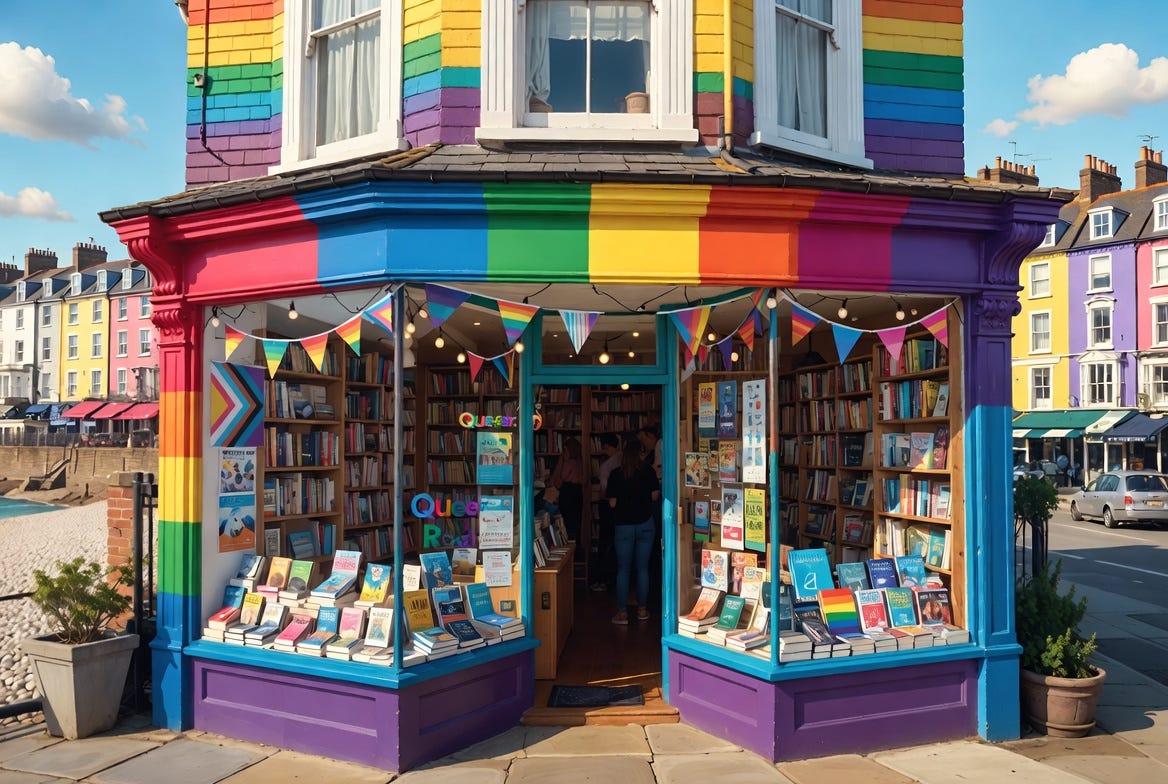
Loading summary
Transcript121 lines
- [00:00]
A
Hello, you're listening to a preview of a premium episode of Blocked and reported. This one involves a crazy cafe meltdown in Brighton, uk. Let's just say trigger warning. If you don't like pervasive ableism destroying people's lives, don't listen to this. You're going to hear about pervasive ableism destroying people's lives. And we're sad about it, but Katie's going to tell the story. If you want to hear the whole thing, go to blocktownporter.org and become a premium subscriber. Highly recommended. In the meantime, enjoy the preview.
- [00:36]
B
Okay, Jesse, we're on vacation. I mean, we're not on vacation right now, but by the time that people hear this, we're gonna be on vacation. Or at least I'm gonna be on vacation.
- [00:45]
A
I won't be on vacation. I'll be finishing my goddamn amazing book.
- [00:49]
B
So when was the deadline for your book? October 2024.
- [00:53]
A
No, I'm gonna be 2325. No, no, don't do fake new. What are you, a Russian blot bot working for Donald Trump?
- [01:03]
B
I think it was October 2024.
- [01:05]
A
There's been. It's taken a while, Katie, in part because I have other responsibilities. I co host a podcast.
- [01:11]
B
Oh, that's why. That's why. So we're recording this quite early. Two weeks early. We're recording this on July 10th. Our listeners aren't going to get it for a couple of weeks. I apologize.
- [01:22]
A
Can you imagine how different the world could be? I know how many more Graham Platner accusations will have come out by then.
- [01:27]
B
This is always the risk of recording early, but we're gonna do it anyway. This is the first of two primo episodes that are gonna come out before the end of the month. I apologize to people who haven't. You've probably been wondering where your primos have been. This is it. We've just been holding them so we can. We can play them during the break.
- [01:45]
A
Yeah.
- [01:46]
B
Anyway, so think. So much might have changed by the time we record this and by the time it comes out that. Well, I don't think this. What we're going to talk about today, is going to be obsolete. But the world might be. Who knows?
- [01:59]
A
The world could be obsolete at any point.
- [02:01]
B
Always a risk with this. But, Jesse, I hope that I am enjoying vacation and you are enjoying your. Not vacation.
- [02:07]
A
To be fair, some of the writing will be on Cape Cod, so I really cannot complain.
- [02:10]
B
I will be at.
- [02:11]
A
Your whole life is basically in a place more beautiful than Cape Cod. So you have nothing to complain about either.
- [02:15]
B
And yet. And yet I do.
- [02:18]
A
And yet.
- [02:18]
B
I actually don't have much vacation planned. We're gonna go down to the coast for a night in the van. The van has been. Has spent more time in the shop than on the road recently. And I just like, you know, spent another many thousands of dollars to get it fixed and brought it home and saw it's leaking oil. So maybe my vacation will be more of a staycation. But anyway, let's get to it. Jesse, it has been a couple of months since we last talked about the implosion of a leftist institution. Although if you can, if you count the.
- [02:49]
A
What about the entire left flank of the Democratic Party? Does that count?
- [02:52]
B
Yeah, if you count the Minnesota Senate race. Not that long.
- [02:55]
A
What's the Minnesota Senate race?
- [02:57]
B
Oh, sorry, Maine. Okay, I'm mixing up my M's.
- [03:00]
A
Let's get to it.
- [03:01]
B
The last time we discussed the implosion of a leftist business where this was a couple of lesbo bars in the US but this time we are crossing the pond to discuss a queer establishment in Brighton, England, called the query. But before we get to that, we both have complaints. Would you like to begin?
- [03:18]
A
Yeah, I mean this. I don't want to get too deep into it. The Washington Post reported on the supposed influx of internally displaced persons fleeing to Seattle because they are trans. And it included a couple from Florida. And look, Florida has passed some anti trans laws.
- [03:41]
B
Yep.
- [03:42]
A
Not. Not pleasant, not good. But this story credulously repeated this estimate that 400,000 trans people had fled because of Trump. And as we discussed recently, the origins of this are like a really non representative poll in which 10% of the respondents were trans. And I just don't think you should spread zombie statistics like that. I just found this to be a credulous article. Why don't we include a link to it in the show notes and people can. Let me. I just want to complain about that because like that exact statistic after we. I think I feel like debunked it, it shouldn't show up in the Washington Post.
- [04:19]
B
Yeah, come on. We debunked it on a primo episode.
- [04:21]
A
We did. We did. Blocked and reported.
- [04:23]
B
Right, right. And so the statistic, the original source of the statistic is Aaron Reed.
- [04:29]
A
Well, V Ertz's poll, I think she helped to popularize it. Right?
- [04:32]
B
Well, she. No, she's the one who came. Reed is the one who came up with that 400,000 number.
- [04:38]
A
I think what the author of the Post story did, Casey Parks, is use the $400,000 figure, dollar person figure. But I don't think that's mentioned by the poll itself. I think it's from Aaron Reid. That's what you're saying?
- [04:52]
B
Yeah. So the Washington Post piece does not cite Aaron Reed. Aaron Reid is the source of that 400,000 trans people have fled red states number.
- [05:01]
A
Let me just read the exact sentence. Okay. Though no one tracks the migration of LGBTQ people from one place to another, a poll conducted by NORC suggests that roughly 400,000 trans adults fled red states in the months after the 2024 election. Another 1.2 million trans people were estimated to be considering such moves. We're getting to the point where, like, I don't know, 2/3, 50%, 25% of the entire country's trans population are considering a move, which I don't think is true, but. Yeah, so Casey Parks, this author who has written other stuff that I found a little bit questionable, she seems to be taking Aaron Reid estimate, but not attributing it to Aaron Reed.
- [05:45]
B
So.
- [05:46]
A
So, but, but you're saying the survey company themselves don't make this claim.
- [05:49]
B
They. I'm looking at the survey right now. No, you search word search. 400,000 in this survey. It's not there.
- [05:56]
A
Yeah.
- [05:56]
B
Let me read to you from Aaron Reed's write up about this surveys of the Movement Advancement Project. That's the poll polled more than a thousand LGBTQ households asking respondents about their perceptions and actions since 2024. Election poll. When asked if they had moved to a different state, 9% of transgender respondents said that they had. That figure translates to a striking level, level of displacement. According to Gallup, transgender people make up roughly 1.3% of the US population, about 4.5 million people nationwide. If 9% of that population has moved states, that amounts to approximately 401,000 transgender people relocating in the wake of the election. Aaron Reed came up with that number, not the poll.
- [06:41]
A
What's amazing is very close to that. A paragraph before the 400,000 figure in the Washington Post, she says that 1% of the population in Washington state is trans. But then she relies on a poll in which 10%. It's not good journalism. I also, I don't want to be a dick, but like they mentioned this group called Traction that is trying to get more funding with this supposed state of emergency. Traction helps people, trans people who've left their homes, like, get housing and jobs. So my understanding is the criteria are you. They're not going to, like, there's no. You can Say you're trans and reach out to an organization in Seattle and they'll help you get jobs, a job in housing. Is that. I'm like, is it surprising that there's a lot of people who want to take themselves of that? I don't. I just don't know what to make of this. I have no doubt that what Trump has done has made life harder for trans people, and that in red states in particular. But this is just. It's. I think it's sort of advocacy reporting that's not done in a rigorous way. Maybe we can just leave it at that.
- [07:51]
B
This is the sort of thing a fact checker would have found.
- [07:54]
A
I mean, maybe. I don't know. Hopefully news articles aren't usually fact checked in newspapers.
- [07:59]
B
They should be. This is the sort of thing that, you know what, Maybe this author. What's her name?
- [08:05]
A
Casey Parks.
- [08:06]
B
Maybe she needs to start running her. Running her stuff through Claude. I think Claude would have found this. Wait, I just. I just put that. I just pasted that into. Into Claude. This claim has several problems. When checked against the actual link source, the specific number. Don't. Don't appear anywhere in the survey. Claude could have, like, seriously could have found this.
- [08:28]
A
Yeah, it's not. It's not good journalism.
- [08:30]
B
Okay. All right. Now for my complaint. Are you ready for it?
- [08:34]
A
Yes. Do it.
- [08:36]
B
Okay, Jesse, So. Oh, actually, before we get to that, someone on Twitter sent me a photo I just posted in our notes here. Jesse, read the. This is. This is a scene from Seattle. This is Seattle's Cal Anderson Park. Jesse just described this.
- [08:50]
A
It's sort of pond and written on a concrete.
- [08:54]
B
It's a reservoir.
- [08:55]
A
Reservoir. Whatever. Death before detransition is the.
- [08:58]
B
It's a. It's graffiti. Big graffiti. Death before d. Transition in Seattle. So I guess this is why trans people are moving to Seattle. Okay, so the thing that annoyed me. So this happened like a month ago. By the time that you're hearing this, I will still be annoyed about it. But in late June, a trans activist named Victoria Cruz died. That's not the thing that annoyed me. And I was not familiar with Victoria Cruz until a number of people sent me this New York Times obituary. But it sounds like she led a very interesting life to Jesse. Have you heard of her?
- [09:28]
A
No, I don't think so.
- [09:29]
B
All right, so she was 79 when she died. And her obit begins, Victoria Cruz, a matriarchal figure in the New York transgender community who was at the Stonewall Inn in 1969 when. When a police raid set in motion the gay liberation movement, who later worked as an advocate for survivors of anti anti trans violence, died on June 25th in Manhattan. Lots of issues with this. But the Obed goes on to say that she spent nearly 20 years working with survivors of violence in the New York at the New York City Anti Violence Project. And in fact, she'd been a client there many years ago. So in the 90s, she'd been working at a nursing home and had been assaulted by co workers. And she contacted the Anti Violence Project. They helped her file police reports. There was later a protest outside the nursing home where she worked. Two of her. Her co workers were actually convicted of harassment, which the New York Times says was, quote, one of the first times that someone was held legally accountable for anti trans violence in, in New York State. She later worked there both as a volunteer and as a staff member. But. So these are the things that I have an issue with. Here's the part of this obit that annoyed me, actually. There's many parts. So, Jesse, please read this section about Victoria Cruz and Marsha P. Johnson.
- [10:40]
A
Ms. Cruz did not know Ms. Johnson, but their lives overlapped. Both were at the Stonewall Inn on the night of June 28, 1969, when police conducted one of the routine raids at the bar. This time, though, the largely transformed gender clientele inside fought back. And a riot into this is like a really crazy example of just that colonization of the past getting worse and worse. So as you so diligently investigated and explained, there's no evidence Martha P. Johnson threw the first brick. But you also point out it was mostly gay men at this place. Like people were like, still on the fringes of the, of the scene and a little bit, you know, unusual and marginalized. Yeah, yeah.
- [11:22]
B
Marsha P. Johnson, again, was not there.
- [11:24]
A
But now it's, it's a largely transgender clientele. Why do they. That's. Yeah.
- [11:29]
B
And Victoria Cruz might in fact have been at the Stonewall in that night. I don't know. She was nowhere. In David Carter's book, which we talked about on the last show. That doesn't mean she wasn't there, but it would have had been nice to have some kind of corroboration. But we do know that Marsha P. Johnson was not there when the police conducted the raid. We played a clip on our show from an interview that she did with Eric Marcus in 1989, saying she wasn't there until after the riot started. And yes, even more egregiously, it was not largely transgender clientele inside the bar that night, it was largely gay men. It was a gay bar. The customers that night and every night were largely gay men. I don't know where the obit rider got that information, but maybe Tumblr, maybe Instagram, maybe the Ether, but it is incorrect. And what's even crazier about this is that the New York Times itself put out a video debunking the Marsha P. Johnson myths and the Stonewall. The broader Stonewall myths, like three years ago. Just check your own. The archives of your own fucking newspaper. All right, let's continue. Read this part.
- [12:33]
A
Ms. Cruz had been outside with her boyfriend, one of the bar's bouncers. As the violence escalated, he told her to go home. When she returned in the morning, she found the bar in ruins. She grabbed a beer sign and other memorabilia and also took home the bar's dog, Rusty.
- [12:45]
B
The bar was not in ruins. The jukebox was destroyed, the cigarette machine was destroyed. The bar was open for business the next night. How could it have been in ruins if it was open for business the next night? Trashed. Okay. Messy, sure. In ruins. No, Jesse, please continue.
- [13:03]
A
The Stonewall riot sparked the beginning of the gay liberation movement, which had a strong trans presence. Ms. Johnson. Yeah, I don't think any of that's true.
- [13:13]
B
No, no, no, no. It was not the beginning of the gay liberation movement. It was the middle. It was the middle. Strong trans presence. Very debatable. There were, as we discussed, many, many internal conflicts about the place of trans people in this movement. They were not on the forefront of it. They weren't. They weren't.
- [13:36]
A
It's just extremely. I mean, it's Orwellian. It's like literally rewriting the past.
- [13:40]
B
Yes. So later in the obit, they quote. He's a filmmaker who made this documentary alleging that Marsha P. Johnson was murdered, maybe by the mob. And he says she. So that's Victoria.
- [13:52]
A
The trans mob or the CIS mob?
- [13:53]
B
I think the CIS mob. Although the trans mob. That's. They just yell at you on Twitter. She was an elder in that community. Mr. France said in an interview she was a transgender woman of color who had lived into old age, which is so rare. Is it? Is that rare? Jesse, fact check, please.
- [14:10]
A
Yeah.
- [14:11]
B
Zero evidence that trans women of color have lower left life expectancies than anyone else.
- [14:17]
A
Yeah. I mean, I. It wouldn't surprise me if they do. But to say it's rare for them to live in old age. Yeah. It's not. This isn't great journalism.
- [14:26]
B
It might be HIV positive. Who knows?
- [14:28]
A
Yeah.
- [14:29]
B
Now, as of this recording, this has not been corrected. Again, we're recording this quite a bit early, so maybe it will have been by the time this comes out. I do know that Eric Marcus from Making Gay History, he reached out to the Times directly to complain about this and try to get a correction. They know that it's wrong. We'll see if they update it.
- [14:49]
A
Okay, that. Yeah, that's just really bad.
- [14:52]
B
Yeah. Okay, before we get into it some more, just a little bit of follow up from a prior episode. So Jesse, during our episode about the DSA from a couple weeks ago, you remember that one?
- [15:02]
A
I do.
- [15:03]
B
So I mentioned that Seattle has a local ordinance that prohibits viewpoint discrimination in businesses. So legally you cannot be denied service from your local communist bookstore or furry cidery if you're a Trump supporter or Lives of TikTok fan or a, I don't know, a hunter, a furry hunter. Even if they have signs outside that say no homophobia, no fascism, no turfs, no hunting, whatever. We both said on that episode that we doubted it would be legally enforced. I believe you thought that there would be. It would be a First Amendment violation to force businesses to serve people they. They don't want to because of ideological reasons. So after that episode aired, we heard from Eugene Volllock. He's a First Amendment lawyer, professor emeritus at ucla, fellow at Stanford, contributor, Reason magazine. Really, really good on free speech issues. And he's written about this very thing in legal journals. And Eugene said that we were right on the first point, those laws are rarely enforced, but wrong on the second point, that it's a business's First Amendment right to deny service based on ideology. So he said this. It seems pretty well settled that businesses have no First Amendment right to exclude customers based on on the customer's religious views. It follows that businesses wouldn't have a First Amendment right to exclude customers based on customers political views.
- [16:20]
A
Okay, that's interesting. So it doesn't surprise me if I was wrong about the specifics. I would definitely defer to Eugene Volok on this.
- [16:26]
B
Yes. So in other words, you know, Chubby's glory hole needs to take down the no fascist signs out of their window. Although I suppose the sign itself might be protected even if you can't legally refuse to serve fasc. And Eugene also pointed out that there's an exception when it comes to creative acts. Quote, to be sure, businesses that create speech, eg, web designers, may choose what speech to create, including in discriminatory ways. That's the 303 creative case. But it applies Only to speech creating businesses, not to coffee shops and the like.
- [16:58]
A
Was that the web designer in Denver, he didn't want to do get websites for gay weddings? She, she.
- [17:03]
B
Yeah. So there's that case, also the Masterpiece cake Shop case. In both cases, courts ruled that customers could not compel a private business to endorse a political message. So, in short, according to this law or jurisprudence, a bartender must pour a drink for the man in the maga hat. But a hat manufacturer does not have to create the maga hat. Does that make sense?
- [17:26]
A
Yes. Do you have to? If someone gives you their maga hat and says, I want to drink a beer out of this maga hat, how does that work? I think I want you to create a website with a picture of me drinking a beer out of a maga hat.
- [17:38]
B
No, no, not the website. I think that drinking out of a maga hat, I think that would be a health department violation.
- [17:46]
A
Okay. So that would bring them in.
- [17:47]
B
You have to sterilize like a maggot. Not a maga hat, but like a maga hair net. Yeah, it could work.
- [17:53]
A
Tell me about this meltdown we're going to discuss today, Katie.
- [17:56]
B
Okay, we're going to talk about the query now. So this is a story that started a few years ago, but has had some recent developments. I was actually convinced that we did this story years ago. But you don't remember it. Jessica the 80s baby doesn't remember it. I asked in our substack chat. No one there remembered it. There's no trace of it in our notes. I remember it. I know we did the story. So the only reasonable explanation here is that you are all gaslighting me.
- [18:23]
A
I think that's true. I'm gaslighting you for sure.
- [18:25]
B
Anyway, as people know, because we already did this episode, Brighton is a town on England's south coast with a population of about 280,000. It was a royal seaside resort back in the 19th century, but today, as many UK listeners will know, it is best known for being the country's gay mecca.
- [18:44]
A
We didn't do another episode about Brighton.
- [18:46]
B
Brighton came up in our Zach Polanski episode.
- [18:49]
A
I thought it was before that. Anyway, continue.
- [18:51]
B
I think we probably did, yes.
- [18:53]
A
What if we end up accidentally replicating that last episode word for word here? That'd be funny.
- [18:58]
B
That's Shakespeare and the Monkeys.
- [19:00]
A
Yeah, that's our podcast.
- [19:01]
B
So Brighton is their Castro. It's their boys town. It's their gayborhood. And it has been for almost a century. So today, if you're in the Mood for a drag show, you can go to one of the 26 businesses that host drag nights. That's a little much. Do you think it's a little much?
- [19:17]
A
I think there should be more.
- [19:18]
B
So some of the venues are actual gay bars and some of them are mixed bars or venues that cater to the queer crowd. Or if you prefer your drag shows on wheels, you can hop aboard the drag bus, which is self described, the UK's sassiest party on wheels. Although I would have gone with the UK's busiest bus on wheels. Do you get that?
- [19:39]
A
I get it, I get it.
- [19:41]
B
So Brighton is very gay, very queer, and unsurprisingly, it's also very progressive. So for 14 years, Brighton was the only place in the UK with a Green Party MP, which people should be familiar with because we did an episode about that crazy party. Those crazy kids, they want self id, they want redistribution of wealth. And the current leader, Zach Polanski, as you mentioned on our our Greens episode, he wants to abolish NATO and replace it with a big hug between Mexico, Brazil and the uk.
- [20:09]
A
It's beautiful to think about.
- [20:10]
B
So with that in mind, Brighton would seem like the perfect place to open a queer bookstore. And indeed, in 2021, a successful crowdfunding campaign led to the establishment of the Query, a place that calls itself, quote, a radical art gallery, bookshop, cafe and community space that is for queers by queers. How would you. It's like fubu, but Foucault. Foucault.
- [20:38]
A
Foucault. Yeah, I think it's Foucault.
- [20:39]
B
Yeah. And it has the sort of programming you might expect. So, Jesse, take a look at their events calendar for just this.
- [20:46]
A
Let's say this past April, Queer Reads book club, second anniversary party. Makes sense. Artem. Inclusive queer domestic violence, peer to peer support group. D word Peer support. I can't say that.
- [20:57]
B
Dyke. You can say it. I'm giving you permission. You can say it.
- [21:01]
A
You're giving me a D put. You're giving me a D pass.
- [21:03]
B
Yes, yes, you get the D pass.
- [21:04]
A
Queer Film Club. The Watermelon Woman. Yeah, I mean, this looks like what you'd expect of a queer venue.
- [21:10]
B
Yes. There's also ethical non monogamy book club, queer improv, a sticker making workshop, board games, anti capitalist resistance, ecosocialism. Ecosocialism against militarism, Body as myth. I agree. The body is a myth. Do you agree?
- [21:29]
A
No, my body is all too real.
- [21:30]
B
There's also something called Dyke Munch, which I hope is a potluck We've also got the Fat Club, Arts and Crafts and the Queer XXXtreme Sportsbook Club. Nothing to do with Extreme Sports Jesse, please read the description of the xxxtreme Sportsboat Club.
- [21:47]
A
Note on the name. I point at things and call them Queer extreme sports almost every day. I guess Queer extreme sports is anything mad you do to taste life for all that it is the boundlessness of spirit, wanting to experience both luxurious ecstatic abundance as well as lying in the ditch somewhere deprived, crying and shaking.
- [22:03]
B
That's a sport.
- [22:04]
A
QXS are especially the things that you really are not supposed to do, the things that might shatter you and yet you move towards him, hurt you and yet why would you resist? It's getting more sentence fragmenting trigger you. But you can't look away against institutionalized rationalism, against the ego's longing for stability and neatness and binding, going and going and breaking and breaking parentheses away from.
- [22:29]
B
Yeah, so it's a poem. And in April, the selection for the Queer XXXtreme Sportsbook Club was on Cuddling Love to Death in the Racial Embrace.
- [22:42]
A
Sounds like a good read. Yeah, that's it. That's all you get. If you want to hear the whole thing, go to blockchainreporter.org to become a premium subscriber. Thanks. Bye.