Loading summary
Transcript214 lines
- [00:01]
Katie
Hello, friends. That's my Joe Rogan doing an ad for non GMO bullets impression. It's Katie and I'm here with a new podcast for you and with an offer. So the episode you are about to hear is the first in a new series by our friends at Longview. That's the new company run by Mapple and Andy Mills, both of whom you have heard on this show before. And their new series is called Strange Bedfellows. And when Andy came to me and he asked if we'd be interested in bringing their series to our listener listeners, my first response was no, absolutely not. Because I'm bitter that Moose likes Andy better than me. And also because every time we drop some other show in the feed, we get at least a couple of complaints. Although now that I think about it, there is a pretty simple solution to that problem. If you don't want to hear it, you could just not listen. Just an idea. Anyway, after hearing this first episode of Strange Bedfellows, I thought, okay, fine, I'll give the dog sitter what he wants, because this is something that the listeners of Blocked and Reported are absolutely going to be interested in. This series is about, well, gay shit, trans shit. It's about how LGB became lgbtq. It's about what brought this sometimes mismatched alliance together and why it seems to be breaking down. And this series is hosted by Ben Koalar, who's also been on Blocked and Reported. And it's funny and thought provoking and informative and I think you guys are going to enjoy it. We've also got an offer for you. So Andy and Matt have very generously offered three months free of Longview's membership program to our Primo listeners. And if you redeem that offer and subscribe to Longview now, you can hear the full three part series of Strange Bedfellows before it goes out to the public. This offer is only available to our Primo subscribers, so to join us go to blockedandreported.org and to redeem this offer from Longview, there will be a link to join in the show notes of this episode. So enjoy the episode and I have a feeling this one is going to lead to some robust discussion in the comments section, which you can always join at blocked and reported dot org. All right, that's it. Thanks for listening and Jesse and I will be back with more Internet soon.
- [02:14]
Historical News Reporter
The program we are about to present is a report on the homosexual lifestyle. We point that out for those who do not wish their children to see any portrayal of Homosexual behavior.
- [02:31]
Andy Mills
Hey, I'm Andy Mills, and you're listening to Reflektor. All right, let's talk about sex.
- [02:40]
Ben Koalar
Okay.
- [02:41]
Andy Mills
And social movements.
- [02:43]
Ben Koalar
Okay.
- [02:43]
Andy Mills
And people coming together to make a change and then maybe falling apart.
- [02:47]
Ben Koalar
Yeah.
- [02:48]
Andy Mills
But first, who are you?
- [02:50]
Ben Koalar
Sure. I am Ben koalar. I'm a 41 year old homosexual, and I also do some reporting work.
- [02:58]
Andy Mills
Okay, so for today, the story of how a civil rights movement morphed into something more complicated. Over the course of the next three episodes, we're going to be hearing from some of the very people who created the LGBTQ coalition.
- [03:17]
Dana Beyer
I was part of the group that appended the T to lgb. I'll take responsibility for that.
- [03:23]
Andy Mills
Including some who say that they do not recognize what it's become.
- [03:29]
Ben Koalar
I'm sick of it all, Ben. I'm sick of it all. I mean, I think we need to correct what's wrong first.
- [03:35]
Gay Rights Activist
And so that's a big thing, particularly the medicalization of children.
- [03:39]
Lori Jean
So we need to form alliances with people who may not pass the perfection test of the most progressive among us and realize, hey, we gotta work together if we're gonna stop this very dangerous onslaught that is upon us right now.
- [03:56]
Andy Mills
Ultimately, what we're gonna do with this little mini series is try and understand how and why a movement that in many ways had come to symbolize just how fast societies can change is now in the midst of a backlash and maybe even a breakup. And leading us through all of it will be very funny reporter Ben Koalar.
- [04:18]
Ben Koalar
Excellent. Thanks.
- [04:21]
Andy Mills
Okay, so, Ben, just start us off by explaining why it is you wanted to do this story.
- [04:25]
Ben Koalar
So I came of age in the 90s and early 2000s, and I was a teenage activist for gay rights. And this was a time when the conversation was about gay marriage, gays in the military, issues that, to me, felt very black and white. And this was also a time when it was generally just the gay rights movement, maybe the gay and lesbian rights movement. You know, you saw LGBT sometimes, but it wasn't what it is today, which is, you know, this sort of hodgepodge of letters, you know, the LGBT or LGBTQ or LGBTQIA movement. And I never really knew how or why this collection of letters came together.
- [05:07]
Andy Mills
Interesting.
- [05:08]
Ben Koalar
How did it come to be considered a cohesive community? What does it stand for now, and is it going to last? Because, like, frankly, it feels to me, and I hear this from other gays and lesbians a lot, that these different letters have really gotten to the point where we all kind of have different goals. And ideas about sex and gender or even reality. And I wanted to go back and piece together how we all got together in the first place and why we might be about to break up.
- [05:36]
Andy Mills
All right, so let's go through it all step by step together.
- [05:38]
Ben Koalar
Okay.
- [05:39]
Andy Mills
Where does that story begin?
- [05:41]
Ben Koalar
Well, what we now call the LGBT or LGBTQ movement started as the gay rights movement. And let me try and phrase this as provocatively, but as accurately as possible. The gay rights movement was a campaign for the right to engage in sexual conduct that most of the country found pathological and repulsive.
- [06:03]
Historical News Reporter
Most Americans are repelled by the mere notion of homosexuality. The CBS News survey shows that two out of three Americans look upon homosexuals with disgust, discomfort, or fear. One out of ten says hatred. A vast majority favor legal punishment, even for homosexual acts performed in private between consenting adopts.
- [06:23]
Ben Koalar
Right.
- [06:23]
Andy Mills
I think that sometimes people forget that actually it wasn't that long ago that being gay was essentially against the law.
- [06:29]
Ben Koalar
Yeah, yeah. Sodomy was illegal. In 1960, sodomy was illegal in all 50 states. It stayed illegal in nearly half the states through the 80s. And in some states, it wasn't legalized until 2003. And so up until that point, there were places in America where you could be arrested and imprisoned for doing butt stuff, meaning grown adults did not have the right to do as they pleased with each other in the bedroom or outside of the bedroom.
- [06:56]
Andy Mills
Uh huh. And when is it that people started to organize to change that, to change society?
- [07:02]
Ben Koalar
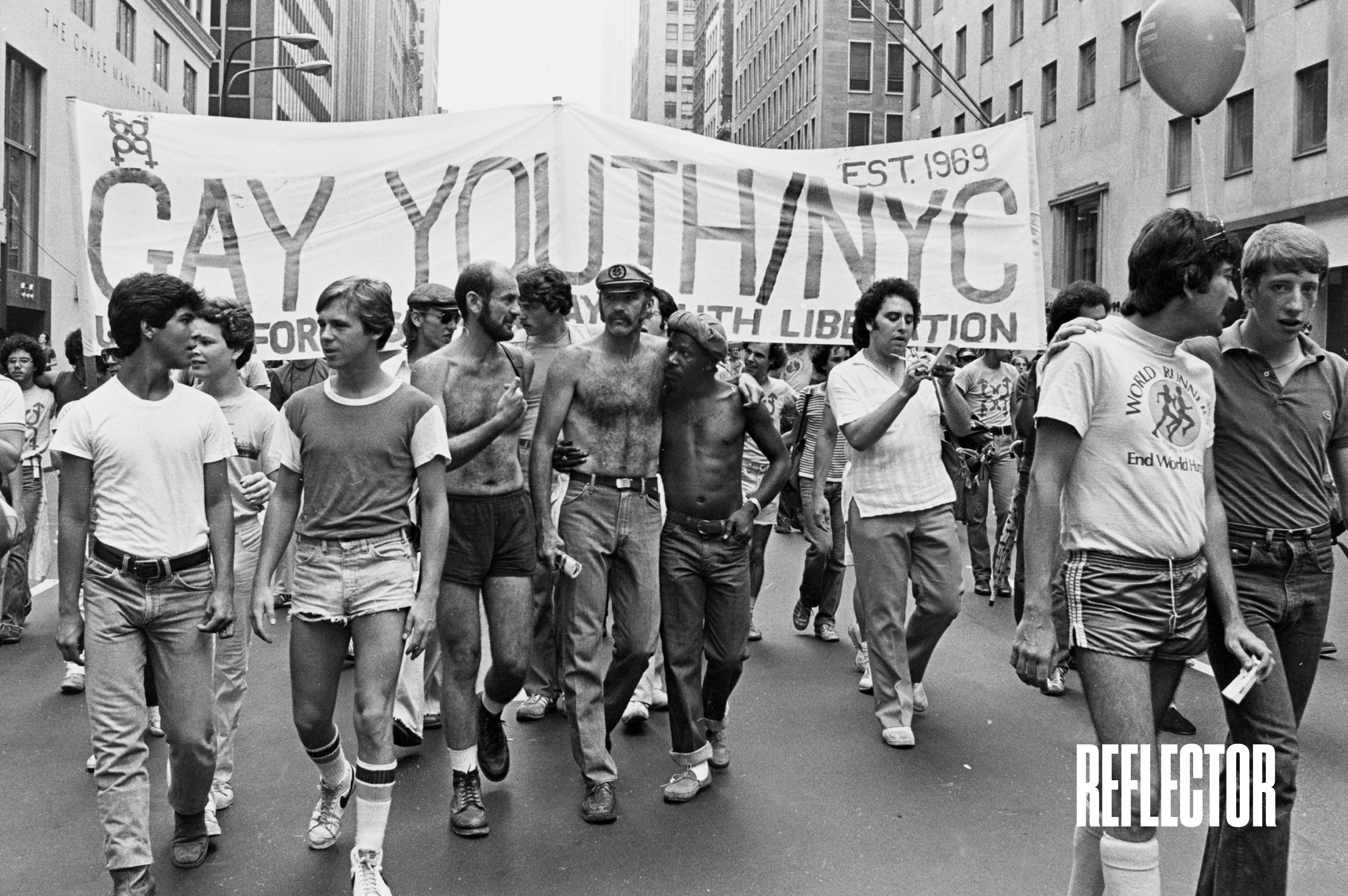
Well, today it's kind of popular to think of the start of the gay rights movement as the 1969 Stonewall Inn riots. This is when the police raided the Stonewall Inn, this gay bar in the West Village, which was something fairly common. But on this night, the gay men there decided to fight back and demand that they be allowed to congregate in this space without being harassed by the authorities.
- [07:25]
Historical News Reporter
When do we want it?
- [07:27]
Ben Koalar
This eventually led to several days of street protest, which were commemorated a year later with the first gay Pride parade. Thousands more. They represented the mood of growing militancy in the United States gay community, which now of course, is an annual month long celebration. But as galvanizing as Stonewall was, there were gay activists before Stonewall. 1950 saw the establishment of the Mattachine Society. For instance, the Mattachine Society is dedicated
- [07:57]
Katie
to mutual understanding between society and the homosexuals.
- [08:00]
Ben Koalar
The Mattachine Society was actually started in 1950 in Los Angeles by a member of the Communist party. But anyway, probably the most famous member of the Mattachine Society was a guy named Frank Kameny, who in 1957 was fired from his civil service job for being a homosexual. He wasn't the first guy to be fired for being gay, but he was among the first to publicly challenge it. And he sued the Army. He'd been working for them as an astronomer. He wasn't successful in suing the army, but this began a nearly two decades long battle to allow gays to be employed by the federal government as civil service workers. Kameny would end up establishing the D.C. chapter of the Mattachine Society. And his political message, and the political message of the Mattachine Society was pretty straightforward.
- [08:44]
Andy Mills
Every American citizen has the right to be considered by his government on the basis of his own personal merits as an individual.
- [08:53]
Ben Koalar
I will not be deprived of my proper rights, freedoms and liberties as I see them, or of a career, profession and livelihood, or, or of my right to live my life as I choose to live it, so long as I do not interfere with the rights of others to do likewise.
- [09:07]
Andy Mills
So essentially he's making the classic civil libertarian pitch here. This don't tread on me, right? The government can't tell me what to believe. I should be judged as an individual on my merits. And me being gay does not affect you, so you should let me be right.
- [09:21]
Ben Koalar
And he was conscious of the fact that this was partly a political project, meaning partly a part of a PR project. There was a really concerted effort to appear normal. You know, when the Mattachine Society would protest, they would wear suits and ties. They really didn't want to look crazy because they wanted people to like them.
- [09:39]
Andy Mills
Interesting. So he's leaning into this idea that I might be gay, but look at me, I'm just like you. I'm a normal guy, right?
- [09:46]
Ben Koalar
I'm only a leather daddy in my free tie. But by the 70s, which is of course after the sexual revolution, after Stonewall,
- [09:54]
Historical News Reporter
if straight people can do it, why can't we?
- [09:56]
Ben Koalar
We start seeing these new organ like the Gay Liberation Front, gay rights. And they are not at all trying to just fit in.
- [10:06]
Radical Gay Activist
We are never going to support straight people who do not totally and unequivocably defend the gay rights of people in this country.
- [10:14]
Ben Koalar
And they're interested not just in civil equality for gays and lesbians.
- [10:18]
Radical Gay Activist
We are never going to support people who have pseudo liberal answers to the political problems facing us, but also the
- [10:26]
Ben Koalar
connection between gay liberation and racial justice or economic justice.
- [10:32]
Andy Mills
Okay, so you're saying that naturally over time you've got like some in the gay rights Movement who are saying, hey, we're just like you. And you've got others who are saying, let's bring on the revolution.
- [10:43]
Ben Koalar
Yeah, I mean, and there's always been throughout the gay rights movement this tension. There's a writer, Bruce Bauer, who summarized it as the difference between those who want a place at the table and those who want to turn the table over.
- [10:56]
Andy Mills
Got it.
- [10:56]
Ben Koalar
People who were more sort of radical and people who were more assimilationist. And there were times when the different camps really got into it with each other.
- [11:04]
Historical News Reporter
It gives us a bad name. We should have the right to do it if they can do it. We should be able to do it if we want to. If we want to get a bad name for ourselves.
- [11:11]
Andy Mills
Right, okay, but were these different groups actually finding success in their overall mission?
- [11:18]
Ben Koalar
Well, the Gay Liberation Front was fairly short lived, actually. At one point they were infiltrated by the FBI who suspected them, not unreasonably, of being communists. So those guys didn't last too long. But there was a less radical offshoot called the Gay Activist Alliance.
- [11:34]
Gay Rights Activist
Gay People, one of the only groups left in this country that it still seems to be safe to laugh at. And what we're here to say is that it's no longer safe or nice.
- [11:42]
Historical News Reporter
The word fairy is the most objectionable.
- [11:44]
Ben Koalar
And these guys gained enough prominence to actually end up on late night television.
- [11:48]
Gay Rights Activist
There are many objectionable terms.
- [11:50]
Historical News Reporter
We're surely not Vag and Queen. Are they objectionable?
- [11:52]
Gay Rights Activist
Yes, they are. Of course they are.
- [11:53]
Andy Mills
They're usually. And this is like what, the 1970s?
- [11:55]
Ben Koalar
Yes.
- [11:56]
Gay Rights Activist
The point is, many people who are sitting in this audience here, many people who are watching this show at home, may be gay people. And the people sitting next to them may not know that and who are therefore loving a false image of those people. What we're doing now, working to change the law so that we can be protected in jobs and in housing and have our civil rights along with every other minority group, is important so that we will be viewed as the people that we are.
- [12:21]
Ben Koalar
But beyond just being on network television, they were scoring victories in the 70s. One of them came in 1975 when the federal government finally stopped banning gay people from working civil service jobs. But the biggest leap forward in the 70s was the successful campaign to get the American Psychiatric association to remove homosexuality from the Diagnostic and Statistical Manual, which is like the official catalog of mental conditions.
- [12:50]
Andy Mills
Yes, this is the famous dsm. And I also think it's a good reminder that it wasn't just illegal to be gay back then, but it was Also considered by the medical establishment to be a mental condition.
- [13:02]
Ben Koalar
Yeah. And this was a campaign that the Gay Activist alliance took directly to the apa. They demonstrated at their conventions, they gave presentations there. They set up kissing booths. There was also a group within the APA that called themselves the Gay pa.
- [13:16]
Andy Mills
Very clever.
- [13:17]
Ben Koalar
These were closeted gay psychiatrists. And one of them at the 1972 convention addressed the convention, of course, behind a mask, behind a. Apparently a Richard Nixon mask and a wig and like a oversized suit, he confessed that he was gay and that the time had come to stop pathologizing homosexuality.
- [13:35]
Andy Mills
Interesting. And you're saying this worked?
- [13:37]
Ben Koalar
Yeah. So as of 1973, we were no longer mentally ill. It was out of the asylum into the bathhouse. Because in the 70s, urban gay men would spend just about every free moment having sex with each other, occasionally, occasionally pausing to campaign for an anti discrimination ordinance or to protest Anita Bryant. But for the most part, we were really busy with other things, a less political time. But the thing that would really galvanize the gay community was the biggest catastrophe, of course, to ever befall us.
- [14:10]
Radical Gay Activist
A mystery disease known as the gay plague has become an epidemic unprecedented in the history of American medicine.
- [14:17]
Ben Koalar
The AIDS CRIS. When AIDS started to appear in 1981, people didn't know what it was.
- [14:24]
Radical Gay Activist
Topping the list of likely victims are male homosexuals who have many partners.
- [14:28]
Ben Koalar
And all that people could see was that gay men were dying of these horrible infections that their immune systems should have been protecting them from.
- [14:36]
Radical Gay Activist
Medical experts say the disease kills and that it threatens to explode in the nation's cities.
- [14:41]
Ben Koalar
And over the next 15 years, around 300,000Americans would die of AIDS related diseases. Jesus. And AIDS wasn't just catastrophic, medically at least in the short run, it was catastrophic politically.
- [14:59]
Historical News Reporter
Proposals to find and segregate those exposed to aids. We want to identify every person who's a carrier. We want to identify every possible way to stop them before it becomes a really serious national health.
- [15:11]
Ben Koalar
You started to see even more fear and ostracizing of gay people. There were laws that essentially targeted gays in the name of public safety. Gays could be fired for being HIV positive. AIDS victims had no recourse for being evicted. There were politicians who wanted AIDS victims quarantined despite the fact that AIDS couldn't be transmitted from casual contact. And you had a media that was still really uncomfortable with the idea of homosexuality.
- [15:37]
Historical News Reporter
When you got aids, did it make you think again about being gay? Did it make you rethink that lifestyle? Did it make you regret Anything you'd done.
- [15:45]
Ben Koalar
And activists and politicians who opposed gay rights on religious grounds were able to point to aids and say, the Bible
- [15:52]
Historical News Reporter
says if you engage in homosexuality, your body will do things that will penalize you.
- [15:58]
Ben Koalar
Well, this is God's punishment.
- [16:00]
Andy Mills
Even in the 90s, when I was growing up, my Sunday school teacher, I remember her telling me that AIDS had been a punishment sent from God to gay people for their unholy lifestyle.
- [16:12]
Ben Koalar
They were also dealing with a government that didn't care about them. You know, President Reagan was famously indifferent to aids. He didn't mention AIDS until 1985.
- [16:22]
Lori Jean
AIDS brought an unprecedented level of visibility to our community because people couldn't hide because they were getting sick and they were dying.
- [16:31]
Ben Koalar
This is Lori Jean. She was the CEO of the Los Angeles Gay and Lesbian center in the 90s. And she told me people were desperate.
- [16:39]
Lori Jean
Their very lives were at stake.
- [16:41]
Ben Koalar
And that in response to all of this, gay men started to organize.
- [16:46]
Lori Jean
They did things that had never been done before, like stage die ins on the steps of the food and drug administration and pour blood all over the steps and blockade the United States supreme Court and do things like that at local level and at the federal level.
- [17:06]
Ben Koalar
I mean, these were some of the more attention grabbing tactics. But more consequentially, I think AIDS patients and their allies raised money for medical research. They made connections within the FDA and the nih. They became experts on medical research in their own right. They found allies in Congress who were able to secure federal funding for AIDS research within the community. They more or less invented the concept of safe sex, which was really no small thing. You know, activists pushed for emergency treatments, for medical trials, for expanding the scope of medical research beyond treatments favored by the establishment. And after many traumatizing years of this, there was a breakthrough.
- [17:46]
News Anchor
If this is a medical miracle, it is a miracle that is now happening across the country as new drugs taken in combination are giving thousands of people infected with the AIDS virus new hope.
- [17:59]
Ben Koalar
I mean, there was still no cure. But in 1996, 15 years after the first documented case of aids, finally a type of medicine called protease inhibitors emerged, and that turned HIV from a death sentence into a manageable chronic health condition.
- [18:14]
Andy Mills
All right, so what happens on the other end of the AIDS crisis to the broader movement in this fight for gay rights?
- [18:22]
Ben Koalar
Well, AIDS decimated the leadership of the gay rights movement because, of course, so many gay men died. So one major shift was that you started seeing a lot more women in leadership roles. And one result of that was that gay often turned into Gay and lesbian. So as for this mystery of, like, how these letters came together, well, what was one letter had become two. National Gay Task Force became the National Gay and Lesbian Task Force, for instance.
- [18:46]
Lori Jean
But also AIDS helped build what ultimately became the queer infrastructure that we have today.
- [18:53]
Ben Koalar
The AIDS crisis was when some of the biggest and most powerful groups now were either coming into their own or being born, including the Gay and Lesbian Alliance Against Defamation, which now just goes by glaad. So with AIDS no longer being a death sentence, and with this now much more organized gay rights infrastructure, gay and lesbian rights organizations could turn their sights towards political battles on the civil rights front.
- [19:17]
Andy Mills
Right, and what did that fight look like? What were their goals and how did they go about trying to achieve them?
- [19:23]
Ben Koalar
Well, the overall goal is wanting being gay to no longer be illegal. In 1996, sodomy was still prohibited in over a dozen states. Yeah, gays couldn't serve openly in the military. Gays couldn't even form civil unions, let alone marriages. In fact, the 90s saw two major defeats for the gays on the federal level.
- [19:44]
Dana Beyer
I have come here today to discuss our nation's policy toward homosexuals and the military.
- [19:50]
Ben Koalar
President Clinton instituted Don't Ask, Don't Tell that barred gays from serving openly in the military. And he signed doma, the Defense of Marriage Act.
- [19:58]
Historical News Reporter
The White House says the President has long opposed government recognition of homosexual marriages
- [20:03]
Ben Koalar
that barred the federal government from recognizing same sex marriage. So we had this depressing legal fight that was suffering losses. But just as importantly, these groups waged an organized social campaign. For example, hrc, one of these groups whose mission was really shaped by the AIDS crisis, started looking to the private sector, pushing corporations to adopt anti discrimination policies in hiring. They pressured companies into extending domestic partnership benefits to same sex couples who worked for them. So, you know, maybe you can't get married to your boyfriend, but you can be on his health insurance just like a straight married couple would be able to do.
- [20:43]
Andy Mills
Interesting.
- [20:44]
Ben Koalar
Yeah. And they found success there largely because anti gay discrimination was getting less and less popular among the public.
- [20:52]
Andy Mills
And why is that? You were saying earlier that in the 1960s, two out of every three Americans held a negative view towards homosexuals. What's changing in the 90s that's shifting the public's overall perception?
- [21:06]
Ben Koalar
Well, there was a semi organic, semi engineered cultural shift that just changed the way people felt about gay people. I mean, this was something that I experienced as a gay teenager. I was like the head of my high school Gay Straight alliance. And there was an organization that promoted Ideas like Coming Out Day, which did not take off at my school, sadly, but more people just started coming out. There was more visibility on television. Men are hot. Of gay characters.
- [21:40]
Radical Gay Activist
I'm serious.
- [21:41]
Trans Rights Activist
I'm gay.
- [21:42]
Historical News Reporter
I'm gay.
- [21:46]
Ben Koalar
I mean, we had Ellen DeGeneres, and
- [21:49]
Andy Mills
they had the relationship between a man
- [21:51]
Ben Koalar
and a woman for the procreation of children is natural. Pat Buchanan, who was winning that popularity contest. And if people were not falling in love with the TV gays, they were starting to learn that gay people had been amongst their friends and family.
- [22:05]
Andy Mills
Right.
- [22:06]
Ben Koalar
And in time, this social change starts paying dividends on the legal front. Most notably, a group called Lambda Legal would eventually end up overturning sodomy laws nationwide.
- [22:17]
Andy Mills
Right. This is the Supreme Court case from like, what, 2000, 2003. So in a way, they successfully made it to where being gay is no longer illegal in America. And you also have the public who's growing more and more tolerant to the idea that being gay is not disgusting or awful. And this is all happening in, like, the early 2000s. So wait, where do things stand with the fight at this point?
- [22:43]
Ben Koalar
Around 2000 is when you start seeing the phrase marriage equality getting popular. Like, if you look on Google, that phrase didn't really exist before 2000. And at that time, there wasn't great national support for same sex marriage. Again, we didn't even have civil unions. So this all just seemed like a pipe dream to a lot of people.
- [23:00]
Andy Mills
Right.
- [23:00]
Ben Koalar
Formal opposition to gay marriage had been part of the GOP platform since 1999. 1992. And as for the Democrats, like, the best they could say was that they opposed doma, but that was hardly the same as saying, we are for marriage equality. We are for the rights of people to get married, no matter their sexual orientation.
- [23:19]
Andy Mills
Yeah, I feel like people forget this now, but throughout the 2000s, you know, the leading Democrats, I believe that marriage
- [23:25]
News Anchor
is between a man and a woman.
- [23:27]
Historical News Reporter
Marriage is between a man and a woman. And states must respect that.
- [23:31]
Andy Mills
I'm talking like Obama, Biden, Hillary Clinton.
- [23:33]
Radical Gay Activist
Marriage is not just a bond, but a sacred bond between a man and a woman.
- [23:40]
Andy Mills
They were not subtle about their position on gay marriage.
- [23:43]
Ben Koalar
Yeah. So because that's what we were seeing on the federal level, this was a fight that had to be focused on the states. So you had groups like the Gay and Lesbian Advocates and Defenders. That's a different Glad they brought the suit that would end up legalizing gay marriage. In Massachusetts, you had groups like New York's Empire State Pride Agenda lobbying their legislature to Pass same sex marriage in New York.
- [24:05]
Andy Mills
Uh huh. I always think of this as like the Andrew Sullivan era.
- [24:09]
Andrew Sullivan
Ask yourself for a second whether any heterosexual citizen of this society has conceived for a second that they had a right to the pursuit of happiness, which did not include the right to marry the person they love.
- [24:23]
Andy Mills
I just remember that, like, as state by state was changing different laws, he was going on C span, he was giving these public talks, he was essentially making the argument that this was a civil rights case of equality.
- [24:36]
Ben Koalar
Right.
- [24:36]
Andrew Sullivan
How much deeper can it get in the ability to be a full and developed human being than the right to marry the person you love?
- [24:49]
Andy Mills
And then slowly, you know, I guess it was, if I'm remembering right, it was like a lot of different blue states that were coming to change their law.
- [24:56]
Ben Koalar
Mostly blue. But you also had Iowa, which was purple. New Mexico is fairly purple. That didn't happen until 2013.
- [25:03]
Andy Mills
So it was a bit of a spectrum.
- [25:04]
Ben Koalar
Yeah. And by 2012 anyway, same sex marriage is legal in nine US states and DC and much of the gay establishment actually was content to continue this state by state approach. I mean, there was a wariness actually of any attempt to pursue a Supreme Court ruling on marriage because a lot of people just weren't sure that they had the votes.
- [25:27]
Andy Mills
Right. And if a Supreme Court decided that it wasn't constitutional, that might even upend the states where it had been legalized.
- [25:35]
Ben Koalar
Exactly. But ultimately, it's over. They were wrong.
- [25:39]
Historical News Reporter
The long debate on whether gay couples have a constitutional right to marry is over. And the answer is yes.
- [25:46]
Ben Koalar
2015, the Supreme Court decides in the case of Obergefell v. Hodges, that gays and lesbians have a constitutional right to get married.
- [25:55]
News Anchor
In doing so, they've reaffirmed that all
- [25:58]
Ben Koalar
people should be treated equally, regardless of who they are or who they love. So in just the span of a few decades, we've gone from our sexual deviancy, making us total social outcasts.
- [26:11]
Historical News Reporter
His favorite form of intercourse is with a goat,
- [26:15]
Ben Koalar
to the President of the United States saying, love is love. Love is love.
- [26:37]
Andy Mills
All right, so this is like when people start going, oh my God, look how fast things can change. Marriage equality is this win. It's surprisingly like kind of becomes a political non issue. How does that end up changing the gay and lesbian rights movement and what they're going to focus on going forward?
- [26:54]
Ben Koalar
Well, by the time 2015 had rolled around, it wasn't the gay and lesbian rights movement. It was now quite solidly the LGBT movement. And that meant that it was now time for the teas to have their moment and to understand how we got there. We kind of need to go back a few years, and really, up until a few months ago, when I started reporting on this, I thought I knew why the Teas were part of the lgbt, but I was completely wrong.
- [27:28]
Andy Mills
More from Ben after a break. Stay with us.
- [27:46]
Trans Rights Activist
Imagine always getting funny looks when you walk down the street, or worse, being the target of violence, harassment, even death, just because you don't fit into the easy categories of he or she. That's the reality for transsexuals, cross dressers, anyone who doesn't fit into the ezcast categories of male and female.
- [28:05]
Andy Mills
Welcome back to Reflector, and we're going to pick up now with Ben Kawalar, who is just about to tell us how the T's came to join up with the L's and the G's.
- [28:17]
Ben Koalar
So first, a disclaimer. Gender nonconformity is not some new phenomenon. People who reject society's sex based expectations on how they should dress or act. These people have been part of every human society to ever exist. What's varied is how accepting these societies are of gender nonconformity. So mostly societies enforce gender roles and expectations quite rigidly, often violently. In the us, before anyone was using the modern language of gender politics, you know, before anyone had even uttered the word transgender, there were laws on the books against cross dressing, for instance.
- [28:53]
Andy Mills
Right. I mean, I just recently learned that even in cities like New York and New Orleans into the 20th century, you could be arrested if you were a man walking around the streets wearing a dress, dressed like a quote, unquote woman.
- [29:05]
Ben Koalar
Yeah. Now, in America, what started happening starting in the 1960s was, of course, the sexual revolution. And that brought a loosening of gender expectations like we had never seen before.
- [29:18]
Andy Mills
Right. This is the era where women are, like, boldly showing up for their office jobs topless. Well, not quite in pants.
- [29:28]
Ben Koalar
Ah, yes.
- [29:28]
Andy Mills
You know, in female cut suits instead of these long dresses, that kind of a thing.
- [29:33]
Ben Koalar
Right. But the modern transgender movement, what we now call the modern transgender movement in the US started to emerge as such in the 1990s.
- [29:41]
Trans Rights Activist
Just as gay people have been fighting for their liberation, transgender activists are coming out to fight for their.
- [29:48]
Ben Koalar
Like, at that point, even the word transgender was new.
- [29:52]
Dana Beyer
In the olden times, trans was short for transsexual.
- [29:56]
Ben Koalar
This is Dr. And early trans activist Dana Beyer. Dana is a reporter's dream. She's an open book.
- [30:02]
Dana Beyer
When I actually completed my transition, my second wife said, oh, this is great and everything, but I don't want to live with a woman. So, you know, we'll part. We're friends and stuff. I get along with both my exes, but it's like, yeah, there's a reality to this stuff.
- [30:17]
Ben Koalar
It might surprise listeners to hear that you were married to two women. You know, certainly when I think. I mean, this is why I'm doing this podcast. I have all these assumptions and a narrative of my own that I don't really know if it's true. It just sort of seems true to me. I had always thought that the T's were sort of functionally gay men who liked to live as women. And so, because we all sort of thought of them as gay men, you know, sure come along as well. It sounds like I'm totally wrong about.
- [30:46]
Dana Beyer
You're totally wrong. You thought we were all drag queens.
- [30:50]
Ben Koalar
I did. I mean, you know, I don't know if I'd say it like that, but that's really something. So I basically thought, and this is somewhat embarrassing, that the Teas were, like, gay plus, and they were not. You were active in the original fight to get the Teas into the Gay Rights Coalition.
- [31:09]
Dana Beyer
I was part of the group that appended the T to lgb. I'll take responsibility for that.
- [31:14]
Ben Koalar
And this was no small feat.
- [31:16]
Dana Beyer
We were different, and our needs were different.
- [31:19]
Ben Koalar
I should note that in the 90s, the word trans meant something somewhat different than what most people use it to mean now. And we'll talk more about that later. But for now, what's most important to know is that to the gay and lesbian establishment, this was not an obvious alliance. First of all, gays and lesbians were fighting for the right to have homosexual sex without penalization. And trans activists like Dana were fighting for the right to live as the opposite sex. Also, the transsexuals, as they called themselves at the time, who were the early leaders of the trans movement, were, for the most part, what we used to call M to F. These were biological
- [31:55]
Dana Beyer
males who would actually undergo hormonal treatments
- [31:59]
Ben Koalar
or surgical treatments and then live as women as best they could. But what I didn't realize is that they partnered romantically with women.
- [32:06]
Andy Mills
Okay, this is interesting. You're saying that one of the reasons that it was not obvious that the T's would join up with the G's and the L's is because the T's, broadly speaking, were not gay. They were kind of straight.
- [32:21]
Ben Koalar
I mean, it depends on how you think of it. It depends on what you mean by gay. I mean, many of them would identify as lesbians. Of course, as you might imagine, other lesbians didn't often see them that way.
- [32:32]
Andy Mills
Right.
- [32:32]
Ben Koalar
Which led to other tensions.
- [32:34]
Andy Mills
This being a bit messy, especially at first. Makes total sense to me.
- [32:38]
Ben Koalar
Yeah. And finally, there was a medical aspect to the trans movement that by the 90s at least didn't exist for the gay movement in general.
- [32:45]
Dana Beyer
Most people understood that transsexual transgender was a medical condition, whereas being gay was simply form of, you know, sexual orientation and romantic attraction and stuff.
- [32:58]
Andy Mills
Again, this makes sense to me because you have the G's who just were in this decades long fight to demedicalize their sexuality while the T's are in the midst of a fight to validate their need for medical care.
- [33:11]
Ben Koalar
Exactly. So at first, gay rights movement, trans rights movement, separate entities.
- [33:16]
Andy Mills
Uh huh.
- [33:17]
Ben Koalar
But in the 90s and then into the early 2000s, that started to change because the transgender movement increasingly saw the benefits of joining ranks.
- [33:27]
Dana Beyer
We wanted in to the building with the gay people because they had people in the Clinton administration back in the day. Right. They had people who were walking the halls of Congress during the Bush administration. We wanted to be a part of that. We wanted to build allies in large
- [33:41]
Ben Koalar
part because they wanted it to be legal and affordable to change their bodies medically. And at the time when this movement for transsexual rights was getting off the ground, you know, the gays had made tremendous inroads with the medical establishment, fighting for AIDS research and treatment. And they'd also managed to get homosexuality officially de pathologized in the scientific literature, in the dsm. Yeah. So some of the T's start to really push to unite the gay rights movement and the trans rights movement.
- [34:08]
Andy Mills
And what did that I guess, look like? Like, how do the T's approach the G's to get into the same coalition?
- [34:14]
Ben Koalar
Well, it looked like a bunch of things. So just like with gays and lesbians, within trans advocacy, there were people who favored confrontation and people who favored persuasion.
- [34:24]
Dana Beyer
We decided to play the inside game and become respectable, sort of in the Frank Kameny model of, you know, gay activism. We tried to persuade, we talked to people as equals. We tried to be fair.
- [34:37]
Ben Koalar
There were trans activists exerting public pressure on gay organizations, you know, politics from within. There were also activists appealing to people that they knew personally.
- [34:46]
Lori Jean
I wasn't anti trans before, but I had had my conscience raised about the transgender community and their needs.
- [34:54]
Ben Koalar
For Lori Jean, she said it was her friendship with a trans woman named Marcia Botzer that won her support.
- [34:59]
Lori Jean
I had deep conversations with her, where I could be stupid and maybe even offensive, and I could ask questions that were in my heart and in my mind.
- [35:11]
Ben Koalar
Do you remember any of those questions that you asked?
- [35:14]
Lori Jean
Oh, gosh. You know, when I think about myself, I don't feel like I have a gender inside. I feel like inside I'm human. I don't feel male or female, even though I'm very proud to be a woman. And I had to come to understand that that's not everybody's experience.
- [35:36]
Ben Koalar
But the argument that a bunch of people I spoke to said they found most persuasive emotionally was something that I think I best heard articulated by Jamison Green.
- [35:46]
Jamison Green
How we deal with our lives is not the business of politics. The business of politics is what rights do we have?
- [35:55]
Ben Koalar
Who was one of the few trans men who was active in the movement at this time?
- [36:00]
Jamison Green
And, you know, when somebody's beating up a masculine woman or a feminine man or a transsexual person or a drag queen or a cross dresser or whoever, and they just start yelling for you, faggot. Pounding on you, they don't differentiate. They're responding to a kind of prejudice that we all share, being victims of, whether we're gay, lesbian, bisexual, transgender. We share that completely.
- [36:36]
Ben Koalar
And ultimately, that argument, this idea that, okay, we may not be the same people fighting for the same thing, but we have the same enemies. You know, the people who bully us, who call us faggots and think we're scum, they don't know the difference.
- [36:50]
Jamison Green
Looking at it from the outside in, we're all a bunch of freaks.
- [36:57]
Ben Koalar
And that is the argument that would win the day. So by 2004, HRC, the Human Rights Campaign, this group that played a big role in the fight for gay marriage, and it became sort of the beating heart of the gay and lesbian movement
- [37:09]
Dana Beyer
at the time, said, okay, we'll let you the door. We'll append the T to lgb. And so we became part of the community.
- [37:19]
Ben Koalar
We were officially now the LGBT movement.
- [37:24]
Andy Mills
Okay, so the T's have joined in in hopes that uniting is going to help their cause. Does it?
- [37:32]
Ben Koalar
Yeah, I mean, it sort of depends on who. It depends on what our timeline is here. But being part of this larger coalition gave the T's a lot more status. It got them plugged into these more organized and much bigger activist networks. And just as those networks had done for gay rights, they started making victories for trans rights as well. In 2013, this new coalition got the APA to change how it classified trans people in the DSM changes to the so called Bible of Psychiatry. Before 2013, being trans meant you suffered from gender identity disorder. And after this change, it was no longer a disorder at all. It was a condition called gender dysphoria.
- [38:17]
Historical News Reporter
As soon as the news about the
- [38:19]
Andy Mills
DSM hit the public, it was just
- [38:22]
Historical News Reporter
instantaneously spread across the Internet through all these networks of transgender people, from one
- [38:28]
Andy Mills
part of this country to the other.
- [38:29]
Ben Koalar
This change, it may just seem linguistic to some people, but given that, like with homosexuals, where for most of memorable history, we were thought of as depraved, sick deviants. Deviants. To have something go from being classified as a disorder to a more neutral description of how patients were describing the condition, which was a feeling of, I don't feel like my insides align with my outsides. Yeah, that was quite meaningful to the people who were experiencing dysphoria.
- [39:03]
Andy Mills
I mean, when I've interviewed trans people in the past, the way that they explained this changed to me is that up until this moment, being trans, you know, thinking, feeling that you are one sex or one gender in a different body, that was categorized somewhat like schizophrenia, right? Like hearing voices in your head. But now with this change, it was gonna be seen as a condition kind of like diabetes. The idea being that, like, you can just get some medical interventions and live a quote, unquote, normal life, right?
- [39:32]
Ben Koalar
And whether or not you agree with that new definition and many people don't, it was huge for many of the activists. I mean, this meant that healthcare providers and even health insurance companies would give greater access and cheaper care to people who wanted to get what we used to call a sex change without those people having to be labeled as disordered. So this big hurdle for many trans people was just leveled with that one sweeping change. However, as meaningful as this change was, there was an emerging tension in this coalition that was a sign of some of the troubles that lay ahead, some of the troubles that the movement is dealing with now. Turned out there were some other people who were part of this coalition, a group that didn't think that transness should be in the DSM at all. They thought of gender not as a state of body, but as a construct. They thought of transness not as a condition, but as an identity. And that tension, Andy, can be summed up in another letter.
- [40:39]
Dana Beyer
All hell broke loose here with the queers.
- [40:41]
Ben Koalar
Q.
- [40:42]
Dana Beyer
We were using sex and gender synonymously in those days, and then the queers picked up the gender stuff and destroyed everything with that one weapon.
- [40:53]
Andy Mills
Next time on Reflector. How did the LGBT become the lgbtq, and what kind of changes did that bring both to this coalition and to society as a whole? I promise you, it is a very surprising story and far more consequential than you might expect.
- [41:32]
News Anchor
Reflector is produced by Longview. If you aren't yet a supporter, you will hear part two of this story next week. However, if you'd like to support our original independent reporting and hear the next two episodes, right now all you have to do is click on the link in our show notes and for whatever dollar amount you want, become a subscriber. You can also Visit us@longviewinvestigations.com or leave a comment and sign up for our newsletter@longviewinvestigations.substack.com Together we are working to build a new media landscape that is rooted in curiosity, deeper thinking, and more open minds. Thank you for listening and we'll be back soon.