← Blockspace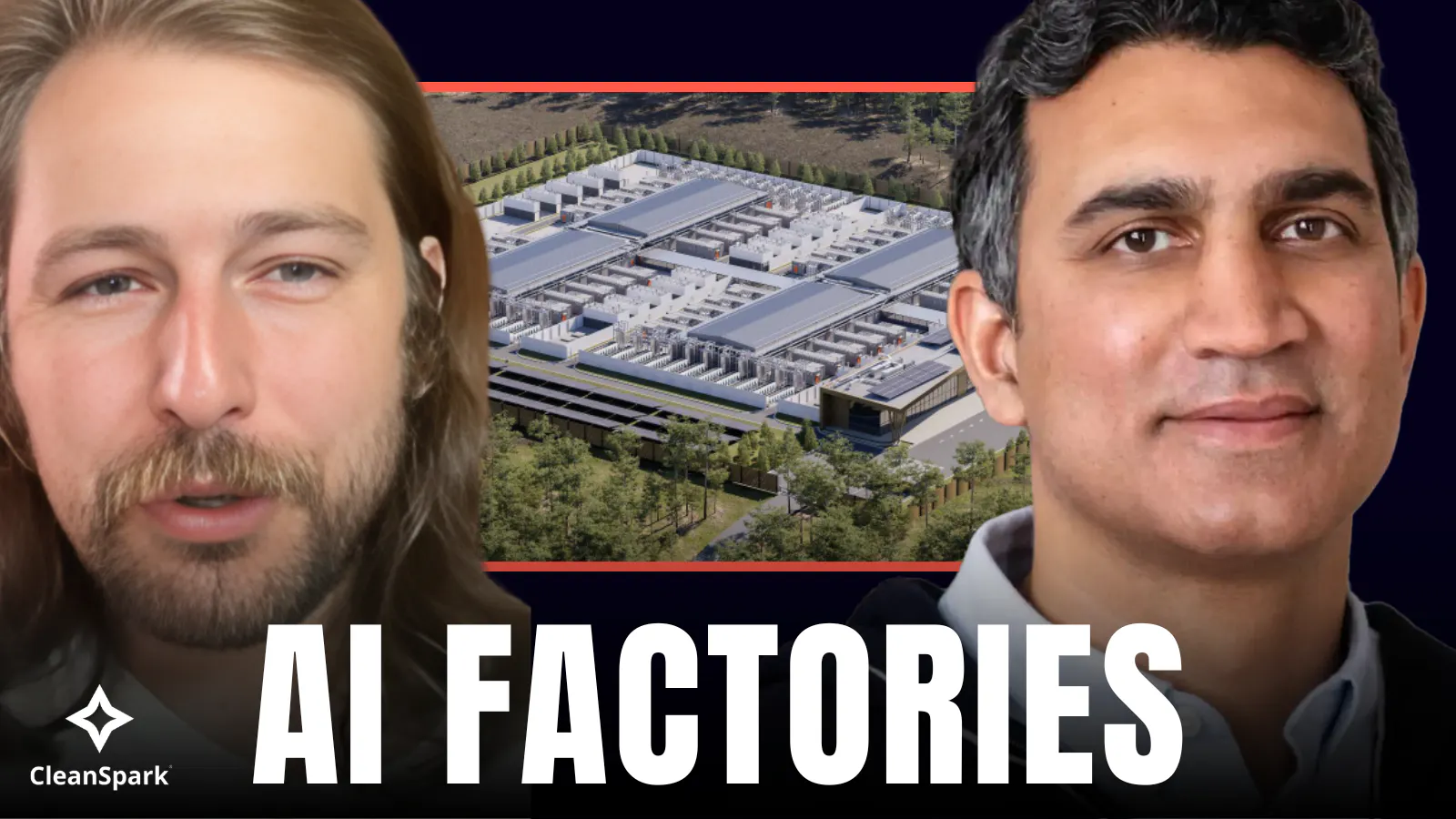
Blockspace
ENERGY: An Update on TeraWulf’s AI Expansion w/ Nazar Khan
00:53:04
TeraWulf is now building 5 sites for AI workloads after recent acquisitions in Kentucky and Maryland.
Loading summary
Transcript59 lines
- [00:00]
Nazair Khan
People say, hey, all these bitcoin miners, you know, how can they really catch up? And how can they work with some of the biggest companies in the world? How can they compete with folks that have been. Have been building data centers for 10, 15 years? And part of it is for better, for worse, we come at it unconstrained. We are not saying, hey, this is how we used to do it five years ago or three years ago or seven years ago. Therefore, it should be something like this. We're coming out and saying, what's the issue? What's the problem? What are we solving for? And how do we go about coming up with this solution for it? We may be those folks 10 years from today and say, oh, yeah, we used to do it in this way, but today I think we do have an advantage in that we're unconstrained in how we're approaching solving some of these issues. And as you said, you know, all of this is a whole new ball game. And having deep expertise in power and power distribution and how it works is really, you know, what's needed.
- [00:49]
Podcast Host (possibly Will or another host from Block Space Podcast)
Welcome back to the Block Space Podcast, brought to you by CleanSpark. 2025 was a banner year for public bitcoin miners expanding into AI, and 2026 is gearing up to be least as impactful. Case in point, Tera Wolf has already announced two deals for brownfield sites this year, one in Kentucky and the other in Maryland. So for today's show, we have Nazair Khan, the CTO of Ter Wolf, on to discuss these deals and the time to market for them. Give us an update on the Abernathy and Lake Mariner campuses that Tera Wolf is also expanding for AI output with its Fluid Stack deal. And we also check in on some of the geopolitical concerns regarding the war in Iran with rising oil and shipping costs, and ask him, what does all of this mean as an end game for Terror Wolf's bitcoin mining fleet? You're listening to the Block Space Podcast. We'll be right back.
- [01:47]
Nazair Khan
Hey, Charlie here.
- [01:49]
Charlie (co-host from Block Space Podcast)
Guess what? We just announced our next Bitcoin Technical Conference Op Next.
- [01:54]
Podcast Host (possibly Will or another host from Block Space Podcast)
That's right, y'.
- [01:55]
Nazair Khan
All.
- [01:55]
Podcast Host (possibly Will or another host from Block Space Podcast)
Op Next is back for 2026. We're running it back after a successful event at Strategies HQ in Tysons, Virginia, last year. And this year, we are bringing it
- [02:04]
Nazair Khan
to the Big Apple.
- [02:05]
Podcast Host (possibly Will or another host from Block Space Podcast)
At the iconic Time center in midtown
- [02:07]
Charlie (co-host from Block Space Podcast)
Manhattan, we're hosting the big names and projects that you recognize, like Robin Linus
- [02:12]
Podcast Host (possibly Will or another host from Block Space Podcast)
of BitVM, Nick Jonas of Blockstream, Antoine Ponceau of Chaincode Labs. And Calais of Bitchat will also be present.
- [02:19]
Charlie (co-host from Block Space Podcast)
And this isn't just for the devs. We have institutions talking with the developers. That's what Upnext is all about. We have Robert Michnick, head of digital assets for BlackRock in the building. We've got folks from mining pools, investor funds, bitcoin startups and other groups.
- [02:36]
Podcast Host (possibly Will or another host from Block Space Podcast)
With a ticket, of course, you'll get access to all the high signal programming and networking you could want. You'll also get coffee, catered lunch and access to the after party at Pub Key. You want to go vip. You'll also get access to the speaker dinner following the event and an investor brunch on Friday.
- [02:52]
Charlie (co-host from Block Space Podcast)
Tickets are capped at 300 and early bird tickets are already sold out. If you want to save yourself a spot, go to opnext.dev that is op n e x t.dev use code podcast to save 20% off a GA ticket to the event.
- [03:09]
Podcast Host (possibly Will or another host from Block Space Podcast)
Ticket prices go up every few weeks, so don't wait. Y' all lock in that ticket to date day.
- [03:13]
Charlie (co-host from Block Space Podcast)
We'll see you April 16th at the time center in New York City.
- [03:19]
Podcast Host (possibly Will or another host from Block Space Podcast)
Nazar Khan, welcome to the block Space pod. Welcome back. I should say last time you were on here it was the mining pod.
- [03:25]
Nazair Khan
Now we've rebranded. How you doing? I'm doing well. Thank. Thank you for, for having us back.
- [03:30]
Podcast Host (possibly Will or another host from Block Space Podcast)
Yeah, absolutely, man. Really appreciate you taking the time out of your busy schedule. We had your colleague Patrick Flurry on last time to talk more about the financing side of things. So I think this will serve as a really good compliment to that. Obviously there have been a lot of developments, but you're on the technical and operations side of things and there have been a lot of developments even so far this year kind of riding on, or I should say terrible is not one to rest on its laurels. You are building on some of the
- [03:58]
Nazair Khan
momentum from last year.
- [04:00]
Podcast Host (possibly Will or another host from Block Space Podcast)
And so far, the two biggest developments this year have been these two new sites in Kentucky and Maryland that y' all are developing. Can you give us a little bit of background on those and also anything that you can tell us about timeline for developing these?
- [04:14]
Nazair Khan
Sure. So we, a month or so ago, we announced two separate transactions. The first is a site in Kentucky, used to be the site of the former Century Aluminum smelter in Hill, Kentucky. The advantage that that site had is, is, you know, there used to be 480 megawatts of power flowing to support that aluminum smelter. And so that effectively is power that's readily available. Today we're in discussions with various counterparties as we speak. And we're targeting to have that capacity online in the second half of 2027. So we think it's a very unique site given its proximity to energization and delivery. And it's really just a question of, you know, who we want to work with and the time it takes to build the data center capacity that they're looking for. And again, this is an example of just our understanding of how the power grid works, where power flows, and also our ability to really roll up our sleeves and deal with things that are at these brownfield sites. So as a part of that process we're also remediating and cleaning up a former smelter site. So kind of in the picture you see here that entire, all of those, those lines, those pot lines from smelter will all be cleaned up, remediated and it will be that, that will be cleaned up. That site will be available for any expansions. And to the north of where the smelter sits, that, that open grass field there is where we'll be developing phase one and that initial 480 megawatts. And so that's our near term capacity that we're, we're working hard on as we speak to, to sign up a tenant with the targeted delivery for 480 megawatts gross, you know, about 380 megawatts net of capacity in the second half of 2027. You know, the team's been in Kentucky quite a bit here over the last few months. We had a local town, local town hall meeting a couple weeks ago that was very well attended. We had a job fair to get the local community up to speed on potential jobs that would be coming from this site. We've been, you know, it's been a warm reception from the local community and you know, we've enjoyed the dialogue so far and we're really looking forward to building out that site there at Hauswood. So that's kind of, you know, the near term opportunity that we have laid out for, for this year in terms of incremental contracting capacity. The second site was in Maryland. It's the former Morgantal coal facility that used to house a 1 1/2 gigawatt coal fired power plant. I was retired. There's currently 210 megawatts capacity that's operational online that largely is dispatched as a peaking facility. And our goal here really is just to kind of transform this into a campus that is bringing an incremental gigawatt of efficient gas power generation A gigawatt of load paired with 500 megawatts of battery storage and the kind of two phases, you know, and breaking it down into half. And so given all the news that we're hearing around, you know, these, these loads must bring their own generation, and they need to speak to their ability to kind of bring their own power source. This campus really is designed to do that, right, Is to kind of pair both the load with the generation and the battery storage. Really helps us kind of manage the shape of that load with respect to the grid. And all of these will be interconnected to the grid. Right. So both the generation, the load, and the battery storage. And so these are all grid resources, both from a gen perspective and from a load perspective. And when all is said and done, the site will be a net supplier of energy back to the grid. And so the state of Maryland has not had much dispatchable generation that's been added to its system for a number of years. And so we've been working with the state or county officials in getting them up to speed on the overall plan and the various steps that we have to take to do that. So that's a couple of years out in terms of the capacity kind of come online. And so we're thinking end of 28 into 29 when the capacity will be available. But that will be, again, kind of this, this large campus that has both load and generation debt. So those are two big projects that, you know, added a gig and a half or so to our portfolio. And again, there's 500 megawatts near term with Kentucky and then a gig, you know, longer term with the Morganton site. And, you know, I think it's interesting to note here, if you look at the sites that we've, we've played at, they largely been, you know, former industrial sites, right? There's been some industrial activity that occurred at the site, and whatever that used to be is no longer occurring. And we're kind of coming in and picking up the embedded infrastructure repurposing. And so what's unique about both these sites, when you had an aluminum smelter, the last thing that the developer of that aluminum smelter wanted to do was to have a single point of failure on power coming into that site. Right? You're running these pot lines. They can't stop mid midway. And so redundancy and reliability of that flow of power is critical. And so at Hawesville, we have five different lines coming into that site. So five different 161kV lines coming into site. And so that redundancy is the same thing, that data center loss. Right. So from a grid reliability perspective, having that embedded redundancy back to the grid we think is, you know, invaluable. Likewise, in Morgantown, that used to be a 1 1/2 gigawatt coal fired power plant. Similarly, power is being generated at that plant. The last thing that the owner of that power plant wanted was a single point of failure in getting power out. So likewise now we have nine different kind of transmission lines that come to that site serving three different utilities. So again, it was a gigawatt and a half hour. A considerable amount of energy is moving, you know, out of that, that node. And so that infrastructure there is again ready for us to use to gain both who power out as well as bring power in at the scale that we're talking about. So these former industrial sites we think are pretty unique in their embedded infrastructure and really feed into what the customers that we're working with really want is kind of reliable and redundant supply of power.
- [10:14]
Podcast Host (possibly Will or another host from Block Space Podcast)
I'm happy you brought up that redundancy because this is an off the cuff question, but when I look at the battery storage element to this, it's one of the first times I've seen that with specifically public bitcoin miners that are expanding into AI and hpc. What was the rationale behind going after battery storage for a backup to complement, you know, those multiple lines of power that are coming through the site versus something like a NAT gas turbine?
- [10:39]
Nazair Khan
Sure. I mean we're going to have the NAT gas turbine and that will be, you know, that dispatchable source of energy. The battery is really, I think, kind of twofold. One is it can serve as a pretty effective peak shaving mechanism. So if you think about the grid and the challenges it has, it's really when peak demand is occurring. People at the company make fun of me all the time for always bringing this up, but there's 8,760 hours need. And you know, the system is really designed to kind of meet peak demand that happens a few hundred hours a year. So the entire system is designed to meet what happens in those few hundred hours a year plus some reserve margin. But the vast majority of the hours a year are not peak demand. Right. You're not hitting peak demand demand. You know, 1am on any given day, 2am on any given day, you're nowhere near peak demand. And so if you have a mechanism where when that peak demand is occurring, you can shift that capacity out of the system. Right. So it's not impacting the grid, that's an invaluable resource back to the grid and being able to kind of move that demand away from the grid and have it being served, you know, kind of, you know, at, at, at the site. So one is, is just kind of, it's, it's an important rethink grid reliability mechanism, particularly with these large loads. And then second, you know, we can use it, you know, facing the load as well. And so if you think about the way these loads behave, they're not running kind of flat out at the same level 24 hours a day, 365 days. Right. Depending upon the type of work that they're doing, depending upon the type of loads that they're running with capacity, you can have variations and fluctuations with respect to kind of that, that, that demand profile. So the battery also serves as a buffer with respect to just the shape of the load itself. And so again it serves a dual function of being a grid resource, kind of being able to move, shave off kind of peak demand when the system is kind of at or close to peak demand and also can kind of serve as a buffer for the variability that the load episode will have in and of itself with respect to kind of how the various work functions it's performing are being ui. So for us, you know, we think as we go forward and start to add, you know, generation to the, the sites that we're building, it's not just kind of the dispatchable, it's like kind of baseload generation and support. We think these batteries will become an ever increasing part of the mix as well. You know, over the last couple days you saw that Google made a pretty announcement with a company called Form Energy, which is a long duration battery. Again it's this very same kind of thought process to really be able to have resources that can be again beneficial both to load and to the grid. When you're going to package, packaging them all together.
- [13:15]
Podcast Host (possibly Will or another host from Block Space Podcast)
Yeah, to wipe the egg off my face there for a second. Of course you're not going to have a NAT gas generator on top of an already NAT gas plant. But it makes, it makes a lot of sense that you would want to park some sort of battery there if you're going to actually be generating the power as well. But that's really cool to see. I think it just goes to show how dynamic power management is, is going to, is becoming and is going to become especially for these high performance compute data centers.
- [13:39]
Nazair Khan
And it has to be right. I think the other thing was we see, we look at the Market. Part of the reason you have all this discussion on bring your own generation and what the impact data centers are having is largely the mechanisms that were built to bring new generation to the grid really haven't worked, whether that's in PJM or other markets. You know, there really hasn't been incremental additions of new generation supply to meet kind of the ever increasing needs of the system. And so in some way, you know, I think there's a unique opportunity here where we have these large concentrated loads being driven off data centers. And I do think that done properly and done with thoughtful intent, these drivers of load can help to kind of transition and augment what the system needs, which is kind of incremental, bulk incremental generation, but also kind of a far more nuanced approach to managing variability and fluctuations and kind of a low profile that exists. And again, we think as we, you know, bringing these loads on, you know, part of our job is kind of be thought leaders and bringing those solutions there.
- [14:50]
Podcast Host (possibly Will or another host from Block Space Podcast)
So one more note on these before we move on, and I know that you probably can't say very much about this, but I have to ask, you know, where is Terra Wolf in conversations for tenants for these sites? Is there anything you can say about where y' all are at in that process?
- [15:06]
Nazair Khan
Sure. With Kentucky, if we're telling folks and you know, we had it in the slide deck here, we're targeting a delivery of capacity. This is kind of data center capacity. The second half, 2027, it takes us 12, 15 months to build a data center. We're in March of 2026 now. And so we're in full swing on discussions. And again, we're targeting to have over the next couple quarters here an announcement in announcement with respect to tenants for that site. So we can then spend the 12 to 13 months to build past the flood. So those are. Discussions are happening as we speak and underway. And again, we are optimistic that, you know, that will happen here over the next couple quarters. And we kind of feed, feed into that, you know, second half of 2017 delivery for Kasia Farm Line. With respect to Morgantown, we are defining, I would say kind of the schedules for the availability, delivery, power. So there's some work we have on our end to do. And as I'd mentioned earlier, we're targeting kind of, we're targeting energy availability at those sites, you know, late 28 into 21. So there's a little bit of time that we had before we can have substantive discussions with customers around that. And you know, when we have these discussions. You know, the very first question is usually when is it available? When can, when can it be available? When can I get my hands on Operation Compute? And if we can answer that cleanly, there's usually a pretty fruitful discussion to have. And if there's some variability in that and they typically go to other places to have discussions before they come back. So for us, you know, I think there's a little bit of work we have to do in Morgantown to shape up the timeline for delivery of power there, which will, then they can lead to those discussions.
- [16:52]
Podcast Host (possibly Will or another host from Block Space Podcast)
Makes a lot of sense. And CEO Paul Prager said that there are. The demand is so significant for all of these different sites. I'm sure Terra Wolf shareholders will be keeping their notifications on over the next quarter for, you know, future partnerships and deals with. He also, yeah, he also called the brownfield development that is becoming Yalls bread and butter your model or our model for Terra Wolf. You've kind of already touched on some of the benefits of that. But what are the benefits of going after these brownfield sites? And for those who aren't familiar with the term, can you maybe uncheck it everyone?
- [17:27]
Nazair Khan
Yeah, I mean, so greenfield is, there's a big grass greenfield that's never been touched. And so what, whatever you're doing for the first time is you're kind of really moving the dirt for the first time. So that's, you know, in industry parlance, Greenfield and brownfield is, is something's happened, right? That grass was torn up, building was put up, smelter was put up, a power plant was put up. It's no longer used for that purpose anymore. There's no longer a grass, green grass field. It's a bunch of dirt and you're figuring out what to do with it. The challenge is there's, there's been something there that you maybe have to clean up, you have to remediate. But the benefit is, is there's probably embedded infrastructure that was put in to support whatever that plant operation was. So when we talk about brownfield sites, again, it's really heavy industrial sites that have been used for these purposes for 30, 40, 50 years plus. It's unlikely they're ever going to be used for anything but some industrial purpose given the history that they have there. And as I said earlier, the benefit that we see, which is, you know, in some sense in our mind undervalued, is really the embedded infrastructure that comes with that site. And so our Lake Mariner site, for example, was a former coal fired power plant. It was connected to the highest voltage transmission line, the state of New York. It was designed to move hundreds of megawatts of power in and out of that location. We showed up and rather than using those transformers to step up the voltage to put it onto the grid, we're using those same transformers now to step down the voltage to bring them in to our data halls. And so that embedded infrastructure has a cost component, obviously. But in addition to that cost component, and sometimes even more valuable, is a time component having all of that embedded infrastructure there fully integrated into the system, into the grid. The grid operator understands it, they've been working with it, the utilities have been working with it. And so the time also component is critical in thinking about the value of these rockless sites that we've been going after.
- [19:28]
Podcast Host (possibly Will or another host from Block Space Podcast)
One more note on construction for Terra Wolf's growing portfolio. I believe it's at five sites at this point. Two plus gigawatts of total potential capacity for Abernathy and for Lake Mariner. What updates can you give us on those sites? And a follow up question to that, are there any things that you could see potentially delaying build outs for those?
- [19:53]
Nazair Khan
So, quick updates on construction at the Lake Mariner site. We've delivered about 40 megawatts of capacity to corp 42. The balance of their 60 megawatts of contracted capacity will be online prior to month end. That's fully, fully, fully on Track here. For CB3, we're targeting a mid May delivery date, CB4s Q3 and CB5 is Q4. So those are all dates that we have. I think we put in our investor deck as well. The activity at the sites are in full swing. You know, we have a lot of people at the site every single day, all over the site. Again we've got three buildings, new construction here, all at the same time with CBP 4 and 5. Given where we sit today, we are, you know, optimistic with the schedules that we have. You know, we, we have a very intimate and close relationship with our tenants. There's not a, any information gap in what's happening with respect to construction at the site between us and our tenants. And they've got the very same goal that we do, which is to bring that compute capacity online as efficiently and safely as possible. And so they've also been great partners for us in helping us ensure that we're on top of things. And so that's Google, Flutestack, Flutestack's underlying tenant. All of them again, have been wonderful partners for us and have been great resources in ensuring that we're working towards these dates. So as we sit today, we are remain committed to these goals. And so far everything is on track for the schedules that we have here. Abernathy is a Q4 delivery as well there. Things are full swing there as we speak as well. The benefit that you have down in Texas is you don't have the conditions, winter conditions that we saw quite a bit of in upstate New York. So we were able to get done quite a bit of work in January, February at that site. And, you know, things are working in pace as we speak as well. Well, so those are all the sites that we, that we have in construction. Again, all of that capacity is scheduled to be delivered prior to the end of 2026. What's important for us really is getting done every single day the various tasks that are on schedule. And if you think about where slips start to occur from an equipment procurement perspective, you know, all of those things have been procured. A number of those things are already on site. So for us, it's not really the availability or the procuring of specific, specific pieces of equipment. It's more just putting it together at site. And that's really a, a daily job of you've, you have a certain number of labor hours that you got to get done on various scopes every single day. And if you get done 80% of it every day, you can, there's a compounding effect that starts to kind of have a real impact on the schedule. And so we're really focused every single day on being extremely vigilant on ensuring that we're getting, that we're supposed to get done. So we kind of come back the next day and do it all over again and achieve those hours. And so long as we continue to maintain that discipline and get done those things every single day, the schedules that we have should, you know, we should be able to maintain them. And if we start to slip on that, that's where those slips start to occur. And so, you know, knock on wood here. You know, so far we've been able to do that, you know, even in upstate New York through the winter season. So, you know, we, again, we're, we're pretty optimistic here on where we are with respect to construction. That being said, you know, there's work to get done. And the dates I just kind of gave you are on us. You know, for CB3, for example, that's literally within, you know, 60, 70 days here that were, you know, kind of, you know, that mid May target. So, you know, there's a lot that's happening there and we, you know have good visibility in where we are there. CB4 and CB5 are all in sync line. We are again in good spot with scratching Scheduler.
- [23:59]
Podcast Host (possibly Will or another host from Block Space Podcast)
We are CleanSpark, America's Bitcoin miner. A publicly traded company with the largest operating hash rate powered entirely by self operated infrastructure across four states. This is our proof of work. We are setting the standard for what's next. Learn more about the intersection of energy and bitcoin@cleanspark.com so you'd mentioned, if I heard you correctly just then, that a lot of the procurement for raw materials has done been done in advance. I'm curious if the conflict in Iran and the effects on shipping. So I mean and obviously it's not like you are going to the Emiratis or the Gulf states to buy raw materials, but the cost of oil, cost of shipping are going up as a result of this conflict. Do you have any conversations internally about how that might impact your forward guidance for building these data centers or your capex for these sites?
- [24:59]
Nazair Khan
Yeah, so good, great, great question. And when we look at the capacity that we've contracted for, we're typically in advance of or soon thereafter locking up all of the various equivalent. So that part of the budget we tried to, you know, again lock down pretty quick and in pretty close proximity to, to having a contract go in and for the customers as well, that's important for them to have a understanding and visibility into. Hey, if you're going to deliver this project, you know, on these dates that you've given us, you know, walk us through where you are with respect to procurement on your so for the existing projects and know the, the impacts on shipping, the increase in the fuel cost to support, you know, and move, you know, things around the world and things that are stuck or kind of unable to move, that doesn't really have much of an impact on kind of the existing capacity at the end. So that's, that's, that's, that's the good news as we look forward. However, I think we're still pretty early in trying to understand the impacts and ramifications of what's happening in the Gulf as we speak. You know, a lot of the daily movements have been either stopped or significantly altered. The pace of the movements has slowed down considerably and it's, you know, I think it's again, it's a little early to be able to clearly quantify or understand the impacts. The longer this goes on, I think, you know, the more challenging it will be. But it is something that we are talking about and thinking through, particularly as we're talking about kind of contracting new capacity. So we talked about Hasbro earlier. We're wearing discussions with customers as we speak. And so there is work that we're doing on our side to ensure that whatever, wherever we are, those discussions we're reflecting upon potential impacts that we could have on things that are coming from, from, from different parts of the world with respect to delivery of that. And so that again it's, you know, I don't know, we're on day 10 or something or 10 or 11 here on the current situation in the Gulf. And you know, we are, we are watching it closely. But again it's in my mind from where I sit, you know, it's a little bit early to, to be able to speak to the specific and quantifiable requirements.
- [27:16]
Podcast Host (possibly Will or another host from Block Space Podcast)
It's hard to divine anything from it. I mean the fog of war hangs over all the information coming out of the region and half the time you're getting hit with propaganda from either side or AI videos. I also, you don't even know what's going on necessarily, even with the shipping. I saw some analysis earlier that suggested some of these carriers are spoofing their transponders so that they can't even be tracked in the Gulf. That may not be true, but I just think it goes to show that the information environment is so muddy with this whole thing. But we won't get into geopolitics too, too much on this, I guess. Yeah, next time for sure. Nas, last question on the operational side for some of these new sites and then we'll get into a few more questions before Did I hear correctly that the Maryland site will continue to be a net exporter of energy to the grid? I have to ask this because it just popped in my head. Another off the cuff question. How does managing a power plant add to Yalls operational complexity? I mean if you're going to be building out this data center, you're going to be consuming it for on site use for Terawulf, but you're also going to be managing these flows with the grid. What does that do in terms of hiring, in terms of operational complexity for
- [28:25]
Nazair Khan
yalls company prior to TerraWolf we had a company called Veil of Energy and Veolf Energy was a owner, operator and developer of power generation facilities, both thermal and renewable domestically in the United States as well as a number of overspeed jurisdictions. At our peak we owned over 5,000 megawatts of generated capacity. So running building Operating power plants was our entire business up until 2018, 2019 when we shifted from being a supply side resource. We were putting kilowatts of electricity onto grid and being a load resource where we were taking that power initially for mining Bitcoin and more recently even putting into AI data centers. So for us it's kind of going back to our roots and we're very well equipped. Our team is excited that they get to get their hands back on power generation facilities. As I mentioned at Morgantown, there's an existing 210 megawatts of capacity that's online there. Again, it's peaking capacity. And so the team that's going to be responsible for running that is being ramped up as we speak. So the skill set and expertise that are required to do those things have been a part and parcel of who we are and the DNA of the company prior to the evolution of Terawulf. So yeah, we're just ramping that back up and I think given where the market is, we feel very excited that more and more. So having to be able to speak to your ability to design, develop, operate, build power is a critical component of being able to land a customer on the back end and building data centers for them. So for us again, this is kind of going back to our roots. And when you think about just the day to day operations, again, we want each one of these resources to be interconnected to the grid. So that means the data center box, if you want to kind of think about that, will be interconnected to the grid, will be pulling power off the grid. The power plant box will be interconnected to the grid and be putting energy onto the grid. The battery storage box will be an interconnected resource to the grid and also kind of have an interconnection back to the load as well. So even operationally there's going to be a team that's responsible for running a power plant, there will be a team that's responsible for running the data center. There will be some crossover between the two, but again those are two separate and distinct infrastructure assets that will be operated and we have skill set expertise to be able to support them. And then sometimes, you know, we get the question of, you know, how do you say you're a net supplier of energy? And when you think about it, a 500 megawatt gross load is something like 480, 400 megawatts, sorry of critical it. And when you're designing, you're designing for PP and so you're designing for ppe, so you have the ability to, to have enough power to run everything at a peak. That peak UE is like peak demand. And power doesn't happen every single hour of the year. You're probably, your average is usually, you know, 0.15 lower than your, your PPE just depending upon where you are. Maryland, you know, summer, it can get hot and humid, will be close to ppe. March and April, you know, to probably what have that much. And then January, February, we probably, we probably won't be running our chips. So when you look at the average throughout the course of the year, we'll probably be closer to a 1.15, 1.18. So that again is just effectively megawatts that are available to be pulled in that may not be pulled in every single day. On the gen side, we're going to have 500 megawatts of gross power that we're putting onto the grid. So again, already just kind of when you're lining up your gross capacity on your data center with your gross capacity on power, we're usually going to be kind of a net supplier. Add into that, on top of that the battery storage. Add into it, on top of that, the 210megawatts are there already. You start to see how again, this could be a very, you know, useful resource. Back to the grid in, in a part of the state of Maryland which has been, which used to have a lot of power but, you know, now does not have any source of power generation. So. So for us, you know, we're very excited about this opportunity here and you know, the discussions we've had today have been very well received as well.
- [32:33]
Podcast Host (possibly Will or another host from Block Space Podcast)
Given that history, it makes sense why Terra Wolf has gone after specifically these power plants for these brownfields. I also love visualizing this kind of electrical puzzle that your engineers have to solve when they're thinking about how to balance all the load between the power plant or between what they're going to send to the grid, between the data center and also the battery storage. You know, it's like this beautiful little interconnected electricity puzzle.
- [32:56]
Nazair Khan
Yeah. And this is where. And this is a microcosm, I think of just a grid more broadly like this is, you know, what we're doing. Morganton is a microcosm. There's load growth coming, there's a need for new generation, and how you now integrate all of these things together, particularly with the shape of how these compute loads are going to operate. Because more and more, as more and more of these large compute loads come online, their behavior and the shape that they have will have a ever increasing impact on the overall, how the overall grid is also behaving. And so for us again, it's an exciting part of what we're doing. And as we look ahead more and more so we believe that those folks that can best understand how to maneuver and navigate through that puzzle will be able to scale most efficiently and effectively. And those that can't, won't be able to do so. And so for us, we think it's going to be an ever increasing important requirement that's needed to continue to scale.
- [33:53]
Podcast Host (possibly Will or another host from Block Space Podcast)
But moving on to the operational side of things, one thing that stood out to me in Yalls earnings call. I don't remember which analyst you were responding to, but you made this point that you and Flu that Terra Wolf and Fluidstack have found this groove with this 168megawatt rollout. And you had mentioned that some of your peers had basically copy pasted this. And the first one that comes to mind for me is Cypher with their deal with Fluidstack, which was shortly after Yalls. I'm curious, why is 168 megawatts here? The magic number, it just is over about 200 megawatts gross, 160 megawatts of critical IT. What makes that number the sweet spot for rolling out one of these, one of these AI data centers, at least for the first phase, it's really the
- [34:40]
Nazair Khan
architecture of the hardware that's that's using capacity. And so within that 168megawatts, there's four data halls. Each data hall is 42megawatts of net critical IT capacity. And each data hall then is comprised of a number of rows of racks. So it's really the hardware architecture that drives that. And so for Fluidstack, their end customer and the hardware that's being deployed, that is really a good combination for what they're looking. Again, it's going to scale 168 megawatts. Still a lot of power. It's these four data halls that have the compute capacity delivered there. And again the end goal that these folks have really is to be able to run as much of that capacity in parallel, not as individual chips by themselves. And so again, the architecture that we worked closely with Fluidstack and Google, the developers really to optimize the use of that hardware. And that's where we ended up on this 162megawatt design comprised of four data halls.
- [35:41]
Podcast Host (possibly Will or another host from Block Space Podcast)
Yeah, I was expecting it to be a kind of cut and dry. This is the way the Math works out. There's no, you know, sprinkle in an eye of newt and then you get them data center coming out of nowhere.
- [35:50]
Nazair Khan
Right. I think, I mean, that's what when we started, you know, if you look at CB1, so CB1 is 16 megawatts net 20 megawatts gross. And why did we build the 16 megawatt net 20 megawatt gross building at the time? And this is going back couple years now. The feedback that we were getting from the large OEMs and different customers that we were speaking to is the optimal cluster size. Right. The cluster that they wanted to run as a single cluster was somewhere between 15 and 20 megawatts. So this is again 24 months ago. And that's where we said, okay, what do we have? What can we do? How do we end up in this 15 to 20 megawatt zip code with respect to a building that can run as a single cluster? And so that's how CV1 came about. If you look at what we're doing now, these clusters are, you know, effectively 42 megawatt gate halls. And so the 15 to 20 megawatts now is a larger number. As time goes on, could you see that number increased and scaled up over time, particularly as you have next generation chips going online that have higher power density? Maybe, probably. And so I think part of the work that we are doing and kind of all of us in the space are doing right now is really optimizing for what we have in hand today with the full understanding that what there is today will likely be different tomorrow and two and four years from today. And how do we build an infrastructure that optimizes the need for what exists today, but embeds within it enough flexibilities that whatever comes tomorrow can, you know, quickly and efficiently be integrated as well? So that's just a little bit more context of how we come up with some of these things. And so initially I thought we would come up with these cookie cutter 42 megawatt net 50 megawatt pro. So we just kind of keep rolling them out. That thought existed maybe for three or four months and then I was quickly disabused of it. And now we spend time with our customer to ensure we have an understanding of what it is that they're deploying, what they're thinking today, but also where they expect it to be over time, and ensuring that there's enough redundancy and flexibility built into the design that we have for them that they can continue to grow. We want to sign 15 year deals. And more likely than not, over 15 years, there will be different configurations. So that's just another layer of context on how we've looked at these things. Yeah.
- [38:16]
Podcast Host (possibly Will or another host from Block Space Podcast)
When you give the context of Core 42 and at the end there, talking about how things could change drastically over 15 years, to me it makes sense that you'd want to have phased rollouts across multiple different sites so that you can actually learn in trial and error what's going on one site and evolve as the industry evolves. Because I think that's something that a lot of folks who may not track this very closely, they don't really appreciate. This is a new ball game. This is not traditional data center storage. This isn't traditional data center compute. This is an entirely different new class of compute. And the rules are changing and the best practices are changing as you all build these data centers. Which is probably pretty exciting, but also, I would think, kind of frightening in some ways, or at least anxiety provoking, maybe the good type of anxiety, you
- [39:00]
Nazair Khan
know, but yeah, no, it's each successive building that we've done, there have been learnings from the prior one that we have rolled in into the next. And it's not just us, it's the customers that we have as well. They're learning with us as well. If you think about the compute capacity that is being deployed, the equipment that they're deploying today probably didn't exist two years ago. And so there isn't this long history of looking back and saying, hey, what did we do here, here, here, with respect to the deployment of this equipment, and given the pace of change that's coming from the hardware side, that will likely continue here for the next few years. And so that's a good point and I think an underappreciated fact. And people say, hey, all these bitcoin miners, how can they really catch up? And how can they work with some of the biggest companies in the world? And how can they compete with folks that have been building data centers for 10, 15 years? And part of it is that for better, for worse, we come at it unconstrained. We are not saying, hey, this is how we used to do it five years ago or three years ago or seven years ago, Therefore, it should be something like this. We're coming at it and saying, what's the issue? What's the problem? What are we solving for? And how do we go about coming up with a solution for it? We may be those folks 10 years from today and say, oh yeah, we used to do it in this way. But today where we sit right now, I think we do have an advantage in that we're unconstrained in how we're approaching solving some of these issues. And as you said, all of this is a whole new ball game. And having, I think, that perspective, but then also having a deep expertise in power and power distribution and how it works is really what's needed today. And that's where we've been able to demonstrate both to the folks that we've signed deals with, but also to others that were a very credible and useful part of the world.
- [40:55]
Podcast Host (possibly Will or another host from Block Space Podcast)
World, you know, Tom Massera of Cathedral Bitcoin made a similar point on a podcast that we published in Believe February that bitcoin miners are actually more suited, like you said, than the traditional data center guys, partly because they have had to learn on the go. And it gives you that kind of outsider's perspective on old problems.
- [41:16]
Nazair Khan
2.
- [41:16]
Podcast Host (possibly Will or another host from Block Space Podcast)
Two more questions, Nazar, and then we'll. We'll let you go. Really appreciate the time. I'm curious. I. I see growing dissatisfaction, or how should I say, growing, growing ranks of disaffected people who seem that they just need something to be mad at, who are pushing back against data centers. And New York just had a bill introduced for a moratorium on data centers. There's been similar or similar efforts, or at least chirpings of similar efforts in other states. Curious if that's anything Terra Wolf is worried about or if that has even come up at all in internal discussions.
- [41:53]
Nazair Khan
So for our capacity in New York, it's not an issue that if the moratorium were to come about, there would be for anything going forward where we delivered capacity already, we're going to deliver all of the contracted capacity we have prior to Iran. So it's not as much of an issue of what we have going on today. But the question really is going forward and whether it's in New York or other jurisdictions around the country,
- [42:21]
Charlie (co-host from Block Space Podcast)
what will
- [42:22]
Nazair Khan
the response be to be? Continued desire and demand for incremental power to be able to run all of these data centers. And so I think there's kind of a couple of different things to think about. One is the issue that exists today is not wasn't caused by the data centers. It was really caused, I would say, principally by the mechanism, the market mechanisms that were developed to bring new generation on, and not just for data centers, but for any kind of for load really haven't worked. And so the places that you've seen meaningful addition in dispatchable generation capacity are usually places that they're integrated utilities, meaning utility owns generation, they own transmission, distribution. And so there's one place to have a discussion, get approval and add new generation. Those markets that were relying on the private sector to bring new generation on haven't seen any meaningful addition of generation. Right? So prior to this demand coming from AI, we were in an environment of flat to slightly negative low growth. And so in that environment, the fact that this was a problem didn't really matter. Everyone, I think, generally understood that this was a challenge, but it didn't really matter because that need for incremental generation really wasn't there. Now we have this need and all of a sudden those issues that were latent, that existed and were latent are now front and center. PJM is kind of, I'd say, the most glaring example of there's been talk of emergency measures to kind of have bring new generation online. And so again, I think kind of the root cause here really is more of a market issue with respect to new generation coming on. And the biggest driver of load growth, which is, you know, highlighting this issue, is data space. So I think again, the pointing of the finger at data centers really kind of comes from, in my mind, from that kind of a construct and backdrop. And then second, when we start to have to add new stuff and cost money, and given the way some of these markets are set up, there is a line between increasing load and increasing cost to all of the ratepayers and assist. And I think whether it's Carewolf or any other folks that are operating in the data center sector have been clearly saying that if done properly, these loads should not be adding incremental cost to the system. If anything, they should be assets to the system in that they can help amortize. The fixed cost of the system was more volume. And so when we spend time and whether it's in Kentucky, Maryland, New York, wherever it may be, it's really spending time in ensuring that the shape of our load and how our load behaves really can be a resource to the grid and not a burden back to the grid. And if done improperly, there are ways that an increasing load can be a burden to the grid. And so again, that's just another layer, I think that which directs to why this is coming up. The general reaction of saying, well, let's not do anything, let's take one year, two years, three years to stop and understand what's happening. In concept maybe sounds good, but in practice, I don't think really works. Just the pace at which the Industry is evolving. If you do a one year study, more likely than not at the end of your one year, whatever you've studied probably is different than what's current at that point in time. And then two, as we talked about earlier, there is a big technological component that I think the grid has not fully utilized in being able to optimize. And so what do I mean by that? We have this wonderful tool called AI which is really driving this. It may take over a number of jobs that exist today, it may do all sorts of functions that we couldn't even contemplate or imagine today. But that same technology and the value of that really hasn't been fully utilized to best manage kind of the distribution and the use of power. And so again, getting back to this 8,760 hours a year, every single one of those hours operates and behaves differently. And to the extent that we can start to figure out how best to optimize the flow of power in certain hours and the use of power in certain hours, there is a tremendous amount of value that's kind of embedded within the system today that just isn't unlocked. And more and more so technology I think will be a solution to some of these things. And that's where doing things, getting things up, designing things, figuring out what has worked, figuring out what could be tweaked and enhanced is more valuable than taking a step back and saying, okay, let's have discussions and study this stuff and come up with the perfect solution. So I just don't think that really, really exist. So for us, what we try to be is in front of these discussions and highlight what it is that we're doing, how we're doing it, ensuring that there's a full understanding from the grid operator, from the local communities, from the local utilities on how we're behaving what we are intending to do and ensuring that they can then measure us against that and again be a resource back to the system.
- [47:29]
Podcast Host (possibly Will or another host from Block Space Podcast)
Overall, I really like you highlighting the point that and it's not quite the cart before the horse, but the gripe kind of reminds me of that idiom in the sense of people are complaining about data centers when really you should be looking at why you should be worried about data centers taking the power in the first place because generation hasn't grown meaningfully long term mining pod and block space listeners will probably know I've said this way too many times, but you can go on EIA and you can just see where it plateaus in the 2000. It's really quite maddening actually because it just ramps up from like the 50s, it stops in 2000s, we start decommissioning certain baseloads and then we're at the present situation, but without getting too much on a soapbox. Last question I have for you nazr, and then I'll let you go. This is partly a bitcoin mining podcast after all. So we got to get the bitcoin mining question in here. What does all of this mean for yalls bitcoin mining operation? Will there be a total phase out? Will you mine opportunistically? Will there be some hash rate left? What's the future of Terra Wolf's fleet?
- [48:34]
Nazair Khan
So for now we continue to mine the capacity that we have. As the AI footprint ramps up, that may get cannibalized over time. So that will likely be a transition as more and more AI MagWatts online, there will likely be a capitalization of the bitcoin mining megawatts that we have. If you just look at the raw economics of what we make selling that capacity under AI versus what the economics of mining are today, you know, it's not even close. The mining economics of 2019 or 2020, you know, may have been close, but you know, that's not the world that we're, we're in today. So, so that, that, that the value of that power and the access to that power is significantly more valuable in the AI in the AI world. So that's really what's driving, you know, for us and I think for, for others as well. Just really how do we, you know, best monetize the value of that infrastructure? And, and that's going to come. AI Bitcoin mining, however, is in, in my mind, you know, the, the most economically rational load known to rank on. And every 10 minutes it's pretty straightforward on exactly what your economics are. And those 10 minutes are same, you know, doesn't matter time of day, time of year. Those, you know, economics for those 10 minute increments work the exact same way. So over time I will continue to believe that as we start to talk about again, how do we, how does this grid evolve and how do we both meet these ever increased needs from AI and other sources? Right. There's load growth from other areas that's coming around as well. General electrification is driving load growth as well. How do we meet kind of that growth in the system with the embedded assets we have today? And is there some sort of flex or swing load that can kind of be a buffer between that? And so I continue to believe that bitcoin mining can continue to serve that purpose. If we think about in 2019, 2020 and 2021, that buffer was pretty large, right? I mean, there was power was available, there was no real load growth. And so the pockets of buffer were fairly large. And so you saw a pretty significant infrastructure boom that occurred in the United States from that time frame soaking that up. That buffer has shrunk. Right, as more and more of it's been soaked up by AI. But there is, I think, a role to play for these highly dispatchable, economically rational loads. And bitcoin mining fits, fits within that. So for, for us, we are looking at, you know, how can we integrate some of that into the things that we do? Again, right now everyone's really focused on ramping up that AI capacity. But, but over time, as you know, the existing fleet is cannibalized. Over time, I think there will be some discussion on can there be a role for bitcoin miners to kind of be that buffer, that swing between peak PE and kind of average PE on a various data centers.
- [51:43]
Podcast Host (possibly Will or another host from Block Space Podcast)
Zarecon, thank you so much for joining us. Best of luck to you all for the rest of the year and we'll have to check back in in six months or so, see how things are going.
- [51:51]
Nazair Khan
Great. Well, appreciate for, for, for having us. Give her love to, to Will and the team as well and appreciate you you having us and we look forward to going back on.
- [52:00]
Podcast Host (possibly Will or another host from Block Space Podcast)
Will do, man. Thank you very much.
- [52:07]
Charlie (co-host from Block Space Podcast)
Hey, this is Charlie and Colin from Block Space Media, and you're listening to the Block Space Podcast, a show about emerging tech in Bitcoin, AI, energy and markets.
- [52:18]
Podcast Host (possibly Will or another host from Block Space Podcast)
We publish two interviews weekly with CEOs, investors, analysts and anyone else of consequence within these spaces. Plus we have a weekly news roundup for all the important stories you might have missed from that week. The show is perfect for retail and institutional investors, analysts, and really anyone who wants to keep their finger on the pulse of the stories that are moving bitcoin energy and data markets.
- [52:41]
Charlie (co-host from Block Space Podcast)
So if you've stumbled across us, make sure to search Block Space wherever you get your podcasts and on YouTube, hit the subscribe button, give us a rating. We produce bonus podcast podcasts and other content on our main feed, so you don't want to miss that.
- [52:55]
Podcast Host (possibly Will or another host from Block Space Podcast)
And if you have any feedback or comments to give us or shows that you would like to see and topics you would like us to cover, hit us up at. Hello, Block Space Media.