← Blockspace: AI & Bitcoin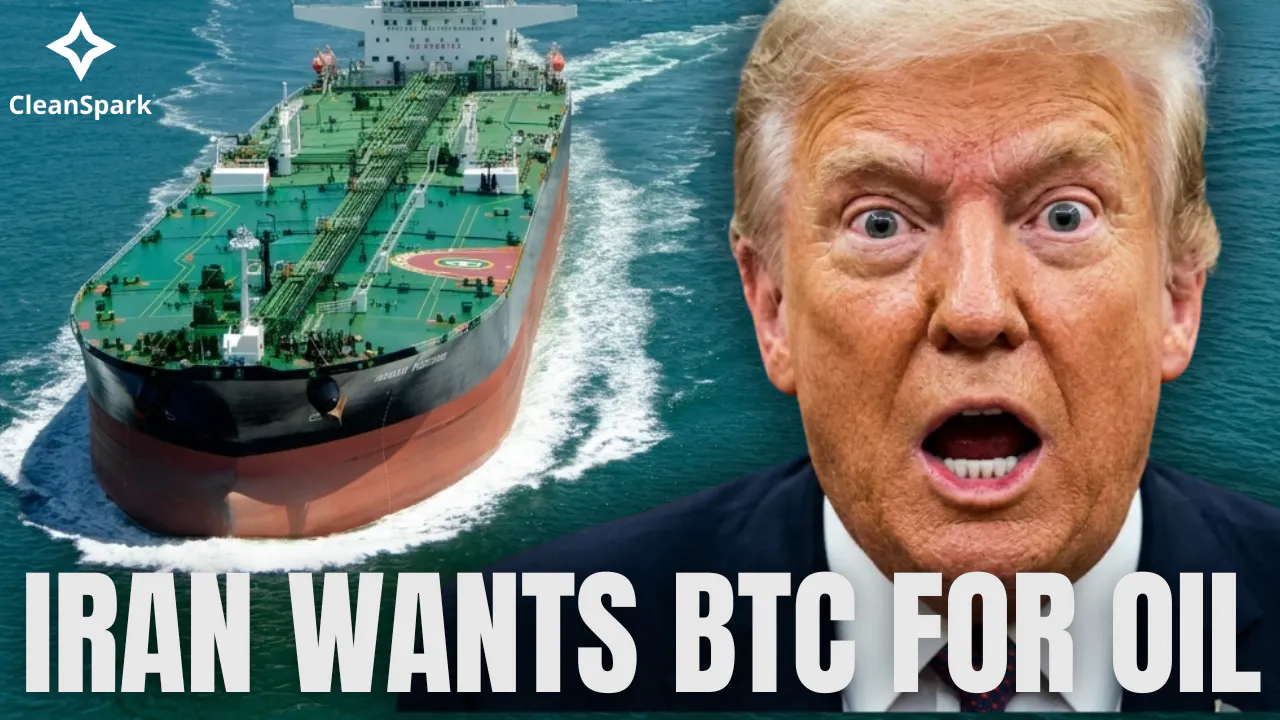
Blockspace: AI & Bitcoin
Iran Taxes Oil Tankers in BTC, Morgan Stanley Launches BTC ETF, the NYT Hunts for Satoshi
01:27:55
Iran reportedly wants shipping companies to pay a toll in BTC to leave the Strait of Hormuz, and the NYT thinks it has cracked the case on Satoshi’s identity.
Loading summary
Transcript128 lines
- [00:00]
A
Foreign.
- [00:05]
B
What's up y'?
- [00:06]
A
All?
- [00:06]
B
Welcome back to Blockspace Live, brought to you by CleanSpark. Iran wants your bitcoin. Well, they don't want your bitcoin, but they do want the bitcoin of shipping companies that are trying to navigate the Strait of Hormuz during the two week ceasefire that was announced last night. That will be our lead story today. One of the stranger ones I think I've come across since we started doing Block Space Live. And then we will follow it up with one of the biggest news items so far this year, certainly this quarter in Q2. Morgan Stanley becoming the first US bank to offer a Bitcoin ETF. And we also have some banger interviews lined up today. We've got Antoine Ponceau of chaincode Labs on first to talk about the things that he's been working on in anticipation of our OP next conference. We also have Jay Patel, the CEO of Lygos Finance to give us a rundown of the cracks that we are seeing in the private credit market and why insurers might be in hot water where they were exposure to private credit. But maybe not as much as some doomsayers might say. And then to close out the show we will be touching on Bit Deer's new ASIC, the A4 and the new York Times figured out who Satoshi was. Psych. They probably didn't. But we will be unpacking a story that dropped today from the New York Times. A one year long investigated expose on who the identity of Satoshi is. Probably won't shock you because you've heard this name thrown around for Satoshi before.
- [01:29]
A
Block Space goes live Monday, Wednesday, Friday at noon Eastern Featuring quick hits in the latest in bitcoin mining. We talk about AI now emerging tech. Make sure to like and subscribe. Get that notification button so you know when we go live. If you like this, it turns into a podcast shortly after we wrap up. You can find that anywhere. Podcasts are found Spotify, Apple, RSS and if you like this you will Love our newsletter. Newsletter.blogspot media.com Coming at you on Friday's good long form deep dives from Colin and I. Lastly we have a conference. It's just over a week out. You can still book that flight. There are a few tickets left. We are sold out on VIPs. This is a technical conference and investor conference in New York City. OP next OP N Ext there's only a handful tickets available. I'll see you in New York next Thursday. This show is brought to you by Clean spark ticker. NASDAQ listed clsk. More on them later on the show. Let's kick it off. Colin, I'm excited to talk about Iran with you because we've noticeably skirted the Iran issue because like everybody else and their dog is covering this. But finally, finally, it has something to do with Bitcoin. So we can finally unshackle ourselves and talk about Iran and bitcoin. But before that, we have something a little more timely. That's a joke, which you'll get in a second, because I've got in the wings, I've got Antoine from chaincode Labs, and we're going to talk about this very interesting thing going on on Bitcoin Signet. I'll have him explain. I'll bring him on here. Antoine, welcome to Blockspace Live.
- [03:13]
C
Hey, guys, thanks for having me.
- [03:16]
A
Yeah. So you are leading a very interesting demo. And this is pretty technical and a little bit deep to start off this stream with, but we're going to dive into it. Antoine, what is happening on Bitcoin Signet right now?
- [03:33]
C
So we are doing a demo of blocks on a test network that take a long time to validate. These are blocks that are not the worst case, very far from the worst case, actually, but would be valid on the main network.
- [03:53]
A
So let's get into this a little bit more. What does it mean to validate a block? And then why is it bad if it takes a long time to validate a block?
- [04:05]
C
Yeah, sure. So in Bitcoin, you check the state of the system for yourself. You check that you indeed own your own Bitcoins and that people transferring bitcoins make valid transactions. You don't rely on a third party. So in order to do this, you need to do some computation. And the amount of computation that you need to do necessarily bounds the accessibility to this sovereignty that is provided by full validation of the system to not have to rely on a third party. Accessibility to full validation is one issue with blocks that take a long time to validate. But another one is probably more important is that it creates perverse incentives for miners to try and delay their competition. Because in mining, as you know, something like a handful of seconds of head start can be a very big advantage for one miner and drive off the competition. So there is today on Bitcoin, ways to make blocks that take a very long time to validate. The worst case would be like over 10 minutes, over half an hour on a regular server, and over a dozen hours on something like a Raspberry PI that people use nowadays. But there is also the ability, because the very worst case is not. I don't want to say that it's an existential threat. It still costs some money to the attacking miner to create this very worst case. But there is also different blocks that you can create that cost a lot less to the miners, but still delay their competition for like 5 seconds or 10 seconds.
- [06:05]
A
So this is a range of like what we would consider to be edge case scenarios, but they do allow perverse incentives and various forms of unfair advantage or just really undesirable toxic things to happen on bitcoin. So and you guys are testing this, I guess. Like why do we need to test this? You know, bitcoin's been around for 16 years. It feel like, it feels like, you know, there's a lot of people working on it. Like, why is this test significant?
- [06:40]
C
It's really, it's not really a test. This issue has been demonstrated in private environments before. We didn't release all the details and today we're doing a demonstration rather so that bitcoin users can experience for themselves on their own nodes, on their own hardware, how long it takes to validate such blocks. And it's again only a minimal version of what an attacker could do. So they can see it for themselves. And the reason that we want them to see it for themselves is that the fix for this vulnerability is a consensus change. It's a soft fork and we need bitcoin users to activate soft forks eventually down the road. There is no activation proposal right now, but we want to build consensus so that bitcoin users will eventually upgrade to a soft fork.
- [07:34]
A
And this gets into what you're working on. Colin, did you want to.
- [07:38]
B
Well, I just wanted to ask a question to clarify kind of a two part question. So I understand correctly, the poison block attack a miner sends basically broadcast this block that takes a long time to verify. The other miners can't verify it in time before the next block is mined. That gives that miner an unfair advantage to mine the next block in the chain. That roughly how this goes down. I'm just trying to contextualize it for listeners who might be less technical.
- [08:05]
C
Well, there's two issues with the, the way the current bitcoin network works. The validation time is going to also affect block propagation time. Block propagation time is going to increase the stale rates for all miners, but it's going to increase it more for small miners than for big miners. So there is this unfairness giving an advantage to big miners, which is going to push mining centralization. But there is also, it's not unnecessary. Like we can upgrade, we could in theory upgrade the network, such as we can propagate blocks faster. But the validation thing is that a miner needs to validate a block before they start working on the block building on top of it. Today they sometimes skip the validation for very small amount of time, but if they skip it for longer, it can create systemic issues for the network. And so they are blocked by this about this validation time. And the attack would be for one miner to delay all its other competition to be mining on a stale tip for 5 seconds or 10 seconds. So that, that's essentially what you said.
- [09:18]
D
Right?
- [09:18]
B
So that. And thank you, I appreciate that, that makes a lot of sense. And my second part question, if this, if this vulnerability exists, why do you think we haven't seen it exploited? Or why do you think big miners haven't, you know, use this to their advantage?
- [09:35]
C
Big miners have been not doing a lot of optimization. There is many things that pools could be doing to reduce the steroids that reduce the propagation time that they have done, but most, most of it has been done by open source developers in the past that were just providing the public network with the resources to reduce block propagation time and the pools just adopted it. But there is many things, like for instance, they could Upgrade to stratum V2 to communicate with the hashers, which does reduce latency, which removes one of the main vulnerability that they expose themselves, having the hash rate stolen and they just don't do it. We have seen also in irrational behavior from some mining pools that had vulnerabilities that were well known, where you could just send a specific message on the peer to peer network to one mining pool and they would waste 30 seconds mining on a fake block hash. This is massive. And that was one mining pool that has 15% of the hash rate of the network. So we have seen that mining pools today have not been the most optimizing. But it doesn't mean that, especially as the block subsidy decreases exponentially, that they may not be incentivized to start optimizing more in the future or be replaced by other pools that do optimize better. So I think we should fix the incentives of the system before we start seeing such evil optimizations.
- [11:16]
A
Yeah, it sounds like it's really just a minor skill issue. So this fits in. You said there are fixes and the reason why you're leading this demonstration is kind of really, it just leads into the fix that you are spearheading on this called the great consensus Cleanup. Can you give me a short TLDR of that in what it is, why it does? How do you explain this to the normal listener?
- [11:48]
C
Yes, so I think the rational, the motivation is the one that I just described. There has been long standing bugs, vulnerabilities in the Bitcoin consensus protocol that are not an existential threat to Bitcoin today. And there's four of them. And the consensus cleanup proposal, which is now BIP54 addresses these four issues. It addresses them in a better way that was initially proposed. There has been iterations on the proposal to try to make the fix as non intrusive to Bitcoin users as possible. And I think we have achieved this. And the motivation is I guess just long term risk mitigations. You don't want to have security holes in your protocol. Even if they are very unlikely to be exploited. Some of them can be catastrophic. It's like very low likelihood but very high impact sort of thing. It's like a plane crash. Plane don't crash often, but when they do, they crash hard. And that would be the same if such vulnerability would be exploited on Bitcoin. Something like the time warp vulnerability for instance, that BF50 or also fixes. So the proposal is fix for long term vulnerability in the Bitcoin protocol.
- [13:11]
A
So last question before I let you go. You are presenting on this at opnext next week. What can we expect? Just a deeper dive into what you've described here. You've given this presentation before. Yeah, just what are we expecting?
- [13:27]
C
Yeah, I think I gave the presentation at Up Next, but voice bugs and the various fixes that are proposed by bip54 last year. I will attend Up Next in New York again this year and speak on this topic. So I think I want to maybe do a small recap on what we are talking about. But I also want to I guess emphasize the progress that has been done and probably the expected next steps from the engineers that are working on this proposal. And really we're talking of a software proposal. So at some point it will have to move from the hands of the engineers that are proposing it into the hands of the Bitcoin users. Which is why I'm trying to do such things as the demo. Because we knew about this block for a long time. We didn't have to do a demo on signet, we're just doing it to try to popularize.
- [14:19]
A
Well, I've got my signet node running. I haven't monitored too closely. But you're doing. This is the first of I Believe three demonstrations you're doing, so I'll be keeping track and maybe I'll throw out some tweets on observations I've had otherwise. Best of luck, Antoine, on the rest of the day and excited to see user reaction as the demos continue. Thank you so much for coming on Block Space.
- [14:45]
C
Thanks for having me. See you guys.
- [14:47]
A
See you around.
- [14:48]
B
Always something lurking around the corner of the next block.
- [14:52]
A
Yeah, let's go to Iran. Not, not physically, just in the conversation.
- [14:58]
B
Hopefully not. We're not Citrini Research. We're not going to send analyst number three. Don't ask about what happened to analyst number one and two now.
- [15:06]
A
Yeah.
- [15:06]
B
Okay, so some context for this and I'll go ahead and read the headline. I Iran Demands Crypto Fees for Shipping Passing Hormuz during Ceasefire. So for those of you who haven't been paying attention, Iran and the US and Israel reached a ceasefire agreement in late hours last night. A little bit slippery because apparently strikes are still ongoing from Iran to Israeli and Gulf state targets. So I'm not really sure how long this will shake out. Not a geopolitical strategist, though, so I don't have to. That's the great thing. But the Financial Times published this this morning in the wake of the ceasefire being announced that Iranian officials are asking for Bitcoin so that ships can clear the Strait of Hormuz. Now, Hormuz has become a choke point for oil trying to leave the Persian Gulf. And this choke point has then really siphoned a lot of the, or choked out a lot of the energy resources and exports, imports rather, that many nations that are dependent on foreign imports of oil need to actually keep the lights on, you know, to keep their houses warm, etc. And it's become a central point for the entire conflict. And in the 10 points that Iran drafted, reportedly to send to the US and Israel for negotiating points, one of the key points there is that they want to have control, continued control over the Strait of Hormuz. And it seems like they're going to start by trying to levy a toll on ships that are passing through in Bitcoin. Quoting directly here from the Financial Times, Hamid Hosseini, a spokesperson for Iran's Oil, Gas and Petrochemical Product Products Exporters Union, told the Financial Times on Wednesday that Iran wanted to collect tolling fees from any tanker passing and to assess each ship. Quote, this is directly from Hosseini. Iran needs to monitor what goes in and out of the strait to ensure that these two weeks aren't used for transferring Weapons, he said, whose industry association works closely with the state. Continuing everything can pass through, but the procedure will take time for each vessel, and Iran is not in a rush, he added. So what this basically looks like is they are telling. They're telling shippers, they're telling freight captains they need to email the Iranian government, tell them what their cargo is, and then they have to send a payment in Bitcoin for a dollar for every barrel of oil. So that means for a supertanker that can hold 2 million barrels of crude, that would be $2 million to pay the troll toll to get through the Strait of Hormuz. And obviously they want to use Bitcoin because it can't be stopped. There are no bank rails, there's no central party, there's no centralized source that could end up blocking those payments from going to the Iranian government. And that's really important to contextualize because Iran has been under the yoke of Western sanctions for, I want to say, almost a decade, maybe longer at this point. It's been a long time that they've been under Western sanctions. This has given way to something of, I wouldn't call it thriving, but Iran. But Iran's Bitcoin industry, or rather its Bitcoin adoption rate, is probably higher than you would expect from a nation like that, because Iranians had turned to Bitcoin and other cryptocurrencies as a way to skirt sanctions. When I was a reporter at Bitcoin magazine, I spoke to an Iranian citizen who was a vocal, very vocal and outspoken protester against the Iranian government, who said that he would use Lightning to buy a PlayStation Network credits because there's no other way for him to buy PlayStation Network credits for his PlayStation other than using the Lightning Network and Bitcoin and a VPN to purchase them off of something. I don't know if it was Bit Refill or another service like that. So Bitcoin has had some rate of adoption in the country as a way to skirt these sanctions and get around them. So it kind of makes sense. Although it's still pretty astonishing to see a government official, or rather a private sector, a private sector actor who works closely with the government, say, this is what we're going to do. We're going to take Bitcoin in exchange for past safe passage through the Strait of Hormuz. Now, the one question I do have with this, before I toss it over to you, Charlie, is if the sanctions still exist, which they do, where does that put Western shipping companies? Because they technically, they still, this is still the law of the land.
- [19:42]
D
Right.
- [19:42]
B
They're not allowed to transact financially with Iranian entities, be they private or public. So will Western nations give them some leeway if they do end up paying this toll to get through, or will they then be under legal threat from their own countries for interacting with a sanctioned entity in Iran? I think that's kind of a looming question. That, to me, was the first thing I thought about when I saw this. Okay, well, that's great. Like eastern countries that don't care or, you know, Asian countries that might not be, you know, subject to the same sanctions that Europe and America are that they levied against Iran. What are these other nations going to do that are actually subject. What are these other shipping companies going to do? Whose nations have levied sanctions against Iran? Are they just going to have to basically do a coin toss? So what would you rather have? Would you rather get bombed by the Iranian military and navy, or would you rather face maybe some scrutiny legally from your home country?
- [20:45]
A
Yeah, that's the big question. I mean, there's so much to unpack here that's really, really fun. And the bitcoiners have. We've got a nice decade of talking about what this might look like. It's been a popular thing to imagine what it would look like for oil to settle in bitcoin. Now, this is not oil settling in bitcoin. This is a fee to transport oil that technically the Iranian government says crypto, but. Okay, let's be realistic here. Are they going to be paying in eth or Solana? Probably not. Are they going to be paying in stablecoins, which are probably, from a unit standpoint, the more desirable because you can peg it to the US Dollar. But most stable coins, the big ones at least do far enough down the stack. Actually have domiciled entities in the United States and need to purchase US Treasuries, which means they got to have access to us, you know, financial rails in the US if there is one country you can't send money to, it's Iran. So, like, what are they, you know,
- [22:00]
D
what are you going to do?
- [22:00]
A
Paying a stable coin? I think it's really kind of just bitcoin. Bitcoin. You know, if you're watching this clip and you kind of stumbled across it, you're not like a crypto person. Why bitcoin as opposed to like another asset like gold? Well, bitcoin you can send digitally. Once that transaction is confirmed, you cannot reverse it, and then it doesn't have to pass through any centralized Intermediaries in order to get into the account of the recipient. Like, just the idea that you could. From your shipping vessel or from the office that owned your shipping vessel, get email, get a bitcoin address. Send $200,000 in bitcoin, five or six bitcoin to an address so you can pass your vessel through, and nobody has to go in between that. That's incredibly powerful. That's the whole reason bitcoin exists. Now, the devil's in the details because we know the latency of communication. First you have to send an email, which is kind of hilarious in the first place.
- [23:05]
B
Yeah.
- [23:06]
A
Then you have to send your bitcoin.
- [23:08]
B
Do you imagine the subject line, like,
- [23:11]
A
free passage, Please, attention to whom it may concern.
- [23:15]
B
To 20 bitcoin. Don't bomb us.
- [23:19]
A
Yeah, it's like, I swear, bro, like the transaction. Here's the mibble at space link. Please don't shoot us down. Or imagine like a slow block. Or you get the fee rate wrong and the bitcoin is not confirmed. There's this hilarious tweet from Clemente showing strips ships in the Strait of Hormuz while they wait 45 minutes for the bitcoin transaction to go through. And it's that clip of the Mexican stand up from the office.
- [23:55]
B
And, you know, I'm glad that you mentioned the confirmation times, because one of the quotes in the article says, this is from Hosseini. Quote, once the email arrives and Iran completes its assessment, vessels are given a few seconds to pay in bitcoin. What does that mean?
- [24:12]
A
What does that mean?
- [24:13]
B
A few seconds? Is it like, all right, like, timer's on now. If you don't pay, we're, you know, you can't pass through, or we're gonna bomb you or something. You know, like you said, at least 10 minutes on. On the heavier end, maybe 45 or an hour if you have a really slow block. I mean, obviously there are zero confirmations, and. And if they see that, it's in their mempool.
- [24:35]
A
But are you gonna. Are you gonna take a 0 conf transaction for $200,000 in, like, the most geopolitically tense, I mean, environment, maybe.
- [24:46]
B
I mean, it's not like, you know. I guess my point is either one, the person monitoring doesn't know enough to know how that works. And two, yeah, I mean, could you imagine, like, a Maersk ship pays and then, you know, does it replace by fee and says psych. When they're halfway through the. The straight, they end up rugging the Iranian officials. I mean, it is Kind of funny to game theory that out. But on a more serious note, looking at what this means according to the Financial Times, and these are estimates based on I would assume industry data and also transponders for the ships, which the transponder data is not very reliable because a lot of ships have turned off their transponders for security reasons as they've been stuck in the strait for the past, gosh, over a month at this point. But the, the Financial Times estimates that there's around 175 million barrels of crude and refined products currently loaded onto 187 tankers in the Gulf. Other industry executives estimate that in total, I don't know what the difference between this, the previous number and these numbers are, but these industry estimates exit executives estimate that there are 300 to 400 ships waiting to exit the Gulf. And one of them said it's going to take weeks to get this backlog through. It's basically like a massive traffic jam. I mean there's no way that you can just clear this in a couple of days. Right? These are massive ships and they can't all leave at once. But so you're looking at $170 million worth of toll fees here for the Iranians if people play ball again, it's really remains to be seen whether or not shippers and shipping companies will play ball.
- [26:31]
A
Yeah and then like there's even more edge cases like okay, about 30 to 40% of the of all blocks are produced from American domiciled entities pools. And right now as far as I'm aware, none of them enforce OFAC sanctions. There was that back and forth. There have been a few of these considerations over the past several years but currently, as far as I'm aware, none of them currently like do that. And yeah, for an abundance of reasons it kind of is meaningless. But like maybe this is a conversation that comes back on the table where the United States says you can't include these Iranian bound transactions. I can see it happening just because of its like prominence on the global stage now previously like how do you, you know, you can blacklist a few hundred addresses on the OFAC list but like, you know, how do you reference the OFAC list if the Iranian government just spins out 400 new, you know, addresses because depending on how deep you want to go into, you know, X pubs and different public keys, you know, you can, it gets really hard to like track this. So 100% and super interesting story.
- [27:49]
B
One last note on this just for people who are thinking there's no way this is real. Are the Iranians actually asking for bitcoin? I mean it is the financial dimes. I will say their track record on bitcoin reporting hasn't been the best, but this seems like a legitimate scoop. But just to contextualize how important, or rather how I would say quietly essential bitcoin and cryptocurrencies are to the Iranian regime, Fox News reported on this this week and I thought this would this Baird mentioning here on the stream, quoting directly from the Fox News article, quote, researchers said they detected more than 1100 active cryptocurrency nodes operating inside Iran. Now the question for that, for me at least, is how many of those are actually government affiliated, how many of those are civilians running their own nodes so that they can make their own transactions and they don't have to worry about being gated out of the bitcoin network because of firewalls, et cetera, things like that. Regardless though, the point, the whole, the headline of this article and the focus of it is that Iran has moved hundreds of millions in crypto during nationwide Internet blackout report reveals. So the Iranian regime and Iranians definitely lean on bitcoin as a way to supplement financial flows that they would, that they're blocked away, blocked out of because of these western sanctions. And I just think it bears mentioning that there's quite a lot of activity with bitcoin going on in that country.
- [29:22]
A
I'll point out pretty much every one of the nation state intrigue bitcoin stories over the past four or five years, really since El Salvador has been various versions of is the government going to buy bitcoin? How much is bitcoin going to go up? Who's going to acquire bitcoin or nation state mining. This is a very different type of story because this gets really into the heart of the adversarial nature of bitcoin. It's designed to function when the most powerful country in the world, the United States, is at heads with another soon, possibly nuclear armed country, Iran. And the whole world is divided around these transactions and yet bitcoin still functions. This is not a bitcoin number go up story. This is a does the bitcoin network function in a nation state level adversarial scenario? And I'm going to bet that it does. I would almost hold this as an example to say bitcoin is thrust onto the national stage and it's beautiful that I think it happens at $67,000 Bitcoin. This is not a bull market right now, so it's not bitcoin screaming towards 200k. It's bitcoin is now down 50% and it's still like front and center. So this is a really cool users and function go up of the bitcoin network.
- [30:58]
B
It's like that meme heartbreaking. The worst person, you know, just made a good point. Not you, but the fact that one of notable and salient examples of bitcoin being adopted on a nation state scale is with the Iranian dictatorial regime. I mean, the benefit of that, the positive is that there are civilians using it. I'm not going to exaggerate that. It's not like everyone is using bitcoin in Iran. But I've talked to Iranians who do use bitcoin and they tell me that there is at least some level of adoption among civilians there. But also clearly the Iranian regime is using it as part of their financing and as part of their monetary regime. And it is a more, I would say, you know, again, going back to the worst person, you know, made a good point. To me, it is more impactful than the kind of LARPing we saw out of El Salvador. The whole bitcoin as the tender thing was, I guess, cool. It made splashy headlines. But the wallet that they rolled out for it for civilians, chivo did not really work very well. People would report paying a lightning invoice and then it didn't get satisfied and then their bitcoin was gone out of their lightning wallet. There were all of these UX and UI bugs and they eventually ended up, I think, reneging on it.
- [32:14]
D
Right.
- [32:14]
B
I think the IMF basically said if you want loans, you have to drop the bitcoin as legal tender thing. And so it's no longer even a thing over there. Also, I do think that there's kind of a, it's a weird ethical question like forcing people to take this payment of, you know, take this method of payment that most people, a lot of people barely know how to use. A lot of people who actually own bitcoin barely know how to use it. So. But yeah, we'll, we'll leave that there. With one last note though. Bitcoin is above 71, 000 right now. Markets are rallying on news of the ceasefire. So let's keep that, let's keep that going.
- [32:51]
A
Let's, let's keep going.
- [32:52]
B
Yeah, we want number to go up.
- [32:55]
A
Yeah. No more doomsday tweets from our president. Commander in Chief, please. Those. No, yeah, those are. I, I, Please let me turn off notifications on Truth Social. It's my least favorite notification to get.
- [33:08]
B
Yeah.
- [33:09]
A
But also it does, it does pull you out of bed at five in the morning Central.
- [33:13]
B
Yeah.
- [33:14]
A
Oh what the heck did he just say?
- [33:16]
B
Oh yeah. I, I think the, the loose cannon charisma, or rather the charm of the loose cannon charisma of our, of our President is I think wearing off even among his most ardent supporters. But we'll leave that there. We won't wade too far into the realm of politics.
- [33:34]
A
We got another story here in a second, but not before a word from our sponsor, CleanSpark.
- [33:40]
B
We are CleanSpark, America's Bitcoin miner, a publicly traded company with the largest operations operating hash rate powered entirely by self operated infrastructure across four states. This is our proof of work. We are setting the standard for what's next. Learn more about the intersection of energy and bitcoin@cleanspark.com all right. And with that we will move on to our next story. The long awaited launch of Morgan Stanley Stanley's Bitcoin etf. So Morgan Stanley rolled out msbt, the first spot Bitcoin ETF from a major US bank. As Unchained headline here reminds us now, a few high level notes on this. This was announced, or rather the news broke a few months back when Morgan Stanley filed for this etf. It's listed on the New York Stock Exchange, ARCA Exchange, and it is once again the first US bank to issue a Bitcoin ETF. Now if you're confused about that, BlackRock, Fidelity, these aren't banks in the traditional sense. They're asset managers. And I'll get into why. Those were some of the first movers within the Bitcoin ETF space here in a minute. But this is the first US bank, not just the first major US bank, the first US bank at all to issue a spot Bitcoin etf. And it's going to have the lowest management fees on the market. It's a 0.4 14%, so 14 basis points. That is well below Ibit's BlackRock's Bitcoin ETF at 25 basis points, 0.25% and below, just below grayscales, which was the lowest on the market at 15 basis points. Now a lot of people heralded this as more important almost than the Bitcoin ETFs being approved in the first place. Maybe that's exaggerating it, but a lot of commentators have said this is at least on par with that milestone for bitcoin. Part of the reason for that is Morgan Stanley has 16,000 wealth management advisors who manage 9.3 trillion in client assets. So you already have this massive war chest of client assets and if you're Morgan Stanley and you're starting to advise 1, 2, 3% into Bitcoin, that's a substantial chunk of that 9.3 trillion. They've offered Bitcoin ETF trading from third party ETF issuers for some years. This is their first entrance into the actual ETF issuing space. Though Coinbase will be providing custody, BNY Mellon will do cash custody and administration. Now going back to why now and why are we just getting the first bank? That was kind of the question that I was most curious about with this. So I interfaced with our LLM overlords, specifically Claude, and asked Claude, why is this such a big deal? What's really the difference between an asset manager and a bank issuing an etf? Why are the banks, or rather a bank just now getting to it? And the key points that came out with was the first one was regulatory structure and culture. Quote banks like JP Morgan are regulated by the Fed OCC and are subject to bank holding company rules. So they face much stricter capital requirements than their counterparts in asset management and regulatory scrutiny around crypto exposure. Asset managers are primarily SEC regulated, which is more permissive environment for launching investment products is partly why asset managers got there first. The regulatory route was a little bit easier for them. But also there's the business model incentive to factor into account. Asset managers make money purely on fees. They offer you some exposure to some sort of asset, they manage your assets for you. They take a little cut off the top of that. So Bitcoin ETF is pretty straightforward for them. It's like, yeah, this is what we do for everything else. We have ETFs for a lot of commodities. This is a natural extension once we get regulatory clarity and once institutions and retail are comfortable enough with these assets, once they've matured enough, we can go ahead and offer them a bank. Though that equation is a little more complicated. They have wealth management clients, prime brokerage, custody, trading desks, all these different interests. And the Bitcoin ETF sometimes complements or competes with those. So they needed to figure out how to structure it first. And the last few distribution and client base. Morgan Stanley's wealth management arm is geared towards high net worth and ultra high net worth clients. And for a long time they were cautious about offering crypto even to those clients. Whereas BlackRock, you know, they had much broader reach for their ETF through retirement accounts, retail brokerage, institutional Things, et cetera. And then there's also the reputational and risk tolerance aspect of it. Like banks have a lot more reputational risk. An asset manager like BlackRock, you know, they can kind of go in. People expect them to have to give them exposure to assets that might be a little riskier. But banks, you know, it's where you store your money. You don't want to lose your lunch, you want to trust your bank, make sure they're making sound decisions. So there's more reputational risk involved for banks as well. And then there's a custody element to it, but it's a little too subtle for this.
- [39:04]
A
So I'll, I'll tap in because I can't speak too much to, you know, wealth managers versus investment banks. But I can say the custody of. They're cussing with Coinbase custody. For those of you not in the know of the ETFs. I believe everyone uses Coinbase custody. That's the BlackRocks, that's the Bitwise's except for Fidelity. So Fidelity does their own custody. So not surprised that Morgan Stanley is going to be using Coinbase custody. I am kind of curious, Colin, like given that Morgan Stanley's ETF has the lowest fees, I mean they're half of blackrock's will we see like intra ETF flows to the, you know, the, the, the less costly product, you know, I don't know this business enough. We might actually pop this question on. We might, we might hit this question to our next guest, Jay here in a second to see if he has any insight. But anyway, yeah, Morgan Stanley, it's great. They were, they were very prominently and conspicuously baiting bitcoin, fading broader crypto for a long time. And here they are coming out big with like the biggest institutional news I
- [40:24]
B
believe in a long time, 100%. And they also will be launching retail crypto trading on E trade, which they now own sometime in 2026. So obviously these two product launches were incubated in tandem with each other and it makes sense that one would follow the other. Definitely big news enough to get us back into more bullish territory? Probably not. But just another example of Bitcoin's increasing institutional adoption, even if it's slower than a lot of people would like.
- [40:57]
A
We're going to wrap that story up. We'll bring up Jay from Lygos here in a sec, but not before we shout out our friends and sponsors of the show, Luxor. This episode is brought to you by Luxor's Commander Bitcoin Miner management software built for enterprise operations. Commander gives you real time fleet monitoring, bulk remote commands across your fleet. And intelligent Miner, an automated profitability engine that runs every five minutes, adjusting power settings to live hash rate and energy markets. ERCOT backtests show over 10% more profitability versus binary mining. Commander Pro is $100 per megawatt or a 25% basis pool fee added. That's roughly half the price of your competitors and comes with a 60 day free trial. Get started today at Luxor Tech Slash Commander and without further ado we will bring on our next guest friend of the show, Jay from Lygos. Welcome back, Jay.
- [42:07]
D
Hey, how you guys doing?
- [42:09]
B
Pretty good man. Thank you for joining us again.
- [42:13]
A
For those of you, just let me
- [42:16]
B
hit you with a question.
- [42:17]
A
You were listening to our conversation about Etsy. We're kind of the blind leading the blind here. You know more, you know your way around this more. What are your thoughts? Like what's your take on the Morgan Stanley etf?
- [42:28]
D
I think the, the so from what I've read about it, the fees are much lower, which I think is, it was almost necessary because, and you know, I know you mentioned it, but Morgan Stanley's got a huge wealth management business. They've got a bunch of, you know, you know, they've got a huge advisory business where they have high net worth clients and they have advisors who allocate them into various products. I think there was this sense that oh, if Morgan Stanley launches an ETF and the fees are not lower and said advisors shovel their clients monies into the etf, it's not a great look because why are you going to put them in Morgan Stanley's ETF if IBIT or other ETFs are charging less? So I think from that perspective, because I think the primary buyer of the ETFs are actually their wealth channel, they had to charge less. But I mean I think that space is just going to continue to see compression. Like you know, if you think about the custody fees, like the reason that Coinbase is able to charge so little and I think in some of the cases none, like I think it's public that maybe there was a custody fee waiver for, for IBIT and others is just, you know, they can make the money on the trading, you know, the flows in and out of the ETF and you know, all of the spot activity that happens around that is more than enough for them. But it is kind of a longer term concern if all of the ETFs, like I know Fidelity's the custodian for their ETF. I know Anchorage is a secondary custodian for a few, but by and large they're all coinbase. And I don't know, there is like a weird kind of concern there if all of these new bank products and asset management products are all just coinbase custody underneath Faith.
- [44:11]
B
Yeah, concentration risk on concentration risk. If it's not bitcoin mining pool concentration risk, it's asset manager concentration risk. But we won't be talking too much about that. We will be touching on private credit once again and appreciate you double tapping on this subject with us Jay, because it's at the heart, private credit is at the heart of the AI cap X boom that we cover a lot here. In fact it is the fund, it's the flow of funds working in the background. I think most people take for granted or don't really know how it works. And we're starting to see maybe some troubling signs. And you're going to give us the fact versus FUD on whether or not people need to start worrying right now. I want to start though with Moody's giving negative ratings to these so called business development companies. Now business development companies are publicly traded vehicles that will extend loans to smaller mid sized businesses that have trouble accessing credit markets. And so investors who want to have exposure to private credit, which can be high return but also high risk, will buy these BDCs. But Moody's just rated BDCs negatively for the first time in two years. Can you unpack what this is saying and why this is happening now?
- [45:26]
D
Yeah, so I think the primary, you know, reason, if you kind of look under the hood for the, for the Moody's derating was the investor exodus as they called it. You know, everyone trying to pull out their capital. And I think the, the thing that underlies this, you know we discussed private credit briefly last time I was on here. But the story, under the story that not a lot of folks are talking about is the fact that private credit only really works because there's bank leverage. So if you think about pre,
- [45:57]
B
most
- [45:57]
D
of these loans were just made by banks like private credit industry wasn't as big because it didn't need to be as big. All these middle market companies could get loans from a bank with regulatory changes and capital requirements. A lot of that has shifted to private credit. The way the banks play a role now is instead of lending to the end company or infrastructure project or whatever, they lend to the private credit fund who's making the loan and the private credit Fund posts their loans as collateral so they can get a turn of leverage. And I think what Moody's rightfully called out is a lot of these BDCs are already near their leverage limits. If people want their money back, it's not like they can borrow more money from the bank to give them their money back. They're going to have to sell some assets or they're going to have to do something to get new investors interested in putting assets in, which seems fairly unlikely right now, which is why I think the negative outlook stands. I think the one thing that would swing things around is if all of a sudden there was some new flow of capital into the space. And I guess that kind of segues into this repainting of the narrative that all these managers have tried over the past couple months, which is like, oh, we're not lending to software companies, we're lending to hard assets, you know, the heavy assets, low obsolescence. We're lending to industrials and manufacturing. It's really just data centers mostly.
- [47:24]
B
But yeah, so just I want to double tap on something really quickly. Are you saying that the Reserve requirements post 2008 have taken a lot of these banks out of these credit markets and that's why it shifted over to these private credit funds? Or did I, did I mix that up?
- [47:40]
D
No, no, no. I think directionally, yeah, like the, the capital requirements for these banks to make these kinds of loans just made it so that it's not economical. And I actually think that's like, you know, I think bitcoiners like to just, oh, everything that goes wrong in Tradfi, it's doom and gloom, like the impending collapse of the financial system and we're all going to be sending sats to each other from now on. And like, you know, maybe one day we will. But I don't think this is that like the banks are not in like a systemic risk position because they are now ending to the funds which have their own equity capital, who are making these loans. And so at worst, maybe these banks. If there's massive drawdowns, all the equity gets wiped out. The banks see a couple billion, maybe Even if it's $100 billion in losses, that's a couple days of printing money. There's no systemic risk here. But yeah, basically a lot of this activity shifted to the, let's say unregulated private credit segment.
- [48:42]
B
Oh, go ahead, Charlie, go ahead.
- [48:44]
A
Oh, you go ahead. I have, I have a dumb question. Okay, so.
- [48:48]
B
But it's also attracted companies that I think that you Wouldn't expect to be playing in these markets. And one of those are insurers, insurance companies. I think that people typically, if they think at all about where insurance companies are earning, yield on their cash to make sure that they have enough to pay back their obligations. If anything, if people are ever thinking about that, which I don't know how many people are, they're probably thinking that they have it in pretty liquid assets or something that is more or less pretty safe. I think most people would probably assume bonds, you know, but a lot of these insurers actually have some might call it overexposure to the private credit market, and they're starting to. There are some headlines now that are going back to the jitter, saying that they might be over their skis with some of these funds. You know, going back to the fact versus fud. How much stress are we seeing from insurers right now within the private credit market credits?
- [49:41]
D
I do think this is probably the one interesting piece of this that could shake out either way. So as a quick backer, we're not talking about your auto insurance. These are mostly life insurers or term insurance companies. So if you think about the last 10 years, private credit kind of sees this take off. They're getting all these assets, making loans. It's great for the managers because they get to charge fees on assets. But if you want to make more money, you know, like every business, you want to grow your business, they want to grow their business. How do they grow more their business? They need to bring in more capital. Insurance, you're right, historically has always invested in kind of very liquid or relatively liquid instruments, you know, publicly traded bonds, things of that sort. And you kind of think of insurance like insurers are a bank in a sense. People put in money, they buy policies, and there's an expectation of a payout in the distant future. And in the meantime, the insurance company does safe stuff with the money to make sure that they can meet the payouts that they have. So these managers decided if I'm Apollo or I'm KKR or another private credit manager, great idea would be for me to buy an insurance company, stuff the insurance company with private credit products that I am also managing and taking fees on. And then I get kind of money on both ends. And I don't think it was fraudulent by any means. These were rated vehicles. But a bunch of the money that went into private credit over the last, you know, 10 years has been from insurance companies. And, you know, if there is kind of significant decline in the value of these assets then that could be in trouble for insurance companies. And the other thing you got to keep in mind with insurance companies is like a lot of them are not US regulated in the way that like banks are. You know, there's much less transparency in terms of the assets that insurance companies hold. A lot of them are regulated in places like Bermuda, which I think is still strong regulation, but it's not the level of transparency that we get from banks in the US So it's kind of hard to see how levered these insurance companies are and what their exposure really is.
- [51:46]
B
Yeah, I'm having trouble sharing it right now, but going back to what you're saying about the exposure here, we have this Financial Times graph that you link to US largest private credit managers forge partnerships with insurers. It shows the estimated share of credit assets funded by insurers at top seven North American listed private capital groups. Apollo is over 60%. KKR is nearly 60%. Blackstone is just over 40%. Carlisle is at 40%. Brookfield is almost at 40%. Aries is 15 18%. Blue Owl at the lowest at about 10%. That's a huge chunk. And my question going back, one of my follow up questions on this and I'll kick it to you Charlie, going back to what you were saying about these private credit issuers saying no, no, no, these aren't software companies, these are infrastructure companies. We're backing data centers, which is mostly true, but I think that one of the fears is that might downplay the risk on the ROI for these things because there is this fear that the CapEx spend for the AI builds has just been so munificent and so, so large that there's no way that, that this capital could be recouped within even the next decade. I, I recall a report I think from JP Morgan or Morgan Stanley a while back where it was like an absurd number, it was like something like 500, 300 billion or something would only net a like 10 to 20 or 1015 return on the capex for some of these data center builds worldwide. All of that. To ask long winded way of asking you, do you think that the actual ratings for these private credit for this debt is too high for what, what, what, what people are actually putting their money into? Like are these AI bills probably less safe than some of the private credit funds were making them out to be?
- [53:43]
D
I think especially I think so. You know, I think you've seen the Oracle CDS charts. I'm sure you guys have discussed them where you know, Oracle CDS is trading at 2008 levels basically. And the idea is basically that investors don't think that Oracle will meet all of these obligations because they've committed to so much CapEx for building out data centers for OpenAI. And I think the idea is like, will OpenAI meet their commitments in terms of spend with Oracle? And I think the same is true across like all these private credit companies. You know, if you go back to the original, I think Blue Owl did a placement with Meta for data centers. I think that was the first one, you know, maybe mid last year. The rates are, you know, they're, the spreads are almost too low. Like in my mind I'm thinking that, you know, if you think AI is this revolutionary thing that's going to upend the entire economy and that's why there's going to be so much demand for these data centers, why are you okay getting 7% on or you know, 8%, like it's, it's just not enough return for the amount of risk. Especially because in my mind the way that they're modeling things out is basically that there's going to be so much demand for these data centers that the data centers will produce enough cash flow and they'll be able to meet the payments on these loans. But if they don't, yeah, there's physical assets, it's better than software. They have infrastructure, power agreements, GPUs, all of that. But GPUs without demand or a data center without customers doesn't produce cash flow. And there's always the risk that there's delay, something happens and you don't get paid. And I don't know if that's completely priced in. The other thing that I'm hesitant to think about there is just if you are a credit investor, you're inherently short volatility. When you make a loan, the best outcome is you get your money back and the borrower pays you the interest like there is no upside. Right. So like credit investors, historically you've inherently been like, you know, they are long the status quo. You want the world to stay the same today for the next five years until you get your loan paid back. And you know, every story you guys have discussed, whether it's AI or Iran or geopolitics, whatever, like the world is changing a lot. And I think in that world it's a lot tougher to be a credit investor just because, you know, your assumption,
- [56:07]
B
you can't price, you can't price the uncertainty. You have no idea. Right, exactly.
- [56:11]
D
Especially you don't have a share on the upside.
- [56:14]
A
Right.
- [56:15]
B
Sorry, Charlie, I lied. I have one more question. Just because. Perfect segue. For my last question, you said that. For, I believe you said for Blue Owl or for, for Oracle's debt from Blue Owl for its data centers, the credit default swaps on that are reaching 2008 levels. That's, that seems pretty, pretty frightening, you know, to people who were around and who knew what happened with the credit default swaps in 2008. So when I hear that alarm bells go off. Do you think that private credit is the tip of the spear for a market downturn then? Is that, do you think that signals that or is that an overblown concern?
- [56:53]
D
I don't think it's the tip of the spear, especially because the Oracle one was a little separate. Right. The Oracle CDS is for bonds that Oracle has issued. And I don't know if you remember, I don't know, maybe it's been a year plus at this point when there was that whole press conference that Trump had and they're going to build Stargate and Abilene, Texas, and Oracle is going to be putting a bunch of money into it and OpenAI is going to spend $500 billion, I think it was over the next 10 years or something, maybe less. But like insane numbers. And Oracle stop. Just stock just went up and to the right until people were like, okay, who are the customers that are going to pay Oracle these hundreds of billions of dollars over the next couple of years? You know, if Oracle is fronting the cash or borrowing the cash from lenders to build all of this, then someone's got to pay for it in the end. And I think the concern is really like all of this hinges on basically four companies, right? It's Meta, Google, OpenAI and Anthropic. Like those are the customers of all of these data centers. That is the GPU demand. So you are making the implicit bet that they will have enough demand that they will be able to, you know, that their customers will pay them enough so that they can pay you enough, you being Oracle, so that you can pay your lenders enough. And I think there's just a lot of assumptions in that chain. I wouldn't say it's like impending doom. Like, I think it's, you know, it is the, the CDS is at 2008 levels. But I think Oracle is very levered. Like, I think their play on the AI story was we're just going to build data centers and kind of pick up on the AI train. You know, I think that's not the position that all the other hyperscalers are in. They actually have, you know, meaningful cash from other businesses. But the capex numbers are big.
- [58:35]
A
We have a comment on YouTube from JHY says it's the new Abilene paradox. I think that's a pretty funny take. Okay, Jay, my dumb question, my dumb kind of question is, you know, when 2008 happened, nobody, nobody knew any of the words, the lingo. Nobody knew what credit default swaps or whatever they, Nobody's, nobody knows what they are still to this day. But over this weekend, I had a normal person ask me what I thought about the private credit market. And I was like, you are in an unrelated profession. You don't like you. You saw some news story. I'm like, this, this, this, this story seems to now be crossing into normie territory. Do you get this idea? Do you think the average person is equipped to even, like, analyze these types of financial news at all?
- [59:29]
D
So I, I, probably not. But I will say the one interesting thing. Like, look, I am, you know, like, I'm, I'm very much in the camp that this is not like systemic collapse, but I think the one interesting thing in this whole story has been like, probably, with the exception of COVID since 2008, there's been no story where there's just been consistent bad news week after week after week for a prolonged period of time. Right? Like, we had blips, you know, you had like the run up in rates, you know, in 22 and 23, the whole inflation story. You know, there was some macro headwinds in like, you know, 2017, 2018, but it was never like, you know, you saw one story and then it was gone. Right. Or like, you know, everyone's like, oh, there was like a bad treasury auction or something, but this has just been like, you know, story after story, different companies, different managers, different problems. Right? So in that sense, I think it's kind of permeated. But I do still think that the private credit market as a whole is like $2 trillion. If you think about a trillion of that being equity and certain drop, even if you assume, worst case, there's $300 billion of losses to banks. That's not a ton. I know it's a big number, but it's not a ton in the grand scheme of things. So the one kind of unknown is maybe the insurance thing that you guys were mentioning. Like, you know, that's a little opaque. And what is the exposure for insurers? You know, people don't withdraw from their policies often. But if they think that their insurers are not good for the money, maybe they will and that could be an issue.
- [61:06]
B
But yeah, yeah, we'll have to see. I think for me it's one of the things to keep an eye on and hopefully not the end of the world, but definitely something to keep track of as we plow through 2026. Jay CEO, Lygos Finance. Thank you so much for joining us man. Hope you have a good week.
- [61:25]
D
Likewise. Take care guys.
- [61:26]
A
Cheers. See you around.
- [61:31]
B
And with that we will do a quick ad read from our sponsor Lygos. Hey, you could easily, you know, maybe throw in a little private credit mention into this ad read. But we'll just keep it kosher. Yeah. Hedge funds are getting liquidated. Is your bitcoin safe? It's not just Bitcoin's price drying up big whales. Hedge funds and lending desks are reeling after the notorious October 10 and February 5 liquidations. Counterparty risk is rampant. So it's more important than ever to understand who controls your Bitcoin. And with Lygos, you control your Bitcoin. Don't be the next FTX or Celsius victim. If you're working with another loan provider. Do yourself a favor before it's too late and check out Lygos Finance. They are our preferred bitcoin lending provider. It is all self custody lending. They use Bitcoin smart contracts to help you protect your stack and make sure that no one has control of your keys except for yourself. With Lygos you always know where your Bitcoin is. No wrapping, no bridging, no rehypothecation. Get competitive rates for as low as 10% APR. Go to Lygos Finance to learn more.
- [62:45]
A
Alrighty.
- [62:45]
B
And with that talk about ASIC chips,
- [62:50]
A
we're doing a tour de force of like every type of bitcoin story here. If you know, just want to pat ourselves on the back. Yeah, we trade tech.
- [63:00]
B
Yeah, it's a very eclectic show run today. All of the sundry headlines and for this one, our friends at Bit Deer are back in the news with the launch of their A4 Seal Miner Series. Now for those of you who don't know, Bit Deer is a publicly traded bitcoin miner that is transitioning into AI. They sold all of their bitcoin recently to aid in the capex spend for that transition. But they also are novel in the sense that they are a publicly traded bitcoin miner that actually produces the picks and shovels to mine bitcoin. They have their own ASIC miner manufacturing line known as Seal Miner, of course. Jihan Wu, the CEO of Bit Deer, formerly a co founder and the CEO of Bitmain. So if there was any company that was going to do this, try to give Bitman a run for its money, it was going to be Bit Deer. But things have changed a lot since Bit Deer started rolling out its ASIC line. And we'll touch on this later in the segment after we get to some of the high level notes for this. But you gotta wonder, with all of these bitcoin miners pivoting to AI, is the ASIC arms race a losing race for whoever's competing at this point? And again, we'll touch on that in a second. But just a few key notes for this. The CO04 trip has a headline power efficiency of 13.5 joules per terahash. And they also have come out with not just an air cooled model for this, but also two hydro models. The ultra hydro model has 9.45 joules per terahash. Joules is synonymous with watts by the way, y'. All. I'm actually just going to go ahead and start using that because Juuls is kind of confusing. No one uses that. And this, the Ultra Hydro model comes out at 886 terahashes a second. The Pro Hydro is 10.9 watts per terahash at 680 terahashes a second and the A4 Pro Air is 10.9 joules per terahash at 33.6 terahash per second. So a few more notes on this before we get into kind of larger commentary for the ASIC manufacturing space. This rollout is actually coming late. As we covered on block space at the turn of the new year, Bit Deer was actually under fire from one investor in a class action lawsuit that that claims that Bit Deer was misleading about their timeline for the for the A4 seal miner series. Now what this lawsuit, basically what this lawsuit charges against Bit Deer is that they were misleading about the timeline for the rollout for this bit. Your first announced the CO4 ASIC chip as part of the CMR and roadmap in June 2024, advertising it as quote, as low as 5 Joule per terahash or 5 watt per terahash energy efficiency. And they said that the chip was expected in Q2 2025. That is from a bit Dear presentation that was cited in the lawsuit. Now things did not shake out this way. Bittier ended up actually delaying the launch and in its Q3 earnings call it said that it was going to have a Q4 2025 tape out and Q1 2026 mass production for the seal miner A4 series with a 6 to 7 joule per terahash efficiency. Now that is that the chip level for the seal 04. So we didn't get to that efficiency for the full shoebox unit for these things because the fans, the control board, other equipment on the miner increases its energy load. But it also said that it is aiming for a 5 Joule per ter hash target in a second round of the Seal minor A4 series. So this is the first round closer to that six to seven. And then it's saying that they want to do another one with the 5 Joule Perterra hash target in a second round of the Seal 4 Seal A4. So all that being said, this is coming a little bit later than than Bit Deer probably would have hoped. But that being said, how much does that really matter? Because now all of these public bitcoin miners, the largest customers for these ASIC manufacturers, are pivoting towards AI, including BitDeer itself. Now, the cool thing about bit Deer is they have optionality. They produce the ASICs. So they can either mine with them themselves, they have extensive mining operations, or they can sell them into the open market. But Bit Deer is also moving into AI. So are they actually going to want to allocate rack space or megawatts towards this if they can repurpose that space for AI compute? Almost certainly not. And so my question then becomes, how big is this rollout for bit deer? How many machines are they actually producing of the A4 series? What was their tape out? It's my understanding. And they're working with tsmc, I'm pretty sure. My understanding is if you're going to tsmc, the greatest semiconductor fabrication company in the world, you really kind of have to up the ante each time to make sure that you keep your spot in the queue for a ASIC chip tape out, because there's just so much demand that otherwise you're just going to get kicked out. And they're saying you're small potatoes, we're not going to worry about you. So I'm curious how big this production run will be. How many machines will they actually produce and what will they actually do with them? I mean, obviously they will replace their older machines with them. How long will they actually mine with them though, if they're chasing this kind of AI golden rabbit? The other question too is will they actually be able, if they wanted to to sell them in the open market. I'm not totally convinced because ASIC prices are low, low, low. And Charlie, I'm almost done here and then I will shut up. But if we were looking at data from our friends at Luxor's hash rate index as of yesterday, the most the newest machines or the tranche that they index for the newest machines, anything under 19 watts per terahash are trading at 4.$13 per terahash which is insanely low. Just to give you an idea. So if you have like a 200 terahash S21, you can get one of those things for under a grand. You can get it for like 800 bucks according to this right now. So there's very little demand in the ASIC market currently. And as we see demand has fallen off a cliff this year. It's wow, look at this. This is crazy. Starting in February it just absolutely tanks. I assume that's because of the introduction of newer models into the system. Or maybe there's just something broke in the ASIC market as all of these public bitcoin miners are selling their machines on the secondary market. Last note on this, Bittier is not the only company that has launched an ASIC manufacturing line in an attempt to jockey for market share with the largest manufacturers Bitmain and Micro bt. Velora, formerly Auradyne, also started its own ASIC manufacturing line. This was one of the more trumped up entrants to the ASIC manufacturing business. When they announced their attempt to build Asics back In I believe 2023 they had a bunch of funding, tens of millions of dollars from Marathon, from Mara and they did launch a their Terraflux line. Ordyne has Asics out in the wild. Mera purchased some and I believe they are operating them. But now the company has pivoted to Velora and they're not really making the ASIC miner a feature of their product suite anymore. If you go to their landing page they say Valora is quote innovative AI solutions driven by ultra low power technology. But they're making AI part of their pitch now. They're no longer focusing on bitcoin mining. And then obviously there's another newer entrant block with their proto miner. Be curious to see what their plans are now that the industry is turning towards AI. That was a lot. I'm going to shut up and toss it over to you Charlie.
- [71:07]
A
Yeah, it seemed like we were having for years the narrative in bitcoin has been like how do we bitmains this dominant Almost monopoly now, more of like an oligopoly. There's been competitors, now those competitors are dialing things down. Like, man, is it just going to be the Bitmain story again? Is this a broader trend that we could see something like this happen at Bitmain? I mean, who knows? So this is a very interesting trend we'll have to see.
- [71:46]
B
Yeah. And going back to Bitmain, last thing I'll say on this, it's also unclear what they're going to do in the future. There have been rumors that they are phasing out air cooled entirely. We have not been able to confirm those rumors, but I've heard it enough times. I think that there might be a case for that. Especially considering Bitmain has been really trying to push their hydro line for the last few generations of bit of ant miners that they've rolled out. So they might be going to only hydro. And then that really does raise the question, well, I mean, are miners going to just move over all their infrastructure to hydro to get new machines? Are we going to enter this limbo period where bitcoin's hash rate doesn't really increase that much? Because a lot of the largest miners are decommissioning machines and moving towards AI? The miners who are still around don't want to make the capex spend for, you know, dry coolers and hydro setups. So they just stick with older generation hardware. You know, there's this, you know, there's this general feeling, or at least historical wisdom would say Bitcoin's hash rate is up into the right. And I don't think that it's going to necessarily shrink over any meaningful period of time or over the midterm. But you do have to wonder over the next few years how much bitcoin's hash rate will grow given all of these headwinds against it.
- [73:11]
A
Yeah, it seems to me that we can actually put a much better ceiling on the hash rate projections for the foreseeable future. That's really just limited by the foundry space. How much tape outs are we going to have? And that is your absolute upper boundary for hash rates.
- [73:32]
B
It's hard not to be a little bit bullish as a miner right now, I think. I mean, bitcoin is kind of like its price is in the toilet, but you have to be thinking that can it really get, I mean, it can get that worse. Bitcoin can get cut in half and then your profitability is cut in half as well. But if I'm a bitcoin miner that has low enough Power costs right now and I have new enough equipment, I'm probably feeling a little comfy because you have to think probably not that much room for difficulty to edge up right now.
- [74:02]
A
But yeah, if I'm a miner, I'm probably flat on difficulty for a long time. Don't expect difficulty to go up. And then also we see this interesting whipsaw back and forth. I will make a big observation which is it's probably way easier to convert an AI build into a bitcoin mining build than a bitcoin build into an AI build. So if the whipsaw happens, it could happen really fast the other way. So in that case, the hash rate could be very good to own because we there is a bottleneck. However, if bitcoin doesn't go up, we have another problem on our hands. So let's move on to our last and final story of the day, which is another publication, another major publication has figured out who Satoshi is. We have heard this story before. We've heard it multiple times before for the New York Times. A reporter for the New York Times did a long investigation, deep dive into who Satoshi could be, and they came up with the answer. It is British cryptographer Adam Pack. Yes. The conclusion from John Carrer you
- [75:35]
B
points to Adam back.
- [75:38]
A
Yeah, I mean, we've heard this story a bunch before. I like to kind of chuckle, brush it off, point fingers at tradfi, you know, traditional media and go, oh, come on, we've heard this a million times before. But I think you wanted, I think, Colin, you may have wanted to maybe kayfabe this a little bit where we take, you know, where you, where you actually point to the fact that this guy did a little more legwork, I think, than your average, say, Financial Times or average reporter.
- [76:11]
D
Yeah.
- [76:12]
A
And it does bring up some good, some good points.
- [76:15]
B
First of all, shout out to John Carrey Rue, the journalist who wrote this for sharing a gift article on X doing the Lord's work, man, I really appreciate that. I did not want to have to re up a New York Times subscription. There's some meta commentary here though, before I get into the evidence that the reason that he dove into this, he was already interested in this topic. But a year ago or in the fall of 2024, we actually covered this on Writers room. For those of you who have been OG BlockSpace fans, back in the day when it was still Bitcoin Season 2, we covered the HBO documentary that claimed that Peter Todd, Canadian bitcoin developer Peter Todd was Satoshi. Anyway, our intrepid journalist here, John did not find the evidence that convincing, so he decided to do his own research after watching the HBO documentary. And the thing that tipped him off to looking into Adam Back, and I will say this is very, I think, to me, at least a little specious. He says that he was. Adam Back, as part of the documentary, was interviewed in Riga, Latvia, I assume during Baltic Honey badger. Quoting directly from the article here, the filmmaker casually rattled off the name of several Satoshi suspects. At the mention of his own name, Mr. Back tensed up, strenuously denied he was satoshi, and asked that the conversation be kept off record. Having encountered my fair share of liars and developed something of an expertise in their tells, this is the equivalent of someone being like, you know, ornithologists here when they're on, on bird Reddit or something, or someone tweets something about birds, you know, and when they're making an appeal to their authority. I don't know what encountering your fair share of liars means other than just living in reality because people are not always honest.
- [78:04]
A
It's because he works for the media. He works, he works for the elitist coastal, coastal elites, you know, who write for the New York Times.
- [78:14]
B
Okay, probably true, but he said that Mr. Back's demeanor, his shifting eyes, his awkward chuckle, the jerky movements of his left hand struck me as fishy. When the credits rolled up, I replayed the sequence several times on my TV and that that is the jumping off point for John Carrey. Rood 2.
- [78:30]
A
I'm imagining, I'm imagining in a dark room and it's, you know, 3:00am and he's like bleary eyed and he's. And he's, you know, doggedly like a detective going through the evidence and he's pauses at the critical climactic moment one third of the way into the film and he. And he figures out. He rewinds and he plays it over and over and over again. I was just imagining that.
- [78:50]
D
Yeah, right.
- [78:51]
B
He's like, wait, there it is.
- [78:52]
A
Yeah.
- [78:53]
B
Leonardo DiCaprio from One Time in Hollywood pointing at the.
- [78:57]
A
Exactly. But.
- [78:58]
B
So he spends a year researching this and as far as I can tell, the bulk of the analysis, or rather the bulk of his evidence, really rests on linguistic analysis. Looking at Satoshi's writings on Bitcoin talking and in the white paper versus Adam Back's own writings and Bitcoin talking on X. I'm going to share a few of those findings here because I will say I'm not convinced that, that this is a Smoking gun. I do think that some of the evidence though is at least worth pointing out because it seems like it could be directionally incorrect. One of them is over 100 words and phrases from Satoshi's writing match backs usage on X and mailing list, including rare terms like partial pre image. I don't really think that that would count. That that's more of a technical term. Burning the money. Okay. And abandonware. I don't actually know what abandoned wear is.
- [79:49]
A
That's the other thing. Is a lot of these common. Abandonware is common. A common term. It's for. Yeah, software that nobody maintains anymore.
- [79:56]
B
So that's one reason why I did want to bring this up is this is those might be rare to people who are not tech literate or people who are not cypherpunks, but those are things that you would see thrown around pretty commonly. I think both use two spaces between sentences. I thought this was funny. An outdated habit suggesting an author over 50.
- [80:18]
A
Okay.
- [80:18]
B
That could be a lot of different people. Back shared 67 of Satoshi's exact hyphenation errors, nearly double the next closest suspects. 38. Both alternated inconsistently between email E with a dash mail and email, all one word. Check spelled the British way versus check spelled the American way and British and American spellings of things like optimized. So using the Z versus the s back.
- [80:44]
A
I could see that. You know, I could see that.
- [80:47]
B
Yeah. Both confused it's with its possessive versus plural and ended sentences with also. Back was the Only person among 620 mailing list candidates to match all of Satoshi's key writing quirks simultaneously, according to. According to this article. And Back denied ever using the word bloody, but the officers found it in 1998 post where he did. I don't know why that matters. The one thing, though, the circumstantial evidence that I think is interesting is Back was conspicuously silent on the cryptography mailing list during the entire period Satoshi was active late 2008, 2011, despite being a prolific contributor before and after, yet later claimed he had participated in those discussions. To me, this is one of the. Actually, the. More.
- [81:30]
A
That's a good. That's a good point.
- [81:31]
B
This is one of the more compelling pieces of evidence because Adam Back's hash cash is cited in the white paper. Adam Back, as the New York Times article points out, had made a lot of the connections that Satoshi seems to make in terms of combining these cryptographic. These cryptographic functions to create bitcoin. Early on in some of his writings in the 90s. I'll get into that in a second. But this idea that the man who's cited in the white paper, who has talked about decentralized money, who is very fluent in the the jargon and also is well read up on the research and white papers of the time to try to create something like a decentralized money. The fact that he would be missing from the cryptography mailing list during bitcoin's bootstrapping phase and then pop up after Satoshi disappears is very odd. You'd have to think that he would be involved in the early days he would certainly he would have known about bitcoin. He was on the cryptography mailing list. He would have seen Satoshi's emails in the cryptography mailing list with the white paper talking about bootstrapping the network. So I find that to be one of the odder aspects of this story that one of the founding fathers, if you're going to have the Mount Rushmore of bitcoin, right, Adam Back would be up there for hash cash. Fact that he would be missing from the discussion from the onset, from the outset makes no sense to me.
- [82:56]
A
That is a very good point. So we do have to at least point out that the reporter did some legwork. Kind of mixed bag on I think like how like you know, how compelling some of the data is. But there are, there are some conspicuous connections. But I'll bring up Adam has consistently denied unilaterally that he is Satoshi every time that he's been asked as far as I'm aware. And I'll just say that my subjective observations on on Adam Back is that just really since then he hasn't done things that like satoshi would do. It seems like, you know, he's been, he's been prominent in the discussion but pretty low key from a like, like heavy handed protocol like proactivity standpoint. He's always had opinions but he's not, you know, like he doesn't like you. Like you know, someone who is satoshi would probably be a lot stronger willed on some of these points. Okay, but that's subjective. Here's Adam's response to that to this article. Adam says, quote I'm not satoshi but I was early in laser focus on the positive societal implications of cryptography, online piracy, electronic cash, hence my 1992 onwards active interest in applied research on E cash, privacy tech, on cyberpunk's list which led to hash cash and other ideas. And he goes on.
- [84:37]
B
One thing I would Add, you know, of course he would deny it if it's true. I'm not saying it is true, but as one of our listeners here, JHY 8557 says, Poor guy's gonna get kidnapped now, thanks to the New York Times. Yeah, and I think that is like kind of the ethical question and problem about this. If you do try to dox Satoshi, you're putting a million bitcoin target up, maybe a million bitcoin. We don't actually know how many coins Satoshi mined and then locked away, but you're putting a target on someone's back. This was a lot of the uproar over the HBO documentary that claimed it was Peter Todd. You know, there was less of an uproar. But someone did analysis last year about how Jack Dorsey is satoshi, which I will say the New York Times article is a lot more compelling than the Rube Goldberg evidence that you get from that article, where it's like, oh, my go this almost like this crazy numerology and, you know, this semantic analysis that looks at, you know, he left all these Easter eggs and clues that end up matching up and it's a little bit too much. The last thing I'll say about the time stuff and then we can sign off. But there was a linguist that did stylimetry analysis with back and 12 other and. And 11 other suspects said that backs was the closest to Matsytoshi's white paper, although the analysts still called it inconclusive. So I think if the author here is being honest, even the linguistic analysis doesn't obviously prove anything. I do think there are some compelling points in here. I think one of the better attempts to try to explain who satoshi is, not endorsing it, but
- [86:18]
A
yeah, so this will just be a regular story. There will always be the media calling someone else satoshi. What's interesting is it feels, Colin, like we're getting some bull market stories at the bottom of the bear market. This is a bitcoin's been screaming upwards type story that you see in TechCrunch or New York Times, but here we are down 50% and we're getting the who is we found satoshi story. So it feel a little different this time. Love to see it. I'd like to say we'll cover who the media thinks is satoshi, but every bitcoiner knows it's not super great to just speculate endlessly on this because satoshi clearly does not want to be connected to a real identity. And with that, we're gonna wrap things up. Thank you for watching Blockspace Live. Coming at you on Monday, Wednesday, Fridays at noon Eastern. Everywhere streams are found. This will be a podcast shortly after we wrap up. And if you haven't already, you can still buy a ticket to our conference in New York, Thursday, April 16th. Up next, op n e x t dot dev I'm Charlie. This is Colin. We'll see you on Variety.