← The Origins Foundation Podcast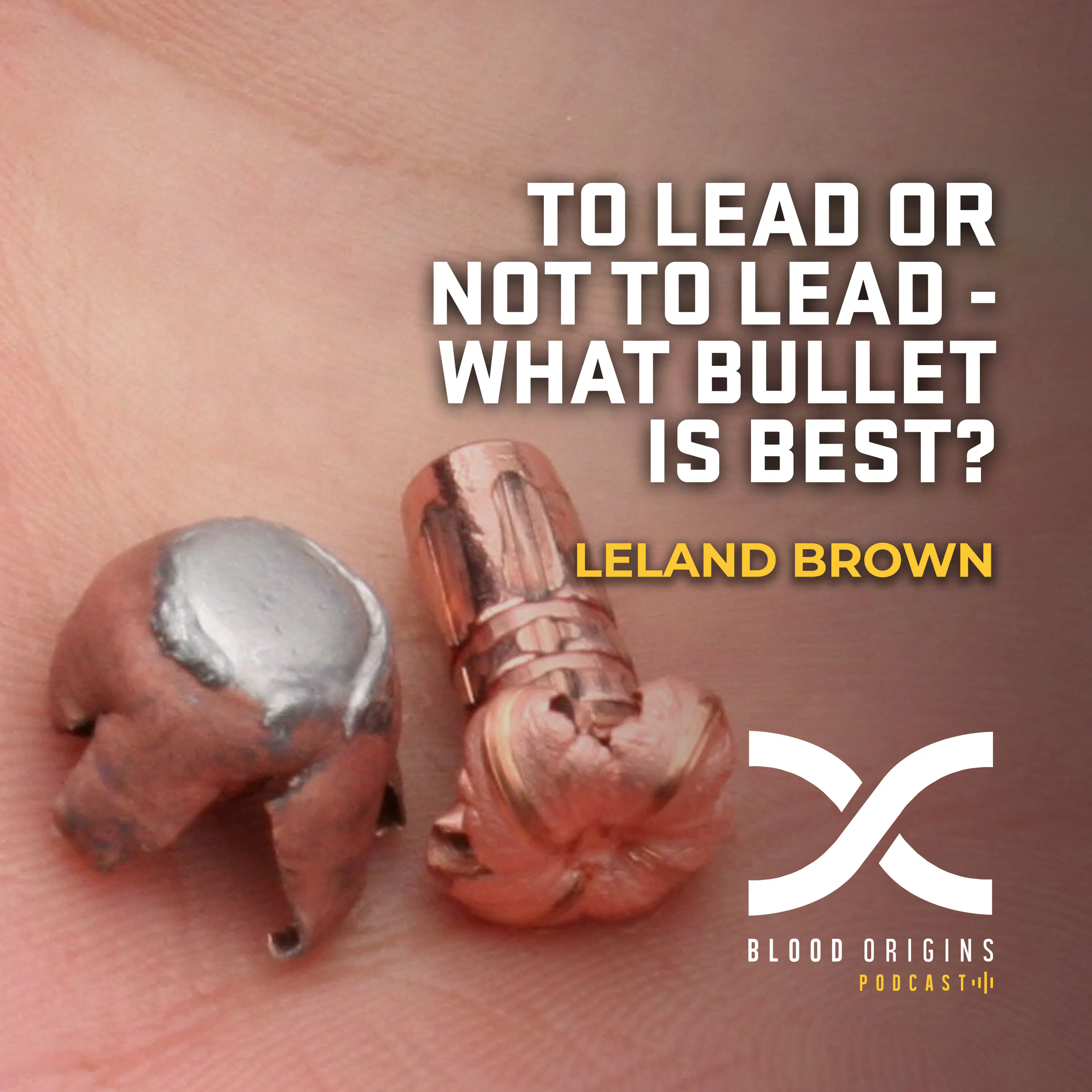
The Origins Foundation Podcast
Episode 571 - Leland Brown || To Lead Or Not To Lead - What Bullet Is Best?
00:59:09
Leland Brown is a PhD student who has worked for some time on the idea of lead-free ammunition. Leland and Robbie cover the start of the lead-free controversy, addressing myths about lead-free ammunition (from efficacy, ballistics, terminal efficient, etc) and sets the tone for Leland’s PhD research. There is always significant controversy when one starts talking about lead free ammunition - specifically as it pertains to reducing hunting opportunities and it always comes down to availability and efficacy. Robbie and Leland talk about it all.
Loading summary
Transcript187 lines
- [00:00]
Leland Brown
Fishing trips anywhere anytime fishingbooker.com want to plan your next fishing trip without the hassle? FishingBooker.com is the best way to find and book a fishing charter anywhere in the world. Whether you're chasing trophy fish or just looking for a family day on the water, fishingbooker makes it simple, fast and secure. With thousands of experienced guides, verified reviews and 247 customer support fish, FishingBooker takes.
- [00:26]
Mike Axelrod
The guesswork out of planning.
- [00:28]
Leland Brown
Visit fishingbooker.com and book your trip today. FishingBooker fishing trips made easy midway USA brand product designers have one straightforward develop high quality, technically sound products and deliver them to customers at reasonable prices. If you are immersed in the shooting sports industry and pay close attention to every single detail you know our products are built right and stand up to everyday use. Who has shooting mats and range bag systems, to hunting clothing and just about everything for the outdoors? Log on and shop24.7 with Superfast Shipping.
- [01:01]
Mike Axelrod
Midway USA.com Leland Brown is a PhD student. He's a mature PhD student in that he has been working for quite some time specifically around the idea of non lead bullets. He started the non lead Partnership back in the 2000s with Chris Parish and has continued to be an advocate for non leading ammunition or lead free ammunition. And obviously there comes a lot of controversy around lead free. And interesting enough, in this podcast you find out exactly why and how that controversy started within the hunting community. It's fascinating about where it started, but this podcast is all about addressing myths around lead free ammunition and I go through a number of them. The cost, the efficacy, the ballistics, those kinds of things. And we're going to do a follow up podcast around terminal ballistics and terminal efficiency associated with lead free ammunition and comparing it to leaded ammunition. But this podcast really sort of sets the tone for Leland's PhD research and I think you'll find it absolutely fascinating hearing from someone who's lived and breathed this research, this topic for essentially the better part of 15 years. So enjoy. So there's a reason why I started Blood Origins, and that reason is simple, is that I wanted to convey the truth about hunting.
- [02:40]
Leland Brown
It brings awareness to to non hunters that it's more than just killing animals.
- [02:49]
Mike Axelrod
How do I start it? Brittany My name.
- [02:52]
Leland Brown
Does my hair look okay? My name is Mike Axelrod.
- [02:56]
Mike Axelrod
Start again.
- [02:56]
Leland Brown
Yeah, I hated it too.
- [02:58]
Mike Axelrod
Braxton, you said something in the car to me. You said that you were living on borrowed time. There's a perception around who hunters are, what we're supposed to be, and a a feminist that works For a nonprofit that is a hunter that has only eaten wild game for the last 20 years is likely not the thing that people think about when it comes to a hunter. So, Leland, you are currently in the throws of Ph.D. dissertation I. E. Herding cats, as I like to proverbially call it.
- [03:38]
Leland Brown
Yeah, well, hurting my own cat, I guess, but that's the big challenge.
- [03:43]
Mike Axelrod
Have you done your comps yet?
- [03:45]
Leland Brown
Finished comps. Finish my comps. So all the hoops are through. Now it's just making myself do all the hard analysis work.
- [03:54]
Mike Axelrod
Exactly.
- [03:56]
Leland Brown
Yeah. So that's good. Closed data collection and end of the January, February for the field harvest portion of the research. And I've got a bunch of ballistic gel shooting I need to do in June to pick up some of that kind of more standardized testing to start to set that all up with the harvest data. So, yeah, there's a lot going on right now.
- [04:28]
Mike Axelrod
Good, good. Well, Leland Brown, welcome to the Bill Origins Podcast. I know we've been trying to set this up for a while. Appreciate Hannah connecting us from Sporting Lead Free, the Partnership, and as the title of this podcast will indicate, as well as me already talking about Hannah. We're not going to talk about a controversial topic at all today.
- [04:52]
Leland Brown
Oh no, we don't do that. Why would we do that.
- [04:57]
Mike Axelrod
Leland? Why don't you tell me who you are, what you do, and maybe even just give us the title of your PhD dissertation? Because then that will probably just tell everybody what we're about to talk about.
- [05:08]
Leland Brown
I mean, remembering what that title is. So, my name's Leland Brown. I'm one of the co founders of the North American Non Led Partnership. So we're a separate organization from Sporting Led Free that started a couple of years before them. But our focus is generally on organizations, state agencies, and sharing information on how we as hunters can continue to lead conservation and stewardship while helping to promote and protect our hunting heritage, mostly through the choice of Lead Free or other management actions that interrupt that pathway of lead exposure. So if you're using a lead bullet, you can still make sure nothing's getting into any kind of lead contaminated remains by removing those remains or if you're in the right location, burying those remains or, you know, whatever other actions. Choosing bullets that tend to fragment less will help to reduce risk. So all of those things for us are valuable actions to help us promote hunting as the conservation and stewardship activity that it is.
- [06:13]
Mike Axelrod
So what, what are you doing a PhD on? What's the title of your PhD dissertation?
- [06:18]
Leland Brown
So the title of my PhD dissertation is. Well, let me pull it because I changed the name recently because it started as a master's and I decided that I needed more time to actually do all the data collection. And so what started as a master's has now turned into, you know, a five year beast PhD, PhD project. Yeah, yeah, a lot more components.
- [06:50]
Mike Axelrod
Look guys, I'm a hunter, right? And when I go hunting, I like to figure out how to get my trophies back home as expeditiously as possible. Well, you don't have to look much further than Safari Specialty Importers. We know that trophy importation can be quite a headache. That's why Safari Specialty Importers strives to make it as easy and hassle free as possible. They have access to a bonded warehouse, you won't be charged storage fees and you get a dedicated team that's readily available and will update you at every step in the process. They'll even go one step further. Safari Specialty Importers is working with us at Blood Origins and they are going to donate $100 from every shipment that they work with to conservation projects that include anti poaching, community development and wildlife conservation. At the end of the day, choose to spend your money with a team that's dedicated to you and is dedicated to helping show how hunting is a great conservation model. Hassle free logistics, fuel and conservation. Go with Safari Specialty Importers. Did you know that in 42 states it is 100% legal to buy a suppressor and protect your hearing? Silencer Central pioneered the simplified silencer buying process. It allows you to buy a suppressor online or over the phone. You go through all the paperwork with a certified expert and that suppressor ships directly to your front door. I don't even believe it, but I've done it and it's come to my door. You can buy a suppressor and have it shipped to you. They offer the best in service, a suppressor expert to make sure you get the suppressor you want. And from there they take care of everything. They take care of the paperwork, the applications to the atf. They even set up a free trust if you want one. And if you don't have the money, put down an interest free payment plan. It's incredible. You get access to your own customer portal online and it tracks your progress. So why not go get started today? Go to silencecentral.com or call 866-811-6536. And with today's fast approval times, you're actually going to be shocked at how quickly your suppressor arrives at your Door. Bushnell has been a longtime supporter of Blood Origins. And in keeping with the spirit of our collaboration, we've come up with an amazing idea. Bushnell is eager to help you get set up for conservation success. That's right. They want to help you. The conservation and research community is dominated by good people doing good things and investing significant time and effort for the benefit of habitat and the species. So what do you need to do? Pretty simple. Send us your conservation story and. Or your conservation wish. Could be managing whitetails, could be understanding your environment or species or something else related to conservation. What would you be able to do if you had a great trail camera setup? We will select the best story every other month and send you a camera bundle. Cell camera, normal SD camera, SD cards, as well as optics. Everything you need to get set up for success. I can't wait to see what you submit. You can email us@infobloodorigins.com DM US. Message us whatever you want. We are not hard to find. Good luck.
- [10:00]
Leland Brown
So what I've decided to title this is Predictive, Effective and Ethical Evaluating Hunting, Bullet Performance and Animal Welfare Outcomes. And I know, you know, hunters listening to this will say, oh, animal welfare, I don't want, you know, that sounds like some hooey, you know, humane society stuff, but we talk about animal welfare all the time because we're talking about how quickly we can put an animal.
- [10:23]
Mike Axelrod
Yeah, it's the efficacy of the bullet. Right.
- [10:26]
Leland Brown
It's all about the performance.
- [10:27]
Mike Axelrod
The performance of the bullet.
- [10:28]
Leland Brown
Welfare is the performance. None of us wants an animal to suffer after we've shot it, so we try to make sure that it works properly. And in the scientific community, that's called animal welfare.
- [10:38]
Mike Axelrod
Yeah, Yeah, a hundred percent.
- [10:39]
Leland Brown
That's what we talk about.
- [10:40]
Mike Axelrod
A hundred percent. And you know, honestly, I. I literally have literally just penned a paper on how actual animal. The consideration of animal welfare should actually be a feather in a hunter's cap. Because we think about it all the time. It's not like we don't do. It's. You hear animal welfare. Like, oh, yeah, exactly. Like, you just. You put it up right. It's just like this hooey. Like, oh, we don't. We don't talk about that. We don't like to talk about that. But in fact, the. The mere sort of circumstance of you pulling your bow back and practicing every day, that's. It is animal welfare, is you considering animal welfare in your pursuit of that animal.
- [11:31]
Leland Brown
It's all. Yeah. The selection of your bra head, your bullet, your cartridge Your ethical shooting distance, all of that is animal welfare. It's all about. And every hunter I talk to, I've talked to, I've personally talked to probably over 40,000 hunters over the last 10 years. I face to face everyone I talk to, their major concern is, well, I want to make sure the animal I'm shooting doesn't suffer and goes down quickly and I can recover it and I can get that meat home. So it is at the forefront of any hunting conversation that I've ever had is how do I do this well and make sure that the animal that I am in pursuit of does not suffer due to the decisions that I make? How can I train? How can I select the right tools to make this more effective?
- [12:24]
Mike Axelrod
So why do you think it's just.
- [12:25]
Leland Brown
A different term for all that? Yeah.
- [12:27]
Mike Axelrod
So why do you think then that this whole idea of switching from lead bullets to non lead bullets has not like gone at that feather in the cap versus almost the opposite, the sort of pushback, like, no, we don't want this at all.
- [12:45]
Leland Brown
Well, I think it's based around some poly decisions, policy decisions, and organizations that got engaged in the policy early on. So when you look at the early 2000s, when we really first started understanding that shooting with a lead hunting bullet out of a rifle could create lead exposure in other wildlife, scavenging wildlife, there was a lot of discussion with the hunting community and most of it was pretty positive. However, some groups took the new research that was out there and rather than having a conversation with hunters, went to legislative bodies and said, look what hunters are doing, we need to make them stop. And that very quickly.
- [13:32]
Mike Axelrod
The opposite of our team.
- [13:34]
Leland Brown
Exactly. So you had organizations that had in the past been saying, we want to get rid of hunting, and if we have to go by state by state to do it, we will. And then they took this brand new research and grabbed it and said, hey, here's this new research we can use and we should force them to stop using lead bullets instead of engaging and asking the community for support and help.
- [13:56]
Mike Axelrod
Oh, so it wasn't actually hunting and hunters within the community saying, whoa, whoa, whoa, whoa, whoa, we don't want this. It was actually a rhetoric from the, from the anti side.
- [14:06]
Leland Brown
Well, I mean, the, the initial start was a conversation. Most of the people doing the research were hunters saying, hey, we need to go tell our fellow hunters about this. This is amazing. I never knew. So Chris Parish, one of the co founders of partnership, was one of the ones who did that. Some of that initial research in Arizona and Was saying, hey, like, I never had. I never had any idea about this. We need to share this with you people. I was working, you know, in the mid-2000s as an invasive species removal biologist. I used to work do. I spent about a decade doing invasive species removal in kind of more remote areas, like sensitive habitats, rather than doing like, BASH programs or, you know, biological removal.
- [14:50]
Mike Axelrod
Vegetation, mammals, what, feral pigs and goats.
- [14:55]
Leland Brown
And things like that? Mostly, yeah. So we, we tended to be more kind of backcountry removal in these sensitive habitats rather than like working in an agricultural field doing depredation.
- [15:06]
Mike Axelrod
Was that with FDA and aphis?
- [15:09]
Leland Brown
That was with a small company called Institute for Wildlife Studies initially. And then I was in Hawaii for a number of years working for the state out there.
- [15:19]
Mike Axelrod
Okay, okay, okay.
- [15:21]
Leland Brown
Institute for Wildlife Studies is actually one of the founding members of the partnership because as part of that, I also got engaged in some of the conversation around lead free ammo, because they had just passed that law at the urging of some of these other groups, and no one knew what they were talking about. There had been no conversation. It was just, hey, we're going to push this right through the legislature and make sure that hunters have to do this. And then hunters were sitting there holding this new requirement, saying, I don't even know what lead free ammo is half the time. Right? And at that time, it was really only Barnes Federal had just come out with the, um, trophy copper, the E tip, and Porny was just coming out with stuff, but it was really limited. And so I. Part of my job is I went and shot pigs. And then the downtime, I would go talk to people and be like, hey, if you want to go hunting and make it work, here's some techniques. But I was lumped in with all the people who passed the law because I was talking about the subject and I was kind of like, so it's a whole.
- [16:22]
Mike Axelrod
It makes complete sense, right? Makes complete sense. You were this hunter talking about being led free. You had these anti hunting organizations saying, oh, we're going to take this. This badass research that actually is. Was from hunters trying to be good stewards and used against us. And then you were lumped into that, that whole group of individuals.
- [16:45]
Leland Brown
And it's easy to do, right? I mean, if the only person you ever talk to about this is the one guy who comes and says, hey, here's why this conversation's happening, they go, oh, well, you're responsible for all this. So half my time was spent saying, look, I'm not responsible for any of this, but I want you to be able to keep hunting. And if you want to keep hunting and be effective and, you know, be legal and all of these other things, here's how to do it. And so a lot of our early conversations were just overcoming that kind of like, I mean, I got yelled at a lot. There's a reason I left and went to Hawaii and worked out there for a few years because, like, I just want to go back to shooting stuff here. Know, like that's, that's where it's at. Um, but then I started, you know, came back into this conversation because we really felt that it was critical that there be a voice in the realm that was by hunters, for hunters having this conversation and not just leave it to these other groups to be carrying this and kind of the polarization that can occur there. But I think we started this talking stuff at one point, way down.
- [17:53]
Mike Axelrod
No, no, no. This is, this is, this is the kind of podcast that people love. Let me ask this question. I've. I haven't. Obviously I'm not in the, the research and understanding the research as well as you or somebody like Chris, but I've heard one of the pieces of rhetoric that I've heard back from people around, whether using lead or copper. I can't remember if it was a nature paper or a science paper where they showed the change in percentage of bald eagles dying because of lead poisoning. And the percentage was super low. Leland. It was like a percent or one and a half percent, 1.8% difference. Do you remember that paper? I'm sorry, I don't.
- [18:41]
Leland Brown
So there's a recent paper who the authors were. Yeah, recent paper by Vince Slaby in 20, in 2022 that looked nationally at lead exposure rates and its population level impacts. So we have to be very cautious or very clear about what that paper found. One, it found that about 50% of all sampled eagles are carrying higher levels of lead than background. They're exposed to more lead. The population level impact on the national level is that approximately 5% of the growth rate of bald eagles is reduced. So without lead poisoning there would be a 5%. Correct.
- [19:28]
Mike Axelrod
That's exactly the same paper. Right? Right.
- [19:30]
Leland Brown
So bald eagles are, are recovering well, but we do still have. I think it's in another paper from 2013 or so. They did a review of all the mortalities for bald and Golden Eagles from 1975 to 2013 and found that approximately there's four main causes of mortality for both species. There's shooting poisoning impacts and trauma, electrocution Sorry, trauma and electrocution. So those four.
- [20:05]
Mike Axelrod
Okay.
- [20:07]
Leland Brown
For both for bald eagles, poisoning is number one. For golden eagles, it's the number four cause. For both species poisoning, over 50% of poisoning is called caused by lead. And if you break that down to what that total portion of mortality is for the known deaths that are gone through by the National Wildlife Health Center, I think it's somewhere around 11% of eagle of bald eagle mortalities are lead poisoning. And I think it's somewhere around 6% of golden eagles. But don't quote me on that because I'm sure I'm wrong. Sure it's lower.
- [20:48]
Mike Axelrod
Yeah, yeah.
- [20:49]
Leland Brown
But the problem for, for us is there's two things. One, lead exposure is not exclusive to mortality.
- [20:55]
Mike Axelrod
Right.
- [20:55]
Leland Brown
The, the impacts of lead exposure are kind of broad, systematic and we don't, we have a hard time understanding exactly what that influence may be at those sub lethal levels. And we know that they're exposed at pretty high levels during hunting seasons. On average between 40 to upwards of like 80 to 90% of Eagles sampled have high levels of lead during hunting seasons. And that depends on flyways and kind of where you're doing the sampling. The other side of this is something that I'm very concerned about is that the general public doesn't care if it's population level. If, if what they're receiving is hey, hunters are poisoning bald eagles and golden eagles and they don't care. That's really bad for hunting. And I'm very concerned that as hunters we need to be proactively engaged in this topic and solving it on our own so that we can share that with the general public because we still are a very small percentage of the population and we rely in North America on that public support for our activities to be maintained. And so we need to.
- [22:15]
Mike Axelrod
So you believe that the sort of, the lack of empathy to bald eagle and golden eagle mortality because of lead poisoning is going to be exactly the same thing that started back in 2000. The rhetoric that they picked up to say, hey this is happening, these guys don't care, get after them. Here's another one.
- [22:33]
Leland Brown
It has another case hasn't changed. I mean they're still saying the same things. They're, I mean there's more and more bills every year coming to state legislatures saying look, hunters aren't doing anything about this. They obviously don't care. We need to force them to do something. And that sets us up for failure as the hunting community because we, we no long it becomes harder and harder for us to claim that we are leaders in conservation that we're solving these problems and sharing that story with the public. Because if what the story they're hearing is hunters don't care. And we do care. And don't get me wrong, I think hunters do care about this. They're just not on board with regulation and there's.
- [23:13]
Mike Axelrod
Do you think they're not on board with regulation or do you think that there's a vast majority of hunters that are just simply unaware?
- [23:19]
Leland Brown
It's a combination of the two of.
- [23:22]
Mike Axelrod
Leaving the gut pile out. Hey, you're leaving it there. Oh, I had no idea that there were lead fragments in that gut pile and that was actually going upstream into the ecosystem, up into bald eagles and golden eagles.
- [23:34]
Leland Brown
That's. That's true as well, right? I mean, it's a combination of the two. So you have organizations that are more aware saying this is inappropriate for regulation. It's not population limiting, which is true. And you know, part of the thing for the partnership is we strongly advocate for voluntary and incentive based programs to build that awareness within the community so that people can be engaged and active partners in finding a solution to this.
- [24:01]
Mike Axelrod
Well, that's the way to do it. Right? Voluntary and incentive based versus which is carrots versus regulatory, which is sticks.
- [24:09]
Leland Brown
Yeah, and the sticks, I mean, let's be honest, the, the stick is pretty soft. You can't tell the difference in most rifle ammunition without cutting the bullet apart. You know, if someone's carrying a pocket full of rounds and you're a law enforcement officer and you go to check, like, how are you going to tell a polymer tip bullet? Looks like I'm a polymer tip bullet? Well, it's got a lead core inside the jacket or it's a monolithic, realistically.
- [24:35]
Mike Axelrod
Oh, so you can't tell the difference. I always thought you could tell the difference.
- [24:39]
Leland Brown
I mean, for some of them, if you've got an exposed lead soft point, sure, you can see that. But if you're shooting.
- [24:44]
Mike Axelrod
Okay, okay.
- [24:45]
Leland Brown
Any more modern polymer tip bullet. Unless you're very clued in on the designs of bullets and even then there's some that look exactly the same. And there's no way to tell the difference without cutting them apart.
- [24:59]
Mike Axelrod
That copper bullets don't look copper. I'm sorry for my ignorance here, but I'm one of these ignorant people.
- [25:04]
Leland Brown
Copper jacketed bullets look like copper too though, right? Same material on the exterior.
- [25:09]
Mike Axelrod
So you get a copper. Again, this is how people are. Like, Robbie, you, you're a hunter. You, you run a hunt. A pro advocacy Hunting organization? No, I'm a. I'm a. What's the word I'm looking for? Neophyte. When it comes to, like, bullets and rifles and stuff like that. So there are lead bullets that are copper jacketed.
- [25:29]
Leland Brown
Almost all modern bullets are copper jacketed. So smokeless powder. So if we get into the. The background of this. We've been using lead as a projectile since the Romans, right? They used to cast sling projectiles to throw, and they actually have archeological digs where they've found them with insults cast into the slingstone, which I find hilarious, right? You imagine you're sitting on a palisade and you get smacked by a lead sling stone and it says, like, your mom's fat or something. Something on it, right? Like insult to injury, you know, I don't know the Latin, but you get my. Get the drift.
- [26:05]
Mike Axelrod
That's brilliant.
- [26:05]
Leland Brown
We've just gotten better at throwing stuff, right? So once we started using black powder, we throw stuff faster. Then you shift into, you know, cases and be able to use cases, and we can increase pressures to a certain extent. Black powder has its limits. But then you get into the creation of smokeless powder, and we skyrocket velocities in comparison, right? So you get into like the late 1800s and smokeless powder, and all of a sudden you've got all these pure cast lead bullets that are being melted in the bore because they've got. They're going so fast and so much friction. They're filling up the rifling with lead and turning them back into smooth bore. So your accuracy goes to hell real fast. So what they did is started jacketing with copper because the melting point of copper is so much higher. So they can wrap that lead core with copper just to, hey, we're just going to solve this one solution. We're going to say use all the same materials. It all seems to work. We'll just wrap it with copper. That'll keep it from melting. We're good. Then you get into the issues of terminal performance, where you've got, okay, we're driving these bullets so fast that they're completely coming to our. And we're not getting the penetration we need to actually create damage within the vital organs. We're getting bullets that are creating splash wounds on the exterior of the animal. And so then you start getting into some of these more modern designs of construction, like the nozzle partitions. One of the first. Right. That's a really classic 1940s they created. Started selling as kind of the first weight retention big Game bullet to make sure you didn't run into those issues. And then you continue to expand technological advances, you start getting into bonding where you can bond the core to the jacket to prevent cup and core separation so they don't turn into two separate pieces inside the animal. Improves weight retention, improves penetration, straight line penetration, polymer tips to increase your ability to have better aerodynamics or ballistic coefficients, as well as capturing different shapes of the hollow point underneath to be able to control expansion in different ways. And really the monolithic copper bullets are just the next step in evolution. It's just the one that stepped away from lead as the material because it's still about terminal performance. When Barnes came out with the, you know, the Barnes expellet In the late 80s, early 90s, it wasn't like, oh, here's some hippie bullet, we're going to solve all the problems of the world. It's hey, I want to kill stuff better. I don't want to have my bullets separated.
- [28:43]
Mike Axelrod
So why didn't it, why didn't, why didn't that constant, why didn't that evolution continue then? Right? You, you just went through this whole progression of evolution of, and it makes sense what you've been saying and it makes complete sense for the, the next iteration, the next evolution to be complete copper. And here's a much better bullet. So why didn't it get adopted?
- [29:05]
Leland Brown
So there's always a trade off. Every, every construction of any projectile, there's going to be some level of trade off, right? So for copper bullets, you're going to get very high weight retention. 98, 99% weight retention. Generally you have some expansion, the material's going to be less dense than lead. So your bullet has to be longer to make the same weight. Obviously we can't go wider, right? You'll blow a gun up if you try to put a bigger, wider bullet into it. So the only way you can go is longer. So then you can run into twist rate issues where you're not stabilizing the bullet properly. So if you imagine a bullet like a football, you need to put the right spiral on it for it to get a good clean throw. We're just doing that mechanically with the rifling. And so we talk a lot about weights of bullet and matching weights to twist rates. But that's because we've been using lead as the same material for a hundred something years now. As we switch to copper, we really need to be thinking about bullet length rather than weight. And going that way, there's some concern about expansion at Extreme, long, extreme ranges. Right. I mean, every bullet will expand less at longer ranges. You reduce velocity, you reduce pressures on the front end of that bullet, you reduce its ability to expand. And then that's the creation of wound channel is that frontal area of the bullet and disruption of tissue and then there's just some of the construction. So manufacturing this.
- [30:39]
Mike Axelrod
Why don't we just do a rabbit hole right now? So somebody says, I have a concern about expansion at greater distance. Is that concern based on science? Is there science to show that copper bullets do not expand as well as lead bullets at tested long range distances?
- [31:02]
Leland Brown
Not in any published research that I've been able to find. That doesn't mean that it's not true. It's just not public. So some of the.
- [31:13]
Mike Axelrod
So it's hearsay. It's hearsay. It's anecdotal. The concern, yes. Oh, I shot a copper bullet at an animal at 600 yards and didn't die. Although then I talked, I've shot an animal at 600 yards four years ago with a lead bullet and it did die. That's why copper is bad.
- [31:31]
Leland Brown
Yeah, a little bit of that. And I've obviously had conversations with folks who like copper and have shot animals at 600 yards and they say, oh, it worked great. I shot it once and you know, it, it was perfect. So, yeah, there's some challenges there with kind of the anecdotal. It's tough with hunting. And the, one of the reasons I wanted to do this research was that it is really hard to get an adequate sample size so that we can actually assess performance with a little bit less bias. I understand people listening to me is like, oh, you work for the, you know, you co founded this partnership. You're, you know, you're all about lead free bullets, blah, blah, blah. I realistically, what I want to know is how do bullets work and how can we make them better? Because if we have lead free bullets that don't work, that's a real problem. We need to make that better. We need to fix that.
- [32:20]
Mike Axelrod
If we have lead bullets, isn't that, wouldn't that be the. That's the biggest hurdle, right? Let's be honest here is everyone's like, you're forcing us. Let's go back to the stick, right? You're forcing us to this bullet that's worse than what we had and it's not as effective as we used to have. It's not as efficacious. I. E. We're not considering animal welfare anymore. And either.
- [32:46]
Leland Brown
So that's the major concern from people we did, you know, so I run, I'm in Oregon, I run the Oregon program. It's all voluntary. We work with people and helping them if they want to choose a lead bullet, how to be effective. Same as we've been talking when we have done some of our survey work.
- [33:03]
Mike Axelrod
Asking people a copper bullet, you mean?
- [33:06]
Leland Brown
Yeah, yeah, copper bullet.
- [33:09]
Mike Axelrod
You said, you said lead. You said lead.
- [33:11]
Leland Brown
Yeah, copper bullet. If they want to use a copper bullet, they want to use a lead free bullet. How can they be effective? So some of our survey work we do, we want to, you know, we obviously don't want to just be doing stuff for the sake of doing it. We want to do stuff that actually helps people. So we do some survey work to see what their concerns are, what they're considering, where we can provide better information. The leading concern for everybody is performance. No one wants to wound an animal. And so again, we need to really focus on how can we demonstrate that, how different bullets work and how to use them in correct situations. The research we currently have that exists, most of it is coming out of Europe and some recent stuff out of Australia by a guy named Jordan Hampton shows that in standard hunting ranges, pretty much 500 yards in, there's really no difference between the types of bullets.
- [34:08]
Mike Axelrod
No difference in ballistics. I mean, there's always expansion rates, all that kind of stuff.
- [34:14]
Leland Brown
No difference in animal welfare outcomes. So terminal performance from what, from what we're seeing right now. So they've done a series of things and one of these is, okay, we're going to shoot ballistic soap at different velocities so that we can see what is the total damage that occurs from muzzle velocity out to approximately 400 yards. It's a little different. You know, you have to calculate out what the, what that impact velocity distance would be because they were just downloading to get to that.
- [34:48]
Mike Axelrod
Yeah, but very standardized, very standardized, very controlled. Let's compare.
- [34:53]
Leland Brown
And then they've also done work comparing and necropsies looking at wound channel sizes in animals at different depths and looking at different bullet designs there. They've done some work looking at flight distances of animals, which is some of the work that I'm repeating in North America because it hasn't been done here. It's a little frustrated because, you know, I've had this idea for 10 years and only really got to get it started a year or two ago. So it's like, dang it, they got it.
- [35:21]
Mike Axelrod
Well, at least you started it. You know, it's North American Base. And look, the fact that there's only one piece of science out there means that there needs to be more obviously. Right? You can't.
- [35:30]
Leland Brown
Yeah.
- [35:30]
Mike Axelrod
What. Do you know what their sample size was down there in Australia? Like in terms of the wound from a necropolis perspective?
- [35:37]
Leland Brown
They did it in Norway with moose and deer and bear and their sample size was about 3,000 animals. I think that chops down when they start to get into their.
- [35:49]
Mike Axelrod
Was that the finished study that compared it to bow and arrows?
- [35:54]
Leland Brown
No, there wasn't any bow and arrow in there. That was.
- [35:56]
Mike Axelrod
Dude, there is a study that hasn't released their results yet.
- [35:59]
Leland Brown
Okay.
- [36:00]
Mike Axelrod
And I want to say it was, it was a comparison of, of arrow efficiency and gun efficiency. And they had like a sample size, a pretty decent one, like a, not a thousand, but it was like 120 animals each. And they did, you know, distance away from, you know, how long a travel time travel distance or all sorts of things. And preliminary results said that there was no difference between a bow kill and a rifle kill.
- [36:29]
Leland Brown
I wouldn't be surprised.
- [36:30]
Mike Axelrod
But I haven't seen, I haven't seen the publication yet.
- [36:33]
Leland Brown
There's still, I mean the mechanism by which you kill animals is not really different between those two. Right. I mean you're still creating, I mean you kill things by either damaging central nervous system or, you know, creating enough hemorrhage that they bleed out and there's no longer oxygen going to the brain. So it doesn't really matter if you stick em with an arrow and make em bleed a lot or you shoot a bullet through their vital organs and make it bleed a lot. Like either way, it's a factor of how much bleeding happens, how much damaged tissue there is. And I would expect that realistically you're probably not seeing much of a difference between the two. I think the risk, one of the issues we have in hunting is that our awareness of kind of wounding loss rates and publish information on wounding loss rates is not great in part because it's a challenging thing to study. You know, you'd have to get people reporting accurately, which I think is probably pretty tough to do or.
- [37:39]
Mike Axelrod
And being aware of it in the moment, right. Really, you know, this exhilarating moment you shot the sound, you've got to remember, oh, I've got a. I gotta mark exactly where the animal was and measure a distance and capture it and record it. For Leland's PhD dissertation, kind of low.
- [37:56]
Leland Brown
On the list of things to do when you're in the middle of all that. I, you know, I Think the email I sent to everyone was like, look, I understand that you've got a lot of stuff going on at this, at this point in time, but if you think about it, print this out, bring it with you so you can write it all down in the field so you don't have to try to like remember any of it. Just have this little sheet of paper and write it all down. And then when you get back, you can submit it online.
- [38:20]
Mike Axelrod
So how many people have you received data from?
- [38:25]
Leland Brown
We got, I think about a thousand complete entries that'll end up being chopped down a little bit.
- [38:35]
Mike Axelrod
Yeah, of course.
- [38:36]
Leland Brown
Just. Yeah, there's some data quality stuff we need to go through and I've done some of that, but I need to rework some of the coding to resample.
- [38:44]
Mike Axelrod
Did you, did you specifically envelope the study around specific species, big game species? Yeah, it doesn't matter. Yeah.
- [38:55]
Leland Brown
So basic, I mean Oregon's maybe not unique, but somewhat unique in that we have a really broad variety of big game. So we've got, you know, Roosevelt elk, Rocky Mountain elk, we've got black tailed deer, mule deer, white tail deer, all in the state. You know, we got black bear, mountain goat, bighorn sheep, we got just about every North American species.
- [39:22]
Mike Axelrod
So those thousand responses are just from Oregon.
- [39:24]
Leland Brown
The majority of them are from Oregon. There's some from outside of Oregon. We expanded a bit in the last couple of years trying to get some more samples. So we have some from Alaska, we've got some from Montana and you know, all the way over to like Pennsylvania and Connecticut even. But those are very.
- [39:41]
Mike Axelrod
So you've got all the data you need?
- [39:43]
Leland Brown
I think so, yeah. I think we'll be good. I mean our initial assessment of the number of samples we would need per bullet, per bullet type, and I have it separated in five different bullet design types, we're pretty good. The only one we don't have enough data for is the fragmenting lead free bullet. So something like a cutting edge or a hammer bullet. We don't. We only got a couple of samples for that, so we'll probably just have to cut those and focus on the four other types, which is, you know, your standard cup and core or something like a core locked, something like that.
- [40:17]
Mike Axelrod
Or just extend your PhD by another year and just get another year of data collection. Come on now, Leland. You're in the truck now, baby.
- [40:23]
Leland Brown
Slacker. Yeah, at some point I just need to like start getting this.
- [40:29]
Mike Axelrod
Exactly.
- [40:29]
Leland Brown
My goal at long term would be to continue to do this work. I think it's really interesting. There's a lot of value in this and we can continue to expand it and make it more useful for people.
- [40:41]
Mike Axelrod
Well, it's myth busting. That's really, you know, and that's the point of this podcast. Right? I really.
- [40:45]
Leland Brown
That's what science is. Right?
- [40:46]
Mike Axelrod
It's really. It is, it is, it is, it is. So, so you've talked about the sort of. You're picking up the necropsy side of the efficacy of copper bullets. Are you looking at the ballistic side too? What else are you looking at?
- [41:07]
Leland Brown
Not so much. I mean, my.
- [41:08]
Mike Axelrod
What are the holes that you're plugging, essentially?
- [41:10]
Leland Brown
Yeah, I mean, my, my focus is really on the terminal performance. There's been other work that's been done looking at, you know, precision, fragmentation rates, all of that. Like, I, I don't need to replicate that. What I'm really interested in and have been interested in since I was doing that invasive species work is how do we document how well bullets kill animals and how do we figure out if there are different situations in which different bullet designs work better or more poorly? Because that's the common questions we hear. You know, especially you get into like new hunters, they're like, well, what should I use? And their focus on, you know, cartridge, you know, the brand of rifle, things like that. And my go to usually is like, that's all cool. Bullet construction really matters. But that's my personal experience, somewhat anecdotal experience. Right. I mean, I've shot a lot of animals, so I have maybe a slightly larger anecdotal sample size than many people, but it's still not published and it's not repeatable. And so we're trying to get it repeatable so that we can have a framework that people can look at and say, okay, if I'm going to go hunt this species, what are my options and how can I expect that to work and go from there?
- [42:35]
Mike Axelrod
Leland, one of the other things that I hear all the time, and I think it's one of the other holes or maybe the other myths that are out there, is the cost. Cost. Or I'll say two more. I'll say cost and availability. Those are the two things that everyone's like, well, that's not, you know, you're reducing, I've heard this lot. And you have to, you're reducing hunting opportunities because of this requirement to go to copper. But it's more expensive and I can't get the bullets.
- [43:11]
Leland Brown
Yeah, and I would say that those, those two availability more than anything is probably the big realistic challenge for people that are interested in using lead free ammunition. It is a smaller part of the market. It's often less available on store shelves. And we know that the vast majority of people are purchasing their ammunition in a store, not online. And you know, you have to find a couple options when you're first going through that transition to test. Because the way I look at it is if you're going to switch materials you probably need to act as if your rifle's brand new and try a couple different things, see which one shoots the best.
- [43:50]
Mike Axelrod
Correct.
- [43:51]
Leland Brown
And so for that cost starts to become a more, more of a challenge. If we look at costs these days. The vast majority of good quality kind of like premium hunting ammunition is all in about the same rang the most.
- [44:07]
Mike Axelrod
Why hasn't anybody done like just a simple analysis showing that.
- [44:14]
Leland Brown
Some people have but they've in my opinion they've been somewhat flawed. It's another piece of research we're actually interested in is looking on store shelves and saying what's actually on the shelf for people. Let's go, let's go to a bunch of stores across the U.S. yeah.
- [44:30]
Mike Axelrod
Go down to Academy and see what's available and what's the cost right away.
- [44:34]
Leland Brown
And, and then actually record that in a set period of time before hunting season, say okay, this is what people are experiencing in stores. Because in the past what people have done is search online and say oh, this is what people are making and this is what the MSRP is. See, it's all comparable. We all know that that's not the real kind of lived experience of people. Like what is advertised for manufacturer is not necessarily what's on store shelves. And so we need to find a way to do that um, where we can kind of have some independent look at what actually exists out there.
- [45:07]
Mike Axelrod
Um, yeah, it would be fascinating to, to just again get a good sample size and see the cost of lead based ammunition and copper based ammunition in your regular store. Go down to Walmart or Academy and.
- [45:23]
Leland Brown
We'Ve done this pretty, the pawn shop or something pretty consistently. I mean we do this but it's all you know, one off. We'll go, we'll go look like if we go somewhere we get invited to do a workshop on like modern hunting ammunition which is something, you know, we do these across the US these days. We'll go to the local stores and look and see what's available to people that are going to be coming to that workshop. Usually we can find some lead free ammunition. It's often not particularly well labeled. So people not even recognize that it is a lead free type of ammunition. The cost is usually in line with other premium types of ammunition. It's usually kind of right in the middle. It's going to be more expensive than your more budget friendly stuff as you'd expect.
- [46:08]
Mike Axelrod
But for it's going to be more expensive than your Remington Korlogs that you throw down range.
- [46:14]
Leland Brown
It will be more expensive than Cor locks usually, but it's usually not a lot. It's usually you know, 10 or 15 a box. So you know, for some people that, that's a lot of money. For some people that really doesn't matter in the quality of the bullet that you get.
- [46:30]
Mike Axelrod
But that would be the same cost.
- [46:32]
Leland Brown
You say like with a good nozzle.
- [46:34]
Mike Axelrod
Partition or something like that. Right.
- [46:36]
Leland Brown
Usually when I look through what's available and what costs are the most expensive bullets tend to be highly produced lead core bullets. The lead free bullets like Barnes and the Nosr E tip and Hornady CX bullet are kind of mid range. And then there's some others that are, you know, it can be like $5 higher or lower depending on the store and what stock they have and what kind of, you know, what kind of sales are going on. But they're kind of right in the middle.
- [47:06]
Mike Axelrod
But again, we're not living in a day and age today that copper, copper ammunition, lead free ammunition is $20 more expensive than everything else.
- [47:18]
Leland Brown
Yeah, I had a funny interaction with someone a couple years ago where they were complaining, complaining about the cost of lead free 28 nosler ammunition, the E tips. And I, I was like, oh wow, that's a lot. I mean it's 28 Nosler. They're all expensive. But then I looked and it was the least expensive 28ammunition. I was like, I'm not sure this complaint that you're making actually works because you, this is the cheapest option that you can get. Like, you can't say it's too expensive if it's the least expensive option for that particular rifle. It just didn't make any sense.
- [47:53]
Mike Axelrod
Well, it's, it's, it's, it's, it's super expensive. Because he's probably again to me being the, the Neo fighter I am with ammunition, he's looking at that 28 Nosler e tip at, you know, 89 a box. And then he looks at the 270 core lock from Remington at 28 bucks or 36 bucks a box and he's.
- [48:12]
Leland Brown
Like, yeah, look at that. Which is, you know, super Expensive. That round is very expensive in comparison to.308 or a.270. Much more common stuff. But the accubond or the partition for the.28 Nosler was over a hundred dollars a box. So it's like, you know, this is what you get for buying the.28 Nosler. You know, this is. That's the deal. It's a great rifle, but yeah, they make great ammo. It makes great rifle. But you know, know what you're getting into when you buy a new rifle. I mean, ammo cost for me is. It is an important piece when I'm buying a cartridge.
- [48:51]
Mike Axelrod
Great rifle. I love the nozzle team. I Love that rifle.
- [48:55]
Leland Brown
$90 a box. I'm not going to be shooting very much. It's just not going to happen.
- [49:04]
Mike Axelrod
Eden, last question that I had was around somebody, a very good friend of mine. And it's funny you bring up the. 28 Nosler, a very good friend of mine. 28 Nosler in Dallas, Texas.
- [49:15]
Leland Brown
Loading data is all there. I've reloaded a fair amount with free ammunition.
- [49:19]
Mike Axelrod
Reload his own ammunition.
- [49:20]
Leland Brown
When I was working in Hawaii, we couldn't. It was in the middle of.
- [49:22]
Mike Axelrod
It's easy for people who reload ammunition.
- [49:25]
Leland Brown
The Obama administration, when everyone had a run on ammo and ammo is really hard to find and Hawaii is particularly hard because you can't ship loaded ammunition by air. And so we were relying on whatever we could find in the store. But we could. That's a transport law about shipping live ammunition. You can't ship live ammunition through air freight. So if you're, if you order ammunition online or something like that.
- [49:56]
Mike Axelrod
How's that? Is it still in place?
- [49:58]
Leland Brown
That truck. Truck in the mainland. But if you wanted to order stuff from Hawaii, you needed to order basically a pallet or more to get it on a ship. And that just didn't make much sense for us with what we were doing. So we ended up. You could order bullets, right? Bullets can fly through the air. There's no powder associated with them. And then we would just be finding powder and primers and everything else we needed locally and then load our own ammunition. And we pretty quickly found good accurate loads with, you know, this like everything, right. Takes a little bit of work. You got to play around with a few things. Anytime you change those components, you got to, you know, reset a little bit and then make sure you're getting everything correct so you don't have any pressure issues.
- [50:40]
Mike Axelrod
Oh man.
- [50:41]
Leland Brown
The data is all published. There's lots of loading data now there's lots of bullet options and there's even more bullet options for a reloader. You can get into some of these smaller companies that are really pushing the technological edge of what you can do with a pure copper bullet. It's pretty cool. So there's some of those like hammer and again, costs.
- [51:02]
Mike Axelrod
And cost is about equal.
- [51:04]
Leland Brown
Cost is pretty similar. I mean, again, it depends what you're comparing to. You know, again, you're comparing the Nosler, you know, box of 50 nosler partitions to a box of 50e tips. Pretty similar if you're buying, you know, 500. What am I like Sierra Game Kings or something? You know, they're probably less expensive because you're buying in larger proportions, so your cost per projectile goes down. So there's some balance out there. But generally pretty similar.
- [51:38]
Mike Axelrod
That's awesome. Okay, so when are we going to see like this necropsy data finished? Like, give me timelines in terms of what you're thinking about and publishing from a PhD perspective?
- [51:53]
Leland Brown
Yeah, I mean, we're probably looking at a year or two out before we can get into any of the publishing. And I'm personally, with my data, I'm not doing necropsy stuff. So I was doing more citizen science, having hunters report outcomes.
- [52:10]
Mike Axelrod
Wow. Oh, yeah, yeah. No, that's what I meant. That's what I meant. Sorry. Yeah, yeah, the, the, the terminal impact data that's coming from your Hunter surveys, your thousand Hunter surveys. Yeah.
- [52:19]
Leland Brown
Finish up in 2027. I think that gives me. I'm still working full time, so it's.
- [52:24]
Mike Axelrod
Kudos to you, my man. That is a load.
- [52:26]
Leland Brown
It's a load.
- [52:27]
Mike Axelrod
That is a load.
- [52:28]
Leland Brown
Yeah. Um, but, you know, like I said, we've got some of this kind of structured ballistic gel testing coming up and we'll do that and then, you know, working through some of the analysis on the harvest data. And there's some cool work that's been done recently using CT scans on ballistic gel and being able to get really fine scale calculations of wound channels, which I was able to pilot test. That seems to be working. So we've got a system where I don't have to cut and put fluid inside a gel or anything like that in order to get a good accurate measurement of wound channels. Yeah. Which makes my life way easier and brings the cost way down because when you need to customize gels in order to use them, then it gets. That's crazy fast. So.
- [53:17]
Mike Axelrod
So you're just adding to the ballistic library of information from. In terms of again, just wound Channel size, volume.
- [53:27]
Leland Brown
Yeah. So my, you know, my hope is to come up with a system that we can use the field data and use this ballistic gel data and actually create some sort of model where we can have a more predictive process for understanding what the, well, animal outcomes will be by using the ballistic gel.
- [53:48]
Mike Axelrod
So you know, at varying with it with a nested variable of distance.
- [53:54]
Leland Brown
With some distance. Yeah. So we're planning on shooting gels at 100 and 300 meters to get that and different calibers. Not with this one, unfortunately. So that's going to have to be a separate, separate.
- [54:08]
Mike Axelrod
Well, no, I was just, I was about to say don't add another variable because you're about to get super complicated from a statistics perspective.
- [54:15]
Leland Brown
But my hope, my hope is that realistically when you look at wound channels and how they work, some of it's, you know, you're based off of your velocity, your bullet construction, your impact velocity, bullet weights, all of those things. And so if, if we can link the ballistic gel wound channels to the outcomes in the field, then we can start to connect what are the critical components of that wound channel in the ballistic gel that predict outcomes. And that way we can create a system where we can actually do ballistic gel testing and have a more accurate assessment of what our expected outcome in the field is. Which, coming from my background is really kind of critically important because often we were being asked, hey, what is the appropriate round to use for this work for invasive species management or for any of these other things? And there's not a lot of data to go off of there. And so let's be honest, the way.
- [55:21]
Mike Axelrod
That this conversation started was, you know, talking about the fact that you have animal welfare in your dissertation title and everything we've just talked about for the last 50 minutes to this final sort of the finality of what the statement that you just mentioned is all about. How do we ensure more effective killing and death and ensuring a pain free, no suffering taking of life, I. E. Animal welfare?
- [55:59]
Leland Brown
Yep, pretty much. Hey, how are we effective hunters? Practice your field skills, have good tools that you know how they're going to work. My role is, the way I see it is to provide information so you know how your tools are going to work and you can make educated choices around that.
- [56:21]
Mike Axelrod
Yeah, well said, well said. Leland. Where can people find information about the North American lead, free partnership or anything else that you want people to find out information about?
- [56:32]
Leland Brown
So it's funny you say that. We're actually in the process of switching it over to the North American lead free partnership. But right now we are the North American non led partnership. So you can go to look at.
- [56:42]
Mike Axelrod
Me, I got their name right.
- [56:44]
Leland Brown
You got it. You got it before we even made that switch. So nonled partnership.org is a current website and non leadpartnership on Instagram and Facebook as kind of our social media platforms. And we have some, you know, bullet testing videos and other stuff we have done on there. Again, trying to provide that information so people have resources when they're considering the tools that they're using in the field.
- [57:14]
Mike Axelrod
Cool. Well, Leland, it's been a pleasure, my man. Thank you so much. I thoroughly enjoy these conversations. I'm a scientist. I've been a scientist for 30 years. And whenever we can, I can geek out on data and specifically the sort of practical implementation and results that come from data. And I think that is often very much lost in the wildlife fisheries world that people are doing research for the sake of research. And I'm like, you guys have got to get your heads out your asses and start like making it practical, specifically in the world that we live in today in which we're just losing habitat after habitat after habitat. Like, let's do work that actually is going to help sustain wildlife in the future.
- [57:55]
Leland Brown
Yeah. You know, it's funny, I was on the Wildlife Society board in Oregon for about six years and that was a constant refrain for me. We would have our annual meetings and it's always cool. How do we invite managers in to talk about their work? How do we make sure that we're connecting researchers to the manager's work so that it can be applied? Because otherwise, if you do research, that's great, but it's not conservation. Conservation is what we do with the work. It's how we apply it. So let's do that.
- [58:25]
Mike Axelrod
Agreed?
- [58:26]
Leland Brown
Agreed.
- [58:27]
Mike Axelrod
Thank you, my man.
- [58:28]
Leland Brown
Thank you. Nice talking to you.
- [58:30]
Mike Axelrod
Well, that's it for today. I appreciate you listening. As always. Leave a review, share it with your friends, and most importantly, do what's right to convey the truth.
- [58:42]
Leland Brown
Around hunting from dawn to dusk and every moment in between. Captain Justin Leake and Meredith McChord have an exciting adventure waiting in the water. Catch chase in the Sun. Sundays at 10am Eastern on Waypoint TV. Waypoint TV, your destination for outdoor entertainment. Hit the road for fun and heartwarming fishing adventures with the real American road trip. I just want to hook up one time. I just need to hook up one time. Catch the Waypoint original series and every Tuesday at 9:30pm Eastern on the Waypoint TV channel. Waypoint TV, your destination for outdoor entertainment. I did get a bite. I have gotten a bite. I did feel it.