← The Origins Foundation Podcast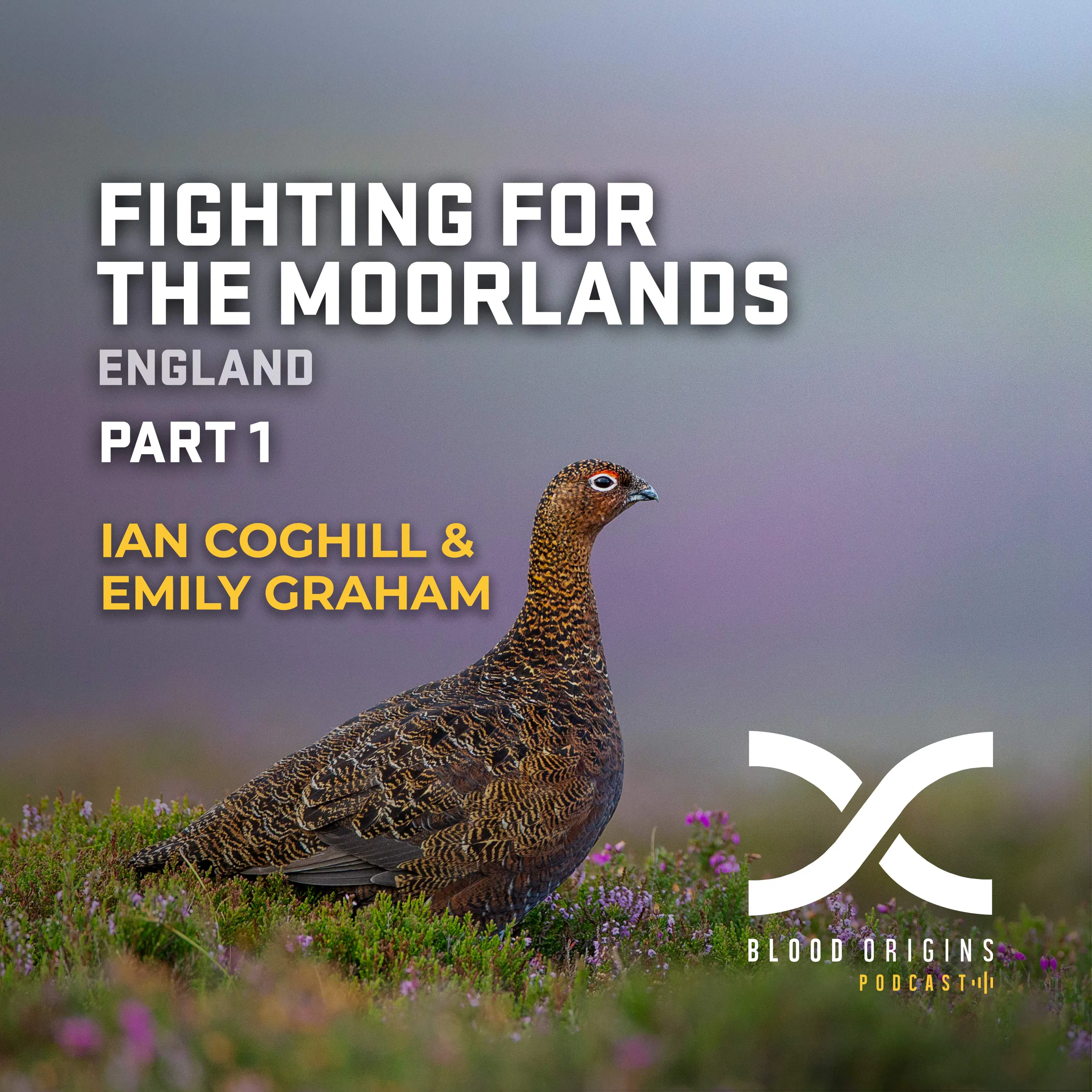
The Origins Foundation Podcast
Episode 576 - Emily Graham and Ian Coghill || Fighting For The Moorlands, Part 1
00:57:03
Grouse hunting on moors is likely one of the most heated hunting topics in the United Kingdom. Every year the industry comes under attack, and they have to stand up and fight to highlight the benefits that come from Grouse shooting on moors. In Part 1 of a series on "Fighting for the Moorlands", Robbie connects with two key individuals in the "Why Moorlands Matter" movement - Emily Graham and Ian Coghill (or commonly referred to as Coggers). If you have ever been interested in learning more about the fight against hunting in the United Kingdom, have heard about grouse shooting, or may have just heard about moors, this is the podcast to learn more about all of those subjects.
Loading summary
Transcript127 lines
- [00:00]
Robbie
Fishing trips anywhere, anytime fishingbooker.com hey guys.
- [00:05]
Melissa Bachmann
This is Melissa Bachmann. Are you ready to stop spooking deer before it's even time to hunt them? Then you need the new Flex S Dark cellular trail camera from spypoint with a no glow flash option, long lasting solar power and a ton of settings that can be changed anytime through the SpyPoint app. There are no more excuses for for letting your deer get wise before the season even starts. So check it out for yourself and see why the spypoint Flex S Dark is the unstoppable and undetectable scouting tool you need for your next hunt.
- [00:41]
Robbie
Midway USA Brand product designers have one straightforward goal. Develop high quality technically sound products and deliver them to customers at reasonable prices. If you are immersed in the shooting sports industry and pay close attention to every single detail, you know our products are built right and stand up to everyday use. Who has shooting mats and range bag systems, to hunting clothing and just about everything for the outdoors? Log on and shop 247 with superfast shipping midway USA.com Ian Coghill and Emily Graham are two individuals that are working hand in hand for moorland management, grouse shooting Moor management in the United Kingdom. It's probably the number one contentious topic in the UK hunting shooting scenes is the management of moors, their impact on non game species as well as game species like grass. Well I wanted to have Ian Coghill Coggers who's been involved in conservation for a number of decades. He was the chairman of the Game Wildlife Conservation Trust. He just recently retired. Emily Graham has been in the hospitality industry as a pertains to grouse shooting. She also runs a PR marketing campaign tied to moors and essentially it's called why Morelands Matter. And you'll hear us get into this a little bit later in the podcast, but I wanted to have Emily and Coggers on because the two voices, strong voices in the Moylan management game, the Grouse Moore shooting game. And it's an important topic to discuss and an important topic to come to light, especially as you understand the pressures around hunting all over the world. And naturally, the United Kingdom has arguably more pressures around hunting than most. So enjoy this perspective from Emily and Coggers. So there's a reason why I started Blood Origins and that reason is simple, is that I wanted to convey the truth about hunting.
- [02:56]
Melissa Bachmann
It brings awareness to non hunters that.
- [03:01]
Robbie
It'S more than just killing animals.
- [03:04]
Melissa Bachmann
How do I start it?
- [03:06]
Robbie
Brittany My name.
- [03:08]
Ian Coghill
Does my hair look okay?
- [03:10]
Robbie
My name is Mike Axelrod. Start again. Yeah, I hated it Too. Braxton, you said something in the car to me. You said that you were living on borrowed time. There's a perception around who hunters are, what we're supposed to be. And a feminist that works for a nonprofit that is a hunter that has only eaten wild game for the last 20 years is likely not the thing that people think about when it comes to a hunter. We are starting to up our podcast Game in the United Kingdom thanks to and I, I don't know if I need to start the podcast this way or not. How you know, Manny is it's almost like how I start these podcasts. Manage scale Hobby is the one who introduced us through email. I really appreciate that. If you've got a funny story of how you know money, go ahead. If you don't, don't worry about it.
- [04:12]
Melissa Bachmann
No, I mean Tarpon put in touch with each other, I think. So they got in touch with Tarquin and then he put us all in touch to do this podcast.
- [04:20]
Robbie
So a hundred percent, 100%. Well, I'm super excited to chat with both of you. You know, you, you, you guys are cut from the same ilk that we are. I think a lot of people underestimate. I don't know, maybe it's just perception, maybe it's not understanding when you're outside of most countries borders of what's actually happening from a wildlife perspective in each of the individual countries. But I know that there's fantastic interest in understand the UK sort of wildlife conservation scene, how hunting fits into in it. And obviously you both are quite experienced in that realm in, in two different, very different scenarios. So Ian, I'll just let you introduce yourself. I know you've got a storied background when it comes to wildlife conservation in the United Kingdom, so.
- [05:14]
Ian Coghill
Well, I'm, I'm Ian Coghill. I, I was at one time for 10 years chairman of the Game and Wildlife Conservation Trust, which is a small but invaluable conservation charity funded largely by hunters. It turns over about 10 million pounds a year these days. I used to do when I first got involved.
- [05:36]
Robbie
That's not a small nonprofit.
- [05:38]
Ian Coghill
It is by comparison to the mainstream conservation industry bodies.
- [05:44]
Robbie
But would you say that the GWCT is the largest sort of sustainable use, hunting driven non profit in the United Kingdom?
- [05:52]
Ian Coghill
Probably the. Yes, if you exclude basc, the British association of Shooting and Conservation. But they're not research based and they're not in the, in that end of the market. GWCT is all about research and it's all about land sharing rather than land sparing. So we will.
- [06:17]
Robbie
What do you mean by land sparing?
- [06:19]
Ian Coghill
There are two schools of thought in the UK about conservation. The one is that if it's going to succeed, you have to take into account the 70% of the land surface which is farmed. And so if you just try and base it on the 8% that is nature reserves, you're doomed to fail. And the way there are two ways of doing that. Land sparing is taking it out of agricultural production and rewilding it. Turning into whatever land sharing which is what GWC2 specializes in is how can you integrate wildlife conservation into profitable agriculture into other land uses. And grouse moors are a classic example. They're grouse moors which are heather moorland. Extensive heather moorland running for hundreds of miles are places which are portrayed by people that don't like grocery as a single function. Just a selfish rich man's hobby kept to grow shooting. In fact they are already multifunctional landscapes where you've got general public recreation, you've got clean water supply, energy use, animal production, a whole massive other functions.
- [07:41]
Robbie
Look guys, I'm a hunter, right? And when I go hunting I like to figure out how to get my trophies back home as expeditiously as possible. Well, you don't have to look much further than Safari Specialty Importers. We know that trophy importation can be quite a headache. That's why Safari Specialty Importers strives to make it as easy and hassle free as possible. They have access to a bonded warehouse, you, you won't be charged storage fees and you get a dedicated team that's readily available and will update you at every step in the process. They'll even go one step further. Safari Specialty Importers is working with us at Blood Origins and they are going to donate $100 from every shipment that they work with to conservation projects that include anti poaching, community development and wildlife conservation. At the end of the day, choose to spend your money with a team that's dedicated to you and is dedicated to helping show how hunting is a great conservation model. Hassle free logistics, fuel and conservation go with Safari Specialty Importers. Did you know that in 42 states it is 100% legal to buy a suppressor and protect your hearing. Silencer Central pioneered the simplified silencer buying process. It allows you to buy a suppressor online or over the phone. You go through all the paperwork with a certified expert and that suppressor ships directly to your front door. I don't even believe it, but I've done it. And it's come to my door. You can buy a suppressor and have it shipped to you. They offer the best in service, a suppressor expert to make sure you get the suppressor you want. And from there they take care of everything. They take care of the paperwork, the applications to the atf. They even set up a free trust if you want one. And if you don't have the money, put down an interest free payment plan. It's incredible. You get access to your own customer portal online. It tracks your progress. So why not go get started today? Go to silenceessential.com or call 866-811-6536. And with today's fast approval times, you're actually going to be shocked at how quickly your suppressor arrives at your door. Bushnell has been a longtime supporter of Blood Origins. And in keeping with the spirit of our collaboration, we've come up with an amazing idea. Bushnell is eager to help you get set up for conservation success. That's right, they want to help you. The conservation and research community is dominated by good people doing good things and investing significant time and effort for the benefit of habitat and the species. So what do you need to do? Pretty simple. Send us your conservation story and or your conservation wish. Could be managing whitetails, could be understanding your environment or species or something else related to conservation. What would you be able to do if you had a great trail camera setup? We will select the best story every other month and send you a camera bundle. Cell camera, normal SD camera, SD cards as well as optics. Everything you need to get set up for success. I can't wait to see what you submit. You can email us@infolotorigins.com DM US. Message us whatever you want. We are not hard to find. Good luck.
- [10:52]
Ian Coghill
And essentially Julia with CT is in its nearly hundred years history been dedicated to how can you integrate conservation with other land uses. And that flows directly from its origins, which are all hunter origins. Started off because the grape partridge was becoming rare and the hunters wanted to find a way of integrating grape partridge production and wild grape production into farming. So that's where we come from.
- [11:23]
Robbie
And you just recently retired as the chair of gwct.
- [11:27]
Ian Coghill
When you get to my age, time passes very quickly. So it's actually about two years now I think. But you'll find when you get older that it's like falling off a cliff.
- [11:39]
Robbie
Yeah, it's funny, my wife, I said to my wife the other day, I said man, like time is just flying. And she's like, you Got to think of it this way. Like when you were 16 years. 16 years old, you know, time was, like, just stagnating. And it's because you've only got, you know, 16 years behind you to compare it to. Now you've got 46 years behind you, and it's almost like you just can't. The clock is just starting to speed up, as you said. Yeah.
- [12:10]
Ian Coghill
And you're both very wise. That's exactly the right description.
- [12:15]
Robbie
I will clip that out. I agree with you completely and I will share that with her because a lot of people know this, but my wife has a PhD in 18th century Gothic literature. She's a horror writer. And so I have to, like, mind my p's and Q's every day because she's googling how to kill people every day. And I have to just be like, hey, look, I talk about you, we praise you.
- [12:38]
Ian Coghill
You know, keep off church roofs. I will, I will.
- [12:43]
Robbie
Emily Graham, welcome to the Blood Origins Podcast. We're so happy to have you. Give us a little bit about your background.
- [12:50]
Melissa Bachmann
Yeah, so I. I grew up in the northeast of England, in the middle of nowhere, pretty much, and the valley that I grew up in is surrounded by grassmores. So it's very much part of the community and it brings in a lot of money into that very small community. You know, it provides jobs for people, homes, etc. You know, there's a huge spill out from these grouse estates into my community, so that's kind of how I got involved with these events. I. I worked in grouse lodges and worked on the fells and things, and I've photographed on them, and I spend most of my time chasing birds around now because I like a bit of wildlife photography, so grass mills are the perfect place to do that. So, yeah, that's a little bit about me, Emily.
- [13:38]
Robbie
Why then? And you'll find out very quickly. I tend to just dive in with hard questions right off the bat. Obviously, in the uk, arguably, you're either number one or number two in the world when it comes to people hating hunting.
- [13:56]
Ian Coghill
Okay.
- [13:56]
Melissa Bachmann
Yeah.
- [13:58]
Robbie
Grass, moors, grouse shooting, people don't like it. Why? Why don't they like it? To what you've just said, if you take. If you go into a rural town in the northeast of England and you ask everybody in that town, let's just call it a thousand people, whether they are for pro or against grass shooting, grouse hunting, and how it affects them or their. Indirectly, their family members, is it a far stretch of the imagination to say that 90%, 95% are going to be like, are going to be pro grasshooting.
- [14:37]
Melissa Bachmann
Yeah, I would say a pretty big chunk, obviously. I would say in recent years since COVID a lot of people have bought second homes where I grew up. So it has changed the community a little bit. But yeah, the majority of people living in those communities understand the benefits. You know, they know gamekeepers personally. The farmers are, you know, it very much interlinks with farming as well, because a lot of our farmers put their sheep onto grouse moss. So it's, it's very much linked into the community. And I think our media makes it look very bad very easily. You know, at the end of the day, you are taking a life when you're, when you're grouse shooting and it's very easy to make that look bad. But I think that it's really complex in how it actually all works.
- [15:26]
Robbie
So, yeah, from my perspective, what we like to do, and that's the perfect reason for having both of you on what I do from a Origins Foundation Blood Origins perspective, is we're storytellers, right? We're narrative tellers, we're narrative changes. We like to change the rhetoric associated with sustainable use with hunting by hunters. And what we found works the best is essentially the marriage of both of you, which is the marketing side of the game, which is the storytelling side of the game, married with Ian, what GWCT does, which is here's the science, here's the facts, here's the proof.
- [16:19]
Ian Coghill
I think that's right. I think that there's several particular British things. The first thing is that Britain is a very crowded place. It was the birthplace of the Industrial Revolution. A lot of people in the cities, in Birmingham, like Birmingham, where I was brought up, I was an urban child, have no connection with the countryside at all. Generationally, they're long distance removed. There are people who are nine generations away from farming in France, it's three generations. And if your granddad shot or hunted, then that's. You have a different view of the world than if nobody you know has ever hunted. So because it's easier to be offensive about people you don't know, if somebody starts going on about, you know, how terrible hunters are, but your granddad hunted, you immediately have a different reaction to it and you liked him, you immediately have a different reaction to that assertion. That's the first thing. The second thing is that in reality, when you do focus groups, the biggest number of people, wherever you get them from, aren't interested. There's about the same number of people that don't like it as do like it, but the big number in the middle is them going, they haven't got a view, they haven't got an opinion. The problem with that is that people with no opinion are very easily influenced by emotional stuff. So what Emily and I have been and others, Tarquin and so on, have been engaged in for some time is this thing called why Moorlands matter, where we take people out onto the moors and show them. Because the people that don't like grass shooting try to make everything a binary decision. Are you for it, against it? And that's not the way it works. Life's not like that. It's much more nuanced. And so once you've taken somebody out onto a grassmoor and seen the fact that they're tripping over the chicks of grand nesting birds like curlew and lapwing and redshank that you can't find anywhere else, even in the nature reserves, the poor things can't survive because they don't do predator control. They don't control the foxes, the stoats and crows and so on. Then it's very difficult to hold a position which is antipathetic towards a way of life which is, as Emily's sort of epitomizes, involves whole communities. So that, you know, the way grouse shooting operates in this country is that driven grouse shooting is an expensive sport, but that the expense is borne by eight or nine people and they employ perhaps a hundred other people who are out enjoying themselves, beating and flanking and all these other things and getting paid for it. So what looks like an elitist activity is in fact a very socially inclusive activity.
- [19:27]
Robbie
One of the things, Emily, that it's almost like an African example here, the motivation of this individual to go and hunt. Right. I can't change that individual's motivation. He's spending $100,000 to hunt a lion, okay? Same thing as the grouse. M. These guys are spending ludicrous amounts of money to go do these things, to lease these properties out. But when you take a step back and you say, well, hold on, hold on, hold on, take just let's forget about that guy for a second and let's look at what, what Ian just alluded to. The trickle down effect of every single dot in that landscape that is touched by a penny or a pound that came from that hunter, it would blow your mind.
- [20:17]
Melissa Bachmann
Yeah, I mean, one of the first why moulins matter events that we did, we had one guy who kind of stopped the conversation at one point, and he, he said, oh, so you're telling us that grouse mow owners don't necessarily make money? We were like, no, if you want to make money, don't buy a grouse mow because they plow so much money into these bits of land. And I mean, for the past two years we've had terrible nesting season. So they didn't shoot at all last year, really, because there wasn't enough grouse. And the year before they barely shot. So they made no money at all those years and they're still plowing. Exactly. And yeah, and even this year they probably won't shoot this year, really, or they'll do one or two days. So that's three years of basically no income for these estates. But the owner is still so passionate about that landscape that he is just plowing that money into it.
- [21:14]
Ian Coghill
So, for example, one of the moors that we went on three years ago had a bumper season last year because of the weather, the chicks just didn't survive. So counts were very low. They didn't shoot at all. He still had to pay to employ the staff. He still had to do everything. Probably £200,000, £300,000 this year he's hopeful that he'll get two days. So, geez, this grass shooting is not for profit. It's a money pit. And so the second problem then is people say, well, what's the point of it if it hasn't got any economic benefit? The point is that it has an economic benefit, but not to the person that owns it. It's like, my example is like a football club in England. We have the sort of middle ranking, teams are in the championship. There is no rational reason to own a championship club. You will never make any money. It is simply a money pit. But people love the game and love to own their club and so they pour money into it and nobody minds. And it's exactly the same with a Grosmore, except to go to watch the football, you have to pay to go on the Grassmore is free. So it's, it's just very strange that people present it so much.
- [22:41]
Melissa Bachmann
Well, actually, they pay us to go on the Grassmore to work, so it's even better. Yeah.
- [22:46]
Robbie
And it'd be, you know, again, it'd be interesting to see Emily, the sort of. If you lined up the. The community coming out sort of out of the grouse more right, you've got the beater, you got the flanker, you got the hotel owner, you got the pub keeper, you got the baker, you Got the petrol station attendant, you know, and they can.
- [23:07]
Melissa Bachmann
All drivers. You've got out of season. I always say, people forget about out of season. You've got the painters and decorators, the plumbers, the electricians, the mechanics. You know, these houses, they are big estate houses, a lot of them, and out of season, they don't scrimp on the houses either. You know, they get them fixed off and make sure everything is perfect in them. So it's a lot of money being pumped into, you know, a 20 mile radius.
- [23:30]
Robbie
And, you know, I know that these owners don't. Maybe some of them do, but probably, again, sort of the motivation for, from an ecological perspective is not there for the owners, but there is certainly ecological benefits from the management and maintenance of these grass moss.
- [23:50]
Ian Coghill
They're huge, absolutely huge. If you look at the UK's contribution to global biodiversity, its largest single contribution is Heather Moreland. It's a very rare resource. There are discussions about how you precisely define it and whether introduced stocks. But we've got over half the world's Heather Moreland in the uk, so it's a very important habitat. In my lifetime, we've lost 40% of it. It's mostly been converted to forestry or to improve pasture, which is catastrophic. We're still losing it. The only places that we are not losing it primarily, well, 90% of the places we're not losing it are managed grouse moss, because grouse, the red grouse is one of only two unique UK species. It evolved because of the nature of Heather Moreland in the uk. It evolved differently from its relatives, which are the willow, ptarmigan and ptarmigan to survive on grouse. Sorry, on heather, which, if I had to survive on heather, I'd last a week. And it is the most indigestible, pointless thing you've ever seen in your life. And that's that. The fact that this wonderful game bird existed in this wonderful habitat incentivized landowners to keep the wonderful habitat. And in my lifetime, successive governments have gone to those landowners and said, please drain this, please plant trees on it. We'll give you grants. Here's extra money to put more sheep on it. Here, put some roads, but no, thank you, I'd rather shoot grass. And now, having kept this wonderful landscape going, bizarrely, people still want to destroy it, which I find extraordinary. But it is an enormous in itself, is an enormous thing if you add to that the fact that it's awash with ground nesting birds and it's a whole series of little ecosystems that don't exist anywhere else because this is such a special place, it's a jewel in our biodiversity crown.
- [26:03]
Robbie
But do you think the, you know, you and Emily have, have said that, you know, you sort of agreed with each other that it's a money pit and so do you think that's the reason why you've lost 40% of it? Because there is, there is a better economic value? Because it all comes down to economics at the end of the day, right, the land use, whether it pays for itself or not and whether or not the landowner can burden its himself or herself with that economic burden of I'm making money or I'm not making money.
- [26:36]
Ian Coghill
I think that yes is the answer to that in some cases. So if you take Wales as an example, which had some very good Grossmores in it, a variety of governments decided that they wanted more trees so that people were incentivized to plant trees. And, and huge amounts of public money went into planting trees. Nearly all of it has been wasted because a lot of it was made to grow trees to make pit props for what is now a non existent mining industry. So that was a big mistake. But the consequence is that those trees were planted adjacent to grouse moors. And because the trees were there, the foxes and carrion crows and the predators were there and that made the grouse more unviable. And so the grouse more just couldn't, you couldn't do enough to keep it going. So it collapses and then you plant more trees or then it goes into scrub and it becomes. So one of the tragedies is that if you did stop driven grass shooting, everybody speculates about what would follow. You don't have to speculate. It's not theoretical. Enough of it has already gone to be able to see every example of what it would be. And it's all worse if you take that Welsh example. There's a whole mountain range called The Berwyns, which 30 years ago was full of wildlife. Golden plover, curlew, lapwing, red shank, everything. Now the gray shooting went the way I've explained it because basically the trees, they planted too many trees around it. There are now no lapwings. There's two pairs of golden plover, handful of curlew. The whole of that ecosystem and all its ground nesting birds have just gone. And that. So you don't have to speculate. It's there in plain sight. The awful truth is that the people who are attacking us know that. That's what I find really, really bad is I'm not making this up. They know it as well as I do.
- [28:35]
Robbie
Emily, your thoughts?
- [28:36]
Melissa Bachmann
I think we also, in the uk, I mean, me and Ko talk about this all the time, but our conservation industry does not want positive results, necessarily. So if you. For example.
- [28:50]
Robbie
What do you mean? So who is this conservation industry?
- [28:53]
Melissa Bachmann
So when you look at our big organizations, you know, you've got wildlife trusts, national parks, rspb, all of these big organizations that get millions and millions of pounds every year to save wildlife for them. If they start a project with the curlew, for example, on a bit of land and they get positive results, you're not going to give them more money because they already.
- [29:15]
Robbie
Listen, you are. You are nailing. You are nailing the.
- [29:18]
Melissa Bachmann
We might as well get down to the, you know, the nitty gritty, because.
- [29:22]
Robbie
We talk about save the elephants, save the rhinos. If rhinos and elephants do well, yeah, we're out of business.
- [29:29]
Melissa Bachmann
Yeah, exactly. And it's exactly the same in the uk. So a grouse more, which is successfully fledging, not just nesting, because this is the other thing they do nest counts and egg counts, but they don't do fledge counts. So if grouse moths are successfully fledging, say two or three chicks per pair, and there's data which is currently being collected by some people we know to prove this, and they have over 10 years of. Of data that doesn't look good to the conservation industry because their estates, which they own grouse mows or what used to be grouse moors, aren't fledging anything, but they can get more money for that. So it's a bit of a, you know, we. We discuss it all the time and I don't know how we fix that problem. But you can't keep asking for money if you're being successful.
- [30:18]
Ian Coghill
It is one of the frustrations is, is the way that public money flows. So if you take just ballpark figures, the Royal Society of Protection of Birds has an annual income of about £160 million.
- [30:35]
Robbie
An annual income of 160 million.
- [30:39]
Ian Coghill
Last year it was 166. So I'm giving you an average. They're sitting on financial reserves of a quarter of a billion. Last year, the government gave them over 10 million. Now, that's more than the entire budget of GWCT. Now, they gave them that for a variety of grants and projects, and that's not their sole source of income. You've got this Heritage Lottery Fund, which is a government lottery. They get a lot of that money as well. At my concern, and I know Emily shares it is Simply that the conservation industry is not subject to any of the normal checks and balances. Value for money is just not talked about. And so not long ago they got a rspb, got a grant to do curly recovery work, and it was an EU grant, plus some in UK money for about £4 million to do it on 5, not your land or my land, but on their own land, so land they should have been spending their own money on. And the outcome target for that was to have no less curlews nesting on there than there were when they started. Now, I don't know whether you think that's a stretch target, but I think that's frankly pathetic. And the idea that that's worth 4 million.
- [32:12]
Robbie
Yeah, it should be 50% increase or 25% increase or 75% increase.
- [32:16]
Ian Coghill
One percent increase would have been good. Zero percent increase is appalling. And they just had. I mean, the list is very long. And I find it very frustrating that in a world which is resource constrained, inevitably that you're giving it to people without any interest in the outcomes. So. And that's the difference between farmers and landowners and gamekeepers. They are outcome based, they're focused on an outcome. They want more corn, they want more deer, they want more whatever. So that if you give them the money and tell them what you want, you will almost certainly get it. Conservation industry is focused on process. Give us the money and we will do this and something won't happen. Give us the money, we'll do that and something won't happen. There's no outcome. Never an outcome. And it, it just. Well, it drives me mad, to be quite honest. As you probably know.
- [33:21]
Robbie
You know, it's funny you say that. It's like it's. I've looked at other, other organizational budgets and some big ones in America, 85 million a year kind of budget, and I'm like, jeez, If I had 10%.
- [33:35]
Ian Coghill
Of that money, you could have, you could have whatever you want.
- [33:37]
Robbie
We would change the world.
- [33:39]
Ian Coghill
It's shocking. And the other thing is the way it disappears on the way down. So you get a. You get a budget. And they just had. They've had two. They've had 212 RSP, about £212,000 to produce an online handbook for a little valley in Wales about what to do when it floods with climate change. And in fact, the thing itself is going to cost about 10,000 pounds. The rest of it is consultation, translation room hire, administrative charges, contingency fees. And you wonder, doesn't anybody read this stuff? You know, it's terrible. There we are. Emily's heard all this before, I'm afraid, so she's.
- [34:31]
Robbie
Well, let me ask this question because, and I think it came out of gwct and if it didn't, I'm sure it's a very close sister organization. About two weeks ago or three weeks ago, there was this very cool study that came out about, about Morins. And it was, it was the, it was exactly what was needed from a science perspective. And here's what it was. It was a 10 year study. It was a, a treatment, early treatment, post treatment. And the early treatment was a predator controlled, you know, experiment. We're getting rid of the foxes, we're getting rid of the crows, we're getting rid of the stoats and whatnot. And a, a data collection effort on your ground. Nesting birds, your curlews, your, you know, I'm going to mess it up because I'm not an English bird biologist.
- [35:18]
Melissa Bachmann
Golden puffer snipes.
- [35:19]
Robbie
Yeah, golden puzzle snipes. Exactly. And then they said, which is incredibly risky but incredibly valuable from a science perspective. We're stopping, we're stopping predator removal. And let's see what happens. Foxes increased by 178%. Crows increased by 78%. Grape partridge, locally extinct. I think the red partridge, locally extinct. Everything went down 45%, 75% decline, 80% decline, 90% decline. I was just like, she rather go.
- [35:53]
Melissa Bachmann
I will eat it. This one. I mean, yeah, we obviously all saw that. It was when we were doing our events that that came out. So it's great for us to use because it's fantastic data and like you say, it's scientific data. So it is, you know, it's proven. Um, but it's like we say to people who attend these events, it's not rocket science. You know, these, these birds nest on the ground. They are fully on the ground. They can be stepped on, trampled, disturbed, driven over. They are very vulnerable. And some of these birds, like the grape partridge, for example, are so loyal to their nests that if a dog runs up to it, that bird will not move. It will let a dog eat it before it moves, and that's for eight to 10 weeks of the year. So you can even predator control for that amount of time to give these birds a chance to get their chicks up and fledge. That would make a difference. And obviously on Grousemoors they have predator control the full year round. So it's obvious that they're gonna do better there. Um, but yeah, it's not it's not rocket science.
- [36:55]
Robbie
Yeah, I know it's not rocket science, but we do need the proof and that that experiment was just like the.
- [37:00]
Melissa Bachmann
Proof I. I said about that bit of evidence that came out. How much proof do you need? Because there's a lot of proof out there. There's a lot of scientific papers, there's that study, there's other studies, there's the Langham Project, which people should read up on. There's a lot of studies to say that this works and people just don't listen because they don't like.
- [37:20]
Robbie
No, but are we not. Not. Are we not translating all of that proof into more. More digestible content for what Ian said earlier to reach that middle ground that have no opinion and change their perspective?
- [37:36]
Ian Coghill
I think that's an important point, Robbie, but it's a very difficult row to hoe. I mean, the problem with the media is that that's a bit complicated. We've just had a thing in this country. We haven't had elk in European elk in this country for 4,000 years. They probably died out naturally because the climate was too warm for them. There's now a plan to bring some back to a fenced gravel pit outside a city called Derby, which has half a million people in it. I can't think of anything.
- [38:17]
Robbie
Are they putting wolves in that gravel pit as well?
- [38:19]
Ian Coghill
I hear beavers are the number, but it is the craziest crackpot idea you can imagine. It has received wall to wall media coverage and plaudits from every idiot on the planet. Trying to get that same media route for something as sensible as if you don't kill foxes, you won't have any curlews is very difficult indeed because I've been trying it for years. The other problem is that the science that you've been talking about is relatively the latest thing that's just come out. But the science is based on is quite old and we demonstrate it's called the Otterburn Project. And you had four areas geographically and habitat the same. One of them you had gamekeepers on all the time for nine years. One of them you had no gamekeepers for nine years. And one you had four years with gamekeepers and four years without and four years without. Four years with. It showed beyond all doubt that controlling foxes, stoats and crows makes not just. Doesn't just make a difference. If you didn't do it, they disappeared. That's now 15 years old, 20 years old. In that time, the conservation industry, the RSPB and others have been wriggling about Trying to find out other ways to solve the problem. So they've been doing habitat, fiddling with habitat and fiddling with bits of predator control because they don't want to kill stopes because they have to use traps and they don't want to use ladder traps to catch crows because they don't like ladder traps. And you think it's like having a house and only wanting to lock the front door and not the back, you know, and when you say, well, you've got to lock them all, they say, well, where's the evidence? You know, you go, well, you know, I have to kill stoats, foxes and crows, otherwise if I kill the foxes and don't kill the stoats, the stoats kill the curlews if I don't kill the stroes, you know, and it, it's pretty obvious that you need to control a suite of predators because they replace each other if you don't kill them, you know, but they won't have it. And it's anything to avoid taking responsibility for doing the things that are necessary to get a successful outcome.
- [40:51]
Robbie
Do you, Emily, do you think it's because this, this, this hurdle, this obviously massive hurdle that's in front of you, is it because predator control is so vilified in the UK media?
- [41:05]
Melissa Bachmann
Yeah, I think so. And it's not just, you know, it's not just grouse malt management, it's badgers is another huge topic here, obviously. Beavers, I think, will become a huge topic here. I think anything where an animal has to be trapped or killed is quite a controversial topic for a lot of people, which I fully understand. But if you're eating cows, pigs, chickens, whatever in your diet, you know, that, that is what happens. And I think in the uk, we're very disconnected from the countryside, from wildlife, from the food cycle. You know, it's, it's just a hard topic for a lot of people.
- [41:43]
Robbie
Yeah, you know, it's interesting that one of the things. Well, I believe one of the narratives that I think we need to champion is, well, there are a couple, but one of them being, you know, this world is not, we're not, we're not growing any new habitat in this world. In fact, we're, we're adding pressure to all of our existing habitats anywhere in the world you look at. And so for conservation to work. And here's where, you know, again, this isn't a tomorrow change of business. This is a 10 year, 15 year, 20 year change of business, which really speaks to the conservation industry. That, that you have just alluded to, Ian, is really a changing face in that conservation industry, which is we, we have to protect what we have left and the only way that we're going to protect it is to be stewards of those lands. We can't just do a hands off approach Mother Nature, you know, take care of it because we've influenced it so much now that we as humans have got such a heavy fingerprint on it. We need to adjust, manage, steward that fingerprint to objectives that probably have to be tied to biodiversity. And that's a champion. That's a narrative that I think with again a 15 year, 20 year outlook. Ian, you do the science. Incredibly important, but as important is starting today developing those media relations with the people to be able to get that message out to the much broader 60% in the middle that have no opinion. But at the same time we can also be a little more cagey and a little smart when it comes to social media and this thing that we live in all day long because there's ways and means to put your message in front of someone.
- [43:42]
Ian Coghill
That's why Emily's just a little bit of money. That's why Emily's so successful. That's what she does.
- [43:48]
Melissa Bachmann
I can do it, but.
- [43:50]
Robbie
Well then you know it. Emily, right. It's like if we want a message to reach a 18 to 25 year old demographic of males and females in London, we can do it. Like the pipeline is there. The pipeline is this thing.
- [44:10]
Melissa Bachmann
Yeah. And we, I mean we have future plans for these events and for the kind of umbrella business that we, we're setting up at the moment, conservation communications. I think the hard.
- [44:23]
Robbie
I saw that website, it looks great. Thank you.
- [44:25]
Melissa Bachmann
By the way, I designed it.
- [44:27]
Robbie
I like it.
- [44:29]
Melissa Bachmann
Yeah, I think it, there's a site, it's slightly tricky in that you have to make people connect with it. So I think, you know, cute, fluffy little tricks, quite easy to connect to and then you can go with the harder hitting topics. But yeah, it's definitely in our future plans to start making the most of some of this scientific data. There's another fantastic study that's just come out, all about gamekeepers and how much they actually put into their local community, you know, on the side of their job that they're doing. And there's some brilliant statistics in that which need pulling out, putting into some pretty graphics and pushing out there because, you know, there's so much data that we already have that is positive. But I think the shooting industry isn't. They're not the best at getting their messages out sometimes.
- [45:16]
Robbie
Well, no, because here's the reason. Right. That's why we exist. That's why in five years we've had such an amazing rise.
- [45:25]
Melissa Bachmann
Yeah.
- [45:25]
Robbie
Is that we should be the best storytellers in the world, but we're not. Because in the past, what we wanted to do is shoot, take pictures of our birds and then send those pictures to our friends.
- [45:39]
Melissa Bachmann
Yeah.
- [45:40]
Robbie
Well, that communication style has not changed in the, in the age of this thing. And because of the age of this thing, everybody now can see our pictures with our birds, not just our friends. And those that don't understand what that picture means now have a different connotation of who we are. And so. But we also, on. On the counter to your point, we have such tremendous impact across the board on, on, on. On topics that are like the hottest topics in this world. Human rights. We can go on and on and on and on about how hunting is good and benefits human rights. Are there bad apples on that? Yes, of course. Animal welfare, just animal welfare, like the huge topic that should be the biggest feather in our cap in terms of every element of animal welfare. The habitat that we're protecting, does, the wildlife we're looking after. You know, obviously this, again, exceptions to the rule here, how it's utilized, how it's taken, the practice that goes into somebody deciding to go hunt all of these elements and just simply thinking about practicing. Why would somebody practice to hunt an animal?
- [47:07]
Melissa Bachmann
I mean, food source has been a big topic this year. Our events every year have changed and the topics have become more or less important on different events. But food. This year we had an entire event just of chefs and. But they're chefs for big organizations and they're looking at sustainability, where the food comes from, how good of a life it's had, and everything else. So food is becoming a big topic as well.
- [47:32]
Robbie
Oh, Gordon Ramsay hunting and using the. The material in his Michelin star chef, you know, Michelin star restaurant.
- [47:40]
Melissa Bachmann
Yeah.
- [47:40]
Ian Coghill
There's no doubt. I mean, if you compare the life of a. Of a pig with the life of a deer, I mean, I wouldn't swap. If I was a deer, I wouldn't swap. I wouldn't swap if I bear the life of a grouse for the life of Chicken, there's a 34 days in a shed. The only day it sees the sunshine is the day it dies. I mean, by the time we start shooting grouse, there's no guarantee, but, you know, it won't survive that year and another year and you get four or five year old growth and it's living a natural life in its chosen habitat. There is no comparison on welfare ground. And as you say, Rob, that's the message we have to keep getting across. The other message which I think is equally important, when you mentioned indigenous, I think the way that the upland communities in this country are treated. I was born in a town and my working life was entirely spent in a city and I understand the way communities expect to be treated in a city. And if any city community was treated the way the upland community is treated in England, there would be, there would be riots. Now they're traduced, lied about, demonized. I mean it's appalling. I mean Emily was just referring to a thing about gamekeepers. I think it was on average that relatively small group of people, I think there were 52 moors on average that somebody gets assaulted every 12 days. They're subject to daily abuse. I mean it's, and that's not because they're bad people, it's because they've been demonized by the conservation industry as, you know, perpetrators of all sorts of criminal activity and therefore are sort of non persons. And that's scandalous, you know, it's absolutely outrageous. And then people come along, Emily and I take part in this more and more masses thing and we take people out on their moors and no one has come back anti grave shooting or anti Mormon management at all. Everybody has had their position changed. But what I find shocking, I think Emily does too, is the lack of knowledge we find in people who have power to influence events. What happens in the uplands, I mean it's catastrophically low, you know.
- [50:12]
Robbie
How many times have you heard Emily? Oh, I had no idea. Oh, I didn't understand.
- [50:19]
Melissa Bachmann
I think the biggest eye opener for me, we start the events with a roundtable and we go around everyone and they discuss what they think the connection between farming, conservation and shooting are or what their knowledge of it is. And on the last group I think we had about 15 people. Community wasn't mentioned once round the entire table. And my talk is very much about community because I grew up in it. And yeah, they all, they all forget the community aspect. We've had quite a few people say to us, I just didn't think about the people. And it's like, you know, these, they are rural communities, they're small communities and farming, shooting, it's a big part of that community.
- [51:02]
Robbie
Yeah, you nailed it, you nailed it. Well, if there's anything that we can do to help in terms of graphics. We've got. I believe I've got one of the best graphic designers in the world working for me in terms of the infographics that we create. We're actually going to build an infographic around that. That study that we just talked about, the pre and post.
- [51:25]
Ian Coghill
If you need any help on the. But if there's anything undated, I can get you into GWCT straight away.
- [51:32]
Melissa Bachmann
Cogger's brain is like the data place.
- [51:36]
Robbie
Anything that you can think of. And can I call you Cogger? Because that's just brilliant the way that Emily calls you. I was like, man, I want to call this guy Coggers.
- [51:45]
Ian Coghill
Another problem.
- [51:49]
Robbie
This is what we were built for. Blood Origins was built without an ego behind it to champion the narrative all around the world for anybody that's in the space. And you guys are in the space. So we've built a bullhorn for you and we want to help. So if there's, you know, if there's data, if there's something that comes out. Emily or you know, the next time you're doing a. Why Morelands matter? Maybe it's something that we can get involved with with a film project for, you know, like, let us come on alongside you and do what we do best and bang out an amazing product that then now gives you an additional media component. You're in the media space that then can be funneled into different avenues to do different things that can be cut and spliced, you know, for our narrative.
- [52:40]
Melissa Bachmann
Definitely. Yeah. I mean, that would be amazing. And we're always looking for people to attend our events. Come and attend one and be part of it.
- [52:46]
Robbie
Oh, heck yes. I need to learn about more lands for sure.
- [52:50]
Melissa Bachmann
And like I said, there's all new studies coming out all the time, which I'd pull apart for some of the businesses I work for. So I'll ping you over some statistics.
- [52:58]
Robbie
That's what we need to do. So my biggest. My cinematography team, the guys that do 95% of my work are Liv in Cardiff. So I think that's an amazing idea. We should attend a why Morelands matter and I get introduced to Morelands. That's great.
- [53:15]
Melissa Bachmann
A hundred percent.
- [53:17]
Robbie
Yeah, 100%.
- [53:18]
Melissa Bachmann
Put you on the list for next year.
- [53:21]
Robbie
Love it.
- [53:21]
Ian Coghill
April and May next year.
- [53:25]
Robbie
April and May next year.
- [53:27]
Ian Coghill
That's the peak of the next season.
- [53:30]
Robbie
Okay.
- [53:32]
Ian Coghill
We will.
- [53:32]
Robbie
We will schedule it. I gotta be in France in. In. In april.ish. in 26 anyway to release a documentary on. It's. The documentary is called Savon Bomby which is saving Bambi. And it's a change of narrative around how Bambi was the first piece of content that almost that vilified hunting and hunters. And there's efforts going and probably happens in the UK too. I just don't know about who's doing it. But it's definitely happening in France, in Austria, Switzerland. Did I say Austria? Austria, Germany, Belgium, in which hunting organizations are going out from mid May to mid June, when the first hay cutting is happening in their fields and they thermal drone the fields. When a farmer says, I'm going to cut this field tomorrow, they're out there, first thing in the morning, they catch the baby roe deer, which is Bambi. The original Bambi is a baby roe deer. And they put it off to the side. The farmer cuts the fields and they put the baby back and they are saving thousands.
- [54:40]
Melissa Bachmann
I mean, we have a huge deer problem in the uk.
- [54:42]
Robbie
So I'm just saying it's. You talk about. And look, rodeo populations are burgeoning as well. It's not like it's an extinction kind of scenario, but rather it's more of a. This is a heart thing. You don't see an hsus. You don't see Humane Society out there. You don't see Peter out there. You don't see any of these anti animal, you know, animal rights movements out there helping farmers, saving these baby Bambi from being brutally mutilated.
- [55:13]
Ian Coghill
Yeah, Ironically, by chopping. Ironically, the only species that the conservation industry kill ruthlessly are deer. So the rewilders in Scotland and the RSPB in Scotland have a zero deer tolerance policy. They're shot on site. I have night shooting licenses and outer season shooting licenses. So the world is very upside down in this country, I'm afraid. They won't shoot a stout and they won't shoot a fox, but they'll kill every deer on sight.
- [55:49]
Robbie
Well, Emily, Cogger, thank you so much for your time. I really, really appreciate it. See, Cogger, I did give you an hour that you can speak. You don't have to write for this hour.
- [55:58]
Ian Coghill
Yeah, yeah, well, I'm. My fingers have started to itch again.
- [56:05]
Robbie
Well, again, if we can do anything for you, please, you've got my information. Please reach out and I'd love to figure out is anybody else in GWCT that we can talk, you know, have a very similar conversation.
- [56:18]
Melissa Bachmann
So we've hosted most of GWCT this year, I think at the event. So we can definitely put you in touch with someone.
- [56:24]
Ian Coghill
We'll get you somebody.
- [56:25]
Robbie
Amazing.
- [56:26]
Melissa Bachmann
Yeah, amazing.
- [56:27]
Ian Coghill
Thank you guys. Thanks Robbie.
- [56:28]
Melissa Bachmann
Thanks for having us. Thank you.
- [56:31]
Robbie
Well, that's it for today. I appreciate you listening. As always, leave a review, share it with your friends, and most importantly, do what's right to convey the truth around hunting Want to plan your next fishing trip without the hassle? FishingBooker.com is the best way to find and book a fishing charter anywhere in the world. Whether you're chasing trophy fish or just looking for a family day on the water, fishingbooker makes it simple, fast and secure. With thousands of experienced guides, verified reviews and 24. 7 customer support, FishingBooker takes the guesswork out of planning. Visit fishingbooker.com and book your trip today. FishingBooker Fishing trips made Easy Want to plan your next fishing trip without the hassle? FishingBooker.com is the best way to find and book a fishing charter anywhere in the world. Whether you're chasing trophy fish or just looking for a family day on the water, fishingbooker makes it simple, fast and secure. With thousands of experienced guides, verified reviews and 24. 7 customer support, FishingBooker takes the guesswork out of planning. Visit fishingbooker.com and book your trip today. FishingBooker Fishing trips made Easy.