← The Origins Foundation Podcast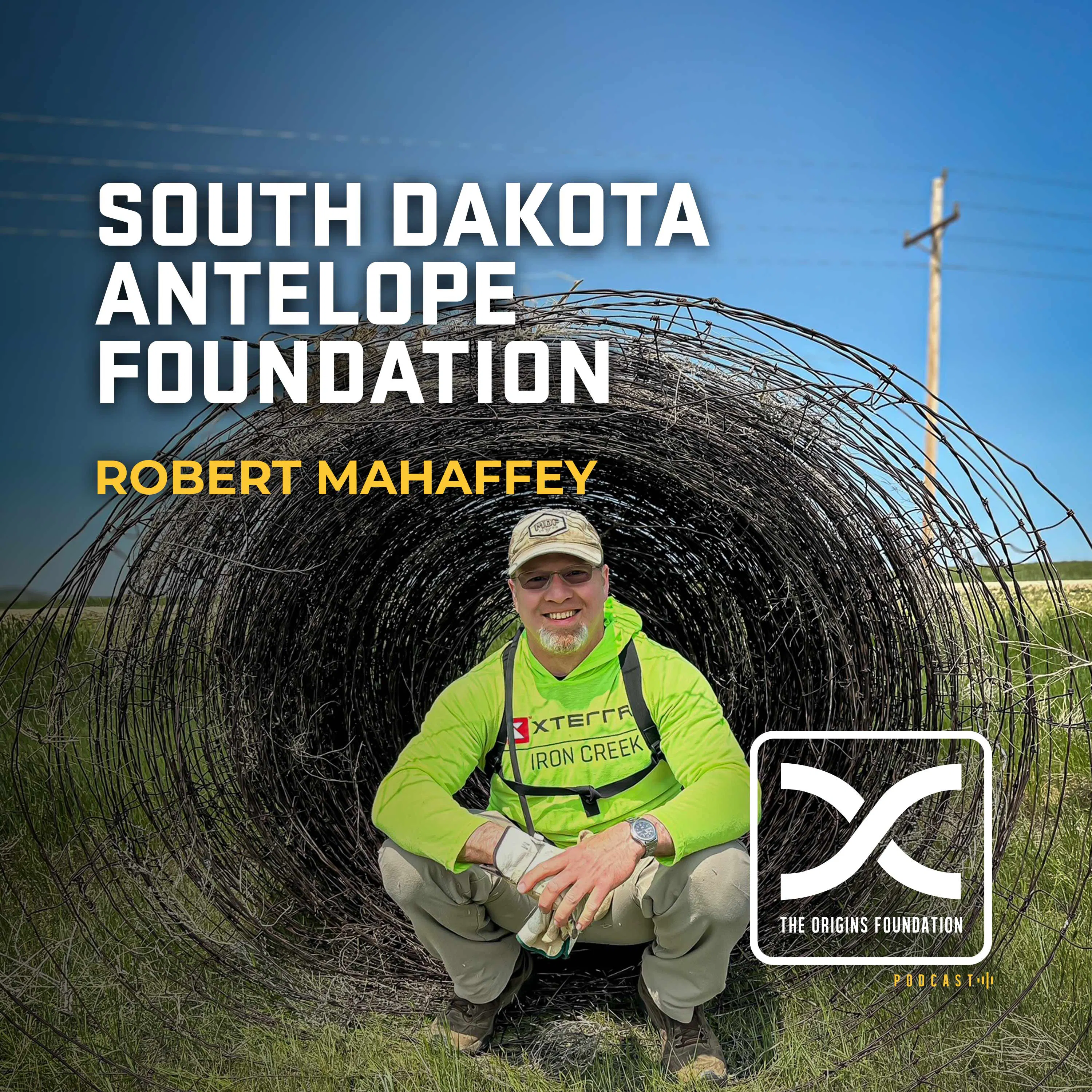
The Origins Foundation Podcast
Episode 589 - Robert Mahaffey || South Dakota Antelope Foundation
00:51:40
Chuck Dye and Joe Bailey of Wildlife Ranch Solutions in the Texas Hill Country join Robbie to talk about the world of ranching exotics in the United States. Robbie dives into exactly “what is” Wildlife Ranch Solutions - the people who do the work, how the education component works with landowners, and whether native whitetail can exist alongside certain introduced species.
Loading summary
Transcript93 lines
- [00:01]
Midway USA Announcer
Midway USA has ammo for your next hunt. If it quacks, honks, whistles or cackles, snorts, gobbles, grunts, bleats, or bugles, you need to shop before your season starts. At Midway usa, the right hunting ammo makes all the difference. And at Midway usa, we've got a massive selection of premium hunting ammo from top brands like Winchester, Hornady and Federal. From big game to small varmint, you'll find the perfect load for every hunt. And with fast, reliable shipping, you'll be ready when the season starts for just about everything. For hunting, shop midwayusa.com bow hunting all.
- [00:33]
Trophy Ridge Representative
Comes down to a moment. And in the moment, you want equipment on your bow that will get the job done. Trophy Ridge products are the tools bow hunters trust react technology, sights, rests, stabilizers and quivers to help a bow hunter be successful in the field. And those tools are from Trophy Ridge.
- [00:51]
Podcast Host (Mike Axelrod)
Robert Mahaffey is the chair of a fairly new organization called the South Dakota Antelope Foundation. I wanted to bring Robert on so that you can hear from him, you can hear directly from his heart about his passion for antler and why they stood up the South Dakota Antler Foundation. I want you to know about who they are, the projects they do, and some of the challenges that they face. As you will see, their greatest challenge is actually getting people to turn up and do fence removal projects. It's tough work, but how rewarding is it to do something like it? So here is Robert Mahaffey, the chair of the South Dakota Antelope Foundation. Enjoy it. Go check out their website and if you've got a couple of dollars, send a donation or become one of their members. Cheers. So there's a reason why I started Blood Origins. And that reason is simple, is that I wanted to convey the truth about hunting.
- [02:02]
Robert Mahaffey
It brings awareness to non hunters that it's more than just killing animals.
- [02:10]
Podcast Host (Mike Axelrod)
How do I start it?
- [02:12]
Robert Mahaffey
Brittany?
- [02:12]
Podcast Host (Mike Axelrod)
My name.
- [02:14]
Robert Mahaffey
Does my hair look okay?
- [02:16]
Podcast Host (Mike Axelrod)
My name is Mike Axelrod.
- [02:18]
Robert Mahaffey
Start again. Yeah, I hated it too.
- [02:20]
Podcast Host (Mike Axelrod)
Braxton, you said something in the car to me. You said that you were living on borrowed time. There's a perception around who hunters are, what we're supposed to be. And a feminist that works for a nonprofit that is a hunter that has only eaten wild game for the last 20 years is likely not the thing that people think about when it comes to a hunter. Robert Mahaffey, as I said to you over email and maybe over a text message or two, I apologize. Should have had you guys on a long time ago. And. But we're rectifying it now. We are having you on. Thanks to Todd Craig. Also pushing a little bit of my buttons and saying, hey, you gave me such trouble about you guys coming on. And I, I, when I looked back at that email, I was like, what? I must have been in, like, number one. Either a bad mood or something, because I, I just was like, man, that's not me. It was like my alter ego responding. Anyway, you're here. Doesn't matter. Robert Mahaffey, welcome to the Blood Origins podcast.
- [03:32]
Robert Mahaffey
Thanks for having us.
- [03:36]
Podcast Host (Mike Axelrod)
Where are you based, Robert?
- [03:37]
Robert Mahaffey
So I'm in Rapid City, South Dakota, so pretty much pretty close to the center of the nation.
- [03:44]
Podcast Host (Mike Axelrod)
I have pheasant hunted in South Dakota. I've done it twice, two different places. And then we also. I don't know if you know this or not. Did you. Have you watched our piece called Living Legacy?
- [04:00]
Robert Mahaffey
I believe I have. When did you really. When was that released?
- [04:04]
Podcast Host (Mike Axelrod)
Early. Early Days of Blood Origins. It must have been 2019.
- [04:08]
Robert Mahaffey
Yep.
- [04:08]
Podcast Host (Mike Axelrod)
And that was about the pheasant sandwich. And Aberdeen, South Dakota. And unfortunately, Ms. Bonnie Ellis has since passed, which I think is, you know, one of the coolest things about what we do is we get to immortalize people, because you never know when something's going to happen. I mean, Bonnie Ellis was a nurse who fed pheasant sandwiches to soldiers coming through Aberdeen in 1943. And then because friends of hers died in the war, she then decided to enlist herself as a nurse and then was on the train when she came through Aberdeen, and she got herself a pheasant sandwich by, you know, the woman of the town. Just such a cool story that I don't think anybody knows. I think I probably need to revive.
- [04:57]
Robert Mahaffey
It.
- [04:59]
Podcast Host (Mike Axelrod)
Because it is such a historic piece. And when we did it in 2019, everybody was still alive. Bonnie was the only. Ms. Ellis was the only one who was old enough to serve pheasant sandwiches. All the other ladies that we interviewed were daughters.
- [05:16]
Robert Mahaffey
Okay.
- [05:16]
Podcast Host (Mike Axelrod)
Of the mothers that were feeding the soldiers.
- [05:20]
Robert Mahaffey
That's crazy. The South Dakota just has this. This, like, all these little oddball little stories and all. Like, there's so many little towns, and there's always something in all of them that there's something to offer. And people have written so many books that you can spend a lifetime reading these books, but they do detail, like, a lot of the little stories that have happened in these places. You know, I mean, we've been around forever, and just like you were saying, you know, like, up in that Aberdeen area with rail systems and everything else, and pheasant hunting has been such a huge part of our tradition here in this state that it's even crazier. Was it, I think Dick Cheney, if I remember right, accidentally shot somebody once on a peasant on here, you know. So yeah, it's all like there this, our state is a really amazing and it's such a diverse state when it comes to just the topography. You know, the eastern side of the state is so flat. Cornfield, soybean wheat, things like that. And as you cross the Missouri river you get into the more hilly country and more ranching. And then eventually you end up out here in the Black Hills of South Dakota. And that's just all a lot of mountains. And then I shouldn't say mountains, but us they are. And then you go north of us and you kind of get up into that, you know, you, you could, you wouldn't know whether you're in eastern Montana or eastern Wyoming. So pretty, pretty unique state for sure.
- [06:44]
Podcast Host (Mike Axelrod)
Pretty amazing. Well Robert, introduce yourself and introduce the organization that we want to talk about today. Look guys, I'm a hunter, right? And when I go hunting I like to figure out how to get my trophies back home as expeditiously as possible. Well, you don't have to look much further than Safari Specialty Importers. We know that trophy importation can be quite a headache. That's why Safari Specialty Importer strives to make it as easy and hassle free as possible. They have access to a bonded warehouse. You won't be charged storage fees and you get a dedicated team that's readily available and will update you at every step in the process. They'll even go one step further. Safari Specialty Importers is working with us and they are going to donate $100 from every shipment that they work with to conservation projects that include anti poaching, community development and wildlife conservation. At the end of the day, choose to spend your money with a team that's dedicated to you and is dedicated to helping show how hunting is a great conservation model. Hassle free logistics, fuel and conservation go with Safari Specialty Importers. Hunting and shooting suppressed have become the norm in over 42 states where suppressors are legal. The growing popularity of suppressors has even led to legislative changes. You might have heard some things around the big beautiful bill, right? Including the reduction in of the NFA mandated tax stamp. Before you used to pay 200 bucks. And now starting January 1st of 2026, the tax stamp is going to zero. However, why wait until January 1st? Our partners silence essential great friends of ours. They're going to pay your tax stamp right now. So if you buy a banished suppressor or other popular brands that essentially are qualifying purchases, Silence Essential is going to cover the cost of the tax stand. They're going to save you 200 bucks right now, so make sure you don't miss out. Shooting Suppressed if you're in the market for a new suppressor, whether it's your first or your next one, visit silenceesscentral.com or call them 866-811-6536. Silence Essential is going to cover your tax stamp right now. They're going to simplify the submission process and deliver your suppressor right right to your door. Don't wait. Get your suppressor right now and start shooting. Suppress this season. Bushnell is eager to help you get set up for conservation success. That's right. They want to help you. The conservation and research community is dominated by good people doing good things and investing significant time and effort for the benefit of habitat and the species. So what do you need to do? Pretty simple. Send us your conservation story and or your conservation wish. Could be managing whitetails, could be understanding your environment or species or something else related to conservation. What would you be able to do if you had a great trail camera setup? We will select the best story every other month and send you a camera bundle, cell camera, normal SD camera, SD cards, as well as optics, everything you need to get set up for success. I can't wait to see what you submit. You can email us, DM us, message us, whatever you want. We are not hard to find. Good luck.
- [10:05]
Robert Mahaffey
So I'm Rob Mahaffy. I am the board chair for the South Dakota and Loaf foundation. And we organized here back right before the beginning of the year. We had, I myself over the last, I don't know, two to four years. I don't know. It's been in my back of my mind, I could never really figure out why there was not an antelope organization in our state. Just because our antelope population is pretty small but easy.
- [10:36]
Podcast Host (Mike Axelrod)
That's why it wasn't, you know, the population, the population wasn't that, that big day wasn't like a Wyoming, right?
- [10:43]
Robert Mahaffey
It was, it wasn't like a Wyoming, but. And I don't want to get, I want to get too far ahead of myself. But if you think about it like this, so our population in the 70s, we were at 20,000 in 1970.
- [10:57]
Podcast Host (Mike Axelrod)
Human population. Human population or antelope population?
- [11:01]
Robert Mahaffey
Antelope population. Right. And then so in 1970 we were like at 20,000 and then jumped all the way forward to 2008. We had somewhere between like 80 and 90,000 prong. Yes. Sheesh. Well, and that kind of like, be. It was the beginning of a little bit of a debacle. So now if you jump over to right now account, last year, done by Game and Fish, kind of had the. The spring count at a little like at 29,000. I don't. Like, I say these numbers all the time, and sometimes I think my Alzheimer's kicking in, but it was like 29,000. And then they figured by the recruitment cycle come fall with bonds, that it probably should be like around 34,000. That was like a very hopeful number. So, yeah, we're definitely not 1970, but we're definitely like not 2008. And when you start to get down on that 20 population, 20,000 population, any of those numbers, it's kind of some. It's kind of some numbers or, you know, there's some concern. We're like a couple of bad winners away from king down to 10,000. And a lot of, you know, there's. There's a lot of factors that come into that. So the state, which our organization 100% agrees with what their biologists have come up with for an objective, they want to be at 60,000, which they feel is a healthy herd. We feel the exact same way, because when we were at 80,000, it's not necessarily that it wasn't a healthy herd. It'd be an amazing healthy herd if there was no woven wire fences and ranchers didn't have. Weren't competing for grazing, especially, you know, maybe like on some winter wheat fields in the winter, or just winter alfalfa crop. So I was around in 2008, and I remember what that looked like. So now myself, you know, driving across the landscape, it's a little concerning, you know, so. And also, kind of. Well, I mean, you know, this, like, antelope don't know boundaries. They. They don't know whether they're in Wyoming or Montana. And we border both states. So it's. They kind of go back and forth when you get in some of those counties that border this. Those two states. And funny little fact is, you know, like, back in the early 1900s, there were antelope in Tracy, Minnesota. So we as humans, yeah, we have pushed that. We've pushed them further and further west, and now they're kind of getting encapsulated more than they've ever been. You know, they really kind of sit down through this corridor where they'll go down through Nebraska, and you still have seven Texas and places like that, you know. But as far as whether there's still actually some in California, I don't know. I know at one point they transplanted some to an island there, but they. They are. They're getting encapsulated, and that's us doing it to them. And there's. There's no way around that. Human. Human interaction is.
- [14:07]
Podcast Host (Mike Axelrod)
Yeah, the human footprint is getting more and more and more heavy on the landscape, heavy on habitats.
- [14:13]
Robert Mahaffey
Yep, yep. So kind of back to the introduction of ourselves. So I was fortunate two years ago. It was a year before you and I had talked a little bit about the South Dakota Bow Owners association, and Randy Newberg was the keynote speaker for us in Deadwood, South Dakota. And Randy stayed with us the night before we had to go up there. And we were sitting around that morning, and I knew his passion for antelope. And of course, that's all we talked about that morning over breakfast. And Randy's like, if you want to do something, you got to do it. Because I brought up the idea, you know, and I was like, well, then he leaves, and my wife.
- [14:48]
Podcast Host (Mike Axelrod)
Nobody else is gonna do it.
- [14:50]
Robert Mahaffey
Yeah. My wife goes, you know, if Randy's gonna tell you you should do it, you should maybe go do it. And I got a hold of one of my other good friends that's on the South Dakota BO Owners association with me, and he's very, very passionate. They have some antelope on his own personal ranch. He was just like, I think we should do this. Like, let's quit messing around. So we started the process then, and I myself was very blessed. I had done a ton of research. There was no other antelope foundation in the country. There was no national. There was no nothing. And I got a hold of the Arizona one.
- [15:25]
Podcast Host (Mike Axelrod)
Isn't there like a little Arizona antelope organization?
- [15:30]
Robert Mahaffey
Yeah. So here's the deal. I like, yeah, they're a state organization, but they donated. They just got in donating, I think in the last two years, like a hundred thousand dollars to water tanks. They're donate. They. They raise so much money there, obviously. And they've been the greatest mentor for us and telling us, like, how to get this thing started. I was just watching a Kuyu film here. It's been like in the last month, month and a half where they were relocating. Kuyu was out doing a conservation project, relocating bighorn sheep. Yeah. And if you look on the front of the. Those great big monster portic kennels that they haul those sheep around to transplant them a new place. Here's that great big Arizona Antelope foundation logo on the front of one of those crates or all of the crates, because that's just the kind of work that they're doing and they're donating. And the amount of fencing projects that they do is wild. I think the beginning of this next month they're doing a project on one of the overpass migration projects. So they're just really involved in. In a lot of stuff. Most of their board are all ex biologists. They have something to do with game and fish. Glenn Dickens has always been my point of contact and very straightforward guy. Will tell you how it is. We'll tell you when you're doing stupid stuff and just try to help you out. They've been around a long time. I mean, I think 1993 was the first year they. They had an elected president for the organization. And so they've been around, they made it work. They did it and they've donated. I mean, it's probably say at this point over a million dollars to wildlife or to antelope, which again, just doesn't only benefit antelope, it also benefits mule deer. Anything else that's out there, just like our organization, like what we're trying to do has a lot of benefits of wildlife.
- [17:20]
Podcast Host (Mike Axelrod)
Sure. So you guys have filed. You filed for 501c3. When did you do that? Earlier this year. You filed, right?
- [17:29]
Robert Mahaffey
Yep, yep, we did that right away at the beginning of the year. I'm kind of, I'm kind of blessed that my wife is. She built our website for us. Somehow she got roped into being our secretary for at least for a while to help keep us going. And now I look back on it, all those things are really easy to do. Like, I just don't know why I didn't do it earlier. I think I was just, you're afraid of failure because failure is not a comfortable thing. And now we did it and here we are. So you get the website up and going. It's always a slow moving process in the beginning. I brought over to the new organization when I was on the South Dakota Bow Owners Association. We had really turned the pages of Bow Owners association from going from, hey, let's just lobby all the time at Game and Fish and post a lot of pictures of people with all the critters they've been shooting to. We started doing these fencing removal projects because I think, like there's this epiphany and I had Called our board chair, Justin Broughton at the time. And I just said to Justin, I said, I think this is like a direction we need to go. I think that we need to reevaluate our priorities in all of this. Because. And I continued to say this and I could probably run into some argument with some people, but it's like we can argue about or we can fight for access all we want. We can do that day after day. We can fight for our history with, or our traditions with archery, with bow hunting. But I would always say to Justin, I'm like, well, if tomorrow they say we can't have bows and we can't use bows anymore and we can't use firearms, I think we're all going to go out and figure out how to use slingshots or rocks. We're going to figure out some other way. But all of that is a hundred percent irrelevant if the number one thing we don't have, and that's wildlife and there's just not enough focus on wildlife, in my opinion. It may be kind of like this thing. There's like this gray area that goes over the top of wildlife where it seems like we're caring about wildlife, but we are always just so consumed with the access and, and our rights, which we have to have those. Don't get me wrong, it's got to have the wildlife. Otherwise it's just totally pointless. You'd have all the access to the world, but if you go and stand on the, stand on the hill and you look out thousand yards and you can't see anything, it's gone and you don't have any more. So that was a big, that was a big push for me to want to kind of turn that page and start looking at, you know, what can we do to put more, more of the resource back on the landscape and give us opportunity and also leave something for our grandchildren. Because our organization when it comes to the Antelope foundation is not. We are not a hunting organization. We're a conservation organ because we try very hard to appeal to non hunters as well as hunters. That has been a big thing that we continue to try to reach out to other organizations that aren't hunting organizations that are. Maybe there's an organization here in the hills called I Care for the Black Hills. They basically go out and do cleanup things and that sort of thing. Well, when we're doing fence removal projects, that's really actually right up their alley because I'm being facetious, but it is removing trash. So woven wire fencing. So we're we really try to appeal to all people.
- [20:58]
Podcast Host (Mike Axelrod)
So I'm looking at your website. The website is sdanthelopefoundation.org have you received your IRS designation letter?
- [21:07]
Robert Mahaffey
Yes.
- [21:08]
Podcast Host (Mike Axelrod)
Okay, good. Perfect. So you are legit moving forward?
- [21:12]
Robert Mahaffey
We're legit.
- [21:14]
Podcast Host (Mike Axelrod)
That's awesome. So you, as we talked about in the beginning, major objectives, obviously, wildlife on the landscape, 34k prong horn and antlo population. Currently looking for a 60k population objective. Anybody in South Dakota listening to this? You've only got nine dedicated volunteers, so we need more of that.
- [21:37]
Robert Mahaffey
That is the. And then. And the number is higher. Like Julie goes in and looks at our WIX account and she'll like update like when we do projects and she'll add those on there. Volunteering for habitat projects is the biggest issue I think we face as, I.
- [21:55]
Podcast Host (Mike Axelrod)
Mean, just getting people out there.
- [21:57]
Robert Mahaffey
Yep, it is so it, it's beyond frustrating. And I, I always, when I get to this point, anytime I've done a podcast on this, I always have to start to bite my tongue because it is what gets me in trouble. Because it's. We're struggling to prioritize the importance of, of things. Like there's a lot of assumption that this is just gonna all be here tomorrow, that we're all gonna be able to just go out and go hunting. You know, there's, there's people out there that don't want us hunting anymore. There's people out there that, they're not going to support us. They're going to sit behind the keyboard, they're going to make cardboard signs stand on the street, yell and scream and make us out to be the worst group of people that there possibly is as, as hunters or conservationists. And we have to start to do better and look better than what we currently do. I've said it before and I'll say it again. I just don't think a lot of the big hitters when it comes to the influence world, I don't think they realize what type of impact they could possibly potentially make on getting more people to volunteer. Volunteering needs to literally turn into a flex and it's really super hard to do that. And I get it. A couple other people I've done podcasts with openly, they'll say it conservation content on social media, like out doing a fencing project or out planting sagebrush or whatever it is that's making it better for the resource. It is not sexy and it doesn't get likes. You could have a video out there pulling woven wire all sweaty Tore up rattlesnakes, the whole nine yards. And it will get a fraction of the likes that someone would get if they were out there, I don't know, opening up their hunting pack and showing.
- [23:54]
Podcast Host (Mike Axelrod)
All the things that stopping volunteers, like local volunteers, guys that don't even have social media.
- [24:02]
Robert Mahaffey
Well, yeah, but if you think about it like this, like, it's that outreach, it's us, and it's us trying to get that. That information that's out there to get people to want to come out and do those type of things. And it's really hard. I mean, it's. We see it across the board. I mean, I see it with. I'll show up for a mule deer foundation habitat project. You could see it in an elk foundation project. It's just crazy hard to get volunteers go out and go do that. And the next thing I'm going to say, I'm literally not taking a pot shot. I'm literally not straight up, like, save my soul. But look at how many hunters will show up at a total archery challenge event. And the last fencing project we did, the day we started, we have a guy that sent out almost 2,000 emails, and he's an employee with Game and Fish that sent out that many emails for people to show up on a project. And two. Two of us showed up for the very first day of the fence removal, and he was actually one of them. And he had to take off because he had to teach a class, because he teaches classes. Here's me and another guy. We're both 55, and we both take out over a mile of woven wire fence by ourselves. The next day, more people show up, but only, I think we only ended up with like 8 a year ago when we were doing our fencing projects, the Antelope or with the Bow Owner Association. First day, it's like five or six. Then the next day, like, we really lucked out. Like 20 people showed up because 10 people can pull out a lot of woven wire. You can make a lot of ground in a day and get out.
- [25:45]
Podcast Host (Mike Axelrod)
And when you say woven wire. So just is woven wire barbed wire?
- [25:50]
Robert Mahaffey
Nope. So typically what it is is it's two strands of barbed wire across the top and then it's that mesh four by four woven wire that's on the bottom.
- [26:00]
Podcast Host (Mike Axelrod)
Like a square? Is it like a square? Okay.
- [26:02]
Robert Mahaffey
Yep. And it's. It's in our area primarily because of the sheet production back in, you know, early late middle 1900s. There's not a lot as much sheep production as what they're what they're used to be. And a lot of guys just leave it in because it's. Why take it out? It's keeping the cattle in so they leave it there. And now there's.
- [26:22]
Podcast Host (Mike Axelrod)
What was the point of the woven on the bottom? To keep sheep.
- [26:26]
Robert Mahaffey
The sheep could. Yeah, the sheep couldn't get through it and it would keep them in.
- [26:29]
Podcast Host (Mike Axelrod)
Okay. Okay.
- [26:30]
Robert Mahaffey
Yeah. So kind of lost my train of thought there. But.
- [26:36]
Podcast Host (Mike Axelrod)
No, it's just volunteers. Like it's a struggle. It's a struggle.
- [26:40]
Robert Mahaffey
It, it's a struggle and it's. Because again, it goes back to though. It's like, it's not fun. It's not a fun thing to go out and go do.
- [26:50]
Podcast Host (Mike Axelrod)
Well, it's type two fun. It's like, it's type two fun, right? It's sucks whilst you're doing it, but then at the end of the day when you're sitting around on the porch drinking a cold beer, like, man, that felt really good actually, you know.
- [27:02]
Robert Mahaffey
Well, that, that's the, like, that's when we were so like a year ago with the Boner Association. We finished up our second day a couple rattlesnakes. It was like over. It was almost 100 degrees by 10 o' clock in the morning. It was literally brutal. And then everybody goes back and my wife just insists on being the camp cook, but she's back at the tailgate of the pickup making everybody's sandwiches and getting everybody drinks. And we're all standing around there and the amount of testosterone is flowing is pretty high because guys literally feel accomplished. And until you actually want to do it, you don't realize how good it feels knowing how much of an impact you've actually made. And so that's that big part of the more people we could get to just get a little taste of that, the better, the better things would be, the easier it'd be. Obligate volunteers. It's hard in the summertime too because of all the things going on. You know, it's. There's a ton of stuff, but people seem to be able to prioritize what they're going to make time for and then what they're not going to make time for. Which goes back to. I think we all have a responsibility as hunters and even non hunters. Like we, like we have a responsibility to put back into what we've been taking all this time. If we were gardeners, we'd starve to death. You know, we're really good at taking out the garden, but we don't go back out there and reseed it. And buying your tag is not conservation.
- [28:27]
Podcast Host (Mike Axelrod)
Yeah, it's. It's funny the way, the way that you're talking. Obviously I've never done a fence removal project. We don't have those kinds of things down here in Tennessee kind of scenario. And with everything that you will find out in a nonprofit scenario, when you're trying to raise money, you're trying to do good projects and whatnot, you have to always be thinking outside the box. I wonder if you could figure out how to tie in. Because fence removal projects are exertion. There's an exertion tied to them. Right. There's a. You're gonna sweat a lot, you're gonna work out a lot. It's almost like you need to tie yourself into a, like a. A mountain tough workout kind of group. A CrossFitter, like a CrossFit group down in the town. You're smiling because you're probably like, yeah, I've already done that, Robbie.
- [29:21]
Robert Mahaffey
Yeah, I might have reached out to Mountaintop. I didn't get a response, but. Cause it sounds almost ludicrous. But I totally agree with you.
- [29:28]
Podcast Host (Mike Axelrod)
Like, yeah, or the local CrossFit gym down. Down where you live kind of thing. Or the running club. Like, hey, runners, you like to sweat? It's going to be 100 degrees today. I promise. You will sweat and you will work harder than you've ever worked before. And you're going to get your workout and you're doing something for conservation.
- [29:46]
Robert Mahaffey
Yeah, I mean, it is brutal. I mean, I grew up on a farm. I Throwing thrown. Throwing bales and stuff. And the last thing we ever wanted to talk about was removing any fence. So we didn't, you know, and it's just you're out doing this stuff and Todd Craig, who's one of my good friends, well, you know Todd already. You know, Todd, we're both 55 and we're out there, you know, and there's no give up. Like we're gonna do this and stuff at the end of the day. I just remember when I went home that night, knowing I had to go back the next day. There was that one moment there for about half an hour. I was like, I think I'm gonna call in sick tomorrow. I don't want to go back to go do this again. Like that's this miserable. But it's such a. It's. You're right. And, and I think that, like there are those ideas where you have to get creative, you know, I, I think I'll be honest Even just going back to like, the comment I made before about the influencing world, though, too, is, I said this to love them or hate them, Matt Renella, I said to Matt, I go, can you imagine, Matt, if your brother said, hey, I'm gonna be. And I'm not. I'm. This isn't me pimping for that to happen. But I'm like, you imagine your brother Matt Steve Rinella showed up for a fencing project publicly said, hey, I'm going to be there to go help, help the Mule Deer foundation pull a full fence out. You'd have to have traffic control there to get people to stop pulling out fence that they're not supposed to be pulling out. There would just be people piling out of the woodwork to show up to go work on this fencing project. So there's. I think that's just. But it also helps to kind of get that ball rolling, though, of getting people to have some level, as stupid as it sound, but to have some level of excitement to go and do this type of stuff and to want to be engaged and then finally have that epiphany of like, oh, yeah, I can see the benefit of why we're out doing this. And I really feel like I'm earning my hunt at this point. Like, I'm earning. I'm earning back what from what I've taken to be able to go back out and hunt. So that's. The guys love it. Anytime we've been doing any projects, guys love looking out and seeing the wildlife that were there to help improve, seeing them on the landscape while we're out there. And that happens. So there was a. There was a fencing project a year ago that my son and I helped with. And that rancher we took out, we took out a lot of woven wire over two days. And the next day, the third day, I did not go. My son went back up and they were having lunch by the pickup and they'd already reinstalled the smooth wire to replace that woven wire, which I can explain that too, but they'd replaced that, that woven wire. And here comes this doe antelope and crawls underneath the smooth wire and goes in the pasture. And the rancher goes, this is a third or fourth generation ranch, and that's the first time I in my life have ever seen an antelope in that pasture.
- [32:41]
Podcast Host (Mike Axelrod)
That is amazing.
- [32:43]
Robert Mahaffey
So right there is a win. Right there is how, like, you know, my son, right? That was. Instead of like, I'm out here doing it, but I really don't really get what I'm doing this for. And then you hear that and see it and you're like, oh shit, this is a good deal.
- [32:57]
Podcast Host (Mike Axelrod)
Yeah.
- [32:58]
Robert Mahaffey
So are you familiar, are you familiar with the smooth wire concept?
- [33:01]
Podcast Host (Mike Axelrod)
Yeah. So I've watched and one of the things I wanted to bring up is that I've watched Unwired, that Wyoming documentary, which is incredible, right? The science of the coloring data coming out of that, those antelope and showing and like, you know, the, the ranch is saying, you know, when I saw the data and obviously you needed a hard winter to knock down the antelope numbers and for him to really see the effect of it. But he says, when I saw the data and I saw the square, that was an issue for migration and that was my fence. Wow. Okay. I'm going to make a change.
- [33:41]
Robert Mahaffey
Yep. Well, and if you get a chance and you go on to like going on to any mapping that you have and you find, we're just going to call it Buffalo, South Dakota and then you're going to find Wall, South Dakota and then follow that map of from there to there. And there was a researcher up in Montana state, part of a program that they worked jointly with South Dakota Game and Fish and they collared a doe pronghorn and that's how far she traveled was from Buffalo down to Wall, South Dakota, which I would love to be able to go back and see the detailed data and actually drive to some of those areas where I can see where this doe made some hard left or right hand turns to get to where she was going and be like, well, why was she doing that? Yeah, yeah, why did she, why did she do that? So, you know, our antelope, we don't have that big migration like Wyoming has, Arizona has. Ours kind of have these little micro migrations, but they do. The weather just pushes them and sometimes an antelope can end up in an area where they've not been before. And I think that's a lot of times where they run into trouble, especially in a bad winter and there's woven wire and they can't get out. They don't know an escape route where if they've been there all summer doing things and there's coyotes or whatever, it's easier for them to move right around freely. But that's. I'm, I do have, I've been having some communication with her and I need to get that final, like that data. I've seen a, a blown up map of it, but it's not as cool as I think If I, if I ever had all the money in the world, I would take a drone and fly the entire route and I would just keep flagging all these spots where I knew she couldn't, she couldn't get through and she had to keep on going and stuff. So, you know, even talk about ammo.
- [35:35]
Podcast Host (Mike Axelrod)
That would be super cool, a drone and flagging the places based on the color data.
- [35:40]
Robert Mahaffey
Yep. And I think, you know, it's the, like that unwired. I sent that out. I sent it out in an email. I sent it to a ton of friends and the response to that film was pretty incredible. You know, I mean, that's. We're nowhere in a position financially to be able to afford a, to have a major filming project done at some time that would be really super nice to do. I should probably tell Arizona they should do it or sponsor us. But just having those things, it brings more awareness because when the money from Arizona.
- [36:14]
Podcast Host (Mike Axelrod)
And we'll do it.
- [36:14]
Robert Mahaffey
Okay, right. If, if the antelope in this, if the antelope in North America ever just are gone, they're done. Like, there is no more. You're not going anyplace. You're not going to go to, not going to go to Asia, you're not going to go to Eastern Europe, you're not going to go anywhere. Like this is the only place that they are. And when they're gone, they're gone. And they are very fragile and sometimes we can argue over verbiage, but it's like they're not a renewable resource. They're the only thing renewing themselves. You can't raise them at a farm in Wisconsin and then bring them out here and release them just does not work that way. So they are so different. I mean, even like when you look at a mule deer versus a whitetail, you know, mule deer just don't multiply as fast as whitetail do. So for the end of the western United States, you start to deal with these more delicate species of wildlife. And if we don't take care of them the way we should, they're just like, they're gone. And you get down these scary numbers. Our youngest daughter had to have a hip, pretty severe hip surgery. So she's been in a walker for I don't know how long now on her road to rehab. And we took her down to Custer State park, which is in the Black Hills and it's a state run park. And we drove down through Wildlife Loop and I saw like eight or nine pronghorn. And I know there's more in there than that, obviously. But I just look at my wife and I go, this is why we did the Antelope Foundation. She's like, what? And I go, I don't ever want to have to go drive to a park to show my kids or my grandkids these things. I want to go drive off in a gravel road off the highway and go look at them, but I never want my kids to have to go look at them in this situation. So, yeah, that. I mean, I have a lot of passion. I don't know why. I think maybe, like the first big game animal I ever shot was a antelope in Wyoming when I was just a kid wearing a skull. Skull chewing tobacco hat. And, you know, I shot it with a lever Action. Savage. 250, 3,000. Really aging myself, you know. But like, I just, I remember that it's always been impactful and I. I just think there's one of the coolest animals, and I think it's just because they're so unique. We own a coffee shop in Rapid City here. And the other day, so we have a couple antelope heads hanging in our coffee shop. And this young couple from. From an eastern state that's not South Dakota came in, and she must have some family that has lived here, or her dad used to come here and hunt. And I didn't ask why, but she was just like, pointed to her. Pointed to it and then whispered to her boyfriend. And a voice I could hear, she goes, look, it's prairie lice. And I was like, you would probably be the same person that would be offended if I said timber dingoes if I was talking about wolves, you know, like, I'm not a big wolf fan. And the, the whole antelope thing, like, there was a time in. In this state and there's still some. Probably some ranchers that they literally, back in 2008, that was driving them nuts that we had so many here. You know, they got called tundra maggots. They got called all kinds of different things. And we have a rancher on our board, and he has done an amazing amount of fencing projects, removal and replacing with the smooth wire and. But he'll openly tell you that, you know, like, in 20 years ago, if you stopped, asked to shoot an antelope, he'd have said no, but you can shoot a hundred if you want, because. And now it's come full circle and he and I are both the exact same age. And we talk about this all the time, where it's this evolution of ourselves from when we're young and we're dumb and we're not really in tune with things to again, we want to leave, we want to leave something here for our grandkids and not just to hunt, but also to look at and also understand the history of how we have cohabitated here on this planet with our, with this wildlife. So it's always like he'll talk about that all the time. He's just like, God. He goes, I, I kind of used to, used to be that guy and now he's not. Like I'll, I'll catch him sometimes doing that thousand yard stare, looking off across his, his ranch at wildlife. And I know he's proud of this moment because he's giving back to wildlife versus just always taking so very meaningful, very, very kind of a, an emotional thing. And, and I think that's important. Yeah.
- [40:54]
Podcast Host (Mike Axelrod)
Look, the only advice I can give you is that you've started with the right, you know, attitude, which is it? It's, you're doing this because you're passionate about something. You're passionate about a subject, you're passionate about a specific wildlife species. And the journey that you are on, you will have the highest of highs and you will have the lowest of lows and it will be heartbreaking. I, I, it breaks my heart when I see someone cancel giving me $3 and 15 cents a month. I'm like, why, like why did you that, that's nothing. It's like, it's like the, the tip that you give to the Starbucks coffee, it doesn't even cost. It's, it's, it's the tip.
- [41:36]
Robert Mahaffey
And you're saying it's a day long parking meter.
- [41:39]
Podcast Host (Mike Axelrod)
You're saying to me, I don't think I'm going to give you that anymore. And you've got to rationalize in your brain like, did I do something wrong? Did I say something wrong? How did I lose the support? But you never know what's happening on, on that side of the, on that side of the fence. And I would just encourage you to, you know, put your nose to the grindstone like you've been doing and think about innovative ways to get people involved. As you were talking, I, I came up with another idea. So obviously in the hunting community space the most, you know, you're getting more and more hunters in, interested in hunting west western big game. Right. You got these application services. You've got preference points specifically for antelope. Right. South Dakota probably has a preference point system for hunting antler. You need to go have conversations with South Dakota Game and Fish, find the antelope biologist, if there is one. Maybe it's just a large mammal biologist. I don't know what the system is and it would take a long political process for this to happen because you'd have to have a regulation amendment and all sorts of things. But imagine you could earn a preference point by participating for a minimum number of days in offence removal or. Or whatever. Antelope Conservation Project through the South Dakota Antelope Foundation. Well, all of a sudden, you know, this world lives. You either have a carrot in front of you or you have a stick.
- [43:16]
Robert Mahaffey
So it's funny you say this because Tyler Pickett's one of our. One of our board members and he must have a friend in Utah. Maybe like. Maybe Utah or. I don't know, but he was talking that they had some form of system similar to, like, what you're talking about, where it was earning a preference point through actual registered project, community service conservation projects. Yeah, yeah, yep. And I trust, like. And I'm glad that you're refreshing that in my brain because it is just something that we have to. We have to have that conversation.
- [44:00]
Podcast Host (Mike Axelrod)
Or it's like the South Dakota Antelope foundation creates a coalition. And I'm sure Matt Granilla would. Would think through this, have thought through it, or maybe, you know, you create a coalition of private landowners. Now, as I'm. As I'm talking through this and hearing it for the first time, maybe Matt wouldn't be happy with you doing this because you would lock up land, but you essentially have this coalition of private landowners that say, okay, we have 20 miles of fence that we need to remove. Hey, you want to come hunt an antelope? You know, we're going to have antelope tags available, but you need to come and work three days, four days. And once you finish your work for four days, you got two days of hunting.
- [44:43]
Robert Mahaffey
And I. The one thing that is somewhat refreshing here is our game. And fish can be. Sometimes they're not real great to work with, but the majority of the time they actually are like the biologists, the people out there doing these contracts with the ranchers to get the fencing up. They just have amazing relationships and they're super easy to get along and talk to and we actually work together with them, which just like what you're saying, like those options that we have to go out there and pursue, I think are really good options. And just having that sit down at a table and visiting with them and asking, you know, I Know, the state of. Or Arizona. Like, they'll do things there with the reservation. You know, they're doing their raffles. They're raising money in that. In that regard, we would. Raising money is kind of a big deal for us, but not as big of a deal as maybe throughout other organizations. We've really tried to mold ourselves as being so focused on boots on the ground. And I mean, you know, this. You've talked to enough people and done your own thing. A lot of money's come out of our own personal pockets. You know, I think everybody. Everybody on the board has been chipping in and. And spending money to help get things going. And it's. It's just the little things that. That we do. You know, that's just like you with the good advice, Glenn Dickens the same way. He's just like, hey, here's how we did it in Arizona. This is why we have the kind of money that we have. And you just gotta, like, you just gotta keep trudging away at it, and it will come. And it's always. It's always also. It's that being mindful of when people give you money, it's how you spend it and what you do with it. It's not. I've lost interest in a couple of organizations in my lifetime where I'm like, I'm not giving you any more money because I don't see. I see too many people sitting at the top making 200 to $300,000 running this organization. And South Dakota Antelope foundation has made a promise, as long as I'm involved in the organization, that we just. We don't have any paid members. We don't. We don't have any paid stuff. Yeah, we just wanted to be our own thing. We were asked, We've been asked a couple of times, you know, why didn't you guys just maybe try to become a chapter of the North American Pronghorn Foundation? Well, a couple of things. One, they're a great organization, and I see them doing great things going forward. I really do. Especially because they're spread out across the United States with their board members, and they're. There are in different locations where. That's where that educational thing really comes into play of just getting more people of understanding, like what we're. What everybody's trying to do out here and those type of things. We opted to strictly do our own thing because we just wanted to be 100% focused in South Dakota. If we did something that raised money, we didn't never wanted that Money to have to go someplace to turn keep the lights on at a corporate office or pay anyone's salary or do anything at all like that. We strictly just wanted it to go right back here. Which helps us out with Game and Fish, because Game and Fish knows they're always probably going to be the recipient in one way or another of whatever funds that we actually bring in. But it's just easier for us to micromanage. All of our board members all live in antelope country, so we're all seeing it every single day, and we're. It's easier for us to communicate. I'm very fortunate. The North American Prom foundation has Randy Routier, who's one of their board members that lives up in Harding county, which is in South Dakota. Here. He's just a great guy. I can bounce things off his head. When we did our last fencing project, I just sent him in a message and he called me right back. He's like, hey, what do you need, man? And I'm like, hey, you guys have any sort of volunteer list right now in South Dakota? Anybody that you guys have as volunteers, you want to send this to them? We would take the assist from you guys, and we'll give you. Give you all the credit in the world for coming out and helping us, you know, and doing those type of things. So the. I think there's going to be some pretty strong relationship there. But again, we just wanted to be that little micro organization that was able to focus strictly on what we have going on here in South Dakota and not be worried about Wyoming, Montana, Idaho, Nebraska, any of that stuff. We just wanted to 100% focus on South Dakota.
- [49:24]
Podcast Host (Mike Axelrod)
Well, awesome. Robert, where can people find more information about the South Dakota Antelope Foundation?
- [49:31]
Robert Mahaffey
You can follow us on Instagram or on Facebook. And you had the Antelope Foundation's website up there, and they can just go.
- [49:40]
Podcast Host (Mike Axelrod)
To that antelopefoundation.org yes. And you can donate on that website.
- [49:46]
Robert Mahaffey
Yep.
- [49:46]
Podcast Host (Mike Axelrod)
It tells you all about the projects. You can do all sorts of things on the website. You can become a member, whatever you want.
- [49:54]
Robert Mahaffey
You can just volunteer on there. And usually we'll have updates. We have two more projects coming up this summer, so we'll have updates on there, and then people we just send it out to in our email group when we're going to have something coming up.
- [50:08]
Podcast Host (Mike Axelrod)
Outstanding. Outstanding. Well, Robert, thank you so much, man. And hopefully some of the ideas that we might have brainstormed a little bit come to fruition and help you generate those volunteers that you need, the sort of hours on the ground, the boots on the ground. So appreciate you coming on, my man. Sorry.
- [50:27]
Robert Mahaffey
We're going to get you out of Tennessee and get you up here to the high desert for a fencing project.
- [50:31]
Podcast Host (Mike Axelrod)
100%. I was actually thinking about that. I know I need to do almost like a road trip and I just need to hit a bunch of things and one of those will be a.
- [50:39]
Robert Mahaffey
Fencing project with you guys. We'll take you man. I appreciate the opportunity, buddy. Thank you. You're welcome.
- [50:47]
Podcast Host (Mike Axelrod)
Well, that's it for today. I appreciate you listening. As always, leave a review, share it with your friends, and most importantly, do what's right to convey the truth around.
- [50:59]
Trophy Ridge Representative
Hunting Join us at a Friends of NRA event where freedom, fun and firearms come together like nowhere else. With more than 600 events held across the country, there's always one happening near you. From exciting games to exclusive auctions featuring one of a kind firearms and gear you won't find find anywhere else. Whether you're a lifelong hunter, a competitive shooter, or simply passionate about defending freedom, there is a seat for you. Visit friendsofnra.org to find an event near you and get ready for a night you won't forget.
- [51:31]
FishingBooker Announcer
Want to plan your next fishing trip without the hassle? FishingBooker.com is the best way to find and book a fishing charter anywhere in the world. Whether you're chasing trophy fish or just looking for a family day on the water, fishingbooker makes it simple, fast and secure. With thousands of experienced guides, verified reviews and 247 customer support, FishingBooker takes the guesswork out of planning. Visit fishingbooker.com and book your trip today. FishingBooker Fishing trips made easy.