← The Origins Foundation Podcast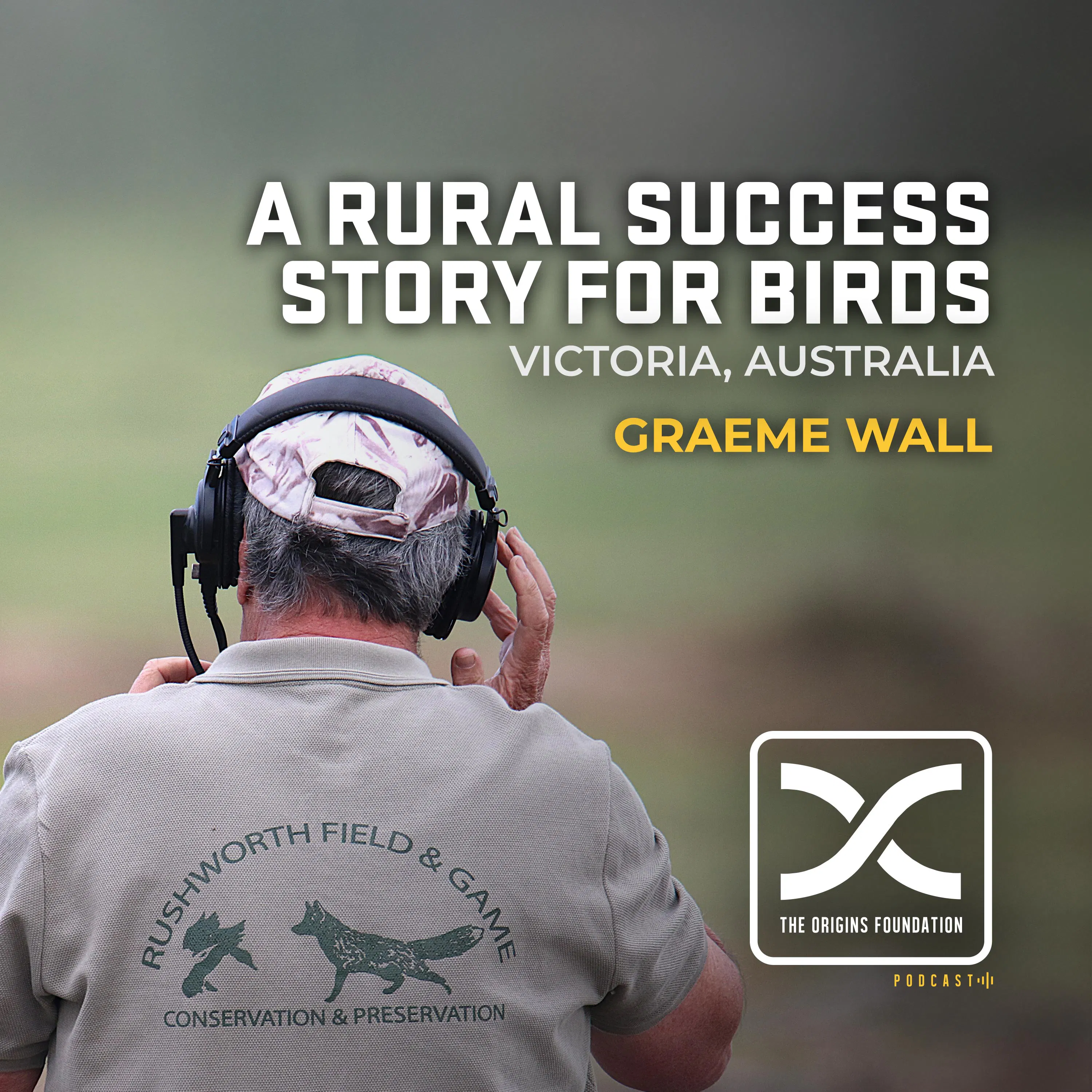
The Origins Foundation Podcast
Episode 607 - Graeme Wall || A Conservation Champion you have never heard of
00:35:00
Graeme Wall, the Conservation Director of the Rushworth Field and Game Branch of Field and Game Australia, is an enigma. We first learned about Graeme and his branch last year and celebrated all the things they do for conservation because they love to duck hunt. During Robbie’s tour down under, he managed to stop in and see Graeme in Rushworth. Graeme joined Robbie on the podcast to discuss his tiny little town of just 1,000 people in the middle of nowhere—Victoria, Australia—and his role as the spear tip of conservation in his community. The two discuss Rushworth’s rural success in conservation, all recorded on location in the middle of an Australian wetland in the middle of nowhere (check out the YouTube video).
Loading summary
Transcript213 lines
- [00:00]
FishingBooker Announcer
Want to plan your next fishing trip without the hassle? FishingBooker.com is the best way to find and book a fishing charter anywhere in the world. Whether you're chasing trophy fish or just looking for a family day on the water, fishingbooker makes it simple, fast and secure. With thousands of experienced guides, verified reviews and 247 customer support, FishingBooker takes the guesswork out of planning. Visit fishingbooker.com and book your trip today. FishingBooker Fishing trips made easy midway USA's.
- [00:32]
Midway USA Announcer
Online gun shop includes an extensive selection of handguns, rifles, shotguns and receivers. We've made it extremely easy to browse and buy guns from the convenience and privacy of your own home. Simply pick from our extensive offering, ship it to your local ffl, and you'll be shooting in no time for just about everything. For guns shop midway USA.com.
- [01:00]
Podcast Host
Graham Wall is the conservation director of the Rushworth Field and Game Branch. You may be asking, what the hell is Rushworth Field and Game Branch? Rushworth is a tiny little town of a thousand people in the middle of nowhere, Victoria. Like slap bang in the middle of Victoria, Australia, which is a state like a province, or stayed in the US of Australia. Graham Wall is the spear tip, the champion of conservation in this tiny community. And I was fortunate enough to meet him. I was fortunate enough to put this podcast down. We did this podcast in the middle of a wetland in Australia. You're going to hear some birds in the background. He was articulating his conservation vision, explaining what they do, why they do it, and I just love meeting people like this. He is a conservation champion that nobody knows. And I got to meet him, I got to chat with him, I got to spend a couple of days with him.
- [01:58]
Interviewer
So enjoy the podcast. So five years ago there was a.
- [02:04]
Podcast Host
Reason why I started this movement. And the truth then is the truth now that we need to champion our narrative. We need to champion the truth around what we do and who we are. There's a sweet spot with a gun, you know, too heavy and it's a.
- [02:18]
Graham Wall
Burden to walk with.
- [02:20]
Podcast Host
Too light and you whipping it. Why is the project so important to the hunting community?
- [02:25]
Interviewer
It's. It's a. I think it's not only important, I think it's, I think it's vital. I think it's, it's just in time.
- [02:30]
Podcast Host
It's like snakes and ladders. You guys are climbing the ladder and then somebody does something stupid and you just slide down. That is such an amazing analogy. Snakes and ladders. Yeah, you know, ivory in my Opinion was the plastic of its age.
- [02:45]
Graham Wall
Okay.
- [02:45]
Podcast Host
The expenses are going up.
- [02:47]
Graham Wall
It goes a long way with families. We have families that do need it.
- [02:51]
Podcast Host
Let me close this door because I have a little wiener dog. What are you laughing because I said wiener?
- [02:56]
Graham Wall
I'm really glad you finished the sentence out.
- [03:00]
Podcast Host
I'm sorry the first happened.
- [03:02]
Graham Wall
What are we doing here today?
- [03:04]
Podcast Host
You're telling the whole world.
- [03:16]
Interviewer
Give me a sound check there.
- [03:17]
Graham Wall
Yep. How's that, Rob?
- [03:18]
Interviewer
Sounds good. Can you hear me?
- [03:19]
Graham Wall
Yep.
- [03:20]
Interviewer
Bring that up just a little bit. Let's. Let's get that situated right there. There we go.
- [03:31]
Podcast Host
All professional now, huh?
- [03:35]
Interviewer
Graham? Rushworth, Victoria, Australia how many people live in Victoria? In Rushworth, about a thousand. A thousand people. Are you the most famous person in Rushworth?
- [03:49]
Graham Wall
No way.
- [03:49]
Interviewer
You've been in how many newspapers have you been in?
- [03:52]
Graham Wall
Quite a few. But I take a lot of photos of other people that are in the field and game and of the various things we do.
- [04:00]
Interviewer
And why are you actually in the newspaper, Graham?
- [04:04]
Graham Wall
We do a lot of conservation work around the Rushworth district in some of the wetlands. So some of the corrupt wetlands are some of the best. Well, they were the best in Victoria. Corop, I sort of call them Corop. So they're just out from Rushworth, Sort of. What would be northwest of Rushworth?
- [04:21]
Interviewer
So what would have been the. Why are there really good wetlands up here? Just a good water table. They're connected to rivers. What's the situation?
- [04:28]
Graham Wall
There's a lot of runoff that comes out of the Rue Forest and runs down through some different creeks, Winolder Creek and Canela Creek. And they run out into the colborne into the crop wetlands.
- [04:40]
Interviewer
And that still happens today?
- [04:42]
Graham Wall
Or not so much still happens. There's still runoff. But a lot of those wetlands have been overgrown with suckers and that type of material. So they're very overgrown and hard to look through. I'm probably lucky that I can remember as a boy you grew up here. Yep. Yeah.
- [05:00]
Interviewer
Duck hunted from a little kid.
- [05:02]
Graham Wall
Duck hunter from a little kid.
- [05:03]
Interviewer
Dad was a duck hunter.
- [05:04]
Graham Wall
Dad was a duck hunter.
- [05:06]
Interviewer
Mum was a duck hunter.
- [05:07]
Graham Wall
Mum wasn't a duck hunter. But when I was growing up, if dad wasn't going hunting, I would go with the guy from down the road. Who's the. The boot fixer. Not. That's a long time ago. It mended boots and shoes.
- [05:24]
Interviewer
Would you say that the duck hunting population around Rushworth has decreased?
- [05:31]
Graham Wall
Yes, definitely decreased.
- [05:32]
Interviewer
Why? Just gun laws and stuff like that.
- [05:36]
Graham Wall
Or I think it's gun laws and people came back from the war and Rushworth Main street would be full of duck hunters and a lot of family connections and people who worked, they lived in the trenches together and fought together and then they built friendships. And the local people would invite those people that they'd been away to war with to come and shoot ducks with them and have their recreational activity around here.
- [06:06]
Interviewer
Would you say if we polled Rushworth today, hundred people we sat in your pie shop that I sat in this morning and we asked everybody that came in the pie shop whether they'd be pro duck hunting or against duck hunting. What do you think we would see?
- [06:24]
Podcast Host
Look, guys, I'm a hunter, right? And when I go hunting, I like to figure out how to get my trophies back home as expeditiously as possible. Well, you don't have to look much further than Safari specialty importers. We know that trophy importation can be quite a headache. That's why safari specialty importer strives to make it as easy and hassle free as possible. They have access to a bonded warehouse. You won't be charged storage fees, and you get a dedicated team that's readily available and will update you at every step in the process. They'll even go one step further. Safari specialty importers is working with us and they are going to donate $100 from every shipment that they work with to conservation projects that include poaching, community development and wildlife conservation. At the end of the day, choose to spend your money with a team that's dedicated to you and is dedicated to helping show how hunting is a great conservation model. Hassle free logistics, fuel and conservation go with safari specialty importers. Hunting and shooting suppressed have become the norm in over 42 states where suppressors are legal. The growing popularity of suppressors has even led to legislative changes. You might have heard some things around the big beautiful bill, right? Including the deduction of the NFA mandated tax stamp. Before, you used to pay 200 bucks. And now starting January 1st of 2026, the tax stamp is going to zero. However, why wait until January 1st? Our partners, silence Essential, great friends of ours, they're going to pay your tax stamp right now. So if you buy a banished suppressor or other popular brands that essentially are qualifying purchases, Silence essential is going to cover the cost of the tax stand. They're going to save you 200 bucks right now. So make sure you don't miss out. Shooting suppressed. If you're in the market for a new suppressor, whether it's your first or your next one, visit silencescentral.com or call them 866-811-6536. Silence Essential is going to cover your tax stamp right now. They're going to simplify the submission process and deliver your suppressor or right to your door. Don't wait. Get your suppressor right now and start shooting. Suppress. This season, Bushnell is eager to help you get set up for conservation success. That's right. They want to help you. The conservation and research community is dominated by good people doing good things and investing significant time and effort for the benefit of habitat and the species.
- [08:56]
Interviewer
So what do you need to do?
- [08:58]
Podcast Host
Pretty simple. Send us your conservation story and. Or your conservation wish. Could be managing whitetails, could be understanding your environment or species or something else related to conservation. What would you be able to do if you had a great trail camera setup? We will select the best story every other month and send you a camera bundle. Cell camera, normal SD camera, SD cards, as well as optics. Everything you need to get set up for success. I can't wait to see what you submit. You can email us, DM us, message us, whatever you want. We are not hard to find. Good luck.
- [09:36]
Graham Wall
I think in Rushworth now, we would probably be 50. 50.
- [09:42]
Interviewer
In the. In the. We're rural here. It's not like we are. You're a thousand people in rural, middle of nowhere, freaking Victoria, Australia, and you're saying 50% of the people that are in a rural country town would be against hunting.
- [09:58]
Graham Wall
They quite possibly would because they're not involved. We've probably changed that through the work that we've done with the Rushworth fielding game. And we put articles in the paper and we do the press stuff and we're trying to change how they view us. And we have changed that by the work we've done in taking over the tennis court building and redoing that building and bringing it back to life. And through that we've, you know, we've gained. People have volunteered and given us stuff like we've got a. The building has been given to us and then people have given us money to buy the paint and they've.
- [10:41]
Interviewer
Because they're seeing the benefits of.
- [10:43]
Graham Wall
Yes.
- [10:43]
Interviewer
The activity of hunting.
- [10:44]
Graham Wall
Yes.
- [10:45]
Interviewer
When? Before, probably. When were you born? Like twenties. Sorry, I thought one of your youngsters was here. He missed the joke. He missed the joke. Back in the day, though, you would have expected, folks. And here's what I'm seeing. There wasn't really a need in 60s, 70s, 80s, 90s to really talk about what benefit came from hunting, I. E. Sugar gliders in a Nest. Rosella's in a nest, putting up nest boxes, that kind of stuff. Nobody cared. And it was. It was more of a. As you talked about, was more of a recreational, social, societal bonding component from duck hunting.
- [11:37]
Graham Wall
Yep. I can remember I would get up to go shooting on a Saturday morning, and you would get up and you would drive down the road where I live, and every second or third house, the lights would be on, and you could look across and go, oh, that's Bill Smith. He'll be going to his little spot wherever he goes and shoots and. Oh, that's right. We saw him two days ago, and he said his brother was coming from Melbourne to go with him. Whereas times have changed now. You know, it's more expensive to buy a firearm. It's more expensive for ammunition. So the young people don't get the opportunity to experience it. And I've got grandkids, and once they experience it, they want to become involved.
- [12:22]
Interviewer
Would you say the 50% of the Rushworth, if they said they would be against hunting, would you know why they would be against it?
- [12:31]
Graham Wall
Probably because they're not aware of it enough.
- [12:34]
Interviewer
It wouldn't be. It wouldn't. How many of the 50% in your mind would be negative connotations versus I. I just don't have an opinion.
- [12:45]
Graham Wall
There would be. Only. Look, there would probably be 10% of people that are dead against hunting, and it's probably never been exposed to it. And the other 30 or 40% are probably what they read in the newspaper about all the bad things.
- [13:01]
Interviewer
Well, and that's what you're changing, like. Yeah, I was joking a little bit that you're the most famous person here because of how many times you're in the newspaper. But that's part and parcel of it nowadays. It's part and parcel of the narrative. Right. You get. People's opinions are shaped by what they read, what they see. That's why I exist.
- [13:18]
Graham Wall
So we've got a population in Rushworth of a thousand people, and we've got a thousand people that follow our Rushworth Field and Game Facebook page. Okay, so that's how many people. Not necessarily from Rushworth, but from other spots. They're the ones that actually follow us, not necessarily live in the town, but there are farmers and there are other people that see our stuff who may not necessarily follow our page, but they read the articles in the paper. And you'll be walking down the street and they'll go, oh, I saw that article the other day. Gee, it was really good. Um. Oh, you've got the school kids involved. Oh, you've got. You know, some of those people would. Yeah, they. They see it and they pick up on how good it is.
- [14:00]
Interviewer
Well, when we drop videos around this and I've said, I. I was actually, when I told you earlier, I was like, yeah, we've done a video and I. I was texting with my social media media content person. She was. I don't remember that. So she obviously hasn't posted it yet. I've done a whole video on what you guys have done and what you do in the field. But there's smart strategies that we can employ. I won't allude to them on this, but we could legitimately touch every single person within a 50 kilometer radius of Rushworth that has Facebook. We could get something in front of them.
- [14:36]
Graham Wall
Yep.
- [14:37]
Interviewer
Let me say that.
- [14:37]
Graham Wall
Yep, yep. And look, the more people are exposed to what we're doing, the better response we get. If people aren't aware of what we're doing, they sort of. Yeah, they're not aware.
- [14:53]
Interviewer
So what are you doing? We've been talking so far and I haven't even introduced you. Introduce yourself.
- [15:00]
Graham Wall
Graham Wall. I'm the conservation officer for Rushworth Field and Game.
- [15:05]
Interviewer
And what is Field and Game?
- [15:07]
Graham Wall
Field and Game has been in existence since the 1950s. It was formed. You probably should get this from the Field and Game people that's formed by hunters that could see a need for some sort of habitat protection.
- [15:24]
Interviewer
Wildlife. Protection. Wildlife.
- [15:26]
Graham Wall
Everyone get everyone together. And at that stage, the Pacific black duck were under threat. They were. Their numbers were dropping and they wanted to get together and put funding and put money into buying some wetlands, buying duck stamps and. Yeah. Being able to, yeah. Improve habitat. And it's a lot of. It's about habitat. It's not about.
- [15:49]
Podcast Host
It has to be.
- [15:50]
Interviewer
Habitat's the key.
- [15:51]
Graham Wall
Yep.
- [15:51]
Interviewer
Yeah. So in when as the Rushworth Field and Game Australia, you guys operate like a chapter, essentially, like a branch of Field and Game writ large.
- [16:03]
Graham Wall
Yes.
- [16:04]
Podcast Host
Y.
- [16:05]
Interviewer
And tell me some of the things that you do.
- [16:10]
Graham Wall
Before we do that, I'll talk about our membership. Yeah. Since we started to do the conservation area, our membership has probably grown 50%.
- [16:19]
Podcast Host
What do you mean?
- [16:19]
Interviewer
Conservation area?
- [16:21]
Graham Wall
Where we do nesting boxes.
- [16:22]
Interviewer
So we do the conservation focus of what you guys.
- [16:25]
Graham Wall
Yes. Yep, yep. So we've been doing nest boxes all around the district. Then we do nest boxes along the rail trail. Warringa rail trail. So we've got sugar glider boxes, we've got parrot boxes, we've got micro bat boxes that were put up along that rail trail.
- [16:46]
Interviewer
None of the. You're. You're a duck hunting organization.
- [16:48]
Graham Wall
We're a duck hunting organization who do conservation work. And we've done partnerships with the Rushworth golf club where we've got boxes. We put up parrot boxes, and we end up with sugar gliders in those boxes. So then we looked at it and went, well, we better build some.
- [17:10]
Interviewer
Possums that we saw today and galahs. All sorts of things.
- [17:14]
Graham Wall
All sorts of things are using those boxes. And of course, we've been able to get the Hope students from the Rushworth B12 on board.
- [17:23]
Interviewer
What is the Hope suit?
- [17:24]
Graham Wall
The Hope students.
- [17:25]
Interviewer
What does Hope stand for? What is hands on? Hands on practical experience.
- [17:35]
Graham Wall
See, Aiden did it properly before.
- [17:38]
Interviewer
Yeah, exactly. Hands on practical experience in which these kids get pulled out of school and they get given practical experience in all sorts of different fields.
- [17:47]
Graham Wall
Yes. So we've had them building next boxes. We've. We're about to hopefully get a grant where we can have them building more hen houses.
- [17:55]
Interviewer
Yeah. You just got a grant. I just read in the newspaper that you got a grant from a community bank.
- [17:59]
Graham Wall
Yes. Yeah, we got one from the Bendigo bank. Community bank.
- [18:03]
Interviewer
Now, was that advertised or you just asked, do you have.
- [18:06]
Graham Wall
Well, we had to put in an application, but they had come forward, they'd seen what we'd done with the building and the work we'd done there, and they'd seen some of the hen house stuff, and they actually came to us and said, you should be putting in for a grant. We reckon we'll be able to help you with something amazing.
- [18:22]
Interviewer
And that was 1800 bucks?
- [18:24]
Graham Wall
Yep. Yep, $1800.
- [18:26]
Interviewer
So how much, how many nest boxes does $1800 build you?
- [18:31]
Graham Wall
It was part of the bigger plan.
- [18:32]
Interviewer
Okay.
- [18:33]
Graham Wall
That. That grant. And part of the bigger plan is so we'll be able to manufacture our own hen houses. In Rushworth. We had been building nest boxes, but we needed a few tools. We needed some fine wire that wraps around the coconut fiber that we use in the hen houses. So they were able to assist us with that. And we've been able to do some hen house construction, but we are hoping on another grant and we'll see if that comes through, which is almost 5,000 bucks.
- [19:02]
Interviewer
Okay.
- [19:02]
Graham Wall
And then we'll be able to make another 40 hen house and get them out onto wetlands.
- [19:06]
Interviewer
So what do you think it costs per hen house in your estimation? 100 bucks?
- [19:11]
Graham Wall
I'd be guessing 150. I'd be guessing 100 to 150? Yes.
- [19:15]
Interviewer
Okay.
- [19:15]
Graham Wall
And the more material you put in. And we've had trouble with crows, so I've had to build wooden ends. And we're very lucky at Russia. We've got some very talented people that have been able to do some of the woodwork for us. Yeah. So that's been very helpful.
- [19:29]
Interviewer
How many hen houses, hen boxes, sugar glider boxes do you think you've got out.
- [19:36]
Graham Wall
All up? I would say I'd have to look at it, but there's probably 150.
- [19:43]
Interviewer
See, this is the issue. And I have it with you. I have it with trend Lean. I have it with everybody. You should know exactly how many boxes you have out, because I've asked Trent, Lean. I've said, Trent, how many nest boxes, nest tubes, are there out in the landscape? It would be a phenomenal statistic.
- [20:00]
Graham Wall
Right.
- [20:01]
Interviewer
He was like, I don't know. Thousands. I was like, that's not good enough. You need to tell me. 4,000, 982, maybe because of the system.
- [20:10]
Graham Wall
When we put them on the app that we use to track them, we have. At different times we call them henhouses, but in other situations we might call them.
- [20:21]
Interviewer
Yeah, but it's still a dot on the app.
- [20:23]
Graham Wall
Yes, it is.
- [20:24]
Interviewer
So how many dots do you have, Aiden? How many dots do you have in the. In the app? Come on, guys. Yeah, take his phone from him and start counting. So by the end of this podcast, we know how many dots we have out in the Rushworth landscape, because to me, that's something that, you know, statistic wise is impactful. And then you multiply that. You say, okay, well, one of our nest tubes. So these ones out here produce four ducks a year on average. Maybe there's two nests per season. And now you start multiplying that out. How many ducks do you think these duck hunters, this duck hunting organization that really at its core loves to shoot ducks and kill ducks.
- [21:16]
Graham Wall
Two years ago, we would have had in excess of 400 that we had in our hen houses.
- [21:23]
Interviewer
400 ducks?
- [21:24]
Graham Wall
Yep. That breed.
- [21:26]
Interviewer
How many ducks do you think you guys shot that season? As a collective here?
- [21:32]
Graham Wall
As a collective from our members, it would probably be lucky to be 80 to 100, because some of our people that do our conservation work don't even hunt. Yeah, they do it because they like the conservation side element of it, the whole thing.
- [21:48]
Interviewer
Yeah.
- [21:49]
Podcast Host
Yeah.
- [21:49]
Interviewer
So tell me. So Rushworth Field and Game here in Rushworth. A thousand people. Are any of the green organizations in Rushworth?
- [22:00]
Graham Wall
There are some green organizations, people in town that are members of some organizations.
- [22:09]
Interviewer
Are they doing any of this kind of work?
- [22:10]
Graham Wall
No, no. They will come and look at the bird life. And that's part of their. You know, they like to come and do that. And we've got. We try and.
- [22:18]
Interviewer
But are they physically doing pragmatic.
- [22:21]
Graham Wall
No.
- [22:21]
Interviewer
Conservation work on the ground?
- [22:23]
Graham Wall
No, not really. Like, we're. We're not only putting up nest boxes. We're advocating for wetlands, too. We've just had a recent meeting with Goulburn, Murray Water Parks, Deka people from the Tungarang Group at some of the crop wetlands because there's been some damage done to structures out there. There's wetlands out there that are overgrown by suckers that badly need some. What's a sucker? So a sucker is a seed that's grown in the wetland and then it's just taken off and they're now as thick as you'll. In some spots, you're lucky to see 20 or 30 meters.
- [23:06]
Interviewer
Oh, okay.
- [23:06]
Graham Wall
They've just grown and grown overgrown in the wetland. Overgrown the wetlands. Whereas before you could see in the wetland, you could see the big trees that were there and just a weed bed on the surface.
- [23:16]
Interviewer
Yeah.
- [23:16]
Graham Wall
And now in some spots, you can't see very far at all.
- [23:21]
Interviewer
No, that's a.
- [23:22]
Graham Wall
And we end up with a black water event all the time.
- [23:25]
Interviewer
Okay. Yeah.
- [23:26]
Graham Wall
So the leaves fall off, the fresh water flows in, and within three months it turns over. It's gone into black water.
- [23:34]
Interviewer
Yeah.
- [23:34]
Graham Wall
And then the birds just leave it. They'll be there for a start, because it's fresh water. And then as soon as it turns to black water, all the birds leave, whether they be ducks or whatever. So we're trying to advocate.
- [23:44]
Interviewer
So what would stop it turning into black water? A flow of some sorts.
- [23:48]
Graham Wall
A flow. Or you've got to have a clearing of the suckers so that you can get air to the water and you can get some of the leaves. Because the leaves just fall off the trees and it's not very long. Once the water gets there, it just turns black.
- [24:05]
Interviewer
Yeah. And you also just need a little bit of wind to turn that water over a little bit.
- [24:09]
Graham Wall
Yes, yes.
- [24:11]
Interviewer
Yeah.
- [24:11]
Graham Wall
But because the suckers are there, you don't get that oxygen oxidation. Oxygen level.
- [24:17]
Interviewer
Yeah.
- [24:18]
Graham Wall
Yeah.
- [24:20]
Interviewer
So are they. But you. Like, for instance, this wetland that we're at right now that you can see sort of behind us, did the. What was your involvement here? Because this is a private wetland.
- [24:31]
Graham Wall
Yep, private wetland. So we were looking around us for some spots to put henhouses and. And nest boxes and the farmer that owns this said, yep, you can do that.
- [24:45]
Interviewer
What was the farmer's reason for why he wanted to restore this wetland?
- [24:52]
Graham Wall
He is very environmental sort of background. He. He was a counselor for the. Or still is for the local sh. Okay. And he's been involved with water through different processes. Gold.
- [25:09]
Interviewer
Med, what you were telling me earlier, it wasn't. It's not just a simple, easy process to get water into this wetland. It is an. It is a.
- [25:19]
Graham Wall
You've got to get environmental order. And there's only certain amount of environmental.
- [25:24]
Interviewer
Water that's available to be used.
- [25:26]
Graham Wall
Yes.
- [25:26]
Interviewer
And you have to petition for it.
- [25:28]
Graham Wall
Yep. And he had to put in for it, say there was a brolga bred on this wetland and there has to.
- [25:34]
Interviewer
Be some sort of endangered species, vulnerable species, that that water is going to benefit. It can't just be generally for wetland habitat enhancement.
- [25:46]
Graham Wall
You've got to have the contacts to be able to get environmental water. So some farmers have now started to be able to find that water and that it is available. So there are a few more projects come along. And Field and Game as a whole have been trying to help find some.
- [26:05]
Interviewer
Of that because we were talking about it earlier in the vehicle. It just seems to be such a great avenue specifically around environmental flows. For instance, all those wetlands that I saw up in Mildura, the Cardross system, the Meridian system, all of those used to be full of water because of the irrigation system for the wineries up there and the grapes, it was flood irrigated. So water would just flow through the landscape and collect in these depressions. And so you had multiple benefits for biodiversity. Obviously ducks, obviously duck hunting. They found like a little fish, the Murray hardhead up there. But now those systems are all dry. Will only fill up in heavy, heavy rainfall years because of drip irrigation. You would think that there would be benefits again if the environmental flows were available, but it seems like they are because it's not like the Murray is low of water. It's full of water. And so it wouldn't. I just don't. In my brain, I'm trying to figure out, like, why isn't just putting water into wetland systems, swamp systems, just a good thing at the end of the day? Just writ large.
- [27:17]
Graham Wall
Yep, I agree with all that. And if we look at our local system here that comes out of Lake Eildon, they will flush water down the Goulburn river and it goes down the Goulburn and then flows into the Murray and then heads towards Mildura. We've been pushing. There are access areas like the Onealdo Creek where water could be allowed, environmental water allowed to flow down that creek and into some of the wetlands. Because there's one tree swamp, there's two tree swamp, there's Walling Joe swamp instead of that gold Murray water harvesting that water when there's a rain and that water goes into the channel system and ends up being used for irrigation. Before the channel system was made, that water would flow down the creek whereas the channel system are there and they collect the water and run it down the channel. So there are, there's a lot of water issues.
- [28:17]
Interviewer
It's almost like an environmental minimum flow argument needs to be made for wetlands.
- [28:22]
Podcast Host
Yes.
- [28:23]
Interviewer
And just like as a, as a general ecosystem regardless, yes, they're going to have fish benefits, yes, they're going to be vegetation benefits, yes they're going to be bird benefits and yes ancillarily there's going to be a duck hunting benefit.
- [28:38]
Graham Wall
Yep.
- [28:39]
Interviewer
But just to you know, restore wetlands on the landscape, man, it's, and it's, you know, in my brain I'm here and I'm going, you know, number one, this is a way flatter landscape than I expected to way more heavily agricultural lands agricultured landscape than I expected. And so you would expect things like this, these wetlands, the Card Ross Systems and whatnot are wetland ecosystems that are just like man, we don't have many of these left in these, in this upper flat, flat country of Victoria. So why would you not want to put some sort of water flow, some sort of environmental flows into these systems to keep them in their natural states?
- [29:21]
Graham Wall
Yep. If we get time and I'll work on this afternoon I'd love to take you out to one tree and two tree which are just big flat areas and also show you some of the sucker growth in some of those wetlands. And you can really see it, they've just been overgrown and it's just owns those wetlands. So they're owned by the government, managed by Parks Victoria. But unfortunately Parks Victoria haven't got the people and the resources to properly manage those areas. They call Victoria the broke state. And unfortunately somebody there were 180 people put off Parks Victoria 12 months ago.
- [30:06]
Interviewer
Laid off.
- [30:07]
Graham Wall
Laid off. And there's more cuts still going on now people have to go for, apply for their, for their own positions again.
- [30:16]
Interviewer
Because so what in that situation why wouldn't a volunteer. Hey, Field and Game Australia, we want to take over the management of this place. It's not going to cost you a dime work.
- [30:33]
Graham Wall
Probably because the, the biggest thing for Field and Game Would be same thing. Resources.
- [30:40]
Interviewer
But. Yeah, but you have access to other resources. You know, there's. There's a philanthropic element to field and game and wet and whatnot.
- [30:48]
Graham Wall
Yeah. Look, there's. There's probably opportunities there for it, but there's a lot of government bureaucracy about the whole wetland system.
- [31:00]
Interviewer
Interesting. Yeah, interesting. So what's next for. For Rushworth? You guys have been doing an outstanding job. You got my attention in the middle of you. And you know, this tiny little thousand person and you sent me a bunch of stuff over email and all the things that are happening because of you. You know the brolga chicks. Oh, what was that? Explain what a brolga is.
- [31:26]
Graham Wall
They're a big gray bird that.
- [31:28]
Interviewer
Like a. Like a sandhill crane, I've been told. Yes.
- [31:33]
Graham Wall
Yep. Super endangered down here. There's probably. I can. As a youngster, I can always remember they're probably 13 or 14 in the. Oh, so not in the crop area. But their numbers have increased. They've had a couple of good breeding seasons. And the same with all worldbuilds. It depends on the season. We will get a wet year and everything flourishes. And the only issue is some of the water areas just aren't as pristine as what they used to be. But there are brolgas that are bred on this wetland here on Private. There's another one not far from us where we're a brolga bred on Private. But because the major wetlands have been overgrown with suckers, the brolga big bird likes to be able to land where it's open.
- [32:26]
Interviewer
Open wetland country.
- [32:27]
Graham Wall
Yes. They don't like it. Coming in with a street and suckers and they can break a leg. They would just avoid those areas. They used to be in some of the wetlands where the suckers are. And then.
- [32:38]
Interviewer
Has anybody done any wetland restoration around here to remove the suckers?
- [32:42]
Graham Wall
Yes.
- [32:42]
Interviewer
Okay.
- [32:43]
Graham Wall
Field and game have in what we call Mansfield Swamp.
- [32:46]
Interviewer
Yep.
- [32:47]
Graham Wall
It's probably 30 years ago. They had a project. They cut some off with chainsaws. They cut some off with axes. And they also had a bulldozer in and. And did some work in there checking it, taking them out. Yep. Hopefully if we can get some discussion going, they might be able to. Now because the suckers are bigger, they might be able to open it up as a wood coop area and get people to go there and get their wood and. And then utilize the wood. Oh, brilliant. And get rid of it out of that wetland.
- [33:21]
Interviewer
Yeah. Brilliant.
- [33:22]
Graham Wall
Yeah.
- [33:22]
Interviewer
Absolutely. Good sustainable use of a resource.
- [33:25]
Graham Wall
Yep. Because we've been working and meeting and talking to some of the government departments that has definitely come up in discussion. And we look forward maybe in a one to five year time of some of that coming and happening.
- [33:40]
Interviewer
Yeah. Well, keep us up to date in terms of what you're doing and any grants that you get. Okay.
- [33:46]
Graham Wall
Yep.
- [33:46]
Interviewer
I want to know about them.
- [33:48]
Graham Wall
I will certainly.
- [33:48]
Interviewer
And keep, keep up the great work here, man. It's, it's amazing stuff.
- [33:53]
Podcast Host
Yeah.
- [33:53]
Graham Wall
We're very lucky at Rushy. We've got some people that have come along and joined up with us who aren't necessary hunters and we've got some people that are very good with timber skills and everything. And we've been able to utilize those skills. And of course, we've had the, the kids from the HOPE program come along and help us as well.
- [34:09]
Interviewer
Yeah. Amazing stuff. Yeah.
- [34:11]
Graham Wall
I really like it.
- [34:12]
Interviewer
That's why I'm here.
- [34:12]
Graham Wall
Yep.
- [34:13]
Interviewer
So thank you, buddy. Thank you, Graham.
- [34:15]
Graham Wall
No worries.
- [34:17]
Podcast Host
Well, that's it for today. I appreciate you listening as always.
- [34:22]
Interviewer
Leave a review, share it with your.
- [34:24]
Podcast Host
Friends and most importantly, do what's right.
- [34:27]
Interviewer
To convey the truth around hunting.
- [34:31]
Graham Wall
Hit the road for fun and heartwarming fishing adventures with the real American road trip. I just want to hook up one time. I just need to hook up one time. Catch the Waypoint original series every Tuesday at 9:30pm Eastern on the Waypoint TV channel. Waypoint TV, your destination for outdoor entertainment. I did get a bite. I have gotten a bite. I did feel it.