← The Origins Foundation Podcast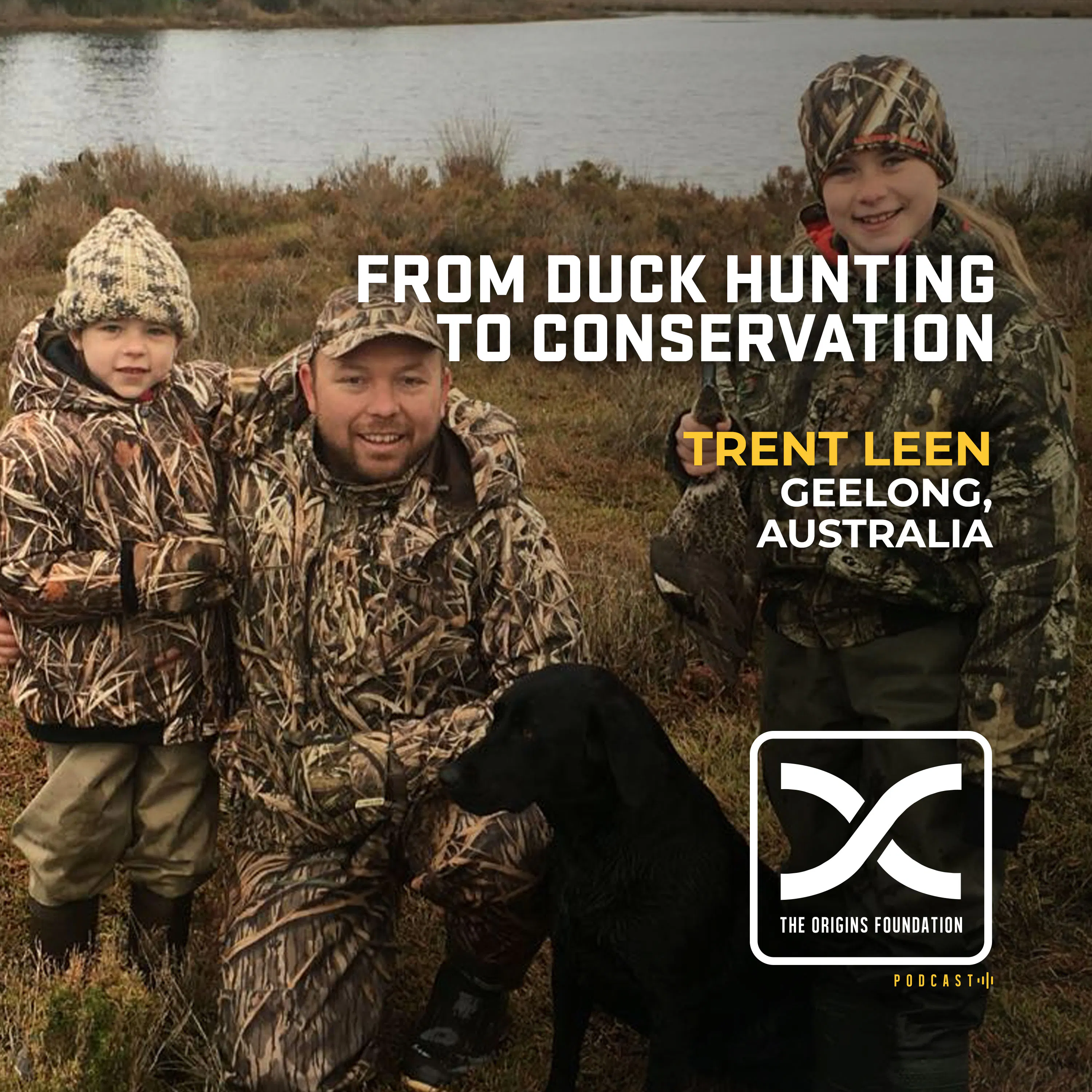
The Origins Foundation Podcast
Episode 608 - Trent Leen || From Duck Hunting To Conservation
01:04:10
While Robbie was making his way through South Australia and Victoria, he connected with team members of Field and Game Australia throughout Victoria. Robbie is joined by Trent Leen, the Conservation Director of the Geelong Field and Game Branch—similar to his counterpart (and previous guest) Graeme Wall. The Geelong Branch has a storied history in Field and Game, and Trent joins on location from the wetland his family donated to the headquarters of Field and Game. He discusses his history and passion for ducks, his heritage, and why this is about more than just shooting ducks for him.
Loading summary
Transcript397 lines
- [00:01]
Host
Midway USA's online gun shop includes an extensive selection of handguns, rifles, shotguns and receivers. We've made it extremely easy to browse and buy guns from the convenience and privacy of your own home. Simply pick from our extensive offering, ship it to your local FFL and you'll be shooting in no time for just about everything. For guns Shop, Midway USA.
- [00:31]
Commercial Narrator
Tito's handmade vodka is America's favorite vodka for a reason. From the first legal distillery in Texas, Tito's is six times distilled till it's just right and naturally gluten free, making it a high quality spirit that mixes with just about anything from the smoothest martinis to the best Bloody Marys. Tito's is known for giving back, teaming up with nonprofits to serve its communities and do good for dogs. Make your next cocktail with Tito's, distilled and bottled by 5th Generation Inc. Austin, Texas. 40% alcohol by volume. Savor respect responsibly.
- [01:00]
Host
Trent Lean is the conservation director for the Geelong Field and Game Branch. If you've been listening to this podcast, you might have heard a similar podcast with Graham Wall, who was the conservation director of the Rushworth Field and Game Branch. Well, the Geelong Field and Game Branch has a storied history in field and game. Trent Lean where the property actually that Field and Game headquarters is on at Konawara in the state of Victoria in Australia, which is west of Melbourne, was actually his family's land. They donated that. It's a phenomenal wetland education center. All of his hen houses that you'll hear us talk about are on it. And I've just been following Trent for many, many, many years and again fortunate enough to meet him, fortunate enough to spend some time with him, understanding his passion for wetlands, for ducks. I went out into the wetland and we looked at and surveyed hen houses and I just got a sense that this, this is bigger than just shooting ducks for Trent. This is, this is generational, this is heritage. And so I think you're going to thoroughly enjoy this podcast, especially for someone who loves to duck hunt here in the U.S. here's somebody who loves to duck hunt equally as much as you do halfway around the world. So enjoy. So five years ago there was a reason why I started this movement. And the truth then was, is the truth now that we need to champion our narrative. We need to champion the truth around what we do and who we are. There's a sweet spot with a gun, you know, too heavy and it's a burden to, to walk with too light.
- [02:35]
Trent Lean
And you whipping It.
- [02:36]
Host
Why is the project so important to the hunting community? It's. It's a. I think it's not only important. I think it's. I think it's vital. I think it's.
- [02:44]
Trent Lean
It's just in time. It's like snakes and ladders. You guys are climbing the ladder and then somebody does something stupid and you just slide down.
- [02:52]
Host
That is such an amazing analogy. Snakes and ladders.
- [02:55]
Trent Lean
Yeah. You know, ivory in. In my opinion was the plastic of its age. Okay.
- [03:00]
Host
The expenses were going up.
- [03:02]
Trent Lean
It goes a long way with families. We have families that do need it.
- [03:05]
Host
Let me close this door because I have a little wiener dog. What? You are. You're laughing because I said wiener.
- [03:11]
Trent Lean
I'm really glad you finished the sentence out.
- [03:14]
Host
I'm sorry the first happened. We doing here today? You're telling the whole world. No, that works perfectly. All right, well, Lucas. We'll figure out Lucas when he gets in here.
- [03:36]
Trent Lean
Y.
- [03:37]
Host
So you've been a duck hunter since you can remember as a kid? Yeah.
- [03:43]
Trent Lean
So, yeah. Grew up on a wetland and had a father that. That was a mad hunter, fisherman. And yeah, from. I think about seven or eight years old. I was paddling and then poling a punt out the opening mornings and tagging along with. With Tony, my father, for all the hunts throughout the year in this area.
- [04:07]
Host
This is your. This is where you grew up?
- [04:09]
Trent Lean
Yeah. Yep. My family home's only, you know, 200 meters behind us. So this was my family property, the wetland center. It is now.
- [04:16]
Host
And you hunted this as a kid? What? You said there was nothing here, so.
- [04:20]
Trent Lean
We hunted a lot on Reedy Lake. So we used to. Every opening he used to hunt Reedy Lake. And until I was about 13. And then the spot that we used to go into, we got beaten. Beaten to get in there one day and we shot a different spot.
- [04:40]
Host
Did you sleep in that morning?
- [04:42]
Trent Lean
No, no, this is the day before. We'd sleep out there in the middle of the wetland in the dock, in the punt.
- [04:47]
Host
Wow.
- [04:49]
Trent Lean
You would have an old sleeping bag, an old rolled up bit of foam and some black plastic. And you would stick the. Stick the pole into the mud and drape the black plastic over the top of you and you'd sleep in your punt. So but the day before we got beaten in there.
- [05:03]
Host
So somebody went in there like 40 hours before.
- [05:06]
Trent Lean
Yep.
- [05:08]
Host
Yeah. So is duck hunting a big. Is that. Is it that big of a culture over here?
- [05:13]
Trent Lean
So the Reedy was one particular place where everyone had their opening spot. That's John's spot. That's Bill's spot, that's Tony's spot, that's Graham's spot. And yeah it's a, it's, it obviously can be a bit of a, you know you would peg, you know you would hear about pegging and staking your claim and all that sort of stuff. That was sort of bit more unofficial. We had platforms, you build platforms and stuff like that. But yeah there was a bit of a. Bit of a takeover. Yeah.
- [05:43]
Host
So who?
- [05:45]
Trent Lean
I don't even know. Like I said I was only. I think I would have been eight at the time.
- [05:48]
Host
So your dad was like screw this, we're out of here.
- [05:50]
Trent Lean
Yeah. So we, well we shot the hole behind the hole where we wanted to shoot and then the next year we shot out in what's called the big hole. And then every year since then we've just gone where the ducks are. So we just stay.
- [06:03]
Host
That makes sense. That's weird. Hey that's a. It's a very unique system here in which where the water is, is obviously where the ducks are. There's no like pattern, there's no migration here, there's no nothing. It's like where we were up in Rushworth. If the, if the water is in Rushworth. Everyone's hunting Rushworth.
- [06:24]
Trent Lean
Yes. Yep. So you follow the water? Pretty much. I mean we were lucky here obviously Reedy Lake was a wetland that was managed by buys your longfield and gain and we dug the, the water channels and built the, built the water retention barrages and stuff like that to put water in and water out. So we had a good supply of water. So that's why it could be hunted. Hunted constantly because we always had water, we guaranteed the water supply. But yeah, since then we just, you know we do the duck counts all over the state. You know part of our region is the Bar and southwest region that's almost stretches over to the South Australian border. But we'll travel all around the state prior to the season doing duck counts and obviously why we're there. So that's me, my father and other members of Geelongfield and Game.
- [07:13]
Host
And then why would you be doing duck counts? Look guys, I'm a hunter, right and when I go hunting I like to figure out how to get my trophies back home as expeditiously as possible. Well you don't have to look much further than safari specialty importers. We know that trophy importation can be quite a headache. That's why safari specialty importer strives to make it as easy and hassle free as possible. They have access to a bonded warehouse. You won't be charged storage fees and you get a dedicated team that's readily available and will update you at every step in the process. They'll even go one step further. Safari Specialty Importers is working with us and they are going to donate $100 from every shipment that they work with to conservation projects that anti poaching, community development and wildlife conservation. At the end of the day, choose to spend your money with a team that's dedicated to you and is dedicated to helping show how hunting is a great conservation model. Hassle free logistics, fuel and conservation go with Safari Specialty Importers. Hunting and shooting suppressed have become the norm in over 42 states where suppressors are legal. The growing popularity of suppressors has even led to legislative changes. You might have heard some things around the big beautiful bill, right? Including the reduction of the NFA mandated tax stamp. Before you used to pay 200 bucks and now starting January 1st of 2026 the tax stamp is going to zero. However, why wait until January 1st? Our partners, Silence Essential, great friends of ours, they're going to pay your tax stamp right now. So if you buy a banished suppressor or other popular brands that essentially are qualifying purchases, Silence Essential is going to cover the cost of the tax stand. They're going to save you 200 bucks right now. So make sure you don't miss out. Shooting Suppressed if you're in the market for a new suppressor, Whether it's your first or your next one, visit silenceessential.com or call them 866-811-6536. Silence Essential is going to cover your tax stamp right now. They're going to simplify the submission process and deliver your suppressor right to your door. Don't wait. Get your suppressor right now and start shooting. Suppress this season. Bushnell is eager to help you get set up for conservation success. That's right. They want to help you. The conservation and research community is dominated by good people doing good things and and investing significant time and effort for the benefit of habitat and the species. So what do you need to do? Pretty simple. Send us your conservation story and or your conservation wish. Could be managing whitetails. Could be understanding your environment or species or something else related to conservation. What would you be able to do if you had a great trail camera setup? We will select the best story every other month and send you a camera bundle, cell camera, normal SD camera, SD cards as well as optics. Everything you need to get set up for success. I can't wait to see what you submit, you can email us, DM us, message us, whatever you want. We are not hard to find. Good luck.
- [10:28]
Trent Lean
So for many years field and game branches, like all over the state we do counts twice a year. So November and February, the February counts are collated and then most of the branches would run what they call their duck nights. They used to call them duck duck fever nights. And then it's a summary. So it gives you water levels and it gives you duck numbers on the wetlands, you know, basically all throughout Victoria. So a lot of branches dropped off their duck nights when we had the heavily reduced seasons going back, you know, quite a few years ago now. And so, you know, Geelong's pretty much been the only branch that's actually consistently run their ducks.
- [11:15]
Host
And why, why did you do. Why? What's the point of the duck nights? So that the members know where the ducks are.
- [11:21]
Trent Lean
Well, that's part of it but it's a celebration of the, the upcoming season as well. Okay. So we, we took our, our duck night to the next level. You know, so we'd have exhibitors that would come along, we'd have guest speakers that would come along. It's, it's, you know, it's like any of the expos you've put.
- [11:36]
Host
Oh it's like a little banquet. Yeah, yep.
- [11:38]
Trent Lean
No, no, just, just an expo. So we houses now the, the, the duck hunting and outdoors expo.
- [11:44]
Host
So yeah, what's coming up?
- [11:45]
Trent Lean
Right, yep, that'll be coming up early next year and that you know we've got you know, everything from, you know, all your, all your, you know, hunting related things, fishing related things, cooking, you know, we've got a lot of the people that sell all the, all the, your pre packaged spices for all your game meats, all that sort of stuff coming along, you know, guest speakers. We've moved now to a bigger venue at the showgrounds. We've outgrown. We were at the Geelong Racing Club.
- [12:13]
Host
How many people would show up for this?
- [12:15]
Trent Lean
So I think last year we were around the 300 and 300 odd. This year we'd be hoping for 500 plus.
- [12:22]
Host
Yeah, yeah, yeah. And you pull people from all over.
- [12:25]
Trent Lean
Yeah, all over. Yeah. A lot of people come down from Melbourne but we had you know, guys from, you know, from Rushworth and Central Vic, Shepparton, Bendigo.
- [12:34]
Host
Sure, sure.
- [12:34]
Trent Lean
Yep. Coming down. It's a good night, good vibe, you know, you're amongst like minded people sharing stories and yeah, it's a really good night. We try and keep a really good, good vibe. Good night. You know, hopefully that's why people keep coming back.
- [12:47]
Host
And so you're. We've been talking all morning and you blew my mind. The fact that you are a volunteer of this organization, a fielding demonstrator. You do not get paid. No. You seem to be the one running this program that's behind us. If you're on YouTube, you can watch, you can see these big hen house tubes. You've also got the app that Delta has that is now logging. Because I told Lucas, I said, I mean, I'm gonna, I'm gonna picture Mona Trent, because I've been asking him for bloody how many years now? Three years, four years. Give me the data.
- [13:24]
Trent Lean
Every bit.
- [13:24]
Host
How many bloody hint tubes do you have out in the wetlands?
- [13:28]
Trent Lean
Yeah, well, I mean, well, in the app right now we've got 790.
- [13:32]
Host
How many do you think you've got out there? You don't have seven ninety, you have way more.
- [13:36]
Trent Lean
No, no, we've. We've got thousands still, like in use right now. Going through some of the old documents, we've got, at times, we've got some documents that state we've got 25,000 plus breeding structures.
- [13:51]
Host
So what would it take to get to that level of accuracy and data in your app? Is it just going to like a Graham hall, a Graham wall and going, show me where you've put things?
- [14:03]
Trent Lean
Yeah, so we've been really empowering. You know, a few years ago we started the hen house group. It's just a messenger group. We invited members from other branches and that's grown now into, you know, we've got three hen house production facilities throughout the state now, you know, similar to this where we, where we make them and install them and just getting people set up on the app, we've still got, we know we've still got wetlands out there that have got either mostly boxes and nest boxes that are not in the app. There'd be thousands. But that's just time as, as it grows and we get more volunteers and our volunteers grow, you know, we'll get into those areas. We'll. We'll plot, we'll plot them and put them into the app. Sometimes they're in disrepair, so you might just reuse a post. So you might put a new hen house on the post or you might put a nesting box back on it. It's still good to run a blend of boxes and henhouses because, you know, we do get different species using them. The teal and the particularly Pacific black ducks. Love the, the hen houses. We don't get much breeding of the Pacific black ducks in the boxes. Boxes here.
- [15:13]
Host
Yeah. But that seems to be an evolution. Right. You maybe in the beginning thought the boxes were. It's like this is the bee's knees. But this thing, this, this hen tube seems to be the bees.
- [15:24]
Trent Lean
Yeah. I mean in the 80s there was a massive push. We were seeing a big decline in particularly in chestnut teal. So it was focused at that. And the boxes that the teal do. Love the boxes.
- [15:33]
Host
Okay.
- [15:34]
Trent Lean
So that was the main focus back then when they hit the massive numbers. I mean where that number of 25,000 come about, we had. Everything was getting used for nest boxes. I remember the old ammunition powder drums from Winchester. Yeah. Every one of them got turned into a nested nesting structure.
- [15:53]
Host
Wow.
- [15:54]
Trent Lean
So they did have a short lifespan. Whereas you know, our manufactured timber boxes that are made out of good ply and exterior painted. You're talking about a 25 plus year sort of lifecycle. Whereas yeah, the. Some of the other ones don't have that same sort of life cycle.
- [16:10]
Host
Yeah, funny. And Rushworth, as I was saying earlier, we saw obviously all their nest boxes and 10% of them are for ducks.
- [16:20]
Trent Lean
Yeah, yeah.
- [16:21]
Host
They're the rosellas, parrots, gliders, sugar gliders, ringtail possum. We saw yesterday galahs. We saw one that galahs in it.
- [16:30]
Trent Lean
Yeah. I've actually got the. So in our app, the monitoring app, we've got all the species of ducks and then we've got other. And it's now to the point where we've got so many parrot boxes, sugar glider boxes, like other target species that we need to put them in there. We can't just have them as other.
- [16:50]
Host
Oh yeah.
- [16:51]
Trent Lean
So and that's credit to the. The boys work that they're doing up there with the lighthouse project.
- [16:56]
Host
Well, it just speaks more to the conservation ethic.
- [16:58]
Trent Lean
Yeah. Yeah.
- [16:59]
Host
You're a duck hunting organization that seeks to champion wetlands and wetland restoration and enhancement and whatnot for ducks. But there's so much more benefit to that than just ducks.
- [17:12]
Trent Lean
Yeah, correct. And you know, you've probably heard us say it before. It. I mean, what's good for the ducks is good for everything else. So you know, we, we might be focused on the ducks, but you know, for it to be good for the ducks, the wet, the wetland health's gotta be spot on. And if the wetland health spot on everything in that way every frog, fish, bird in their benefits.
- [17:30]
Host
So well, you have to focus on something. You have to have a. A focus species. You have to have a Keystone species. Regardless of whether it's a, you know, a muddy hard head, a Murray hardhead, a tiny little endangered fish, which is, that is the reason why Field and Game Australia started. I'm just making it up. Right. And the ancillary benefit is ducks. Yep. Or it's the other way around.
- [17:51]
Trent Lean
Correct.
- [17:52]
Host
Yep.
- [17:53]
Trent Lean
So yeah, it's. But no, it's good. It's the, the, the growth that we've seen and the acceptance of the app. We, we generally have a lot of older members, you know, that might not be as computer savvy and.
- [18:07]
Host
Sure, sure.
- [18:08]
Trent Lean
Phone and phone savvy.
- [18:10]
Host
Graham was handing off his phone to the, the 16 year old kid who was doing it all for him. So.
- [18:15]
Trent Lean
Exactly. So guess. Improvise.
- [18:17]
Host
Exactly.
- [18:18]
Trent Lean
You know, improvise. And we've got members so we, you know, with our predator management, we track our predator management and stuff like that and it all goes into a, into a, directly into a web, a web sheet. And some of our older members just. Nah, it's that simple. Write it down. Send me a text. Text, not. Don't do text. All right. I said call me, right. Write it down. Call me if you don't want to call me. I said, you know, we meet once a month here at the Wetland Center, Geelong Field and Game. I said just catch us then. Yeah, so just write down, you know, you know, you might have any foxes and how many rabbits and that you've shot. Yeah. And we'll enter it into the, enter it in on the meeting night so they find a way. Yeah, yeah.
- [19:05]
Host
Well, talk to me about. Because I think the, the thing that obviously when I came in earlier, this is your baby. So what I'm referring to here is these hidden tubes. So we've got three. And again, if you're on YouTube, you can look at this. But. So you've got three tubes here and we've got one over there. The fourth one that's like the old school one that's over there.
- [19:26]
Trent Lean
Yep.
- [19:27]
Host
Tell me about the evolution. Well, let's just start like, why do you even need this?
- [19:31]
Trent Lean
All right, so we weren't getting a very high uptake of Pacific black ducks in the nesting boxes and the Pacific black ducks out.
- [19:41]
Host
Why do you even need nesting boxes?
- [19:44]
Trent Lean
So basically the nesting box is a, a safe nesting site. So it's, it gets them away from the ground predators. So we have a lot of red foxes and cats over here. And being ground nesters, the predation level is, is incredibly high.
- [20:00]
Host
All your duck species here are ground. Well, that's a Duck is a ground nester.
- [20:04]
Trent Lean
Yeah. Well, they will nest in hollows, like tree hollows and stuff like. Well, but predominantly ground nesters. So, you know, some of the studies in the state said talking as high as 80% predation rate. Gotcha. Ground. But worse still is you're not just losing the eggs, you're losing the hen in a lot of instances. So that led to. All right, we've, we know in the past we've had tens of thousands of nest boxes out. That's great. That's all, you know, it's a nice warm and fuzzy feeling. But we didn't know much about the what, when and how. So that led to the pooling of data, you know. So Ken Farmer, one of our, one of our members that's, that's active in the, in the nesting structures, had worked with Deakin University and got a study done on the western end that we'll go to later on the nesting, nesting boxes down there. And that was when I was a kid and that sort of intrigued, intrigued me into the data side of it. And, you know, and yep, it's one thing doing it, but what are we learning?
- [21:09]
Host
What are we. How are you improving?
- [21:10]
Trent Lean
Yeah, correct. And that's. Now I'm. Yeah, right into. Right into that. So the evolution came from, you know, Delta Waterfowl. We took where they're at and, you know, they've got all their plans online and stuff like that on how to build these.
- [21:26]
Host
And Delta's using this concept, right, this tube.
- [21:30]
Trent Lean
Yep. Concept that the exact one that's sitting over there is.
- [21:33]
Host
It's so chicken wire mesh. That's a 25 mil by 25 mil.
- [21:38]
Trent Lean
Similar. Yep. They do run different wire because we don't have it available, but in, in essence, wire and then flax drawer wrapped around the outside and then bedding material inside it, whether it be local hay or straw. So that's with our start point.
- [21:54]
Host
Essentially a double layer of wire with a straw.
- [21:59]
Trent Lean
Yep. So to roll it, it starts out as a 2.3 meter long piece of wire. You roll it to form a tube, which is the internal tube. Then you lay the flax out on the tail of it the last meter and then you roll it around it, which in turn gives you a sandwich.
- [22:18]
Host
Of flax between two pieces of wire.
- [22:21]
Trent Lean
And a 12 inch hollow tube through the middle.
- [22:23]
Host
Okay.
- [22:23]
Trent Lean
Yep.
- [22:24]
Host
And then you stuff the tube.
- [22:25]
Trent Lean
Stuff the tube with. With straw, which gives them a nest bowl. They can create a nest bowl in it and also reduce avian predators. So by having it 3/4 filled with straw and a nice little entry that they can get in and out, they can burrow in and have a nice nest bowl in there and be not only safe from ground predators, but also hidden a bit more from alien.
- [22:50]
Host
Alien predators.
- [22:51]
Trent Lean
Yeah.
- [22:52]
Host
So what did you find that about the, the first structure, the original delta structure that didn't work here?
- [22:59]
Trent Lean
Yeah. So the, the original structures, the flax drawer and we had a lot of issues with the flex drawer getting pulled out. They would create sunroof. So where the duck sat in the nest, they would either a bird from the top would pull it out or the hen would pull it out underneath and expose on your sunroof through the wire. And we.
- [23:19]
Host
Why would that be a bad thing though? Because the wire's still there, the wire's still there.
- [23:22]
Trent Lean
But of course everything that lands on there can then pester the hen. And also when the hen's laying, because they, they'll lay an egg a day, ish. Or you know, approximately an egg a day until they start incubating. So that could be 10 to 15 days of eggs sitting in there unprotected. So no hen, she goes in, lays the eggs and goes about a daily business. If you've got that sunroof in the top, any predator or, you know, that lands on it can then see those eggs. And as we've now learned after consecutive years of, of using them, you know, we had, the first year we put them out, we had 100% uptake. So everyone got used.
- [24:06]
Host
And that was a mind blowing statistic. Delta. Right.
- [24:09]
Trent Lean
It doesn't happen like this. You know, everything that we read that they put out and say that it'll take, you know, between two to three years to get the use. And most of their data is one use per year.
- [24:20]
Host
Is it because that ducks in America are migratory? That is, they won't be there whilst your ducks here essentially are here.
- [24:28]
Trent Lean
Correct.
- [24:28]
Host
If there's water, they're here and they stay here.
- [24:31]
Trent Lean
Most of their breeding in the Perry Prairie pothole region. Yep. Whereas, you know, our birds, being more nomadic than migratory, just follow the conditions. If there's water and food, they'll stay there, they won't move on. If that water and food dries up, they'll be forced to move on. And that's why. So they in a way migrate, but it's more just they just find better conditions. If the conditions are there, they won't move. They've got no reason to. So I think the additional use that our henhouses were getting because we were getting multiple clutches In a year. That's something that's unusual in America. That's very common in Australia.
- [25:08]
Host
Yeah.
- [25:10]
Trent Lean
So that extra traffic through the hen house and the hen sitting in there for multiple clutches. Hen hens was putting extra strain on it and therefore the maintenance was killing us. We were spending so much more time trying to repack the flax in it. It was just. It was really hard work basically and trying to roll these out on a large scale, you.
- [25:36]
Host
It was just being used too much. Too much.
- [25:39]
Trent Lean
Yeah. It's a great problem to have but they were getting overused. So you know, it was like a rendan motel.
- [25:45]
Host
So yeah, there were just ducks being born, pushed out, new ducks coming in, renting the place.
- [25:51]
Trent Lean
Yep. Just kicking the door down in some cases. One out one end and they're coming in the other end. So geez. It it. So it was really good to see but it created a maintenance problem for us and that's when we started looking at alternative materials again. Went back to, went back to Delta, had a chat with them. They'd done a few experiments with stuff and just you know, they'd settled with what they'd settled with. And now we know why. Because it's generally only one. One clutch per year. It's. Yeah, we're putting three to six years of use in one year.
- [26:21]
Host
In one year.
- [26:22]
Trent Lean
Yeah. So then we landed on the coconut fiber. So the coconut fiber we could get locally wasn't really suitable or just a 10 millimeters thick. It was only 10 mil thick. Yeah. So you know you can double and triple it up and all that sort of stuff. But so we got a custom.
- [26:39]
Host
You were trying to find almost the same thickness like the fact was giving you. Right.
- [26:43]
Trent Lean
Yeah. So we wanted to. We had a target of about 30 mil.
- [26:46]
Host
Okay.
- [26:47]
Trent Lean
So we did some trials with stuff that we could multi layer up. But the stuff that was available locally was very expensive. So it becomes sort of cross cost prohibitive because we've got to balance the cost fee, the maintenance. So we're happy with a bit more upfront cost if it reduces the maintenance, long term maintenance. So. So we got a product custom made. So we got it custom made. We had a full container dropped off and you know you can see some of it in the background there and.
- [27:16]
Host
That now how long have you been using for this? 30 mil.
- [27:19]
Trent Lean
So we just got that this year.
- [27:20]
Host
This is the first time that you're.
- [27:22]
Trent Lean
Using it in this product. We've trialed this product for nearly three years now. Yeah, yeah, yeah. Before we could get the custom made Product.
- [27:28]
Host
Okay.
- [27:28]
Trent Lean
That probably took 12 months of work to get that bit over. 12 months of work to get that to the point where it's sitting, sitting here now. And you know, we're constantly looking at new, new wires.
- [27:40]
Host
Yeah. Because this is a double wire system right here. So this is the latest version.
- [27:44]
Trent Lean
Yep.
- [27:45]
Host
You've got the 25 by 25 mil. But then you've got this super fine. What is this like a five by five.
- [27:51]
Trent Lean
That's a six by six rat and mice mesh.
- [27:53]
Host
Okay.
- [27:54]
Trent Lean
And you know that's. We call that hen armor. So it's. And it's on the inside and the out. So the hen can't. The hen can't pick it up on the. In the inside or the outside.
- [28:06]
Host
Yep.
- [28:08]
Trent Lean
You know, and, but even recently now we've, we've now found another wire that's 12 by 12 in the same diameter. So it should make it a lot stronger. We have to do a double internal wrap because this is only 1.2 mil wire in diameter. And we do a double internal wrap because we have pelicans that sit on them.
- [28:28]
Host
Oh, geez.
- [28:29]
Trent Lean
And if we don't do the double internal wrap squishes it just squishes it down. So we now that we found that that wire in a 12 by 12 square, it's got double the amount of horizontal squares and vertical squares, which should give it a lot more strength, more structure. So we're going to trial that with one wrap. Now, I know it doesn't sound like a lot, but that one wrap is 800 mil of wire. So if you've got a 30 meter roll and you can, you know, almost reduce one meter per double the output of your. Yeah, we can get 18 hen houses out of a 30 meter roll instead of like 13. So it just makes the, the unit cost cheaper because we want these as accessible as we can.
- [29:08]
Host
How much is one of these hen houses, do you think, right now costing?
- [29:11]
Trent Lean
So they're available to buy at $75.
- [29:15]
Host
Okay.
- [29:15]
Trent Lean
So. And, and a large. The, the dearest single item used to be the post. Now the dearest single bit of item is the coconut fiber.
- [29:24]
Host
Oh, okay.
- [29:25]
Trent Lean
But it then reduces the maintenance over time. Over time, so it becomes cheaper.
- [29:32]
Host
So how does the post attach to this?
- [29:35]
Trent Lean
So you can just see in the background, we've got the T piece cradles down.
- [29:38]
Host
Oh yeah. Yep, yep.
- [29:40]
Trent Lean
It's just basically a T piece that slides inside a post. You've got some curved wire cradles that the, that the nest tube sits in. And we put two cable ties on the top of the T section. And then we put a cable tie on near the top of each wire and pick up diagonally across the squares. So it's, it's nice and. Nice and rigid and that will support the pelicans. So.
- [30:04]
Host
Cool.
- [30:04]
Trent Lean
Yeah, we've, we've got a lot of pelicans out here. You got to be careful when you put them in that the wire state, the bars stay on the outside of the wire or they can push in and they start leaning over and if you get the pelicans on it, it starts leaning over and can, you know, start to bend. But when they're installed correctly, they're. They're double pelican rated.
- [30:24]
Host
Nice.
- [30:25]
Trent Lean
Yeah.
- [30:25]
Host
So talk to me a little bit about. Obviously, once it's stuffed with straw, one of the things that you've noticed. Well, firstly, just to reiterate, ducks are taking up residence almost immediately.
- [30:37]
Trent Lean
Yeah. We. We put a trail camera out on the first one we put out and which was Penhouse one that I just showed you before. And we had exit in the first week.
- [30:47]
Host
Wow.
- [30:47]
Trent Lean
Yeah, so we had visits literally the second day it was up like, you know, put it up that day. There's already pictures on the trail camera and we had. They'd already laid in.
- [30:55]
Host
And as you said, it's almost like they're desperate for nests. Safe nesting.
- [31:01]
Trent Lean
Yeah. Well, I mean, so we've. Unfortunately, we've had. And you actually made the comment you've been driving all over Victoria. I think you've come, you've flew into Sydney and you've, you've.
- [31:10]
Host
Sydney, Adelaide. And I drove from Adelaide up to the top to Muldura. And then I've literally gone from Muldura to here, which is, yeah, 90% of a North south project that you can make, I think. Yeah.
- [31:20]
Trent Lean
And then considering that most of Victoria, once upon a time, was covered in trees.
- [31:27]
Host
Interesting.
- [31:27]
Trent Lean
There's not many trees left there, is there?
- [31:29]
Host
No.
- [31:30]
Trent Lean
So given that a lot of our nesters do nest in hollows as well as on the ground, they're starved of hollow nesting habitat.
- [31:38]
Host
Right.
- [31:38]
Trent Lean
So. And it takes about 80, approximately 80 years for a nesting hollow to develop in a tree.
- [31:44]
Host
Right.
- [31:45]
Trent Lean
So, you know, because the bush was cleared and you know, for agriculture, there's not a lot of safe nesting sites for them. So then they're stuck with nesting in the reeds, nesting on the ground, and.
- [31:58]
Host
Then you've just got a. An abundant ground predator. Feral nuisance issue here in Australia. Feral cats. Yeah. Feral foxes certainly do high populations of both.
- [32:10]
Trent Lean
Yeah. Yep. So, and that's where I guess our predator management programs link in. So you've got, you know, nest, which is the, the, the nesting structures. But then we've also got our, our predator management, our nest guard, which is our, our predator management. So, you know, we had it safe from the, the ground predators. But by year two and particularly year three, we were noticing that we're having egg losses. So we didn't really know what it was at first. We didn't know whether it was, you know, somebody playing tricks on us.
- [32:47]
Host
Yeah.
- [32:49]
Trent Lean
But through trail cam footage and stuff like that, we've been able to confirm that we've, you know, avian, you know, we've got crows that have been stealing eggs.
- [32:58]
Host
So, so the crows would, would they be able to bury in from the side with all the, all the straw that's sticking out the side or is it, are they going into a system that's already been flattened down? They can easily get in.
- [33:10]
Trent Lean
Correct. So that's where. So once upon a time when we'd send the hen houses out, that's how we, that's how if you bought one, that's how you get it and you get your T bar and then we tell people, make sure you put, you know, hay or straw in it and fill it up 2/3. Unfortunately, a lot of them wouldn't understand the 2/3 and they just put a little bit of.
- [33:30]
Host
Well, it doesn't make sense. It doesn't, it doesn't. Correct. When you look so full like that, you're like, why? Nobody's going to use that.
- [33:37]
Trent Lean
So after the ducks being in and out at a hundred times, which is probably no exaggeration, between the. They go window shopping. When you look at the trail cam footage, they, there's multiple pairs, you know, chestnut, teal, black ducks. We do a lot of banding at my property. So I've got a lot of banded ducks and obviously non banded ducks. So it's very easy to sell with black ducks that they're different ducks. So there's a lot of traffic that goes through them and even when they're getting the eggs laid in them, you can still get teal and black ducks coming into the same one. It's not really until they start sitting that that's when the, you know, all bets are off. The no vacancy signs sort of up. So it, so that compresses down a lot. So that's why now when we send them out, we send them out stuffed full, well, not full, but how we would like them.
- [34:29]
Host
Right.
- [34:30]
Trent Lean
And just say, well, that's ready to install.
- [34:32]
Host
Right. And so the crows were getting into these.
- [34:35]
Trent Lean
Yeah. Unfortunately, by the second year and into the third, we experienced massive egg losses.
- [34:42]
Host
What are we talking? Massive hundreds, percentage wise.
- [34:46]
Trent Lean
Oh, in the 80. 90%.
- [34:49]
Host
Oh, wow.
- [34:49]
Trent Lean
Yeah. So.
- [34:51]
Host
So 80 to 90% nest depredation.
- [34:53]
Trent Lean
Y.
- [34:54]
Host
Essentially, what would have been happening on the ground? So. Well, I guess the reason why, you know, they're so desperate for these nest tubes is because of the depredation rates on the ground. Correct.
- [35:07]
Trent Lean
Yep. So. And then the only disadvantage on the ground is quite often you'd lose your hen.
- [35:11]
Host
Oh, that's so correct.
- [35:12]
Trent Lean
So at worst.
- [35:13]
Host
Good point. Worst.
- [35:14]
Trent Lean
Even if our. Even if our nest does get predated, which we're currently sitting at 90% nest success at the moment, that's. That's tracked through the app. We're not losing hens. So if. If. Let's just say at the moment a crow pinches the eggs and it's. It's not as successful, that hen, then he's free to go and lay some.
- [35:36]
Host
It doesn't get. It get. It doesn't get predated. Exactly.
- [35:38]
Trent Lean
So. But, you know, I don't know what you can see on the wall over there, that's how the crow stoppers. And you would have seen a rough.
- [35:44]
Host
Rush where they put a bit. Yeah. Big. And then he was also talking about putting a tube in it.
- [35:50]
Trent Lean
Yep.
- [35:50]
Host
And filling that tube so that, you know, it just. Just seems logistically super tough.
- [35:55]
Trent Lean
Oh, yeah. And we've, you know, we've got 45 entries, so that even if a crow did sit in the entry and look in, it can't see the eggs. Right. But the cost is. It's cost prohibitive. You're talking, you know, nearly $50 an end to do that. So it's. It's not scalable. We can't mass produce it at an economical scale. Then even with the crow stoppers, we still experience losses. So again, another year or two and then it's, you know, and through our network throughout Victoria, with our volunteers, it's like, oh, I think we've lost eggs. And we're like. With a crow stopper. Yep, with a crow stopper. All right. So we set some cameras up. Sure enough, unfortunately, the crows figured it out.
- [36:39]
Host
Well, they're super smart birds.
- [36:40]
Trent Lean
Like, they. Very super smart. Yeah.
- [36:42]
Host
So in those videos of them, like, using hooks to move weights out of tubes to get to food. Yeah. It's unbelievable.
- [36:49]
Trent Lean
They're incredibly smart. So at that stage was when we went down the. Again, the predator Management side and looked at and gone. All right, how can we. We got a permit to. To shoot crows.
- [37:04]
Host
And how difficult was that permit to get?
- [37:08]
Trent Lean
Wasn't actually that difficult. So because we'd already tried and trialed all these things, we could prove to them that we've tried.
- [37:19]
Host
But something happening here.
- [37:20]
Trent Lean
Yep. And so we can prove that it's crows, and so we know it.
- [37:24]
Host
Got footage from trail cameras and whatnot.
- [37:27]
Trent Lean
But what we could also.
- [37:30]
Host
So you're saying the. The crows.
- [37:32]
Trent Lean
Yeah. So to get the permit, we could also demonstrate that we'd taken steps to try and restrict the crows access.
- [37:42]
Host
Oh, you. Yeah, you had taken a mitigation business already.
- [37:45]
Trent Lean
So before we went to a lethal. A lethal option. So, yeah, so they gave us a shooting permit, which was good, but that also takes a lot of work and time. Then we discussed about how good would it be if we had something similar to a hen house to actually target the crows that are pinching the eggs. Not just the. The crow that's indiscriminately flying.
- [38:11]
Host
Yeah, because you would think it would be a learned behavior. Like, you've got to figure it out. As you said, they. They come in, they don't know what's in here. What is in here? Oh, there's an egg in here. Oh, figure out how to get to the egg.
- [38:22]
Trent Lean
And in behind all of this, I've got, you know, hundreds of hours of trial camera footage of crows landing, crows walking around, crows looking before a crow even ever went in a hen house. So there takes a lot of time and hours to build up the courage to go in. Then they had to build up the courage to go in the crow stopper. But it eventually happened. But we're not talking about every crow that's flying around. So when we reached out about the permit to trap, they sort of said no straight away. Once we explained that we actually targeting the crows that are actually predating and stealing these eggs. And not just indiscriminately, but they said yes to.
- [39:03]
Host
Yes, you can shoot a hundred. No, you. You can't trap eight.
- [39:09]
Trent Lean
Yeah, I get.
- [39:10]
Host
I get you.
- [39:11]
Trent Lean
And I think.
- [39:12]
Host
I think no to trapping. A smaller amount were they worried about, like by catch in the.
- [39:16]
Trent Lean
So if the animal ethics in the trapping, obviously, you know, hunting and. And shooting is. Is a very effective form of predator control, lethal control. So whereas trapping, there could be certain stresses, you know, on the animal. We could mitigate all those. So we have trail cameras transmitting trail cameras so we can monitor the trap 24 7. So we know as soon as it's. It's been set off, and then we can go out and just, you know, in a timely manner and dispatch. Dispatch that bird. So. And if we did happen to get a bycatch, which. Which we haven't at the moment, we can, you know, release it out.
- [39:58]
Host
And this is like breaking news. Like, you guys have literally just done the live tools, right?
- [40:03]
Trent Lean
Yeah, literally, yeah.
- [40:04]
Host
Yep.
- [40:05]
Trent Lean
So, and this is the constant development. And this is, I guess, you know, I guess where my wife would say if I'm staring blankly into the. Into space, but this is the stuff that runs through my head constantly. The constant evolution of. Of what we're doing to, you know, to ensure the sustainability of. Of what we love.
- [40:26]
Host
So has it been. Has it worked? Like you've been doing this for two weeks, you put the traps out?
- [40:30]
Trent Lean
Yeah, it's amazing, actually. So we. I've got footage of two eggs in 15 seconds getting raided out of a hen house.
- [40:41]
Host
Wow.
- [40:41]
Trent Lean
Crows.
- [40:43]
Host
Crows or one crow.
- [40:45]
Trent Lean
So one took an egg and flew that way.
- [40:49]
Host
Okay.
- [40:49]
Trent Lean
Fifteen seconds later, a crow flew in this way. Now, I don't know whether, because obviously it's a trial camera, I don't know whether that that crow dropped that egg and then flew around and come back in, or it was another crow, but I do know in 15 seconds, two eggs were taken out of a hen house.
- [41:03]
Host
Okay. And did you put a trap up around this hen house?
- [41:06]
Trent Lean
So we've got a trap in the general area.
- [41:09]
Host
Okay.
- [41:10]
Trent Lean
And we've. We've now trapped some crows out of that area. And within five days, we have an experience after trapping them. We haven't experienced any egg losses so.
- [41:18]
Host
Yet.
- [41:19]
Trent Lean
Yet.
- [41:20]
Host
But leading up to you putting the. The trap out, you had been experiencing.
- [41:26]
Trent Lean
Egg losses, Major egg losses.
- [41:27]
Host
Yep. Yeah. So, and how many crows have you trapped in the area? In that area, we're up to six. So potentially, again, we don't know. Right. Could have been six crows doing all of the damage.
- [41:40]
Trent Lean
Correct. Yep. So what we do know is since we've trapped those six, we haven't lost an egg yet.
- [41:46]
Host
Wow.
- [41:46]
Trent Lean
Yeah. So it's. Now it's. The focus is on more of the predator management than the development of the crow stopper, because we know whatever we put in front of the crows, they work it out. The other thing that we've also noticed is when we put the crow stoppers in, the uptake of the hen houses is lower.
- [42:07]
Host
Yeah, it makes sense. Yeah.
- [42:09]
Trent Lean
Because the ducks have got to work it out too.
- [42:10]
Host
That's right.
- [42:10]
Trent Lean
I've got hours of footage of the ducks trying to get in and falling out. Falling out. And then we had to make the modifications you would have seen in Rushworth yesterday. They had the coconut fiber in the bottom of the pipe. Peter. Or twos.
- [42:22]
Host
Correct.
- [42:22]
Trent Lean
Without that, they can't get in because there's no grip. I've got hours of footage of them going in and falling out. And then as soon as I stuck that coconut fiber in there, straight in. So now the shift is. Yeah. On the predator management. So we'll look at. Now this is our. We use the Conaway Witland center as our trial site. And you know, I'm fortunate enough to have a lot of passionate members around me here, so that help me with the monitoring and do a lot of that stuff. And we try and, you know, trial all the things here, work out all the. All the idiosyncrasies with it in relation to the trapping. We're trialing different trail cameras and plans and costs. It's same thing to make it scalable and cost effective and easy for our volunteers. And then we'll look at rolling that out to other areas.
- [43:12]
Host
Is there. Have you guys encountered. Is there a too many nest tube scenario for a wetland?
- [43:23]
Trent Lean
So if you have them. So the short answer is yes and no.
- [43:27]
Host
Okay. Right.
- [43:28]
Trent Lean
So if you have them in too close a proximity, you can get a lot of nest abandonments because of simply the competition between them. And they get a little bit angry and a bit protective. So you don't want to have them too close.
- [43:42]
Host
What's too close in your brain right now?
- [43:45]
Trent Lean
So as a trial, the. The guys down in Gippsland at Sale, they've. They've run a. A great program with. With professor Brian Hiller. And they've got some that are literally side by side, so under a foot apart. And the data suggests that that's too close. Okay, Right. But they've also got some massive big tree stumps in the middle of the wetland. And they might have, you know, they might be 3 or 4 meters apart from which cause no problems. As a general rule, we try and put these sort of no more than 10 meters.
- [44:21]
Host
And you think 10 meters. No competition.
- [44:24]
Trent Lean
Not directly, but we also try and put them out of direct line of sight.
- [44:28]
Host
Oh, okay.
- [44:29]
Trent Lean
So we're putting them in a vegetated wetland that has got little ins and outs on the vegetation. You'll put one on an in. In. They can't see each other. They might only be 5 or 6 meters away. They can't physically see each other. So my small wetland matter Obviously it.
- [44:45]
Host
Matters the way that they're orientated. Right. So couldn't you just orientate them a different way? We. Yeah, like a T shirt.
- [44:51]
Trent Lean
They do sit on top a lot, though. And that's where it starts.
- [44:54]
Host
Okay.
- [44:54]
Trent Lean
You know, I guess it's a little bit like, you know, looking over your front lawn care neighbors.
- [44:59]
Host
So.
- [45:00]
Trent Lean
And that's. And you know, on the trail camera, we call it duck wars. They're pretty, they're pretty feisty. So. Yeah, by having them separated, they just play nicer.
- [45:12]
Host
Okay.
- [45:13]
Trent Lean
Yeah. So. But there's in these wetland complexes, like of my wetlands, only small at home. It's. The whole area would only be when it's full 400 square meters.
- [45:27]
Host
Okay.
- [45:27]
Trent Lean
And then it goes into neighbor's property. So it's probably, you know, you know, 1200 square meters all up. But when the water's low, it's would be no more than probably 80 square meters. So there's a box and a hen house in there. And that. That seems divine. That's it. But I've got some reeds that have grown up in the middle. So now I'm going to install another hen house on the other side of that. So, you know, in that small area, I'll end up with probably six because. And I'll just have them around the other side of reeds so they're not sort of.
- [46:02]
Host
And you convince your neighbor that he needs somebody.
- [46:04]
Trent Lean
No, he's, he's, he's on board.
- [46:05]
Host
Yep.
- [46:06]
Trent Lean
So he, he loves the ducks.
- [46:08]
Host
Good.
- [46:08]
Trent Lean
Hates the rabbits. So the Jack Russell gets a bit of a run in his place as well.
- [46:13]
Host
Okay.
- [46:14]
Trent Lean
So, yeah, it. They're definitely the ducks he's pretty happy with.
- [46:18]
Host
So, so what's the eventual goal, Trent?
- [46:20]
Trent Lean
Like, so I guess the goal is, I mentioned earlier, like, we've, We've. We've had thousands and thousands of nesting structures out there. And it was a warm and fuzzy feeling that we've, we've bred lots of ducks. And, And I know you've been, you've been at me for numbers.
- [46:37]
Host
Yeah. Because I want the data. Like that's your, that's your thing that you should be putting on a billboard.
- [46:42]
Trent Lean
Yep.
- [46:42]
Host
I can flick you the next board we put out. We're going to say how many nest tubes, how many ducks duck hunters have created.
- [46:48]
Trent Lean
Yeah. So. And yeah, there's some, you know, good news stories on that is, you know, like, we've, we've produced a lot of ducks.
- [46:55]
Host
So. And you're the only person who probably knows the data. Maybe, maybe Lucas does Too. But if you have to guess on an annual basis, because these guys breed multiple times throughout the year to the amount of ducks killed.
- [47:12]
Trent Lean
So at its peak, when we were running, you know, the. When we found the literature on the 25,000 boxes, we were breeding in excess of half a million ducks. We weren't anywhere near harvesting that many ducks. So at its peak, we were actually producing more ducks.
- [47:30]
Host
We were adding to the population.
- [47:32]
Trent Lean
Yeah.
- [47:33]
Host
So any other organization here in Victoria building nest structures for ducks?
- [47:43]
Trent Lean
Not. Not on the scale that we. We're doing it on.
- [47:46]
Host
Who else would be even building one?
- [47:50]
Trent Lean
Look, there's some of the other. Some of the other duck orgs are in their infancy.
- [47:54]
Host
Oh, no, no, I'm. Okay. Maybe let me re. Re. Jig what I said.
- [47:59]
Trent Lean
Okay.
- [48:00]
Host
Any. Not hunting organizations.
- [48:03]
Trent Lean
I don't know of anybody doing any targeting ducks. Any organization that is actually targeting ducks.
- [48:11]
Host
That's not a hunting organization.
- [48:12]
Trent Lean
That's not a hunting organization. Yeah. So, yeah, we're the. We're the only ones out there, and we're certainly the only ones out there that are tracking and monitoring full stop. So the. We're taking it further than just a feel good of knowing that we're producing the ducks. That's great that we're producing some ducks. And we would. Again, we need thousands of these things out there to make a difference. Right. But what we can do is through that data, we can start having at the moment, in the adaptive harvest model, there is no breeding index. It is just like it's not even there. So we could potentially have an input for the adaptive harvest model because we would actually have a breeding index for ducks, not just large, large water birds. We can better influence environmental water allocations and timings because we can look at data, look at water levels through the app, the water levels tracked. So we can run. Run studies on increasing water levels, decreasing water levels, what it does to the breeding when it triggers it. When it, you know, triggers things like nest abandonments.
- [49:24]
Host
Yeah.
- [49:24]
Trent Lean
So as the water starts to recede, if you're not at that sitting stage, generally we'll find that if a hen is sitting and incubating, even if the water recedes, she'll keep. Keep incubating, she'll finish, and they'll hatch out. But if she's only laying and that.
- [49:39]
Host
Water disappears, she'll abandon it.
- [49:41]
Trent Lean
More than likely abandon it. Yeah.
- [49:43]
Host
So because she's going somewhere else, she's going to go find the water.
- [49:46]
Trent Lean
Correct. Yep. So at the moment, a lot of that stuff is antidotal, whereas you Know, with Professor Marcel involved and doing the study on it, we can actually now have that data collected, and then whether it's him or students can come in and do the studies on it. And that data that we've collected can be used for studies for the next however many years. So anybody can pick that. Pick that data up and do whatever studies they need to do on it. So you're sort of creating a legacy of data and data sets for things that we don't even know that we might want to study. That's. There's not a lot of studies on Australian waterfowl and particularly on. On breeding, so. And nobody was looking at doing it.
- [50:35]
Host
Sure.
- [50:35]
Trent Lean
So, yeah, that's part of what we've picked up to at least get that data collected and then we can do the studies on it. Moving forward, when we target what information we need to find out.
- [50:49]
Host
What do you see as a. As a goal for these? How many do you want out? You've got 790 in the app right now.
- [50:56]
Trent Lean
I mean, obviously, our first goal, you know, make sure we tick over the thousand.
- [51:00]
Host
But do you think you'll hit a thousand this year?
- [51:05]
Trent Lean
We'll go close.
- [51:07]
Host
Well, we said we're October 25, December 2025, we had a thousand.
- [51:11]
Trent Lean
If I got on the road, we could definitely get over a thousand because we know there's lots out there that aren't in the app, so we don't. We don't actually have to install another 200 and 210 odd because we know there's lots.
- [51:23]
Host
Maybe you should do. Maybe we should pitch this to Lucas. Is. Do a competition for the chapters to say between now and the end of the year, whoever puts the most. Oh, yeah.
- [51:33]
Trent Lean
Depend. Yeah.
- [51:35]
Host
Into the app is going to win. Yeah. A gun for their next duck night.
- [51:39]
Trent Lean
Yep.
- [51:40]
Host
And something.
- [51:40]
Trent Lean
Oh, and then, you know, so when we do our duck counts, that's another time. So you will come across a wetland. We know where all the wetlands are, but seasonally as to whether they've got water in them or not. So you might visit a wetland that, you know. You know, I have. There's obviously lots of wetlands in Victoria haven't shot.
- [51:59]
Host
And there's lots. Like I was at wetlands yesterday that had no water in them.
- [52:02]
Trent Lean
Correct.
- [52:02]
Host
And won't have water in them for three years.
- [52:04]
Trent Lean
Yeah. But then when, you know, they get a lot of rain over in the southwest or over near the. Near the border, South Australian border, and all the wetlands fill up over there.
- [52:13]
Host
The ducks will show up.
- [52:14]
Trent Lean
Yeah. And we just like that that's where we'll be hunting. Yeah, we'll be hunting. We love red gum swamps. You know, we have typhur and reeded swamps over here. So that's what I've sort of grew up on. So I love hunting red gum swamps. You know, there's beautiful and picturesque. So whenever the. The red gum swamps fill the water. Yeah. You're on the hunt looking for those. And while we do that.
- [52:35]
Host
Yeah.
- [52:35]
Trent Lean
If we come across a wetland that's got. Got boxes and nesting structures in it.
- [52:39]
Host
Yeah.
- [52:40]
Trent Lean
Now that we've a lot of our members carry the app, we can start plot them in. Once upon a time, we didn't have that. We didn't have that technology.
- [52:47]
Host
So the materials that you've got there. I'll look at those coconut fiber pallets that you have there. And this is the only place that has coconut pallets, right?
- [52:55]
Trent Lean
Yep.
- [52:56]
Host
Yes.
- [52:56]
Trent Lean
The only.
- [52:57]
Host
Only place was another. No, I thought you said there was another facility that was building these as well. The.
- [53:03]
Trent Lean
The hen houses. Yeah. With the flax. Yep. And we've sent up some of the coconut fiber to them.
- [53:08]
Host
Now, how many coconut fiber sheets did you guys order?
- [53:11]
Trent Lean
We've got 780.
- [53:13]
Host
Okay, so double what you have in the app right now.
- [53:16]
Trent Lean
Yes. Yeah.
- [53:18]
Host
Okay.
- [53:18]
Trent Lean
So. And we're already in talks for the next container. So if you ask me if you know how many I want out, I'm already talking about the next one.
- [53:24]
Host
So end of 20, 26, we're looking at 2,000.
- [53:28]
Trent Lean
Yeah, we. Yeah. I think if we can. If as a goal, if we can grow it, a thousand a year would be great. Um, but I guess the.
- [53:35]
Host
And again, how much is this? A. A hen house? You're going 75 bucks. Right.
- [53:39]
Trent Lean
So it's 75 bucks to buy the hen house. Right. But we've, you know, we. And you know, I'm not going to lie, we've modeled a lot of this stuff off Delta, and Delta have been really good to us and really supportive of us in our efforts. So part of what we're doing now is the project, and part of that is sponsoring the hen house 100%. The biggest part of it is, you know. Yep, we put it out there and it's great. But without monitoring it and maintaining it, you're never going to work to its potential.
- [54:11]
Host
Correct.
- [54:11]
Trent Lean
Never going to learn something that could have a. Have an impact on the species and on hunting. 100% sustainability.
- [54:19]
Host
That's right.
- [54:20]
Trent Lean
What it's all about.
- [54:21]
Host
Right.
- [54:22]
Trent Lean
So at the moment, for 400, you can buy a Hen house. And that hen house is installed, maintained and monitored for 10 years.
- [54:31]
Host
Okay.
- [54:32]
Trent Lean
So that creates that legacy.
- [54:33]
Host
Okay.
- [54:34]
Trent Lean
So. And then obviously at the end of the 10 years, the structure's removed. So that's what we're building. You know, so we've got a. We've got a, you know, Breeding Structure subcommittee, A nest. Nest subcommittee. And are you the leader of that committee? I'm the board representative. It's a good match, but I'm lucky. I've got a lot of passionate. A lot of passionate guys that are involved and.
- [55:03]
Host
Yeah.
- [55:04]
Trent Lean
And rolling that project out. We do have a major industry sponsor that's come on board that I can't talk about just yet.
- [55:14]
Host
Cool.
- [55:15]
Trent Lean
Which is. Which is really good. And, you know, they're picking up a hundred hen houses, 100 at the 400 mark. Yep. So. And yeah, so that's. That's exciting. And obviously, through the expansion of our fundraising and developing not only nest, which is our breeding structures, but our Nest Guard, which is our predator management, that'll link in with our fundraising efforts to ensure that we. We get these out. Because currently everything that our members do and our branches do comes out of their own pocket. So, you know, we're looking at. So this is just Geelong. Just Geelong on our breeding program in the last five years would have spent over $50,000. So now some of that was a grant that we applied for. Yeah, but, you know, there's, you know, we're talking 20 plus thousand dollars of cold hard cash of, you know, members, cash that we', know, raised people have donated. And that doesn't even touch the. That doesn't include the donations. You know, like, you know, all the first ones was just, you know, when Josh pitched the idea to him, he like, yeah, let's do it. And, you know, we're buying rolls of wire, trying this and trying that.
- [56:36]
Host
Using some pocket money.
- [56:37]
Trent Lean
Yeah, exactly. So but now we want to take it to that next level of the project so that it creates a. Something beyond, beyond me, beyond the guys that are involved now. You know, we mentioned earlier that we've got documentation that says we once upon a time had 25,000. 25,000. Well, they weren't monitored and maintained. Yeah, right. So what we're doing now is building a legacy to ensure that this continues on. And we also get the data, we get the tracking and the data, so then we can, you know, learn, improve and ensure the sustainability of, you know, the species that we love.
- [57:19]
Host
No, I love it. I love it. That's why I love what you guys do, man. That's why we hooked into you guys super early, you know, wanted to help you figure out what we can do, how we can, how can we.
- [57:29]
Trent Lean
Yeah, you've been, you've been chasing that number for a long time.
- [57:31]
Host
I know. I'm finally there.
- [57:32]
Trent Lean
Oh yeah. And look, it took some digging and.
- [57:36]
Host
Part of it was you kept ignoring me. I kept sending messages and you were like, no, I'm not going to respond to him. I can see that you've read it.
- [57:44]
Trent Lean
I just didn't have it and I didn't want to put out there something that was not factual. So, you know, I know you're all about the truth and we wanted to ensure that, you know, what we put out there is factual. So the move from the national office down to Konowari from Seymour, so the pack up of the office and that process and obviously coming here and this obviously being Geelong. So Geelong Field and Game actually built this facility. So with, with the help, help of the WET Trust and, and, and many of the, many of the donors and fundraising. So yeah, obviously neck deep in the office move and through that office move, going through all the old docs and talking to people and as much as you were pestering me, I was pestering the hell out.
- [58:34]
Host
Yeah, yeah, for sure, for sure.
- [58:36]
Trent Lean
And it was actually one of our, one of our members that said, hey, I've got, I've got these documents. This is what you need. Yeah. And that's when he sent it over to me and that's how we, how we got it. So. And we actually. Interesting. That year we came second in the, I'll get it wrong, but it was the, the Government Conservation Awards.
- [58:59]
Host
Oh, wow.
- [58:59]
Trent Lean
Yeah. So we came second in that. I think that's the only time the hunting organizations even got on the starting line.
- [59:05]
Host
That's amazing. So. Well, I hope that you're submitting applications now every year for what we're doing.
- [59:12]
Trent Lean
Yeah, look, I mean it's, it's good. I mean at the moment we're all about, you know, growing the, growing the project through our branches and getting, and getting our volunteers engaged because without our volunteers we're, we're, we're nothing.
- [59:27]
Host
Yeah.
- [59:29]
Trent Lean
And taking it wider than just us. And it's been really good to see, you know, the guys like Rushworth, you know, what they've been able to achieve in probably the last.
- [59:40]
Host
He's the most famous person in that area because he's in the newspaper every other week.
- [59:44]
Trent Lean
Amazing. So it's not just a doing. And, and I will say that you know, Geelong have got a rich conservation history, but so do a lot of our other branches. But what we don't do, tell everybody.
- [59:58]
Host
How good a job you've done.
- [59:59]
Trent Lean
We don't publicize the good work that we do. Partly a lot of that was through the 80s and into the 90s, the culture became no comment. We used to have the debates, the duck hunting debates on the national news and you'd have the worm, like in the political worms. We used to have that. And it got to the point where the comment became no comment because we just got slaughtered by the media.
- [60:24]
Host
Yeah. We didn't own a narrative, we didn't own a story.
- [60:27]
Trent Lean
Yeah. And today we have to, we have to now. And we've learned the hard way because we nearly lost, we did lose it, but we got it back that to a certain we, you know, we have to promote the work that we do and don't be ashamed of, of, of the hunting that we do. You know, there's nothing to be ashamed about. But, you know, for many years we tried to fly under the radar and just have no comment. And what that did was the general public didn't think that duck hunting was still a thing. Yeah, they, they saw that the, the anti side, because they were screaming it from the rooftops, but they never saw the, the benefits of hunting. They never saw the, the work that hunter conservationists do. And therefore, because they never heard anything about duck hunting, they just thought it wasn't a thing. So. But, you know, the work that we get, we get a lot of people coming, we have open days here and we get a lot of people come in that have, you know, come in and they, you can see them from a mile away because they're like a cat on a hot tin roof. And, you know, they're an ant, a raving anti hunter. And they'll come in and you'll have a chat with them and you'll explain what you do. And from almost being, you know, disgusted to walk in the gate to buy the time, they've gone for a walk with you around the Britta observation trail, the 1.5 kilometer track. They've come back and go, yeah, you know, you guys are doing some really good work. We had no idea.
- [61:54]
Host
We still don't like the fact that you kill ducks, but you do good work.
- [61:56]
Trent Lean
Yeah, we do good work. And you know, then you get the others that go, you know what, you know, I, I don't see anything wrong with it. You know what I mean? So it's breaking down those barriers and it's the general public. It's not. We're never going to change the antis.
- [62:09]
Host
No, never.
- [62:10]
Trent Lean
Yeah, the anti's mind. But it's the general public, the in between us which is the 80% that we need to get out there and that's the work that you know, that you do and you do it, you do it so well. And yeah, we've got to play catch up on that department. But yeah, we're fortunate with you know, guys like yourself and DU DW and all that in the States have been really good and you know, we went over to their duck expos and presented to their boards about anti hunting because we're unfortunately years ahead.
- [62:43]
Host
Oh 100. But yeah, duck hunting does not have a single anybody against it in the.
- [62:49]
Trent Lean
States but it's, it's, it's growing under the surface over there so they need to be mindful of it. And you know where we're, we're learning from those organizations and how they, how they grew. You know, we're helping educate them as to how the anti huntings grew in Australia and what they need to be mindful of and you know, where they need to be concentrating their efforts to ensure that they don't get a stronghold.
- [63:13]
Host
Yeah, agreed, Agreed. Well, Trent Lean, thank you so much, man. It's been a long time coming. No worries. And I look forward to getting the data after this conversation's over.
- [63:22]
Trent Lean
That's all. We'll get you in a set of wages. We'll create some data.
- [63:25]
Host
Nice. I like it, I like it.
- [63:26]
Trent Lean
No worries.
- [63:28]
Host
Well, that's it for today. I appreciate you listening as always. Leave a review, share it with your friends and most importantly, do what's right to convey the truth around hunting.