← The Origins Foundation Podcast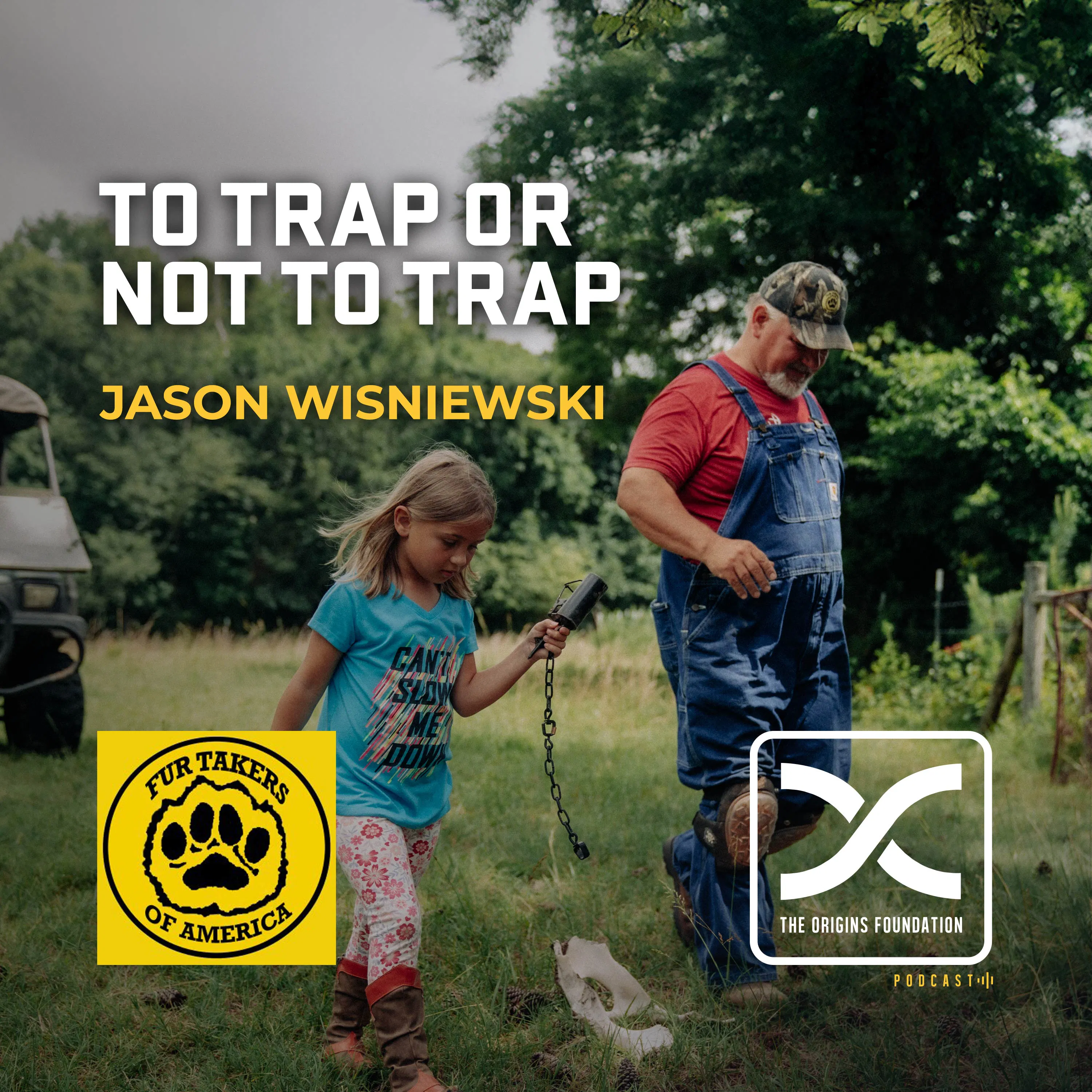
The Origins Foundation Podcast
Episode 609 - Jason Wisniewski || To Trap Or Not To Trap
00:49:07
One of the most misunderstood actvitiies in sustainable use is trapping - including how trapping has evolved over time to include best management practices to ensure the humane trapping of animals. Robbie is joined by Jason Wisniewski, the current President of Fur Takers of America, to talk about the science and stories behind trapping in the US. From the myths to what’s happening in the trapping world, to what’s happening in the fur taking trade, and beyond.
Loading summary
Transcript102 lines
- [00:01]
Narrator/Advertiser
Chronic spontaneous urticaria or chronic hives with no known cause. It's so unpredictable. It's like playing pinball. Itchy red bumps start on my arm, then my back, sometimes my legs. Hives come out of nowhere and it comes and goes, but I just found out about a treatment option@treatmyhives.com Take that, chronic hives. Learn more at treatmyhives.com Transform your home.
- [00:31]
Commercial Announcer
During Blinds.com's Black Friday Super Sale. Get up to 50% off site wide, plus huge doorbuster deals on popular styles. Go DIY and do it all 100% online. Or choose white glove service with expert design help and professional installation, Both backed by Blinds.com's 100% satisfaction guarantee. Blinds.com's Black Friday Super Sale is here. Save up to 50% site wide and get a free professional measure. Limited time offer rules and restrictions apply. See blinds.com for details.
- [01:01]
Podcast Host
Jason Wisniewski is the current president of Fur Takers of America. We've had David Hastings or Dave Hastings on here from the Fur Takers of America before. He's the past president now. And we just wanted to have another conversation, which we typically love to do, about trapping. The myths about trapping. What's happening in the trapping world, what's happening in the fur taking world. Just simple questions that I think you have. I had them, I asked them, and a quick good conversation with Jason about it. I think you'll love it. I think you'll find it's super intriguing, super interesting, especially if you're not a trapper or maybe a beginning trapper or someone who's like, man, I don't like trapping, man. That's super cruel and unethical. Well, maybe this podcast will change your mind. If you like it, share it. If you like it, send it to friends of yours and subscribe. Thanks. Enjoy. So five years ago, there was a reason why I started this movement. And the truth then is the truth now that we need to champion our narrative. We need to champion the truth around what we do and who we are.
- [02:13]
Jason Wisniewski
There's a sweet spot with a gun, you know, too heavy and it's a burden to walk with. Too light and you whipping it.
- [02:20]
Podcast Host
Why is the project so important to the hunting community? It's. It's a. I think it's not only important, I think it's. I think it's vital. I think it's. It's just in time. It's like snakes and ladders. You guys are climbing the ladder and.
- [02:33]
Jason Wisniewski
Then somebody does something stupid and you Just slide down.
- [02:36]
Podcast Host
That is such an amazing analogy. Snakes and ladders.
- [02:39]
Jason Wisniewski
Yeah.
- [02:40]
Podcast Host
You know, ivory, in my opinion, was.
- [02:43]
Jason Wisniewski
The plastic of its age.
- [02:44]
Podcast Host
Okay.
- [02:44]
Jason Wisniewski
The expenses are going up. It goes a long way with families. We have families that do need it.
- [02:50]
Podcast Host
Let me close this door because I have a little wiener dog. What? You are. You're laughing because I said wiener.
- [02:56]
Jason Wisniewski
I'm really glad you finished the sentence out.
- [02:59]
Podcast Host
I'm sorry.
- [03:00]
Jason Wisniewski
The first half.
- [03:01]
Narrator/Advertiser
What are we doing here today?
- [03:03]
Podcast Host
You're telling the whole world, Jason, I'm not going to pretend to be able to say your last name correctly. I'm going to try with nukes. Wisniewski.
- [03:22]
Jason Wisniewski
That's perfect.
- [03:24]
Podcast Host
It's perfect.
- [03:26]
Jason Wisniewski
Perfect.
- [03:26]
Podcast Host
Wisniewski. What is it? Polish?
- [03:28]
Jason Wisniewski
Polish, yes, sir.
- [03:30]
Podcast Host
Hey, man, two for two. Starting out this podcast, we just. Just cut it. Cut it right now. So, you know, we're winning already for today. Welcome to the Origins foundation podcast. Jason. Very happy to have you. You're not the first time that we have had somebody from the Fur Trappers association on the podcast.
- [03:51]
Jason Wisniewski
Yeah, I believe Dave Hastings, our past president, was on a couple years ago, and he did a great job. And he did a great job as president of our organization. So very thankful that have him as a mentor and somebody that I had to step in and fill some big shoes.
- [04:09]
Podcast Host
And so with that, obviously, you are now the current president of the Fur Trappers association of North America. Is that the official title? North America or America?
- [04:19]
Jason Wisniewski
Fur Takers of America.
- [04:21]
Podcast Host
Fur Takers of America, not fur trappers. Sorry, Fur takers. I like that. It's a little bit more PC for Takers of America. Give us a little bit of background to you, Jason. Who are you? Where are you? What do you love? I assume you love to trap.
- [04:39]
Jason Wisniewski
Okay. Well, I grew up in southwest Pennsylvania and, you know, big into hunting. You know, of course, their first day, deer season's a state holiday, so, you know, very.
- [04:49]
Podcast Host
Kids get out of school up there. Right.
- [04:51]
Jason Wisniewski
Yeah. I never had school the first day of deer season. And, you know, and it wasn't until after I graduated that they actually gave everybody the first day of dough season off whenever they had separate doe seasons, too, so. But grew up there hunting and fishing, doing all the. The typical stuff. And of course, Pennsylvania is one of the. The big hotbeds for trapping as well. And I always had an interest, but my dad never done it. One of my best friends that lived right down the road, he. Him and his dad used to trap, or still do, and they took me out every once in a while. I'D run up airlines, had some early exposures there, but never did it on myself by myself until I think I was in my second or third year of college. And my college roommate, who's another one of my best friends since middle school, we, you know, he got into it and took me out and I said, you know what, I need to do some of this for myself. So I bought some traps from local classifieds and went to a.
- [05:49]
Podcast Host
Now when you do that, as somebody who's doing this for the first time and somebody's listening to this and going, man, I want to do it for time. The first, first time. Did you buy dog proofs or did you buy Connor bears? You buy a combination of the two and maybe people don't understand what I just said in terms of the difference between the two traps.
- [06:05]
Jason Wisniewski
Yeah, so there's a number of different traps and of course at the time whenever I was starting the dog proofs really weren't, weren't greatly available. There were some variants of them, some of the duffers and stuff like that. But the dog proofs are basically a foot encapsulating trap. Just look like a piece of pipe and have a spring there that the raccoon stuff that have more dexterity in their front paws usually reach down in, pull the trigger and it basically restrains them in that pipe or piece of pipe, you know.
- [06:36]
Podcast Host
And it's called the dog proof because no dogs can put their foot into it. Unlike a Conor bear.
- [06:42]
Jason Wisniewski
Correct. It's very selective. Basically, like I said it, it's going to really get your, your raccoons and your possums, which are two of the furbearers that have the most dexterity. They tend to use their front feet a lot to reach and grab stuff. Occasionally you'll get some skunks in there as well. So it's very selective. Keeps, keeps just about anything other than those, those critters out of there.
- [07:06]
Podcast Host
Look guys, I'm a hunter, right? And when I go hunting I like to figure out how to get my trophies back home as expeditiously as possible. Well, you don't have to look much further than safari specialty importers. We know that trophy importation can be quite a headache. That's why safari specialty importers strives to make it as easy and hassle free as possible. They have access to a bonded warehouse, you won't be charged storage fees and you get a dedicated team that's readily available and will update you at every step in the process. They'll even go one step further. Safari Specialty Importers is working with us and they are going to donate $100 from every shipment that they work with to conservation projects that anti poaching, community development and wildlife conservation. At the end of the day, choose to spend your money with a team that's dedicated to you and is dedicated to helping show how hunting is a great conservation model. Hassle free logistics, fuel and conservation go with safari specialty importers. Hunting and shooting suppressed have become the norm in over 42 states where suppressors are legal. The growing popularity of suppressors has even led to legislative changes. You might have heard some things around the big beautiful bill, right? Including the reduction of the NFA mandated tax stamp. Before you used to pay 200 bucks and now starting January 1st of 2026 the tax stamp is going to zero. However, why wait until January 1st? Our partners, Silence Essential, great friends of ours, they're going to pay your tax stamp right now. So if you buy a banished suppressor or other popular brands that essentially are qualifying purchases, Silence Essential is going to cover the cost of the tax stand. They're going to save you 200 bucks right now. So make sure you don't miss out. Shooting Suppressed if you're in the market for a new suppressor, Whether it's your first or your next one, visit silenceessential.com or call them 866-811-6536. Silence Essential is going to cover your tax stamp right now. They're going to simplify the submission process and deliver your suppressor right to your door. Don't wait. Get your suppressor right now and start shooting. Suppress this season. Bushnell is eager to help you get set up for conservation success. That's right. They want to help you. The conservation and research community is dominated by good people doing good things and and investing significant time and effort for the benefit of habitat and the species. So what do you need to do? Pretty simple. Send us your conservation story and or your conservation wish. Could be managing whitetails. Could be understanding your environment or species or something else related to conservation. What would you be able to do if you had a great trail camera setup? We will select the best story every other month and sends you a camera bundle. Cell camera, normal SD camera, SD cards as well as optics. Everything you need to get set up for success. I can't wait to see what you submit. You can email us, DM us, message us whatever you want. We are not hard to find. Good luck. So let me ask this question again. I love I love podcasts because I get to hear things that I know a very little about, but then I get to ask questions to make me learn more about it. And I think people are listening to this and hearing the same, probably having the same questions. Maybe they, they, they don't and they know the answers. What if you got a skunk in a dog proof? I'll post two scenarios. Scenario number one, I don't want to kill the skunk in the dog proof. How do I do it without getting sprayed?
- [10:51]
Jason Wisniewski
Ah, well, you might not be able to. It's, it's a gamble. So it's kind of like going to, going to the casino and seeing which one you're going to do. You know, certainly when you catch skunks in cage traps, for instance, the best thing you can do one is you, you approach them very calmly. They're, they're some of the neatest animals. I think whenever you catch one, they actually, they almost seem to like reason on how they can get out of it. It's a real, real interesting animal, but they'll, they'll be there and they're fairly, you know, anytime we catch these critters, for the most time we walk up on them. Most of them are sleeping. They're not real, real active. Some get a little more antsy whenever they see somebody coming. But skunks, you know, they're just kind of, they'll sit there, they'll be looking at the trap, and you gotta keep them calm. Now there are some stuff you can do with, you know, it's some sprays that calm them a lot more. But yeah, some people go up and they sing Twinkle Twinkle Little star or, you know, little song. I know some people that do that actually. And you know, you do it in a very soothing voice. And a lot of folks that catch them in cage traps, they just go and they stick a sheet or a blanket or something over top of the cage trap and you know, they'll go stick it in the backseat of their car and drive to wherever they're gonna, you know, dispatch or release.
- [12:13]
Podcast Host
Oh, my God, I would not do that. There's no way that skunk is coming in the car.
- [12:18]
Jason Wisniewski
Jeez. Yeah, there's, there's other stuff, you know, you can use. Some of the, you know, some people use a board that have a little, little notch cut in that you could put over the paw the animal and you know, reach down there kind of blocks you from the animal so you can reach down and grab the trap and open it and release it. And that's the nice thing with most traps, especially foothold Dog proofs is they're all. If you want to release the animal, you're more than welcome to. It's. It's not necessary. It's catch and release. It could be if you want it to be.
- [12:49]
Podcast Host
Yeah. And it's just to that point, number one. So the other question I had was if I did decide to dispatch a skunk in the, in the trap, do they spray if I dispatch it? It's again, depends, Right?
- [13:03]
Jason Wisniewski
Well, I won't even say it depends. It's just, it's a ran. It's almost random. Some people say, well, if you, you know, dispatch it by shooting them in the lungs, they won't spray. But I think it's probably about a 50, 50 shot. So.
- [13:17]
Podcast Host
Okay.
- [13:17]
Jason Wisniewski
You always want to make sure you're positioned upwind. So, you know, if it does spray, you know, it's hopefully not going to get you too much. And, you know, we always, you know, people be driving down the road, they'll smell skunk that's hit on the road, you know, and it smells, smells like a skunk.
- [13:34]
Podcast Host
And I have been, when, when you get, I have, we have, we have dispatched a skunk just off the side of the road. And that smell, oh, he must have sprayed right at the time. And we're 10ft from it. Okay. But when it hit the back of the ATV that I was in, I was retching. It was so strong, like in the back of your throat. It was like full on retching for two, three minutes. Unbelievable.
- [14:12]
Jason Wisniewski
It could be pretty rough. Yeah. This, the pure essence is just so much stronger than anything you smell when you're riding down the road. It's, it is so powerful and, you know, and it's used in a lot of our trapping lures and in baits and stuff. You know, people put a little bit in there. You don't need a whole lot. And it'll, you know, make a little stronger odor. A lot of call lures, what they call that, have that stronger smell to draw the animals in a little further, they tend to have a little bit of skunk in there, you know, and a lot of people don't realize a lot of canines just absolutely love skunks. So, you know, when you have that skunk smell around, it really does attract them because, you know, I used to use, every once in a while you could take part of the skunk and buried in a, in the ground and put a trap not too far from it. And you could actually catch, catch fox pretty easy off of that.
- [15:06]
Podcast Host
Jason going Back you said that all, all traps are catch and release. I don't think a lot of people know that. And so talk to me about the trap itself. How can it be catch and release? I thought, you know, these traps, you know, break limbs, you know, cause a lot of damage. So why would we want to release something that you've caused a lot of damage to?
- [15:34]
Jason Wisniewski
Yeah, that's, that's one of the common misconceptions. And you know, there are the body grip traps which are, they are generally kill type traps. So you know, one of the nice things with those is they'll dispatch that animal as soon as they get into it. There's no releasing from a, from a, a body grip and you know, and they're designed to kill efficiently and quickly. But your footholds and your dog proofs, they're more of a restraining device similar to, you know, pretty much like handcuffs. All they're going to do is hold on to the feet. You know, we all seen the stuff. You'd probably find that on any of the propaganda from the anti groups or whatever. Somebody has a foothold trap there, they stick a dry wooden pencil in there, pieces go flying everywhere. Well, that's a dry wooden pencil. And you know, you could find plenty of videos on YouTube or anywhere else of people actually sticking their hands in coyote traps, different traps and all it does, it, it clamps down. And the worst part about it is you have to bend over and take the trap off with your feet because you know, if it's on your hands then you're not gonna have the use of both hands. But so yeah, they basically just hold their, hold their feet. You know, the animals, most of them have.
- [16:47]
Podcast Host
Well, I've seen a lot of YouTube videos of like people, people sticking their hands in and saying, look, it doesn't do anything and it's smashing it and it doesn't smash their fingers, doesn't break their bones and their fingers and whatnot, which everyone thinks. Right?
- [16:59]
Jason Wisniewski
Yeah, that's, that's the big common misconception. You know, it's like cotton and breaking and everything else. And you know, there's actually been a, a ton of research since I think it was 1997 done by the association official wildlife agencies here. Furbear Technical Working Group's been working on best management practices for trapping. And what they've done is they've actually taken those traps and they test them mechanically and then they also use them out in the field, catch animals and then take those animals and you know, they're dispatched and Then frozen, taken to a central location, usually during the summer. And they have a team of wildlife veterinarians get together and they actually do necropsies on those animals to assess how much damage there is, whether it be lacerations, hematomas, anything like that. You know, stuff that you're not going to see under the skin as well. And the vast majority of traps out there score really well for very little damage to the animals. Very selective on the species that you're trying to catch with them, you know, and there's been, I want to say it's been at least $20 million spent testing this over the last 20 or 30 years. And that was all part of some standards that. That we needed to have here in the States to be able to sell fur internationally. A lot of people don't realize that most fur markets are international. And, you know, a lot of the people.
- [18:29]
Podcast Host
Is there still a fur market in America?
- [18:33]
Jason Wisniewski
We can still market it, but most of it gets shipped overseas. Europe, you know, before. Before all the conflicts in Russia, Russia was a huge buyer. Same thing with China, Korea, Greece used to be.
- [18:45]
Podcast Host
And what are they using it for? Are they using it for everything that we would have used it for? But people here just don't like fur anymore for some reason.
- [18:53]
Jason Wisniewski
Yeah, it's, you know, they'll make the garments out of it. An interesting story. I went to China back in 2019. I was over there for about a month, and it was during December, and probably one in 20 people I saw had some sort of coat or jacket or something made of fur or parts of a real fur. You know, it's a big product in other countries, and you still see it here in a lot of places as well, but not to the extent that you see it. See it in some of these other places. And I think, you know, a lot of it has been the. The. Excuse me. The idea that you know, for maybe, you know, it's not politically correct anymore. A lot of people don't think it is, but, you know, it's doesn't get any more renewable or natural or organic than fur. And especially in a time when. When all the alternatives are made of plastic, some sort of synthetics that, you know, there was a new study published earlier this year that, that found that there's been a significant increase in the amount of microplastics in human brains over the last 20 or 30 years. And, you know, why would we want to be wearing something that contributes to that? We should be trying to, you know, reduce our. Our use of plastics rather than increase It. And so, and then plus it gets, it's.
- [20:18]
Podcast Host
It's baffling, man. It really is baffling when somebody says, no, don't use leather, don't use fur. A very, very renewable. Well, not renewable, sustainable resource. Over time that can be utilized, a sustainable use of a resource and they want to replace it. That's organic, that breaks down on the environment.
- [20:39]
Jason Wisniewski
It's natural.
- [20:42]
Podcast Host
To something that's synthetic, as you say, that is manufactured with all sorts of chemicals. We don't know what those chemicals are. We don't know their impact on, on human health, on any or any of these things that we see cropping up in society today. And they still go and say this is better.
- [21:05]
Jason Wisniewski
Yeah, that's, that's a very frustrating thing. You know, they, the World Health Organization, they've done some, some studies and they found that microplastics are actually in 86% of the world's waters. That's, that's a really disturbing fact. You know, that's almost all of the water anywhere in the world has some sort of plastics in it because of it. You know, and you think of all these, these faux fur and everything else being made of these synthetic materials, you know, ultra processed and it's kind of like food. We always talk about ultra processed food and how bad it is for you. And it's like, well, is these synthetics any better than, than for. The other thing is, you know, generally if you pay a little more money for something, you tend to take care of it a little better. And you know, a lot of the natural first stuff does cost a little more. It lasts a lot longer and you know, it's certainly much more resilient. So. And it's, I mean there's no substitute for warmth either. You know, especially in these colder climates, people that live there, that it's, it's a huge part of being able to survive or be comfortable in a lot of those places.
- [22:12]
Podcast Host
Yeah, that makes complete sense, man. That makes complete sense. Going back to the traps, the Connor bears and the dog proofs and whatnot. I think another misconception is, and maybe you can give us the history of the change and it's still used as in sort of anti trapping, anti fur campaigns is the traps with the teeth.
- [22:33]
Jason Wisniewski
Yeah, that.
- [22:34]
Podcast Host
Teeth that grab and stab and whatnot. Talk to me, tell me a little bit about that.
- [22:39]
Jason Wisniewski
Yeah, so, you know, the older traps, a lot of times, especially bear traps, mountain lion traps, stuff like that they used to use, tended to have teeth. And the idea was, you know, would give Better, better gripping power. One of the big advantages of, of those was the animals wouldn't slide in the jaws. Those teeth would actually hold, hold those paws of the animals they were trying to trap kind of more steady so they're not moving back and forth. And that's where a lot of the cuts will happen is from going back and forth on the metal, metal jaws. And you know, but those were pretty much, I guess, done away with in most state regulations for trapping quite a while ago. And now it's all smooth jawed. Uh, but that doesn't mean that, you know, anybody out there that's trying to say something bad about trapping or make their points about how trapping so cruel doesn't use images of those kind of traps out there. Even though most of them, you look at them and it's like, you know, knowing them as a trapper, it's like that thing's so fake. It, it, it's just a bunch of metal. It looks like they cut teeth into and, and stuff. But, you know, makes the traps look a lot more vicious than they really are.
- [23:57]
Podcast Host
Right? 100%.
- [23:59]
Jason Wisniewski
And that's what it all is. You know, picture says a thousand words. So if you can show a picture of something that looks really vicious, well, you know, there's nobody there to refute it. And most people are so unaware of what's legal and what's not that, you know, they think, okay, these things are being used out there and if I step in it or my kid steps in it or my dog, then there's going to be all this harm. And really, I mean, I step in my traps usually to set them off. There's most of them don't even hold on to a foot. You know, my daughter, she'll go out with me. And the worst part about her, you're my dog. I used to take dog out with me every once in a while. A lot of people do take dogs out on their trap lines. And the worst part when they step in most of our footholds is you have to re bed that trap that you had set perfectly. So it's just aggravating. But you know, I, I wouldn't have any problem if my dog got caught in one. I just reach down and release it and it would be totally fine. But most of the time, you know, with the baits we're using the, a lot of the footholds we can adjust the, the weight of the trigger are basically the pan tension, what they call it. And you know, I have most of mine for coyotes and canines set at about four to five pounds. So it's going to take five pounds of pressure for that trap to be triggered. So if, you know, a small dog or a cat gets on there, probably not going to set it off. First of all, you're very comfortable with.
- [25:24]
Podcast Host
Having your dog running a trap line with you. You're not worried about his leg being broken or anything like that?
- [25:31]
Jason Wisniewski
No, not at all. It's, they're not going to break a leg. And it's, you know, like I said, there's been over 10,000 animals that have been tested through the BMP projects through the years. And you know, they assess that and very few of them have any major injuries. If anything, it usually cuts, scrapes, stuff like that.
- [25:52]
Podcast Host
So, so there's been studies, there's been studies on the best management practices of traps. 10,000 animals, and there was no breaking of limbs or anything like that.
- [26:06]
Jason Wisniewski
There was some in some cases, but it's very minor. You figure statistically it's going to be a very, very small percentage that have any sort of major damage damage reported from the necropsy. So it's, it's something that it's, you know, it looks vicious, like I said, when you use a wooden pencil or a small piece of wood or something. But, you know, whenever you're catching anything that has any meat on its front paws, like, you know, or even our hands, you know, it probably, it doesn't even sting for the most part. And you know, a lot of times I'll be out there if you're not, if you're not catching yourself probably once a year in your own traps when you're set and you're, you're not doing something right, probably. So, you know, I usually accidentally set one of mine off on my hand each year when I'm setting it and you know, on its, like I said, the only thing is, it's like, well, crap, now I gotta, you know, bend down and open it up with my feet and then reset the whole thing, you know, and, and you know, one of the keys to really, really catching is making sure that trap's bedded firmly. So when you get that trap bedded firmly and you have everything going, you're covering it up and it somehow goes off whenever you're, you know, trying to pack in dirt around there. Then it's like, I gotta start this process over again and just slows you down, it takes another couple minutes and then you're on your way.
- [27:26]
Podcast Host
But so is a. What's been happening currently? Have we had any Wins from a fur taking perspective for use perspective in the policy realm in the states or anything like that.
- [27:40]
Jason Wisniewski
Yeah, it's been, you know, 20, 25 has been overall a fairly slow legislative year. We haven't had a whole lot of anti legislation out there. You know, general year, there's probably, probably between between 20 and 30 bills around the country in different states that are out there to, you know, limit trapping or fur sales. The biggest ones we've been having is the bans on new fur sales. And that's been something that. It's California.
- [28:17]
Podcast Host
What does that mean?
- [28:18]
Jason Wisniewski
Basically it would. It would ban any commercial sales of fur garments. So anything from jackets, you know, this is where the devil's in the details because they kind of write these bills very general. But a lot of people don't realize like a lot of western hats, if you're getting a decent cowboy hat or even a felt, it's beaver. Yeah, there's beaver.
- [28:42]
Podcast Host
The whole Colorado builder was looking to get rid of animal. Animal products. Right. And people didn't realize, number one, the most famous fly tying material used for the elk hair Cattus Elkhead would have been banned. And all the cowboy hats at the rodeo show that comes into Denver would have been banned if they were beaver.
- [29:09]
Jason Wisniewski
That's right. That's. People don't realize how much fur is used in daily products. We have felt tip markers, a lot of the paint brushes artists use. Some of the highest quality ones actually have real fur bristles. You know, a lot of hats. One of the biggest groups right now, you know, is orthodox Jews, prefer good quality hats. They want them to be able to. So they could pass them down from generation to generation. And, and you don't get that with synthetic materials. So they want to get these fur hats. And you know, that's been one of the reasons we've had a kind of a boom the last few years in the fur market, particularly the beaver market. You know, one was because of the TV show Yellowstone. Everybody wanted to be a cowboy. So and, and then you had some of these, you know, all around the world wanting good, good hats for passing down from generations and generations. But then like you said in Colorado, the fly tying material, that was something that, that I had actually. You know, these bills, that same bill that was for Denver last year has been. It's a cookie cutter bill that's being centered on.
- [30:23]
Podcast Host
Came out of Oregon. Right. I think originally taking hate.
- [30:30]
Jason Wisniewski
Yeah, yeah. Actually it came out of California. So they actually passed it statewide in California several years ago. And then once they got that Victory. They started looking at, okay, where else can we do this? So they tried it in Oregon, Washington State, Hawaii.
- [30:46]
Podcast Host
Did a pass in those states.
- [30:48]
Jason Wisniewski
No, no. And it's in one of the cases I made. And it was actually, you know, something I've been trying to do with the fur takers. Go to some of these bigger meetings, you know, the Apple meetings, the North American with North American Wildlife. And I can't remember the exact name of it, they just call it the North American. But a lot of these bigger meetings that, you know, all the wildlife professionals are at all the agencies and stuff. And, you know, and one of the connections I made was with the American Sport Fish association. And several years ago when we were battling these bills, you know, I had started to think about it like, well, you know, a lot of flies, spinners and stuff have real fur on there. And, you know, you can't say, okay, we're not going to let hats or jackets be sold, but we're okay with this. So. So I'd actually contacted one of the guys from. I saw them in a meeting and I asked them if they were. They were actually following any of those bills and they weren't even aware. And so they asked if I could send some of those examples to them. So I sent it to them and they looked and they started getting involved. And I. In Washington State, for instance, you know, they contacted the one legislator there. I think he had family that was in the fishing industry, and that would have had a real economic impact on a lot of these outfitters and guides and stuff, because, you know, they're selling flies and, you know, wanting to do a lot of this. So, you know, the American Sport Fish association really, when it came down to it, was probably one of the biggest reasons that that bill failed, I think, in Washington state. And. And that's a really important point. And this is something that, you know, Dan Gates, who's also one of our board members of the fur takers, and he's going to be the. He's actually the vice president elect coming up for this next year. You know, he's been always saying, you know, this. This stuff is bigger than just trapping. It's. Multiple organizations need to be worried about it and concerned that we need to be banding together to. To the fight for each other's interest because, you know, as soon as the trappings gone, we already know that there's been some flack towards bow hunters out in some of the Northwest states, you know, and they're just going to find the next thing the hound Hunters, it's, excuse me, you know, whatever's next. And these people have shown, shown their cards I think in Colorado. They said, yeah, once we get, you know, the, the, the Cats band, then we're gonna go after, you know, this stuff. And that's why they wanted to use the term trophy. And you know, and that's such a, such a poor term because you know, trophies or anything, I mean I, whenever I have a cooler full of deer meat, that's my trophy because that's going to feed my family for the next year. And it's way better than anything you're going to buy in a store, 100%.
- [33:42]
Podcast Host
So in terms of the future, what, what's next for the third Takers of America association? Are you guys like, are they, are there areas that you can gain back any ground?
- [33:56]
Jason Wisniewski
That's interesting because after, after the victory in Colorado last year, there'd been a few more people out there that have been, I guess asking, you know, hey, is this something we need to look at as far as getting, getting trapping back here? Because that's one of the states where trappings for the most part been banned. You know, right now there's not a whole lot we're looking at trying to get back and for the most part we're doing pretty well. This is one of the things that I've, I thought about a lot. You know, a lot of people really get worked up about the anti hunting groups and you know, and trapping at least kind of doing some self reflecting. Yes, they are a threat to us, but in all honesty I find that, that sometimes we're our biggest own enemy. Because you know, the old thought process from 20, 30 years ago was well, if we lay low and we don't say anything, we'd be inconspicuous. People are going to leave us alone and they're not going to come after us. And we found that we actually helped the antis in that because we made ourselves irrelevant. Nobody knows trapping exists anymore, you know, and that's, that's been done. AFWA studied that, they've surveyed folks and they actually found that so few people were familiar with trapping that they didn't even know it still existed. So you know, we essentially helped the antis make us irrelevant and now we were trying to dig out of that hole. And you know, and the biggest things that, that I've been trying to do since I've, you know, been president of the fur takers is really start showing up at some of these big wildlife meetings where the agencies and other organizations Are at start. Start acting like we belong there because we do. We're a conservation organization just like all them. And if we're not showing up to represent ourselves, well, nobody's going to represent us for us. So.
- [35:57]
Podcast Host
Yeah, good point.
- [35:59]
Jason Wisniewski
So a lot of what we're doing is kind of digging out of the hole we've been in the past and trying to increase our relevancy. You know, a lot of people get worked up about social media, for instance, putting stuff out there. And we've really tried to increase our social media presence. Maybe not focus on showing any animals or anything else, but show, you know, do educational stuff. You know, hey, how would you set this or what states do you want to trap in? And it's amazing how much that has increased our social media following the last, last two years. Large part to our business executive who really handles that. She just does a fantastic job. Christina Jones.
- [36:39]
Podcast Host
Outstanding.
- [36:40]
Jason Wisniewski
She is just on it. And it was real interesting. We had a, an outstanding rendezvous this year. You know, every, every year we have a big convention. It's called the Ear Takers America Rendezvous. It's usually hosted by different states. And this year was a little different. We had it in Iowa. One of our board members actually hosted it. Him and his wife kind of shared it up and, and did, did a great job. And we had one of the best turnouts we've had in years. And you know, after that we noticed that our social media following just exploded and you know, we got a bunch more followers. We're seeing a lot more participation in any of the posts that's out there. And I think, you know, a big part of that is that, you know, there's a real interest in trapping across the entire country. And there's been a recent survey and you can actually find this information on the U.S. fish and Wildlife Services partner with a pair website. But you know, and hunting and fishing, everything else, you know, maybe not so much fishing, but hunting. We're certainly seeing the decline in the number of participants over the years in trapping. They did the survey of license sales and stuff back in, I think it was 2015. And then they did it again this past year and the number of license sales for trapping licenses increased by 226%. Wow. 180,000.
- [38:13]
Podcast Host
Holy smokes.
- [38:14]
Jason Wisniewski
Yeah, it's, it's, you know, some of that. There's little nuances in there as far as, you know, some states have like a sportsman's license and Tennessee includes a trapping privilege as well, even if you don't participate.
- [38:27]
Podcast Host
Yeah. But still 220% increase. It's not like you're saying, oh, we had a 28% increase.
- [38:32]
Jason Wisniewski
Yeah, yeah. I mean, that's over doubling in. And I think a big reason is. It is one is there's, you know, a real genuine interest in protecting your turkeys, your deer, your waterfowl, all this stuff. So a lot of people, especially in the southeastern United States, are, you know, getting into it for those reasons, managing their predators.
- [38:53]
Podcast Host
Yeah, there's great science out there that shows managing your predators and, you know, has knock on effects at a local scale for whatever you're looking for, whether it's, you know, turkeys, whether it's quail, you know, a lot of, or whether it's, you know, maintaining your deer population or increasing it, you know, yes, people will. I agree. The science doesn't show that. You know, for instance, let's use coyotes, you know, widespread, you know, any sort of trapping of coyotes won't have an effect on a landscape level. Turkey population, quail population, deer population. But at a very local scale, like your farm. My 200 acres. I don't have 200 acres, FYI. But your 200 acres. My 200 acres. If I do it on my 200 acres, it makes a difference. Rain there, right there. And I do it at the right time of the year. It even makes a more big, a bigger difference. That's not to mention, you know, the trapping of like foxes and stoats and ferrets in the UK and the changes in biodiversity of non game bird species species as well as game bird species. It's documented, it's, it's proven like there is no question if you, you're not eradicating. Here's the other thing, right? We're not eradicating predators, we're managing them.
- [40:12]
Jason Wisniewski
That's the key. It's management. It's not control either. A lot of people like to say predator control and you know, control is such a, I think a misleading term because you really don't have control over anything but, but you can manage stuff. And, you know, that's what I do on our farm here. I've been trapping it for probably about 12 years now and we finally moved to it in the past two years. And you know, it used to be where I'd only be able to go pretty much over the winter break whenever, you know, we weren't in work or something, I could take a few days off and, and you know, go and trap right around the new year. But now that we live locally and this all started actually Back during COVID I happened to not be able to trap until February. We came down to the farm whenever all of our offices closed down and stuff. We came down here for several weeks and I figured, well, I'm gonna run my line here in February. And I caught a bunch of coyotes and really noticed that I didn't have a whole lot of sign. The next year, started seeing more red fox running around a lot of things. And what. What I really came to the conclusion of is if you trap very specific times for you're not going to manage or control those numbers, but you can manage predation. And. And I figured, well, if I'm taking out the breeding pairs that are having the pups in February, whenever they're breeding, then they're probably not going to have a litter of pups to feed all summer long, and they're not going to have to prey upon everything to feed them. So, you know, I'm still gonna have probably the same number of coyotes. It's just those ones that are left aren't gonna be eating as much or having to feed their pups. So it actually manages the predation rather than the predators.
- [42:03]
Podcast Host
Yeah, no, no. It's a good way to look at it. It's a really good way to look at it. Jason, for those people that are listening to this podcast that may not even have known that there was a Fur Takers of America association out there, why do they need to join and where can they join?
- [42:19]
Jason Wisniewski
Sure. So you can join at. Fortakers of America.com join on the web. We have our site there, where I think there's just a tab you can click on. Join, go through the process there. With that, you get a monthly magazine. You know, we've been doing.
- [42:36]
Podcast Host
Holy smokes.
- [42:38]
Jason Wisniewski
I know.
- [42:38]
Podcast Host
It's a lot of work, dude. A month magazine.
- [42:41]
Jason Wisniewski
Yeah, you gotta write a president's column each month. And yeah, we're one of the few organizations that still have a monthly magazine. But what we've been doing also is we've been trying to do a little more educational outreach stuff, maybe doing webinars and stuff. That's something that's on the docket. We just had a real interesting one on social media and had a few experts that got on there and talked about how you can use it most effectively for talking about trapping and everything. So, you know, we're trying to have some of those. We also have our annual Fur Takers of America Trappers College. That's the only one like it anywhere in the world. It's held annually since 1980 now in Wolcottville, Indiana, which is up in the very northeast corner of the state. But you know, it's one full week at a YMCA camp. You're, you know, staying on the premises and bunks and everything else. You go out from about, I guess it's probably about 6am you leave and you're on the line till about 2 or 3 in the afternoon. You come back and then you do some round robins with other groups, talk about trapping, live, setting everything, checking traps for the week, and then pretty much after dinner you're in the classroom learning till 10 o' clock at night. So it's a pretty intensive thing. It's actually accredited through Purdue University, so you can actually get continuing education.
- [44:07]
Podcast Host
That's cool.
- [44:08]
Jason Wisniewski
And it was something that was started in 1980 and it's just kept going. And how many people go through that.
- [44:14]
Podcast Host
Camp a year or college piece?
- [44:16]
Jason Wisniewski
We have it capped at about 60, so we, we get roughly between 50 a year. A lot of agency folks come, a lot of trappers. We've had people from different countries. Spain, I think we've been there before. We had a gentleman, I think it was two years ago, he was from Hawaii and his whole job was to trap mongoose and feral cats that are decimating all the birds. And he came and he was actually from Japan originally. So he was just a hoot to have there. He learned so much. And a lot of the folks had really, you know, if you're getting into trapping, any sort of instruction that you can take helps flatten that learning curve because it is a fairly steep learning curve. And so if you can get involved with one of your state organizations who have trappers camps, you know, the fta, any of the other opportunities that are out there, some agencies do some stuff to, you know, it's just going to lower that, that learning curve. And that's what I started when I started, I got involved with Pennsylvania Trappers association, went to one of their weekend classes. They had, it was a three day thing and it taught me stuff that I should be doing rather than, you know, learning on my own, learning stuff I don't need to be doing and then having to unlearn it later on. So anything you don't have to unlearn later on makes a huge difference. So. But yeah, these classes are just invaluable if you're just getting into it. And, and of course, you know, you're doing it with some of your state organizations or the fur takers definitely join. They all need, need your Help and support. You know, if you're a turkey hunter right now, you know, there's, like you said, there's the research that shows trapping on your individual property or on micro scale or you know, local scale will have a huge effect. You know, and if you want to be able to continue to do that, you know, we need, we need strength, you know, there's strength in numbers and we need as many numbers as we can get, you know, so certainly, you know, there's, there's all sorts, like I said, legislation across the country each year that's trying to take trapping privileges and rights away from us. If, you know we have more members that can speak up, we can, could show bigger, bigger memberships or more people in different states. Especially where these things show up, it helps us tremendously. Plus it's just, you know, when people come to our, our conventions and stuff, it's just a great time. It's a real family oriented kind of atmosphere. Most people know each other. People that don't know you, they're very quick to, you know, if you ever have a question or something, people will go out of their way to help you, you know, and I always say trappers are some of the most intelligent people you ever meet. And, and I don't say that kind of tongue in cheek. I'm saying it that they're problem solvers, I think by nature. So if there's something that you're trying to figure out, whether it's, you know, so many of them build their own tools and you know, all sorts of things that make life easier, they're very inventive on stuff and you know, just some of the, the most intelligent people for doing stuff like that. So they're always willing to help and you know, most of them will give you the shirt off their back. They're just those kind of folks and just love what they do and love people, love to help and.
- [47:50]
Podcast Host
Brilliant. Brilliant. Well, if you're interested foodtakersofamerica.com go check them out, buy a membership, get involved, go to the college. That's, that's pretty cool. If you want to really do that as a full time job, because they are full time jobs like that. Wildlife services, USDA wildlife services, state game agencies, all have need for that. So Jason, thank you so much, man. I appreciate your time today, really do.
- [48:15]
Jason Wisniewski
Thanks for having me on.
- [48:17]
Podcast Host
Well, that's it for today. Appreciate you listening as always. Leave a review, share it with your friends and most importantly, do what's right to convey the truth around hunting.