← The Origins Foundation Podcast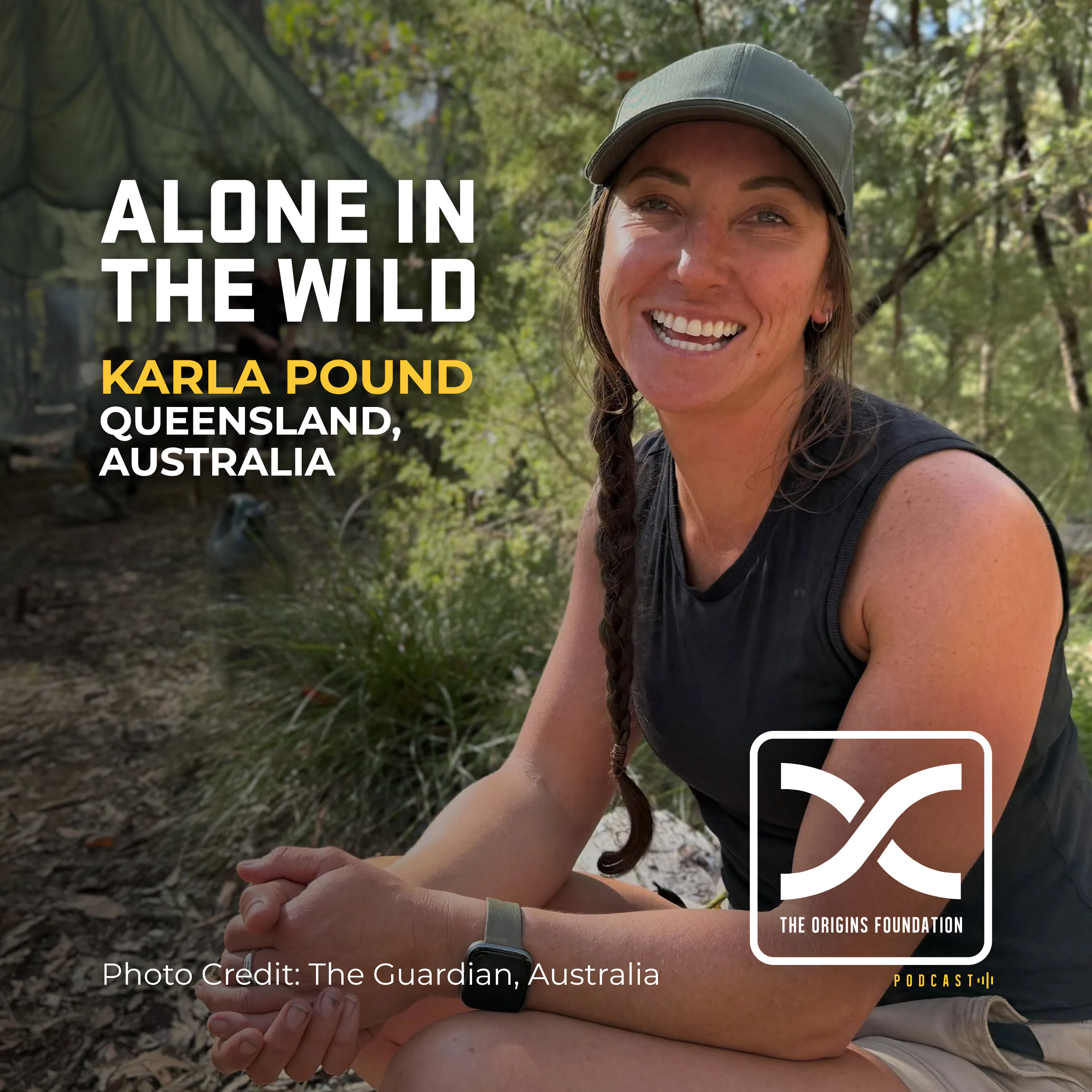
The Origins Foundation Podcast
Episode 612 - Karla Pound || Alone In The Wild
00:41:24
In today’s society, we need all the voices we can get to champion hunting and the sustainable use of wildlife. There is no greater mechanism to do that than influencers, especially those who have used the sustainable use of wildlife for survival. Australian influencer Karla Pound became well known for her escapades on the show Alone. She joined Robbie from the floor of the Wild Deer Expo in Victoria, Australia, back in October. Robbie went into the interview cold, knowing nothing about Karla, and peels back the layers of the onion to get to the bottom of her life as a survivalist, hunter, and more.
Loading summary
Transcript234 lines
- [00:00]
A
Midway USA brand product designers have one straightforward develop high quality technically sound products and deliver them to customers at reasonable prices. If you are immersed in the shooting sports industry and pay close attention to every single detail, you know our products are built right and stand up to everyday use. Who has shooting mats and range bag systems to hunting clothing and just about everything for the outdoors? Log on and shop 247 with super fast shipping. Midwayusa.com hunting is not easy. It never has been. It takes dedication, motivation, a lot of patience and quality gear. If you manage a food plot, put up stands or need just one more game camera, we can help. @midwayusa.com we opened our doors in 1977 and continue to put customers first by offering super fast same day shipping for just about everything for the outdoors, go to midway USA.com Carla Pound, dare I.
- [01:01]
B
Say, is an Australian influencer. She became well known from her escapades on alone, that reality TV show where you survive. Carla is a survivalist. She just loves the bush. She loves anything associated with outdoor survival. And so I got to know Carla at the Hunt Expo, the Wild Deer Hunt Expo in Victoria, Australia. And we sat down and we recorded an amazing podcast. I actually didn't know anything about Carla, just knew that she had a big following, a big influence and she loved to hunt. That's all that I needed really to know. So I brought Carla onto the podcast. As you can hear, phenomenal conversation. Just learning from someone who just came to hunting, loves hunting, used it in an outdoor survival context and now has a huge community that follows her that she is open to sharing, that she hunts with. So enjoy. So five years ago, there was a reason why I started this movement. And the truth then is the truth now that we need to champion our narrative. We need to champion the truth around what we do and who we are. There's a sweet spot with a gun, you know, too heavy and it's a burden to walk with. Too light and you whipping it. Why is the project so important to the hunting community? It's, it's a. I think it's not only important, I think it's. I think it's vital. I think it's, it's just in time. It's like snakes and ladders. You guys are climbing the ladder and then somebody does something stupid and you just slide. That is such an amazing analogy. Snakes and ladders. Yeah. You know, ivory in my opinion, was the plastic of its age. Okay.
- [02:45]
C
The expenses are going up. It goes a long way with families. We have families that do need it.
- [02:51]
B
Let me Close this door because I have a little weiner dog. What are you laughing Because I said wiener.
- [02:57]
C
I'm really glad you finished the sentence out.
- [03:00]
B
I'm sorry. The first half.
- [03:02]
C
What are we doing here today?
- [03:04]
B
You're telling the whole world. Old hat costume.
- [03:19]
C
Yeah. Ever since alone, people want to have a chat. They want to hear things.
- [03:22]
B
So is that what made you famous?
- [03:23]
C
I'm not famous. Huh. It's actually my second TV show.
- [03:28]
B
What was the first one?
- [03:29]
C
It was called Million Dollar Island. It was kind of a similar thing. It was a hundred contestants got put on an island in Malaysia.
- [03:34]
B
Like a Mr. Beast.
- [03:36]
C
It's kind of. It was a bit like Survivor. I feel like we had to, like, split into camps and then build shelters and make fire and collect our food. And then you had to do challenges and stuff as well. It was more of like a social game than anything.
- [03:46]
B
Good people on the island.
- [03:47]
C
100 people.
- [03:48]
B
And what number were you?
- [03:49]
C
I came ninth.
- [03:50]
B
You didn't win it?
- [03:51]
C
I didn't win it.
- [03:52]
B
Why didn't you win it? Politics.
- [03:54]
C
No, people were targeting me because they thought I was gonna win, so they targeted me and got me out.
- [03:58]
B
That's the whole problem with these things. Right. It's not just. There's the Survivor element of the TV is it's not really survival.
- [04:09]
C
No, it's not.
- [04:10]
B
It's more politics. It's human politics at the end there, which is reality television. Right.
- [04:15]
C
It's a social game. It's a social game. That's totally what it is. I think that's why people like alone, though, because it's the complete opposite.
- [04:21]
B
Because it's like legit.
- [04:23]
C
It's so authentic.
- [04:24]
B
If you do not survive, you are out.
- [04:26]
C
And just because it's raw and people can sort of relate to it and people open up because for some weird reason when you're out there, like, you just feel so okay being vulnerable. Like, the stuff that I would open up and talk to the camera, like, I haven't even told my best mates about, like, it's just. I think you have so much time out there to reflect and to think and to feel deeper because you just have you in the wilderness.
- [04:48]
B
Yeah.
- [04:48]
C
And particularly those days where it's raining and you can't go outside and go hunting or fishing. You're just sitting down inside your shelter next to your fire and you decide.
- [04:56]
B
To go be on an island with 100 people to start with.
- [05:00]
C
Growing up with life. No, I just. I like those challenges. Like when as an adult do you get to go, do you know A social game like that. Or get do obstacle courses and challenges.
- [05:08]
B
And things like that with your life at that point.
- [05:10]
C
Same thing as always, gallivanting around the world doing tourism and wildlife stuff and. Yeah, yeah.
- [05:14]
B
Army then?
- [05:16]
C
No, I signed up to the army just after that. Yeah. So I've been in the army for two years now. Just army reserves. Because I'm not giving up my job. I've got the best job in the world. So.
- [05:24]
B
Which is?
- [05:25]
C
Expedition leader for National Geographic.
- [05:28]
B
Whoa. When did that start?
- [05:29]
C
I've been with them for two and a half years. So what kind of expeditions? It's high in tourism, so we have about 100, 120 guests, generally Americans that will come on board and we go snorkeling, diving, hiking, kayaking. Lots of wildlife experiences, lots of cultural.
- [05:47]
B
Australian driven.
- [05:48]
C
No. So it's an American company.
- [05:49]
B
Yeah.
- [05:50]
C
And then we have 18 ships in the fleet. I.
- [05:53]
B
Okay. So it's like a cruise ship?
- [05:56]
C
Not cruise ship, cruise ship have thousands and thousands and thousands of people.
- [05:59]
B
Very boutique.
- [06:01]
C
We're, we're expedition educational. So because it's Nat Geo, we'll have a Nat Geo photographer on board. We'll usually have like a guest speaker, like in New Zealand.
- [06:09]
B
Oh, you have like a professor if you're doing like an archaeological kind of.
- [06:12]
C
Yeah. I've got a team of about 15 naturalists. I'll have an ornithologist, a botanist, a historian, a cultural specialist and they'll do lectures on board. So if we're moving from one place to the next, then they'll have an hour long lecture or something. So it's very highly educational. But because it's Nat Geo like we get so deep in the culture of really remote villages around the world. I typically do the South Pacific, so I do the Kimberley here in Australia, Indonesia, Papua New Guinea, French Polynesia, New Zealand and Antarctica.
- [06:38]
B
And how many expeditions would you do, say in a year?
- [06:42]
C
So we generally do like, I'll work say six weeks on, six weeks off, and then in that six weeks on, I might do four trips. So the trip's sort of a week long or 10 days long. Those guests get off and new ones get on.
- [06:53]
B
Yeah, yeah, yeah.
- [06:53]
C
I just got back from the Mediterranean. We're out there for a month. So I did Greece, Albania and Croatia.
- [06:59]
B
Look guys, I'm a hunter, right? And when I go hunting, I like to figure out how to get my trophies back home as expeditiously as possible. Well, you don't have to look much further than safari specialty importers, we know that trophy importation can be quite a headache. That's why Safari Specialty Importer strives to make it as easy and hassle free as possible. They have access to a bonded warehouse, you won't be charged storage fees and you get a dedicated team that's readily available and will update you at every step in the process. They'll even go one step further. Safari Specialty Importers is working with us and they are going to donate $100 from every shipment that they work with to conservation projects that include anti poaching, community development and wildlife conservation. At the end of the day, choose to spend your money with a team that's dedicated to you and is dedicated to helping show how hunting is a great conservation model. Hassle free logistics, fuel and conservation go with Safari Specialty Importers. Hunting and shooting suppressed have become the norm in over 42 states where suppressors are legal. The growing popularity of suppressors has even led to legislative changes. You might have heard some things around the big beautiful bill, right? Including the reduction of the NFA mandated tax stamp. Before you used to pay 200 bucks and now starting January 1st of 2026 the tax stamp is going to zero. However, why wait until January 1st? Our partners, Silence Essential, great friends of ours, they're going to pay your tax stamp right now. So if you buy a banished suppressor or other popular brands that essentially are qualifying purchases, Silence Essential is going to cover the cost of the tax stamp. They're going to save you 200 bucks right now. So make sure you don't miss out. Shooting Suppressed if you're in the market for a new suppressor, Whether it's your first or your next one, visit silenceesscentral.com or call them 866-811-6536. Silence Essential is going to cover your tax stamp right now. They're going to simplify the submission process and deliver your suppressor right to your door. Don't wait. Get your suppressor right now and start shooting suppressed. This season, Bushnell is eager to help you get set up for conservation success. That's right. They want to help you. The conservation and research community is dominated by good people doing good things and investing significant time and effort for the benefit of habitat and the species. So what do you need to do? Pretty simple. Send us your conservation story and or your conservation wish. Could be managing whitetails, could be understanding your environment or species or something else related to conservation. What would you be able to do if you had a great trail camera setup? We will select the best story every other month and send you a camera Bundle cell camera, normal SD camera, SD cards, as well as optics. Everything you need to get set up for success. I can't wait to see what you submit. You can email us, DM us, message us, whatever you want. We are not hard to find. Good luck. Which is the like, was there a mythology guy on board?
- [10:13]
C
Absolutely. We had locals. Yeah. It's just amazing to be walking through, you know, 4,000 year old archaeological sites. It's not my normal style because I'm such a nature based girl, but yeah, incredible. And the fact that I'm paid to do it, like I'm paid to travel the world. It is the best job in the world. Like I have to pinch myself on the daily. Like how am I paid to be here right now? Like it's very cool. And hence why I only joined up as a reservist in the army because I was never going to give up my job. So.
- [10:38]
B
Yeah, yeah, yeah, yeah. Carla Pound is the full name.
- [10:43]
C
Yeah.
- [10:43]
B
Welcome to the Origins foundation podcast.
- [10:46]
C
Thanks.
- [10:46]
B
We just connected again. The beautiful, the beauty of social media and Instagram and all the rest of it. It's, it's pretty impressive, right?
- [10:55]
C
I mean it's amazing because we just get in contact with people that we otherwise would have no idea that you even existed. You know, it's just, it's, it's the best networking possible.
- [11:06]
B
Have you heard of us or what we've done?
- [11:08]
C
No, it was through the shooting association that they suggested that we got in touch because I did an article with them in their.
- [11:15]
B
Oh, that's right.
- [11:16]
C
It comes out next month.
- [11:17]
B
Like leaders in the field. Charlotte Fox was like, yeah, you need to talk to this girl.
- [11:21]
C
Yeah.
- [11:22]
B
I said, oh, I'd like, I'll talk to anybody. Did you grow up hunting? This hat is but yours by the way.
- [11:28]
C
Oh, thanks. No, not at all. I mean my dad, he grew up hunting so he was a bit of a roo shooter. But I'm the youngest of five. My brother got taught a little bit but he dad stopped doing it by the time I came around. So it's definitely in the blood but I only got into.
- [11:42]
B
So you may have had some sort of like outdoor survivalist thing, otherwise you wouldn't be doing these.
- [11:47]
C
Well, this is the thing that people always ask, like how did I get into it? Was it from my family? And definitely not like to this day my family still not campers or hikers or anything. But from the age of four my parents put me into Girl Guides. So I, yeah, I was a gum nut, a brownie and Then a Girl Guide. I did it for 10 years. So my weekends were learning to build fires and tie knots and go kayaking and hiking and navigation. And, you know, I was the overachiever because you have your sash and you get your badges. I had two sashes full of badges and a bag. Like, I was just like, the next one. But it was so good because it was like orienteering, navigation, and then pottery. It was archery and then it was swimming. Like, it was just such a great way for a young girl to grow up and just expand my skill set. And I'm hugely contributing to who I am today.
- [12:29]
B
My oldest is in Scouts.
- [12:30]
C
Yeah, same thing.
- [12:31]
B
And he would call you a try harder.
- [12:34]
C
Really? I loved it.
- [12:37]
B
And, like, try hard is around him.
- [12:38]
C
Oh, true. Yeah, I was a try harder. But you know what?
- [12:40]
B
Many badges ahead of it.
- [12:41]
C
I never grew out of it. It's the same thing now. Like, I just get the next ticket, the next qualification. Even just in the military now, like, I'm a truck driver. And then I saw one of the tanks drive past. I was like, oh, what ticket do I need to drive that thing? Like, it's just. It get. I worked on a ship recently that has a submarine on board. Same thing. I was like, what? How do I get into driving that thing? Like, it's just.
- [12:58]
B
Well, I was talking to you yesterday about. I think the Aussie culture, specifically females in the Aussie culture, is very unique. Like, you don't see people in. In America, like, road crews. Okay, let's use road crews as an example. You will not go past a road crew in America. And it is rare to find a female even in the road crew. Super rare. Here. It's probably half the road crew are females, and most of them are driving the bulldozer or driving the big truck or doing the excavating. And you're like, that is unbelievable. What is it about it?
- [13:41]
C
I mean, it's big in the mines as well, and women are so encouraged to apply for that kind of job because we're generally more gentle on the machinery. So they enjoy having women because blokes can kind of just thrash around and don't care. And even just in the truck driver course I'm doing right now in the army, my instructor said the same thing. He's like, you've got so much care for the truck. I was like, well, I don't want to break it. You know, like, it's. But that's just a natural thing that we have. I think it's just a big appeal and definitely More women are getting into that space because the opportunity is available.
- [14:11]
B
Crazy. So I guess you've never really had a podcast host because I don't know you. I don't. I don't actually don't know anything about you. And podcast people are reaching out because she's super famous in this, like, a lame world.
- [14:25]
C
Oh, my gosh.
- [14:26]
B
So tell me about this alone, because I'm super. I'm super intrigued. Did you do it here in Australia?
- [14:32]
C
Yeah. So I was on season three.
- [14:33]
B
So it was specific Australian alone series trips.
- [14:37]
C
Yeah. So Australia's had three seasons now. The first one was in Tasmania. The second one was in New Zealand, and then my season was also in Tasmania. So we got dumped on the west coast of Tasmania in the middle of winter. Oof. Yep.
- [14:50]
B
In the highlands.
- [14:51]
C
Right. Well, it's all like, hush, hush of where the location is. You can't work it out.
- [14:57]
B
And were you dressed the way that you've been dressing here? That would be absolutely freezing.
- [15:01]
C
No, I had many, many layers on thermals. But even still, like, they control what clothing you can have. So you get like two pairs of pants. You can have, you know, two hats, one jumper.
- [15:09]
B
And.
- [15:10]
C
Yes, but they inspect it. It has to be to a certain material standard. So that way it's all level playing ground with everybody. And just so they got the gear to go out there and actually survive. Then you get 10 items that you get to select from a list of about 50. And same thing.
- [15:25]
B
They installed bow and arrow in that list.
- [15:27]
C
It was not allowed in Tasmania the New Zealand season. They could have a bow and arrow, but because the rules here in Australia for Tasmania, we weren't able to. So I took fishing gear. Like you could take just line and I think 30 hooks were allowed to have kernel. And yeah, you're dumped out there and you get given three cameras and you're essentially a documentary maker. So you have to film everything yourself.
- [15:49]
B
So there's no cameraman with you.
- [15:51]
C
That's why it's called Alone. You are a.
- [15:53]
B
Because a lot of people think like, oh, there's a crew following you, you know, and they're. They've got. They go back and have. And sleep and eat and they just come and see you.
- [16:01]
C
So you, we. You get trained, like you do a bit of a boot camp before you go, and they teach you how to use your cameras and charge them totally at different angles and all that kind of stuff. Because you've got to be a storyteller and you have to give them enough material that they can produce A tv. So you had to do a certain amount of filming per day. But what the viewer doesn't understand is to get that scene, you've got to go up the hill, set up the camera, go back down, get in your backpack, walk past the camera, you know, and then go back and get. And then you've got to do that from two different angles. So something that should take 20 minutes takes two hours. And mind you, you haven't eaten for four days. Like, if not longer, Like, I didn't go. My first bit of protein was 12 days in.
- [16:39]
B
Whoa.
- [16:40]
C
And I survived for five weeks on two eels and one fish. Wow. I lost 18 kilos and I'm not the biggest person. Yeah. So I put on weight before I went. I put on 10 kilos before I went out.
- [16:52]
B
Yeah.
- [16:53]
C
And I went full carnivore too. Like I wanted my body to already be in keto. Yeah. So I just ate nothing but animal products before I went. Which is actually hard to put weight on, doing that.
- [17:02]
B
Yeah, yeah, yeah, of course.
- [17:03]
C
And then it's such a good detox while you're out there as well, because there's no alcohol, there's no sugar, there's nothing processed. But in saying that coming back into the real world and eating again was hard, like your body's shut down, it doesn't want to digest. And then I've got food intolerances now that I didn't have before because my body didn't have gluten and didn't have all these other things. And now I'm finding these weird little triggers. My body didn't have it.
- [17:25]
B
Yeah, I've seen. We've had a couple of people. We haven't had Kai on. Obviously Kai's a part of our Wild Origins Australia crew here who's naked and afraid. That's her show, her deal. But we've had a couple in the States, Lindsay Le Tyler was one. And then a lady called Kyla Cummings, who's a knife maker. You'd love her. She's badass. Just like has big, like black fingernails constantly, like huge fingernails. And she's just knife maker, but just dirty all the time.
- [17:54]
C
It's a wild woman.
- [17:55]
B
Wild woman, right. And she was describing how like, of after being out, you know, surviving or nothing, coming in for the first night and there's just like a gorge spread, you know, Oreos and power aids and you name it, like.
- [18:10]
C
But you've got to be careful though, because you can get something called refeeding syndrome. So they worked that out from people that had been in the concentration camp. So if you haven't had food and then you have carbohydrates in particular, too quickly, it has this enzyme reaction in your body and can kill you.
- [18:24]
B
Wow.
- [18:24]
C
So when we come off the show, they actually keep us under observation and they slowly introduce food. Like, you can have some bone broth, and then you can have a couple little handfuls of nuts. And to be honest, like, the first nuts, I was like, oh, my God, it's crunchy. And texture and flavor. It's just incredible. Like, it gives you a whole new appreciation for food. But it's really good that they do monitor you, because the first TV show that I did, they didn't want to you. I got out from living on an island for a month, having very little food, living on mostly oysters and flowers, and then straight into a hotel with a buffet breakfast. I ate so much, threw up my guts everywhere, Got put on a drip overnight because that made me so sick. So alone. Know that you know, when you put your body in. In that situation, you've really got to take care of it and ease your way back in.
- [19:07]
B
And so to win alone, what do you. What is that?
- [19:10]
C
Last man standing? So, people, you leave in one of three ways. So you either tap out because it's too hard, or you've had enough experience or whatever your reason is. You get medically taken out. Which two people from my season got medically taken out, or you win.
- [19:24]
B
And the winner of that Tassie series that you were in, how long did they stay?
- [19:27]
C
Shay won, and he was out there 76 days or something like that. And Shay, like, when I first met him, because we meet each other before we go, and I was like, he's gonna win. Like, I knew straight away he had. He's from New Zealand, so he's used to the cold. He's a possum trapper by trade. He is an ultra marathon runner, so he's got that headspace dialed in. He put on 25 kilos before he went. And he lives in the bush. That's just his whole life. And I was like, I picked it day one. I was, he's going to bring this thing home. And he did.
- [19:56]
B
Yeah. Because you would think that, yeah, food obviously is important, but mentally.
- [20:03]
C
And that was my undoing when I tapped out, like, I got to day 30 and I was bouncing off the walls, like, every day. I was having so much fun. I was building my shelter and building a trap and making flies for fishing and build a chair and all this cool Stuff. But then once I had finished sort of everything, I kind of lost my mojo. Like, I just didn't have a purpose anymore. Apart from trying to find food, of course. But when it's raining and windy outside, you can't go fishing or whatever. I was like, I'm just done. And my headspace just went down. I got really depressive down at the dumps and I was like, this isn't.
- [20:32]
B
Fun anymore because you don't have, like a book to read.
- [20:35]
C
Nothing. You just got the camera that you talk to. Yeah. Which ends up being bit like, you know, Wilson off castaway, kind of becomes your best friend, which is a nice thing to talk to. But, yeah, for me, it was just. I was. I knew I lost so much weight at that point, I worked it out that I lost half a kilo a day. And I realized that I couldn't win because I had lost all of my weight already. And then once I realized I couldn't win, I was at about day 30 and I was like, oh, my next Milestone is day 45. Who is out? No, you've got no clue. You don't know if you're first, fifth, or about to win. You've got no idea whatsoever. So you could be about to tap out and you could be the second last person. You tap out. You've now got a winner. But you've got. You don't know. You've got. No. And the thing is the viewers don't know that as well. That we don't know who wins until it goes to air. We learn everything. When you learn everything, we are none the wiser. We still have no idea where we place until it actually goes to air.
- [21:25]
B
Oh, whoa. They don't tell you?
- [21:26]
C
Nope. We've got no idea.
- [21:27]
B
So how does. How does the winner. Does the winner have to tap out?
- [21:30]
C
No. So the winner, obviously, when the second last person goes, which in my season was Maza, he got medically taken out. Then their loved one, the last person standing, gets flown over and they go and tap them on the shoulder. But that's the one the person who won knows.
- [21:44]
B
Oh. And so they're not stating anything. And obviously they don't.
- [21:47]
C
And they don't get given the money until the show goes to air. Otherwise it's obvious. If you come out with a brand new car or whatever off these amazing holidays, you're like, hey, you. Actually people thought that I won because I had just bought a 1983 EX Army Unimog, like this big truck. It was a hundred thousand dollars and everyone's like colors won alone. She's totally won. And it threw everybody off because it was just time in my life that I just bought a really big, expensive vehicle.
- [22:10]
B
Have you still got.
- [22:11]
C
No, I sold it. It's on its. It's on a ship on its way to America, actually. Yeah, it was just too costly. It was really fun. I didn't have it for very long, but, like, I had a catastrophic brake failure, which I could have killed many people, including myself, and I spent 20 grand on repairs. And it was just. I'm overseas so much as well, but it just got too much, I think, to own something. It's a 1983 EX army truck. You've either got to have the mechanical skills to do it yourself or deep pockets. And I don't have either, so. Or have a partner, you know, two incomes to paper stuff. So. Yeah, no, it's going to a new home.
- [22:44]
B
So you live in, you said Airlie Beach?
- [22:47]
C
I don't really live anywhere because I'm so nomadic, but my family in Airlie Beach, Queensland. Yeah, yeah, North Queensland.
- [22:54]
B
And we're at the Wild Deer Expo here in Victoria, Australia. I asked had you hunted growing up? You said no. Do you hunt now?
- [23:02]
C
Yeah. So I've been into bow hunting for probably about two years now. So with my line of work, I've been a Naturalist guide for 10 years, specializing in bush tucker and indigenous culture.
- [23:12]
B
Okay.
- [23:12]
C
So through that, I just really started to get more passionate about wanting to live off the land.
- [23:17]
B
And before that, did you have. Did you have a perception on hunting or.
- [23:23]
C
Hunters always open to it. Like, it was always something that there.
- [23:26]
B
Was never, never like a. That's not good.
- [23:28]
C
Look, the thing that I still struggle with today is I'm an animal lover, number one. Like, I studied zoology when I left school, I worked in zoos all over Australia, and wildlife has been my number one passion. So even now, when I take an animal's life, there's a very, you know, deep moment for me that it still hurts. I don't like doing it, but for me, it's the. The whole picture. It's not just about the animal's life. It's the sourcing of the meat and just being in the wilderness and connecting to where I am and the whole experience. But I knew I wanted to do bow hunting again. It's just more leaning into that primitive ancestral skills because I do like the survival and bush tucker and whatnot. And then through my work with National Geographic, I travel through remote villages around the world that truly still live off the land, and I get to see them doing that. So it kind of just lit that fire in me even more. And then I just reached out to people on social media, like, how do I get into this? Sure. And then. Yeah. I mean, I'm still super green. I've only been on a handful of hunts, but my first two hunts were both successful, which, after now meeting so many people, they're like, that's unheard of, dude. Like, people hunt for years before they get anything. I mean, it was a goat and a pig. It wasn't deer. And they're much easier.
- [24:37]
B
Sure.
- [24:38]
C
But I went from never touching a bow to having a successful hunt in three days.
- [24:41]
B
Well, if you want to be a. A true. Like, I'm gonna live off the land kind of hunter. You're not a bow hunter.
- [24:49]
C
No, that's right, because it's just. You're gonna go hungry. You're gonna go hungry. And we make the joke now when, like, people say, are you going for a hunt? You're like, yeah, I'm just gonna take my bow for a walk, and we're just gonna go spook some deer, you know?
- [25:01]
B
Great.
- [25:02]
C
So I only had a crack at my first deer hunt last weekend while I'm down here, and I closed in 40 meters on a sunbar. So that was good. I mean, I can't shoot 40 meters. 30 is the best I can do. Sure. And even my pound is, like, I'm only still at probably £45 at best. So, yeah, I've still got a lot more practice and. And just having an event like this, being here and the exposure and the networking and just chatting to people and learning, it's just. It's such a supportive community. Everyone's out there to give you a hand, and everyone's got so much experience, and you can sort of cherry pick what you like to create your own experience as well. So, yeah, I'm loving it. Absolutely loving it.
- [25:36]
B
So I want to. I want to push you a little bit. You say you still have issues, you know, killing an animal. Have you tried. Have you. Have you thought about the reconciliation of the fact that bow hunting is not probably the most effective mechanism in doing that?
- [25:58]
C
Look, with the hunts that I've had, I've had good shots, and it's been a very quick kill. I haven't had to chase a blood trail. I haven't had to go looking for the animal. I hit it. It took a few steps, and it was down. So I haven't had a negative experience. And I. I know my day's coming and that's going to hurt me even more. But you know, the people that I hunt with, unless it's going to be a good shot, you don't take the shot in the people and we that are passionate about that. And that's how I've been influenced as well. But yes, it can be hard, you know, in the amount of friends that I have been warned, you know, that you will put an arrow in an animal and it'll take off and that blood trail will disappear and you can't find it. And that that day for me hasn't come. And that will come. I know. And that's going to be hard for sure. Yeah.
- [26:43]
B
Have you. What do you think would happen? Do you think you'll stop hunting?
- [26:49]
C
I don't think so. I think I'll come to terms with it. I don't think I'll ever stop hunting. Like, this is something that I really enjoy now and it feels natural for me. I feel like my natural instincts just kick in with it. So I don't think it's something that will upset me to the point of not wanting to hunt again. It'll make me train harder and practice more and be more accurate with my shot or not take it. I think it'll make me more passionate about it.
- [27:14]
B
You know, I don't know if you've felt this yet. You probably will given that you are famous. Has anybody. Have you. Have you advertised any of your bow hunting or animals?
- [27:28]
C
Yeah, look. And on through my social media, before I do post anything, I warn people. You know, I've been out hunting this weekend. There is some content coming. I've lost a lot of followers through that as well because I am an animal lover and a lot of people have followed me because of my animal background. Sure. But it's actually been really nice. Quite a few people have reached out to me saying you are the perfect person, the advocate for this to help close that gap. I'm a female. I'm working for National Geographic. I'm in the wildlife space as well. And I think being a female, we're naturally more nurturing and caring and stuff and it helps to remove that stigma of that bloodthirsty killers of going out there and hunting. So yeah, that's something that I'm really passionate about now is getting more women into that space and just sharing my story and my journey and it's opening up people's minds and it's just helping to close that gap. But the thing is, people are so quick to judge of you Being a bow hunter or any hunter yet, they'll happily go to one of the supermarkets and go buy their meat off the shelf, not knowing where it's come from. If these people had been to an abattoir or had seen the animals on, you know, the ships that are being sent overseas or whatever, you know, stockyards, and they wouldn't eat the meat. Yet what we do gets so frowned upon. Yet our animals have lived a wild life. The animals have no idea that we're coming. It's over so quickly, you know, and for me, well, for us humans, it's so much healthier because they're not pumped full of hormones and they're not fed up grain in the stockyards before sale. And it's just, it makes perfect sense to me. But, like, other people are just so, like, oh, you hunt them, it's just so confronting for them. But I'm glad that I can be that voice that can help just to create that bit of awareness and just open people's minds a little bit. And when I do post things, I make sure it's, it's, it's not bloody. I make sure it's not, you know.
- [29:09]
B
Clean up the animal. You show respect for the animal. You show the meat, you show the food, you show the. The sunrise that I watched this morning because I was out in the bush.
- [29:17]
C
And I explain it, you know, and I, I give a big blurb or I'll have a chat and I'll talk about why I hunt, my reasons for it. And then sometimes hunters are like, you shouldn't have to justify. I'm like, I know I shouldn't.
- [29:26]
B
No, you have to justify. I will say, I will push against somebody like that to say we as hunters used to communicate by sending pictures of dead animals to one another. That's how we communicate. We have not adjusted our communication style in the world of social media since 2005. We've been living in this new world for 20 years. We have not adjusted our communication style in 20 years. We still communicate by showing a dead animal, but now the world is watching us, and the world doesn't understand that communication style. They don't understand what you're communicating. They see you communicating. Oh, you are joyful because you have a dead animal at your feet and you killed it. That's why you love it. That's why you. You already very new to our community, but you already nailed it. Bloodthirsty killers. Where do you think that comes from? Yeah, it comes from pictures. There's nothing wrong. Don't get me wrong. I'm not. I'm not apologizing for hunting. I'm not apologizing for the trophy shot. But in today's day and age, we need to communicate differently and understand that there are a whole sector of this community that's looking at us and saying, I want to understand a little bit more. Give me a little bit more. And if you give a little bit more, people are understanding, just like your community is seeing you, and they're understanding a little bit more. But I would say to you, number one, use us as a resource. Use me as a resource in that we've addressed every single question you can possibly hear or understand. I was even doing it last night here with friends that you're friends with.
- [30:54]
C
Yeah.
- [30:56]
B
And, you know, one of the things that we don't actually champion a lot, and you just mentioned it when we said, well, what if the scenario happens that you don't find Januel? And your response to me was, well, I'm going to practice more. I'm going to ensure that I am in a better position next time, or I'm going to make the shot better next time. Those three things directly mean that you want the animal. That's why you're doing that.
- [31:24]
C
Not so much. I mean. Yes, you want the animal.
- [31:26]
B
The majority of hunters. Yes.
- [31:27]
C
Yeah. But it's not. It's because I don't want that animal to be in pain, to be out in the wilderness with an arrow through its.
- [31:32]
B
That is a very rare motivation, to be honest.
- [31:36]
C
Okay.
- [31:37]
B
It's a very rare motivation. Most of the people here, 99% of the people in this around us would say the opposite.
- [31:44]
C
Yeah.
- [31:44]
B
It's that practice.
- [31:45]
C
Yeah.
- [31:46]
B
Because the reason you hunt is for the mate. It's for the food, is to kill.
- [31:50]
C
Yeah.
- [31:51]
B
Otherwise, we'd be hiking. We'd be hiking our bows around the forest.
- [31:54]
C
Yes. Okay.
- [31:55]
B
So the purpose is to kill. And so I want to be as lethal as I possibly can. I want to be as effective as I possibly can. I want to put myself in the position to be the best hunter I can, which means to kill that animal. Indirectly, though, it means everything that you're after. Yeah, indirectly. It means we've got the most colorful, biggest animal welfare feather in our caps that we never talk about, which is we want the animal to die very quickly. We want the animal to be as humanely dispatched as possible. We want to reduce pain as much as possible, though 99% of the people here are not thinking that way. That's what is a result of the activity, of what other lifestyle practices before they go out. And why do you practice? You practice to be better, you practice to be more efficient, you practice to be more effective. And that all results in a cleaner kill. Which means you have addressed animal welfare confidence constantly.
- [32:59]
C
Yeah, I mean, I definitely do get people sort of shocked as well. Like, how are you a hunter when you're an unambled person? But again, having these conversations with them helps to open up their mind a little bit about it.
- [33:17]
B
It's all that wine that you drank last night.
- [33:22]
C
I'm actually being cooked the last week. But sir. But no, the beers didn't help. Yeah. Being crooked there. The army barracks. Once one person gets seeker, goes around, breaks around.
- [33:37]
B
Excuse me, get some water in you.
- [33:44]
C
But yeah, I mean, that's. That's interesting to hear that you don't think many people are caring about the welfare.
- [33:50]
B
Unfortunately, they don't.
- [33:52]
C
So it's a very big focus for me.
- [33:53]
B
Yeah. Now, again, they. They do, but they don't. It's not conscious. It's not really like, this is why I'm doing it. They're doing it because they want to kill that animal. And indirectly, though, it's all the things that you just discussed. I will be. And I'll lay this out there. And I don't mean to. To put bad juju on you. I will. It wouldn't surprise me if national geography. If they get wind that you hunt, that you're not employed with National Geography.
- [34:25]
C
No, opposite. Because look what we do. National Geographic is all about going into tribes around the world that live off the land.
- [34:30]
B
I hope you're right. I hope you're absolutely.
- [34:32]
C
Look, I don't advertise it when I'm at work. I don't advertise I'm a bow hunter. But if people ask me, I'll talk about it. But I mean, I've never had. They're aware of what I do. They know my survival background. I was actually supposed to be working when I was on a loan. I had to get out of some contracts to go onto the show. So they know what I'm about anyway. Which for them, for the clientele, they love it. Their expedition leader is a survival girl who goes out there bow hunting. And they're like, oh, we're in good hands. We're fine. You know, like, they love it. They feel like. Because I'm a chick too.
- [35:00]
B
I love that. I love that. Yeah. It is a shame. Like, you know, our experiences with National Geographic are just through the digital media space. Right. And you never know who. Who's the person posting for National Geographic and why are they saying what they're saying.
- [35:17]
C
Yeah.
- [35:17]
B
But there clearly is not like a. And I hope this changes. There's not a very clear, like sustainable use bend lane to what you see in the digital media space coming out of National Geographic.
- [35:37]
C
Yeah. I don't know. It's changed hands a lot. And even just recently because a National Geographic got purchased by Disney. Disney now owned Nat Geo. So we joke at work if something goes wrong or something like bloody Mickey Mouse at it again, like. But yeah, so it's definitely changed hands and that's right.
- [35:51]
B
Yeah. You get it on Disney. Nat Geo is on Disney.
- [35:55]
C
Yeah.
- [35:55]
B
So is there anything like. Obviously you started bow hunting. When did you start?
- [36:00]
C
About two years ago.
- [36:01]
B
Okay. I had the best bow hunting experience and people ask me, like, do you bow hunt, Robbie? I said, my answer is, I bow hunt. I'm not a bow hunter because I don't have time to practice.
- [36:12]
C
Yeah, it's one of those things that you have to. If I don't pick up a bow for a while, I'm rusty. Like, it takes me a bit to get accurate again, for sure.
- [36:18]
B
100.
- [36:19]
C
You don't use it, you lose it.
- [36:21]
B
Do you have things that you want to do with your bow? I know you're obviously food and survival.
- [36:27]
C
And whatnot, but look, that's really just my focus for now. So my good friend Sarah McDuffie, she's from the U.S. but she's Sarah. Yeah. Yeah. You did know Sarah. We're doing these women's bow hunting retreats in Australia and she's running it like, she's incredible. She's so in tune. And she's the one that taught me to hunt, but we teed up together.
- [36:46]
B
How did you learn to hunt? Where did she take you?
- [36:48]
C
Did you take Hunter Valley?
- [36:49]
B
Yeah. With Nick.
- [36:49]
C
Yeah.
- [36:50]
B
Nick's property.
- [36:50]
C
Yeah. Yeah. That's how I found out about Sarah was true Nick. I reached out to Nick through social media, told him I want to get into it.
- [36:55]
B
We probably did in the same valley.
- [36:57]
C
Oh, probably. Yeah. Yeah, exactly. And it's a great place to start out. You know, there's so many animals out there and yeah, she just wanted to tee up. And I do like the survival aspect of it and. Yeah, so that's something that we're hoping we can get off the ground. She's back in the States now, but wants to come back to Australia. And two of the girls, or one of the girls here, Lucy, I went to New Zealand with Her and Ellie and Amazing. We had two US Girls, two Australians and two Kiwis. And we took the helicopter out there to Hokitika and went out there.
- [37:24]
B
Us girls that went.
- [37:25]
C
Sarah and Courtney Pratt.
- [37:27]
B
Yeah, yeah, I know her. She's been a. She's one of our blood origins episodes. You know that?
- [37:31]
C
Oh, I didn't know that.
- [37:32]
B
That's how she's just all over world. This is.
- [37:34]
C
I love what she does because she does her outdoor journey. And again, it's just a safe space for women to get into. Not just hunting. It might be whitewater rafting or it could be mountain biking or rock climbing or fly fishing. And it's just a group of women that come together and get to do cool stuff. Because unless you have a partner that's into it or your parents grew, you know, you grew up that way. How do you get into these things? Yeah.
- [37:55]
B
High hurdle to get into.
- [37:57]
C
Yeah. So it's just amazing. And I'm so lucky that I, you know, bumped into these girls. And now we're just building this incredible female community. And it's funny in the female hunting space because there's not many of us. Soon as you meet another girl, you're like, let's be best friends. Like, you click to each other straight away because there's not many of us here. But our community is growing. And then next year, I'll be working adventure hunting based in Brisbane, and they want to put me on because they find there's women that come in that want to learn, but they're intimidated by the blokes. And they come in and they have a look around and they leave without asking the questions that they want to. So having me in there is an easier way for the girls to come in, have a chat, feel a little bit more comfortable. And then that works for me and Sarah, too, because then these girls come in, they buy all the equipment from the store, and then we can take them out on the hunting street. It's a win. Win. So, yeah, I start that January next year. Should be fine.
- [38:43]
B
Fantastic.
- [38:43]
C
Yeah.
- [38:44]
B
That's awesome. No, it's. It always. It doesn't surprise me anymore because it happens so often. But how deadly small this world is, you know, with Sarah and Court.
- [38:56]
C
Yeah.
- [38:57]
B
And obviously where you've hunted in the Hunter Valley, and I've hunted in the Hunter Valley. Same water.
- [39:02]
C
Yep.
- [39:03]
B
And I'll tell you a funny story that happened when I was in. That probably stayed in the same cabin.
- [39:08]
C
Yeah.
- [39:09]
B
I'm a big dessert guy. Like, I'm like a sweets.
- [39:12]
C
Yeah.
- [39:13]
B
Fundy. And so we had a beautiful coat. We killed the goat that day and we ate the goats. It was brilliant. And I was like, man, I need to eat something sweet. And I looked around and there was nothing in this pantry, like this bare pantry. So I took a slice of white bread, put a bunch of butter on it, and then took the Milo sandwich. And Nick Morton's looking at me going, what are you doing, you alien? And I was like, don't knock it until you try it. And he videoed the whole thing and I ate it. And then he tried and he was like, yep, you may be onto something.
- [39:47]
C
I just would have gone straight in with a spoon straight out. That's how we grew up in Australia. Like, you don't want spoon either. It's like, it's. I feel bad for people that didn't grow up in Australia because we have vanilla ice cream with tons of Milo on it. The best thing ever.
- [40:01]
B
Well, man, I'm glad that we managed to connect. I appreciate you spending a little bit of time with me. Yeah. I know that you're busy and famous.
- [40:09]
C
I do have a talk on very soon, but.
- [40:12]
B
Exactly. Well, let me know how we can help you. Like, we deal with. It's going to come, you know, you've got. Going to have questions and you're going to have people that are like, they'll say X or Y. And if you just need help understanding how to respond to X and Y in a very methodical, intellectual, like, thoughtful way.
- [40:32]
C
Yeah. Thank you. That's good to know. That helped. Yeah. It's nice to have that support for sure.
- [40:36]
B
Yeah. Well, you got it here.
- [40:37]
C
Amazing. Thank you.
- [40:38]
B
Cheers, Bill.
- [40:39]
C
Awesome.
- [40:40]
B
Well, that's it for today. Appreciate you listening as always. Leave a review, share it with your friends, and most importantly, do what's right to convey the truth around hunting.