← The Origins Foundation Podcast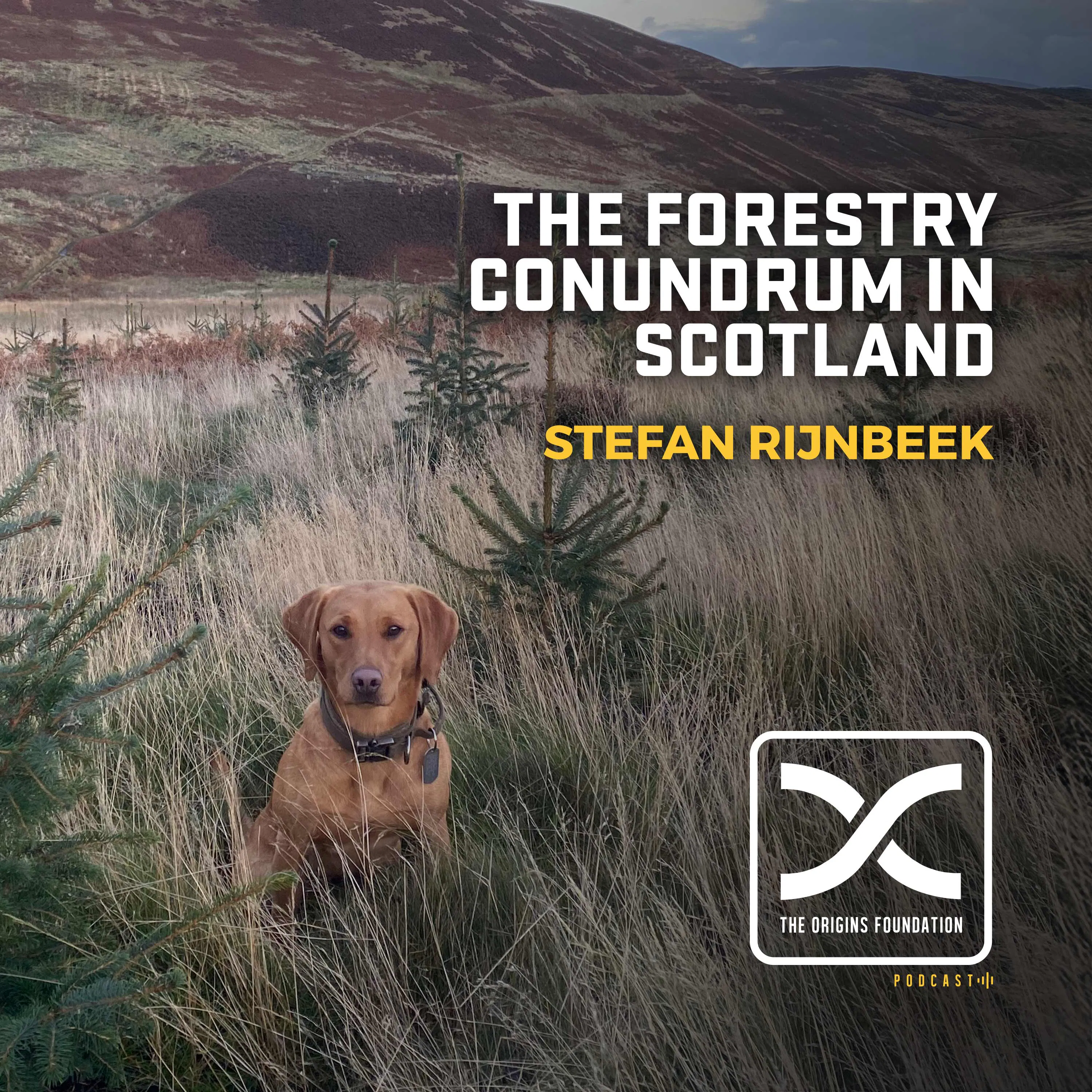
The Origins Foundation Podcast
Episode 621 - Stefan Rijnbeek || The Forestry Conundrum In Scotland
00:56:20
This podcast is one of those that came out of left field. A connection from a past podcast guest, and an invitation to podcast about an industry that if you looked at from the outside looking in, in a place like Scotland, one may think it's an industry that is not compatible with wildlife and sustainable use conservation. Stefan Rijnbeek, an expert on forestry initiatives and how they’re tied intimately to conservation efforts in the UK, spends the better part of an hour schooling Robbie on the complexities of forestry in the UK and Scotland in particular. As a reminder the opinions of Stefan in this podcast are his own, they are not born from hard evidence, nor represent the stance, policy, or opinions of his employer. This is a fascinating podcast that everyone should listen to...
Loading summary
Transcript151 lines
- [00:00]
A
Stefan Reinbeck is in the forestry system in the United Kingdom. Now, before you say, well, I'm not going to listen to this podcast, I learned so much in this podcast that you probably want to listen to it. I came in with a different perception around forestry in the United Kingdom, one that was actually quite negative. And it's almost like a lesson learned. Right. You know, what we do every day is we change the negative perception around hunting and hunters. And so this kind of conversation is right up our wheelhouse. A conversation with someone who's very articulate, has very. Is very thoughtful, and all about a topic, forestry in the United Kingdom, that has a little bit of a bad rap, like from my perspective, from perception perspective, and he agrees that they do have a bad rap, but there's a reason why they have a bad rap. And that bad rap is unfounded today because of several different factors. So enjoy this podcast. Share the podcast. Use it as a. As a talking tool around the water cooler. I don't think anybody has water coolers anymore around the coffee pot in the morning, at the office or at a dinner party or in a WhatsApp group. Enjoy. So five years ago, there was a reason why I started this movement. And the truth then is the truth now that we need to champion our narrative. We need to champion the truth around what we do and who we are. There's a sweet spot with a gun, you know, too heavy and it's a.
- [01:33]
B
Burden to walk with.
- [01:34]
A
Too light and you whipping it. Why is the project so important to the hunting community? It's. It's a. I think it's not only important. I think it's. I think it's vital. I think it's. It's just in time.
- [01:45]
B
It's like snakes and ladders. You guys are climbing the ladder and then somebody does something stupid and you just slide that.
- [01:52]
A
That is such an amazing analogy. Snakes and ladders.
- [01:55]
B
Yeah.
- [01:55]
A
You know, ivory in. In my opinion, was the plastic of its age. Okay.
- [02:00]
B
The expenses are going up.
- [02:02]
A
It goes a long way with families.
- [02:04]
B
We have families that do need it.
- [02:05]
A
Let me close this door because I have a little wiener dog. What?
- [02:08]
B
You are.
- [02:09]
A
You're laughing because I said wiener.
- [02:11]
B
I'm really glad you finished the sentence out.
- [02:14]
A
I'm sorry.
- [02:15]
B
The first half we doing here today.
- [02:18]
A
You'Re telling the whole world. You know, the beautiful thing about these podcasts is that you never met. You don't know the person. You've never met the person. You, come on, you have this like super cool intellectual discussion and sometimes like, you. You're like, man, I don't even know how to say the guy's name. But I will give you a little bit of background before I try and say your name. Stefan obviously is easy. Your last name is Dutch. I am obviously from South Africa. So I look at it and I go like Reinsbeek would be the first way that I would say it. How close did I get?
- [03:09]
B
Well, Ryan, Ryan is in the river Ryne. That's pretty much spot on. But the beek is actually a bake, a baked cake.
- [03:16]
A
Oh, because yeah, but that's, yeah, that's the. That would be the Hollandish like you know, intonation on it.
- [03:23]
B
It's a bit less brutal.
- [03:23]
A
Should we say Rhinebeck?
- [03:26]
B
Yeah, Rhinebeck.
- [03:27]
A
Yeah, I like Rhinebeck. I like it. I like it. Stefan. Welcome to the. I. I keep saying the old name. The Origins foundation podcast introduced to me through now my like podcast sponsor. I guess in Europe we call her Te Thereza. Just amazing French woman who passionate about hunting. How do you know her?
- [03:53]
B
So I obviously I work in forestry now, but used to be more in the outdoor industry. Actually started off as a industrial design kind of engineer and very much specializing the outdoor industry, both from the design side of things.
- [04:12]
A
Oh, designing things?
- [04:14]
B
I guess. Yeah. On the R and D side of things mainly kind of came into it from the athlete side and myself and a friend of mine had a business essentially giving a bit of a one stop kind of package for a lot of the outdoor brands that offered everything from the actual athlete doing the expeditions, whatever it is, but the athlete management side of things, a lot of design work in digital format. So the graphic design, their websites, all that sort of stuff. Sorry. Dogs modelled up in the chair photography, the cinematography, all different basic parts that it's kind of a collective where we had a bunch of creatives that we'd call in for different speciality work that.
- [04:59]
A
They were able to do. Yeah, it sounds like a service. It sounds like, like a service agency.
- [05:02]
B
Precisely. Yep. And we kind of basically just knitted together the team that we required to fulfill the certain essentially projects that a lot of these outdoor projects. And that's how T plugged in very much so. So her kind of background was very much on the project management side of it and connecting all the dots together to make it all one coherent group. Should we say? I'm no longer in that industry myself anymore. But yeah, very much stayed in touch.
- [05:27]
A
With Te but she said now you're in the. You said you gave us a little bit of inkling, you're in the forestry business.
- [05:34]
B
Yes. Based in Scotland. I'm actually in Carlisle, Scotland. Right, Carlisle, where the head office is for the company. But I'm based in south of Scotland but cover nationally. So everywhere across Scotland into North England, even as far as Wales and, and down beyond that as well, which to yourself maybe you don't understand, but it's, it's, yeah, opposite ends of the country basically. So yeah, get a good oversight of the uk.
- [05:58]
A
I guess the reason I wanted to have you on when, and I was intrigued when she started talking about you Scotland Forestry is that if I, if there's anything that is controversial right now in the UK space, forestry is it. Look guys, I'm a hunter, right? And, and when I go hunting, I like to figure out how to get my trophies back home as expeditiously as possible. Well, you don't have to look much further than Safari Specialty Importers. We know that trophy importation can be quite a headache. That's why Safari Specialty Importers strives to make it as easy and hassle free as possible. They have access to a bonded warehouse, you won't be charged storage fees and you get a dedicated team that's readily available and will update you at every step in the process. They'll even go one step further. Safari Specialty Importers is working with us and they are going to donate $100 from every shipment that they work with to conservation projects that include anti poaching, community development and wildlife conservation. At the end of the day, choose to spend your money with a team that's dedicated to you and is dedicated to helping show how hunting is a great conservation model. Hassle free logistics, fuel and conservation go with Safari Specialty importers. It is 2026 and my friends, big changes have happened in the world of firearm suppressors. The $200 tax stamp fee is now gone. Huge win for hunters, huge win for shooters, and a huge win for your wallets. If you're thinking about elevating your shooting experience and adding a suppressor, Silence Essential is the best way to to shop. And you don't even have to get off your couch to do it. Go to silenceessential.com, browse hundreds of suppressor options. They literally have all of the popular makes and models. Then their experts will walk you through setting up your account, creating a free NFA trust and then submitting your application to the atf. Once approved, Silence Essential ships your new suppressor directly to your door. That's when you're going to have to essentially get off the couch. It's A game changer, guys. You haven't done it yet. Do it. The old days of waiting eight to 10 months on a suppressor are gone. It's more like two weeks. Some have even gotten their suppressors in shorter timeframes. It's never been easier to start shooting suppressed. Get started today by visiting silencer central.com it's really the simplest way to get your suppressors. Bushnell is eager to help you get set up for conservation success. That's right. They want to help you. The conservation and research community is dominated by good people doing good things and investing significant time and effort for the benefit of habitat and the species. So what do you need to do? Pretty simple. Send us your conservation story and or your conservation wish. Could be managing whitetails, could be understanding your environment or species or something else related to conservation. What would you be able to do if you had a great trail camera setup? We will select the best story every other month and send you a camera bundle. Cell camera, normal SD camera, SD cards, as well as optics. Everything you need to get set up for success. I can't wait to see what you submit. You can email us, DM us, message us whatever you want. We are not hard to find. Good luck. Why is it so controversial, Stefan?
- [09:25]
B
I think one of the key terms you probably quite often hear about is the land sharing, land sparing debate, very hot topic in the uk.
- [09:33]
A
Describe that, tell us, what is that? If you define that, what's the difference?
- [09:37]
B
You've essentially got a very populated country, very small amount of land, very interesting kind of platform for land ownership here, where unlike a lot of our European neighbors who you might compare to either in scale or population densities, it's pretty financially incentivized here. So you can own a lot of land and it can do very well even if you just want to sit on it. Right? You could literally just own the land and not pay a single penny for the, well, I guess the privilege of owning that land. Whereas you go to any of the scandi countries, for instance, and just the privilege of owning that square meter of land, you're paying heavy taxes on it. Straight off the bat here, you could sit on it and do nothing and be earning a lot of money.
- [10:25]
A
How do people make money just by sitting on it? Is it just. Are they biodiversity schemes or forestry schemes? Is that what you're talking about?
- [10:32]
B
A lot of that is obviously in the, in the building. A lot of that is also very volatile. Kind of going off on 100 different topics here. But yeah, that can be Very volatile market in terms of yet how the value grows. But it's more the fact that it doesn't cost you to own that land here, which is why you end up with some very large areas of land owned by individual landowners. Some of them right intentions, some of them wrong intentions. Depends which, I guess, which party you sit in. But the issue there being that farming would essentially be the primary land use across the uk. They are very strong as a union. They obviously ruled away with government pockets, should we say, the way that money flows in the country, farmers are definitely sitting up top and they have the public behind them. Essentially what it takes is a farmer to say, oh, we're supplying your food and that's it. Media's on your side, everyone else is bad. So when you start talking about using that land for anything else, such as forestry, it could be conservation, could be, you know, peatland restoration. Very large talking point at the moment as well. It creates friction and you get a lot of problems of questions being asked of why are we not using this land for something else, mainly farming, or especially when you get these different incentives coming in and actually taking farm and land away and using it for something else.
- [12:08]
A
Yeah, the thing that I've heard, like, again, this is just media stuff that I'm hearing. There's. I don't know, Forestry seems to have this, like, bad rap. For instance, them, you know, digging up peatlands and planting forests in the peatlands. Is that true? Like, is that happening?
- [12:28]
B
Not now. Definitely not now. But the bad rap is something that was set, you know, 40 years ago. the end of the day, it's an industry full of introverts.
- [12:37]
A
I'm being very happening, like in the last 18 months, like, this is.
- [12:42]
B
This is a while back. No.
- [12:44]
A
Okay.
- [12:44]
B
You will get the occasional where, you know, some people have messed up a bit and there are some projects where issues have happened, but it's, you know.
- [12:52]
A
Be like, super protected.
- [12:55]
B
Yeah, there is. I mean, I work quite a bit of the compliance side of things as well. And there's a hundred laws stopping you from doing that. Yes, people will push it, but that's more of a problem that we don't have any strong leadership from the regulator, so from the government bodies who actually set the criteria for. Yes, you're allowed to do that or you're not. And that's the biggest issue because realistically, again, I'm very blunt on this. Not very good for me, career wise. But they. Yeah, they sit in the pockets of the big investment houses, essentially. Criteria for why certain things can or can't happen is done originally from a ecological perspective. But at the end of the day, if the big investment houses come in and chap on the door to govern body and say that's going to affect investor confidence, suddenly those things get unraveled and hidden away very quickly. Yeah, it depends how you kind of look at it. But the days of deep plowing, Pete, you know, meters deep and chucking trees in there and areas that trees really shouldn't be growing and trying to force them through there are long, long gone. That's kind of back in the 70s, 80s, we're actually harvesting all of that stuff now, essentially a lot of these places now you're getting a lot of these projects that you're harvesting it all and then you're actually doing forest to bog restoration or you're finding a different land use for it. You're putting it back to whatever is going on there, which was a contentious topic. And that's where obviously the investment houses were very skeptical about it. But that's what's really pushed through a lot of this nature based finance that essentially now those companies are able to get grants and payments for other uses. That could be biodiversity kind of directed or that could be.
- [14:42]
A
So there are payment schemes in the UK that are thinking through, you know, two things off the top of my head, carbon and biodiversity. So there are biodiversity payment schemes occurring in the UK right now.
- [14:56]
B
Yes, very big topic to touch into whether it's successful or not. But that is very much a big part of a conversation at a table when you're talking about what you do with that land. Is it a land sharing or is it a land sparing debate? Basically. And going back to that original question.
- [15:10]
A
So again, what is the difference? What is land sparing? Land sparing is what? No, nobody does anything on it.
- [15:18]
B
Yes. Or you're trying to actually kind of, I guess, set aside areas that are specifically for a certain use, or are you trying to actually bring in different interactions into that same area? Moorlands, grouse. Well, that's all there's obviously been big media talking point. Forestry is always a big contentious topic, as you said there, for that, for that side of things. And it's people's perspective on change, really that's the big issue. Why forestry really struggles with that is we don't really have a voice to the public, whereas farmers do. If a farmer goes and does something which would be never allowed in forestry, they'd automatically have the public on their side because they're feeding the country.
- [16:10]
A
Right.
- [16:10]
B
But it's a country where we're, you know, if we're getting to about mid-20s on our supply of food from our own country, then we're doing pretty well. Right. With 20 to 30% of our food is imported. Debatably, that'll be the biggest talking point. So when they're talking about sharing the land or, you know, putting it to something else, the biggest argument the farmers will have will be, ah, you know, well, then our imports going to increase, you know, how can we expect to feed our country?
- [16:40]
A
Land sharing. Land sharing is like public access. That's where people can go. It's biodiversity. It's not just the one use, that kind of stuff.
- [16:49]
B
Yeah, you're changing up land use, but you've got different land uses within one area. It's not just this, it's not just a field with no other uses, basically. It could be, no, you've got some trees tossed around and then suddenly you've got, you know, agroforestry on the, on the cars there or something, where you get your livestock in there. Again, it's still farming, but you've got other uses to it. But the main, you know, thing they, the farming unions will sit on is, you know, it's really high number of imports of foods. 20, 30%. Huge. You flip the cars, though, and you talk about forestry and you say, actually the UK is the second biggest importer of timber in the world after China.
- [17:28]
A
Really?
- [17:29]
B
Yeah. 80, 80 to 85.
- [17:31]
A
Such a small country.
- [17:32]
B
80 to 85% just because you just don't have timber.
- [17:35]
A
Is that the reason?
- [17:36]
B
Yes. But it's also how our energy markets are set up primarily. Again, this is a really dark talking point. It's actually what actually got me into forestry in the first place. And I went off and study the masters because I was pretty distraught of working in its contractor and actually seeing what's happening with material. But chip would be the main, main part of it, essentially, and that is biomass. That is fueling our energy national grid. Basically the product that we produce here for construction of what you'd normally see as being timber market is pretty poor compared to our European partners because we've very much taken a farming approach to sickest breeze plantations. It is low quality, bulk chomp through it and that is our. Yeah, main market.
- [18:25]
A
It's not saying they're all mainly for the chip market.
- [18:27]
B
You said that's for the timber. Obviously a lot of that still ends up in chip. So, you know, if you're harvesting a site, maybe 50% of it would go into log, but the rest of it's going into all that other niche. It could be fence posts and then it'll go down to chip. But that's very good. Productive plantation of sicker spruce, let's say. It's more the issue that the majority of it is going to chip. And when we talk about, you know, climate net zero incentives that we're trying to reduce carbon, they have to do these things called life cycle assessments where they check out all the different carbon emitters and the carbon, I guess gainers within a product's life cycle, which could be, you know, a kilowatt of energy in your house and they see where the carbon cycle is, what's emitting and what's actually gaining. Problem with that in the UK is transport is not taken into account when they are counting chip. And there's documentaries about this, this is a big public scandal. But we've got some of the biggest coal factories. If you go back, let's say 20, 30 years, we've got some of the biggest coal factories in the world. China's overtaken us now. But we had some of the biggest coal burning factories in the world and all of these have been converted to biomass. So they burned wood chip.
- [19:39]
A
So Chip.
- [19:40]
B
Yep. But this is the problem, this is why we import.
- [19:43]
A
And they were converted because they're going to be more environmentally sustainable.
- [19:47]
B
Yes. Not all of them. So there are still some residual turbines left which will burn coal, but they just don't burn it when we have dips, let's say when the war started in Eastern Europe. Now we start firing the coal back up again in the background without people realizing. But the chip is a. It's an instant energy source. Right. It's not wind, it's not solar. You don't store it, you just chuck it in the furnace and off it goes. It's very efficient, just like coal is in the way that you can start and stop it, even out the spikes. Problem is that's why we import so much of it, is we don't have the material here and even if we do, our biggest power burning plants take pellet rather than the wood chip in raw form. As the uk, we don't produce any pellets. That's Gael. So what happens is we harvest everything, we send it on the send it away. Sweden, North America, Sweden, North America, Canada. Yeah, that goes away there. It then gets shipped back to us in pellet form and we burn it. That's why that should we say that import is happening and why that import number is so high. Problem is that haulage doesn't get taken into account in their carbon models when they actually look at how much it's been burnt, should we say? And I started off my forestry career down south of England. Really nice, broad leaves, you know, and I'd be having these beautiful oak trees and, you know, really good minimal material you could put into furniture and all that sort of stuff. And I'd have it laying there. I'd put it back in the yard because I didn't want to chip it. I'd be like, this is too good to chip. I need to keep this. I'll call up the local five sawmills and say, look, what are you going to offer me? Oh, you know, if you can deliver it for free, maybe we start conversation. And even then, you know, it's like this.
- [21:27]
A
Why were they not interested in it? Are they getting it cheaper from.
- [21:31]
B
They just can't compete with the price that you're getting for the chip because the energy market demands it. So I'm getting these amazing boards that could be, you know, productive hardwoods, and I'm putting them through the chipper. Yeah, we've got.
- [21:46]
A
Because you're getting more money for the chippers.
- [21:47]
B
Yeah. So I had, let's say, an example. I had a site where I was working. I was working on the fence into a sawmill, which was producing sweet chestnut fencing materials. Really high price. They're really durable compared to the spruce. They were desperate. They had months of queues of people wanting material, and I literally offered them as a joke. I was like, I could literally grab it in my harvester and chuck it into your yard. No transport costs and, you know, we're talking. That was like £5 a ton better off if I put it into a chipper and shipped it down to the container port. Alfa went to Canada.
- [22:27]
A
Jeez.
- [22:28]
B
Yeah.
- [22:28]
A
It just shows you, like, how the economic models are just sometimes are just like, man, they're driven by. Who knows, you know, when it gets into those upper atmospheres of politics and trade negotiations and whatnot, you know, the guy on the ground, like the guy pulling the tree off and just lay it over the fence line into the, the, the, the, the wood processor there. It should make sense, but it doesn't.
- [22:53]
B
No, that's the point. But that site there is actually the one that actually made me turn around and go, I'm off to study. I want to go and do a, you know, conversion. I said I was previously it was design engineering, but I jumped into it from the contracting side of things, and I Thought, I'm off to study. I went and did a master's and that's how I kind of transferred into this industry after that.
- [23:09]
A
Stefan, what's this I've got again? I've got this perception, and that's why I like these conversations, because you have perceptions on things. I have this perception that forestry is not something that is native, quote unquote to England.
- [23:22]
B
We have one of the youngest forest commissions, public bodies in Europe. We just hit 100 years old as a commission, even as an industry only a couple of years ago. Know you go to any of our European partners, they're hundreds of years old with their industries. We didn't really think about forestry until First World War. Everything was.
- [23:45]
A
But was the landscape, was the English landscape forested, like, again, I don't know, historically? Like, was it rolling green hills like you see today, or is it forested and cleared for agriculture?
- [23:57]
B
Forested. Along comes World War I. Suddenly we need a huge amount of resource, mainly at the time for coal. That requires pit props, all of the timber work to mine the coal, and suddenly you've gone down to, okay, maybe a slightly below average European forest landmass. World War I comes along, you're down to about 3% of the land mass is actually forested. European average.
- [24:23]
A
What was it? Do we know what it was? The percentage before World War I, I.
- [24:27]
B
Can'T quote you off the top of.
- [24:29]
A
My head, but I'm but 40%, 50%.
- [24:32]
B
30 to 40 probably. That's European average at the moment as well, is 30, 40 plus. And we went down to 3%. We almost kind of locked ourselves into a dead end actually, with World War I. We're very close to being short of power because there was no material left to build the coal mines. Suddenly thought comes around, okay, we need an industry, we need a forestry commission. They need to get trees in the ground. Fastest growing species. Doesn't matter about quality. We just need production.
- [24:59]
A
We need energy. We need energy.
- [25:01]
B
Yeah. So this is.
- [25:03]
A
And what is that? That's the Sitka Spruce model that you're describing.
- [25:07]
B
Yep. So that was. Obviously there's different sea source from all over the place, but Heidegger is the original kind of source of, of our sick spruce now in bc. And that was brought over because it was very suitable for our climate. Grows super fast. And, you know, we're talking 30 year rotations.
- [25:22]
A
What are we talking about? Super oh, 30 year rotations.
- [25:25]
B
Yeah, 30.
- [25:25]
A
What's your chip rotation.
- [25:28]
B
Again? Depends what you're growing. But the problem here with chipping everything doesn't matter. Where it comes from, it's an end product of chip. But yeah, you don't, you don't have.
- [25:36]
A
Your rotation cycle early for a chip product versus a board product.
- [25:41]
B
As a general, it's still grown for timber at the moment. The chip is just something that's come around recently with all the jumps in global kind of economics and energy shortages.
- [25:54]
A
So it's a 30 year rotation regardless.
- [25:57]
B
30, 35 years is what you're kind of looking at for productive crops. And if you want to look at it, it's basically farming. This isn't forestry as such, this is just farming. It's get it in, chuck it through, grow it and that's where that. Going back to early in the conversation there, we were just planting it everywhere, anywhere that wasn't arable land that could be, you know, food crop production or cattle at most maybe a bit of sheep grazing, the rest of it, plow it, forest it, quick as possible, bulldoze the land, get there and plant it all through. So we've been through a couple of rotations of that now and we're essentially on second, third rotation most places of complete monoculture blocks of spruce.
- [26:41]
A
And talk to me about the impact on biodiversity of these monoculture blocks. Right. Specifically the whole deer management lens that DEFRA is looking through. You know. You know, I've heard horror stories of Scottish forestry, Scottish forestry systems where it's like we're going to kill them all, we're eradicating deer. We do not want a single deer in our forestry block.
- [27:08]
B
Difficult to narrow that conversation point down, if you know what I mean. There's a lot of. You don't have to go down there. Let's maybe look at it from. Rather than looking at the restocking of what was already there and the different options that can go to us. Maybe look at it from the new wooden creation side of things because that's really where my specialty comes in here. That's what I moved to Scotland for. And that's kind of the large scale afforestation, not reforestation, but afforestation. So areas that were currently predominantly rough sheep grazing at best. Otherwise heather, moreland, grass shooting or the estates with a lot of the bad media they're getting, they're being kicked out, you know, a couple of bad decisions, should we say by groundskeepers, maybe shooting a raptor or something like that, you know, a few dodgy things and suddenly that landowner's gone, I'm out of here, I'm buying up somewhere else because it's not worth the hassle and these large expansion, thousands of hectares at a time are being opened up for brand new planting schemes.
- [28:13]
A
So why would it be a good thing? Let me ask the basic question, why is it a good thing? I would think Morelands, from a biodiversity perspective, is way better than monocultural forests.
- [28:25]
B
Again, then we're talking back to that original conversation of sparing or sharing. Are we trying to have multiple uses from that block of land or are we just going for a blanket?
- [28:33]
A
Right, so if there's nobody there, you know, moorlands for moorlands to do what they can do in terms of game bird species as well as non game bird species. Biodiversity proliferation needs a heavy hand of stewardship, heavy hand of management. If the landowner is like, I'm out, you're not going to get that anymore.
- [29:06]
B
No. But as a country, you're trying to net zero. Well, you're losing carbon.
- [29:12]
A
Well, you're going to lose, you know, management of predators. Predators are going to run loose on the landscape. There's nobody really looking after things. Your ground nesting birds are going to disappear. They're going to be probably locally extinct. Now, we've seen that in the science that's come out of what's the Game Management Council, that gwct. Yeah, gwct, yep. Done some great work from a science perspective on predation and its effect on biodiversity.
- [29:42]
B
Agree. But what's the baseline? That's the question there as well. What are we referencing to? And as this one's saying, there's a lot of different avenues to this. Are we baselining off today? We're baselining off 50 years ago, 200 years ago. Right. A lot of country would have previously. We only talked back as far as World War I previously, prior to that. You've got to beg the question of how much of it was forested we had in Scotland in particular, the Clearances was a big part of it. And that's a large part of history where essentially the English came in, stripped the land of all the people, said, right, we're all out of here bottom in cities, and that is all going to be our sporting estates, essentially. Right. It's a very crude and very rude culmination of facts there, but the land was cleared. Basically. All these people that manage the land for multiple uses, you know, crofting and things like that, where it would have been small localized economies.
- [30:32]
A
In your mind, if we did do this sort of backtracking exercise, are you saying that the. There were no moors? It was forestry before the moors?
- [30:43]
B
There would have been, but I personally don't See it would have been such large expanses of single land uses. Don't just have a blank area of moors which is only managed for moors and we don't have a blanket plantation of cicus spruce. Those only manage four forestry. Basically what you're really looking for is a more biodiverse but structurally diverse and age class diverse landscape of trees.
- [31:09]
A
Is that what you're looking? Is that what you're seeking when you're a forest?
- [31:14]
B
Personally, yes, personally, yes. But very difficult to start from zero, right. You can't just look to, you know, have a diverse age structure when you're starting from zero trees as you, I guess going back to where you were talking about animals there and then welfare and deer in particular, everything's grazed within an inch of its life, right. There's not many places where you have a lot of natural regeneration happening because during those clearances the whole replacement for people on the land was sheep. That's what we need, right. And we've gone and just chucked a load of sheep in and then deer has gone out of control. We obviously have some native species, but we also have a lot of species that have been brought in Victorian era, you know, in particular in Scotland seeker from Japan. I actually used to live about a mile away from the origin of an estate that actually had those seeker deer escape. So I've probably got some of the and problem with them as well. They hybridize with red deer. So there's a lot of hybridization there and they're just becoming better at munching the landscape to within an inch of its life. But the, the kind of the whole perspective there and the push from government is very much to cull, get those numbers down as possible. And although I myself kind of maybe from what I've seen from yourself as well have a different understanding of hunting and culling. There's two different parties. If you're going out to go and shoot a deer today, you have to be either one hat or the other. You can't be a person that's, you know, floating between the two at least I don't think I'd like to be that person to be floating between those two understandants really going out there for a job to get the numbers down. And that is your she. Any means possible that are humane. No thermals, night vision, all that sort of stuff, drones. But if you're going out stalking, leave all that stuff at home. You're not stalking if you're using a thermal drone and a thermal spotter and night vision, all that Sort of stuff.
- [33:10]
A
Right.
- [33:11]
B
You're so far ahead in terms of your advantage over that animal, but I don't see that as a fair game. You're there with. Basically.
- [33:20]
A
Agreed.
- [33:21]
B
The problem is they've put a dollar sign on a deer and that's why the numbers, although they're saying, are exponential growth. We can't even control it. But I. I see quite the opposite happening. I see that we're actually going to have a complete lack of them left. In particular, with the way that all these moving creations are pushing them. Rather than actually dealing with the problem, they just fence the area off. Like, you've got 2,000 hectares, 3,000 hectares, boom, quarter of a million quid. Let's go and put a fence in, exterminate. That is it. It's a kill to zero ratio. It's not, you know, going from 20 deer per hectare down to a manageable Bio forestry standards, 2 to 3 to 5 maybe, depending on the landscape. Deer per hectare. It's a zero tolerance and that is the government incentive of. Are they doing it? No. Is it realistic to do that? No. But the problem is they just put a dollar sign on that carcass and that's our way of. It's just going crazy. Everyone's out about and, you know, just.
- [34:17]
A
And how can you. I guess maybe in those. In that scenario, if I put myself in that scenario, even though my morals are like man again, I'll use myself as an example. I like to hunt, I like to see deer on the landscape. I totally understand that management is necessary. I totally know that we have to reduce the population numbers. Plus I have to grow some trees that have to escape the munching. Right. But if the. If the government is offering me quarter of a million quid to go to zero, It would be tough to say no.
- [34:59]
B
Exactly. And that's where the investment houses come in. And this is where we go back to that original point of land ownership. You can just go in and buy all these areas and do what you want. Essentially, yes. There are laws that you have to adhere to, but for a small fee of getting a consultant in to consult you through that process, hey, presto, you're there. Just keep the government happy doing what you're doing.
- [35:21]
A
Are there rules in place? Because, you know, when people think of a monoculture forestry block, they think of like, oh, you're planting trees literally everywhere. Are there rules and regulations in the UK system for like, stream buffers, things like that, that would allow for the sort of mix of biodiversity that we just. That we Discussed.
- [35:51]
B
Yes. And they're very strict and they're, to be fair, pretty up there in terms of their standards globally, as you can say, we are very hot on that. We've got all of the international organizations like FSC and PFEC that actually audit this consistently and all of our standards are based off that. And a lot of international standards are based with reference to our UK standards as well. Problem is, we still living with bad rep. It's an industry that, you know, we're still living reputation of 40 years ago of IHD de plowing Sitka and. Sorry, deep plowing peat and chucking sitka in there. And it's.
- [36:26]
A
That's what I'm like. I could have sworn I saw like these huge holes being planted in the peatland and people are trying to plant trees. And I was like, how does that work? They're going to drown the trees, won't or will they? You're a forestry guy. If you plant in water, will these Sitka spruce live?
- [36:41]
B
You'd be surprised how much people force it. And it still doesn't work. You know, talking about the old open face coal mine and you put this much soil on top and just go, oh, yeah, we'll just fertilize, it'll grow. You come back 20 years and they're still this size. And the investors are very upset. Okay, fine, whatever. But we're living with a bad rep and going to the kind of forestry farming debate as an industry. You're a bunch of foresters, you're a bunch of introverts that want to go run off into the forest and just get on with your job. They have no public face, they cannot do social media. They cannot actually get their word out about the actual good jobs they're doing. Right. You're even asking the question there about do we have the laws in place to actually make sure we're doing a good job today? 100%. And we're not, you know, just planting block monocultures anymore. We have to adhere to rules of water buffers about, you know, not planting on peat and this, that and the other. And all of that is being churned up every year. They're adjusting these things. We've just had a new national, I guess, guideline document by law released last year. And it's very up to date. It's very up to date even on a kind of European spectrum. So I think we just don't shout enough about the good stuff and live very much in the shadows of the bad stuff.
- [38:00]
A
That's of, yesteryear Stefan, what is the. If you had your magic, if you were given a magic wand, I'm trying to think through like, what is a better scenario in which you do get. Because I think a multi use, multiculture environment has multiple benefits for society and environment, right, has multiple values tied to it. You still make the money from a forestry perspective, you still satiate energy requirements or energy needs. You are satisfying biodiversity, you are working with the land, not against the land. And. But in my brain, that's again, back to the beginning of this conversation. My brain, something like a biodiversity scheme that values two or three deer per hectare, not zero deer per hectare, would need to be elevated in some sort of investment scheme above and beyond wood chips.
- [39:22]
B
You've hit the nail on the head. And what it needs really is confidence. It needs those investors to be confident that that's a long term agenda by the government and it's something they can lock into and they've got something at the end of it. Forestry has been that for a long, long time. It's a very stable investment. You look through all the different geopolitical problems going on in the world, it's one of the most stable investments you can make. It doesn't really fluctuate too much. When you talk about a 20, 30, 40 year cycle. All of this stuff that we have going on now with biodiversity and carbon credits and all of that, it's just not got the investor confidence behind it yet. In particular, because in my brain, how.
- [40:04]
A
Does it make money? That's the thing in my brain, right? I'm not an economic, I'm not an economist, I'm a low restoration ecologist that has big dreams and I don't think about money. And I always think like, why would somebody, why would an investor who's not just investing for the sake of investing, he wants his money to grow or her money to grow, where does the growth come from? In investing in biodiversity, you're probably picking.
- [40:38]
B
The one that's at the end of the list at the moment. Being biodiversity, that's the one we have the least experience with here. Carbon has been there for a while.
- [40:47]
A
Carbon's easy, right? Plant a tree, it goes from this big to that big. I have X amount of carbon and those are offsets, sequestered carbon. And there's offsets that people need to buy because of industries that they're doing. And hopefully with the offset or inside of some sort of like negative neutral kind of scenario, at the end of.
- [41:06]
B
The day, the biodiversity side of it, I will honestly own up here and say, I don't know enough to really comment on that properly. I know there's a lot. I know people in this industry who are leading that, they're really pioneering here in the uk. They're the ones actually pushing this forward. But I haven't seen it. I definitely haven't seen the fruition of it yet. I see a lot of money being chucked into it, but I haven't seen the actual outcome yet. And that's what most. If I'm thinking that and I work in this industry, an investor sitting in London who's just thinking about where to put some money at the moment, they're not going to be trusting in that just yet either. There's good examples of where it does work, but it's not an investment national scale. This is estate and this is where, you know, your old landowners are actually just incentivized and think it's a good idea. So this is where this land ownership pattern here can be good because there's a lot of opportunity for people with the right mindset and the right thought process to actually do an amazing job. You know, T actually was, that's why I got chatting to her recently again, because she'd been up to an estate that I know quite well up in, up in Sunderland and Penis in north, north of Scotland there. And they've got a really good head stalker there at the moment, Estate manager Sam, who he has a really good understanding of everything from the farming to the forestry to the biodiversity to the landscape, everything. He's really, really good at managing an estate, a traditional estate that very much relied on just, you know, deer and grouse previously, actually spanning out and doing some other things with that land. That's because the client's happy to. For him to go ahead with that. They try, yeah, give it a go and it's people give it a go that set a precedent for others to then go, you know, the estate next door just seen that happening. They're like, actually they're getting all the good publicity and they're still making it functioning, still making it work. There are great examples where this is happening. There's some, yeah, maybe some of which are leaning more towards the greenwashing side of things and they do big scale stuff, but debatable how much of a output there is so far, but there's some great ones that are actually able to really hit that land sharing point. Well, management companies that manage land and forestry and all of this all together and combine it that funnily enough has an amazing Effect on the biodiversity. A bit of forestry, a bit of moorland, a bit of peat bog, a bit of this and that. Everything all mixed in together into a landscape. Brilliant. And that's where Scotland really amazing because this land ownership pattern here can allow for that to happen at thousands of hectares in scale. As long as they're convinced the landowner that it's a good idea. You won't get that anywhere else in Europe. They wouldn't be allowed to, you know, a, they wouldn't have that ownership because they're taxed so heavily. You know, a lot of our land here is owned by foreign nationals that love the idea of that. Probably one of the biggest people here making a actual push for biodiversity as a whole is, is a, is a Danish chap, actually, and he is the single biggest lander in the UK outright. You know, he's up there with a large, large percentage of Scotland, other areas in England as well. But his perspective is, yeah, I'm actually doing this for the land, I want the people. Yes, he's got some friction some, somewhere along the way with some locals. But it's the communities, it's the, it's the land, it's the welfare of the animals and everything all around. It's not just like, oh, we're just going to do this because it's really popular right now that we, you know, get rid of all the deer and tomorrow we suddenly put it all back in again. It's trying to really mix together that sharing debate of I want some forestry, I want some productive, I want some non productive, I want some areas of peat and all of that mixed in together into one big cohesive landmass that anywhere else you're really going to struggle to get where you don't have large national parks and things like that to do that for you.
- [44:49]
A
Yeah, no, the biodiversity thing, you know, my brain against very simplistically economically, it's almost like again, it's all tied to politics and government.
- [44:57]
B
Right.
- [44:57]
A
So government needs to come to the table when they're giving quarter of a million dollars for a fencing operation to take it to zero. Oh, we'll give you a quarter of a million dollars if you can prove x biodiversity enhancements on your property. Right. And so you've got these incentives or big companies are investing in biodiversity because they're getting a tax credit for being in a certain place with their certain industry. You know, if, you know, towns are interested in, you know, attracting industry into their towns to make economic growth, you know, in their towns. Well, maybe there's a tax break that occurs because of, you know, to attract them and then there's an additional tax break if they do. XYZ from a biodiversity perspective.
- [45:51]
B
Yep.
- [45:51]
A
Again, I'm not an economist but I think that's, that's where some of the.
- [45:55]
B
Trials, the carbon models are working quite well. They had a bad rep to start with. You know, there's a lot of just plant and forget. You come back and realize there's nothing growing there. Now they've really stepped up their game and it's pretty hot stuff. Like you have to be, you know, a con artist to get around them. It's, it's, it's pretty heavily regulated because they had a bad rep to start off with. So it's quite, it's doing quite well with that. But any of these things could work well if there was a commitment to actually full on go down these routes. The problem we have here mainly is our government bodies, our civil service are really under resourced and because of that they bend their knee to anyone and everything. They'll be going along a way of saying, right, we need 30,000 hectares of new woodland creation every year. I myself was very much involved with one particular project that got a bit of traction with a single local who just had the right connections to make a big fuss. Suddenly our industry's gone, you know, from going from targets of 30,000 to, you know, this year we're looking, pushing at maybe 5,6000 hectares. The whole industry just crumbled in terms of new wooden creation, new planting companies going bankrupt. You know, it's, it's gone because one person in the public domain decided that he doesn't like forestry Realistic had no jurisdiction here anyway, but had some money to throw at it. MEDIA UPROAR BOOBS Suddenly the whole industry's clocked down because the regulator bent the knee. You know, we've spent on that project millions on ecological survey like hundreds and hundreds of thousands. Years and years of work and planning going by the book. Every bit of legislation followed the whole way through and everything. And then you have one person who has no ecological understanding, backing jurisdiction or anything, who just doesn't like it with X amount of money.
- [47:47]
A
The idea of agricultural land going to forestry land really coming back to what you started with, right?
- [47:53]
B
Yep. And that one voice was given the same weighting, has hundreds and thousands of pounds worth of ecological experts, bodies, companies, the lot, everything. How do you battle with that? And as I said, it's an industry usually media with step in here, but we have, we live on that bad rep from 40 years ago in forestry here. And it just crumbled. And now over the over, literally within a year, all in creation's gone from doing that for the last 10 years to now. That's it.
- [48:28]
A
No, it's fascinating, man. And again, I'm guilty of the perception right now, right? And I live in this world like I live in the perception world. That's what I do. I change perceptions around hunting and sustainable use of wildlife. And you just brought a topic to the table that I'm guilty of not opening my eyes or taking a step back and going, maybe there's a little bit more to this. I've just been completely, you know, the context that I have in Scotland from a deer stalker's perspective was how bad, literally, I'll tell honest truth, how bad forestry is because of the incentive to take deer to nothing and not seeing it as a resource that can be used with management, obviously, but that can be used.
- [49:19]
B
That's a problem. Management costs. And if you can get your management costs, if you can get your money out of there without having to manage as much, why would you? You get the deer, you get the deer out. The deer could actually be of real benefit to forestry and they can, but it's not. I mean, we're not even touching the topics of future problems that you can foresee wild boar, right? This country is not prepared for it. And we do have wild populations that have exploded. It's not even a talking point of water boar. And again, we've had that issue with invasive species of deer or non native species, should we say, which, you know, things like the Muntjac Chinese water deer that, you know, they multiply like rabbits. We've gone from populations of0 in 20 years to hundreds of thousands, just obliterating landscape. It's mainly down south in Scotland. There's a bit less, less of an issue with the. What I guess Sitka is. Sika deer is almost kind of like native now, almost. But wild boar would be the next talking point. Like, mark my words, 10 years down the line, there'll be a lot of people scrambling and thinking, oh dear, that wasn't even an issue. Look at this now.
- [50:26]
A
Just tearing up landscapes.
- [50:29]
B
And that will affect the farming world a lot more than the deer do. And that's when it will start becoming something that this government will actually deal with. Because farming's where the money's at and that's where the public's at. And when the ball will start really taking a foothold, I think that'll be A big talking point to come back to in five, 10 years time, I think.
- [50:48]
A
Yeah.
- [50:49]
B
No experience. No one knows about deer management, is there? But no one really knows about pool management in this country.
- [50:59]
A
Yeah. Yeah. Well, Stefan, thank you, man. I appreciate your time, I really do. I. As you experienced, it was a very, like up and down, left and right rabbit hole kind of conversation. But 45 minutes goes by in a, in a. Very quickly when, you know, it's. I love, I love topics like this because obviously I came in with a certain perception and I'm curious about understanding and learning. And there's experts in this field like yourself, that have other additional insights and insights that, as I heard yesterday on a podcast, you can't change someone's reality. But what you can is you can put a different perception in front of them of a perception that they believe is true, and you can say, here's what I know.
- [51:45]
B
That's what should be happening with that whole land sparing, sharing debate. Because change is the main thing that people or communities are most fearful and scared of. And forestry is a huge, huge change. You know, changing from a grouse moorland to something else. It's not such a visual eyesore. But forestry is such big change in the landscape. That's why it has such a reputation. Exactly that point.
- [52:11]
A
Yeah. And look, it all comes down to management, right? At the end of the day, like going back to that example of the Grassmoreland, if that grass moorland is going to be managed appropriately, I would be still in favor of it staying a grass moorland. Right. Instead of being converted to forestry because of all the biodiversity benefits that come from it. But if somebody's going to step away and go, I'm out. I'm not managing this thing. We know for certain that there are organizations out there in the UK landscape that said, oh, we'll take it on as a management perspective, but don't believe in trapping. Well, what are you doing? You're pretending, you're pretending that you're actually influencing biodiversity at this point. And so, you know, if, if, if we say this all the time, the African landscape, if it pays, it stays. Okay.
- [52:59]
B
Yeah.
- [52:59]
A
And if, if, if something is not paying, something's going to come in and replace it. And you can't, you can't fault a landowner to say, hey, bud, forestry hunting is not going to work. I'm going to convert to forestry because I need to make money. Like, I have to make money on this land, otherwise what is it going to do?
- [53:20]
B
Yep, you've hit the nail on the head. Interesting.
- [53:24]
A
Interesting, buddy. Thank you, Stefan, man. I really appreciate your time and maybe we'll do this again one day. Okay?
- [53:32]
B
Good to keep in touch.
- [53:33]
A
Sounds great, dude.
- [53:34]
B
Perfect. Give shout when you're coming over to Scotland.
- [53:37]
A
Will do. I actually. I'm actually coming next year. I'm going to do. We've got. We're actually putting a big footprint down in the UK next year. We're going to do a wild fouling piece probably in Scotland end of January, and then we're going to do a why Morelands matter piece third week of April and then first week of June.
- [53:59]
B
Wct.
- [54:00]
A
Yeah, with a little bit with. Not really with gwct, but I'm working with a couple of people you might have heard of a couple of them, a guy called Ian Coghill, Emily Graham and the most English name I've ever heard, Tarquin Millington. Drake.
- [54:20]
B
Yeah. Names I've come across.
- [54:23]
A
Yeah. Good guys. But yeah, I'll stay in touch. We'll let you know if we're in the neighborhood.
- [54:28]
B
Sounds good. Wonderful. Cheers to that, Robbie. Cheers. Good time.
- [54:31]
A
Cheers, mate. Bye. Well, that's it for today. I appreciate you listening as always. Leave a review, share it with your friends and most importantly, do what's right to convey the truth around hunting.