← The Origins Foundation Podcast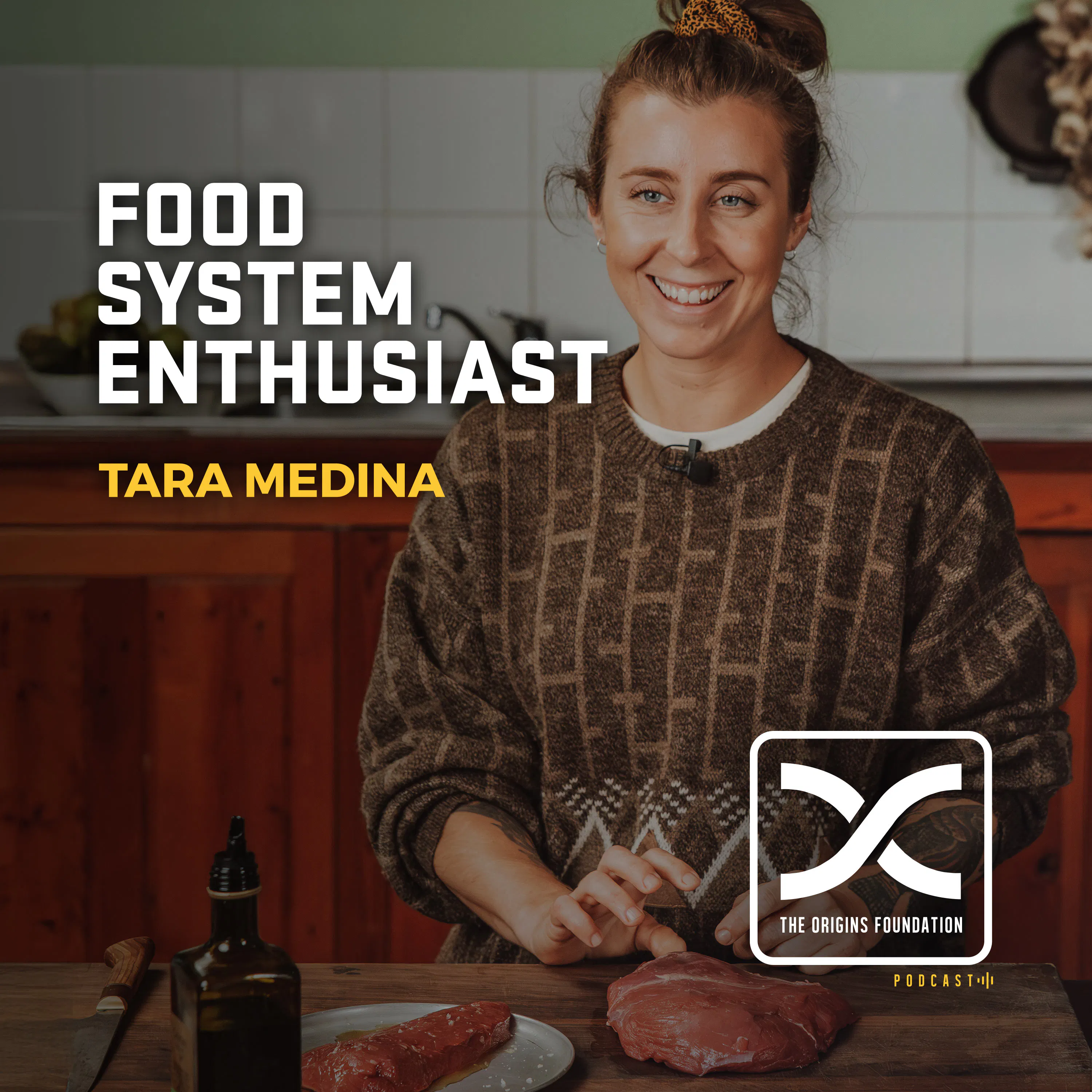
The Origins Foundation Podcast
Episode 625 - Tara Medina || Food System Enthusiast
00:50:50
Tara Medina, cofounder of Australian based wild venison company ‘Discovered Wild Foods’ sells “quarter beasts” of Samba deer sausages, tenderloins, steak cuts, and more. Tara was introduced to Robbie via their favorite pie maker Jo Barrett. Tara joins Robbie to talk about the wild foods economy in Australia, about being the first company in Australia distributing wild shot animals into the economy of Australia, and the whole concept of invasive animals being incredible resources for food in a country like Australia.
Loading summary
Transcript141 lines
- [00:00]
Narrator/Advertiser
Planning a fishing trip shouldn't feel like a full time job. With fishingbooker.com you can find and book the perfect fishing trip within minutes. FishingBooker.com connects you with trusted fishing captains around the world. Booking is fast, easy and secure with access to verified customer reviews, loyalty rewards and around the clock customer support. Everything you need to book with confidence is in one place. So head to fishingbooker.com and start planning your next fishing fishing adventure today.
- [00:30]
If you're a serious hunter and you haven't tried hex yet, this is the edge you're missing. Hunters have always talked about animals having a sixth sense, feeling you before they ever see you. Hex works by completely blocking your body's natural energy, helping you get closer without tipping them off. Most hunters don't believe it at first until they hunt in it. And once they do, it makes them believers fast. Go to hexhunting.com that's hecshunting.com and use code waypoint to save $20 on a full hex system.
- [01:00]
Robbie
Tara Medina is the co founder of Discovered Wild Foods. Discovered Wild Foods is an Australian based wild venison company. They sell a quarter of a deal, they call it a quarter beast in which you get all your cuts, your sausages, your mince meat, your tenderloins, your steak cuts. They've joined forces with Joe Barrett. Joe Barrett's been on the podcast before with Wild Pie, has the most amazing wild pie, wild boar sausage rolls, Sri Lankan goat curry pies, Flinders island wallaby pie. Just amazing stuff. I wanted to have Tara on because they're the first venison company really in Australia that's distributing wild shot venison into the mainstream food human consumption line market in Australia. Yes, Macropods has been there from a kangaroo perspective. Nobody's taken a step in there from a deer perspective, specifically samba deer. And so I think you're really going to like this. And for those of you all over the world, just an amazing utilization of resources in Australia. So enjoy. So five years ago there was a reason why I started this movement and the truth then is the truth now that we need to champion our narrative. We need to champion the truth around what we do and who we are. There's a sweet spot with a gun, you know, too heavy and it's a burden to walk with. Too light and you whipping it. Why is the project so important to the hunting community? It's, it's a. I think it's not.
- [02:39]
Tara Medina
Only important, I think it's.
- [02:40]
Robbie
I think it's vital. I think It's. It's just in time. It's like snakes and ladders. You guys are climbing the ladder and then somebody does something stupid and you just slide that. That is such an amazing analogy. Snakes and ladders. Yeah. You know, ivory. In. In my opinion, was the plastic of its age. Okay.
- [02:58]
Tara Medina
The expenses were going up. It goes a long way with families. We have families that do need it.
- [03:04]
Robbie
Let me close this door because I have a little wiener dog.
- [03:06]
Tara Medina
What?
- [03:06]
Robbie
You are. You're laughing because I said wiener.
- [03:10]
Tara Medina
I'm really glad you finished the sentence out.
- [03:13]
Robbie
I'm sorry the first happened.
- [03:16]
Tara Medina
Doing here today.
- [03:17]
Robbie
You're telling the whole world. So I failed in my introduction, just briefly before we started recording, to ask you anything about yourself, which is what I love about these podcasts, because I invite people that I get to know that I hear about and I honestly, I'll be completely honest with you, I don't tend to Google stalk them at all. So it's just like, hey, I'm going to learn about this person on the podcast as everybody else is learning about them, and we're going to dig down some rabbit holes and whatnot. I do know this, Tara, you have an awesome colleague in Joe Barrett.
- [04:05]
Tara Medina
Oh, yeah, definitely.
- [04:06]
Robbie
Shit, what a woman. Like, she is number one amazing, amazing chef. Her wild boar sausage rolls was so good. I think I had three a day. Yeah, that wasn't including the dim sum, wild boar dim sum, the wild goat, Sri Lankan curry pie, and the Flinders island wallaby red wine pie. I didn't. I'm sort of showing you a hand here in that. I had a lot of pies.
- [04:47]
Tara Medina
Yeah. Where did you try those?
- [04:49]
Robbie
I came to Australia in October for the Wild Deer Expo.
- [04:53]
Tara Medina
Oh, okay. Got it. So that. That's.
- [04:56]
Robbie
You didn't show up. Like, where were you?
- [05:00]
Tara Medina
We have a very distributed team. I suppose one of the things about Discovered is we are very much like mission aligned as an owner's group, but we pour a lot of our money into it because we all have a lot of things going on outside the business and it's very much our passion. And. And some people would say the goals we have are a little bit hairy and that it's a bit of a pipe drain. But we all kind of work in different fields around the country in order to really pour everything we can into this business.
- [05:41]
Robbie
Well, look, I think hairy is a very, you know, dare I say, very appropriate descriptor, so. Tara Medina, co founder of Discovered Wild Foods, welcome to the Origins foundation podcast. Super chuffed to talk to you. I Think what you guys are doing is incredible, especially in a country like Australia where I believe that is the key like to opening up a narrative conversation around hunting around sustainable use of wildlife. The abundant, like uber abundant resource that you guys have in Australia. Shockingly abundant resources. Nobody in Australia should ever go hungry resource that you have.
- [06:31]
Tara Medina
Yeah, we've, we've got, I mean it's kind of in line with the nature of our country in general. Like most, I don't know the, the geographic location of most of your audience, but even a lot of Australians. Global, global. Okay, so even a lot of Australians don't know that 70% of our food is exported in terms of farmed produce, you know, livestock, etc. So we're an over producer of food even when it comes to cultivation.
- [07:02]
Robbie
Look guys, I'm a hunter, right? And when I go hunting, I like to figure out how to get my trophies back home as expeditiously as possible. Well, you don't have to look much further than Safari Specialty Importers. We know that trophy importation can be quite a headache. That's why Safari Specialty Importer strives to make it as easy as and hassle free as possible. They have access to a bonded warehouse, you won't be charged storage fees and you get a dedicated team that's readily available and will update you at every step in the process. They'll even go one step further. Safari Specialty Importers is working with us and they are going to donate $100 from every shipment that they work with to conservation projects that include anti poaching, community development and wildlife conservation. At the end of the day, choose to spend your money with a team that's dedicated to you and is dedicated to helping show how hunting is a great conservation model. Hassle free logistics, fuel and conservation go with Safari Specialty importers. It is 2026 and my friends, big changes have happened in the world of firearm suppressors. The $200 tax stamp fee is now gone. Huge win for hunters, huge win for shooters, and a huge win for your wallets. If you're thinking about elevating your shooting experience and adding a suppressor, Silence Essential is the best way to shop. And you don't even have to get off your couch to do it. Go to silence essential.com, browse hundreds of suppressor options. They literally have all of the popular makes and models. Then their experts will walk you through setting up your account, creating a free NFA trust and then submitting your application to the atf. Once approved, Silencer Central ships your new suppressor directly to your door. That's when you're going to have to essentially get off the couch. It's a game changer, guys. You haven't done it yet. Do it. The old days of waiting eight to 10 months on a suppressor are gone. It's more like two weeks. Some have even gotten their suppressors in shorter timeframes. It's never been easier to start shooting suppressed. Get started today by visiting silencercentral.com it's really the simplest way to get your suppressors. Bushnell is eager to help you get set up for conservation success. That's right. They want to help you. The conservation and research community is dominated by good people doing good things and investing significant time and effort for the benefit of habitat and the species. So what do you need to do? Pretty simple. Send us your conservation story and or your conservation wish. Could be managing whitetails, could be understanding your environment or species or something else related to conservation. What would you be able to do if you had a great trail camera setup? We will select the best story every other month and send you a camera bundle. Cell camera, normal SD camera, SD cards as well as optics. Everything you need to get set up for success. I can't wait to see what you submit. You can email us, DM us, message us, whatever you want. We are not hard to find. Good luck.
- [10:12]
Tara Medina
So it's not super surprising that we're also extremely abundant in wild protein. And between the feral deer population, the feral boar population and the portion of the macropod population, so kangaroos and wallopes, the that are, you know, at dangerously overpopulated levels, we're talking 30 million probably animals that are, they're really like, they're doing more damage to the environment and potentially having a more painful end to life. Like a painful end to life that's brought around by suffering or nature or.
- [10:57]
Robbie
He's a bit of a cruel bitch.
- [10:59]
Tara Medina
You know, she can be. And so can we when we don't, when we don't appreciate what we have or when we scale food systems that, you know, intentionally or as a byproduct create a lot of harm and a lot of stress. So it's kind of up to us to, you know, work with what we have. And I really think Australian wild protein is one of the most overlooked resources in this country.
- [11:29]
Robbie
Yeah, 100%. So you're the co founder of Discovered Wild Foods. Tell me, is it like what. No, no, I know what it is. I want to know why. Why did you decide like, what was your business before you Go into the food space.
- [11:44]
Tara Medina
You believe it or not, it was two things, neither of which correlate or necessarily make sense. Which is probably why working on discoveries is natural next step. So I can't come from a really traditional business background. You know, I went to law school. I worked in strategy consulting at a big firm. And while I was doing that, I started a music festival with two of my best friends and we were just random.
- [12:14]
Robbie
Totally. Yeah. Totally in line with law and strategy and whatnot. Yeah, I like that.
- [12:19]
Tara Medina
Yeah, yeah, was always. Was always. Was always the black sheep. But we started a party and it grew organically over time. It started in a very haphazard fashion, but today is something we're quite proud of.
- [12:34]
Robbie
And you still wrote a mute vegetable.
- [12:37]
Tara Medina
Today we run it. We still run it today.
- [12:40]
Robbie
And where is this music festival?
- [12:41]
Tara Medina
It's on the Murray River. So on the border that defines the border between New South Wales and Victoria. Um, there's a great big river and.
- [12:50]
Robbie
Yeah, I. I saw it in our. I saw it in October. I did a. A whole road trip. I started Adelaide, went all the way up to Mildura, down to Rushworth. I stayed in a Half star motel in Rushworth, which is. It was amazing.
- [13:11]
Tara Medina
I love. They went for the Half star.
- [13:13]
Robbie
Jeez. It was. I don't think they did. I gave them the half star. I don't think I had any stars. But anyway, I was lucky to go on the Murray and see, like, the differences. It was pretty cool.
- [13:24]
Tara Medina
Anyway, so, yeah, we started this little gig on the Murray and I think one of the byproducts of that is I saw an example of where, you know, business can meet purpose, I suppose. And, you know, you might laugh and be like, oh, like run a festival. Like, does it have purpose? But, you know, we got to be creative, we got to make community. We made decisions purely based off passion.
- [13:52]
Robbie
What you love.
- [13:53]
Tara Medina
Yeah. But in order to keep doing our passion, we had to make it commercially viable. And that was a real. A real different tact to what I'd seen in business, which was this is about making money. It's a means to an end. You know, every decision is kind of like quite a black and white one. And through doing the festival, I definitely learned you can have both. And at the same time, my best friend that I started out with, who is my co founder in, discovered he taught me a lot about country Australia. So I grew up traveling the world with my family. I was very lucky to do that. But I lived in a lot of rustic places, like in the Middle East. And I lived in a lot of big cities like, like in Southeast Asia.
- [14:38]
Robbie
Coming from Australia, that's like your home city in Australia.
- [14:42]
Tara Medina
Home city in Australia now is Barren Bay. Okay. It's barely a city.
- [14:46]
Robbie
It's more barely a city. Yeah, yeah.
- [14:49]
Tara Medina
But Billy, my co founder, Billy Stoughton, taught me a lot about country Australia, including hunting. So we lived in Melbourne at the time. He grew up in the Upper Murray again, the Murray, and you know, would bring back like, like, like ducks or bring back venison. And I'd never really tasted game, but I, massive foodie, loved to cook. And we, I learned more about, you know, the issue, the scale of the, like, available protein. And we'd always say it would be an amazing business. But at the time, commercial harvest of deer in Victoria, specifically the state where all the samba are, was illegal. You could hunt recreationally, but you couldn't sell the protein. Then in 2019, PrimeSafe, the meat regulator, brought in a scheme for commercial harvest because the invasive population was just getting so bad. At the time, the estimates were about 1 million. Today they're more like 2. And we say, great, cool, it's legal now. Let's start this business. And we went at it with all the vim and vigor in the world, but, like very little clue when.
- [16:04]
Robbie
Let me ask this question. Had Billy taken you hunting it at this point?
- [16:09]
Tara Medina
Yes.
- [16:10]
Robbie
Okay.
- [16:11]
Tara Medina
Yeah.
- [16:11]
Robbie
So. And you were okay with it? You were like, no problems.
- [16:14]
Tara Medina
Okay, okay, no problems. I would not call myself a great hunter. I'm nowhere near a Joe Barrett.
- [16:21]
Robbie
If anybody calls themselves. If Joe Barrett calls herself a great hunter, we need to call her out.
- [16:27]
Tara Medina
Well, that's true. And she would never.
- [16:28]
Robbie
It's a great hunter. And Joe wouldn't. Jo wouldn't exactly.
- [16:31]
Tara Medina
She's probably the most humble human being who's ever walked the face of the earth. But, you know, she, she is, she's a hunter. I'll put it that way. I, I wouldn't, I wouldn't describe myself as such. I, I think I'm more of a food system enthusiast.
- [16:47]
Robbie
I like that. But yeah, podcast that. Food sustainability enthusiasts. I like it.
- [16:56]
Tara Medina
Billy had taken me hunting. We really wanted to have a crack at this. I don't think anyone believed we would be able to create much demand for wild shot venison in a huge.
- [17:10]
Robbie
At this point, let's just say, let's just call this 2020. Had anybody put any wild gain from an Australian perspective into the food chain in Australia, I thought could get like kangaroo tail stew.
- [17:26]
Tara Medina
Yes. Yeah. So kangaroo was the only example, and there was one company, so Macro meats, which still exists today, basically has a more or less global monopoly on human consumption. Kangaroo. And they'd been in grocery stores for a couple decades. Um, and, you know, all credit to what they built, but they never really made the effort to evolve the story of like, why eat it? And I think for a lot of Australians, the perception of kangaroo meat is it's for university students and your dog. You know what I mean?
- [18:07]
Robbie
Yeah. There was no marketing. There was no marketing of like, this is really good meat. Fit in with the organic market, the locavore market kind of scenario.
- [18:16]
Tara Medina
Yeah. Like, they have, they have put. Made some pushes into fine dining with their, like paru, like high. It's what they call their elite brand. But they're up against it in a couple ways, which is one, you know, it's all about what the mainstream thinks. And to the mainstream consumer, it's a cheap grocery meat to it's kangaroo. Like, I eat kangaroo. I'm not going to say it's bad, but if you don't like something that's quite gamey and a lot like at the tip, tip top of challenging to cook with, then you might struggle, you know, like, it's a. It's a challenging protein. And the third is just the preconception, I think, of the, the industry and, and the meat. When it came to venison, I think most Australians didn't even know that it was an option domestically, like. And the, the actual penetration of people who tried it or knew that it was edible or knew that it was available was next to zero. Like it was really hunters and people who grew up country and eating deer because it was a byproduct of trying to clean up the paddock for. For their uncle or their dad or whatnot. Yeah. So a lot of people didn't think we would be able to create any demand. They're like, maybe you'll get a couple chefs in fine dining and that will be it. And also by the time we'd established a supply network that could get us some meat, had a facility that was approved by prime safety process. It was April 2020 and the pandemic hit and our first horizon of customers, which were all chefs, you know, were fighting for their lives to stay in business. So we had a really challenging first kind of two years in business before hospitality started opening up more. We did what we could in consumer online, but we had, you know, one cold chain in Australia is extremely expensive. Like, it's a geographically very spread out country, low density. So sending refrigerated boxes is quite dear and quite dear. That's a good pun. But we, we shipped some of our first cartons of meat just like with. With a couple ice packs in there in unrefrigerated transport, just hoping for the best. And yeah, that feels like a long time ago now, but it really wasn't very long.
- [20:47]
Robbie
Sure.
- [20:47]
Tara Medina
And we've managed to build friendships with the likes of Joe Barrett and Markie Lebroy, who are both now part of the business, and they have been really, really critical in helping us understand how to overcome the barriers to entry. For your average person who wants to make a good choice ethically for the, you know, the quality of the death of an animal, I would say ethically, they want to make a good choice from the sustainability of the protein, they want to a choice from the nutrition of the protein, but they're a little apprehensive about trying something new. Joe and Mark really helped us understand, you know, it doesn't just have to be affordable, it doesn't just have to be healthy on paper. Like you need to make people feel like it's not even a decision to eat it. And Wild Pie and those products you referenced in the beginning that Joe has created, partly because she's an amazing chef, but they understand that this is just accessible formats. Like when you see a meat pie, especially in Australia, because it's eponymous, you know what to do and you're not worried about what you're going to taste. So that's been really instrumental in expanding our range and making it more accessible and getting more people talking about us because of the format, because it can show up at their local publishers or it can show up in a bush shop. Just kind of makes sense.
- [22:19]
Robbie
Yeah, I thought I saw her that you guys had just recently gone into a couple of stores in New South Wales and people could just open the freezer and be like, oh, here are her sausage rolls, here are her pies. And I. And I'll be honest, I was incredibly jealous. I was like, send some to Tennessee. Come on, man.
- [22:40]
Tara Medina
Well, we'll. We'll do our best. I would love to be in America. I think, I think that that's the thing is, you know, you look at in Australia a premium, like ground ground beef or lamb, like lamb minced per kilo, you're looking at $20 a kilo Australian dollars. And then I see wild venison or wild shot venison in the States for sale, equivalent size for five times the price. So as a Nation. I think the United States really like values wild shot game and Australia has a long way to go in understanding that.
- [23:27]
Robbie
Yeah, we've got a different food system here. Obviously none of our native species can be used in the food chain at all. It's just part of the model that we have. But Texas has every exotic under the sun and they are certainly. There's a new guy I'm sure you know, if you've heard of him, a guy called Mike Robinson. He's a chef out of the uk. He has just my immigrated to Fredericksburg, Texas and is absolutely like building. He's the guy. He is going to be building a restaurant, a sort of feel to fork kind of table experience. But then he's also going to be figuring out the intricacies of getting this food into the food chain. The only company that has obviously done it extremely well and, but they have an invasive species that they are reducing similar to Australia is Maui Nui venison. Jacob Muse out of Hawaii.
- [24:29]
Tara Medina
Yeah, we've been chatting with Jake, trading some stories.
- [24:33]
Robbie
Yeah, it's just a brilliant system. Right. And, and the, the, the, the threshold that Mike has to get over that Jake has already gotten over is the presence of a vet. Actually. I think he needs two veterinarians certifying the meat right then and there, inspecting and certifying. So yeah, it's a, I think it's a. To, to your point, I think it's an undertapped market here in the United States. I think people actually don't have a clue of what wild Denison actually can do. And the ability to have options, tenderloins, back straps, you know, French cut roasts, those kinds of things. Those are only available right now DTC through essentially Jake and Maui Nui.
- [25:19]
Tara Medina
Yeah, yeah, completely. Yeah. And we'd like to change that. Like I think America is the market that is the most exciting unlock for Australian operators. I mean definitely for our business. But anyone, I guess who wants to do it because we simply have too much to consume domestically and if we can feed the world and in the process create a much more robust Australian game industry where harvesters can go full time, are well supported, where landowners are spending less money dealing with invasives, where local councils and governments are spending millions of dollars less on population control, knocking off animals from helicopters and letting them die in a paddock or in the bush and just create more issues with wild dogs, wild cats and all kinds of them and then that just feels like a win. Win.
- [26:11]
Robbie
Yeah, 100%. Like any venison that you Eat in any restaurant in the United States is probably farm raised elk out of New Zealand. And it's like you're not that far away. You know, it can't be that hard. I don't know, I'm not, I'm not in the, you know, entrepreneurial space. But.
- [26:34]
Tara Medina
Well, we're trying our best to find out.
- [26:39]
Robbie
So tell me a little bit about the process in Australia. So obviously we have a bunch of Australian listeners that may, some of them may have only now heard of discovered wild foods through you. Do you have a. I remember Joe saying like if you asked, hey, I'm eating this fallow deer steak. It's traceable like all the way back to where it was shot. Can you explain that sort of like again feel to freezer kind of model?
- [27:06]
Tara Medina
For sure. So essentially under the food Safe and food authority regulations, every single animal that's shot is tagged. And that tag identifies not only the license of the accredited harvester who harvested that animal and the date and all of the weights and like that kind of stuff, but it also includes a pick code. So property identification code. And those codes are, they're short form identifiers of actual addresses. They could be quite broad. Like it could reference a property that might be a couple hundred acres. But a couple hundred acres is still fairly specific if you're thinking about like a livestock farm that's the same size as, you know, saying this comes from Bundurong farm, et cetera. So the level of traceability is really based off that pick code. We've always dreamed of setting up traceability to the level you say, where we actually put QR codes on every piece of meat we pack so that the consumer can like see where it came from. But we mainly haven't done it because we don't want to disclose private property. Because in Australia all deer have to be shot commercially on private property. And we don't want a bunch of kind of like wannabe shooters rocking up at a place that say we know there's deer here for hunting and we want to maintain the privacy of our land.
- [28:33]
Robbie
Sure. So the people that shoot, they have to be inspected, they have to be licensed. The processor needs to be licensed, as I understand, has an extra layer to become wild game process license.
- [28:52]
Tara Medina
Right, correct. So it's interesting in Australia, even at the very, very peaks of the, the wild boar and kangaroo industry, which used to be a lot bigger than it is today, there's always been like a separation of the business of being a harvester and the business of being a processor. So all harvesters are essentially individual contractors who maintain their own license, set up their own equipment and run their own hours. Like, you know, they're not on a paid salary. They get paid like you eat what you kill, right?
- [29:33]
Robbie
Yeah, you get paid by the kilo, the kilos.
- [29:35]
Tara Medina
You get paid by the kilo if you, if you shoot something outside of spec, like an animal that's condemned because it's unhealthy, or if you, you know, it's sprayed with body shot and was killed unethically, like you don't get paid for that. So in some ways the model really incentivizes one, the right behavior, but to the best of the best, because you're not going to spend substantial amounts of money on your vehicle, on your scopes, on your, you know, thermal cameras, if you use them on your rack and your winches and all that stuff, unless you think you can get your money back because you're a really good shooter and that you can get numbers and you have access to the right properties. So I think in some ways that independent model for the harvesters being contractors has worked quite well. But we definitely think more and more about how we can integrate a more kind of enduring model and think about bringing in harvesters like, fully embedded in the business. They have a minimum guarantee in terms of their salary and incentives on top, because otherwise there's always this push pull of shooters who actually are quite good, wondering if they should go full time, you know, concerned whether the demand is going to be there, concerned whether they're going to be able to get consistently enough. Should they give up their career as a truckee or a dairy farmer or working for the government or whatever it is they do in rural Australia. And I think until we make that leap and really invest in saying we kind of back ourselves ahead of the curve and we'll make a market for it. The industry can never grow to its full potential. But yes, essentially harvesters maintain all their own accreditation, inspection licenses, access to property equipment, and then processors have their own separate license with the meat authority to either process game for pet grade or human consumption. You need to have specific licenses for the species you're dealing with, if you're dealing with kangaroo versus others. So we maintain two sites at the moment. We have a site that is where we receive all of our game and then we have a further meat processing facility which is specifically just for human consumption and value adding. That's where the Wild Pie Pie factory is, where Joe is the queen of that site at Beechworth. And the reason we do that is because we know that there'll always be a proportion of game we receive that is not at the spec that we want for human consumption. So we treat our receivable location as kind of a grading point where things kind of get the yay or nay. It's pet food or people food.
- [32:22]
Robbie
Okay. Do you find you obviously have just said that you've got your own facility that receives its own meat. I've heard in the. In the past in conversations with like Anthony Rowe, who's got Dharma Dharma Venison, that the bottleneck to more wild game being distributed is the processor himself or herself, I. E. They don't have the accreditation, they don't want to get accredited. It's too much money. And he's saying, well, if there was, you know, there's essentially one on this side of the state, there's one on this side of the state, there's nothing in between. So if somebody wants to become a shooter, wants to become a wild game, there's just very limited on the downstream end right away, where do we take it? Do you feel like that that is a bottleneck?
- [33:13]
Tara Medina
Not quite. I think the bottleneck's actually somewhere in the middle. So he raised a good point, which is, if you want to become a shooter, even if you're great, you're willing to invest in everything I just mentioned and go through that process, you will still be constrained by your geographical location in terms of the driving distance being able to deliver.
- [33:34]
Robbie
Right?
- [33:34]
Tara Medina
Correct. Because you have to have your animals loaded in and chilled to a certain temperature before sunrise. So if you can't get to a depot or a point of drop off by sunrise, you will be constrained in your ability to actually work. And in Victoria, there are much less drop off locations than there have been historically. For example, in New South Wales, rails in the kangaroo industry, because a drop application doesn't just have to be an actual processing plant or an abattoir, you know, per se. It can be a chiller box or basically a 40 foot reefer with hanging rails in it that shooters will fill up over time with animals and then trucks will come and collect them. So, you know, I agree with Anthony in the perspective, there's a bottleneck, but the bottleneck is probably more infrastructure out in the field in Victoria.
- [34:26]
Robbie
Mm.
- [34:26]
Tara Medina
Because Victoria's only had a deer industry since 2019. You know, let's say 2020, by the time people were ready. And we don't have a kangaroo industry really like we kind of do, but it's very different to New South Wales and Queensland, where there's quotas and fauna dealer licenses and, you know, much harvesting at scale. So in order for there to be more infrastructure in the field, there has to be investment. And it's not insignificant, right? Like the cost to put a 40 foot reefer somewhere and power it either with a generator, diesel or in fields and having a tenancy agreement for rent with the landowner and have an operator who attends that box because you still have to have someone that is logging everything in and out, doing all the paperwork, compliance, the PIC codes, et cetera. So the bottleneck has been the leap of faith required from operators to say, I'm going to put a bunch of infrastructure out of the field and greatly increase the number of harvesters I can work with because they'll have shorter drive times. That make it make sense?
- [35:33]
Robbie
That completely makes sense. My next question is this is one thing that I think again is an avenue for the general public to accept hunting except the use of wildlife. Why is there not in Australia right now a Hunters for the Hungry program or you know, feeding the Homeless program in which there's obviously lots of deer shot. I can't, I've already got my freezes already full. And let's talk the recreational side of things, right? I've got, I've taken three animals. The landowner says, I need you to take another 10 animals. Yeah, why can't those 10, those extra animals find their way? And again, maybe it's this again. We've just talked about the infrastructure and stamping and laws to put it, you make it humans, human consumable for the homeless.
- [36:28]
Tara Medina
Yeah, I think it's a great point and it's part of what I try and hold myself to a reasonably high standard when it comes to eating meat to live by the principles of the business we've created. But sometimes I still get lazy, you know, and you just find yourself tapping into whatever food system exists and accepting it for what it is. But the bottleneck for us that I just mentioned with infrastructure is the same bottleneck with a program that you're talking about, which is its investment. So if we as a nation wanted such a program to exist, it's about making the investment to enable it. That investment would be in infrastructure, like the boxes in the field that I've just described, because it would be really difficult to bypass process. Right. Like even if you want to feed the homeless, you're not going to drop your health standards such that, you know, Joe Blow, who just shot a deer out in the paddock, can dump it at a Doorstep and get it processed without it having gone through the traceability. Right. Qa. Right. Licensing of that harvester because it would be a risk to the homeless person ultimately eating it, and it would be a risk to whoever processed it amidst other products and disease and whatnot.
- [37:57]
Robbie
I just think this is where Australia and all their rules, like, just stymie such an amazing opportunity. Like here in America. Like, I can go out tomorrow. It's deer season. I'll shoot a deer again. We have infrastructure. Right. So I can drive 10 km, 20 km to the local deer processor. Who has signed up with the state to say, I'm a Hunters for the Hungry person.
- [38:22]
Tara Medina
Yeah.
- [38:23]
Robbie
And I'll give them $50 to process the meat and it goes into the food chain. There's no.
- [38:29]
Tara Medina
That's amazing.
- [38:30]
Robbie
There's no vets. There's no stamping. There's no. Of this. Like, I'm sure they get inspected by the state to be a processor, a proper processor, but that's it.
- [38:40]
Tara Medina
Yeah. I mean, that sounds amazing. Yeah. Australia is the nanny state, I'll give us that. And. And it. It comes through. There are some times that you're really grateful for it, like when you have free healthcare and education and good responses to national disasters. And there's a lot of ways in which we do things right. But there are. There's definitely room for challenge. I think the thing that I would personally be most worried about is guaranteeing that animals are still being harvested ethically, I suppose, in terms of when it comes into a facility to be processed in a Hunters for the hungry channel. Sure. We can solve for that. It'll be very obvious to a processor whether you can process something or not. From a health and safety perspective. You can use a common sense approach. But I do. When you asked before, like, did you have a problem going out hunting for the first time? I didn't because I saw how, if I had a choice as a wild animal as to which death I would prefer getting. Breaking my leg in a fence, dying slowly, like starving or like drought. Like, no, I'd rather be shot in the head at 300 meters while I'm grazing on the edge of a bluff. And with a headshot so good that when we go and collect the animal, its blood is still full, you know, eyes have popped out, and I'm like, give me that death for sure. Like, I'll take that. But if. If there was a risk to that being part of the standard we hold ourselves to, that's the only thing that I would stand by Australia being In any state for is. Is ensuring that we can still make sure these animals still have a really noble death.
- [40:37]
Robbie
Yeah. You know, and again, this is where sort of. I don't want to say it's gray, but for instance, if I was to shoot a deer tomorrow and I knew my freezer was full and I was doing it for the farmer, the farmer says I've got too many does. I'm not a competent enough shooter to shoot in the head. Okay. Yeah, I know that. I'll shoot it through the shoulder.
- [41:05]
Tara Medina
Yep.
- [41:06]
Robbie
And it'd be a fatal inch. It'll be a fatal shot. And the deer will probably run 20 yards. It might just drop down there. Might run 20 yards or 80 yards or 100 yards, but it'll die.
- [41:18]
Tara Medina
Yeah.
- [41:20]
Robbie
Is that, is that any more unethical?
- [41:26]
Tara Medina
I don't think it's necessarily that. That much more. What I mean is, is more. There's been, there's been a lot of pushback on things like the kangaroo industry, for example.
- [41:35]
Robbie
Right.
- [41:36]
Tara Medina
And this is why I'm a bit precious about standards is the scenario you've just given. Look, if we were hunting and that happened, it's like no judgment. It's still, it's still far. It's still far better than the slow death of starvation, disease or injury. Right. But what the reason we have to hold ourselves to such high standards if we want the industry to ultimately be successful, if we want this amazing protein source to be more widely available at an affordable or a free price for the right cause. We can't promote any kind of risk of stigma. Because you look at the kangaroo industry, which was a lot more vibrant a decade ago than it is today. And the main reason for that is animal activists mainly in America saying that we are being unethical in harvesting of these animals because they might see like a Joey get shot or a video of where someone's shot a root and then it wasn't dead, so they clubbed it on the head. And those are taken to be like, oh, that's how it all is. Instead of that's an exception to the norm. And the outcome is, you know, animal activists being able to get the RSPCA to derange kangaroo as like an ethical protein. The knock on effect of that is that every pet food business in the US is deranging kangaroo from its recipes. And for a long time, a lot of the. The leather that's used to make sports shoes like Nike, Adidas, etc. Is kangaroo. Right.
- [43:13]
Robbie
There's stills still on a state level like California Bandit, Oregon Bandit.
- [43:17]
Tara Medina
So correct.
- [43:18]
Robbie
Because kangaroos are endangered, but now millions.
- [43:21]
Tara Medina
Of sneakers are using plastic instead of kangaroo.
- [43:24]
Robbie
No, it's ridiculous. The narrative is ridiculous what you're saying about that.
- [43:27]
Tara Medina
It's easy to think that always. Especially in the industry of kangaroos.
- [43:32]
Robbie
Yeah, yeah. Especially in the industry that we live in because we kill things. I totally get your perspective. We have to be above reproach.
- [43:44]
Tara Medina
Yeah. We have to set the bar of being like best in field is what we say. Because the risk is too high that something will be misinterpreted, that something will be stigmatized or used as a hurdle to what is ultimately our mission to help people eat more sustainable food.
- [44:09]
Robbie
I totally get it. Totally get it. So on the horizon, what's on the horizon for discovered wild foods, obviously you got Joe and Wild Pie, which is amazing. Yeah, I apologize. I have not eaten any of your other products. Only I could not, but I will the next time I'm in Australia. What else is. Tell me what else you have and then what else is potentially coming down the pipeline?
- [44:31]
Tara Medina
Yeah. So outside of wild pieces, all the delicious pastry based game products, most of our products are just traditional like cuts of meat. Like it's very similar to what Jake does with Maui Nui where they'll sell subscript subscription boxes of, you know, a quarter of an animal boned out and value added into all its component parts. So you'll get your burgers, sausage, ground meat, your tenderloin strip, like stir fry strips. Strips. You'll get some rump steaks, like some pies and some broths and bone broth as well. So we call that our quarter base box because it's really the same experience as going hunting and getting your quarter of the deer. If that's, if that's how you split it up. But.
- [45:16]
Robbie
And this would be all fallow deer or samba deer or both.
- [45:20]
Tara Medina
We, we exclusively work with samba. So even all of the venison that goes into wild pies, samba. And that's because we are Victorian focused, but also we just think it's the most delicious option. Some people might argue with that. You know, there are some people who really like their red deer, but I suppose for us we saw the biggest opportunity in samba. They're also fairly large.
- [45:48]
Robbie
Yeah.
- [45:48]
Tara Medina
Big animals, which makes.
- [45:51]
Robbie
Yeah.
- [45:51]
Tara Medina
Which makes the harvest model a little bit more favorable. But what's coming up for us in 2026, we're going to be launching a new brand that is going to be a direct to consumer brand called Real Wild. And it is actually a jerky Biltong meat stick company. So it's taking away what have been some of the last remaining challenges for us. I mean, Joe and Mark helped us go a long way with product market fit with just your average person and making these consumable formats. But making wild game shelf stable and in a format no one can really contest, which is like a meat stick or a biltong, I think is a huge unlock for us and we've seen it been successful overseas. We've also finally nailed down a recipe that we think you better have a.
- [46:47]
Robbie
Bloody good biltong recipe. You better have a South African working on that shit.
- [46:52]
Tara Medina
Oh, he, he is South African. He is very much South African. He, his, his like, he's so South African that his family actually used to run a game harvesting business in South Africa. So he is definitely into his wild protein. But yeah, I think Meepsteak is going to be a really exciting next chapter. Discovered in 2026 and otherwise we're just looking to up the game. We want to bring on more harvesters, we want to bring on more landholders and really encourage anyone who's interested in joining the industry as a chef, as a hunter, as a landholder to reach out.
- [47:34]
Robbie
Amazing. So when do you think the real wild will come out?
- [47:38]
Tara Medina
Will come out probably around Q Q4. So like that's. What's that? That's April. Yeah, April 26th.
- [47:48]
Robbie
Oh, Q4 is different in our world. Q4 in our world is October.
- [47:53]
Tara Medina
So Q4, that makes a lot more sense. But we run a financial year, so I'll say Q2. Q2 us.
- [47:58]
Robbie
Perfect.
- [48:00]
Tara Medina
But yeah, April. April 26th.
- [48:02]
Robbie
Well, let us know when it comes out. We'll be happy to talk about it. And Amazing. See if we can buy some and send it to my family. I've got some family in Sydney that we can send some to and get.
- [48:15]
Tara Medina
Oh, we definitely can do that.
- [48:17]
Robbie
Yeah. A hundred percent.
- [48:18]
Tara Medina
Absolutely.
- [48:19]
Robbie
If people are interested in learning more about discovered wild foods, where can they go? Where can they buy some food?
- [48:27]
Tara Medina
If you're in Australia, just head to our website. It's discoveredfoods.com the best place for updates on us is, is either the newsletter you can subscribe to there or our Instagram, which is Discovered Underscore Foods.
- [48:42]
Robbie
And for the rest of the world, sorry for you for being.
- [48:45]
Tara Medina
Yeah, sorry guys. We'll find our way. We'll find our way overseas and hopefully into the US soon.
- [48:52]
Robbie
Hopefully. And just keep us in mind, we'll be happy to help introduce you to whoever we know that's just part of our organizational mission. We are a, you guys mean, tide rises, all ships kind of organization. So anybody that in our space that does good shit, and we're interested in partnering with them and them being a part of this family. So consider us willing to help.
- [49:17]
Tara Medina
Thank you so much.
- [49:18]
Robbie
Just because the wild boar sausage rolls.
- [49:23]
Tara Medina
We'Ll find a way to get them to Memphis. I mean, there's millions of them in Texas. Maybe you gotta find your own recipe.
- [49:29]
Robbie
I think. No. Well, Joe did sneakily tell me the secret to her wild boar sausage roll. And I did try and trick her on the podcast because her podcast is coming out here soon or would be out by the time this podcast is out.
- [49:43]
Tara Medina
Yeah.
- [49:44]
Robbie
And she started to tell it, and I said I thought this was gonna be a secret joke. You gonna tell the world now? And then she.
- [49:50]
Tara Medina
She's. She's not a. She's not like that. She's just a giver.
- [49:54]
Robbie
Yeah, she was awesome. She was super awesome. So, Tara, pleasure. Pleasure to meet you, and I look forward to the next time our paths cross.
- [50:04]
Tara Medina
Awesome. Thanks, Robbie.
- [50:07]
Robbie
Well, that's it for today. Appreciate you listening. As always. Leave a review, share it with your friends, and most importantly, do what's right to convey the truth around hunting.