← The Origins Foundation Podcast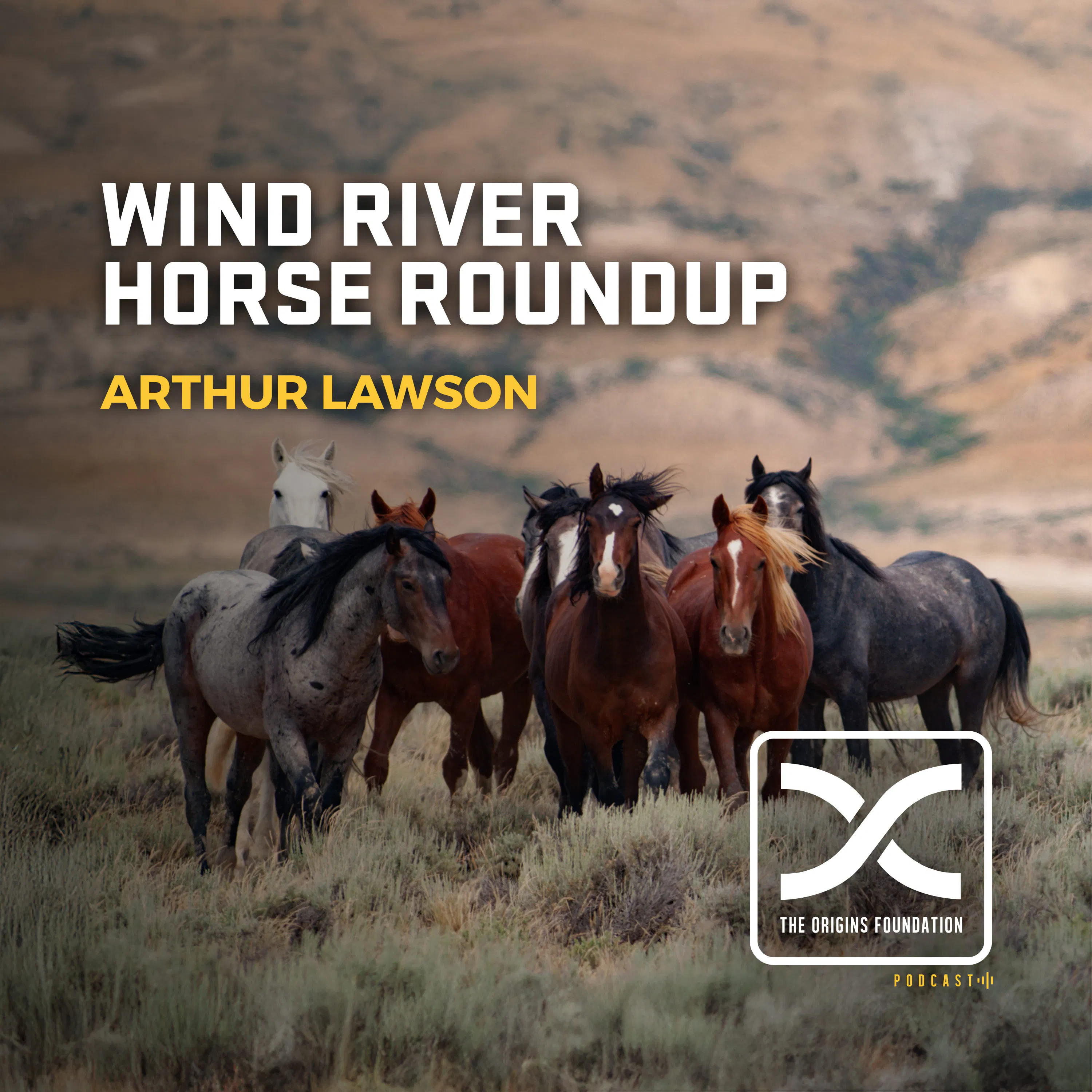
The Origins Foundation Podcast
Episode 629 - Art Lawson || Wind River Horse Roundup
00:45:47
Wild Horses across the range in the West are likely the most significant wildlife issue facing wildlife and habitat across the western range. Art Lawson, Director of Shoshone and Arapaho Fish and Game in Wyoming shares the amazing efforts they’ve put in removing feral horses in the Wind River Valley. The council, the community and the team, facing a lack of funding, rounded up almost 7,800 horses and restored acres of habitat in the process, showing what happens when you manage problem species accordingly.
Loading summary
Transcript155 lines
- [00:01]
A
Art Lawson is the director at Shoshone Arapaho Fish and Game Reservation up in Wyoming. And I wanted to have Art on this podcast. We've been trying to connect for quite some time about the amazing efforts that they put in, in removing feral horses from their landscape. The Shoshone Wind river area is 2.2 million acres of pristine wilderness. They say it's like going back in time, back into the 1800s, and the horses were having a massively detrimental effect on the ecosystem and wildlife specifically. And so the council, Art, the team, the community, all banded together with very simple measures and a lack of funding and rounded up almost 7,800 horses. And the effects were almost immediate in terms of elk movements, mule deer migrations, restoration of habitats, you name it. And so it shows that the example that we say, you're not going to eradicate horses, they didn't eradicate horses. They managed them appropriately. And the effect was dramatic for everybody involved, including the feral horses, but most importantly, the people of the reservation and the wildlife that they depend on. So enjoy. So five years ago, there was a reason why I started this movement. And the truth then is the truth now that we need to champion our narrative. We need to champion the truth around what we do and who we are.
- [01:39]
B
There's a sweet spot with a gun, you know, too heavy and it's a burden to walk with. Too light and you whipping it.
- [01:46]
A
Why is the project so important to the hunting community?
- [01:50]
B
It's. It's a. I think it's not only important, I think it's. I think it's vital. I think it's. It's just in time.
- [01:55]
A
It's like snakes and ladders. You guys are climbing the ladder and then somebody does something stupid and you just slide. That is such an amazing analogy. Snakes and ladders. Yeah. You know, ivory, in my opinion, was the plastic of its age. Okay, okay. The expenses are going up.
- [02:12]
B
It goes a long way with families. We have families that do need it.
- [02:16]
A
Let me close this door because I have a little wiener dog. What? You. Are you laughing because I said wiener?
- [02:21]
B
I'm really glad you finished the sentence out.
- [02:25]
A
I'm so happ.
- [02:27]
B
What are we doing here today?
- [02:29]
A
You're telling the whole world. I think one of the best things about this job that I have, and I'm super humbled and grateful to have it and be able to do it, is that, you know, the podcast is such an amazing long form conversation medium because you can sit and talk and learn about the person that you've never met before. Like We've never met, Art. We've never met. We've been trying to get this penciled in because I thought I was a busy guy. You, my friend, when people say, yeah, in like three months time, like on this day, let's do it, then I was like, okay, we're going to make this happen. But what I'm saying is 3 hours ago I was talking about big elephants in Zimbabwe on a podcast, and now I'm having a podcast with Art Lawson, who has done some, some incredible things. I won't let the cat out the bag. Or should I say horse out the bag.
- [03:37]
B
Yeah, bury the horse.
- [03:40]
A
Art Lawson, welcome to the Origins foundation podcast. I'm so happy for you to be here. I'm so looking forward to chatting with you. And obviously, I think this is the beginning of a lot of things that we're going to probably do together. So get. Art, will you introduce yourself?
- [03:56]
B
Yeah. I'm Mark Lawson. I'm the director of Shoshone Arapaho Tribal Fishing Game on the Wind River Indian Reservation, located central Wyoming. I'm an enrolled Northern Arapaho tribal member. Lived on the reservation my whole life. I'm an avid outdoorsman. I spend most of my time in the outdoors on the Wind River Indian Reservation. If I'm not working it, patrolling or trying to make it a better place, I'm out enjoying the wilderness and everything that the Wind river has to offer from hunting, fishing, just, you name it, we have it. It's, it's, it's a unique area.
- [04:31]
A
I have heard, and you can correct me if I'm wrong here, that the Wind river area, the Wind River Range, is almost one of the last places in America that if you could turn back time and it'd be like the 1800s.
- [04:47]
B
That is correct. We were the first roadless area prior to any national forest or anything else. 26 years prior to the roadless area. Wind river was the first one.
- [05:01]
A
When was that, Aunt?
- [05:03]
B
That was back when Bob. This is one of Bob Marshall's first projects was reservation. So Bob Marshall got a lot of these areas closed and stuff to protect our natural resources in our wilderness area. It's, it's unique. I mean, if you want to, we have places. We have like over 260something lakes in the back country that most of those lakes don't see a person all year long.
- [05:32]
A
Oh, amazing.
- [05:34]
B
Yeah.
- [05:34]
A
How big is it? How big is it, Art?
- [05:37]
B
It's 2.2 million acres. We're the size of Yellowstone.
- [05:42]
A
2.2 million and that. And again, going back to who you are, your job is to manage those 2.2 million from a game wildlife perspective, that's your job.
- [05:53]
B
Manage it and protect it. Yeah, that's what I'm in charge with
- [05:57]
A
one person for 2.2 million acres.
- [06:00]
B
I have three wardens right now, an office manager, another secretary, and then we work with U.S. fish and Wildlife as our biologists on the winter reservation. And then so it's, you know, it's, I get a lot of credit for it, but I'm just the guy they put in the front because if it goes good, I'm the man. If it goes bad, I'm also the man that gets in trouble. So it's, it's a lot of responsibility. But I do have a team of unique people with the same passion I do to make it a better place. So I wouldn't say it's just for one man. It's, it's a, it's a team, it's a team effort.
- [06:40]
A
Look, guys, I'm a hunter, right? And when I go hunting, I like to figure out how to get my trophies back home as expeditiously as possible. Well, you don't have to look much further than Safari Specialty Importers. We know that trophy importation can be quite a headache. That's why Safari Specialty importer strives to make it as easy as and hassle free as possible. They have access to a bonded warehouse. You won't be charged storage fees and you get a dedicated team that's readily available and will update you at every step in the process. They'll even go one step further. Safari specialty importers is working with us and they are going to donate $100 from every shipment that they work with to conservation projects that include anti poaching, community development and wildlife conservation. At the end of the day, choose to spend your money with a team that's dedicated to you and is dedicated to helping show how hunting is a great conservation model. Hassle free logistics, fuel and conservation go with safari specialty importers. It is 2026 and my friends, big changes have happened in the world of firearm suppressors. The $200 tax stamp fee is now gone. Huge win for hunters, huge win for shooters, and a huge win for your wallets. If you're thinking about elevating your shooting experience and adding a suppressor, Silence Essential is the best way to shop. And you don't even have to get off your couch to do it. Go to silence essential.com, browse hundreds of suppressor options. They literally have all of the popular makes and models Then their experts will walk you through setting up your account, creating a free NFA trust, and then submitting your application to the atf. Once approved, Silencer Central ships your new suppressor directly to your door. That's when you're going to have to essentially get off the couch. It's a game changer, guys. You haven't done it yet. Do it. The old days of waiting eight to 10 months on a suppressor are gone. It's more like two weeks. Some have even gotten their suppressors in shorter timeframes. It's never been easier to start shooting suppressed. Get started today by visiting silencercentral.com it's really the simplest way to get your suppressors. Bushnell is eager to help you get set up for conservation success. That's right. They want to help you. The conservation and research community is dominated by good people doing good things and investing significant time and effort for the benefit of habitat and the species. So what do you need to do? Pretty simple. Send us your conservation story and. Or your conservation wish. Could be managing whitetails, could be understanding your environment or species or something else related to conservation. What would you be able to do if you had a great trail camera setup? We will select the best story every other month and send you a camera bundle, cell camera, normal SD camera, SD cards, as well as optics. Everything you need to get set up for success. I can't wait to see what you submit. You can email us, DM us, message us, whatever you want. We are not hard to find. Good luck. It sounds like you need like 10 wardens. Over three wardens.
- [09:54]
B
Yeah. I could use 200.
- [10:01]
A
Art growing up on the reservation. Give me an idea because obviously I have no idea. Like, I have no idea. I'm. I'm a proud American today. Became a citizen in 2013. Obviously didn't grow up in this country, but what was it like growing up as a kid? Was there plentiful wildlife? What would tell me a little bit about that?
- [10:21]
B
So reservations, especially in the United States, are not. It's really poor communities. There's not a lot of funding. There's not a lot of opportunities. It's rough. I mean, there's a lot of drugs, alcohol, high suicide rate. There's just not a lot of opportunities and possibilities to leave the reservation. So, you know, the Wind river was first established in the late 1800s and it was the Eastern Shoshones Reservation. A couple years after that, the government put the northern Arapahoe up here after a big massacre in Colorado. Then they decided to make him 50, 50. Ownership of all the land and natural resources of the reservation. So, I mean, you can tell it's pretty rough. It's kind of hard. It's kind of like you have Democrat, Republican, and then you have Shoshone and Arapaho. There's a lot of politics involved with it and stuff. But. But the landscape, unreal. You. We have desert, plains landscape with all your, you know, reptiles and everything else. And then you move into the high. Then it goes, you know, miles of this desert and then rolling hills and then straight up into the mountains that in our back country looks like Alaska. You know, it's. It's unreal, untouched, just phenomenal. The wildlife is better than Yellowstone. I mean, we have a lot of elk, deer, bighorn sheep, moose, wolverines, grizzly bears. You name it, we have it. Wind river has it.
- [12:06]
A
You got wolves as well? Art?
- [12:07]
B
Oh, yes.
- [12:09]
A
Oh, yes. Art. As a kid growing up, obviously you just painted the picture, you know, poor communities and whatnot. Did dad was there like a. There's obviously a traditional heritage tied to Native Americans and the land and the wildlife and loving it and belonging to it and the mystique around it. Did your dad, grandfather, are they embedding these things into you?
- [12:41]
B
Oh, yeah, of course. I mean, that's just the way a lot of us are raised. We're raised in. In the back country. We were raised hunting, fishing, surviving off the land. You know, my dad was a Vietnam vet, and so we spent a lot of my youth up in the mountains. Just, you know, it's. It's like a rehab up there. You can just get away from things, unconnect, unplug, and just, you know, just be one with nature and. And not have to be bum rushed with hundred or thousand other people in the same area. You can go up for weeks at a time and not see anybody. It's just therapeutic to be up there. And then, you know, when I was a kid growing up, that's all we did. We just spent all of our time up in the mountains and haven't stopped yet. And so now they pay me to be up there. So I love every minute of it.
- [13:40]
A
So coming out of high school, is this something you knew you wanted to do? Did you want to go into the wildlife side of things?
- [13:47]
B
Ever since I was a kid, I wanted a job to be in the mountains. That was my number one goal, was to be just. Any way I could get paid to be up there was worth it. I ended up being a federal police officer for the Bureau of Indian Affairs. And then a position came up. I mean, cut my wages in half. Took it in a heartbeat. And it was the best three years of my life, just being a warden, barely getting paid. Had to pay for my own fuel sometimes had to pay for my own bullets and was well worth it. Loved every minute of it, man.
- [14:23]
A
So you only got to be.
- [14:25]
B
Yeah, I only got to be a warden for three years. And then. Then I became director. So I've been director for eight years now.
- [14:31]
A
So you know what those wardens are going through and you know what they are looking for, how you can help them.
- [14:36]
B
Yeah, but they have the same passion I do. All my wardens enjoy the outdoors as much as I do, so it's not. I don't really have to teach them too much. I mean, it's.
- [14:47]
A
Yeah, it's not a teaching thing. It's more like I've been there, done that. I know the struggles. I'm going to help you as much as I possibly can because I know I've been there.
- [14:56]
B
Yeah, well, you know, the weird thing about the reservation, too. I'm related about everybody out here. They're all my family members, so I'm about related to the whole northern Arapaho tribe. And then we've got a lot of family members on the Eastern Shoshone tribe, too.
- [15:09]
A
So it's.
- [15:10]
B
I mean, the guys I hire are also ex Bureau of Indian affairs law enforcement. And so they know how to operate and very tactical. And then they know the areas just as much as I do. I mean, they love it as much as I do.
- [15:29]
A
Are there places on the reservation that you just are like, this is my place. If you're like, man, I'm super stressed out and that maybe it was tied to your childhood. Do you have places like that?
- [15:41]
B
Oh, I have a lot of places like that. It's not hard to find a lot of places like that with 2.2 million acres and hardly anybody on it. There's a lot of places, like me and my brothers, we'll go to certain places every year. We spend the majority of our time off still in the mountains.
- [16:00]
A
You have kids?
- [16:01]
B
Yeah, I have three daughters.
- [16:04]
A
Are they following in your footsteps or
- [16:07]
B
are the new generation kind of new generation? I do have two grandsons, and they are exactly like me. My oldest grandson. Yeah, I mean, you know, most kids play with toys or phones, iPads or anything else. He plays like he's ice fishing. He plays like he's hunting. Like we're trapping, doing all that, so.
- [16:31]
A
That's amazing. That's amazing. Are There any. Do you guys run any outfits or guides or anything like that on the 2.2 million acres?
- [16:41]
B
So for non enrolled people, non natives, it's fishing only. And so we do have several outfitters that do whitewater rafting. A lot of fly fishing. It's getting. Is getting big on Wind River Reservation. We have a couple backcountry guys that take people in the backcountry, hit those upper lakes and stuff like that.
- [17:05]
A
But no hunting. Hunting is only for east of Shoshone and North Rappaho people on the reservation.
- [17:11]
B
Yes.
- [17:13]
A
Are you from a. From. Obviously you are controlling hunting within your reservation, within the people in the community. How are you approaching that? You said you have Fish and Wildlife Service biologists that are helping you come alongside you. Are they undertaking population surveys? How does that look? What does that look like for you guys?
- [17:32]
B
Yeah, we do a lot of aerial flights. We're just now getting into infrared counts. It's. It's a lot better system.
- [17:38]
A
Oh, it's amazing. Thermal drones. Unbelievable.
- [17:41]
B
Yeah, well, we're already using actual planes because.
- [17:43]
A
Oh, planes. Fixed flights. Yeah, yeah, Big.
- [17:47]
B
But we started doing that with the feral horse count to get a better population density of how many horses that were on the reservation. And so now with the success of that, we. We started doing. We're going to start doing big on sheep counts with infrared. Our biologists were still doing aerial flights for the elk counts. I mean, it's. It's. I don't know, we could afford the infrared count on elk and everything else because we have abundance of elk on the reservation. That. It's pretty unique area. You know, we've got herd just like you see in elk refugees of a thousand or two thousand. We have that everywhere on the reservation.
- [18:25]
A
That's amazing. It's amazing. So let's go to the. So the reason I wanted to have you on here and you've been on some other very big podcast, right? You are meat eater, right? Yes, I wanted to talk specifically about horses. We are currently undertaking a wild horse documentary in Arizona and using Arizona Heber river as a test case example of horse management or lack thereof and what that looks like on a general, broader landscape scale across the West. Well, as I was digging into the research behind the documentary and whatnot, I kept hearing about this very proactive approach by a guy called Art Lawson or Art Lawson and his team and your team. And I was like, wow. I was like, nobody's been bold enough to do what you did. And so I want to. I don't want to dive Right into what you did. But I want to understand what led you to this point because. And that's why I sort of set the tone. Like, you've been on the reservation your whole life. You've been engaging in the outdoors your entire life.
- [19:44]
B
In.
- [19:44]
A
In the Wind River Reservation area. Had you, before you got into this position and was in the. And were in a position to make these kind of decisions with everybody else in the team. Had you noticed that you had a problem?
- [20:01]
B
Yeah, everybody noticed. It's when you were tribal members would go up to harvest enough elk to survive the year and stuff, you would have to compete with the horses. They would just be in the way. There would be, you know, a couple hundred horses pushing the wildlife away. We were starting to see wildlife not in their wintering habitat areas because of the horse population. They were just removing a lot of the wildlife off the reservation. And then when it really became a concern is when people were up 10,000ft trying to harvest their sheep, their trophy animal. They'd get to the top of a mountain and then see abundance of feral horses up on. On top in the sheep country. And so, you know, it started becoming an issue. And then a lot of the ranchers and everybody else, the livestock producers on the reservation, were losing a lot of their horses to the feral horses because they're knocking down corrals, fences, and everything else.
- [21:02]
A
And so where do we think the feral horses originally came from, Art?
- [21:08]
B
Well, so we call them feral, not wild, because at one point in time, a lot of people own these horses with technology, four wheelers, motorcycles, everything else. People didn't have to saddle up a horse to push cattle or do anything else. So it's, you know, if you look at the average cost of. Of a horse a year, you know, you're looking between five to $9,000 a year per horse. And people just, you know, it was cheaper, easier route to start using motorized vehicles.
- [21:40]
A
So they just let their horses go or they just got out, or they just were like. Yep, just let them go. Yep.
- [21:47]
B
Yeah. You know, and a few just got loose. It happens, you know. Yeah, some just run away and.
- [21:53]
A
But they reproduce.
- [21:54]
B
They reproduce so fast, it's hard to manage them or to keep track of them and stuff. So, um, you know, people, what are
- [22:02]
A
we talking about in terms of growth rates on horses up there?
- [22:06]
B
So every four years, population doubles. So we were.
- [22:11]
A
Wow.
- [22:11]
B
Yeah, we were getting pretty close to having 20, 30,000 feral horses running around on. On 2.2 million acres.
- [22:19]
A
So obviously you're seeing things. People are starting to Notice things. Livestock producers are like, hey, there's, there's an issue. Are these, are all of these things floating up? Are you. You're at this time the director? Are all of these things starting to bubble up? You're starting to hear them more and more and more.
- [22:37]
B
Yeah, you know, like you said, I'm a busy man. I'm not just the director. Tribal fishing game. I'm also one of the livestock officers on the reservation too. So I have to deal with all the livestock stuff that happens on the reservation. And, and so we get up. We're starting to get a lot of complaints in the office of livestock producers trying to release their cows in the summering range. You know, the three to four months that they leave them out there and then bring them back for the winter. And cows are coming back really skinny, not producing, not making any money. You know, they're just having a hard time putting weight on this. Yeah. So everything leads to, you know, there's just too many horses from the livestock that we manage and also the wildlife that we manage too.
- [23:23]
A
Did you see any effects on the range itself from the horses?
- [23:28]
B
Yeah, a lot. I can't explain.
- [23:32]
A
It's funny, if you're not watching this on YouTube, you're looking. Art's looking at me like, robbie, are you crazy? Like you're asking me dumb questions. Because it's like obvious that.
- [23:42]
B
Yes, well, yeah, it was so bad that we, the Bureau of Indian affairs, the councils, both councils, Shoshone and Rappah, we were again, just eliminate livestock production on the reservation.
- [23:56]
A
Wow.
- [23:57]
B
There was not enough for wildlife, livestock to compete with the horses. So we were pretty much at a point where it was either we keep the horses and no livestock and no wildlife, or we get rid of the horses and we keep our wildlife and our livestock. And you know, we're. Right now we're in a position that after one hundred and something years, we're finally bringing back buffalo on the reservation. And we want to get to a point where we can release them and tribal members can traditionally hunt them like we used to and then move off them like we used to. But what was the point of releasing buffalo if there was no feed? Then we would have issues with the state because our buffalo would leave the reservation and just, I mean, wildlife does not stay in one area. Like, like livestock, you know, they, they migrate, they move around and everything else. And so what would be the point of releasing buffalo if there was no forage for them to eat?
- [24:55]
A
So in getting to this decision, are there, are there people in the on the reservation that are like, no, we love the horses, keep the horses.
- [25:05]
B
Not really. There might be a handful, but most tribal members were traditionally known as outdoorsmen, you know, and then we became livestock producers, cowboys, you know, it's. There wasn't a very big pushback.
- [25:25]
A
What you're saying is there aren't any anti roundup horse fanatics on the reservation?
- [25:33]
B
No, we're pretty lucky. I mean, I know it's an issue everywhere else, but we're pretty lucky. And you know, but we also have the results to prove that it's. The landscape is better without them.
- [25:48]
A
So tell me, so walk me through, so walk me through this. What happened? You got to this point, do you call a meeting of the tribal council? Do you have a council? Is it a council of elders? And said, okay, this is what we're going to do?
- [26:03]
B
Yeah, it was, it was the intertribal business council. Six members from eastern Shoshone, six members from northern Arapaho. We went in with us fish and wildlife biologists, explained the situation, informed them what we needed to do.
- [26:17]
A
And when you explained the situation, what are you saying to them? Are you. How many horses did you have?
- [26:24]
B
We had around 8,000 feral horses roaming the reservation. We, we had a lot of pictures. We have a really nice presentation that we do. You know, we, we didn't want to. It's not like we really had to inform them of the issues. They knew the issues already. It was just the, it was the, the timing of the biologists, the livestock producers and the tribal hunters all getting together, making a big team effort to get this put push forward and moving through. It was, it was a lot of the community that was supporting it too.
- [26:58]
A
So 8,000 horses on the reservation and your proposal to the council was what,
- [27:03]
B
to remove as many as possible.
- [27:07]
A
Oh, it wasn't even a number. It was like, we're going to go out and get as much as we can.
- [27:11]
B
Yes. So we started. So we don't get funding. Tribes don't get funding. We don't get Pittman Roberts and Jingle Johnson funding. We don't get the sale of the tax of the ammunition. So if you look at every state tribal fish or fish and game budget, that's 50%, half of the budget. We don't get federal funding like that. We don't get hardly any funding at all, actually. It's a tough situation to bring up funds and get stuff moving along. And the progress that we have is unbelievable with what the conservation efforts on one river is pretty, pretty unique and. But we've we have a real. Like I said, it's a team effort. I mean, I team up with the state, I team up with the US Fish and Wildlife, I team up with other tribes. I came up as many people as possible to get projects and get things done. And not me, not I, but my team.
- [28:08]
A
Oh, sure, sure.
- [28:09]
B
Yeah. And so we started off with $100,000. We sell fishing permits. We have a conservation stamp. I used $100,000 of it. Not much. We were on dirt bikes, horseback, motorcycles, doing the best job we could do.
- [28:28]
A
And you're just putting the word into the community saying, we're going on a horse roundup. Anybody who wants to come, come help.
- [28:34]
B
Well, with that, we even started hiring tribal members as contractors to come out and help us. Um, like I said, it's very little funding. We didn't get much done, but it was an effort. It was a push to show everybody we were serious about it. So the state, the governor's office gets a hold of me and asked me how serious we are about removing feral horses. I was like, well, we're doing.
- [28:56]
A
We're as serious as you can get. Yeah.
- [28:59]
B
And so they actually pitch in some funding. And we, we did one roundup and we brought him 500 horses before noon. We started at 8 o' clock in the morning, and before noon we had 500 horses rounded up.
- [29:16]
A
In one morning?
- [29:17]
B
In one morning.
- [29:19]
A
Okay.
- [29:21]
B
And. But a lot of those horses were surrounding state land habitat areas. They were knocking down fences, just destroying mildew migration habitat areas and stuff. And so they helped pitched in. And then that led to one thing, led to another. I can't compliment on how great the Wild Sheep foundation has been for us.
- [29:45]
A
Amazing guys.
- [29:46]
B
Yes. Really amazing. They pitched big.
- [29:49]
A
Shout out to Gray Thornton and Corey Mason. And yeah, it's a phenomenal, phenomenal team that they have at Wild Sheep.
- [29:56]
B
Yeah, that horror organization was phenomenal, helping us get it started. So they pitched into some funding, and then the Bureau of Indian affairs pitched in quite a bit more, and then we got the project done.
- [30:07]
A
And when you said you got the project done, how many horses did you round up?
- [30:14]
B
Pretty close to 7,000, 7763, something like that.
- [30:20]
A
Holy smokes. You nearly, like if. You know, if your estimate was close to 8,000, you nearly got them all.
- [30:29]
B
You like to think so. But like I said, that population doubles pretty fast. It grows pretty fast. So whatever you leave out there, still producing. So if you see one mare and she has a colt beside her, well, there's one in her and there's Two more beside her.
- [30:46]
A
So when did this. So this roundup happened? When aunt?
- [30:52]
B
2022, 23.
- [30:55]
A
Okay. 2022, 2023.
- [30:57]
B
We started in 2020, but I don't know if you can really count that as a good start. 500 in the morning to maybe 100 in a year.
- [31:09]
A
Gotcha. Gotcha. But you ended up with over, you know, 7,700 horses.
- [31:14]
B
Yes.
- [31:15]
A
And this finished off. When did you think you finished off? Spring. End of spring of 23.
- [31:20]
B
Summer. Summer 23. So we decided to do it in the worst winter possible. We had like three feet of snow on the ground. We did a majority of it then. And this only took. We did like a month and a half in the winter and a month in the summer and we removed that many horses.
- [31:39]
A
So tell me what you've seen since. So you've taken the 7700 off. What's being the result?
- [31:49]
B
So in one area, we removed 1100 horses in one trap. They overran the calving area where the elk used to calf in the spring. And so we weren't seeing any elk in there that we've seen prior years. I mean, thousands of elk. In one year, about 1500 elk came back and it started calving out in that same area where they used to the bighorn sheep. We started in a huge area called the Washkee Reservoir and the Washakie Breaks. And it was just getting overrun with cheatgrass and trails from the horses and just demolished. There was hardly any forage there left less than a year from that winter to that spring. By the end of that spring, we had almost 2 inches of natural growth back from the forage. And the wild sheep were starting to come back in their wintering areas. And one thing we weren't seeing was a majority of mule deer that used to winter in that area because it was overpopulated with horses. Now we're starting to see a bunch of mule deer in there. We started seeing them. We took about a hundred kids from Wyoming Indian Middle School ice fishing up there. And it was phenomenal because we started seeing wildlife back in the area instead of horses. Yeah.
- [33:09]
A
That's amazing. That's amazing. And the landscape, you're saying places that, you know, had impacts, erosion, whatnot. Have you seen those turnaround?
- [33:21]
B
No. Yes, we have. But the damage was done.
- [33:26]
A
Yeah.
- [33:27]
B
And so we're probably going to spend more on.
- [33:30]
A
On restoring it.
- [33:31]
B
Restoring what? What we did on removing, which is fine. I mean, it's, you know, that's our job. That's what we have to do. If we want to keep our wildlife. It's something that we have to do.
- [33:43]
A
It's almost like you've got to. Now, I don't know if you've heard of any of those high intensive regenerative agricultural practices like Allen Savory. And bring in your livestock producers, bring your cattle, constrain them to a tight area, let them turn up the ground with their hooves. Dung comes down and boom, the system comes back.
- [34:03]
B
That and buffalo.
- [34:06]
A
Yeah.
- [34:07]
B
Phenomenal for that.
- [34:08]
A
Yeah.
- [34:09]
B
Our buffalo program that we have on a reservation is phenomenal. They're doing a great job over there. You know, not only do we have to bring, you know, cows and livestock in there, but now the tribes have the opportunity to bring buffalo back into the area.
- [34:26]
A
Are you already got bison on the landscape, buffalo on the landscape already, or have you released them now since we rounded up all the horses?
- [34:34]
B
It's a process. I mean, the buffalo is a process. It's nothing easy. There's a lot of issues with livestock and everything else. Private property owners and everything else. But no, the tribes are building their herds. They just finally had approval to start putting them under the river, our game code, so they'll be under our protection and we can treat them like wildlife. And so there's. It's nothing easy.
- [34:59]
A
I mean, slow steps, slow steps to
- [35:01]
B
the, to the goal 20, 30 year plan. Trying to get, you know, stuff done.
- [35:06]
A
Yeah, incredible. Incredible. So just like probably any wildlife around the world, you name it, wolves, elephants, you name it horses, you're in the same boat because you did an amazing job to curtail their population back in 2023. We're now 24 months post 2023. Your horse population is probably growing again, little unless. Unless you are actively managing it now.
- [35:45]
B
Yeah. And so we've allowed tribal members to also round them up and sell them if they want. Like, you know, we're for the community. We're for.
- [35:57]
A
That's an amazing idea. Let the community gain some economic benefit from them.
- [36:01]
B
Yeah, well, you know, let's break a few. Let's see if we can get them to ride. Let's, you know, our long term goal is to keep a few and maybe have some of our backcountry outfitters use them and then tell the story to their clients. Like, yeah, this horse was a feral horse. The tribes caught it, we broke it, and now you're riding it up on the mountain. You know, it's, you know, and we want, we do a lot of youth programs and try to get the youth involved quite a bit on the reservation. And so we want to build a facility where a tribal youth can work with these horses and do something with them. You know, it's not all about just we're bad guys and we want to get rid of horses. You know, we all ride horses quite a bit. We have to ride them in the backcountry to patrol for search and rescue and everything else that we do. It's just, you know, if you're going to call them wild, well, then we kind of need to manage them, you know.
- [36:50]
A
Yeah, yeah, yeah. No, look, and I think you made a very good point there, which is, I think the, the whole horse debate, and again, any, any wildlife debate tends to have a black and white component to it. I. E. Black get rid of all the horses. White don't remove a single horse, wherein probably 95% of us live in this gray area in between, which is we all recognize they need to be managed. And if you sat down with the white side and the black side, you say, do you think we should manage horses? Both of them would say, yes. Okay. But it's not a matter of eradication or non. No management at all. It's a, it's a balance. Like you said, we need to restore the ecosystem because our value is in the wildlife. It's not in the horses. But there is some value in the horses. So we're going to keep some around, we're going to utilize them, we're going to use them for the benefit of the community. Because at the end of the day, and people hate this, for wildlife to exist. And I'm not classifying feral horses as wildlife. Let's be honest. Let's just be clear here, okay? Before anybody jumps down my throat, for wildlife and feral horses to exist, they have to have value. If they have no value, they won't live there. It wouldn't be there anymore. If the elk didn't have value to the Shoshone or the Rappaho, you wouldn't have elk, you'd have cows. Or if the horses were more valuable, you have more horses. That's just how society works.
- [38:25]
B
You know, we started seeing that they were, they were kind of moving a lot of the milder migration routes. They had a big effect on that. And we've seen that in this last year that these areas, we haven't seen mule deer in 15 years. Now the population's coming back. We just weren't be able, we weren't able to see them because of the landscape, but they were getting pushed higher north in the high country where it's a lot harder for them to migrate back and forth and now they don't have to compete for food and some of the forages come back. And so that's nice to see. But we also started noticing too that they were pushing out our wild sheep. And you know, if you're an avid hunter, you know, the sheep have a huge problem already with movi and pneumonia and everything else like that. And you know, the population just keeps decreasing and stuff. And so that was one of our bigger efforts is to help sustain our big, big on sheep herd and, and give them their wintering grounds back so that they could survive. And you know, they have enough problems as it is, but come back to your wintering ground. Well, and then we weren't even seeing them in our winning ground. You know, I got a picture of like 80 something horses and maybe 10 sheep where they winter and it was just overran by, by fur of horses. And so, you know, we started noticing our elk populations were decreasing a little bit. They weren't coming back. So a lot of elk in central Wyoming winter on the reservation because they can strive. It's perfect wintering ground for wildlife. And then we were starting to see there, there was no forage for them to survive and, and to come back. And then, you know, after we removed these, these feral horses too, our reservoirs, our creeks started holding a lot more water and everything else. So it's been pretty phenomenal. You know, it's, I don't want to sound like the bad guy that we just want to get rid of horses, but there we want, we also want to keep our wildlife and reintroduce the wildlife that used to be here too.
- [40:20]
A
No, look, and again to the point we just made, I think that there is a balance to be had and that balance is tied to value. And you know, I think a lot of people would be jealous of you, Art, because of the system that you have. And, and jealous here is. Fraught with circumstance because it's unfortunate that the circumstance. It is what it is when it comes to the reservation that you have, given the history that we talked about at the beginning of this podcast. But the circumstance also allows you to be independent. And when you made a decision we're going to take out 7,000 horses, there wasn't a federal judge saying you can't because an anti pro horse movement got an injunction put in in the federal courts level to say you can't do your job. Biologists, you're not allowed to look at the landscape and go, we need to balance this landscape and me, as the court, because somebody else has told me to do it, is telling me you can't do it.
- [41:28]
B
Yeah, no, we're. We feel lucky. We. We feel pretty good about the situation. We're glad we did it, and we're also glad to be able to. For somebody to finally do it and to show everybody, you know, it is a good thing. And it's. It's good for the landscape. It's good for livestock and all wildlife. You know, it's. It's. It's a unique balance that we. You have to manage them. You just have to. I mean, there's. That's why there are certain times of the year, you can release livestock into these. These ranges throughout the summer, and then, you know, by fall, they all bring them back in. Yeah. Bring them back in limited time, but when you're. We don't have 8,000 cows roaming the reservation either, so a little easier to manage that than. Than, you know, horses running around, eating everything up.
- [42:21]
A
No, look, it's a. It's an amazing feat that you did. I think a lot of people are looking at you and going, man, we wish we could do the same thing. And hopefully, you know, slow. Slow progress is happening on multiple fronts. You know, obviously Arizona, New Mexico, Nevada, being the. The absolute epicenter of this wild horse, feral horse issue. So. Yeah, I appreciate your time. I know. Look, I know. I don't think you told us all the hats that you actually wear. You only told me two, and there are big hats. So I'll let you get back to your day. I really appreciate your time. I love the story. I love the impact. I love the courage that it took. And obviously, at the end of the day, you're doing it for your people, right?
- [43:09]
B
Yeah. You know, Wind river prides itself on our conservation efforts. The tribes are really supportive of all of our natural resources, and so we take a lot of pride on keeping it pristine and keeping it unique and keeping it looking like the 1800s.
- [43:27]
A
Yeah, I need to see it one day. I need to see it one day. Maybe we can do this again in person. How's that? Yeah. Driving around, showing places.
- [43:36]
B
Oh, yeah. It's pretty phenomenal.
- [43:39]
A
Well, I really appreciate you, man. I look forward to the next time we connect. And if there's anything we can do in the meantime, you have my contact information. And you know what we do, we like to storytell. We like to showcase how great a job people are doing from a sustainable use of wildlife perspective. So please don't hesitate to reach out and knock on the door. Okay?
- [44:01]
B
You bet.
- [44:01]
A
Thanks.
- [44:02]
B
Thank you for your time.
- [44:03]
A
Well, that's it for today. I appreciate you listening, as always. Leave a review, share it with your friends. And most importantly, do what's right to convey the truth around hunting.