← The Origins Foundation Podcast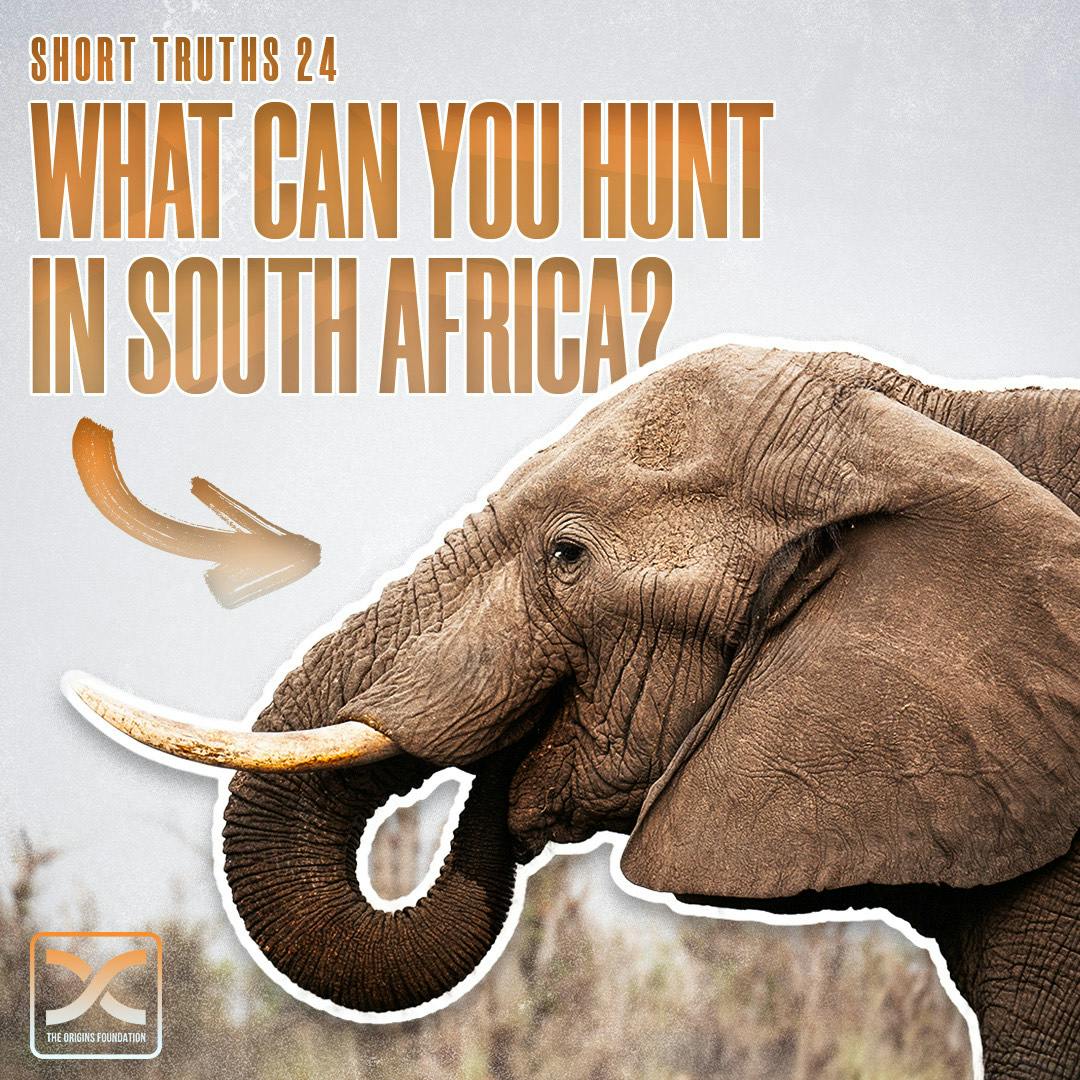
The Origins Foundation Podcast
Short Truths 24 || What Can You Hunt In South Africa?
00:10:05
Your favorite short truths series are back. The short truths are a short pieces of information that you can listen to, digest, and talk about. Today’s Short Truths question is, “What animals have quotas in South Africa?” And the answer is not what you’ve been told. Most animals belong to the owner of the land based on law and certificates of adequate enclosure. However, other animals have different rules. The Department of Forestry, Fisheries and Environment (DFFE, as it is called colloquially) hasn’t actually issued a quota for black rhino, elephant or leopard in South Africa since 2021. What happened in 2021? DFFE was taken to court by Humane Society International - and two full years later, the case was thrown out by a judge. Find out from Robbie all about the quota process and the goings-on there in this Short Truths episode.
Loading summary
Transcript8 lines
- [00:00]
A
Hey guys, this is Melissa Baughman. Are you ready to stop spooking deer before it's even time to hunt them? Then you need the new Flex S Dark cellular trail camera from spypoint with a no glow flash option, long lasting solar power, and a ton of settings that can be changed anytime through the SpyPoint app. There are no more excuses for letting your deer get wise before the season even starts, so check it out for yourself and see why the spypoint Flex S Dark is the unstoppable and undetectable scouting tool you need for your next hunt.
- [00:37]
B
For almost 50 years, Midway USA has been America's go to source for just about everything for shooting, hunting and the outdoors. Go to Midway USA.com to see our latest deals and promotions and take advantage of our super fast same day shipping. If you need a cooler, a new fishing rod, another rifle, ammo or a reloading press, you can find it all@midwayusa.com thanks for your business.
- [01:09]
C
Have you always wanted to learn something more about a hunting related topic? Or always wanted to say something to someone on social media that called out something related to hunting? Or even how to address a statement made by colleagues around hunting? You want to be confident in your response, but you're just not equipped with enough knowledge, facts or questions to sound intelligent. In the next five minutes I'll give you what you need. Short, sharp information, dense and to the point.
- [01:45]
D
Here we go. Foreign so in South Africa right now you can hunt. You cannot hunt elephants, leopards or black rhinos and get them exported out of South Africa. For those three CITES animals you need export quota and the Department of Forestry, Fisheries and the Environment. Dffe. I'm going to use DFFE a lot is the government agency that issues quota. Well there has been no quota issued for elephant, leopard and Black Rhino since 2018. 2021 or what happened in 2021? 2021 the quota was issued. There was a quota for elephants, leopard and black rhino. Well the government DFFE got taken to court by Humane Society International. They got taken to court if I remember correctly, for not following protocols, not having a large enough comment period, yada yada, all the stuff that you typically would put in place to stymie something that you're not in favor of. Okay, obviously quota for charismatic megafauna like elephants, leopards and black rhino. A humane society is not in favor of. And so the courts had to make a decision whether or not the FFV had followed the right protocols. Well it drag out. Well this was for quota for 2021. Well the court case, drug out. It's 2022, and I believe in 2023, the judge looked at it and goes, I'm throwing this case out because this is a case for determining whether the quota in 2021 was appropriate. It's 2023. Out it went. So since 2021, nobody has been able to hunt elephants, rhino and leopard and export any of them. You can't hunt black rhino, you can't hunt leopard at all. In South Africa, only local South African hunters can hunt an elephant. And only up until the last six months, Limpopo and Mpumalanga have allowed international hunters to come hunt elephants. So what's the big deal about not having a quota? Well, we thought we were going to get a quota. So Fast forward to October 2024. The FFV puts a quota on the street for 2020 25, anticipating the whole court stymying scenario again. And they went through the public comment period, they went through a period of time in which they had to evaluate all the public comments. And we expected a quota to be released in early 2025. Well, here we sit, September 2025, and there has been no quota issued. And now the minister, Dion George, has just released a statement that because WRSA has taken them to court for non issuance of quota, that he's not going to issue a qu. The court case has figured itself out. So now we're back in the scenario we were in 2021 in which that a court case has now stymied the issuance of a quota. Why is this quota so important? I think that's a really good question to answer. Why is this quota important for elephants, leopards and black rhino? And simply it comes down to adding value to those species. If you do not add value to those species, for instance, elephants, why would people want to keep elephants on their property? Beyond the ecotourism, photographic tourism element of it currently in South Africa, you cannot give an elephant away for free. You can't. There's nobody wanting elephants. Everybody's actually looking to get rid of elephants. And so there was a mechanism by which you could manage elephants, that you could reduce their population, that you could create an extra value. Why would you not do it? That's where the quota comes in. The South African hunters for elephants are paying probably a quarter of the price. That's why a quota system is so important. The quota system gives value to animals. So let's finish the elephant argument. Is there enough science, is there enough data to show that there is sustainable number of elephants to allow a Quota to be created. Yes. South Africa has more elephants today than it has ever had. We're at like 44,000 elephants. Plenty of elephants to issue a quota on and lots of them in private hands. Leopards. Do we have science on leopards? Actually, we don't have great science on leopards. Safari Club International foundation is doing a survey on leopards in South Africa to give us some data. But there's also a lot of anecdotal evidence to say that. Are there lots of leopards present? Yes. Are there leopards present in areas that they've never seen leopards before in the past? Yes. Are there trail camera pictures on small acreages that have identified multiple leopards showing how dense of a population there is? The answer is yes. And so instead of just letting leopards be a byproduct from a depredation perspective on sheep, on cattle, whatever they are, why not put a value on those leopards? Currently, farmers do not see leopards as a valuable product. They see them as a nuisance. Why not put a value on leopards, reduce the number of illeg takes associated with leopards and depredation and increase the value of leopards by issuing a quota, then black rhinos. We have plenty of data to show that black rhinos are doing very well in private hands. They're only doing very well because of the money being invested in the security of those rhinos. By giving them value, $300,000 value, you can aid in rhino conservation moving forward. It's a very simple concept. Issue quota, add value to wildlife, issue no quota, that wildlife has no value any longer. You have phenomenal private operators, private landowners. You have private landowners, private operators and outfitters that hunt areas that have elephant, that have rhino the desperate for help. If you gave them help through a quota, they would be looking after your wildlife even more. Isn't that what you want? A quota is going to add value to the wildlife of South Africa. A quota is going to enhance the economic GDP of South Africa from, from approximately 4 million rand a year right now to, I think, based on my calculations, about 20 billion rand. So five fold. That money will go back into infrastructure, community investments, habitat restoration, wildlife conservation, security and risk management of species like rhinos to improve their conservation. How is that a bad thing? If the atsi's of the world are whispering in your ear, Minister, that you shouldn't issue a quota? Have you asked the very simple question why? Why should you issue a quota of zero? Is it because elephants are doing badly from a population perspective? No. Is it because there Are too few leopards in the landscape of South Africa? The answer is no. Is it because Southern Black rhino are doing terribly because of hunting? The answer is no. None of these species would be detrimentally affected if you issued a quota. In fact, the opposite would happen. Elephants, leopards and black rhino would be significantly more valued if you issued a quota. It's as simple as that. One thing you've got to remember, the South African system is a private wildlife, private land model of a wildlife conservation system. That is, if you have a certificate of adequate enclosure, the animals within that enclosure, within that fence belong to you. And so how do you put value on those animals that somebody privately owns? You have somebody interested in valuing that animal? I, I value it to photograph it, I value it to eat it, I value it to hunt it. Those are values for wildlife. I value it because it'll breed and create more wildlife that I can then sell. That is why a quota is so important. A quota is important for the private landowner to see more value in these specific species, all of which have risk and liability associated with holding them on your property. Elephant from a destruction perspective. Human wildlife conflict perspective. Leopard from a depredation perspective. Rhino from a poaching risk, security, liability perspective.
- [09:29]
C
Well, that's it for today. Appreciate you listening as always.
- [09:34]
D
Leave a review, share it with your.
- [09:35]
C
Friends and most importantly, do what's right to convey the truth around hunting, Bow.
- [09:43]
E
Hunting all comes down to a moment. And in the moment, you want equipment on your bow that will get the job done. Trophy Ridge products are the tools bow hunters trust react technology. Sights, rests, stabilizers and quivers to help a bow hunter be successful in the field. And those tools are from Trophy Ridge. Join us at a friends of NRA event where freedom, fun and firearms come together like nowhere else. With more than 600 events held across the country, there's always one happening near you. From exciting games to exclusive auctions featuring one of a kind firearms and gear you won't find anywhere else. Whether you're a lifelong hunter, a competitive shooter or simply passionate about defending freedom, there is a seat for you. Visit friendsofnra.org to find an event near you and get ready for a night you won't forget.