Podcast
Blue-Collar BS
Hosted by Brad Herda and Steve Doyle · EN
The age-old excuse "we can't find good people" is busted by two business coaches, Brad Herda and Steve Doyle. Blue-Collar BS features the top blue-collar business owners, thought leaders, and experts to share strategies on attracting and retaining top talent across ALL generations--including Gen Z's (and why they should not be overlooked). Blue-Collar BS helps blue-collar business owners like you build a business that'll thrive for decades by turning that blue-collar bullsh*t into some blue-collar business solutions.
This podcast uses the following third-party services for analysis:
Podtrac - https://analytics.podtrac.com/privacy-policy-gdrp
OP3 - https://op3.dev/privacy
10episodes
Episodes
Newest firstAll episodes

No Emojis Just Real Talk with Thomas Hermann
2w ago00:30:18Tap to summarizeThis week on the show we're talking about something most business owners never think about until they can't find people to hire the pipeline. Tom Hermann is an educator who spent 24 years as a principal and now works on connecting schools with businesses through experiential learning. And he's got something important to tell you.There's a massive gap between what schools teach and what the real world actually looks like. No amount of videos or lectures can bridge that. A student can learn construction theory in a classroom, but until they're 25 feet up in the air on an actual job site with nothing to grab, they don't really know what it's like. That's where you come in.The shift happening right now in education is that schools finally understand they can't do it alone. They need businesses to open their doors. Not for a year-long commitment. Not for a massive time investment. For a half day. An hour. Even just a conversation. Let a teacher walk your facility for 30 minutes so they can go back and tell students about the real work happening in their own community.But here's the bigger piece when you bring people into your organization, whether they're students or new hires, they need to understand they belong to something bigger than their job. They need to see the whole picture, not just their task. And they need to know there's a path forward. That sense of belonging and purpose matters more than the paycheck now.Highlights:There's a gap between school and work that experience is the only way to bridge.Most schools need businesses to help. The commitment level is very low start small.New employees need to understand how their role fits into the bigger picture.Belonging and purpose matter more to younger workers than the paycheck.Clear growth paths and "what's next" conversations change retention dramatically.Your best recruitment tool is your local school.Make sure to subscribe to Blue Collar BS where we talk about the things most don't want to talk about so we can help move the trades forward. Share this episode with someone who needs to hear real conversations from people actually working in the trades today.Helpful Videos:https://www.youtube.com/watch?v=lQZokbCmCkg&authuser=0 https://www.youtube.com/watch?v=zMu4ySZKVZE&authuser=0 https://www.youtube.com/watch?v=3wd0J-Uk9Eo&authuser=0Get in touch with Tom:LinkedInPhone - 262-497-6351Get in touch with us:Check out the Blue Collar BS website.Steve Doyle:WebsiteLinkedInEmailBrad Herda:WebsiteLinkedInEmailThis podcast uses the following third-party services for analysis: Podtrac - https://analytics.podtrac.com/privacy-policy-gdrpOP3 - https://op3.dev/privacy
Transcribe →Bushwood Chronicles
3w ago00:27:25Tap to summarizeThis week on the show we're exploring something most business owners don't talk about the mental game. Brad's been writing about his golf experiences and how they directly parallel running a business. Not in a cute, surface level way. In a real way that matters to how you lead and make decisions.The thing about golf is it reveals exactly what's happening in your head. You can have all the physical tools, all the knowledge, all the experience, but if your mind isn't right, you're not going to perform. Same in business. You can have the best systems, the best team, the best opportunity, but if you're operating from fear or desperation or anger, it changes everything about how you show up.Brad broke 80 on a new course this year a goal he'd been chasing for four years. Physically he could do it the whole time. The piece that was missing was mental. He had to learn to be present instead of fixated on the result. He had to learn to control what he could control his reaction, his communication instead of getting frustrated at things outside his control.For business owners, this is everything. Your service tech gets angry because a customer doesn't show up. Now he's providing bad service, cutting corners, not following process. A salesman loses a deal and decides the market's dead instead of asking what they could have done differently. A leader gets frustrated at a problem and makes decisions from that place instead of solving from clarity.The best coaches whether in golf or business help you see the gap between where you are and where you want to be, then help you close it. They show you what you're missing. And they teach you to stay present.Highlights:The mental game in golf is exactly the mental game in business.You can have all the skills and still perform poorly if your mind isn't right.Most business problems come from reacting out of fear instead of solving from clarity.Control what you can control your reaction and how you communicate.Being present means focusing on the solution, not fixating on the result.Make sure to subscribe to Blue Collar BS where we talk about the things most don't want to talk about so we can help move the trades forward. Share this episode with someone who needs to hear real conversations from people actually working in the trades today.Get in touch with us:Check out the Blue Collar BS website.Steve Doyle:WebsiteLinkedInEmailBrad Herda:WebsiteLinkedInEmailThis podcast uses the following third-party services for analysis: Podtrac - https://analytics.podtrac.com/privacy-policy-gdrpOP3 - https://op3.dev/privacy
Transcribe →
6-7 Means Nothing. Your Network Should Mean Everything with Jamar Jones
4w ago00:57:17Tap to summarizeThis week on the show we're talking about something that might be the most important thing you never thought about who you're spending time with. Jamar Jones wrote a book called "Change Your Circle, Change Your Life" because he realized that his ability to consistently change his circle of people was what got him where he is. Not his skills alone. Not his hustle. The people around him.Most business owners go through life never really auditing who they're letting into their space. You've got the same two guys you've been working with for 35 years. Or you frequent the same place every morning and complain with the same people about the same stuff and then you wonder why things aren't changing.The thing is you don't have to cut people out. You don't have to burn bridges. You can add to your circle. But you do have to start separating yourself from what Jamar calls the vampires the people who are constantly draining your energy with victim mentality, complaining, and whining. Because here's the reality: if you're around that all day, you become that. Your circle shapes your energy, your mindset, and ultimately what you can achieve.The other piece is being intentional. Stop saying "I just want to be better next year." That means nothing. You need to know exactly what you want, who has what you need, and be willing to ask for help. Make introductions for other people first. Give value. Build real relationships, not transactional ones. And then and only then ask for what you need.HighlightsWho you spend time with shapes who you become.You don't have to cut people out, but you do have to limit the toxic ones.Intentionality about your goals and conversations changes everything.Most people won't ask for help, but most people will give it if you ask.Your circle is one or two introductions away from completely changing your life.Make sure to subscribe to Blue Collar BS where we talk about the things most don't want to talk about so we can help move the trades forward. Share this episode with a friend or colleague who would benefit from hearing real conversations from people who actually work in the trades today.Get in touch with Jamar: WebsiteLinkedinYoutubeBookGet in touch with us:Check out the Blue Collar BS website.Steve Doyle:WebsiteLinkedInEmailBrad Herda:WebsiteLinkedInEmailThis podcast uses the following third-party services for analysis: Podtrac - https://analytics.podtrac.com/privacy-policy-gdrpOP3 - https://op3.dev/privacy
Transcribe →
3hr Scope Meeting WTF
Jul 1700:33:03Tap to summarizeThis week on the show we're discussing a real life example of how home service businesses operate when they don't have their systems dialed in. Without the proper CRM and real processes, you and your team are winging it. You're losing time and money while everyone's frustrated because they're not on the same page.In this example a large landscaping project was what the homeonwere needed. They called 10 different companies and only one called back.Those other companies lost money just by not having a process in place to return calls.What stands out in this situation are massive opportunities to streamline operations. Between a three-hour scope meeting, handwritten quotes, and communication happening through personal cell phones, there's clear potential to implement software and systems that would transform how the business operates.When business owners say cash flow is the problem, maybe it's time to take a look at a few simple things: Where are you spending your time? Are there some processes that could be automated? Is it time to let go of the old ways of doing things and update by bringing in software?HighlightsManual quote process means your team is never on the same page.Being the one who answers the phone is the simplest way to stand out make sure you have a system for callbacks.Operations are the foundation - everything else builds on that.Implementing a communication platform shows professionalism and streamlines communication so your team isn't texting clients from their personal phones.Get in touch with us:Check out the Blue Collar BS website.Steve Doyle:WebsiteLinkedInEmailBrad Herda:WebsiteLinkedInEmailThis podcast uses the following third-party services for analysis: Podtrac - https://analytics.podtrac.com/privacy-policy-gdrpOP3 - https://op3.dev/privacy
Transcribe →
Tradeswoman. Trouble Maker. TikTok Star. Brooke Laing
Jul 1000:31:39Tap to summarizeBrooke Laing is a steam fitter and welder apprentice in her third year with UA Local 46 in Toronto. She's also the Chief of Strategy for the Sisterhood of Trades and just started her own podcast. So she's got something to say about what it's really like for women coming into the trades right now.The barriers are real. Women have to prove themselves in ways men don't. There's harassment that supervisors aren't taking seriously. And trying to find PPE that actually fits? Good luck. But the industry is starting to shift some employers are finally getting it.The flip side is that women are crushing it in the trades. Better attention to detail, willing to do the work right instead of just fast. And young women are discovering this through social media where tradeswomen are showing the real side of the job.Getting women into the trades isn't that complicated. Union apprenticeships are structured and solid. Networking opens doors. And having a community like the Sisterhood means you're not figuring it out alone.Highlights:Women entering trades face barriers like have to prove themselves constantly and dealing with harassment that goes nowhere.PPE that actually fits women is harder to find than it should be.Social media is how young people are actually learning about what trades look like.Union apprenticeships provide structure and community that matters.Employers who take complaints seriously and create safer environments are seeing the shift happening.Make sure to subscribe to Blue Collar BS where we talk about the things most don't want to talk about so we can help move the trades forward. Share this episode with someone who needs to hear real conversations from people actually working in the trades today.Get in touch with Brooke:FacebookInstagramLinkedInGet in touch with us:Check out the Blue Collar BS website.Steve Doyle:WebsiteLinkedInEmailBrad Herda:WebsiteLinkedInEmailThis podcast uses the following third-party services for analysis: Podtrac - https://analytics.podtrac.com/privacy-policy-gdrpOP3 - https://op3.dev/privacy
Transcribe →
Transparency Without Clarity Is Just Opaqueness
Jul 300:28:59Tap to summarizeA lot of younger workers are going through major organizational change for the first time. When leadership announces big shifts without spelling out what success looks like, they're left trying to figure it out on their own. They came in with their trust bucket full. But when the clarity doesn't show up, that bucket empties fast.The real problem isn't the change itself. It's announcing change without defining what success looks like. If people don't know what they're working toward, why would they get on board? They're just going to come in, do the minimum, and move on.Define what's changing. Be clear about what winning means. Set a date to revisit it. And then actually show up. Because people believe what you do, not what you say.Highlights: Younger workers experiencing organizational change for the first time have nothing to compare it to confusion and unclear expectations empty their trust bucket fast.Transparency without clarity just creates opaqueness.When leaders aren't around during change, people stop working as a team and start protecting themselves.Your actions tell the real story not your words.Make sure to subscribe to Blue Collar BS so you don't miss what's happening in the trades. Share this episode with someone who would benefit from knowing what works with a multi generational work force.Get in touch with us:Check out the Blue Collar BS website.Steve Doyle:WebsiteLinkedInEmailBrad Herda:WebsiteLinkedInEmailThis podcast uses the following third-party services for analysis: Podtrac - https://analytics.podtrac.com/privacy-policy-gdrpOP3 - https://op3.dev/privacy
Transcribe →
Global Hustle, Local Lessons with David Hewitt
Jun 2600:32:28Tap to summarizeDavid Hewitt is one of the first guests we've had who's led teams across the world - China, Europe, Asia, and North America. This gives David a completely different perspective than many of us would have. One of the starkest differences is how people view work.In China, people didn't mind hustling because it got them to a goal. In Europe, work hours are strict and asking someone to stay late is basically a non-starter. Very different perspectives.One thing David shared with us is that you have to learn that people have different definitions of winning. As a leader, you need to be clear about what that looks like, share it, and hold people to that goal.We discussed whether working from home actually kills innovation and if you can replicate team collaboration the way it would in an office. But on the flip side, many people are more productive working from home. Maybe a hybrid situation is the best option.The real question is what your business actually needs to win and how to manage a workforce that isn't backing down on wanting autonomy and flexibility through working from home.What matters most is being intentional about it. Define what winning means, show people how their work connects to that, and celebrate when you hit it. That works whether people are in an office or remote.Highlights:Ideas flow differently when teams are in the office versus working remote.Taking on a challenge is different than being in over your head.Regularly check in with your team on goals and hold each person accountable.Move away from tenure and focus on results the next generation won't wait 20 years for a promotion.Make sure to subscribe to Blue Collar BS. Share this episode with someone who needs to hear conversations about what's happening in the trades from people in the trades.Get in touch with David:LinkedInGet in touch with us:Check out the Blue Collar BS website.Steve Doyle:WebsiteLinkedInEmailBrad Herda:WebsiteLinkedInEmailThis podcast uses the following third-party services for analysis: Podtrac - https://analytics.podtrac.com/privacy-policy-gdrpOP3 - https://op3.dev/privacy
Transcribe →
Hope is NOT a Business Plan
Jun 1900:29:35Tap to summarizeWhen uncertainty hits whether it's weather, natural disasters, or the unexpected how you respond reveals your leadership. We talk about what separates leaders who have plans from leaders who are making it up as they go.The difference between chaos and calm isn't luck. It's preparation. It's knowing what matters when everything else is falling apart. It's writing down who does what, what gets protected, and what the actual priorities are. Most leaders skip this step until it's too late.There's also a shift happening in what employees expect from their leaders when crisis hits. The old mindset was sacrifice everything for the business. The new mindset is having a plan that doesn't require that choice. Both matter and good leaders figure out how to do both.The real question isn't whether something will go wrong. It's whether you'll be ready when it does. And readiness starts with thinking it through now, before the pressure is on.The real question isn't whether something will go wrong. It's whether you'll be ready when it does. And readiness starts with thinking it through now, before the pressure is on.Highlights: Uncertainty reveals leadership prepare now or lead from chaos.Writing down your priorities and roles before crisis hits changes everything.Employees expect plans that don't force them to choose between family and work.The difference between panic and clarity is preparation.If you haven't already make sure to subscribe to Blue Collar BS. We would also appreciate if you could give us a 5 ⭐️⭐️⭐️⭐️⭐️ rating on Apple Podcasts this helps more people find our show!This podcast uses the following third-party services for analysis: Podtrac - https://analytics.podtrac.com/privacy-policy-gdrpOP3 - https://op3.dev/privacy
Transcribe →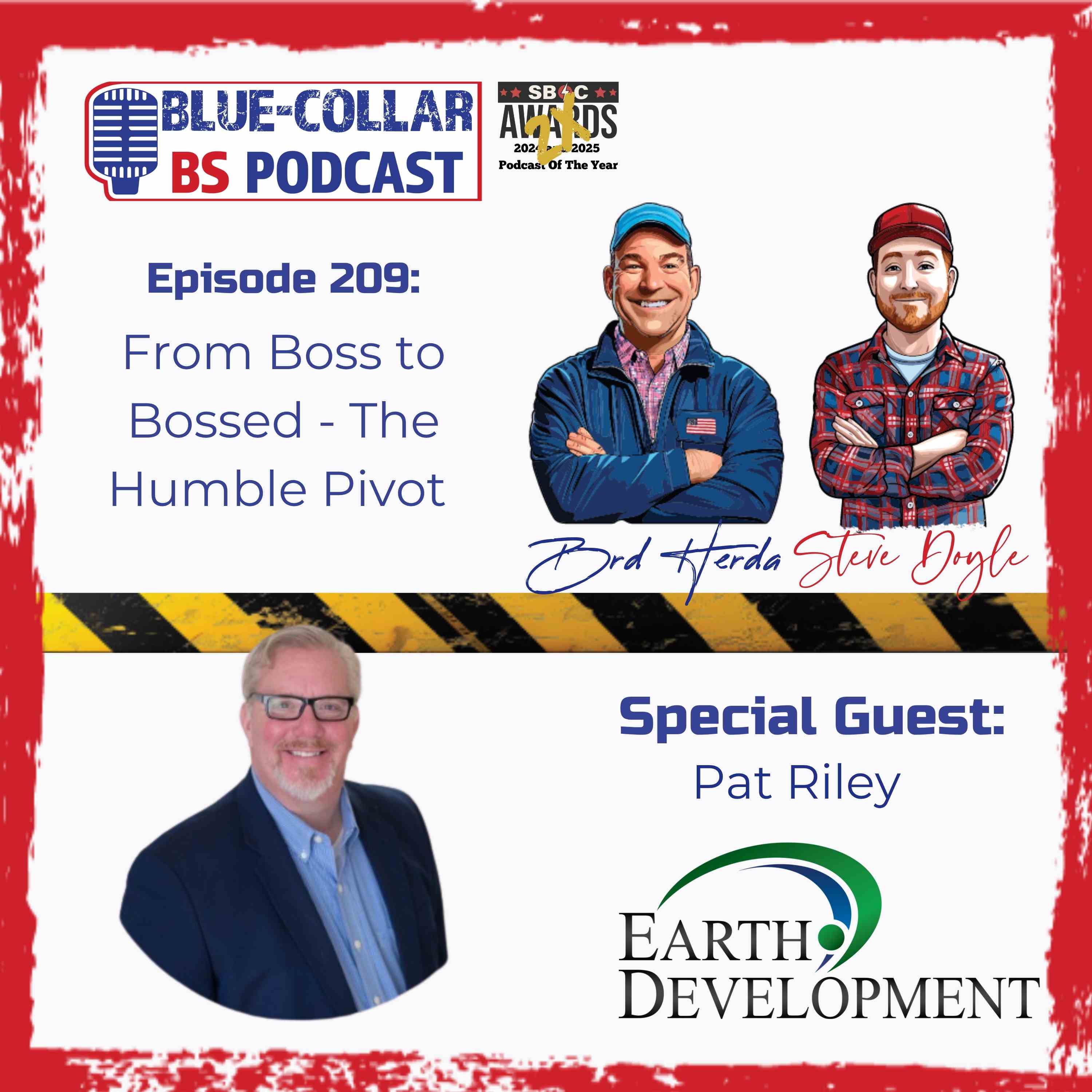
From Boss to Bossed - The Humble Pivot with Pat Riley
Jun 1200:34:57Tap to summarizeLet's welcome Pat Riley onto the show this week. As an entrepreneur for years, Pat made a big pivot into working for someone else. That shift gives him a unique view from both the owner's and employee's side.This conversation challenged stereotypes we all hear Gen Z isn't lazy, Boomers aren't just selfish stock watchers, and bringing decades of experience into a new role doesn't mean you're stuck in old ways.Pat spent years owning and selling multiple businesses before transitioning into a sales management role. That transition from being the boss to having a boss required humility and finding leadership with values that aligned with his. He found both at Earth Development, bringing experience in building and leading organizations to his new position.We spend too much time labeling generations instead of recognizing what each one brings to the table.Pat's team is young and motivated by something bigger than just money. They understand the company's mission of keeping people safe in the winter. They care about purpose and community.Pat also talks about how he brought his AI expertise to transform a stagnant CRM system by simply asking technology how to solve problems differently.The college debt crisis came up when Pat shared his daughter's story about how her ideal college tuition just didn't make sense at over $200,000. The math didn't work. She ended up choosing a college closer to home which sacrificed experience but saved a lot of money in the future.Major employers are also starting to shift their requirements for four-year degrees. They've realized that many positions don't actually need one.Highlights:Young workers care more about purpose and being part of something bigger than just money.Pat's transition from business owner to employee required humility and finding values-aligned leadership.College debt has reached the point where $268,000 for a teaching degree makes zero financial sense.Major employers now accept two-year degrees because they've realized the traditional four-year degree isn't necessary for many positions.AI tools can transform stagnant systems when you simply ask how to solve problems differently.Do you want more honest conversations about what's actually happening in business and the workforce? Make sure to subscribe to Blue Collar BS. Share this episode with someone who needs to hear conversations about what's happening in the trades from people in the trades.Get in touch with Pat:WebsiteLinkedInGet in touch with us:Check out the Blue Collar BS website.Steve Doyle:WebsiteLinkedInEmailBrad Herda:WebsiteLinkedInEmailThis podcast uses the following third-party services for analysis: Podtrac - https://analytics.podtrac.com/privacy-policy-gdrpOP3 - https://op3.dev/privacy
Transcribe →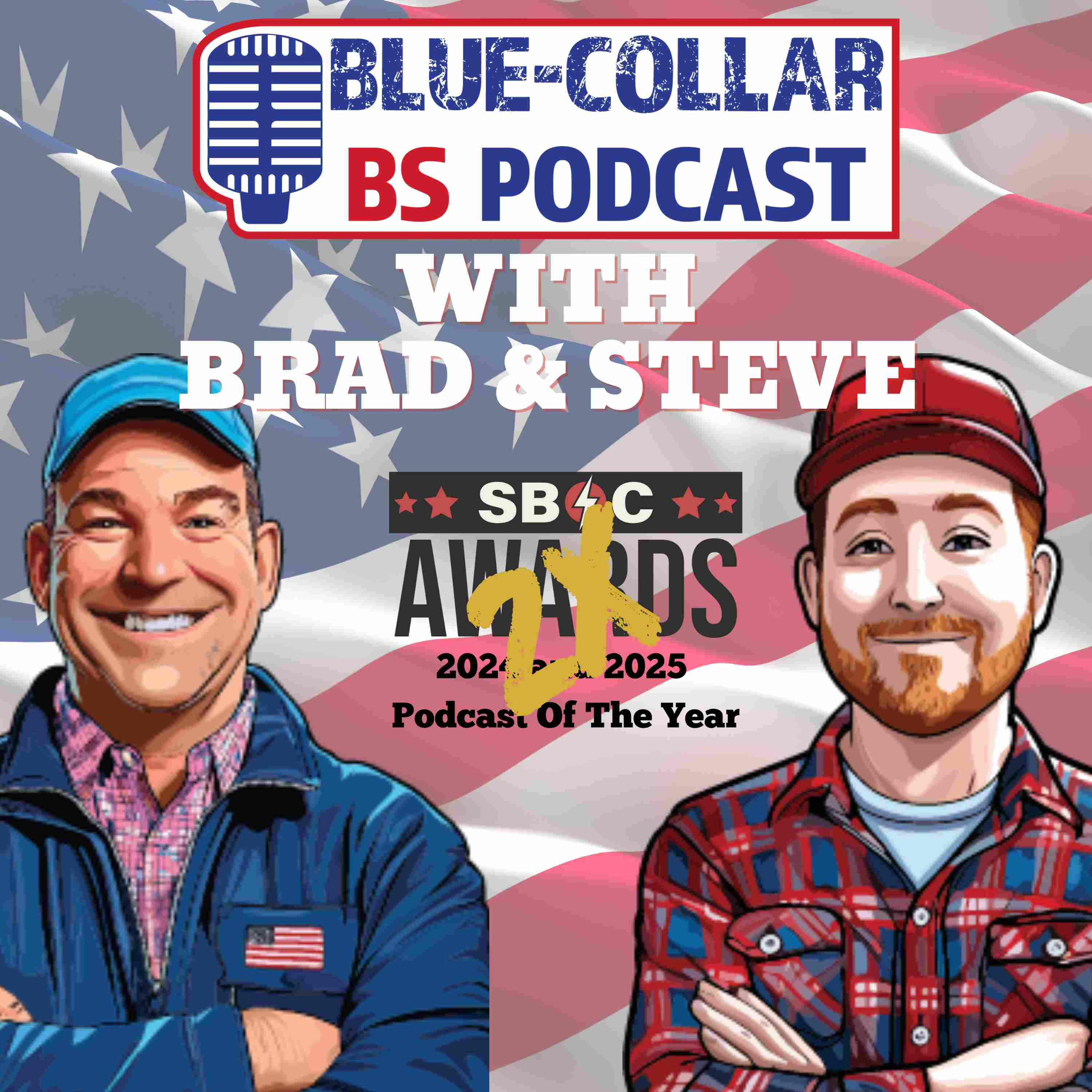
Decks, Daughters, and Dumb Decisions
Jun 500:23:31Tap to summarizeWe break away from our usual educational episodes to talk about what's actually going on in our lives. Steve's daughter is graduating, Brad's rebuilding a trailer, and the roasting begins immediately starting with Steve's 40 yards of concrete project that never happened.Our conversation bounces from home improvement disasters to paint color debates (chartreuse with zebra stripes, anyone?) to what summer looks like when we're not recording podcast episodes. Brad's golfing in 31-degree weather. Steve refuses to shingle his own roof despite knowing how. We argue about whether Cookie Monster blue or lime green with pink LEDs makes more sense for a trailer.We wrap the episode with what's next for the show. We're thinking about an in-person event late 2026 or 2027, somewhere between Detroit and Milwaukee. We want to know what would get you to show up. What would make it worth your time?Highlights:We ditch the usual format for a conversation about summer plans and roasting each other.Steve's daughter graduates and heads to college.Brad debates trailer paint colors while Steve deals with deck repairs and roof quotes.What's next for the show: a potential in-person event if you want one.Let us know. Would you attend an event? If so what would make it a "Hell Yes" to attend? Email us your ideas. We appreciate you being here.Get in touch with us:Check out the Blue Collar BS website.Steve Doyle:WebsiteLinkedInEmailBrad Herda:WebsiteLinkedInEmailThis podcast uses the following third-party services for analysis: Podtrac - https://analytics.podtrac.com/privacy-policy-gdrpOP3 - https://op3.dev/privacy
Transcribe →